October 1, 2026

6
min read
Shadow AI Monitoring: See AI Usage Without Surveillance (2026)
Shadow AI monitoring shows which AI tools your fleet uses and when sensitive data comes near them — without reading prompts or logging keystrokes.
Shadow AI monitoring is the continuous view of AI activity across your fleet: which services are reached, by which app and device and user, whether they’re sanctioned, and when sensitive data comes near them. It is how a one-time discovery becomes an ongoing signal you can trend, alert on, and prove to auditors.
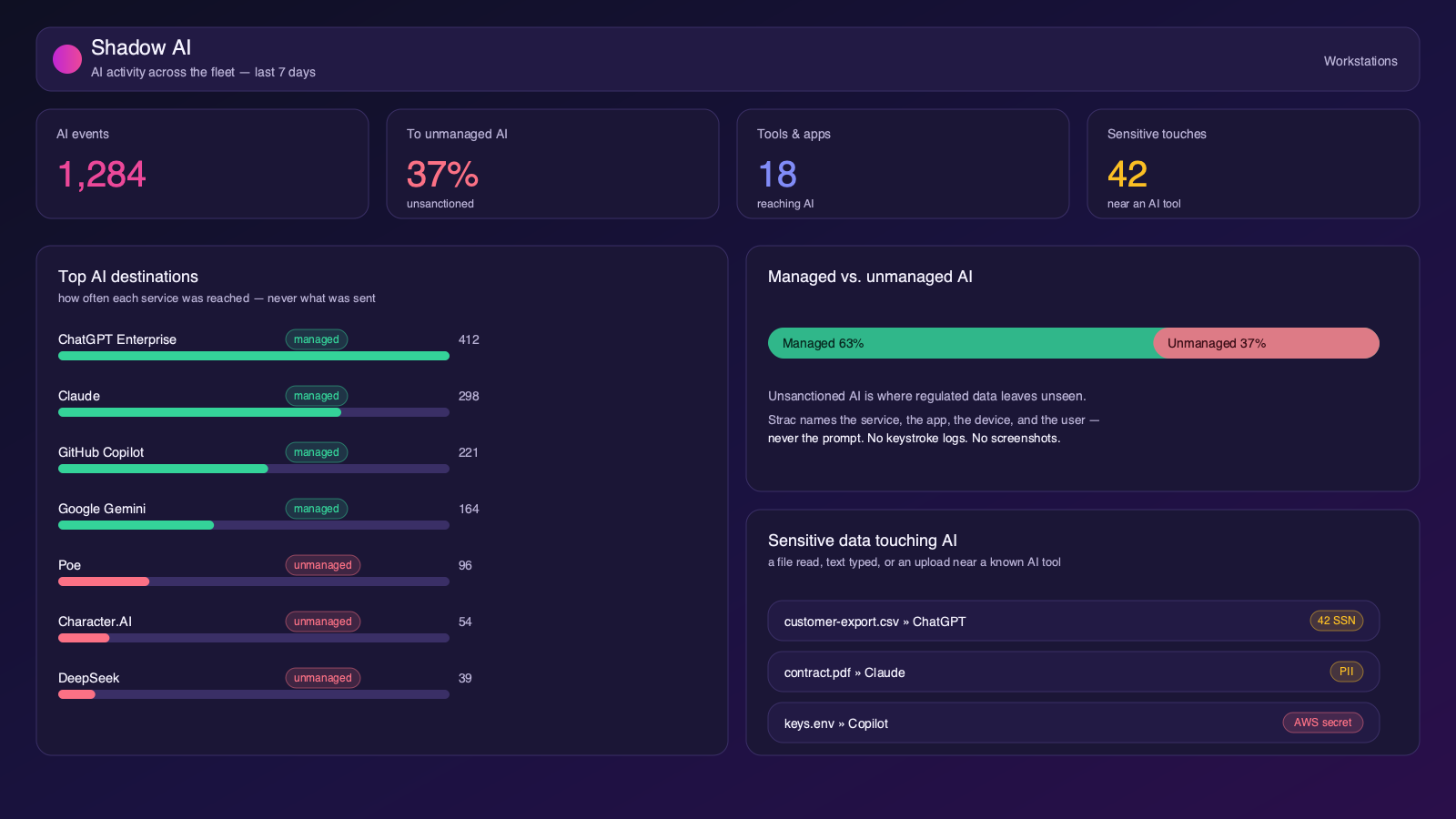
There is a hard line between monitoring AI usage and monitoring employees. Usage monitoring records the AI service reached, the app, the device, and whether sensitive data was involved. Surveillance records what people type and see. Strac does the former and explicitly not the latter: no keystroke logs and no screenshots anywhere in the product. That distinction is what makes monitoring deployable without a revolt.
Many “AI usage monitoring” products drift into employee surveillance — keystroke capture, screen recording, productivity scoring. That creates legal exposure under GDPR and works-council rules, and it poisons trust. A monitoring program that records content is a liability; one that records destinations and data classes is an asset.
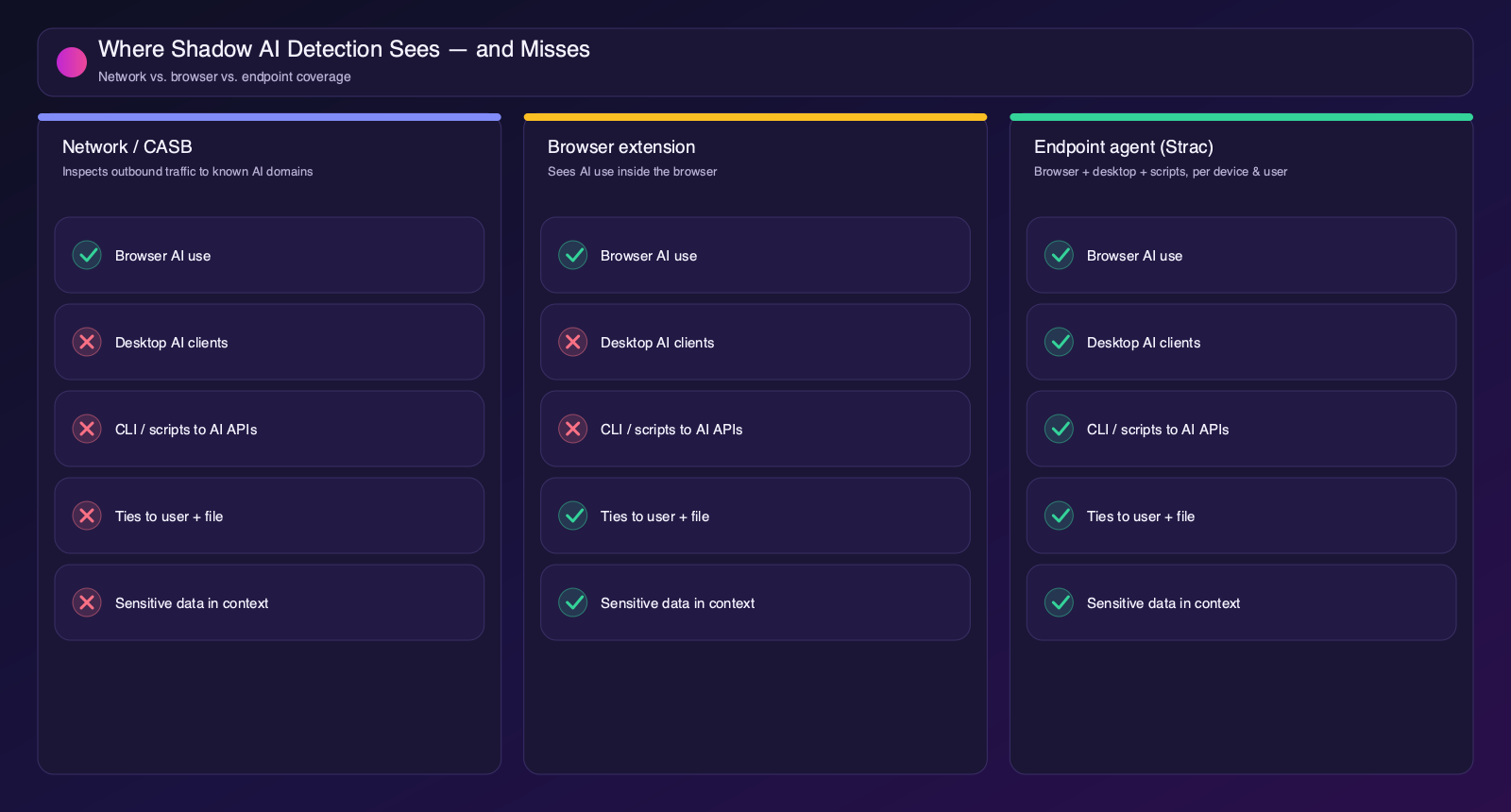
Strac watches AI activity from the endpoint and names the service from a destination catalog rather than by inspecting content. It records that a service was reached, by which app, on which device, and whether a sensitive file or listed-app keystroke was involved — the fact of the event and its data classes, never the prompt. The result is rich telemetry with a clean privacy story.
Monitoring answers “what is happening.” The same endpoint agent answers “stop the risky part” by blocking sensitive files and uploads to unsanctioned AI. That is the advantage of monitoring and enforcement in one agent: no swivel-chair between a visibility tool and a control tool, and one audit trail.
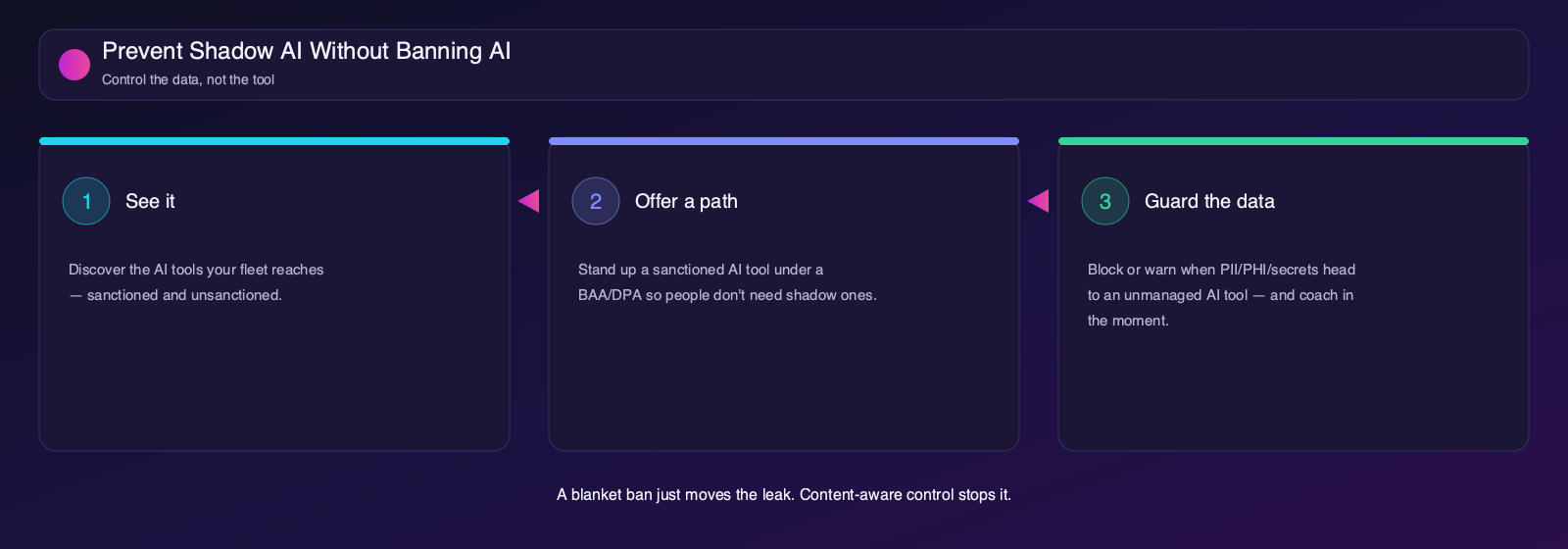
Frameworks increasingly expect you to demonstrate awareness of AI use. A monitoring trail that shows which tools were reached, how much went to unsanctioned services, and where sensitive data was involved is exactly the evidence auditors want — without the privacy baggage of content surveillance.
See usage telemetry that respects employees and still catches the risk:
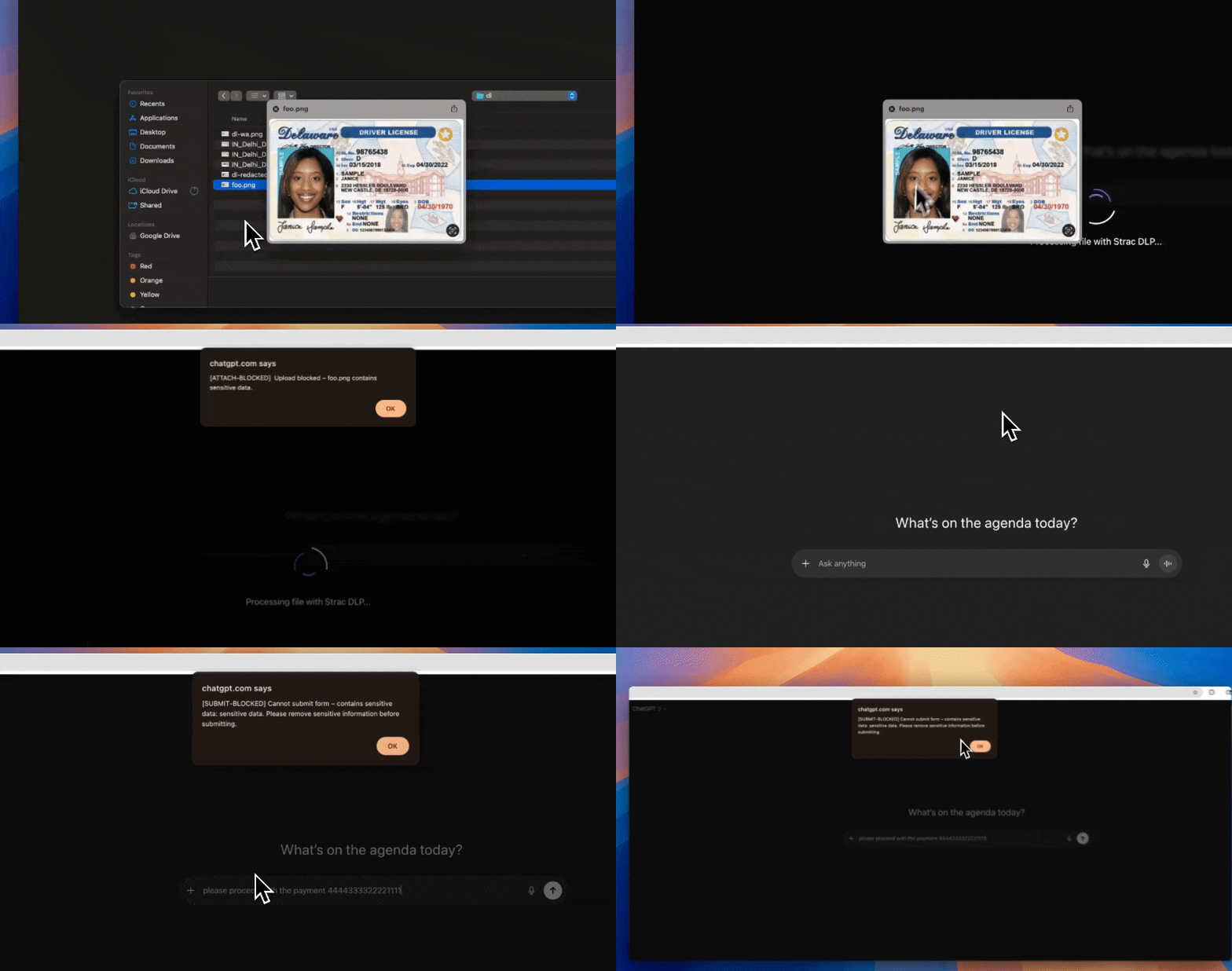
Detection tells you shadow AI is happening. DLP is what stops the leak. The moment sensitive data heads to an AI tool — pasted into a browser prompt, dragged into an upload, opened by a desktop AI app, or overshared in a file an agent can reach — Strac’s content-aware DLP remediates it in real time. This is why so many teams run Strac for web GenAI DLP: it is the remediation layer that turns “we found shadow AI” into “the data never left.”
Strac gives you the right response for each surface, set per data type:

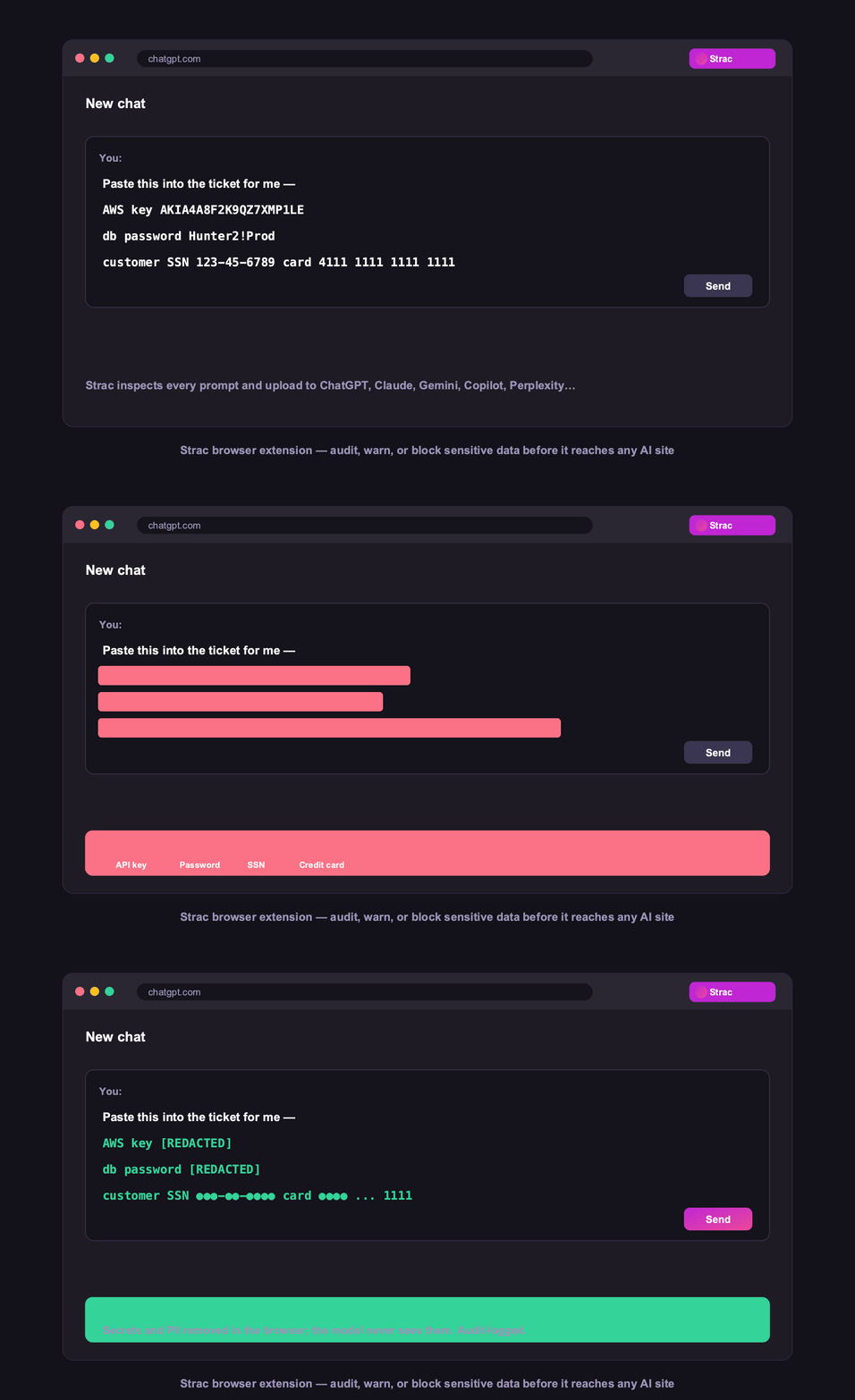

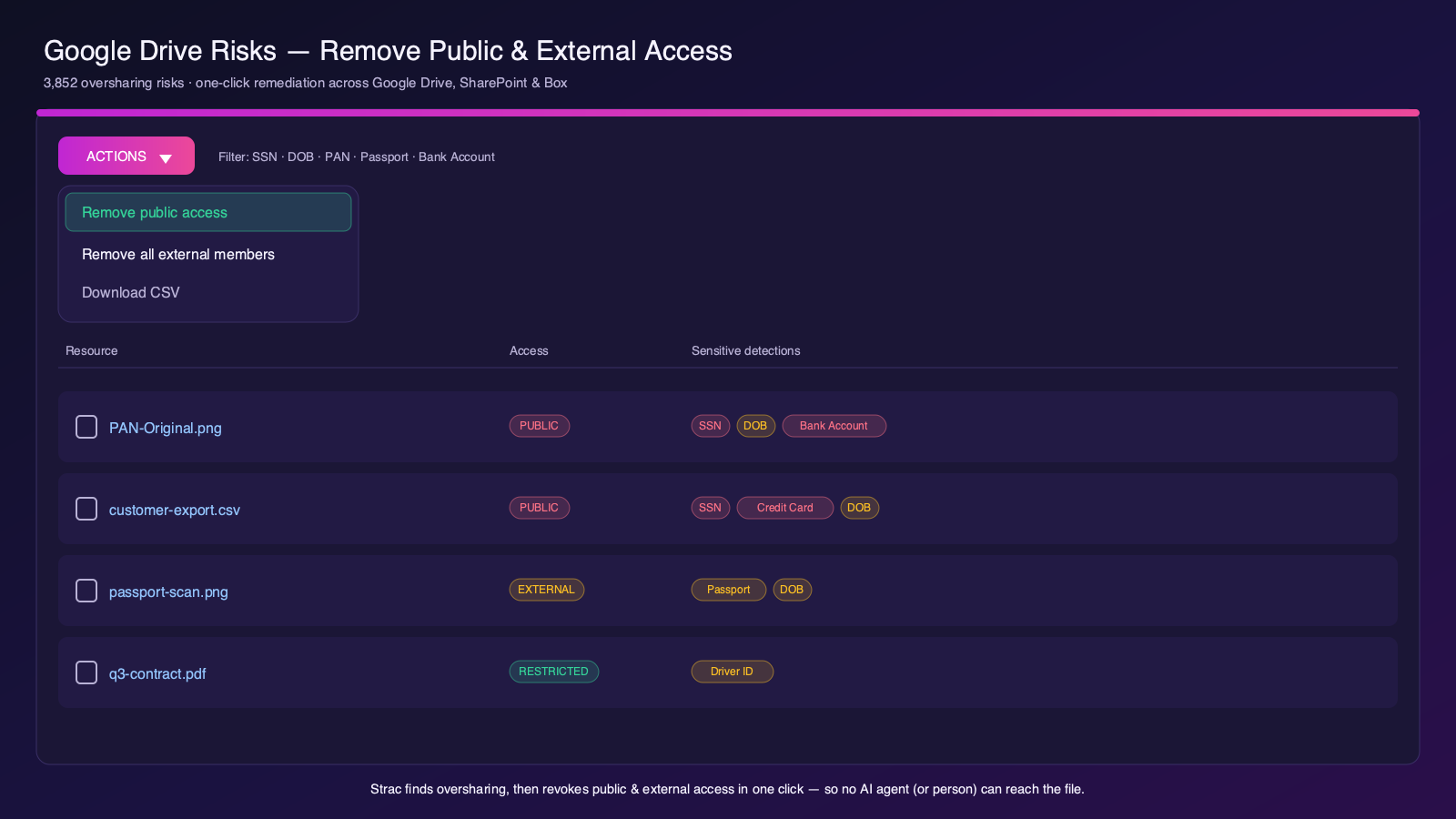
Because detection and DLP live in the same platform, you see the shadow AI and remediate the data with one policy and one audit trail — across SaaS, browser, endpoint, GenAI, and MCP.
Strac monitors shadow AI as usage telemetry — never employee surveillance. Start at the Shadow AI hub, or read how to detect shadow AI and shadow AI governance.
To monitor AI usage where it actually happens — on employee laptops — Strac’s endpoint DLP agent surfaces Shadow AI on every device, privacy-first.
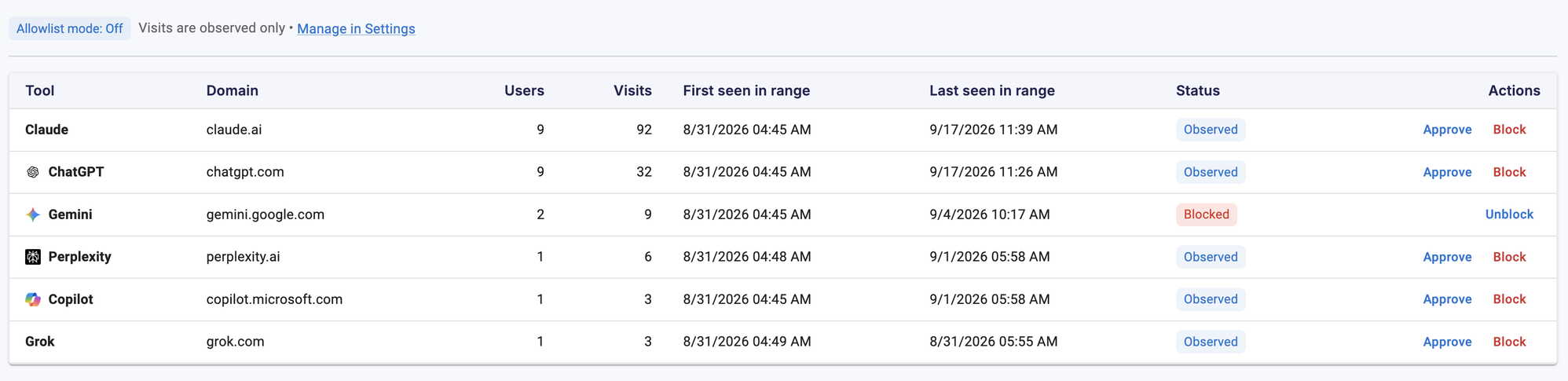
Want to block or govern a tool? See how to block ChatGPT at work and AI usage monitoring.
How do you monitor shadow AI without spying on employees? Record the AI destinations, apps, devices, and whether sensitive data was involved — not what people type. Strac keeps no keystroke logs or screenshots.
What does shadow AI monitoring show? Which AI services the fleet reaches, managed vs. unmanaged, and when sensitive data comes near them — with the device and user behind each.
Can monitoring turn into blocking? Yes. The same endpoint agent can block or warn on sensitive files and uploads to unsanctioned AI once you’re ready to enforce.
Is shadow AI monitoring legal / privacy-safe? Usage monitoring that records destinations and data classes — not content — is far easier to deploy under privacy regimes than surveillance. Strac captures no prompts, keystrokes, or screenshots.
Does monitoring slow down devices? A well-built endpoint agent is lightweight and runs in the background; Strac syncs policy every ~30 seconds without a noticeable performance hit.
.avif)


.gif)


.webp)