What Is a DLP Endpoint Agent? DLP, Shadow AI & Data Lineage (2026)
A DLP endpoint agent explained: what it inspects on Windows, macOS, and Linux, why content-aware and AI-tool coverage matter, and how it stops data leaving the device.
DLP endpoint agents prevent data leaks on devices by monitoring actions like USB transfers, uploads, emails, and screenshots.
They work online or offline, enforcing security policies directly at the endpoint.
Key risks addressed include insider threats, shadow IT, and data exfiltration during offboarding.
Modern agents should support real-time blocking, AI/ML detection, multi-platform coverage, and automated remediation.
Strac delivers next-gen DLP with fast setup, lightweight performance, deep SaaS/LLM integration, and instant response actions
In this guide, we’ll dive into what is a DLP endpoint agent, how it works, what problems it solves, and what a modern DLP agent should look like; and we’ll explore how Strac takes this to the next level with automated remediation and cloud-native protection.
Strac’s Workstations agent is more than DLP. It combines three things in one lightweight agent: content-aware DLP across every exit channel, Shadow AI visibility into which AI tools your fleet uses, and per-file Data Lineage that tells the full story of a file on a device. Together they make it an endpoint data security platform, not just a blocker.
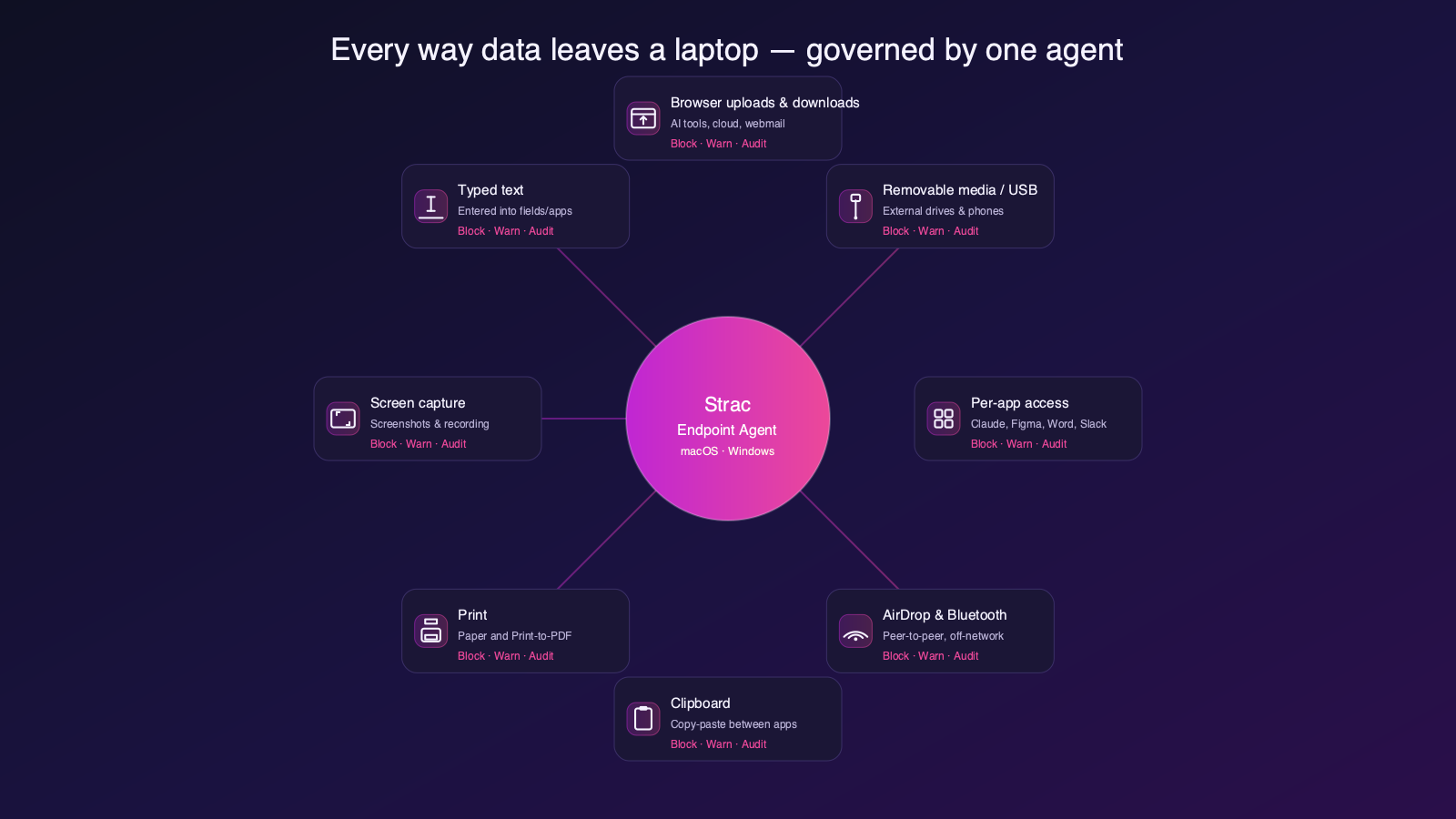
✨ Every Way Data Leaves a Laptop — Governed by One Agent
Most data loss happens on the endpoint: a customer list dragged to a USB stick, a source file pasted into ChatGPT, a patient record AirDropped to a personal phone, a spreadsheet printed to PDF the night before someone resigns. The Strac endpoint agent for macOS and Windows watches every one of these exits and, where you configure it to, stops the leak before it lands.
What makes it different from legacy endpoint DLP is that Strac is content-aware, not channel-blunt. Old tools lock the USB port or clipboard outright and drown users in false positives. Strac inspects what is actually moving — the same classifiers that power Strac’s SaaS, cloud, and MCP DLP — and applies policy by data type. An engineer can still paste a code snippet; they just can’t paste a live AWS key or a block of customer SSNs.
One agent, eight exit channels. Strac inspects the content leaving each channel and applies your policy — Block, Warn, or Audit — by data type.
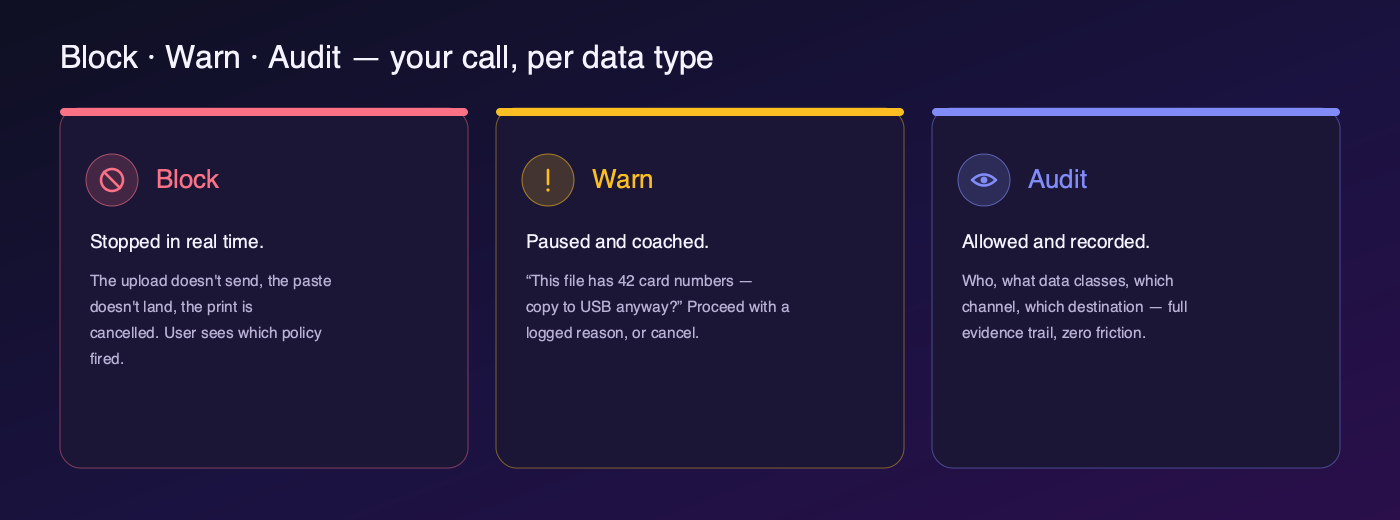
✨ Block, Warn, Audit — Your Call, Per Data Type
Every channel supports the same three modes, so you roll out control without breaking how people work. Block stops the action in real time. Warn pauses and coaches the user (“this file has 42 card numbers — copy to USB anyway?”), letting them proceed with a logged reason or cancel. Audit allows the action but records who, what data classes, which channel, and which destination. Because mode is set per data type per channel, you can Audit everything on day one, flip Warn on for PII and PHI next, and Block secrets and cardholder data over USB and browser last — a staged rollout security teams actually ship.
Block, Warn, or Audit — set independently for every data type on every channel.
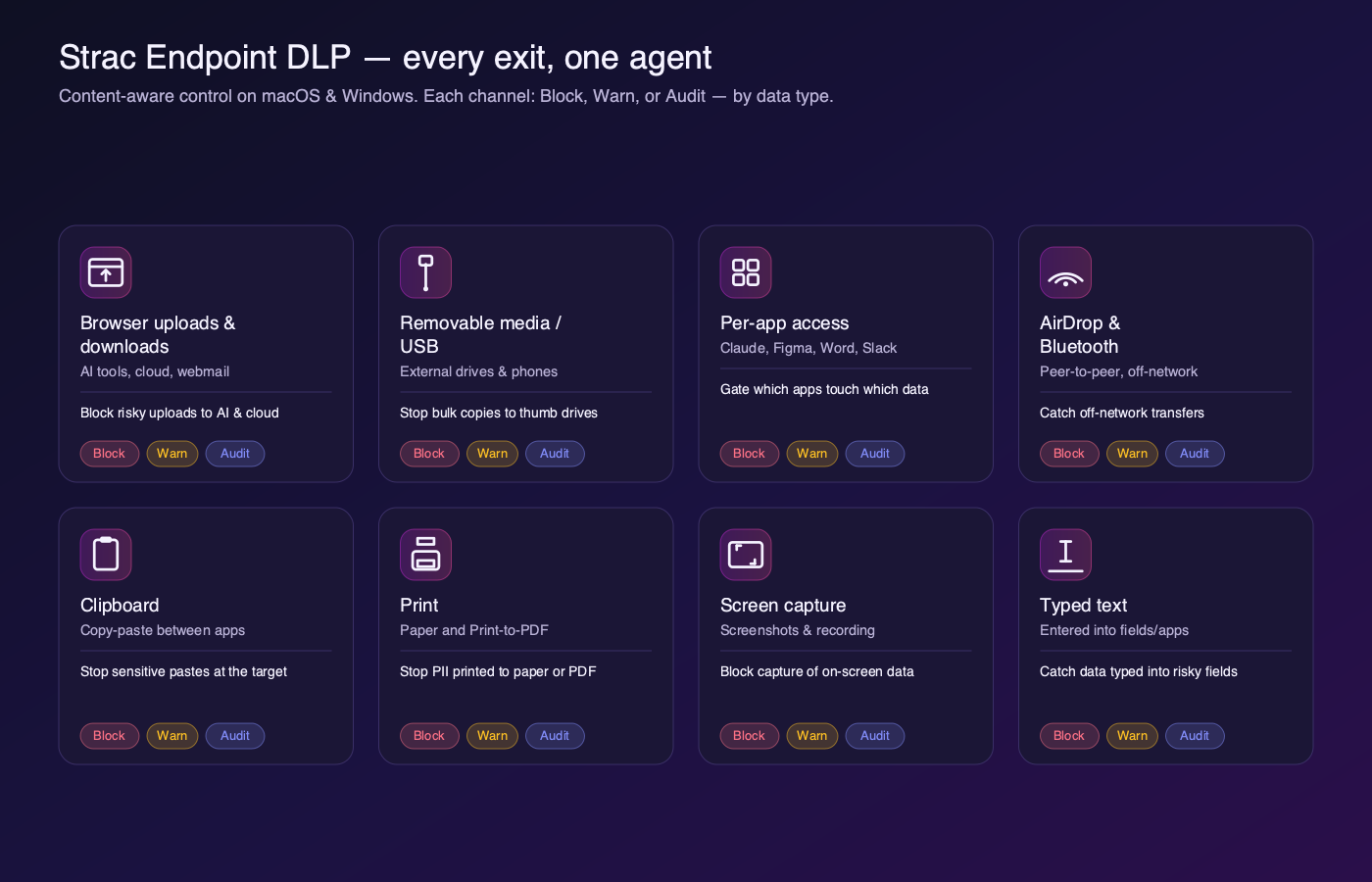
✨ Every Exit Channel Strac Governs — Grouped by Risk
Every exit, one agent — browser, USB, per-app, AirDrop/Bluetooth, clipboard, print, screen capture, and typed text, each content-aware.
Browser uploads & downloads
The browser is the busiest exit on any laptop. Strac inspects files and text as they upload to any site — generative-AI tools (ChatGPT, Claude, Gemini, Copilot), personal cloud, webmail, shadow SaaS — and inspects downloads as they hit disk. Block customer data to consumer AI, Warn on personal-cloud uploads, Audit normal SaaS.
Removable media & USB
USB mass-storage is the oldest exfiltration path. Strac inspects each file written to external drives, SD cards, and MTP phones and enforces by content — allow the vacation photos, Block the file with 500 SSNs — and can require encryption so any permitted copy is unreadable off the device.
Per-app access (AI & desktop apps)
Native apps read local files and send data out. Strac applies policy per application — Block the Claude/ChatGPT desktop client from ingesting cardholder data, Warn when Word opens a Restricted document, Audit approved tools.
AirDrop & Bluetooth
On Macs especially, AirDrop is a one-tap bridge to any personal device, and Bluetooth transfer is its Windows cousin. Both bypass the network, so network DLP never sees them — the endpoint agent is the only place to catch them. Strac inspects the content and stops regulated data.
Clipboard
Copy-paste is how sensitive data quietly hops from a protected app into an unprotected one. Strac inspects clipboard content at paste — harmless text flows, a block of card numbers or a secret is stopped or warned — not a blunt ‘no copying’ rule.
Print
Printing — to paper or, more often, Print-to-PDF — makes an offline copy no cloud control can see. Strac inspects the document sent to any printer or PDF driver: allow the agenda, Block the export full of PCI data.
Screen capture
A screenshot turns on-screen data into an image that sidesteps text controls; recording and screen-sharing do it at scale. Strac detects capture while sensitive data is visible and can block it or mask the sensitive region.
Typed text
The newest ingress is a person typing regulated data straight into a web field — an SSN into an AI prompt, a card number into a chat. Strac inspects the content being entered (content classification, never a keystroke log) and can warn or block before submit.
Coverage spans three groups. File channels: file open, download (provenance-scanned via Mark-of-the-Web), USB write, print (incl. print-to-PDF), screenshot, AirDrop, and Bluetooth (rolling out). Egress channels: per-app access (AI desktop/CLI tools, Figma, and more), browser upload, clipboard, and typed text. Network: outbound upload visibility and a domain/IP site blocklist. Each channel runs in Audit, Warn, or Block (Allow turns a channel off), and the content behind any finding can be staged to the vault so an admin can open the exact document that fired.
✨ Beyond DLP: Data Lineage — the Story of Every File
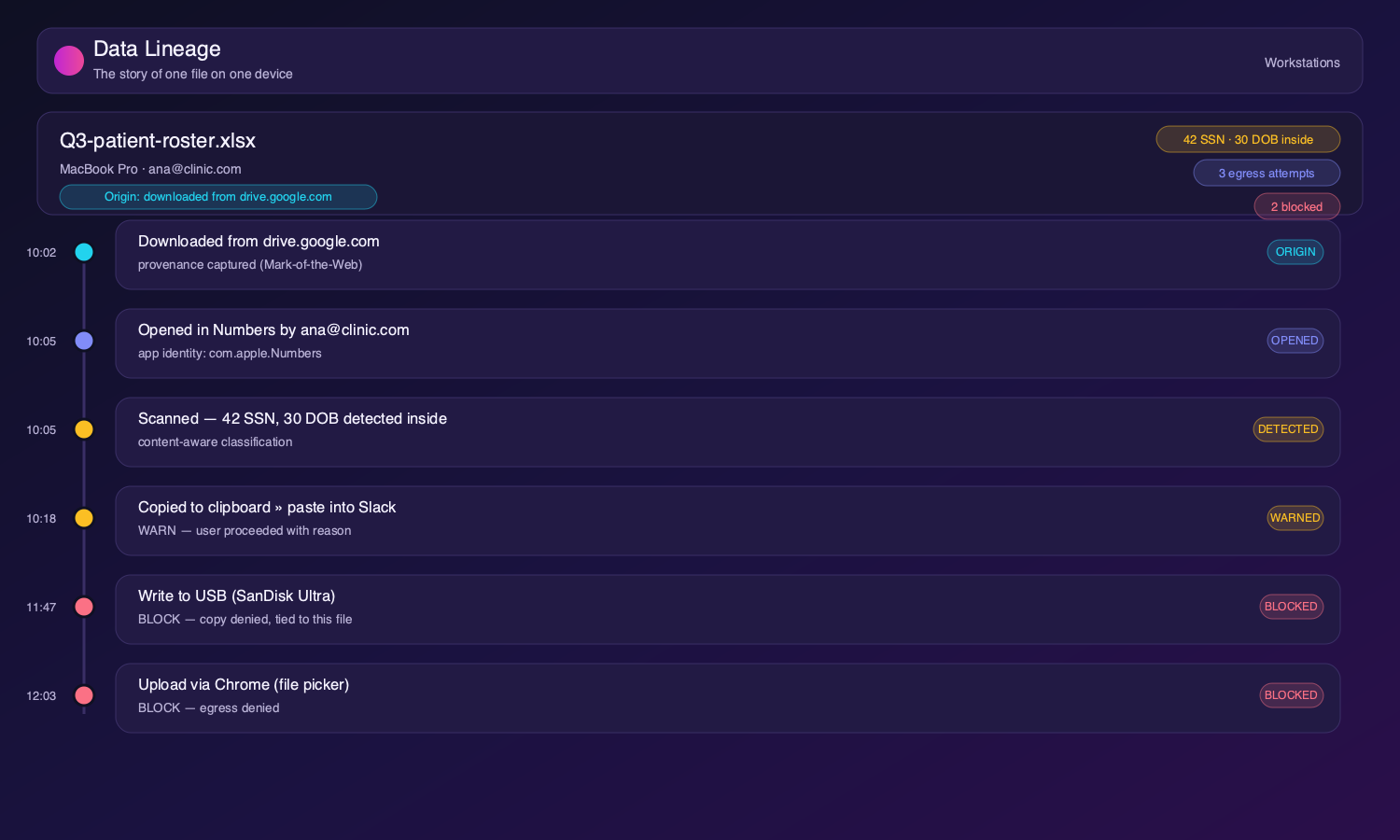
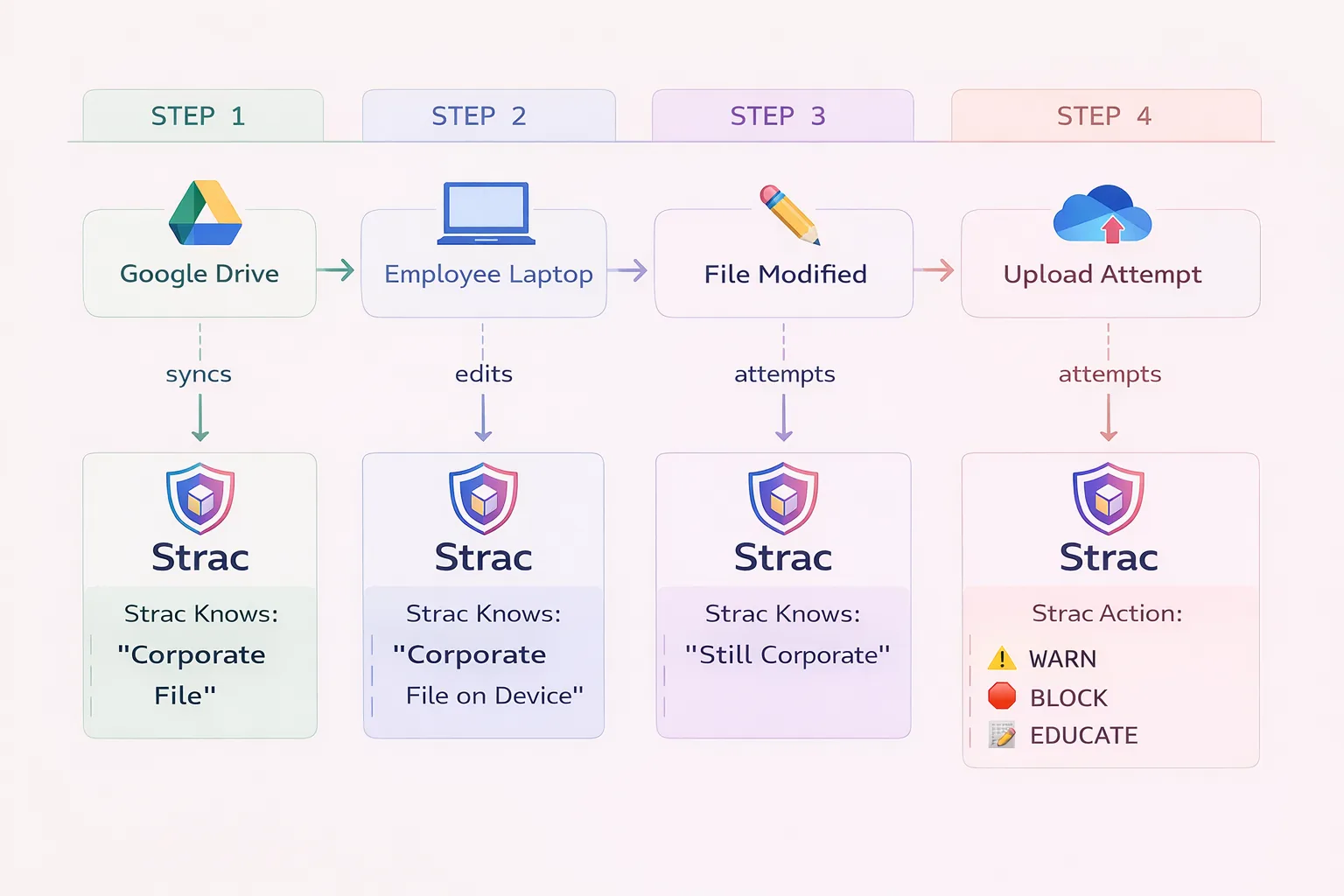
Blocking tells you a file was stopped. Data Lineage tells you the whole story of that file on the device: how it arrived (downloaded from a site, copied in from a USB drive, or already there), who opened it and in which app, what sensitive data was found inside, and every attempt to move it off the machine — and which of those were blocked. A copy written to a USB drive is tied back to the original, so it appears inside that file’s own story. That provenance turns an alert into an investigation you can actually close.
Data Lineage: one file’s full story on a device — origin, who opened it, what was inside, and every egress attempt (blocked or allowed).
✨ Beyond DLP: Shadow AI — See Every AI Tool Your Fleet Uses
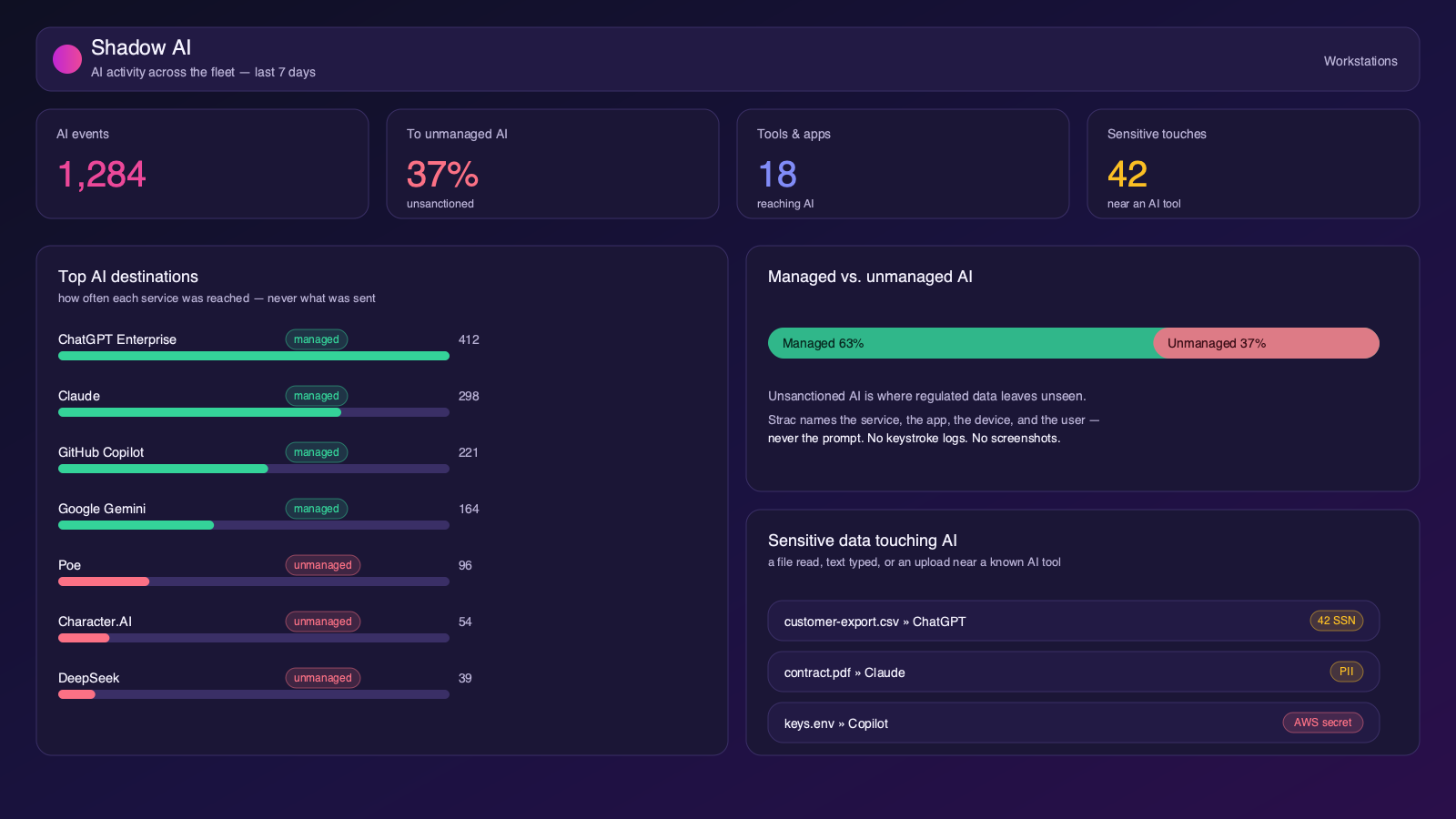
The fastest-growing endpoint risk is unsanctioned AI. Shadow AI shows which AI services your fleet reaches — in the browser and from desktop clients, plugins, and scripts — which are managed vs. unmanaged, and when sensitive data comes near an AI tool. It does this without reading a single prompt, and with no keystroke logs and no screenshots anywhere in the product — visibility, not surveillance.
Shadow AI: which AI services the fleet reaches, managed vs. unmanaged, and when sensitive data comes near a tool — never the prompt.
One Detection Engine, Mac and Windows — Same Policy as Your Cloud
Every channel is judged by the same classifiers that run across Strac’s SaaS, cloud storage, email, and MCP coverage. A data type you defined once — customer PII, PHI, PCI cardholder data, source code, a custom detector — is enforced identically whether the data leaves a laptop over USB or leaves a SaaS app through an API. The agents are lightweight, enforce policy offline, and report every action into one audit trail for SOC 2, HIPAA, PCI DSS, and GDPR. See also endpoint agent vs. agentless SaaS DLP and SaaS DLP.
🌶️ Spicy FAQs: Strac Endpoint DLP
Isn’t endpoint DLP just blocking USB ports and the clipboard? That’s the legacy version, and it’s why endpoint DLP breaks work. Strac blocks by content: the USB port stays usable, the clipboard still works — a copy is only stopped when what’s moving is actually regulated data.
Do I have to Block on day one? No. Start every channel in Audit, move noisy ones to Warn, and reserve Block for the data classes you can’t afford to lose. Mode is per-data-type per-channel.
Is “typed text” a keylogger? No. Strac classifies content — it recognizes a card number or SSN being entered into a risky destination and acts on that. It does not record keystrokes.
Does it work offline? Yes. Policy is enforced on the device; detections sync to the audit trail when connectivity returns.
✨ What a Modern DLP Endpoint Agent Does
A DLP endpoint agent is lightweight software on each device that inspects how sensitive data is used and enforces policy locally — on and off the corporate network. The Strac endpoint agent runs on Windows, macOS, and Linux and covers every channel data actually leaves through, including the one legacy agents miss: AI tools.
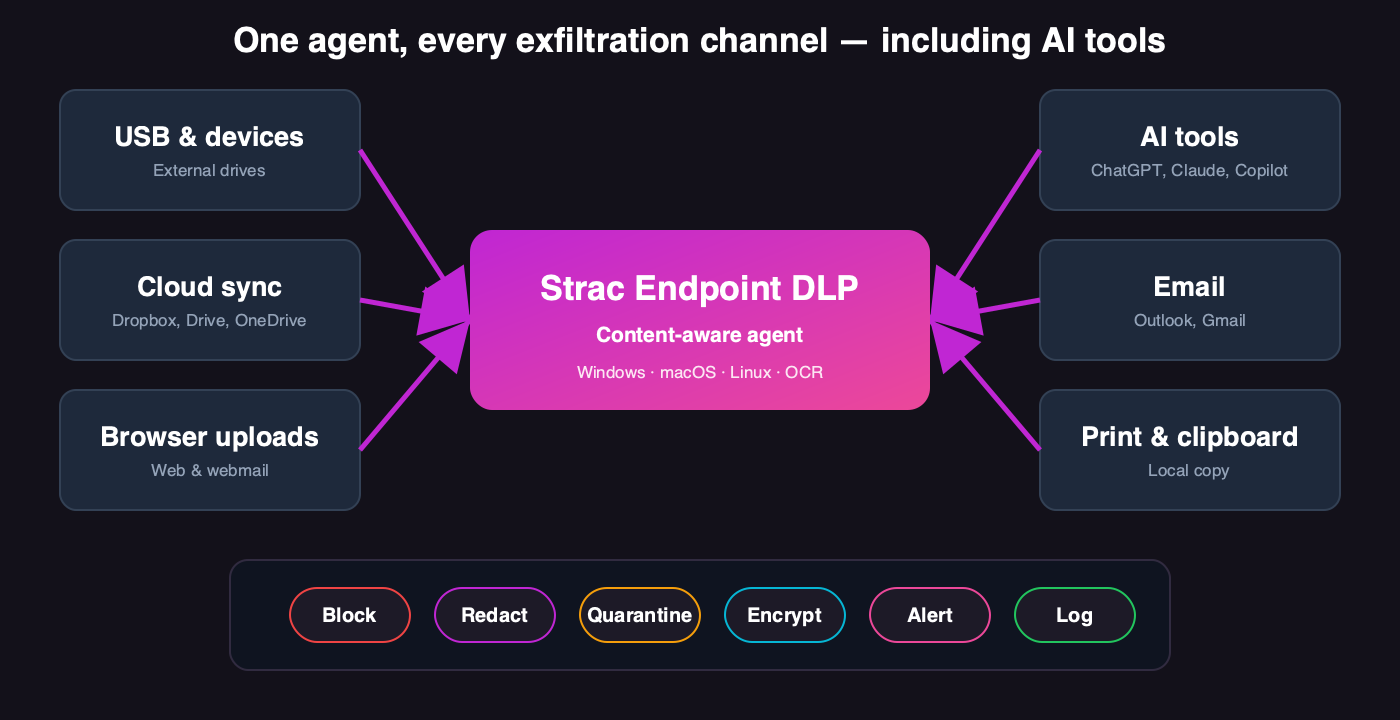
One content-aware agent across every exfiltration channel — USB and devices, cloud sync, browser uploads, email, print, and AI tools like ChatGPT and Claude.
Capability
What the Strac agent does
Platforms
Windows, macOS, and Linux from one agent and one console
Content inspection
Reads file content, not just names — with OCR for scanned docs, images, and screenshots
Device & peripheral control
USB drives, external storage, and other removable media
Cloud-sync & upload monitoring
Personal Dropbox, Google Drive, OneDrive, and browser uploads
AI-tool coverage
Desktop AI apps and prompts to ChatGPT, Claude, Gemini, and Copilot
Remediation
Block, redact, quarantine, encrypt, warn, or alert — per data class
Works offline
Enforces policy when the device is off the corporate network
Evidence
Every action logged and mapped to SOC 2, HIPAA, PCI DSS, and GDPR
The AI-tool row is what separates a 2026 endpoint agent from an agent built for the USB era. Sensitive data now leaves through a prompt as often as through a thumb drive, and a modern endpoint DLP agent has to see both.
✨ What is a DLP Endpoint Agent?
A DLP endpoint agent is a lightweight software component installed on user devices (e.g., Windows,macOS, Linux machines) to monitor, detect, and control the movement of sensitive data. It enforces security policies directly at the device level; even when the device is offline or outside corporate networks.
Think of it as your on-device data guardian.
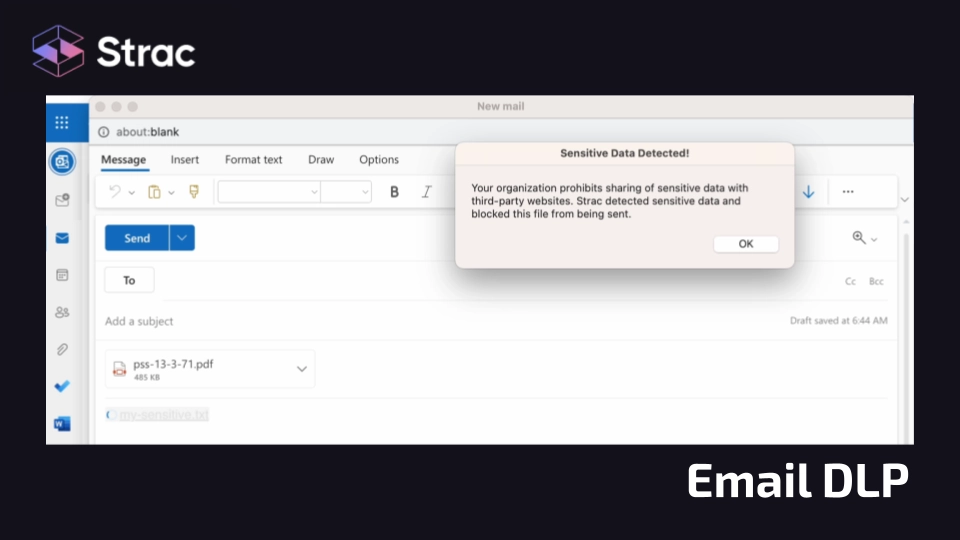
Strac Email DLP in action
It monitors activities like:
File transfers to USB drives
Copy-paste actions
Email attachments
Uploads to cloud apps
Printing of sensitive files
Real-World Example 1:
An employee attempts to copy a file containing Social Security Numbers to a personal USB drive. The DLP endpoint agent detects the data pattern and blocks the action immediately.
Real-World Example 2:
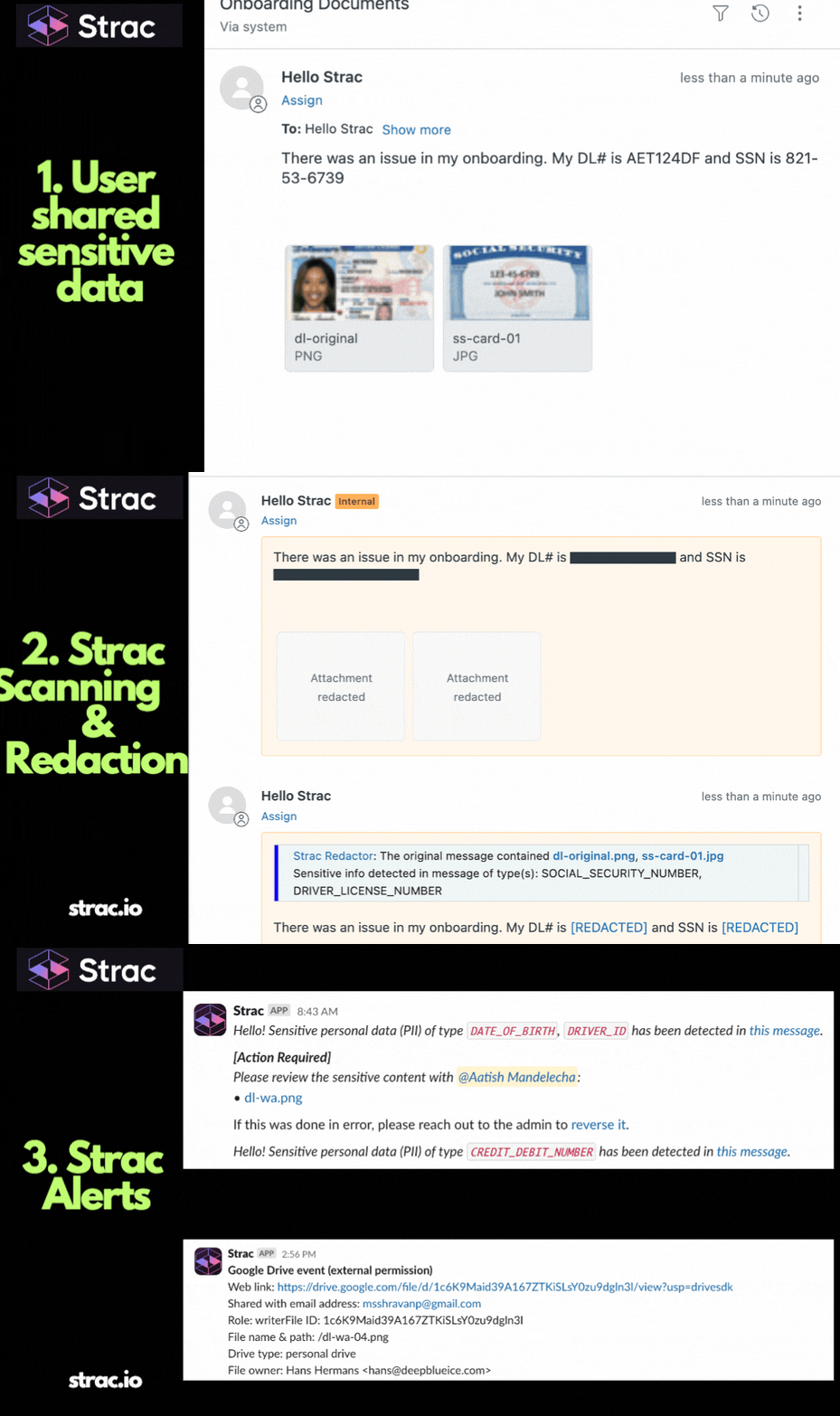
A contractor tries to email a spreadsheet with PHI (Protected Health Information) to an external recipient. The agent redacts the sensitive fields and sends an alert to the security team.
Real-World Example 3:
A developer screenshots source code and tries to upload it to ChatGPT. The endpoint DLP agent intercepts the screenshot before upload and prevents the leak.
For cross-platform coverage, check out how Strac enables endpoint protection for:
✨ What Risks or Problems Does a DLP Endpoint Agent Solve?
The endpoint is often the weakest link in your security chain; and it’s where sensitive data is most vulnerable. A DLP endpoint agent mitigates numerous data risks, including:
Insider Threats
Whether accidental or malicious, insiders can leak data through USBs, messaging apps, or uploads. Endpoint agents detect and block these actions.
Data Exfiltration During Offboarding
When employees leave, they may attempt to take confidential data with them. A DLP agent can log, alert, and prevent such exfiltration.
Shadow IT Usage
Employees using unauthorized apps (e.g., personal Gmail, Dropbox) to share sensitive files? An endpoint agent blocks uploads to unapproved domains.
Example 1:
An intern tries uploading client financial data to Google Drive — the agent flags the activity, encrypts the file, and sends an alert to the admin.
Example 2:
A disgruntled employee prints payroll documents. The DLP agent detects the pattern and disables printing functionality for sensitive data.
Example 3:
A remote worker is using a browser-based AI tool to process confidential legal documents. The agent redacts sensitive fields before submission.
🎥 What Should an Ideal DLP Endpoint Agent Include?
A good DLP endpoint agent doesn’t just scan and alert. It follows the data, understands context, and steps in when something risky actually happens. It should feel invisible to users; but very visible when there’s a real problem.
Here’s what that looks like:
Persistent file tracking Protection should follow the content itself; not just the file name or where it’s stored.
Protection after download If a corporate file is pulled down from a SaaS app to a laptop, it shouldn’t lose protection the second it leaves the cloud.
Blocking uploads to any website Whether it’s ChatGPT, personal Gmail, Google Drive, or any random site; sensitive data should be detected and stopped instantly.
Detection even if files are renamed or edited Changing the filename or tweaking the document shouldn’t be enough to bypass controls.
Policy-driven enforcement Actions should be triggered by clear, centralized policies; not constant rule rewriting.
Real-time remediation Block, redact, encrypt, or warn the user immediately; not hours later.
Cross-platform coverage Windows, macOS, Linux; because risk doesn’t live on one OS.
If an endpoint agent can’t follow the data and enforce policy in the moment, it’s not really protecting anything.
✨ Why DLP Endpoint Agents Are Critical in 2026
We don’t work behind a perimeter anymore. Sensitive data lives on laptops, inside browsers, across SaaS apps, and now inside AI tools. The endpoint is where real data movement happens.
Here’s why that matters:
Remote and hybrid work is permanent. Data moves through home networks, USB drives, personal browsers, and unsanctioned apps. If you don’t control the endpoint, you don’t control the risk.
GenAI created a new leakage vector. Employees paste contracts, source code, PHI, and payroll data into ChatGPT and Copilot every day. Traditional DLP wasn’t built for prompt streams or browser-based AI. Modern endpoint DLP must inspect, redact, or block sensitive data before it reaches AI systems; not after exposure.
👉 Read our blog on AI DLP to learn how AI DLP prevents sensitive data exposure in ChatGPT, Claude, Copilot, Gemini, and other AI applications.
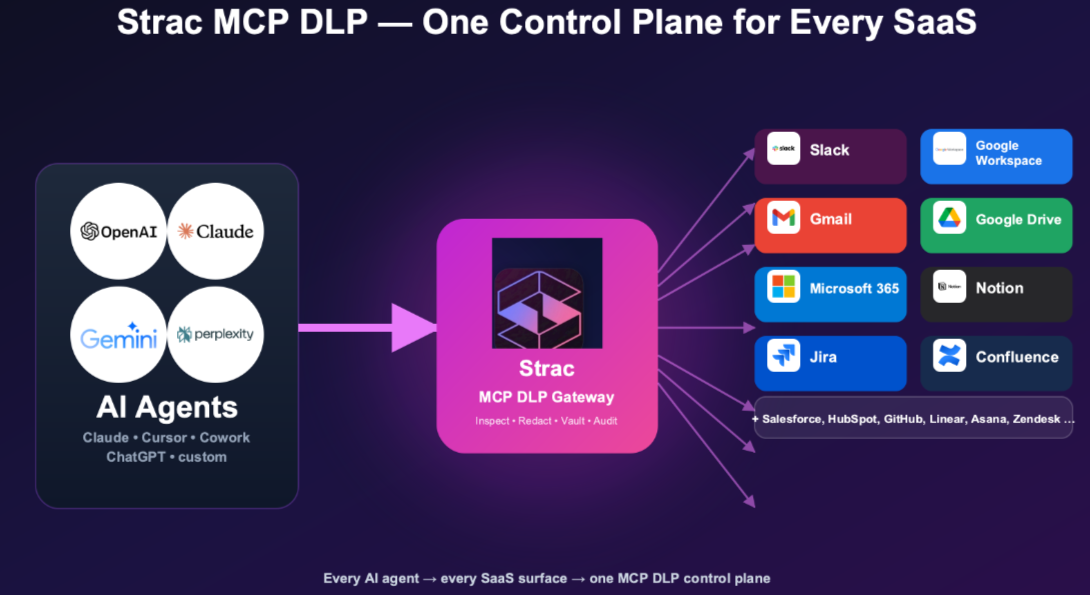
MCP is creating a new machine-to-machine leak path. Agents connected through the Model Context Protocol can pull customer records, internal docs, code, tickets, and cloud data from multiple systems in one workflow. Traditional DLP was not built for MCP tool calls, agent memory, or cross-system context sharing. Modern endpoint and AI DLP must inspect, redact, or block sensitive data before it moves through MCP-connected tools and agents.
Insider risk happens at the device level. Most leaks aren’t dramatic. They’re copy-paste, uploads, prints, screenshots. Those actions happen on the endpoint; enforcement must happen there too.
Compliance now requires enforcement and traceability. CCPA, HIPAA, PCI, and AI governance frameworks expect provable controls; not just written policies.
Blocking a file transfer isn’t enough. Security teams need to see where sensitive data originated, who accessed it, how it moved from endpoint to SaaS to AI, and whether an incident is isolated or part of a broader exposure chain.
Without endpoint enforcement and data lineage visibility; you’re not just exposed; you’re blind to how exposure spreads.
✨ Strac’s Modern Take on the DLP Endpoint Agent
Strac reimagines the traditional endpoint DLP with a powerful, cloud-native solution that combines Data Discovery, DSPM, and advanced DLP; and full data lineage visibility across endpoints and SaaS applications; all from one pane of glass.
A DLP endpoint agent is lightweight software installed on a laptop or desktop that monitors how sensitive data is used and enforces data-loss-prevention policy directly on the device — USB transfers, cloud-sync uploads, browser and AI-tool activity, printing, and clipboard — even when the device is off the corporate network. It inspects file content rather than just metadata, and remediates rather than only alerting.
Does a DLP endpoint agent cover AI tools like ChatGPT?
A modern one does. Because the agent runs on the device, it can see and control what an employee pastes or uploads into desktop AI apps and browser-based tools like ChatGPT, Claude, Gemini, and Copilot — including on personal accounts — and redact or block sensitive data before it is submitted. Agents built for the USB era generally cannot.
Is a DLP endpoint agent heavy on the device?
It should not be. A well-built agent runs with low CPU and memory overhead and stays out of the user’s way, enforcing policy in the background. Content inspection and OCR happen efficiently on-device so protection works offline without slowing the machine.
What operating systems does an endpoint DLP agent support?
The Strac endpoint agent runs on Windows, macOS, and Linux from a single console, so policy is consistent across a mixed fleet. Cross-platform coverage matters because sensitive data and the people handling it are rarely confined to one operating system.
How is an endpoint agent different from network DLP?
Network DLP inspects traffic at the perimeter; an endpoint agent acts on the device before data reaches the network. With remote work, most exfiltration — a file to USB, a sync to personal cloud, a paste into an AI tool from a home network — never crosses a network sensor, which is why the endpoint agent has become the primary control. See network vs cloud vs endpoint DLP.
Discover & Protect Data on SaaS, AI, MCP, Endpoints & Cloud
Strac provides end-to-end data loss prevention for all SaaS and Cloud apps. Integrate in under 10 minutes and experience the benefits of live DLP scanning, live redaction, and a fortified SaaS environment.


.webp)







.avif)



.gif)
