October 1, 2026

6
min read
Shadow AI Governance: Policy, Framework & Enforcement (2026)
Shadow AI governance turns "don’t use unapproved AI" into something you can see and enforce.
Shadow AI governance is the set of policies and controls that bring unsanctioned AI use under management: knowing which AI tools your workforce uses, deciding which are allowed and for what data, and enforcing those decisions where they matter. It is the difference between an AI-use policy that lives in a PDF and one that actually changes what happens on employees’ machines.
These are often confused. Model governance is about the AI systems you build or fine-tune — bias, evaluation, lineage of training data. AI-usage governance is about the AI tools your people use — which services, with what data. Shadow AI is squarely a usage problem: your employees are consumers of third-party AI, and the risk is what corporate data flows into those tools. A governance program that only covers models leaves the usage side wide open.
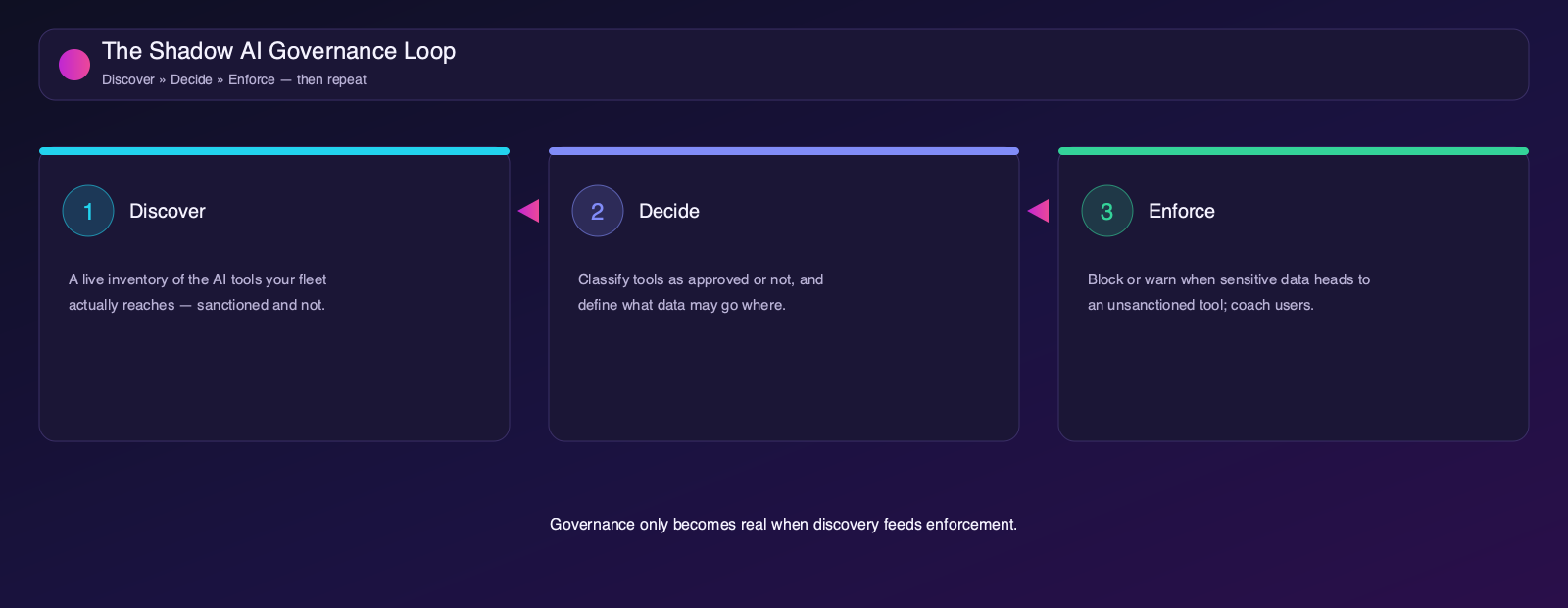
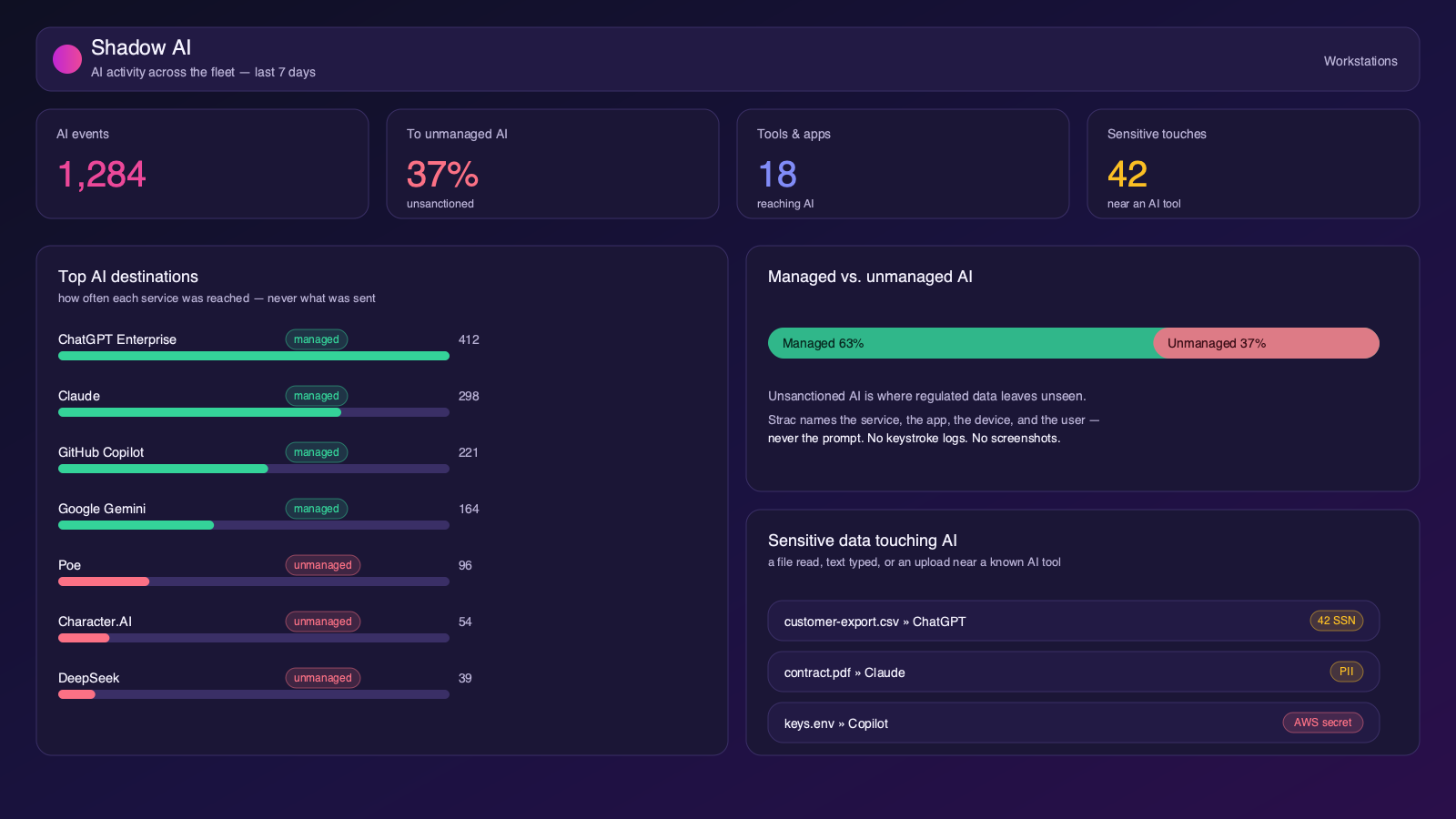
You cannot govern what you cannot see, and self-reported surveys are stale the day they’re done. Effective discovery watches the endpoint so it catches browser, desktop, and CLI AI use, names managed versus unmanaged tools, and ties each to a user and device. This inventory is the foundation everything else stands on.
With reality in view, decide. Name your sanctioned tools (for example, ChatGPT Enterprise and Claude for Work under a DPA/BAA). Define the data classes that must never reach unmanaged AI — customer PII, PHI, cardholder data, secrets, source code. Set acceptable-use expectations that people can actually follow, and an exception path so the policy bends instead of breaking.
Policy without enforcement is theater. The endpoint is where a file gets pasted into a prompt or picked into an upload, so it is where enforcement belongs. Strac blocks or warns when regulated data heads to an unsanctioned AI tool, coaches the user in the moment, and logs every action for compliance.
You don’t have to invent this from scratch. The NIST AI Risk Management Framework, ISO/IEC 42001 (AI management systems), and the EU AI Act all converge on the same operational demands: maintain an inventory of AI in use, classify its risk, and monitor it. A shadow-AI program is how you satisfy those demands on the ground rather than on paper.
Most AI-use policies are unenforceable because nobody can see the violations. Governance becomes real only when discovery feeds enforcement: you know Poe and Character.AI are in use, you know a file with PHI was picked into an upload, and the agent can act. Visibility first, enforcement second, both in one loop.
Watch Strac turn AI-usage visibility into real enforcement on sensitive data:
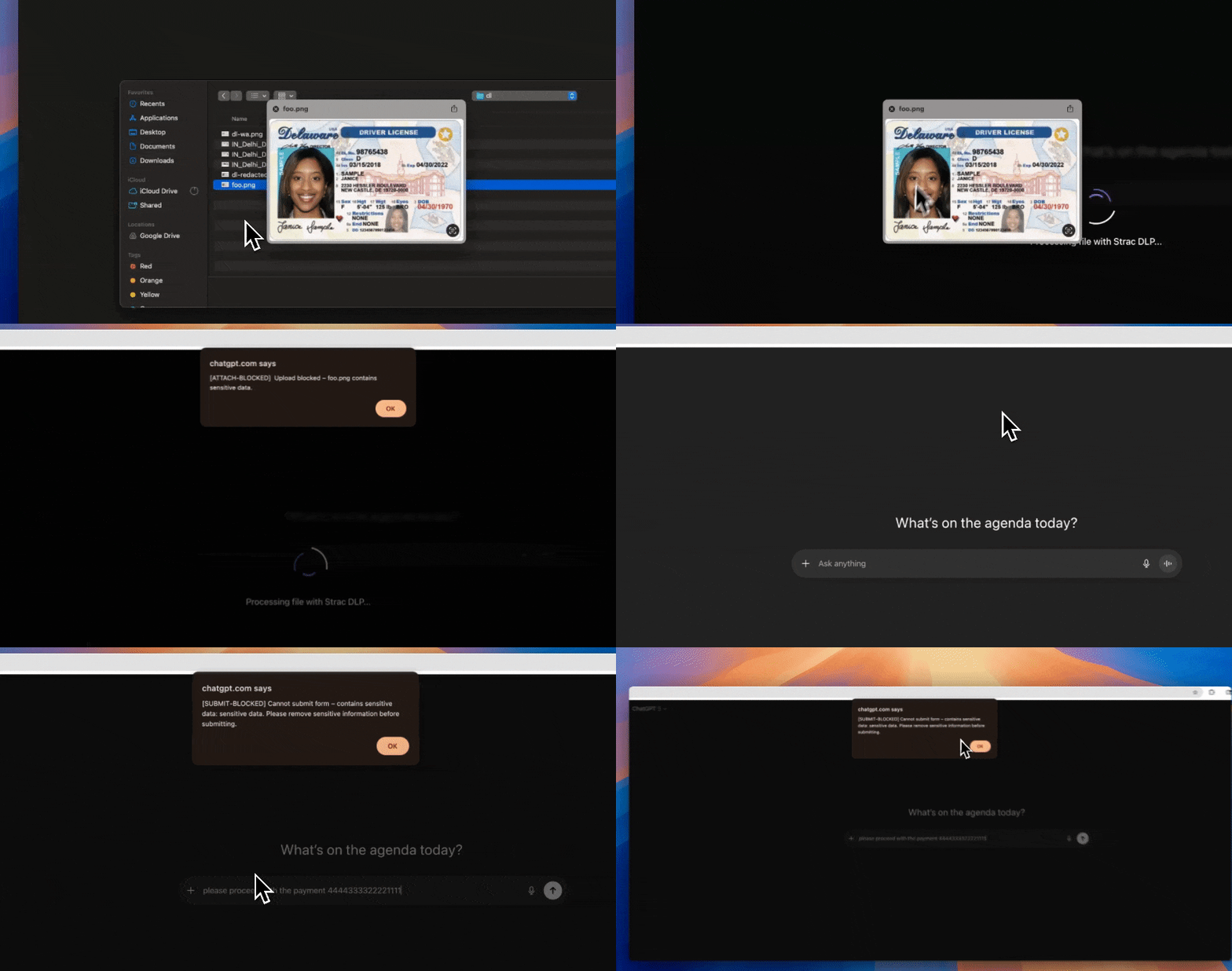
Detection tells you shadow AI is happening. DLP is what stops the leak. The moment sensitive data heads to an AI tool — pasted into a browser prompt, dragged into an upload, opened by a desktop AI app, or overshared in a file an agent can reach — Strac’s content-aware DLP remediates it in real time. This is why so many teams run Strac for web GenAI DLP: it is the remediation layer that turns “we found shadow AI” into “the data never left.”
Strac gives you the right response for each surface, set per data type:

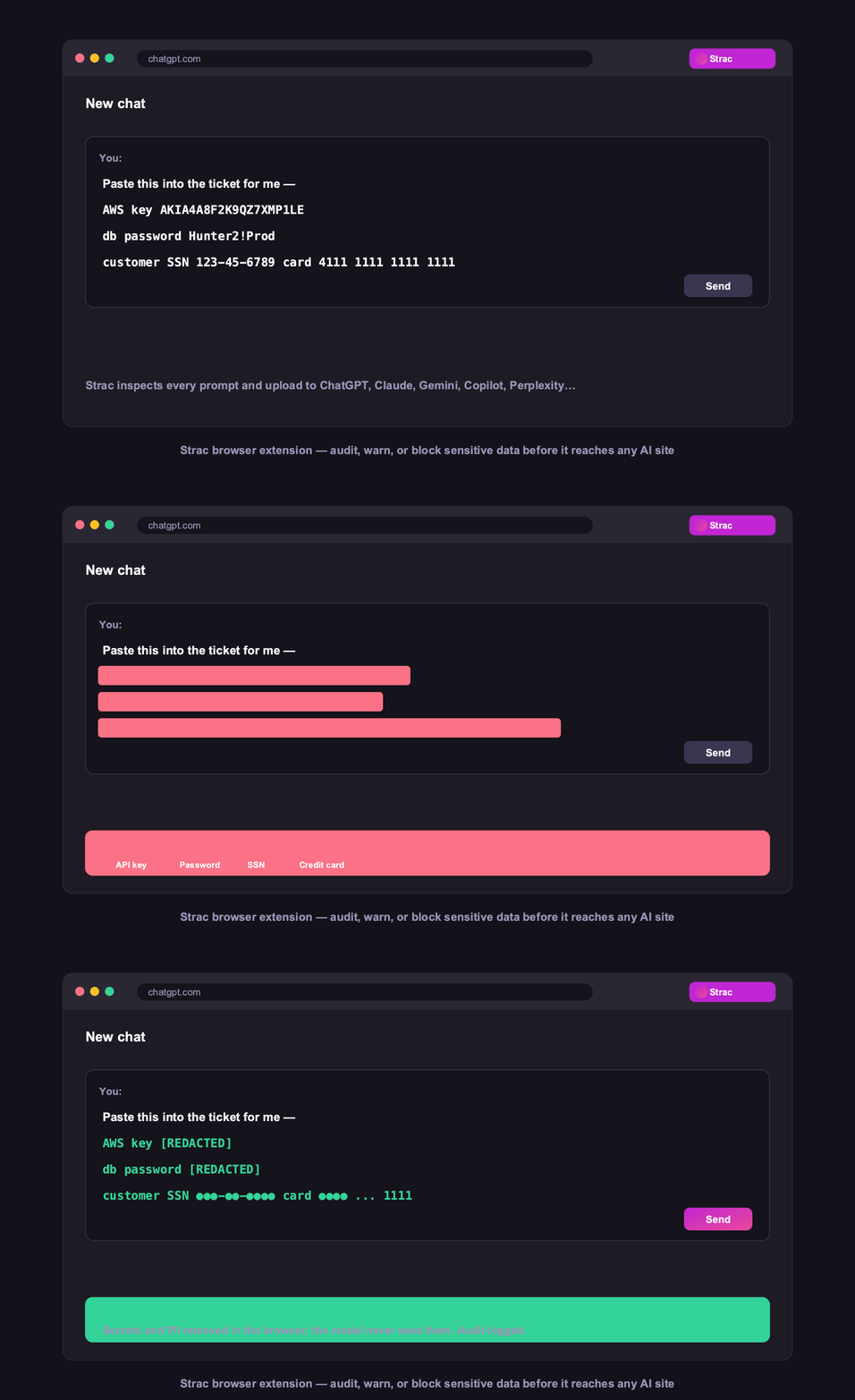

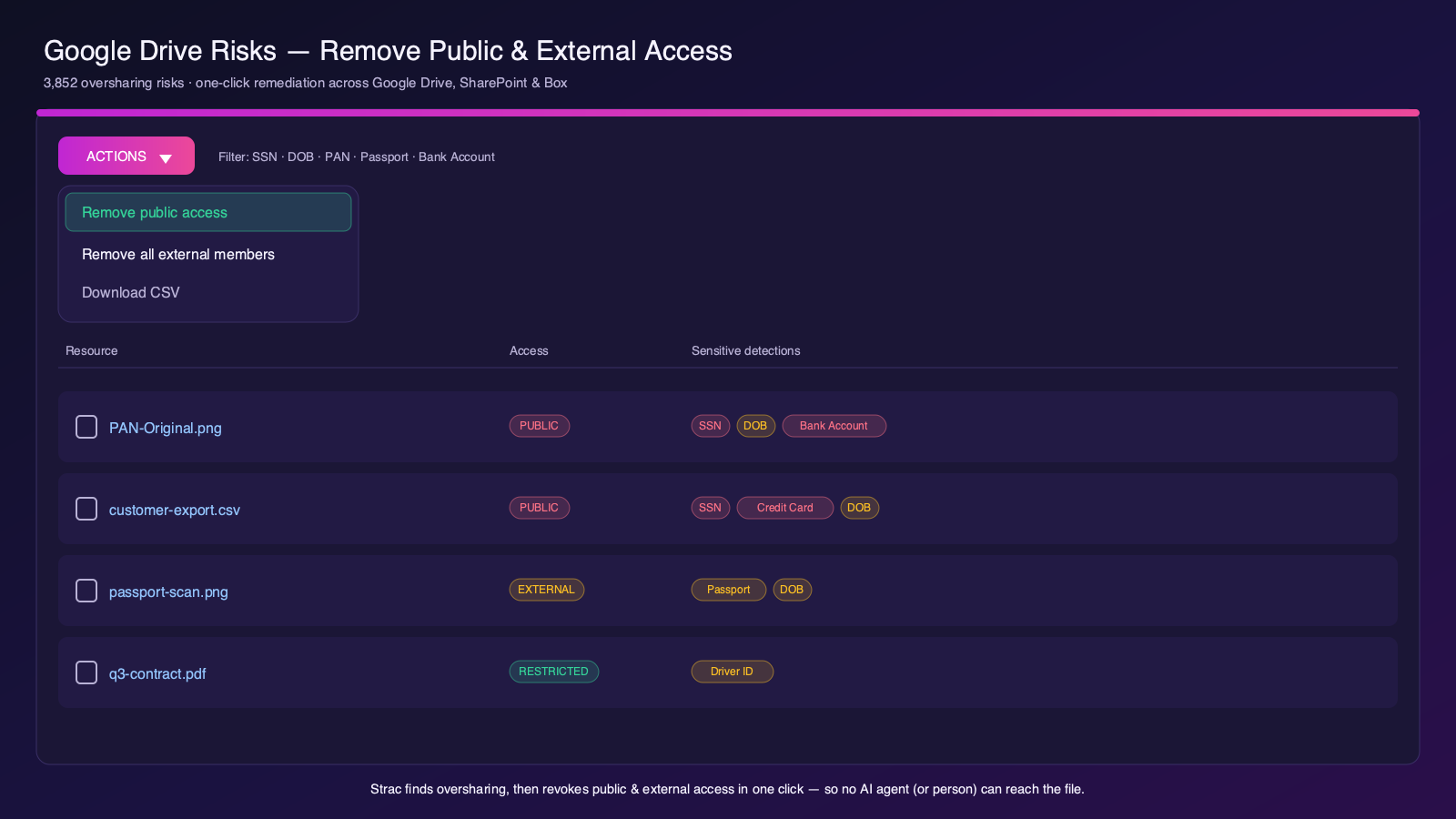
Because detection and DLP live in the same platform, you see the shadow AI and remediate the data with one policy and one audit trail — across SaaS, browser, endpoint, GenAI, and MCP.
Strac gives shadow-AI governance the visibility and enforcement it needs to be real. Start at the Shadow AI hub, or read how to detect shadow AI, how to prevent it, and AI agent governance frameworks.
Governance has to reach the laptop, not just the network — Strac’s endpoint DLP agent brings Shadow AI discovery and control to every Mac and Windows device.
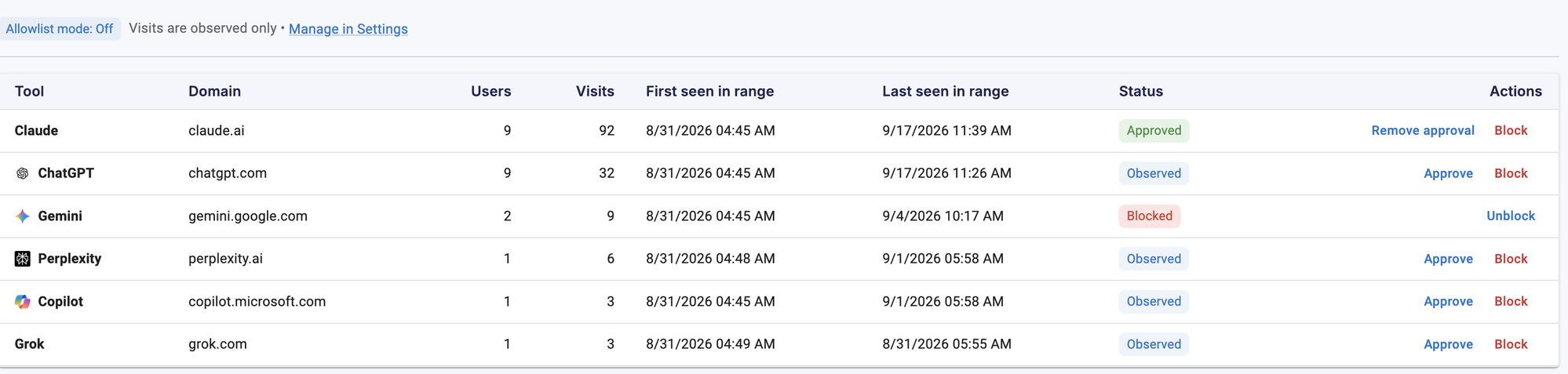
Want to block or govern a tool? See how to block ChatGPT at work and AI usage monitoring.
What is shadow AI governance? The practice of discovering unsanctioned AI use, setting a usage policy, and enforcing it — ideally at the endpoint where data actually moves toward AI tools.
How do you enforce a shadow AI policy? Feed discovery into enforcement: when sensitive data heads to an unmanaged AI tool, block or warn. Strac does this on the endpoint, staged Audit → Warn → Block, with a full audit trail.
Should we ban shadow AI? No — ban the risk, not the productivity. Provide sanctioned tools and block only sensitive data going to unsanctioned ones.
What frameworks apply to shadow AI governance? NIST AI RMF, ISO/IEC 42001, and the EU AI Act all push toward inventory, risk classification, and monitoring of AI use — exactly what a shadow-AI program provides on the ground.
What should a shadow AI policy include? Sanctioned tools, prohibited data classes for unmanaged AI, acceptable-use rules, an enforcement model (Audit/Warn/Block), and an exception process.
.avif)


.gif)


.webp)