
Cart(
0
)
No items found.
Product is not available in this quantity.



.webp)


.avif)
.webp)
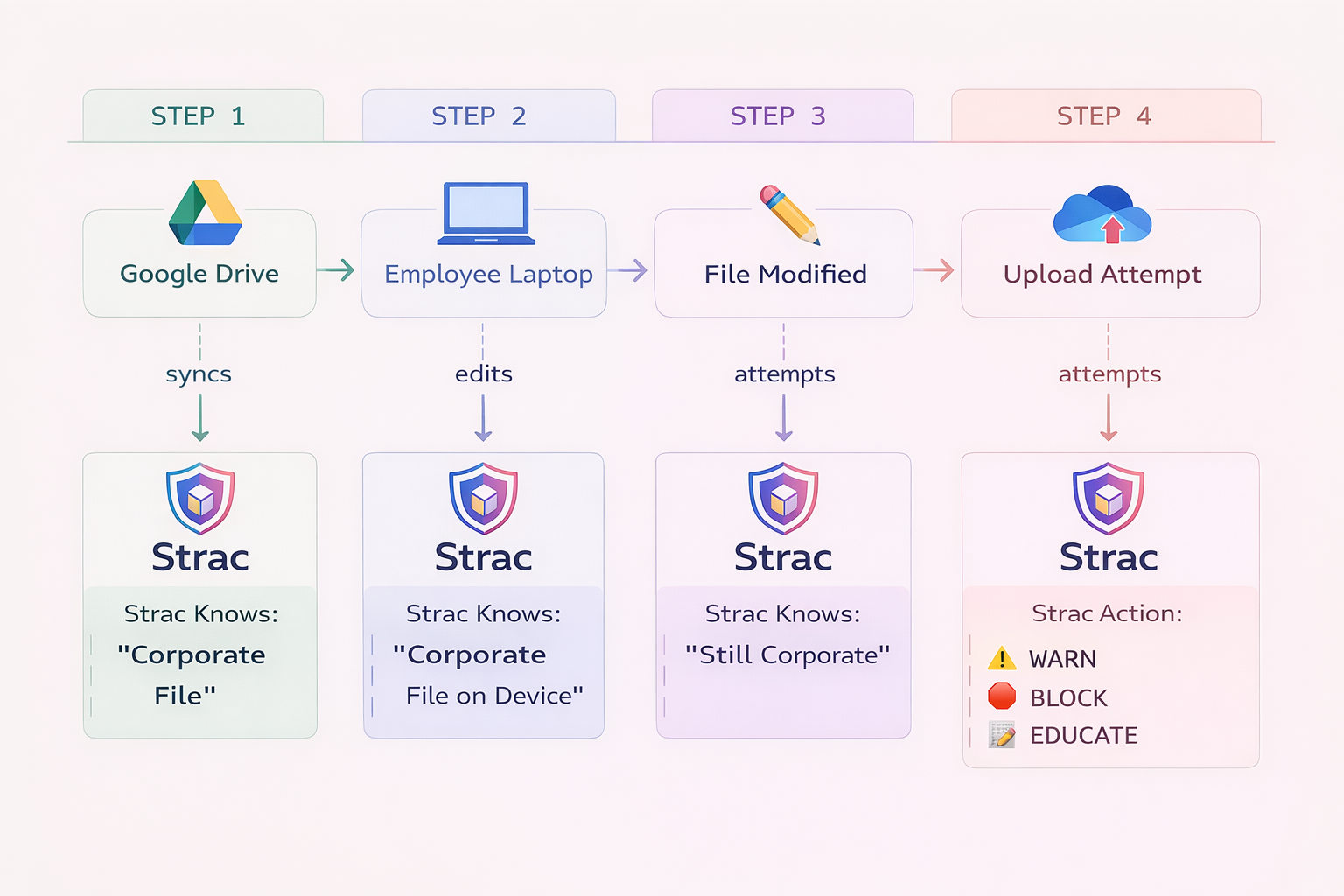
Endpoint DLP (Data Loss Prevention) security protects sensitive data directly on employee devices like laptops and desktops. It monitors how files and data move across endpoints — including USB drives, browsers, desktop apps, cloud uploads, and AI tools — and prevents unauthorized exfiltration of sensitive information such as PII, PHI, source code, and customer data.
Modern Endpoint DLP goes beyond just blocking file copies. It includes real-time detection, historical scanning of existing files, visibility into which applications accessed a file, and enforcement across browsers and GenAI tools. Strac’s Endpoint DLP extends traditional endpoint protection by combining endpoint agents with browser and GenAI DLP, so sensitive data is protected even when users upload content to tools like ChatGPT or Gemini.
Traditional Endpoint DLP tools were built for a world where data lived mostly on laptops and moved via USB or email. That world is gone.
Today, most data exfiltration happens through:
Agent-only Endpoint DLP can’t reliably see or control these modern exfiltration paths. Even worse, many legacy tools still rely on brittle regex rules, creating massive false positives and alert fatigue.
Strac’s approach combines:
This ensures Endpoint DLP protection works in the real world — where users copy-paste into AI tools, drag files into browsers, and sync data to cloud apps.
Modern Endpoint DLP works in two modes:
1) Real-time protection
Strac monitors file access, uploads, copy-paste events, and browser activity in real time. If sensitive data is detected during a risky action (e.g., uploading to ChatGPT or personal cloud storage), Strac can alert, redact, or block the action instantly.
2) Historical discovery & remediation
Strac also scans existing files on endpoints to discover sensitive data already sitting on laptops. This helps security teams answer:
This dual approach ensures Endpoint DLP is not just reactive, but also proactive in reducing long-term data exposure.
Strac provides deep Endpoint DLP protection for Windows devices, covering:
This allows security teams to prevent data leaks even when employees use unmanaged apps or personal accounts on corporate Windows laptops.
Learn more about Windows Endpoint DLP:
👉 https://www.strac.io/integration/windows-dlp
Strac’s macOS Endpoint DLP protects sensitive data on MacBooks used by engineers, executives, and go-to-market teams. It provides:
This ensures sensitive data stays protected even when users copy files into SaaS apps or AI tools from macOS devices.
Learn more about macOS Endpoint DLP:
👉 https://www.strac.io/mac-data-loss-prevention
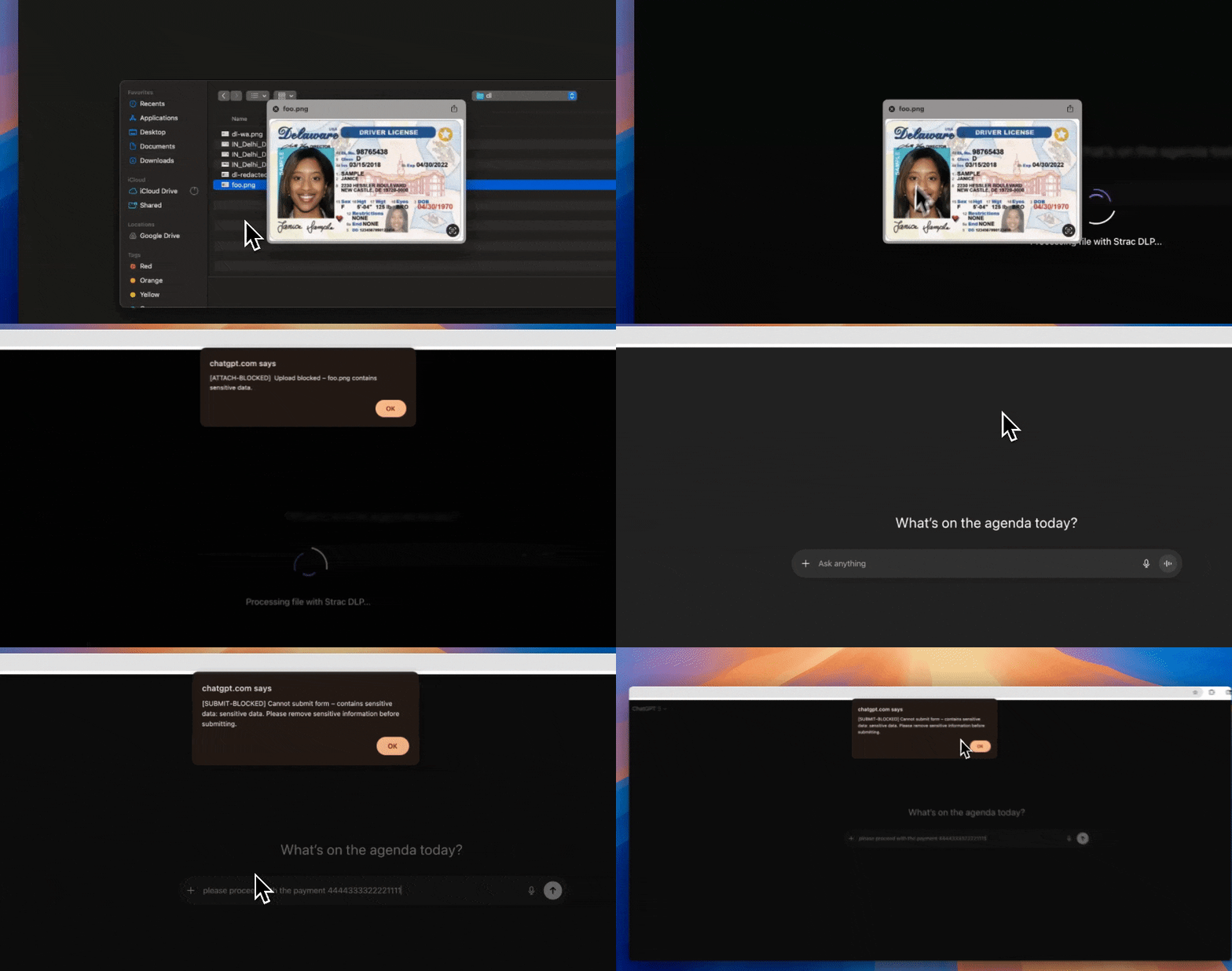
The biggest blind spot in Endpoint DLP today is GenAI.
Employees increasingly paste sensitive data into:
Strac’s Endpoint DLP integrates directly with browser-based DLP to inspect prompts, file uploads, and responses flowing into GenAI tools. This allows organizations to:
This bridges the gap between Endpoint DLP and GenAI governance — a critical requirement for modern enterprises rolling out AI at scale.
You can learn more about how Strac secures GenAI workflows here:
👉 https://www.strac.io/integration/chatgpt-dlp
Most Endpoint DLP tools can tell you that a file was uploaded. Very few can tell you where that file came from.
Strac’s Data Lineage for Endpoint DLP tracks:
This lineage view helps security teams answer questions like:
“This sensitive snippet was pasted into ChatGPT — which original file did it come from?”
This context dramatically improves investigations, insider risk detection, and compliance reporting.
Learn more about Data Lineage:
👉 https://www.strac.io/data-lineage-dlp
Endpoint DLP, Network DLP, and SaaS DLP solve different parts of the data protection problem:
In a remote, cloud-first world, Endpoint DLP alone is not sufficient. Users work outside corporate networks and move data directly from endpoints into SaaS apps and AI tools. Strac combines Endpoint DLP with SaaS and Browser DLP to provide end-to-end data protection across the entire data flow lifecycle.
Strac’s Endpoint DLP architecture combines:
This unified architecture allows Strac to enforce consistent policies across Windows, macOS, browsers, and GenAI tools — without relying solely on brittle endpoint-only enforcement.
Common Endpoint DLP use cases include:
Endpoint DLP is especially critical for companies in healthcare, fintech, SaaS, and AI-native organizations where sensitive data routinely touches employee endpoints.
When evaluating Endpoint DLP solutions, look for:
If your Endpoint DLP vendor can’t see GenAI uploads or browser-based exfiltration, it’s already outdated.
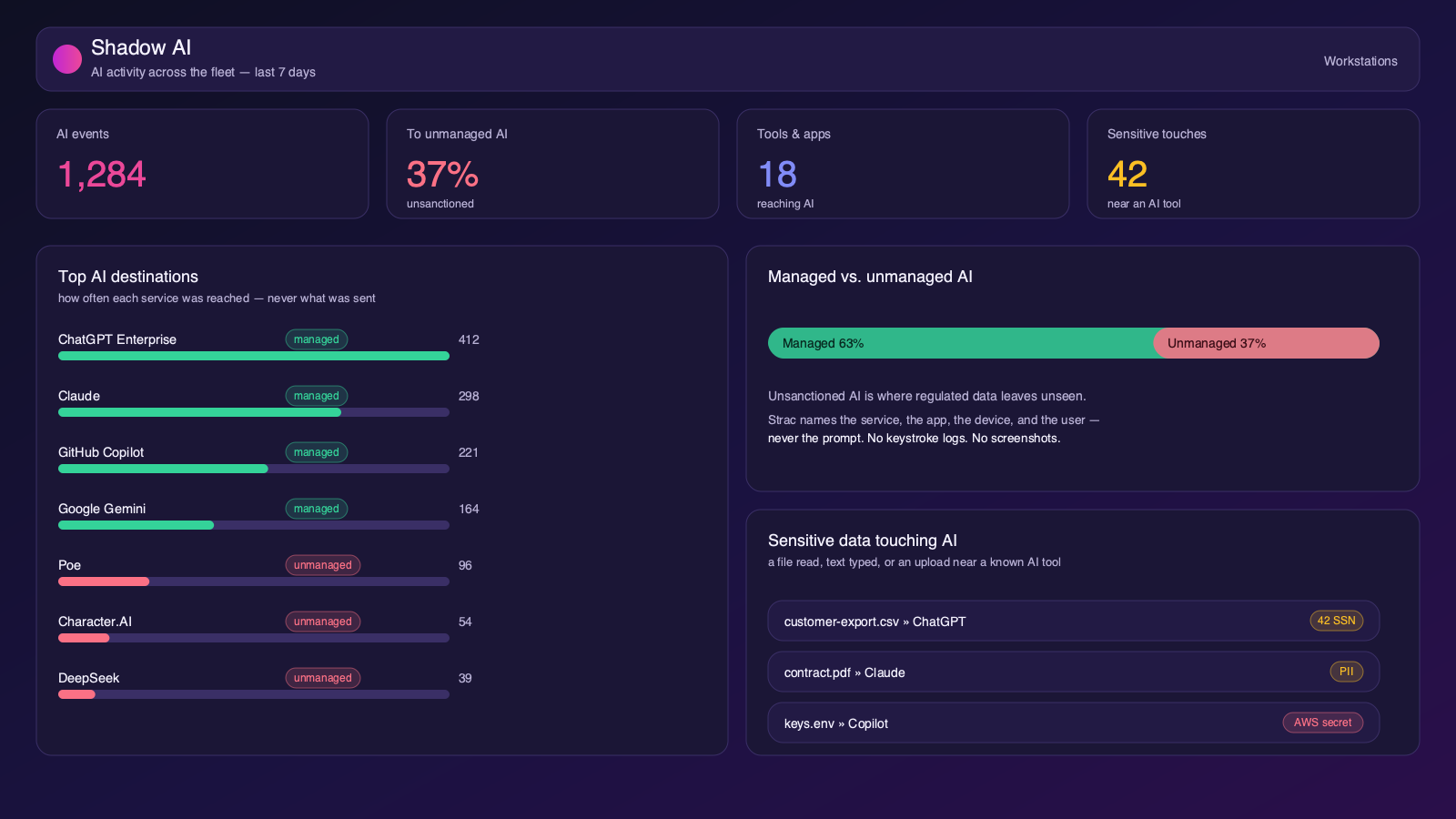
Yes. Strac's endpoint agent discovers unsanctioned AI tools (ChatGPT, Claude, Gemini, Copilot) on Mac and Windows, scores the data risk of each, and governs what flows into them — no keystroke logging or screenshots. See how to detect Shadow AI.
No. It's privacy-first Shadow AI monitoring: it identifies which AI tools are used and the data at risk from content and metadata, never by recording the screen or logging keystrokes.
ChatGPT, Claude, Gemini, Microsoft Copilot, coding/agent tools, and any browser-based GenAI — each ranked by data sensitivity. Endpoint discovery is part of Strac's broader AI data governance across GenAI, SaaS, and MCP.
How is Strac different from Microsoft Purview Endpoint DLP?
Purview focuses heavily on Microsoft 365 workflows. It has limited visibility into non-Microsoft SaaS apps, browser-based uploads to personal accounts, and GenAI tools. Strac covers these gaps with broader endpoint + browser + GenAI coverage.
How is Strac different from Forcepoint or legacy Endpoint DLP tools?
Legacy Endpoint DLP tools were built for USB and email-era threats. Strac is built for modern data flows involving SaaS, browsers, and AI tools — with contextual ML and lineage rather than brittle regex-only enforcement.


.webp)
.webp)
.webp)
.webp)
.webp)

.webp)
Hear from companies who leveraged Strac to secure and accelerate their business


