TISAX Certification: Labels, Levels, Cost and Timeline
A practical TISAX certification guide: the AL1, AL2 and AL3 assessment levels, what the VDA ISA catalogue covers, the ENX process end to end, realistic timelines and what it costs.
TISAX is run by the ENX Association and assesses you against the VDA ISA catalogue, which covers information security, data protection and prototype protection.
AL1 is a self-assessment and produces no label. Only AL2 (remote) and AL3 (on-site) give you something an OEM accepts. AL2 carries about 65% of active labels.
Labels last three years and are shared through the ENX portal rather than handed out as certificates.
12 to 18 months from nothing, 3 to 6 months on an ISO 27001 foundation.
Roughly EUR 15,000 to 80,000 for a single-site SME, most of it the management system rather than the audit.
AL1 produces no label at all, which is the single most common misreading of a customer's request.
What TISAX actually is
TISAX stands for Trusted Information Security Assessment Exchange. The word doing the work in that name is "exchange". It is not only a set of security requirements, it is a mechanism for a small number of very large manufacturers to check the security posture of a very large number of suppliers without drowning in paperwork.
The ENX Association administers it. You are assessed against the VDA ISA catalogue by an accredited audit provider, and the result is a label recorded in the ENX portal. Your customer looks you up there. You do not email them a certificate, which is a real structural difference from TISAX vs ISO 27001 and the reason the two are not interchangeable even where their requirements overlap.
✨ The three assessment levels, and which one you actually need
This is where most confusion starts, because "we need TISAX" is an incomplete sentence. TISAX has levels, and one of them does not produce a label at all.
Level
How it is assessed
Produces a label?
When it applies
AL1
Pure self-assessment, no external party
No
Internal use and low protection needs. If an OEM asked for TISAX, this is not what they meant.
AL2
Remote assessment by an accredited provider, largely interview and document review
Yes
The industry standard. Roughly 65% of all active labels sit here, and it is the usual answer for information with high protection needs.
AL3
Full on-site assessment
Yes
Very high protection needs. In practice this is prototypes and unreleased designs, where someone has to physically verify the room.
If you take one thing from this page: confirm the assessment level and the assessment objectives your customer requires before you spend anything. AL2 and AL3 are materially different projects, and prototype protection at AL3 involves physical controls that no software will give you.
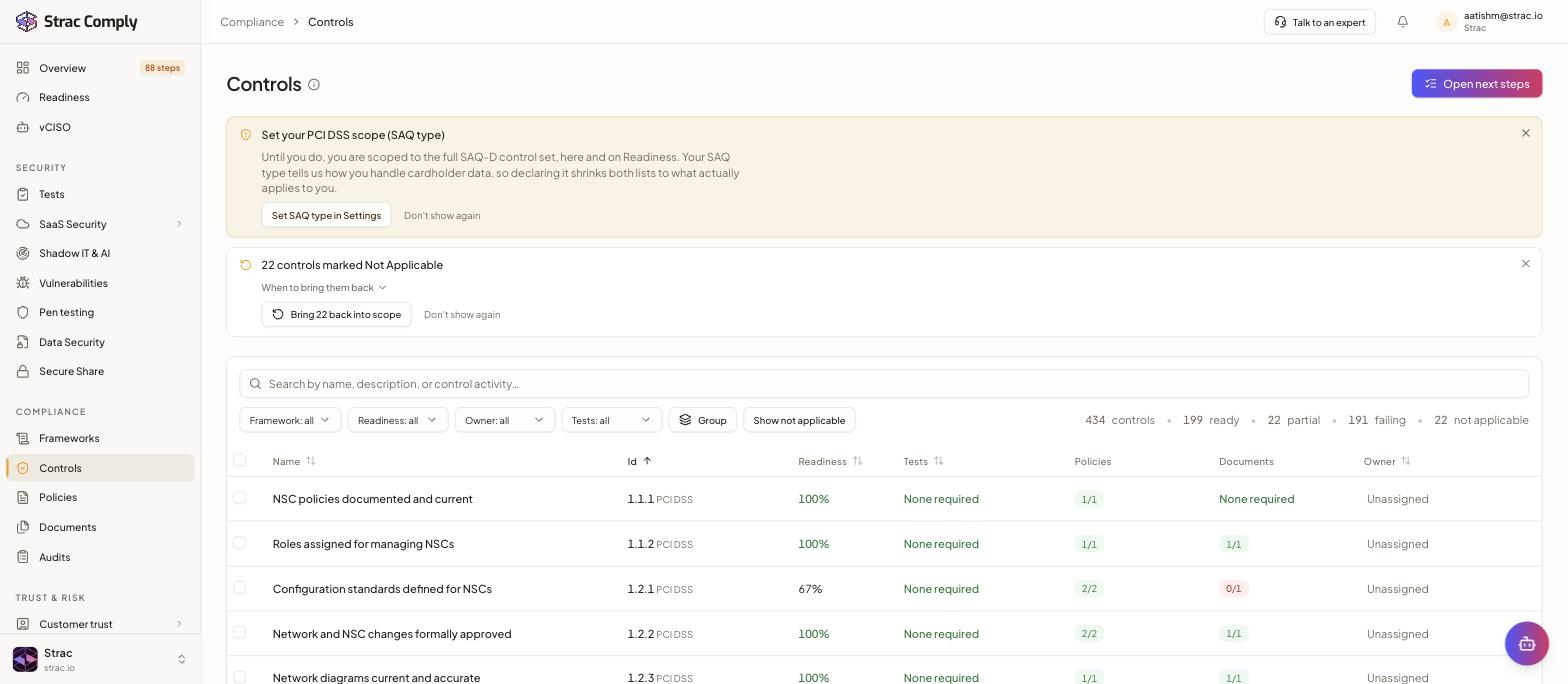
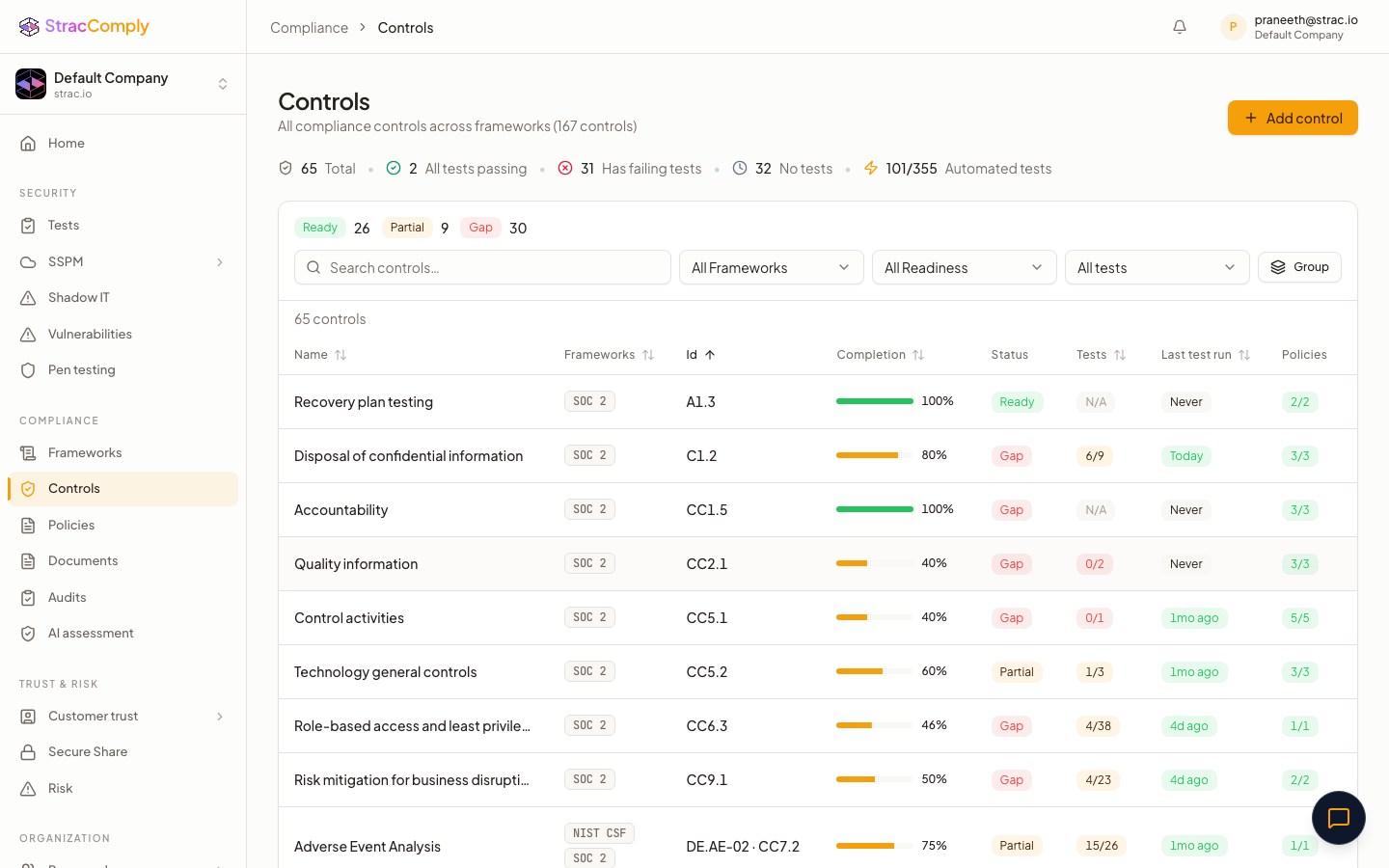
Each control carries an owner and a completion state, which is what an assessor asks for.
✨ What the VDA ISA catalogue covers
Three areas, and the balance between them is the thing to understand early.
Information security. Built on ISO 27001 Annex A and sharing the majority of its controls. If you have an ISMS, you have most of this already, and the work is mapping rather than building.
Data protection. A dedicated module with its own assessment objectives. ISO 27001 treats personal data as one more asset class; the VDA ISA treats it as its own regime. Companies arriving from ISO 27001 often find their first real gap here.
Prototype protection. The genuinely automotive part, and the part with no equivalent anywhere else. Physical security for unreleased vehicles and components, controls on photography, visitor management, shielded areas. This is why AL3 exists and why it is on-site.
Controls mapped to criteria and backed by live evidence, which is the shape a VDA ISA objective needs too.
✨ The process, end to end
The sequence is fixed and there is not much room to be clever about it.
Stage
What happens
Typical duration
Scope and register
Decide which locations and which assessment objectives are in scope, then register with ENX. Registration is charged per location.
Days, once scope is decided
Prepare
Close the gaps against the VDA ISA catalogue. This is the whole project if you have no management system, and a mapping exercise if you do.
1 to 3 months, or far longer from nothing
Self-assessment
Complete the VDA ISA questionnaire honestly. Inflating it here is counterproductive, because the assessment tests it.
Weeks
Assessment
An accredited audit provider assesses you at AL2 remotely or AL3 on-site.
2 to 4 months
Label issued
The result is published to the ENX portal and shared with the customers you nominate.
2 to 4 weeks
Total: 12 to 18 months with no existing management system, 3 to 6 with ISO 27001 already running. That gap is the single largest lever you have on this project, and it is why the sequencing advice in TISAX vs ISO 27001 matters more than any tooling decision.
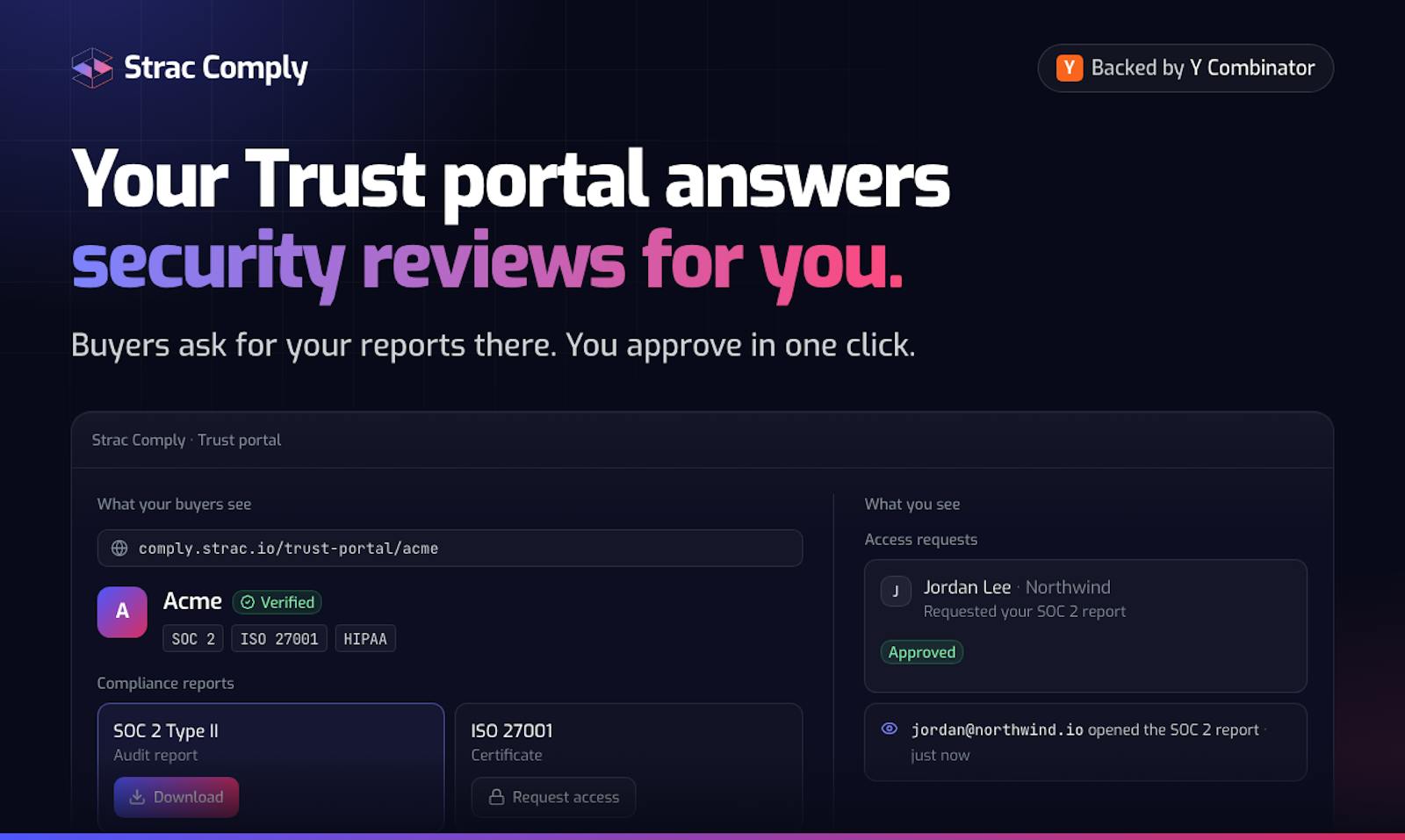
A trust portal does for your certificates what the ENX portal does for a TISAX label: it lets the customer check without emailing you.
What it costs
Cost component
Typical range
Notes
ENX registration
EUR 400 to 500 per location
Per location, so multi-site scope multiplies this and everything downstream.
Assessment provider (AL2/AL3)
EUR 3,500 to 10,500
AL3 sits at the top of the range because someone travels to you.
Building the management system
EUR 8,000 to 40,000
The dominant cost, and the one an existing ISO 27001 programme has already absorbed.
Tooling and internal time
EUR 3,000 to 20,000
Easy to under-count. Someone has to own this alongside their day job.
Single-site SME, all in
EUR 15,000 to 80,000
The spread is mostly about whether you are starting from a management system or from nothing.
The shape of that table is the argument for doing ISO 27001 first. The audit is a small line item. The management system is the project.
Where companies with an ISMS still get caught
Arriving from ISO 27001 is a strong position, not a finished one. The gaps cluster in three places, every time.
Prototype protection, because nothing in ISO 27001 prepares you for it and it is often physical rather than procedural. The data protection module, because it is assessed on its own terms rather than as a subset of information security. And scope, because ISO 27001 scope statements are written for a certificate while TISAX scope is written per location against specific assessment objectives, and the two rarely line up without work.
✨ Running a TISAX programme on Strac Comply
Strac Comply supports TISAX, and it supports the ISO 27001 management system underneath it on the same platform. Frameworks are mapped onto one control set rather than maintained as separate silos, which is what makes the VDA ISA overlap useful instead of theoretical.
In practice that changes the cost table above. The assessment provider fee is fixed and small. The dominant line is building and running the management system, and that is the line a shared control set with automated evidence collection actually moves.
Controls carry named owners and completion states, tests run continuously rather than in the fortnight before an assessment, and the AI Evidence Agent captures the proof that normally has to be screenshotted by hand. Plans start at $4,995 a year.
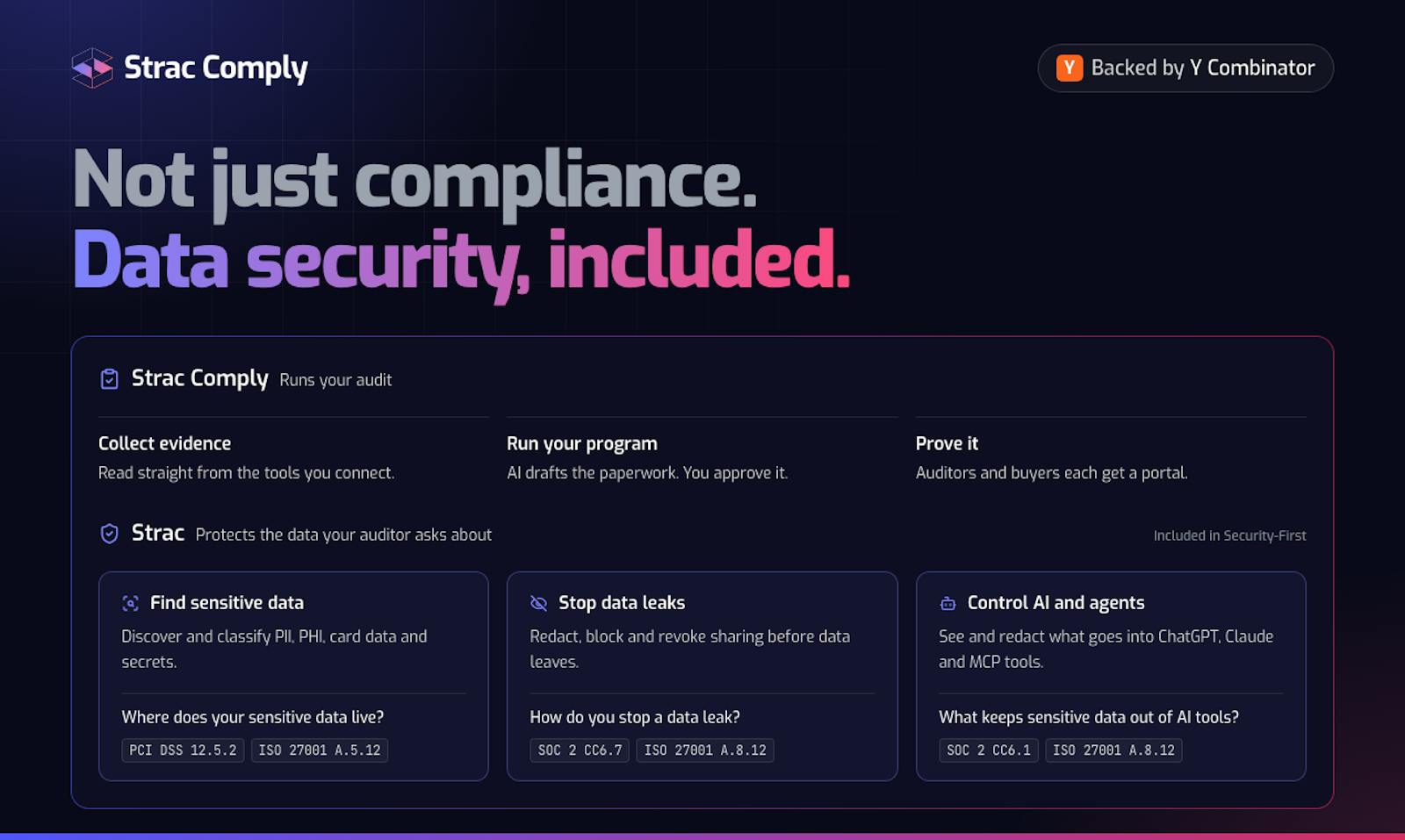
Data security sits inside the same platform, so where the data lives is part of the evidence.
🎥 Watch Strac Comply skip the sales call
The same platform, the same control set, no demo gatekeeping before you can see it work.
🌶️ Spicy FAQs on TISAX certification
What is TISAX in one sentence?
TISAX is the automotive industry's shared mechanism for assessing information security at suppliers, run by the ENX Association, where the result is a label published to a central portal that your automotive customers can look up rather than a certificate you send them.
What are the TISAX assessment levels?
Three. AL1 is a pure self-assessment and produces no label, so it is not what an OEM means when they ask for TISAX. AL2 is a remote assessment and is the industry standard, carrying roughly 65% of all active labels. AL3 is a full on-site assessment, used where protection needs are high, typically anything involving physical prototypes.
How long is a TISAX label valid?
Three years from the completion of the assessment, for both AL2 and AL3. There is no annual surveillance audit in between the way ISO 27001 has, which is a genuine difference in ongoing effort.
How long does TISAX take to achieve?
From a standing start with no management system, 12 to 18 months is realistic. With an ISO 27001 ISMS already running, 3 to 6 months. Within that, preparation is 1 to 3 months, the assessment phase 2 to 4 months, and label issuance a further 2 to 4 weeks.
How much does TISAX cost?
For a single-site small or mid-size company, roughly EUR 15,000 to 80,000 all in. ENX registration is EUR 400 to 500 per location, the AL2 or AL3 assessment provider charges EUR 3,500 to 10,500, and the remainder is building the management system plus tooling and internal time. The management system is the dominant cost.
Can I do TISAX myself without an audit provider?
No, not if you need a label. You can complete the VDA ISA self-assessment alone, and that is AL1, which yields no label in the ENX portal. Every label an OEM accepts comes from an accredited audit provider at AL2 or AL3.
What does the VDA ISA catalogue cover?
Three areas: information security, data protection, and prototype protection. The information security part is built on ISO 27001 Annex A and will look familiar to anyone who has done that standard. The other two are automotive-specific and are where companies with an existing ISMS find their real gaps.
Do I need TISAX for every site?
Labels are scoped to locations, and ENX registration is charged per location, so a multi-site operation is a materially larger project than a single office. Scope the locations that actually handle the OEM's information before you register, because getting that wrong is expensive to unwind.
Customer story
“Don’t just alert on problems, fix them.”
Scott Roberts, Chief Information Security Officer, UiPath
TISAX is the automotive industry's shared mechanism for assessing information security at suppliers, run by the ENX Association, where the result is a label published to a central portal that your automotive customers can look up rather than a certificate you send them.
What are the TISAX assessment levels?
Three. AL1 is a pure self-assessment and produces no label, so it is not what an OEM means when they ask for TISAX. AL2 is a remote assessment and is the industry standard, carrying roughly 65% of all active labels. AL3 is a full on-site assessment, used where protection needs are high, typically anything involving physical prototypes.
How long is a TISAX label valid?
Three years from the completion of the assessment, for both AL2 and AL3. There is no annual surveillance audit in between the way ISO 27001 has, which is a genuine difference in ongoing effort.
How long does TISAX take to achieve?
From a standing start with no management system, 12 to 18 months is realistic. With an ISO 27001 ISMS already running, 3 to 6 months. Within that, preparation is 1 to 3 months, the assessment phase 2 to 4 months, and label issuance a further 2 to 4 weeks.
How much does TISAX cost?
For a single-site small or mid-size company, roughly EUR 15,000 to 80,000 all in. ENX registration is EUR 400 to 500 per location, the AL2 or AL3 assessment provider charges EUR 3,500 to 10,500, and the remainder is building the management system plus tooling and internal time. The management system is the dominant cost.
Discover & Protect Data on SaaS, AI, MCP, Endpoints & Cloud
Strac provides end-to-end data loss prevention for all SaaS and Cloud apps. Integrate in under 10 minutes and experience the benefits of live DLP scanning, live redaction, and a fortified SaaS environment.