Top Endpoint Monitoring Tools: Data-Aware & AI Coverage (2026)
Endpoint monitoring in 2026: monitor sensitive-file movement across USB, cloud sync, and AI tools with data lineage — and remediate in the moment, not just alert.
Endpoint monitoring tools help organizations monitor device activity, detect threats, and prevent data breaches across employee laptops and desktops.
They provide real-time visibility, centralized management, and security monitoring for endpoints across on-premise and remote environments.
Modern endpoint monitoring tools also support data protection and compliance for frameworks like PCI DSS, HIPAA, GDPR, and SOC 2.
The most effective tools combine endpoint monitoring, threat detection, and automated response to quickly stop suspicious activity.
Key capabilities include real-time monitoring, centralized control, device management, reporting, and compliance support.
Endpoints are one of the most common entry points for cyberattacks, which makes endpoint monitoring tools essential for modern IT security. Without proper monitoring, organizations risk data breaches, unauthorized access, and compliance violations. As remote work, cloud apps, and mobile devices expand the attack surface, businesses need solutions that provide continuous endpoint visibility, threat detection, and real-time alerts.
What Is Endpoint Monitoring? (2026 Definition)
Endpoint monitoring tools track activity, health and security on every device that connects to your network: laptops, desktops, servers and mobile phones. Traditional endpoint monitoring tools watch the device itself, including performance, patch status, running processes and threats. In 2026, the harder question is what data those endpoints move. Examples include a file dragged to a USB stick, a customer record pasted into an AI tool like ChatGPT, or a spreadsheet printed to PDF. Data-aware endpoint monitoring tools answer that question. They record more than the fact that a device did something. They log which sensitive data moved, where it went, and whether policy allowed it. The endpoint monitoring tools below are compared on both device telemetry and data awareness. For the data-aware layer, see Strac’s endpoint DLP agent, Microsoft endpoint DLP guide and endpoint DLP.
✨ Monitoring That Knows the Data, Not Just the Device
Most endpoint monitoring tools log processes and device events. That tells you a USB was inserted — not that it received a file with 300 card numbers. Strac monitors by content, so every record names the data classes that actually moved.
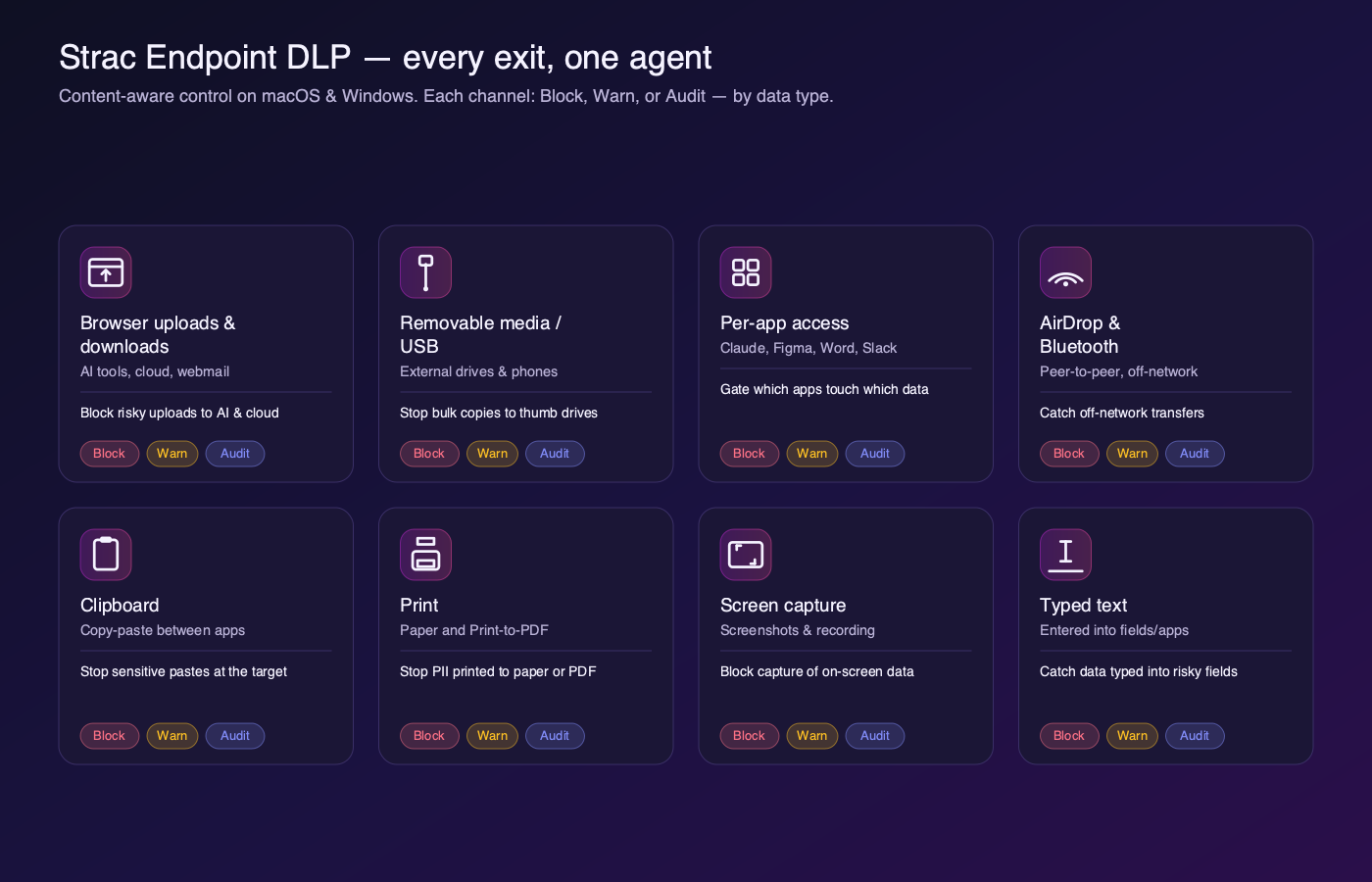
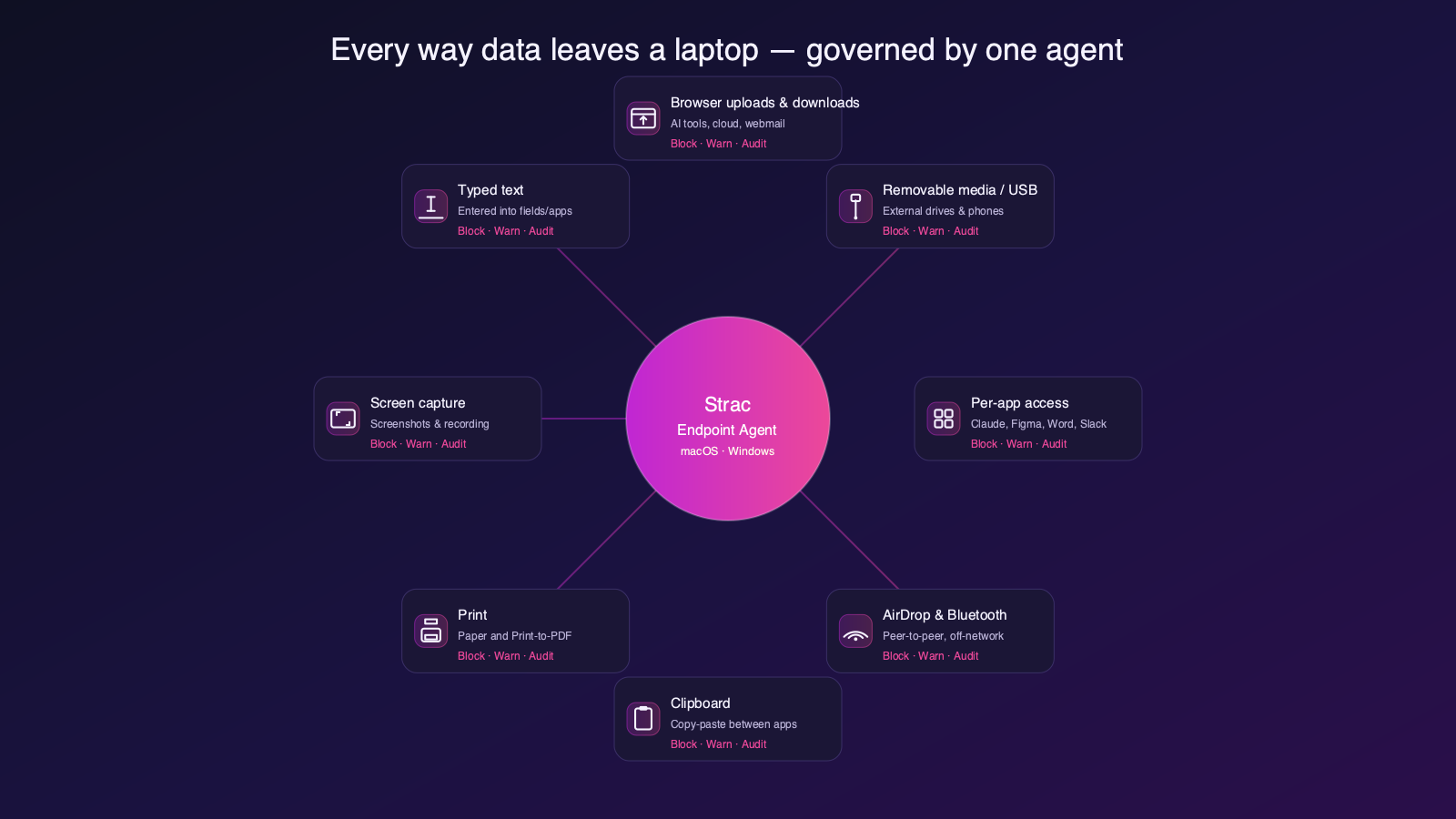
Strac Endpoint DLP — every exit channel, each content-aware, each Block/Warn/Audit.
Data-aware logging across all every exit channel.
OCR and document parsing, so sensitive data inside files and images is seen.
Turn monitoring into control: Audit today, Warn/Block when ready.
Block, Warn, or Audit — per data type, per channel. See the full eight-channel breakdown in the endpoint DLP agent guide.
In this guide, we explore the top endpoint monitoring tools that help organizations strengthen security, monitor device activity, and protect sensitive data.
✨ What Endpoint Monitoring Must Cover in 2026
Endpoint monitoring has shifted from watching processes and uptime to watching data — where sensitive files go and how they leave. The channels that matter now include one that did not exist a few years ago: AI tools.
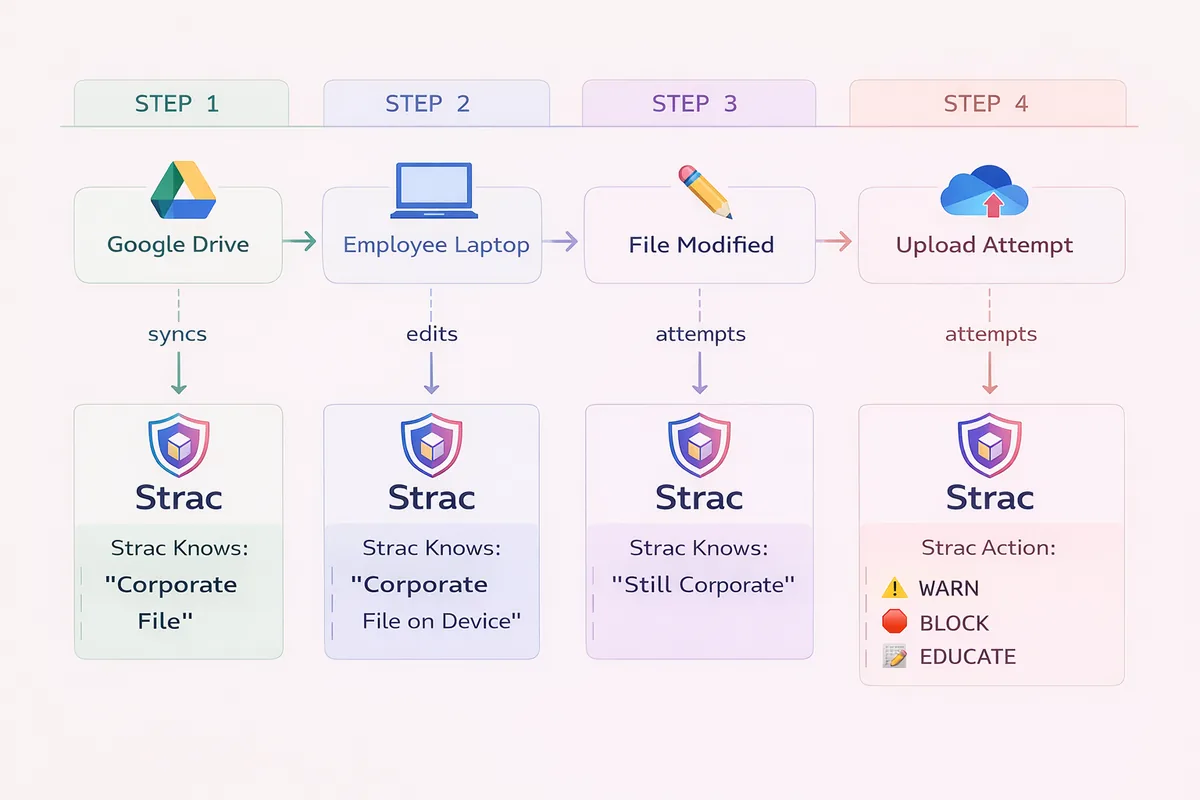
Modern endpoint monitoring is data lineage: where a file came from, everywhere it went, and where it was about to leave.
A good endpoint DLP tool should watch sensitive file movement first, because the real risk is PII, PHI and card data leaving the device. It should cover USB and removable media, still the oldest exfiltration path. It should also catch cloud sync and web uploads to personal Dropbox, Google Drive or OneDrive, along with AI tool activity such as prompts and file uploads to ChatGPT, Claude and Copilot. Data lineage lets you trace a file from where it started to where someone tried to send it, even after it has been renamed or copied. Most important, the tool should remediate, not just alert. That means blocking or redacting the data while it is moving, not sending you a report after it is gone.
The distinction that matters: monitoring that only alerts produces a queue nobody clears. Monitoring tied to an endpoint DLP agent can act — block, redact, or quarantine — the moment sensitive data is about to leave.
Best Endpoint Monitoring Tools for Enhanced Security and Efficiency
These tools will help enhance cybersecurity measures, streamline IT operations, and ensure compliance with modern IT standards.
As organizations adopt remote work and AI tools like ChatGPT, sensitive data increasingly moves from endpoints into cloud apps and browser-based workflows. Strac closes this gap by combining endpoint visibility, browser monitoring, SaaS protection, and AI data governance in a single platform.
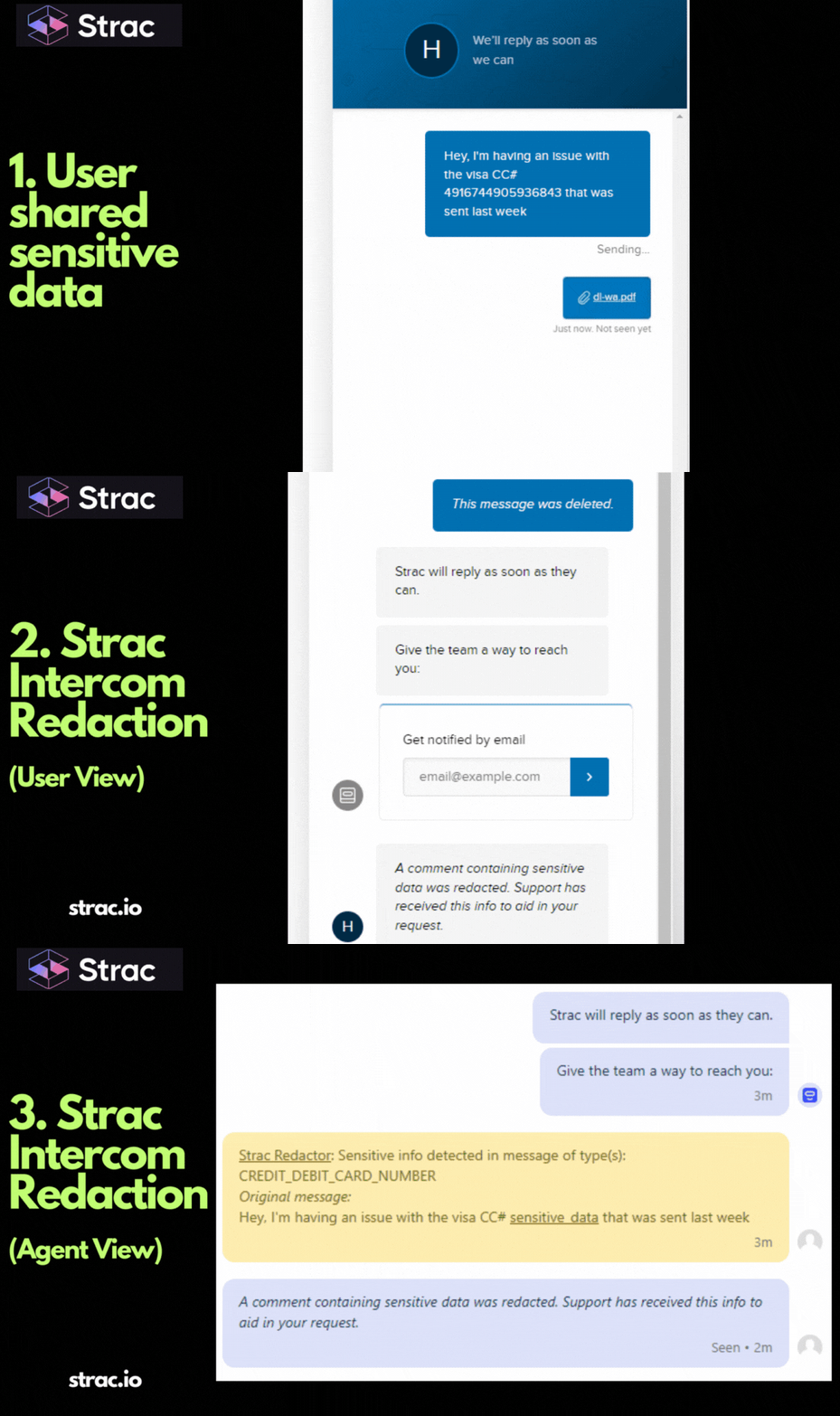
Real-Time Data Leak Prevention Strac monitors file activity, uploads, copy-paste events, and browser interactions in real time. If sensitive data such as PII, PHI, or source code is detected leaving a device, the platform can alert, redact, block, or quarantine the action instantly.
Endpoint + Browser + AI Protection Modern data leaks often occur through browser uploads and AI tools. Strac protects data flowing into platforms such as ChatGPT, Gemini, Copilot, and cloud storage services; preventing employees from unintentionally exposing confidential information.
Data Lineage and Forensic Visibility One of Strac’s unique capabilities is data lineage tracking. Security teams can see where a piece of sensitive data originated, which file it came from, which application accessed it, and where it was ultimately sent.
Historical Data Discovery on Endpoints In addition to real-time monitoring, Strac scans files already stored on laptops to identify sensitive information that may be at risk.
ML and OCR-Based Detection Instead of relying only on basic pattern matching, Strac uses machine learning and OCR to detect sensitive data inside documents, images, and attachments; improving accuracy and reducing false alerts.
Cross-Platform Endpoint Security Strac protects Windows and macOS endpoints, as well as browser workflows and SaaS applications, ensuring policies remain consistent across the entire environment.
Built-in Compliance Support Organizations can enforce policies aligned with PCI DSS, HIPAA, SOC 2, ISO 27001, GDPR, and other frameworks, helping security teams maintain regulatory compliance.
Strac is ideal for organizations that need modern endpoint monitoring combined with advanced data protection, especially those working with remote teams, SaaS platforms, and AI tools. It is particularly valuable for SaaS companies, fintech firms, healthcare organizations, and AI-driven businesses where sensitive data frequently moves between endpoints, browsers, and cloud applications.
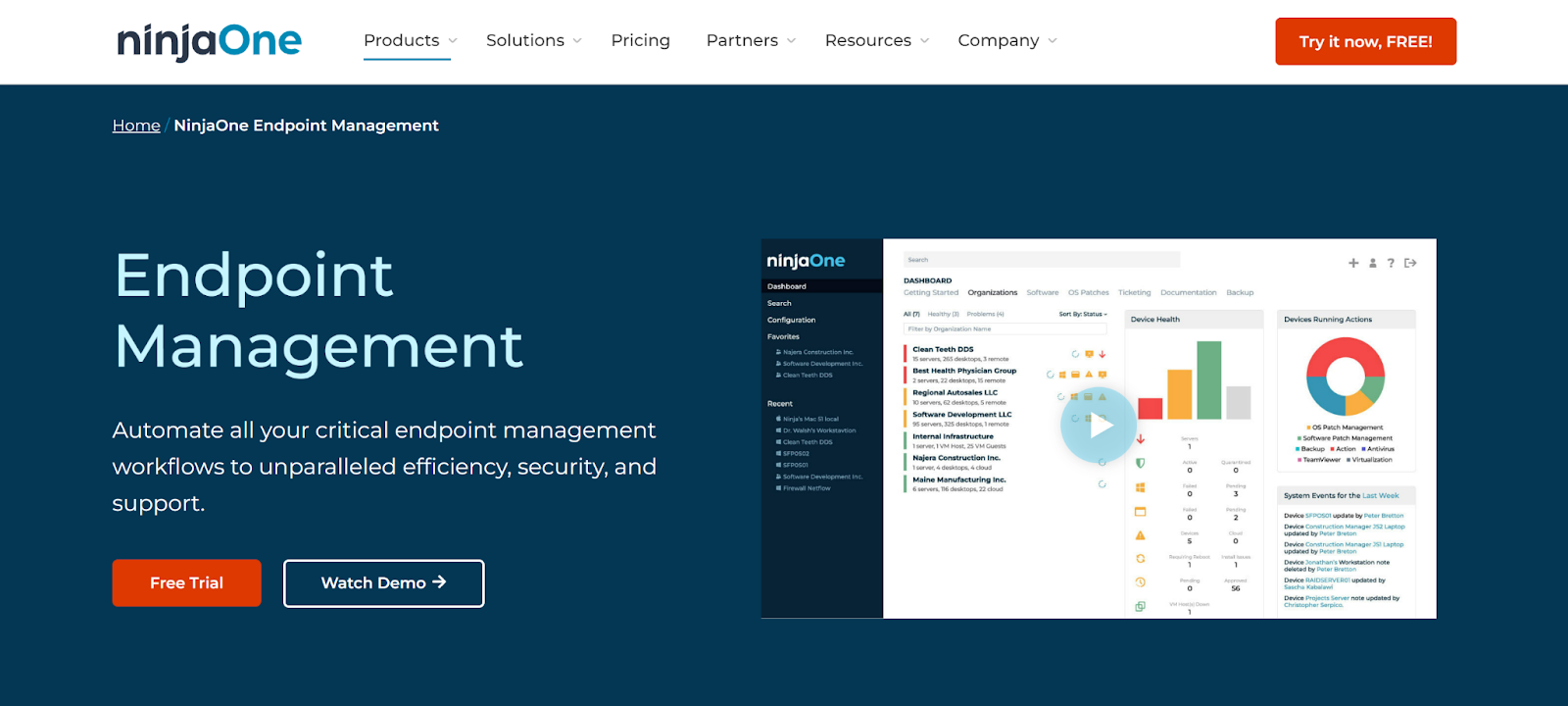
NinjaOne is an all-in-one endpoint management and monitoring solution designed to enhance IT security and efficiency. It integrates endpoint performance monitoring, task automation, remote access, software management, and automated patching. This platform especially benefits organizations with remote or hybrid workforces, offering user-friendly interfaces and comprehensive features to streamline endpoint management.
Key Features
Unified endpoint management with a single-pane-of-glass interface for all endpoint devices.
Remote monitoring and management to track and manage devices from any location.
Live telemetry data for real-time data on endpoint performance for quick issue resolution.
Automated patching and software management to ensure all devices are up-to-date and secure with automated updates.
Task automation of IT to increase efficiency.
Robust security features like drive encryption management, antivirus management, and role-based access control.
Alerting and reporting for real-time alerts and detailed reports on endpoint health and performance.
✨ 3. Miradore
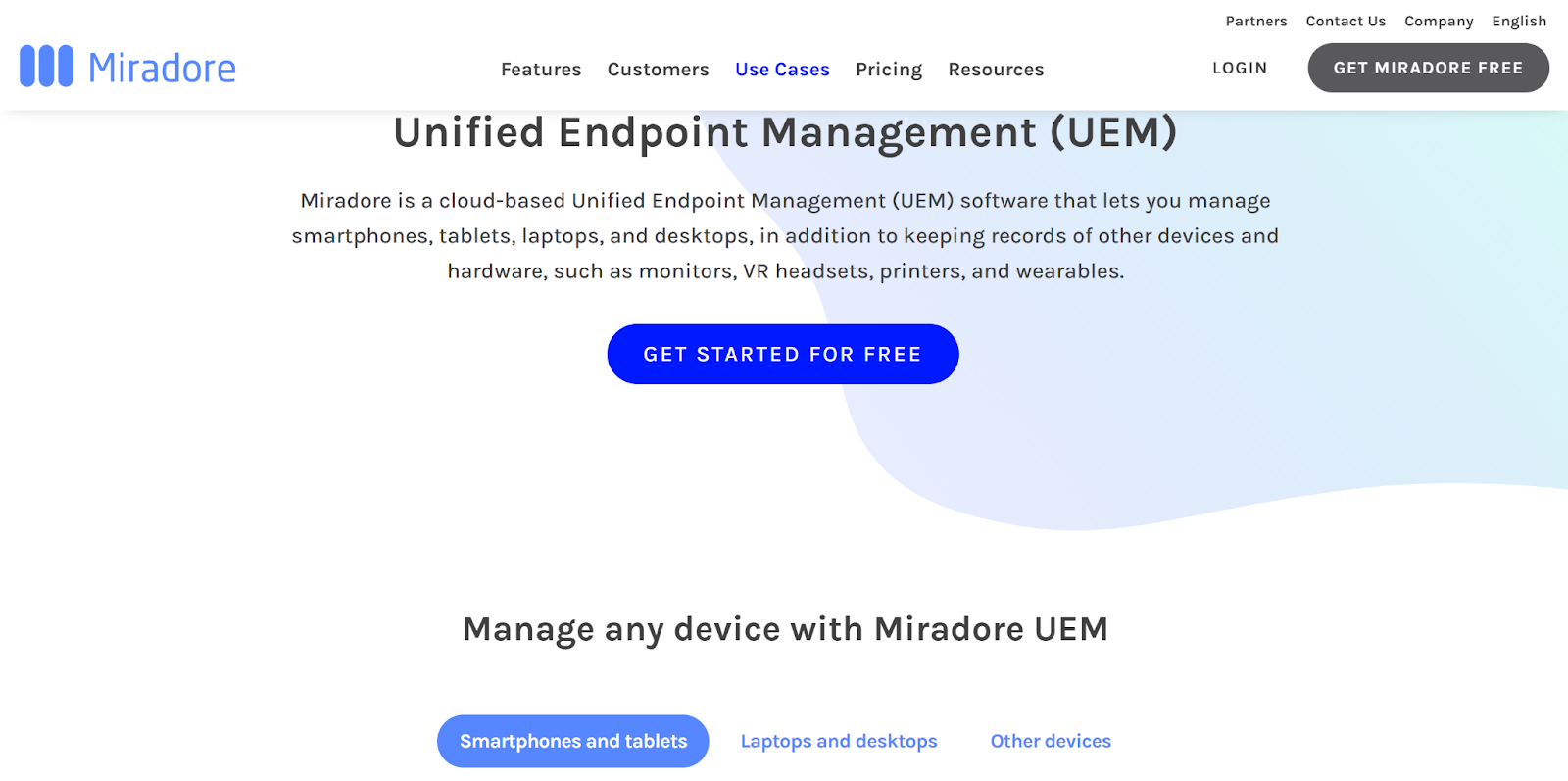
Miradore is cloud-based Unified Endpoint Management (UEM) software that manages various devices, including smartphones, tablets, laptops, and desktops. It also tracks other IT assets such as monitors, VR headsets, printers, and wearables, providing a centralized platform for Android, iOS, iPadOS, Windows, and macOS devices.
Key Features
A centralized control for Android, iOS, Windows, and macOS devices.
It encrypts data, enforces passcodes, and supports remote lock/wipe.
It ensures compliance with policies and regulations like GDPR.
Remote app installation and control feature with automation for compliance.
Dashboards and analytics for device health and status.
Create and deploy configuration profiles with remote support integration.
✨ 4. Microsoft Endpoint Manager
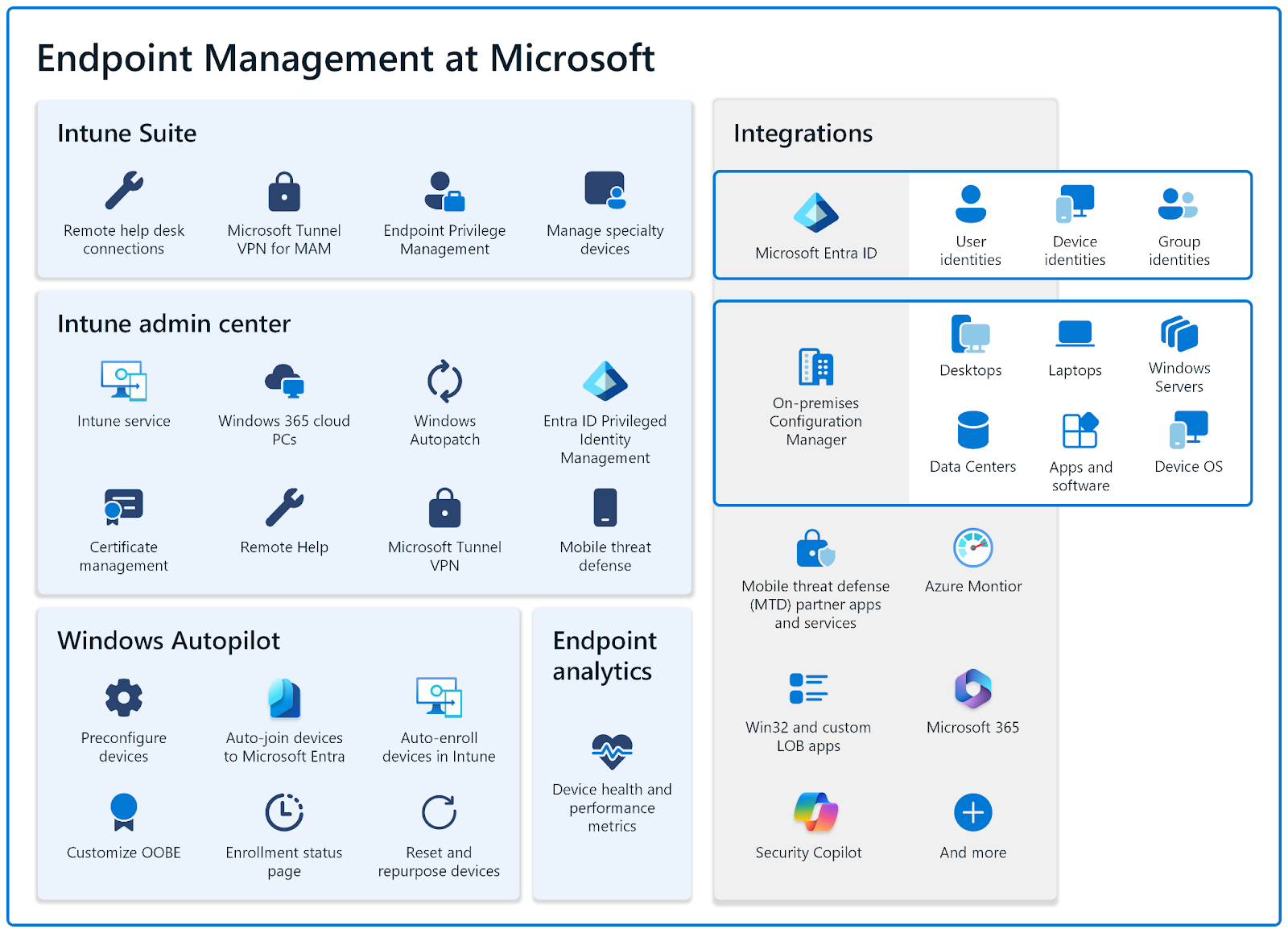
Microsoft Endpoint Manager (MEM) is designed to empower organizations by enabling secure access to resources from any device, anywhere. It integrates application-level controls and intent-based policies to ensure users only access necessary resources.
MEM provides centralized management for all networked devices, including on-premises, remote, and personal devices. It enhances cloud security across virtual endpoints to protect users' remote devices from threats.
Key Features
The centralized management allows managing all endpoints, including on-premises, remote, corporate-owned, and personal devices.
It employs Zero Trust security controls to protect the entire network consistently.
It enables automated remediation for workspace applications, ensuring continuous protection and compliance.
Comprehensive device compliance ensures compliance with device types and applications to control data flow across mobile and desktop environments.
It manages encryption, antivirus, firewall, and other security technologies to safeguard organizational data.
The BYOD ecosystem promotes the secure management of diverse devices, including desktops, mobiles, and BYOD.
✨ 5. Hexnode
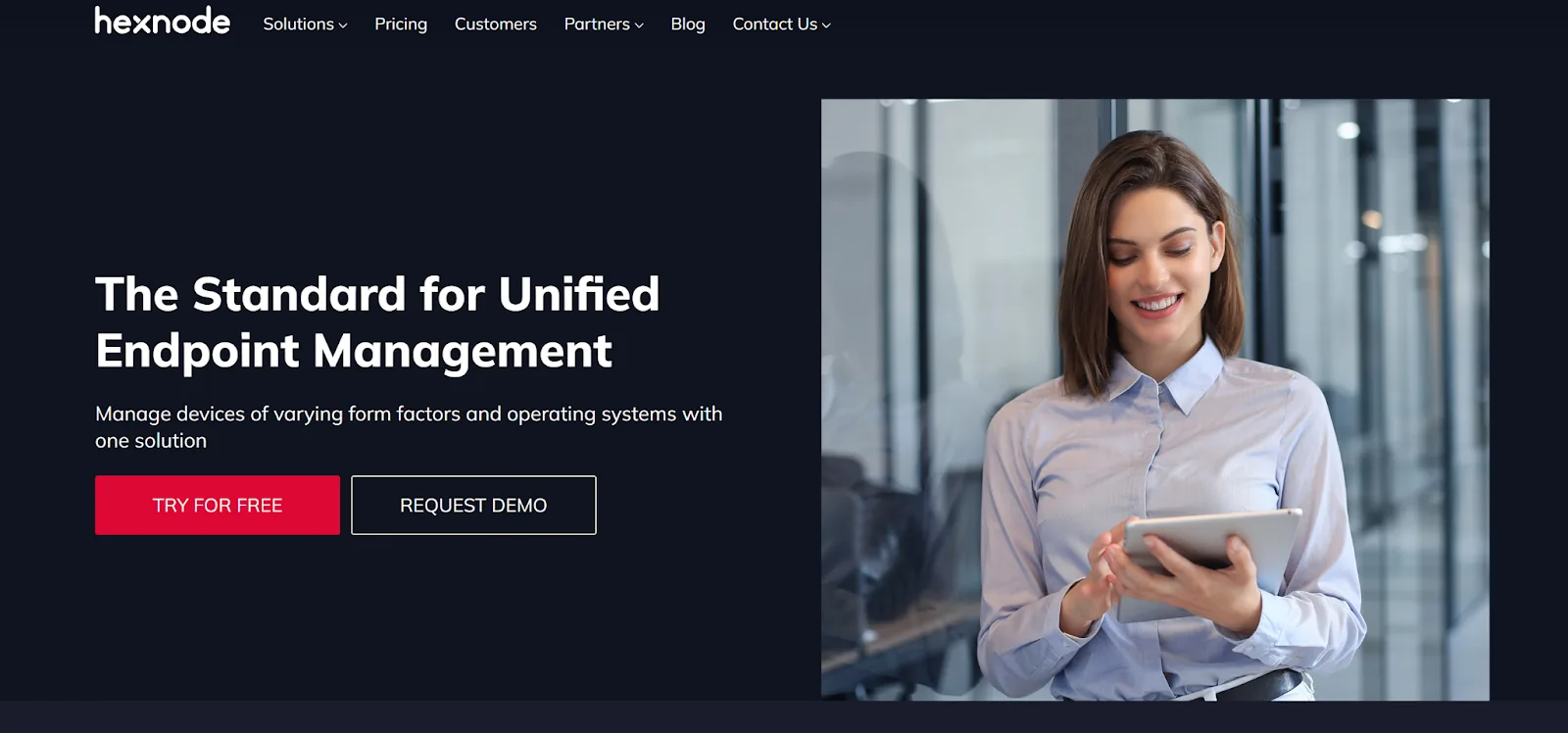
Hexnode is a comprehensive Unified Endpoint Management (UEM) software designed to streamline the management of various devices from a single, centralized console. It is ideal for organizations implementing bring-your-own-device (BYOD) policies to enhance both security and user experience. Hexnode empowers IT teams to remotely secure, encrypt, lock, and wipe data, thus significantly strengthening the security framework of the organization.
Key Features
Hexnode offers continuous 24/7 monitoring of endpoints, allowing IT teams to track device health and status.
The centralized controls simplify the management of desktops, laptops, mobile devices, and IoT devices.
It enforces compliance with corporate policies and regulatory standards, using features like BitLocker management and password rules.
Location-based policies allow tracking and geofencing to manage devices based on their geographical location.
Real-time remote support enhances troubleshooting capabilities, allowing IT teams to address technical issues quickly and efficiently.
It generates comprehensive reports on device usage, compliance, application management, and more.
✨ 6. Teramind
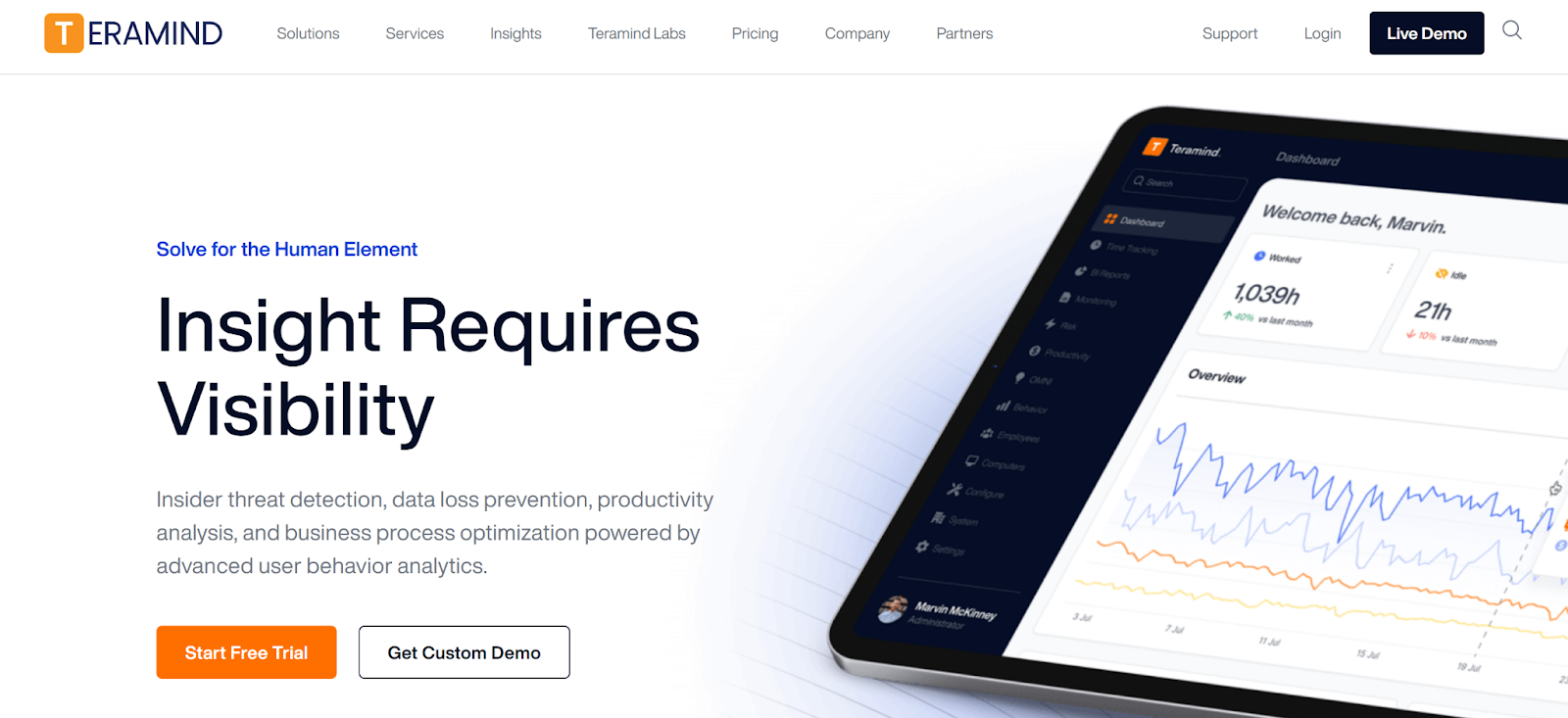
Teramind ranks highly among endpoint monitoring tools for its extensive visibility and control over IT infrastructure and workforce. It enhances data security, mitigates risks, and optimizes employee productivity.
Teramind's robust feature set includes advanced monitoring capabilities such as user activity tracking, website monitoring, file transfer tracking, and session recording. These features enable organizations to gain detailed insights into employee behavior, identify potential security risks, and ensure compliance with data security standards.
Key Features
Teramind tracks and records user activities, including keystrokes, websites visited, and application usage, for insights into employee behavior and security threats.
It monitors web browsing activities and blocks access to non-work-related or risky websites.
It generates detailed reports and analytics on employee productivity, time utilization, and potential insider risks.
The file transfer & web file tracking feature logs file transfers, downloads, and uploads across the network to prevent data loss and data exfiltration.
It allows remote access and control of employee workstations for troubleshooting or assistance in managing remote or hybrid workforces.
Its DLP capabilities prevent accidental or intentional data leaks by blocking actions that violate data security policies.
✨ 7. Atera
Atera is a powerful unified endpoint management solution tailored for IT teams and managed service providers (MSPs). It offers comprehensive remote monitoring and management capabilities, enabling users to maintain a real-time, holistic view of multiple networks.
This allows IT professionals to efficiently oversee various aspects of their IT infrastructure, promptly address issues, and enhance support capabilities. Atera's proactive design, featuring real-time alerts, ensures that potential problems are detected and resolved before they escalate.
Key Features
Atera delivers immediate insights into system resources, network status, IP monitoring, logged-in users, and active directory activities.
Its network discovery facilitates simplified network discovery and monitoring through a consolidated single-pane view.
It enhances efficiency by automating administrative and maintenance tasks across all devices and servers.
The automated patch management provides detailed status reports and allows for the direct application of missing patches.
Its intuitive and interactive interface ensures smooth navigation and a seamless user experience.
It enables IT administrators to remotely access and control devices for troubleshooting, maintenance, and security checks.
It offers a centralized console for monitoring and managing all endpoints from one location.
Factors to Consider When Choosing Endpoint Monitoring Software
Selecting the right endpoint monitoring software is crucial for maintaining a secure and efficient IT infrastructure. To make an informed decision, consider the following key factors:
1. Compatibility and Scalability
Your organization must ensure the endpoint monitoring software is compatible with its existing hardware, operating systems, and software applications. The tool should seamlessly integrate with your current IT environment without requiring extensive modifications. Additionally, the software should support an increasing number of endpoints and adapt to business changes.
2. Security Features
Look for tools that offer advanced threat detection, antivirus protection, firewall capabilities, and encryption. These features help safeguard against malware, vulnerabilities, and unauthorized access. Additionally, patch management capabilities are critical to ensure that all devices are up-to-date with the latest security patches.
3. Remote Management Capabilities
Effective endpoint monitoring software should allow IT administrators to access, configure, and troubleshoot devices remotely. Features such as remote desktop control, software deployment, and real-time alerts can significantly enhance the efficiency and responsiveness of IT support teams. It will reduce the downtime and improve overall productivity.
4. Automation and Integration
Automation features can streamline endpoint management tasks, reducing the burden on IT staff. Look for software that can automate routine tasks such as software updates, configuration management, and compliance checks. Additionally, integration with other IT management tools and systems, such as IT service management (ITSM) and network monitoring solutions, can provide an efficient IT management environment.
5. Vendor Support
Reliable vendor support is a critical factor in the successful implementation and ongoing operation of endpoint monitoring software. Evaluate the vendor's reputation, customer reviews, and the quality of their support services. Consider factors such as availability of technical support, documentation, training resources, and responsiveness to issues.
✨ Bottomline
Endpoint monitoring tools are essential for maintaining the security and efficiency of modern IT infrastructures. They provide critical oversight and management capability to help organizations protect against cyber threats and ensure regulatory compliance.
With Strac, you can choose one of the industry's most effective endpoint monitoring tools. Its advanced security features, including threat detection and policy enforcement, are designed to protect all devices from cyber threats.
Endpoint monitoring is continuous visibility into what happens on laptops and desktops. In a data-security context it means watching how sensitive data is used and moved — to USB, cloud sync, browser uploads, and AI tools — and, in the best tools, acting on it in real time rather than only logging it.
Does endpoint monitoring cover AI tools?
Modern endpoint monitoring does. Because it runs on the device, it sees what employees paste or upload into ChatGPT, Claude, Copilot, and other AI tools, including on personal accounts, and can redact or block sensitive data before it is submitted. This has become one of the most important things to monitor as AI adoption grows.
What is data lineage in endpoint monitoring?
Data lineage traces a sensitive file’s full journey — where it originated, everywhere it moved, and where it was about to leave. It turns a pile of endpoint events into a clear exfiltration story, which is what makes an incident investigable and a policy enforceable.
What is the difference between endpoint monitoring and endpoint DLP?
Monitoring observes; DLP acts. Endpoint monitoring gives you visibility into data movement, while an endpoint DLP agent adds enforcement — blocking, redacting, or quarantining sensitive data in the moment. The strongest tools do both from one agent. See endpoint DLP solutions.
Discover & Protect Data on SaaS, AI, MCP, Endpoints & Cloud
Strac provides end-to-end data loss prevention for all SaaS and Cloud apps. Integrate in under 10 minutes and experience the benefits of live DLP scanning, live redaction, and a fortified SaaS environment.


.webp)
.webp)




.gif)



.avif)


.gif)
