AI TRiSM Explained: Pillars, Data Protection, and Implementation (2026)
AI TRiSM (AI Trust, Risk and Security Management) is Gartner's framework for trustworthy AI. The pillars explained, and how Strac covers the data-protection pillar.
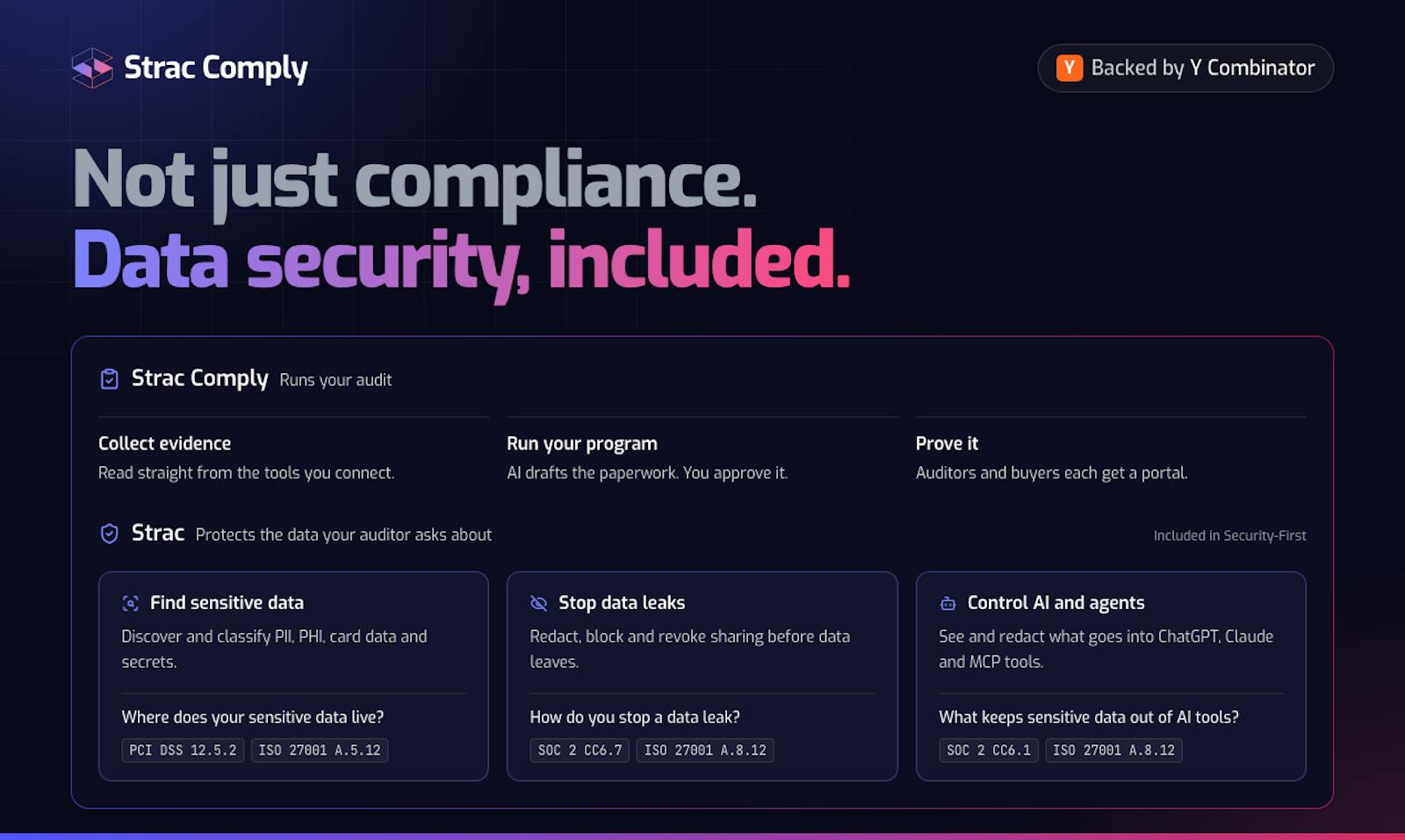
Short answer: AI TRiSM (AI Trust, Risk, and Security Management) is a Gartner framework for making AI trustworthy and secure. It spans explainability and model monitoring, ModelOps, AI application security, and privacy and data protection. Strac covers the data-protection pillar and the data and access portion of AI application security with AI DLP, DSPM, and shadow AI discovery.
Strac covers the data-protection pillar of AI TRiSM.
✨ What is AI TRiSM?
AI TRiSM, short for AI Trust, Risk, and Security Management, is a framework Gartner introduced to help organizations deploy AI that is reliable, fair, private, and secure. Rather than treating AI risk as an afterthought, it gives security and governance teams a structure to manage it across the AI lifecycle.
Strac addresses the data-protection pillar of AI TRiSM.
✨ The pillars of AI TRiSM
AI TRiSM is usually described across four areas. A data-security platform like Strac maps to two of them:
AI TRiSM pillar
What it covers
Strac
Explainability and model monitoring
Understanding and watching model behavior
Not covered
ModelOps
Operationalizing and governing models in production
Not covered
AI application security
Protecting AI apps and agents from abuse and data exposure
Strac discovers and protects the sensitive data AI TRiSM asks you to govern.
✨ AI TRiSM and data security: where Strac fits
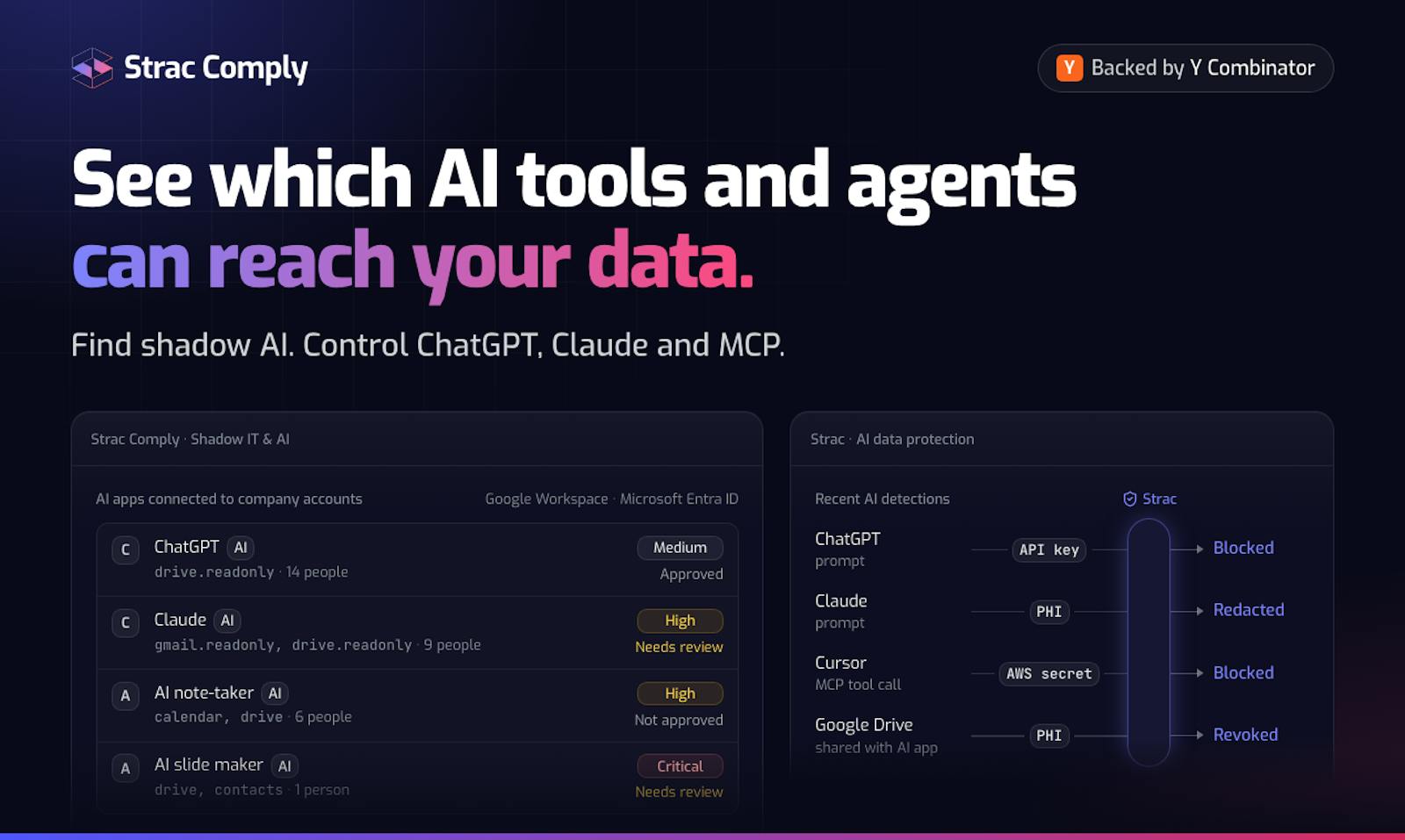
The data protection pillar is where most AI risk actually lives, because a single prompt or file upload can send regulated data to a model. Strac addresses it directly: it discovers where sensitive data lives, redacts or blocks it before it reaches any AI tool, surfaces shadow AI your team adopted without approval, and governs what AI agents can reach over MCP DLP. This pairs with broader AI data governance and AI security posture management.
Strac governs agent access, the AI application security pillar of AI TRiSM.
How to operationalize the data pillar of AI TRiSM
Inventory sensitive data and the AI tools that can reach it, including shadow AI.
Enforce AI DLP at the browser and endpoint so every AI tool is covered.
Keep an audit trail of every AI data decision for risk reporting.
Want to cover the data-protection pillar of AI TRiSM across every AI tool? Book a Strac demo.
🌶️ Spicy FAQs: AI TRiSM
What is AI TRiSM?
AI TRiSM stands for AI Trust, Risk, and Security Management, a framework defined by Gartner for making AI systems trustworthy, reliable, and secure. It spans explainability and model monitoring, ModelOps, AI application security, and privacy and data protection. Strac covers the data protection and AI application data security parts.
What are the pillars of AI TRiSM?
Gartner describes four areas: explainability and model monitoring, ModelOps, AI application security, and privacy or data protection. The data protection pillar, keeping sensitive data out of AI and controlling what AI can reach, is where a data-security platform like Strac fits.
Is AI TRiSM the same as AI governance?
They overlap. AI governance is the broader set of policies for responsible AI, while AI TRiSM is a framework that operationalizes the trust, risk, and security parts of it. Strac provides the data-security controls both require, through AI DLP, DSPM, and shadow AI discovery.
How does Strac support AI TRiSM?
Strac addresses the data-protection pillar and the data and access portion of AI application security. It discovers sensitive data and shadow AI, redacts or blocks sensitive data before it reaches a model, and controls what AI agents can access over MCP, with a full audit trail. It does not cover model explainability or ModelOps, which are separate pillars.
Why does AI TRiSM matter now?
As teams deploy AI across the business, sensitive data flows into tools and agents faster than traditional controls can track. AI TRiSM gives leaders a structure to manage that risk, and the data protection pillar is usually the most urgent because a single prompt can exfiltrate regulated data.
Discover & Protect Data on SaaS, AI, MCP, Endpoints & Cloud
Strac provides end-to-end data loss prevention for all SaaS and Cloud apps. Integrate in under 10 minutes and experience the benefits of live DLP scanning, live redaction, and a fortified SaaS environment.


.webp)




.avif)



.gif)
