A data security solution finds sensitive data, classifies it, and acts on it. Read our 2026 guide to discovery, classification, and automated remediation across SaaS, AI and MCP.
· A data security solution is a platform thatdiscovers sensitive data across SaaS, cloud, endpoints, browsers and AI tools,classifies it, and remediates it automatically before it leaves your control.
· The category got harder in 2026 for one reason:data now moves through surfaces nobody bought a tool for — a paste into achatbot, an agent calling a tool over MCP, a browser upload to an unsanctionedapp.
· Most stacks stop at visibility. Scannersinventory data at rest, identity governs who may reach it, and neither one ispresent at the moment a record actually leaves.
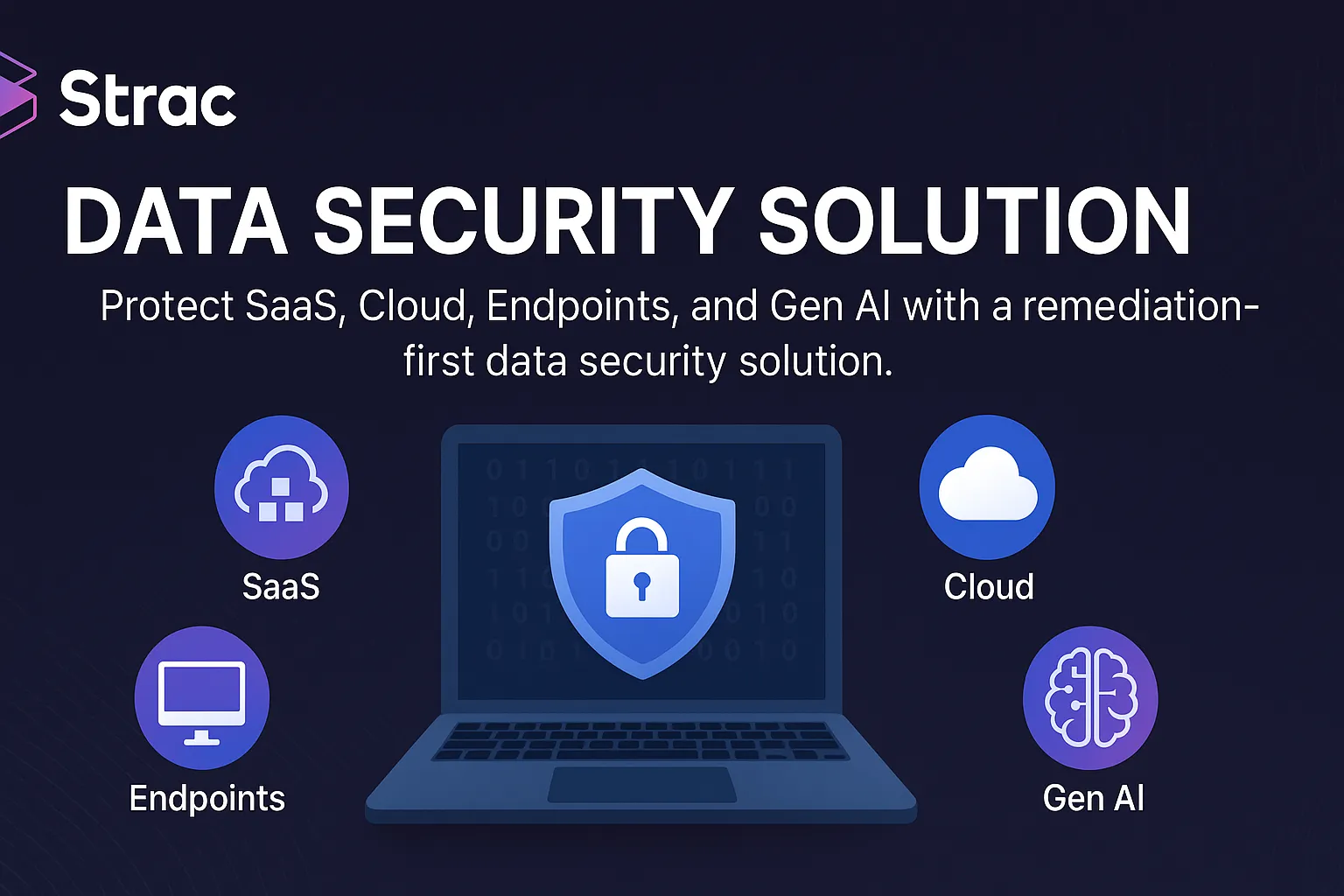
· Strac delivers detection and remediation on thesurfaces where data moves: SaaS,cloud, endpoint DLP, thebrowser, AI DLP and MCP DLP.
· Startfrom the pillar on data lossprevention; this post is the evaluation layer on top of it.
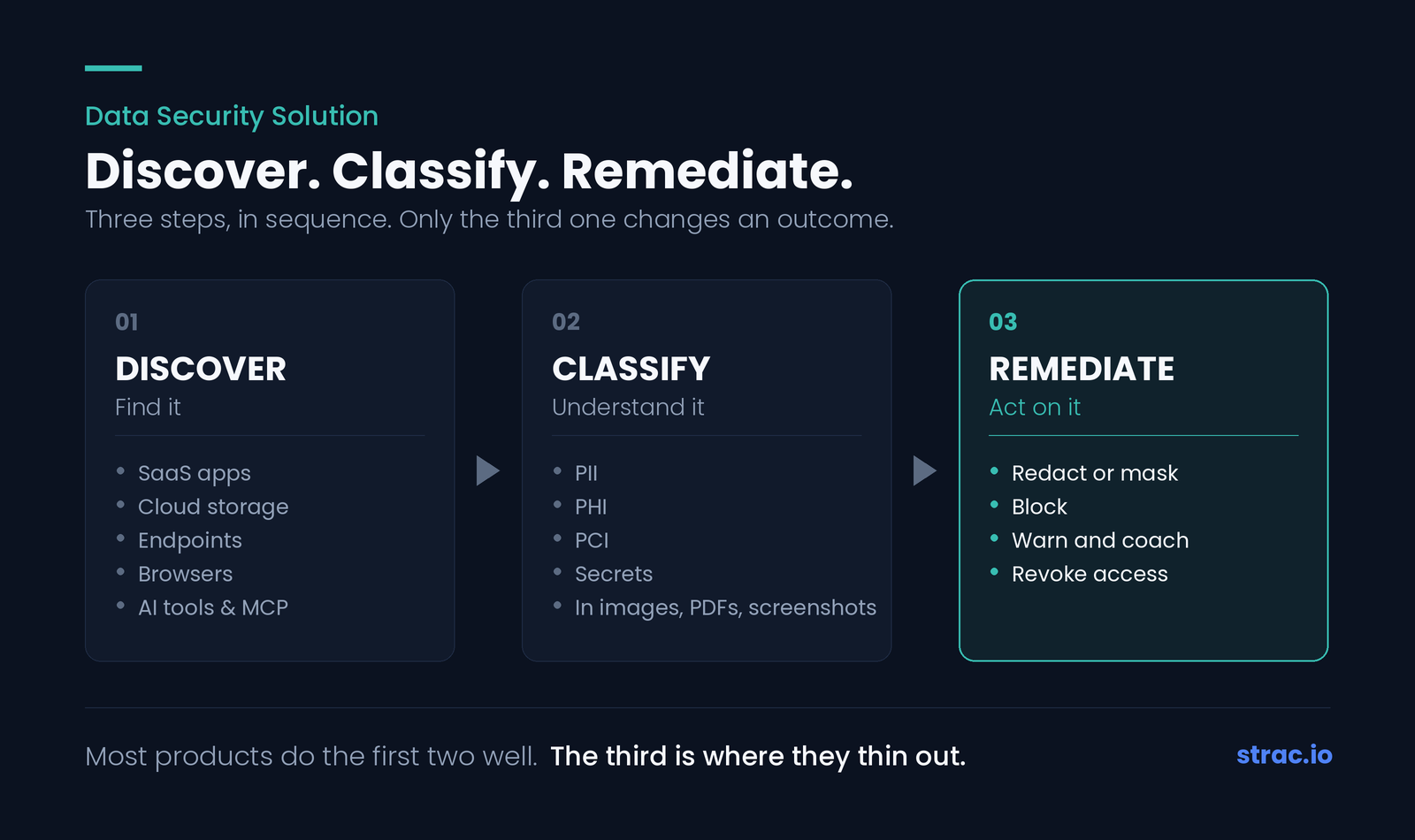
A data security solution is a platform that protects sensitive data across its lifecycle by doing three things in sequence: finding it, understanding it, and acting on it.
Finding it is discovery — scanning SaaS applications, cloud storage, endpoints, email, tickets and code repositories for regulated content. Understanding it is classification — deciding that this string is a Social Security number, that attachment is a passport scan, and that column is PHI. Acting on it is remediation — redacting, blocking, warning or revoking at the moment the data is about to move somewhere it should not.
Most products in the category do the first two well. The third is where they thin out, and the third is the only one that changes an outcome. Discovery tells you the data exists; remediation is what keeps it from leaving.
Why Traditional Data Security Tools Fall Short in 2026
Legacy data security was built for a network with an edge. Data sat in a datacenter, left through a gateway, and a tool at that gateway inspected it. That architecture assumed a chokepoint.
There is no chokepoint left. A customer export lands in a Google Drive folder that gets shared externally. A support agent pastes a full ticket transcript into a free summarizer. An AI agent holding a valid token queries a production database over MCP and returns raw rows to a model you do not host.
Each of these is a legitimate action by an authorized user or identity. Access controls approve them; network controls never see them. That is the whole problem in one sentence — the tools that can see the data cannot act, and the tools that can act cannot see the data.
This is why why legacy DLP fails for AI has become the defining evaluation question for the category. The failure is not detection accuracy. It is coverage of the surfaces where data now moves, and the ability to do something at that moment rather than report on it the next morning.
The Five Capabilities That Define the Category
Evaluate any data security solution against five capabilities, and weight the last one hardest.
Discovery finds sensitive data wherever it rests — SaaS applications, cloud storage, endpoints, browsers and AI tools, not just object storage.
Classification identifies what discovery found, including in images, scanned PDFs and screenshots, which is where regulated data hides from pattern matching.
Real-time inspection sees content in motion: uploads, pastes, prompts and agent tool calls.
Automated remediation acts inline — redact, block, warn or revoke — without a human in the queue.
Compliance evidence maps every finding to SOC 2, ISO 27001, HIPAA, PCI DSS and GDPR on demand.
Note what is deliberately absent from that list: alert volume, rule count, and dashboard depth. Those measure how much a tool noticed. None of them measure what it prevented.
Manual Review Versus Automated Remediation
The honest comparison is not between two products. It is between a program that depends on people reviewing findings and one that acts without them.
Manual review scales linearly with data volume and breaks immediately. An analyst triaging a queue of exposed files is working on last week's risk while this week's export is already sitting in a third-party tool. Automated remediation inverts that: the sensitive element is neutralized at the moment of the action, and whatever reaches the queue is already defused.
A program that produces findings for humans to sort is a backlog; one that neutralizes data on contact is a control.
✨Remediation Is the Product
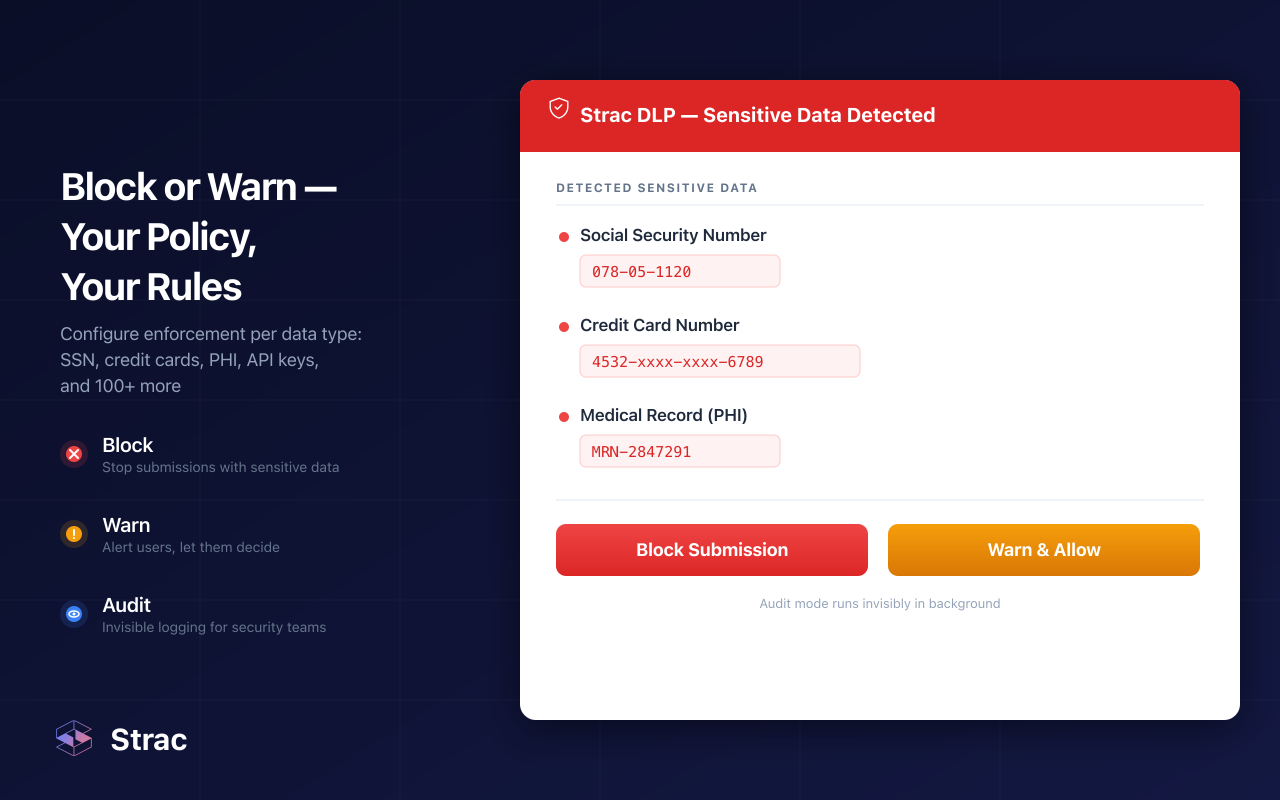
Remediation is a small, fixed set of actions, and a serious data security solution offers all four.
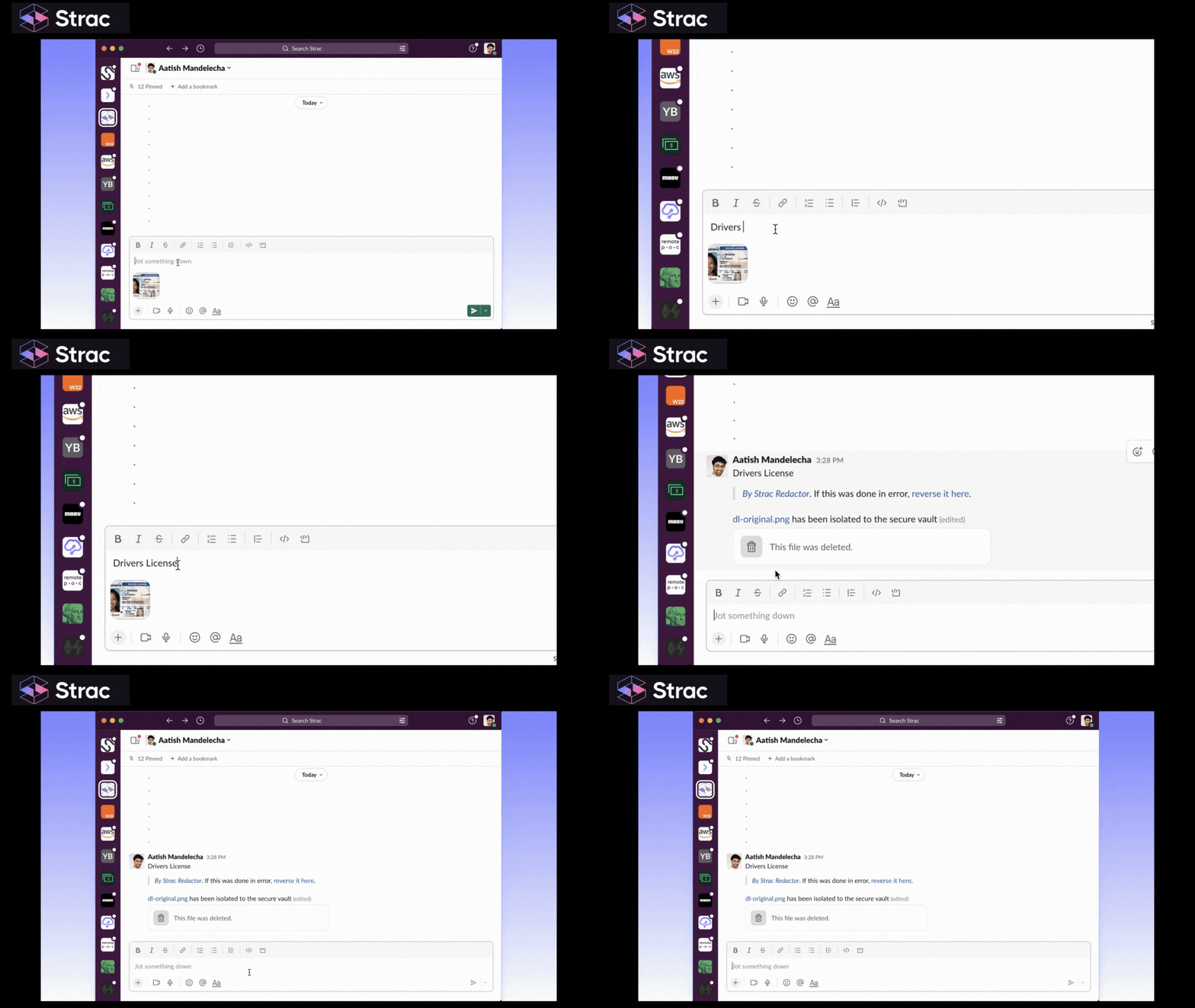
Redact or mask. The sensitive element is replaced in place — in a Slack message, an email, a Zendesk ticket, a Google Drive document, a SharePoint file or a Box folder — while the surrounding content stays usable.
Block. The upload, paste or send is stopped before it completes, on the endpoint or in the browser.
Warn and coach. The user is told what they are about to expose and given a compliant path, which is what turns a control into a habit.
Revoke access. The oversharing link, the external collaborator or the stale token loses the permission that made the exposure possible.
Securing the Surfaces That Did Not Exist Two Years Ago
The browser and the agent are now first-class data surfaces, and most solutions treat them as URL categories rather than as places data moves.
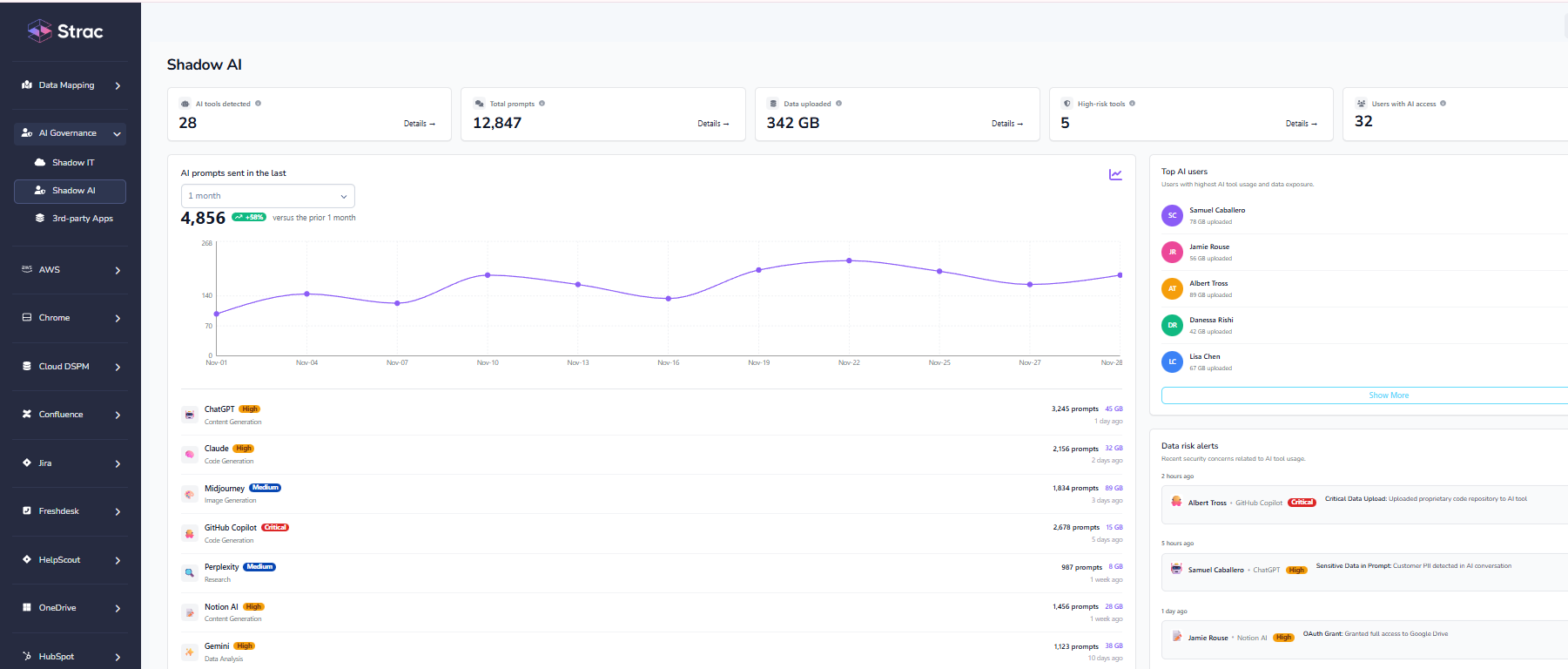
In the browser, the unit of exposure is the paste. An analyst moves a customer export into a free summarizer in one second, and no gateway, proxy or agent-based file scanner is positioned to inspect it. AI DLP inspects the prompt and the upload themselves, which is also how a team gets an honest inventory of shadow AI rather than a blocklist of the tools it already knew about.
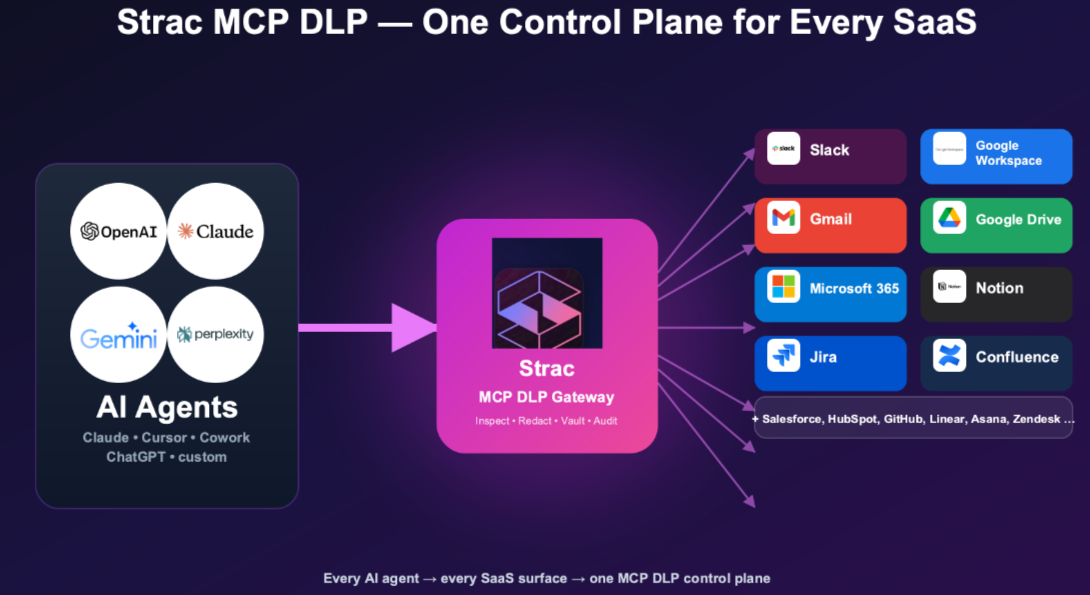
For agents, the unit of exposure is the tool call. An agent with legitimate credentials reads a record and hands it to a model, a log and a vendor in one hop. MCP DLP inspects every call and redacts sensitive data in the response, so a hijacked agent returns a masked record instead of a raw one.
Detection tells you an AI tool is in use. Remediation is what stops the record from reaching it.
🎥 How Strac Delivers It
Strac is a Data Loss Prevention (DLP), Data Discovery and DSPM platform that runs on the surfaces where data actually moves. One policy engine drives every surface below, so discovery at rest and enforcement in motion never disagree about what counts as sensitive.
SaaS — Slack, Google Workspace, Microsoft 365, Zendesk, Jira, Salesforce. Strac scans messages, tickets and files, then redacts regulated content in place so the thread stays usable.
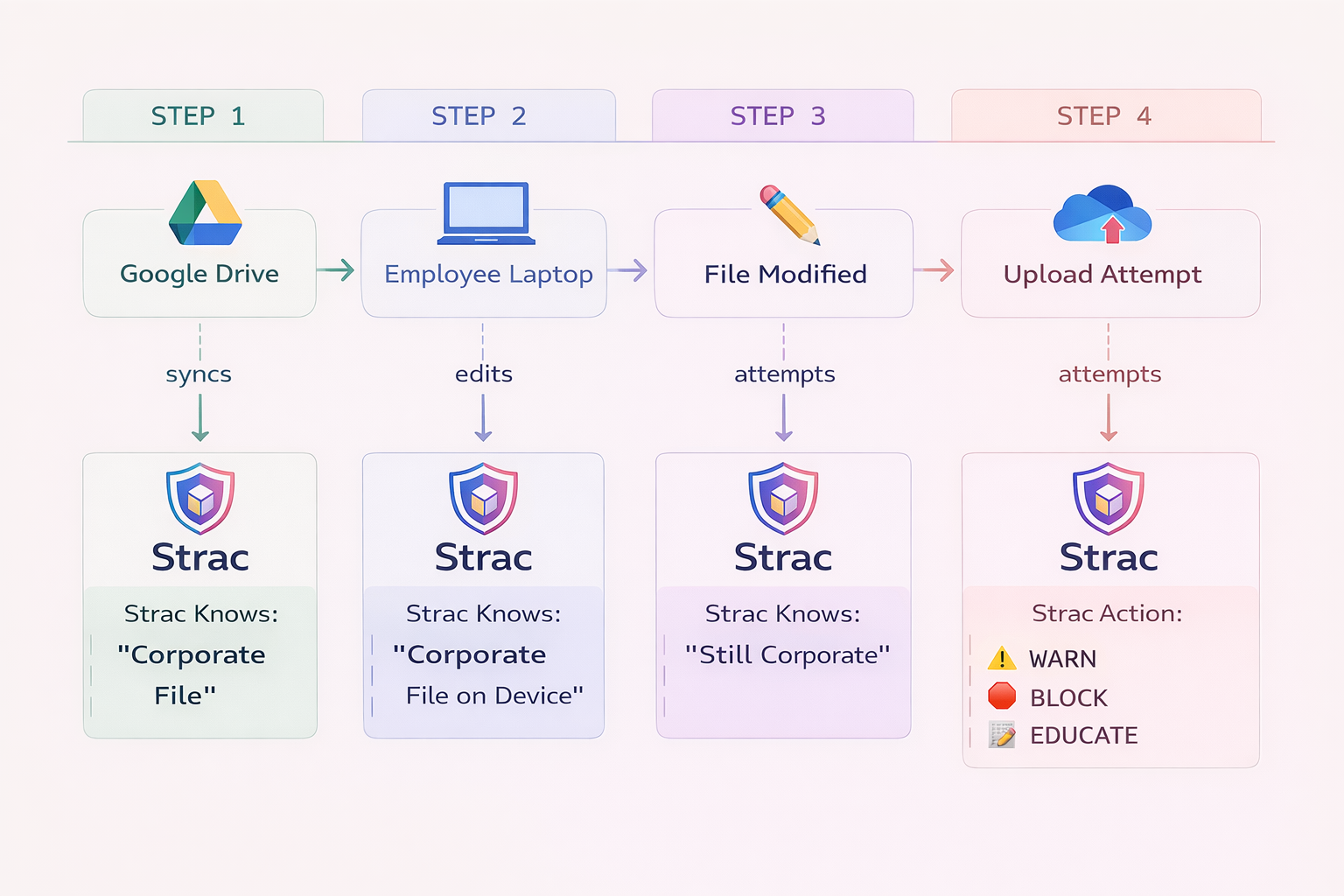
Endpoint DLP — laptops and desktops. One agent inspects files, clipboard activity and uploads before they leave the device, covering browser, desktop and CLI paths in a single vantage point.
AI DLP — the browser and generative AI tools. Strac inspects the prompt and the upload themselves, sanctioned tool or not, which is also how a team gets an honest inventory of shadow AI.
MCP DLP — AI agents and their tools. Strac inspects every tool call and redacts sensitive data in the response, so a hijacked agent returns a masked record instead of a raw one.
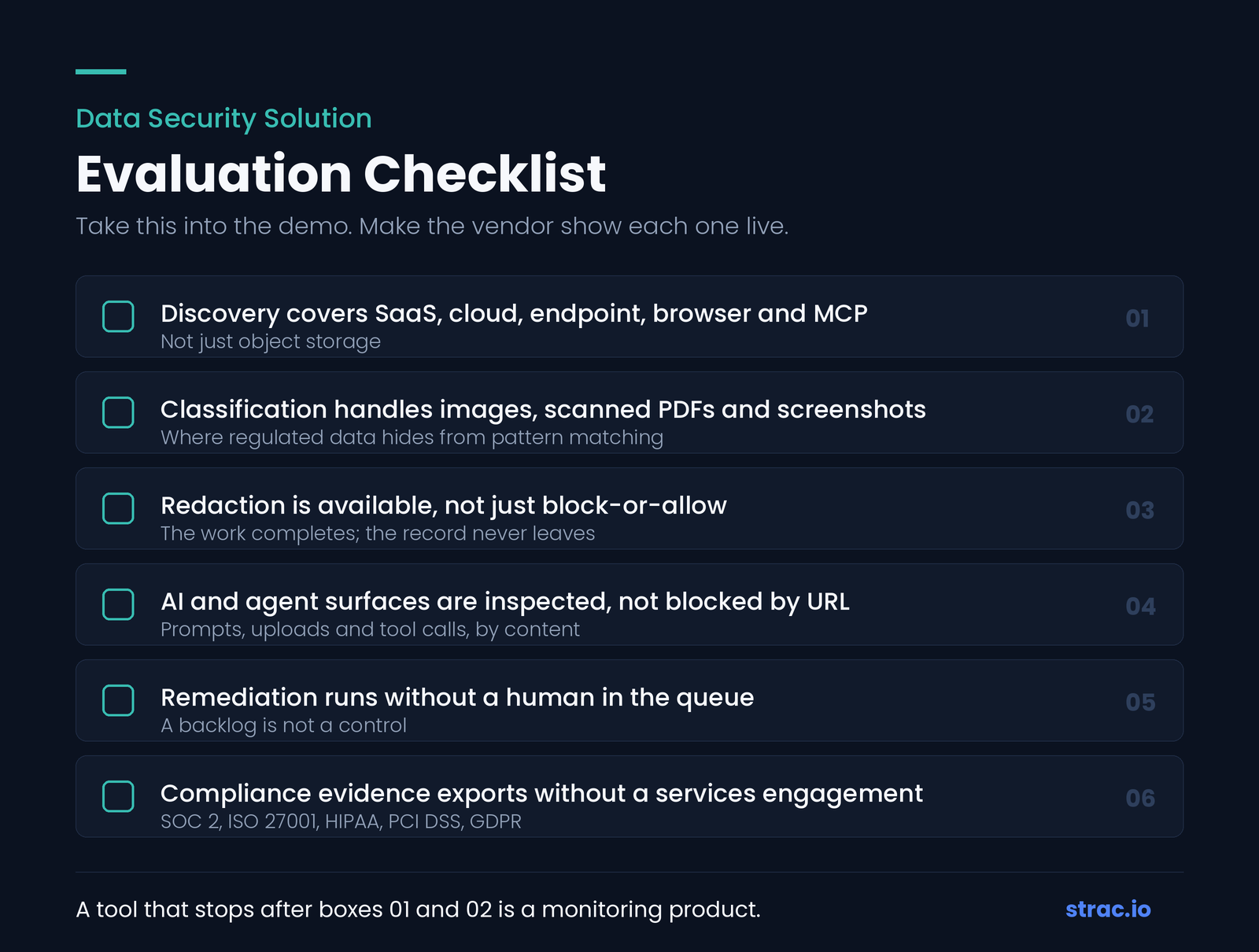
DSPM — cloud and data at rest. Discovery and posture findings run on the same classifiers as inline enforcement, so a policy change applies everywhere at once.Your Evaluation Checklist
Take this checklist into the demo and make the vendor show each one live.
Every control above the data eventually fails. Identity gets phished, models get injected, network paths get bypassed, and users make ordinary mistakes at speed. The data layer is the backstop: redact sensitive data on every action and a compromise never becomes a breach. Evaluate a data security solution on what it does at that moment, not on what it reports afterward.
Book a demo to see Strac discover, classify and remediate across SaaS, cloud, endpoints, browsers and MCP.
🌶️ Spicy FAQs on Data Security Solutions
Is a data security solution the same as DLP?
No. DLP is one function inside it. A data security solution combines discovery and DSPM at rest with data loss prevention in motion, under one classification policy and one remediation engine.
Because identity governs who may reach data and CASB governs which apps are allowed, and neither inspects content at the moment it moves. An authorized user pasting PHI into a chatbot passes every identity check you own.
Can we secure data without slowing teams down?
Yes — redaction and vaulting, not blocking. The message, ticket or prompt still goes through with the regulated element masked, so the work completes and the record never leaves.
Can any solution stop every leak?
No. Determined insiders, photographs of screens and novel channels will always exist. That is precisely why the data layer matters: if data is redacted on every action, the channel that succeeds carries nothing worth having.
Where does this fit in AI governance?
It is the enforcement layer beneath it. Policy defines what is allowed; AI data governance and MCP DLP are what make the policy true at runtime.
Discover & Protect Data on SaaS, AI, MCP, Endpoints & Cloud
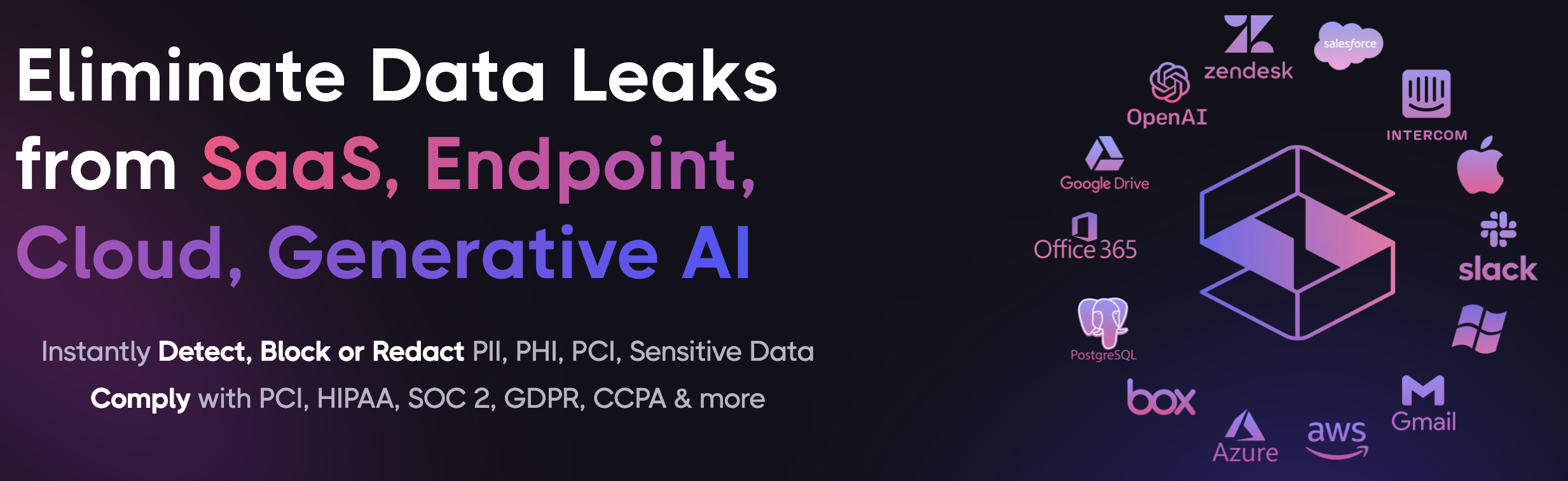
Strac provides end-to-end data loss prevention for all SaaS and Cloud apps. Integrate in under 10 minutes and experience the benefits of live DLP scanning, live redaction, and a fortified SaaS environment.


.webp)



.avif)



.gif)
