October 1, 2026

7
min read
Protect Your Business: Understanding Data Leakage Prevention Policies
Understanding the Importance of a Robust Data Loss Prevention Policy for Your Organization
· A data leakage prevention policy is the writtenrule set that defines which data is sensitive, where it is allowed to go, whomay move it, and what the platform does automatically when a rule is broken.
· The policy got harder in 2026 because the exitroutes changed: data now leaves through a browser tab, a paste into a chatassistant, or an autonomous agent calling a tool over MCP, not through an emailattachment on a managed laptop.
· Most policies still describe the 2018 estate.They name email, USB and file shares, and say nothing about prompts, modeloutputs, browser uploads or agent tool calls, so the controls stop exactlywhere the risk starts.
· Strac enforces the policy at the data layeracross browser, endpoint, SaaS, cloud, GenAI and MCP DLP, redacting sensitivevalues in real time rather than filing an alert after the fact.
· Treatthis as the enforcement arm of AI data governance.Start from that pillar, then write the policy here.
A data leakage prevention policy is a written rule set that defines four things: which data classes are sensitive, where each class is allowed to live and travel, who is permitted to move it, and what the platform does automatically when a rule is broken.
The word doing the work in that sentence is automatically. A policy that ends at a paragraph in the employee handbook is a statement of intent. A policy that ends in a redaction rule on a live surface is a control.
Every mature policy has two halves. The written half assigns owners, data classes, retention rules and escalation paths, and it is what an auditor reads during a SOC 2 or ISO 27001 review. The enforced half is the set of detectors, destinations and actions running on real traffic. Auditors read the first half; attackers meet the second.
Most data leakage prevention policies in circulation describe an estate that no longer exists. They govern email, removable media, file shares and a managed laptop inside a network perimeter. Every one of those routes still exists, and none of them is where the pressure is.
The exits that matter now are these. An employee pastes a customer export into a free summarizer in a personal browser profile. A support agent uploads a signed contract to a chat assistant to draft a reply. An agent with a valid token queries a production database over MCP and returns raw records into a model context that nobody classified.
None of those events touch email. None of them cross a network boundary you own. A legacy tool that inspects SMTP and file shares reports a clean week while a quarter of the sensitive data in the company walks out through a text box. That is the gap why legacy DLP fails for AI describes in full.
There is a second failure that is quieter and more damaging. Policies written for the old estate default to blocking, because blocking a USB port costs nobody anything. Applied to a browser or a chat assistant, blocking costs the business real productivity, so the policy gets exceptions, then gets ignored, then gets quietly disabled. A policy that people route around is worse than no policy, because it produces a clean dashboard over an unprotected surface.
A policy is only enforceable if it is specific. Five elements carry the weight.
Data classes. Name the actual detectors, not categories. Social Security numbers, credit card numbers under PCI DSS, protected health information under HIPAA, API keys and secrets, source code, customer lists, contracts and identity documents. If a class is not detectable, it is not governable.
Surfaces. List every place data moves: browser uploads and pastes, endpoint file activity on Mac, Windows and Linux, SaaS applications such as Slack, Google Drive, SharePoint, Box, Gmail, Office 365, Jira, Zendesk, Salesforce and Notion, cloud stores, generative AI assistants, and agent tool calls over MCP. Anything unlisted is unowned.
Destinations. The same file is fine in Google Drive and a breach in a personal ChatGPT account. Policy is a function of data class and destination together, never of data class alone.
Actions. Four, in this order of preference:
Owners and evidence. Each data class needs a named owner, a review cadence, and a log that shows what was detected, what action fired and who approved the exception. Compliance is not the policy document; compliance is the log.
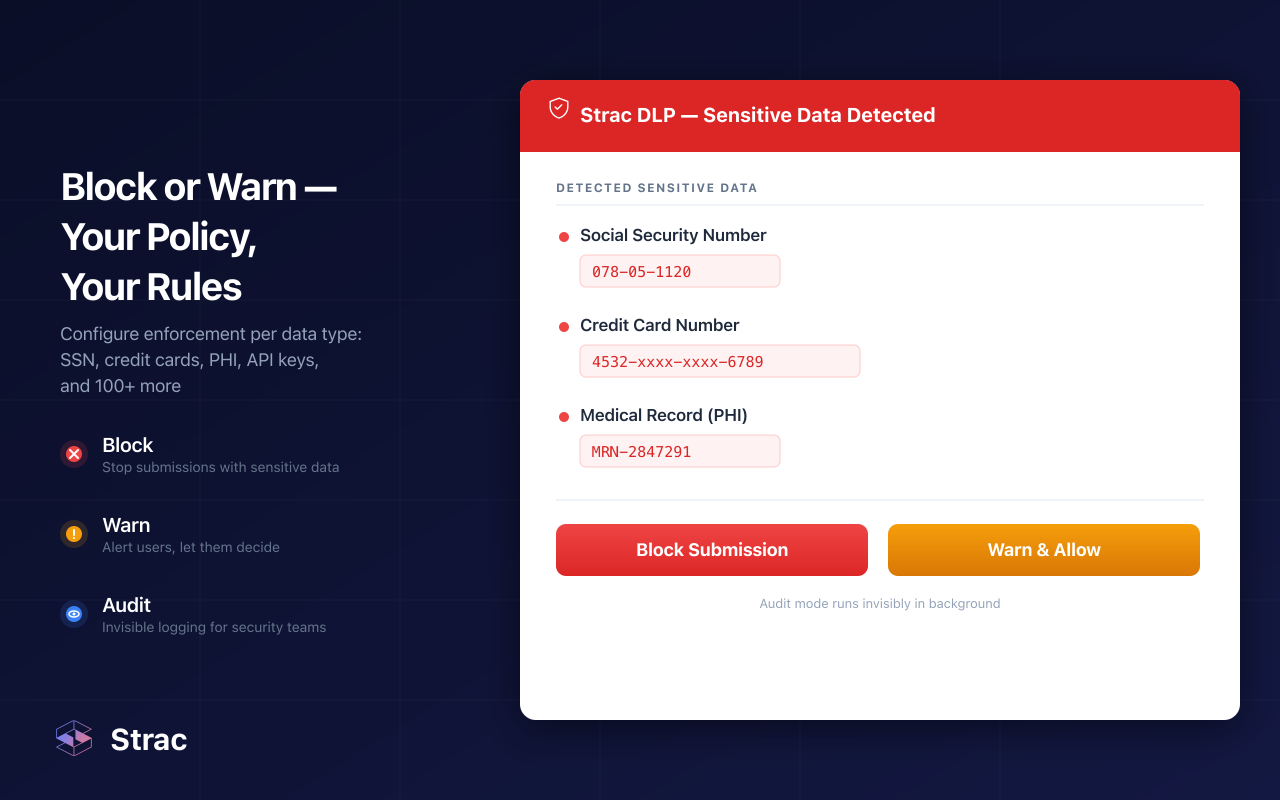
The productivity fear is real, and it is the reason most policies fail in month three. The resolution is that redaction and blocking are not the same control. Redaction lets the analyst finish the summary with the customer names removed. Blocking sends the analyst to a personal laptop where nothing is watching.
Write the default as redaction. Reserve blocking for a short, defensible list. Put the warning in the flow of work rather than in an inbox nobody reads. A policy people can follow is enforced a thousand times a day; a policy people resent is enforced once and then bypassed
Strac runs one policy engine and applies it wherever data moves.
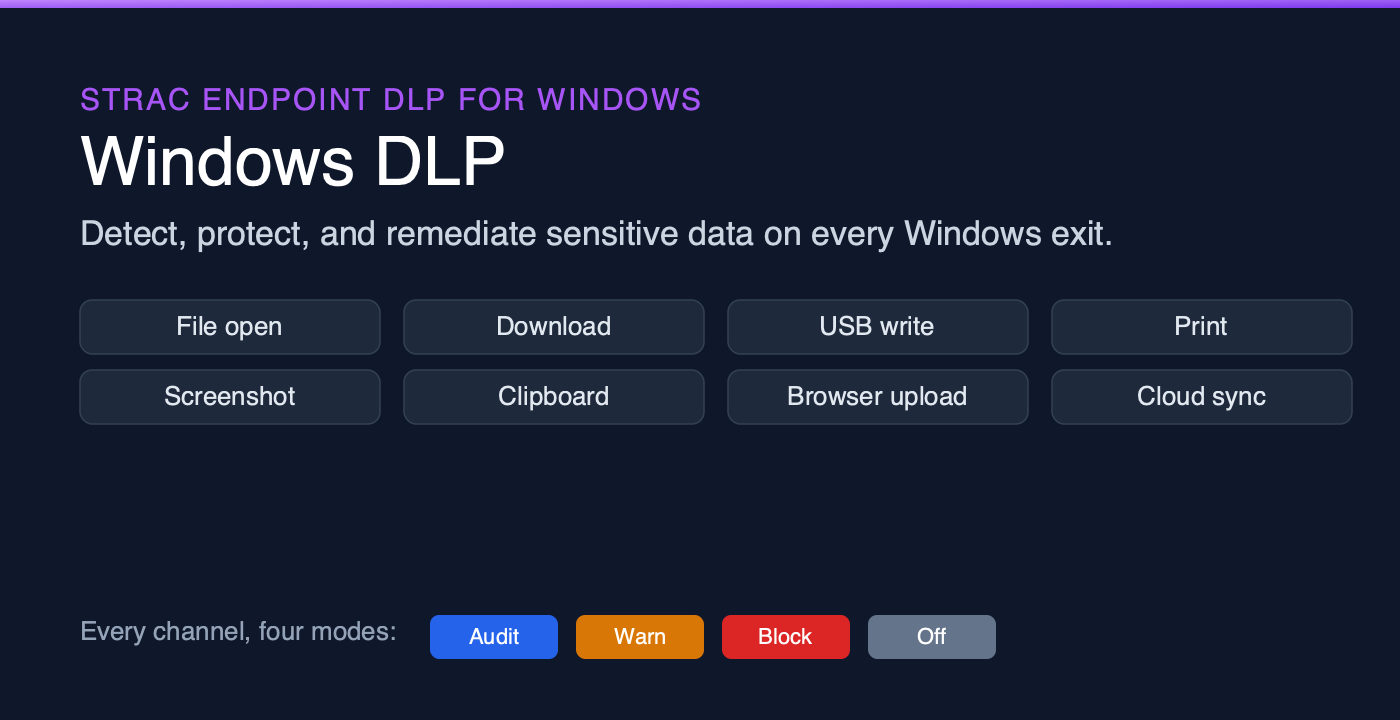
Endpoint DLP covers file activity and local exfiltration on Mac, Windows and Linux.
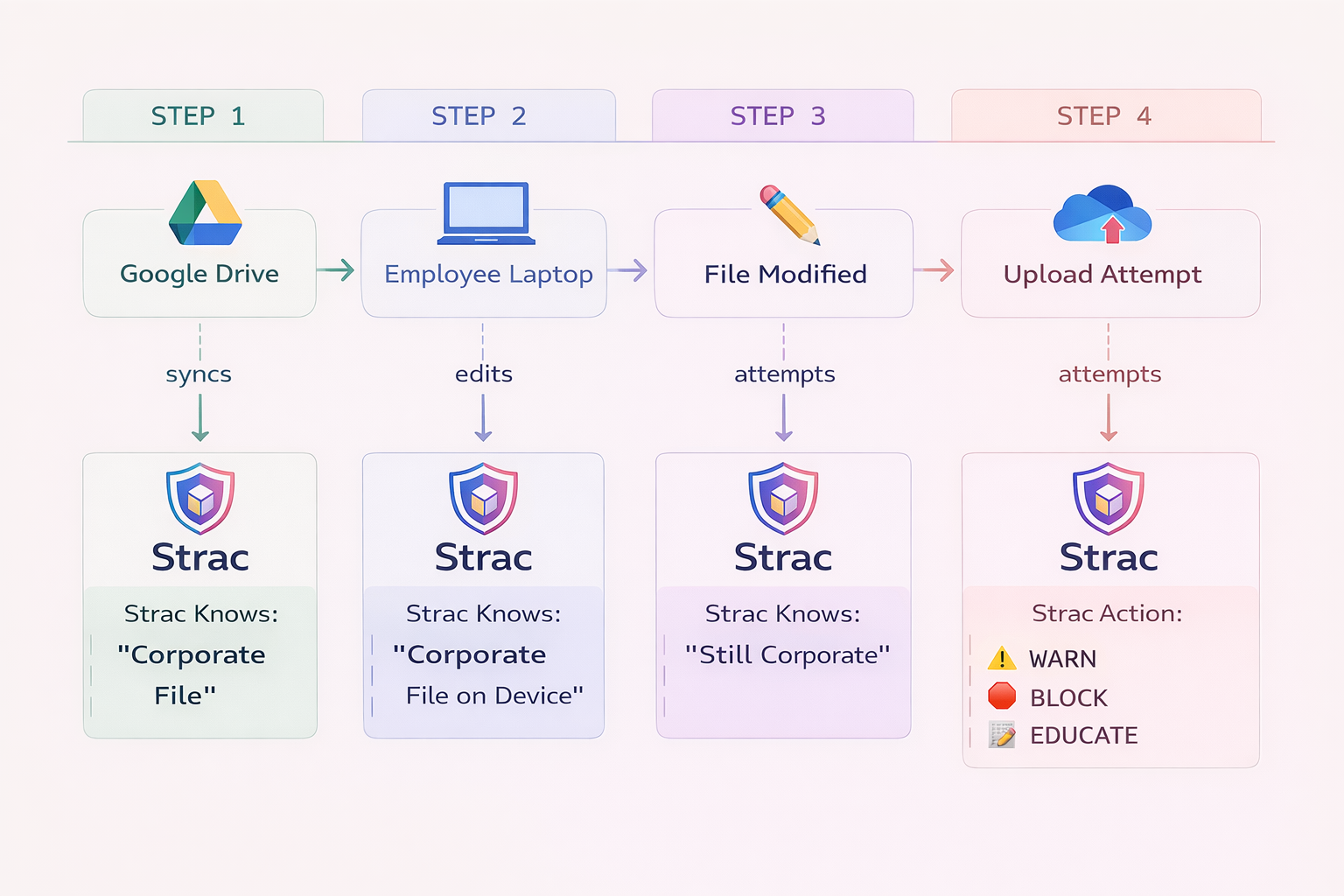
Browser DLP inspects uploads, pastes and downloads inside Chrome and Edge, including personal profiles and unmanaged sessions.
.gif)
SaaS DLP scans and remediates data at rest and in motion across the connected applications.
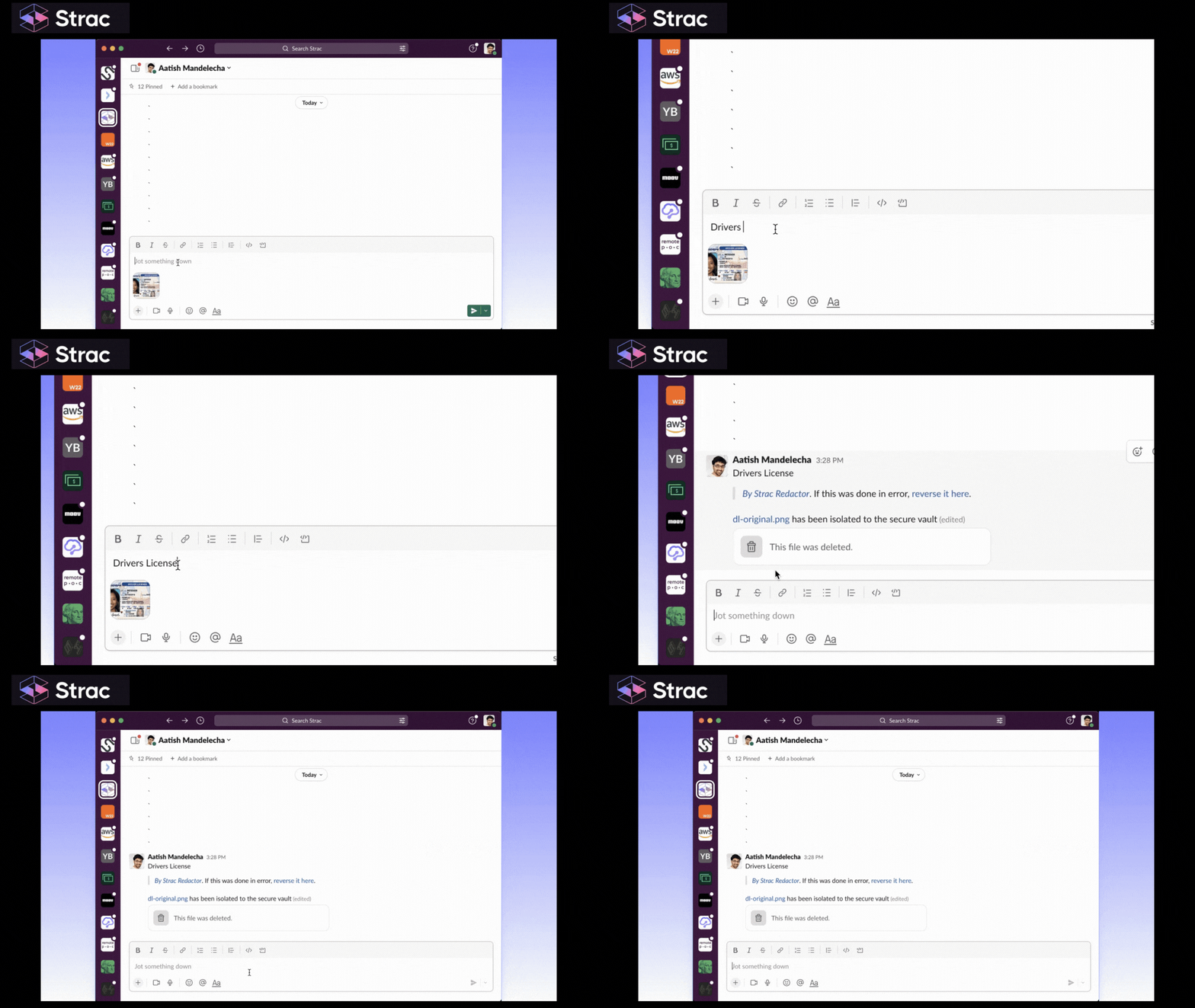
AI DLP covers prompts and outputs in generative AI tools.
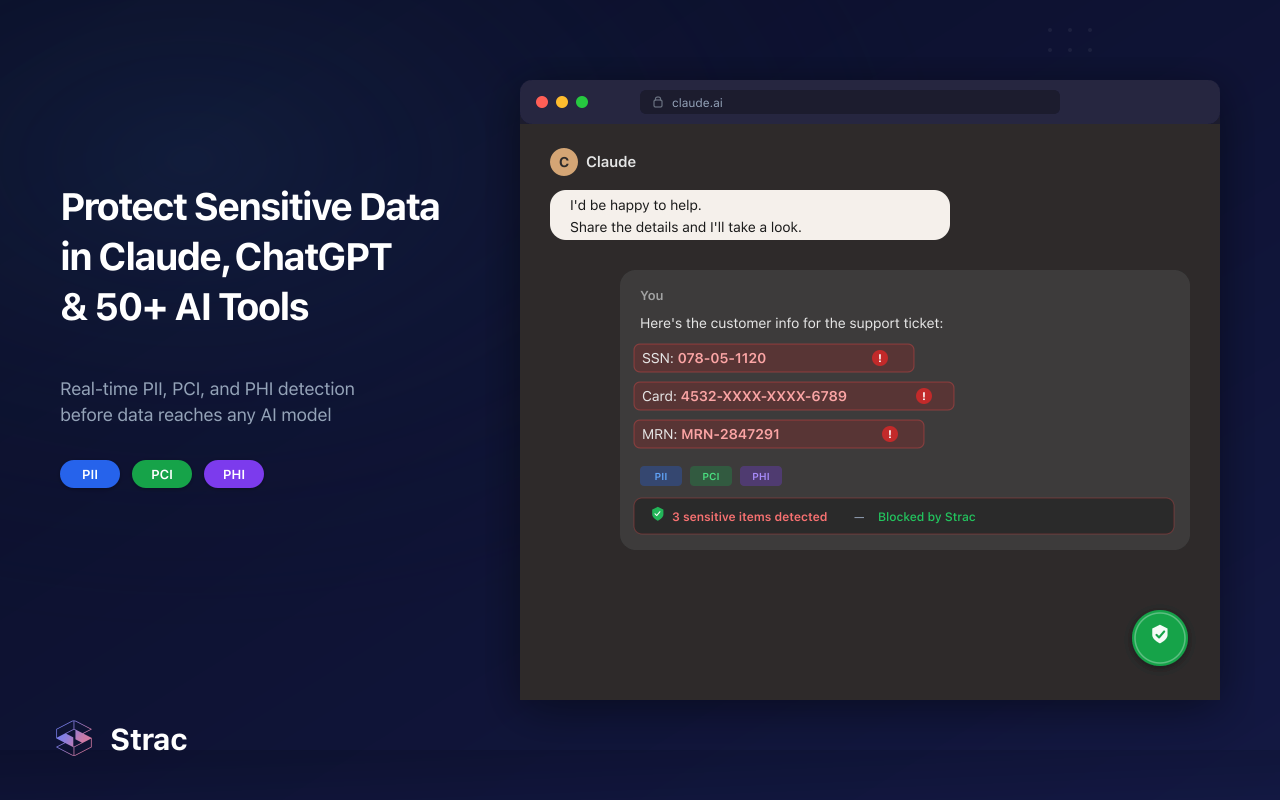
MCP DLP inspects the content of every agent tool call and redacts sensitive values before they enter a model context.
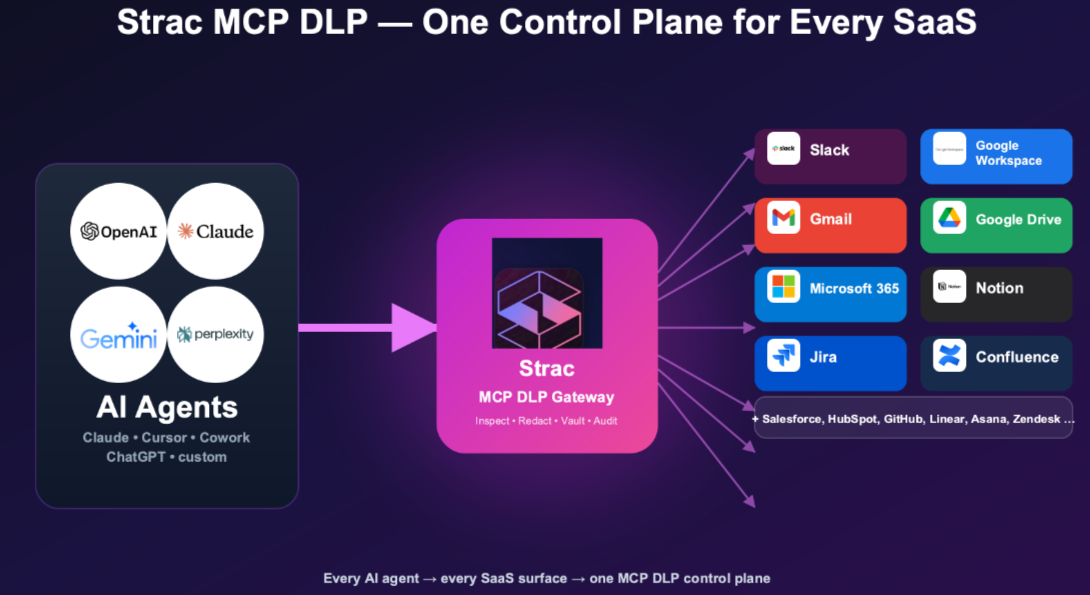
The detection is the same in all five places, so a Social Security number is treated identically whether it appears in a Box folder, a browser paste or an agent response. One policy, five surfaces, one audit trail.
Writing a policy for data you cannot see is guesswork, so the sequence starts with discovery. Strac's data discovery and classification scans connected SaaS applications, cloud stores and endpoints and returns the actual inventory: which sensitive data classes exist, in which systems, exposed to whom. DSPM keeps that posture current as permissions drift and new shares appear.
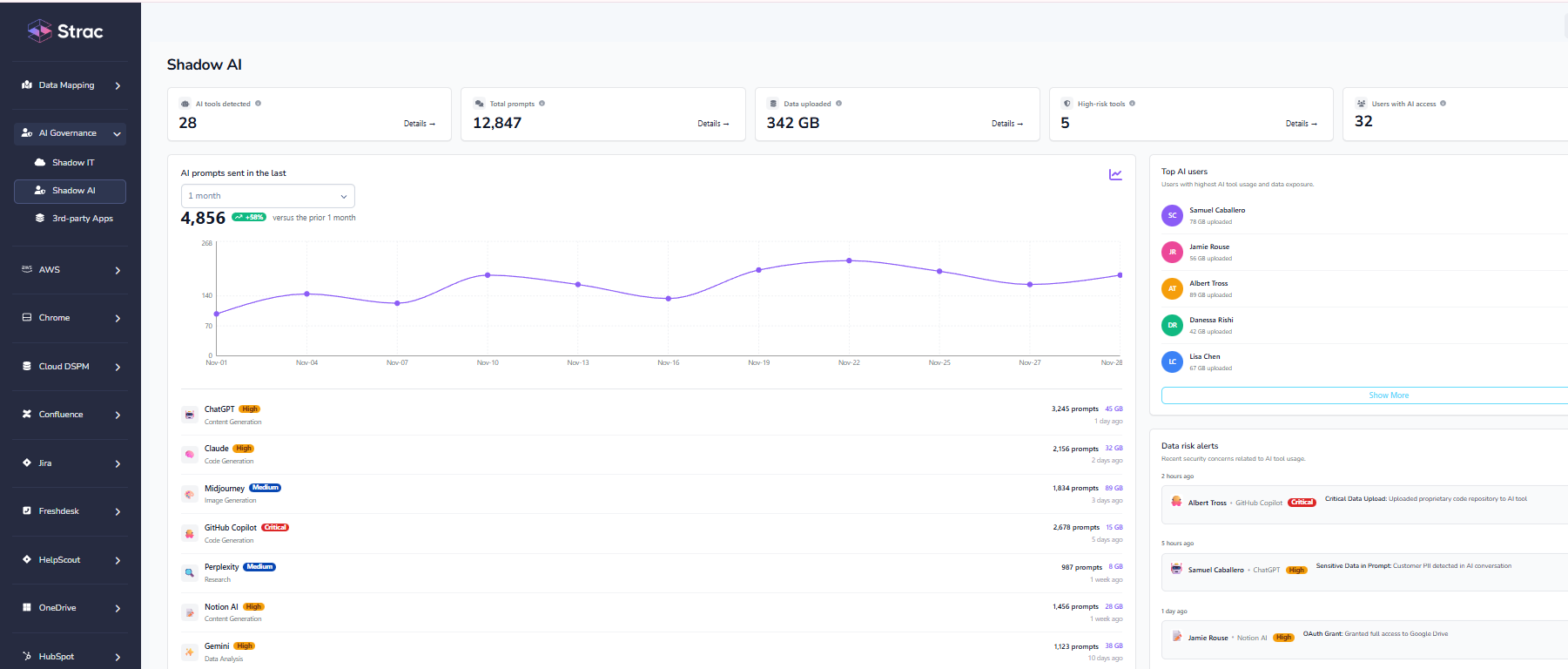
Shadow AI discovery closes the last gap. Strac shows which generative AI tools are actually in use and the sensitive data heading toward each one, which is the difference between a policy written from a vendor list and a policy written from reality. Detection tells you the leak path exists; DLP is what stops the leak.
Days 0 to 30, discover. Run discovery across SaaS, cloud and endpoints. Inventory the AI tools in use and the shadow AI already present. Publish the data class list with named owners. Run every detector in monitor mode only.
Days 30 to 60, protect. Turn on redaction for the top three data classes on the highest volume surfaces. Enable inline warnings in the browser and in generative AI tools. Block the short list of destinations with no business case. Route exceptions through a named approver.
Days 60 to 90, prove and scale. Extend to MCP and agent tool calls. Wire the detection log into the SOC 2, ISO 27001, HIPAA and GDPR evidence pack. Review false positives with the data class owners and tune. Report on data classes protected and exposures remediated, not on alerts generated.
Related reading: AI data governance, shadow AI governance, AI agent governance.
A data leakage prevention policy earns its place when it stops being a document and starts being an action on live traffic. In 2026 that traffic runs through browsers, endpoints, SaaS, cloud, generative AI and MCP, and a policy that names only email and USB governs a company that no longer exists. Identity, model and network controls all fail eventually; the data layer is the backstop, because a redacted record cannot become a breach. Book a demo to see Strac enforce one policy across every surface your data touches.
Is a data leakage prevention policy the same as a data loss prevention policy?
In practice, yes. Data leakage emphasizes slow, unnoticed outflow such as pastes, uploads and oversharing; data loss covers destruction and theft as well. The same policy and the same platform govern both.
Why does our existing DLP not cover generative AI or agents?
Legacy DLP inspects email, endpoints and file shares. It does not see a paste into a browser tab or the content of an agent tool call over MCP, so those routes never reach a policy decision. That gap is covered in why legacy DLP fails for AI.
Can a policy be strict without blocking AI tools?
Yes, and it should be. Redaction removes the sensitive value and lets the task complete, so the work continues without the customer record. Blocking is reserved for destinations with no defensible business case.
Can a policy prevent every leak?
No. Insiders with legitimate access, screenshots and photographs of a screen all sit outside any policy engine. That is why the control worth investing in is the one that removes the sensitive value from the flow, so an unstoppable action moves a redacted record instead of a real one.
Where does this policy sit in overall governance?
It is the enforcement arm. Governance decides what is permitted and proves it; the policy engine makes the decision on live traffic. See AI data governance and AI agent governance for the layers above it.
.avif)


.gif)


.webp)