August 21, 2026

6
min read
Shadow AI vs. Shadow IT: What's the Difference? (2026)
Shadow IT is unapproved apps and services; shadow AI is unapproved AI tools — a fast-growing, higher-risk subset.
Shadow IT is any software, SaaS, or device used without IT approval — the classic example is a team expensing a SaaS tool nobody vetted. Shadow AI is the AI-tool slice of that same behavior: ChatGPT, Claude, niche assistants, IDE AI plugins, and autonomous agents adopted without approval. All shadow AI is shadow IT; not all shadow IT is shadow AI.
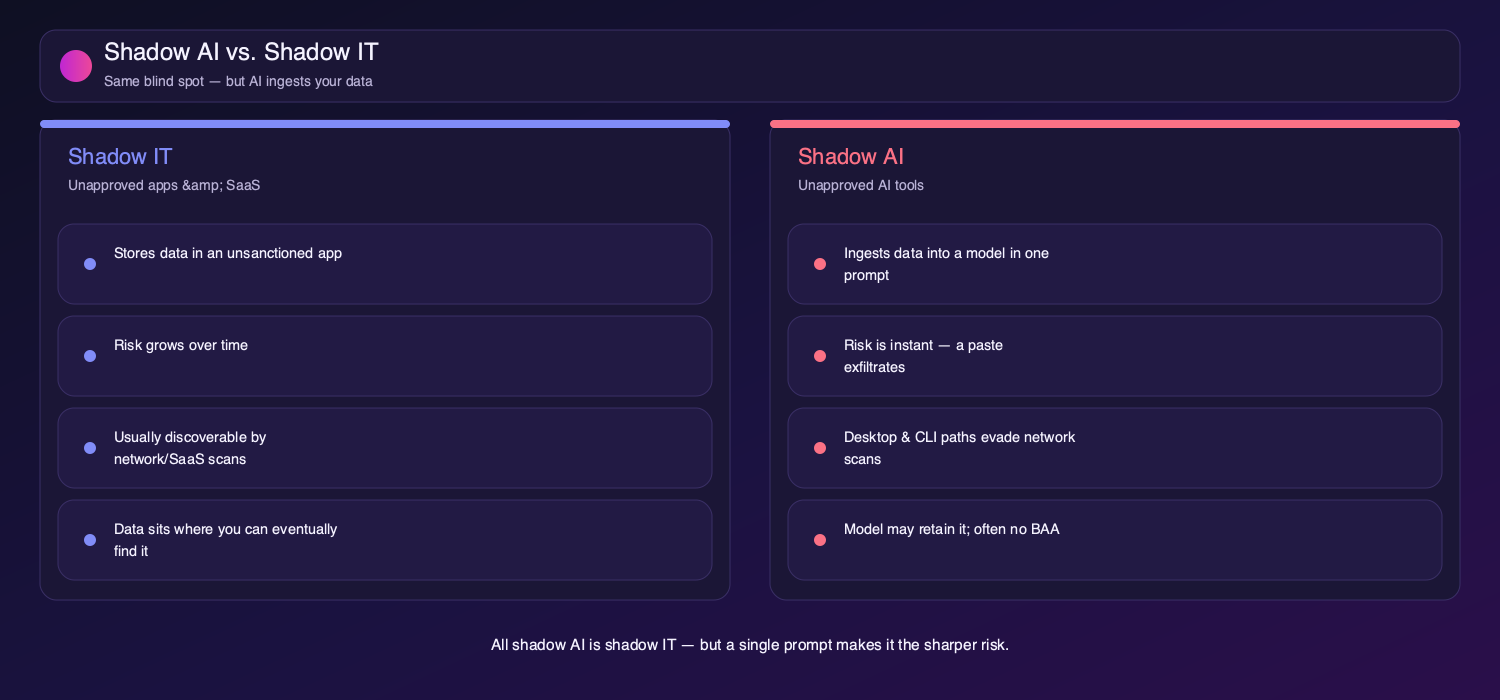
The overlap is the blind spot: in both cases, corporate data leaves through a channel IT never sanctioned and cannot see. The difference is what happens to the data. A shadow SaaS app usually stores it — a risk that grows over time and is often discoverable later. A shadow AI tool ingests it into a model, instantly and often irreversibly.
Three things make shadow AI more dangerous than ordinary shadow IT. It is instant: a paste exfiltrates a customer record in one second. It is evasive: desktop clients and CLI scripts bypass the network monitoring that would catch a shadow SaaS login. And it is often uncovered: consumer AI tools carry no BAA and may retain what they’re given, so a single prompt can create a reportable exposure.
Shadow IT is often found through network and SaaS-log analysis — unusual logins, OAuth grants, expense reports. Those methods miss most shadow AI, because the risky action is a local paste or a desktop client that never produces a SaaS login. Shadow AI detection needs the endpoint to see desktop and CLI paths and to tie AI activity to a file.
Shadow IT took years to accumulate; shadow AI arrived in months. Generative AI delivers instant, visible value, and adoption costs nothing — a browser tab or a free plugin. That combination means usage now outruns governance faster than any prior wave, which is why organizations that had shadow IT under control still have a shadow-AI problem.
Both come down to visibility at the point where data moves: the endpoint. Discover what’s in use, decide what’s sanctioned, and enforce on the sensitive data heading to unsanctioned destinations — whether that destination is a shadow SaaS app or a shadow AI tool.
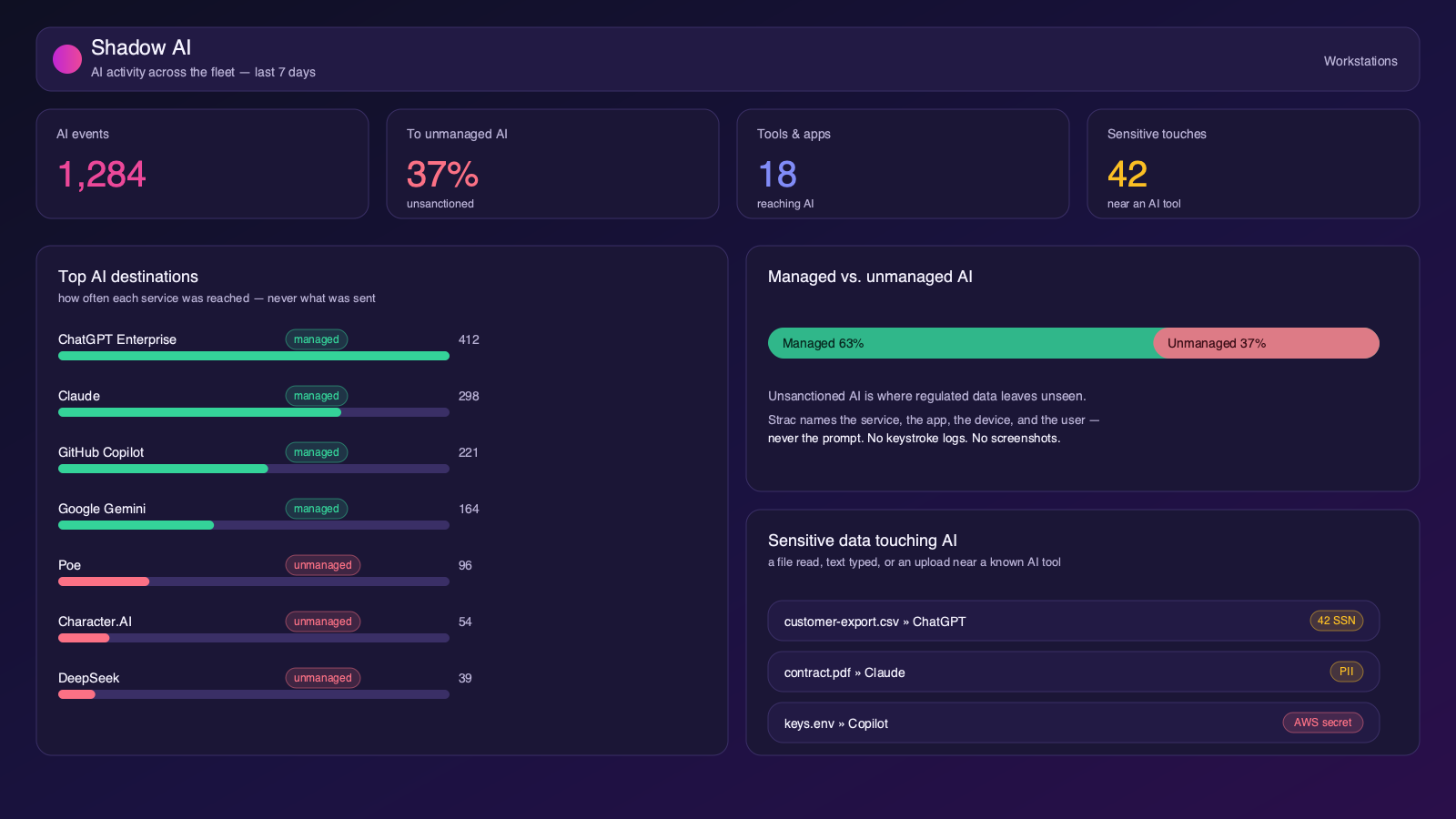
See how Strac surfaces unsanctioned tools and stops the sensitive data from leaving:
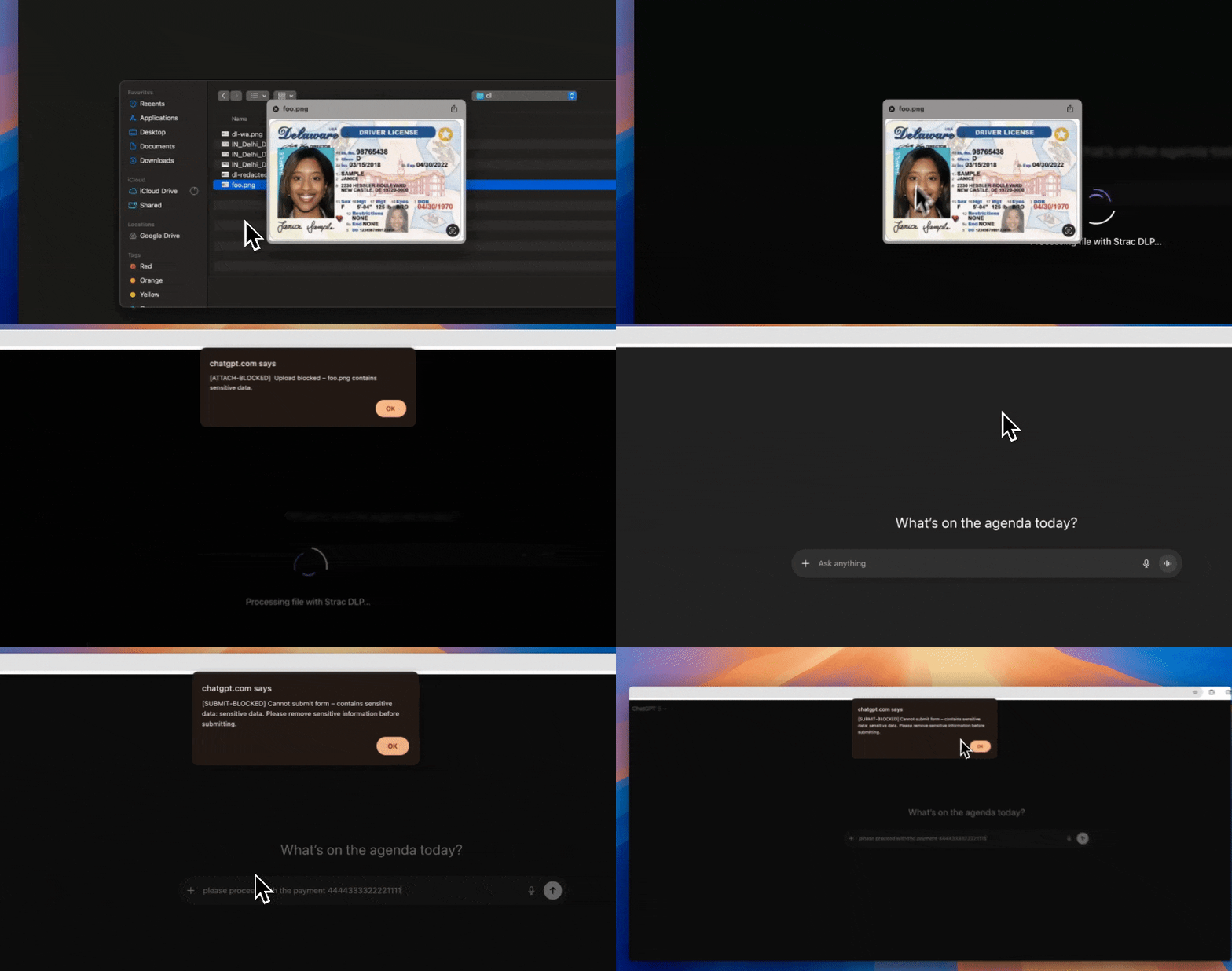
Detection tells you shadow AI is happening. DLP is what stops the leak. The moment sensitive data heads to an AI tool — pasted into a browser prompt, dragged into an upload, opened by a desktop AI app, or overshared in a file an agent can reach — Strac’s content-aware DLP remediates it in real time. This is why so many teams run Strac for web GenAI DLP: it is the remediation layer that turns “we found shadow AI” into “the data never left.”
Strac gives you the right response for each surface, set per data type:

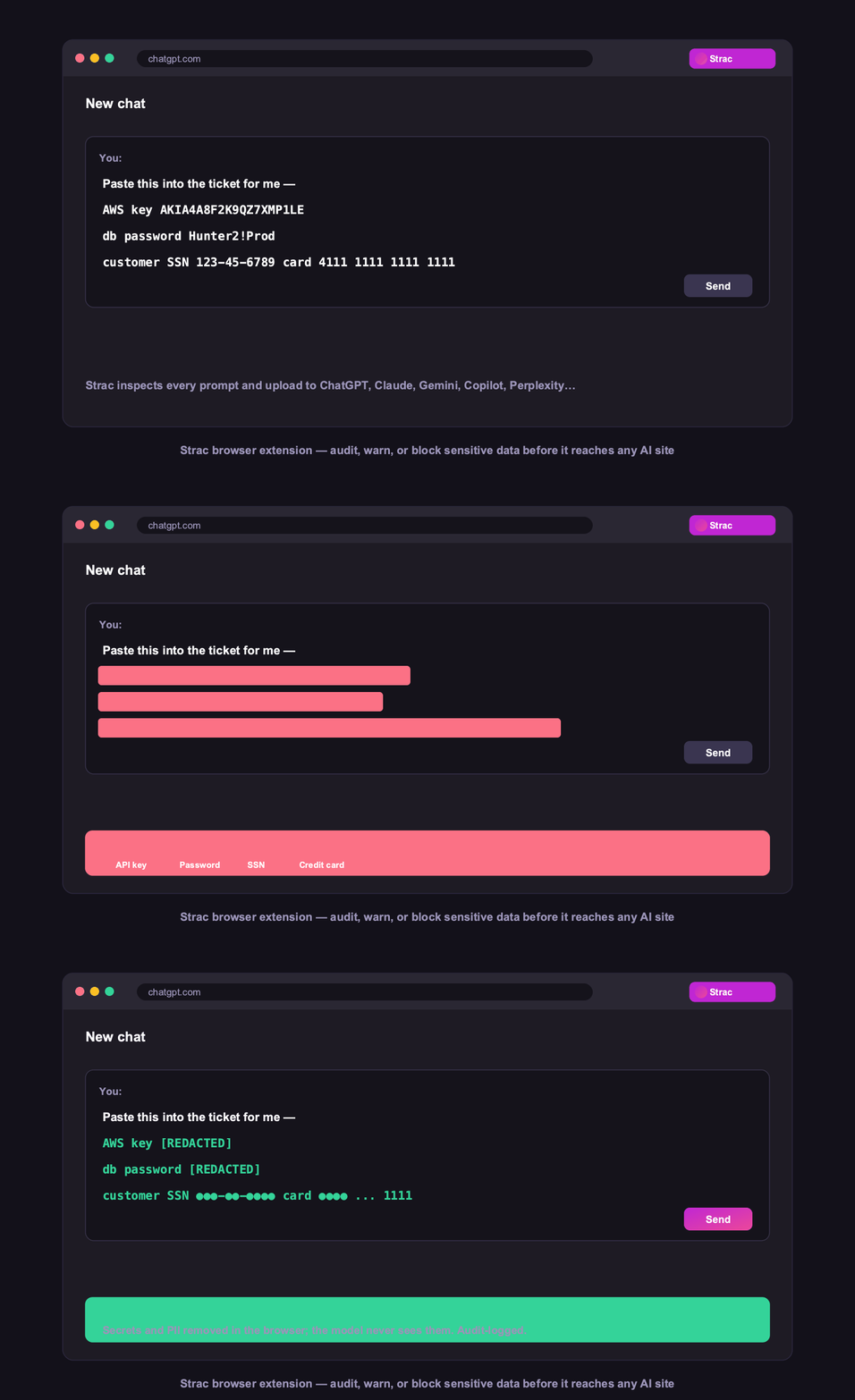

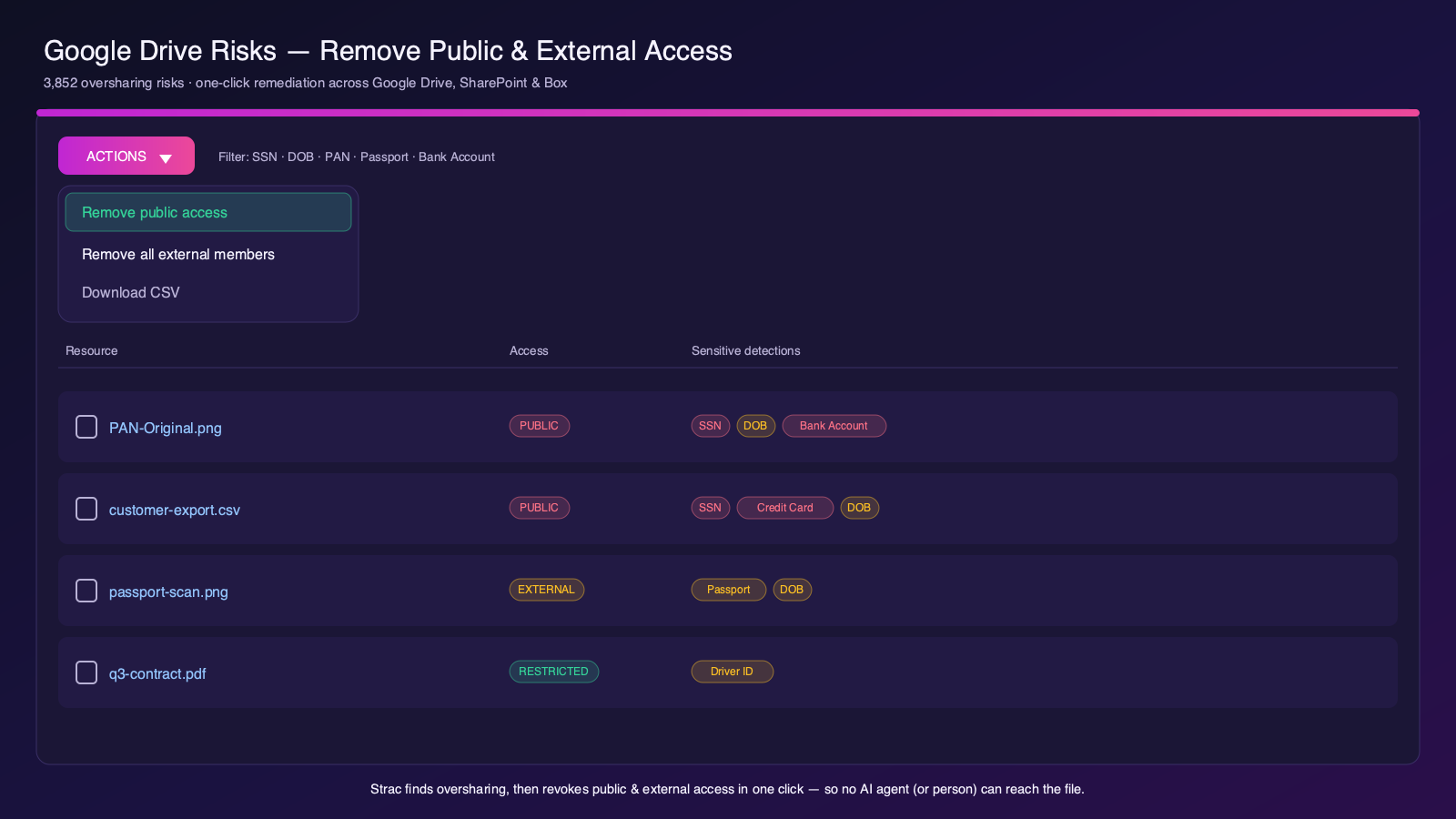
Because detection and DLP live in the same platform, you see the shadow AI and remediate the data with one policy and one audit trail — across SaaS, browser, endpoint, GenAI, and MCP.
Strac closes the blind spot behind both. Start at the Shadow AI hub, or read how to detect shadow AI and shadow IT & shadow AI third-party risk.
What is the difference between shadow AI and shadow IT? Shadow IT is any unapproved app or service; shadow AI is the AI-tool subset. Shadow AI is riskier because a single prompt can send regulated data to a model that may retain it and often carries no BAA.
Is shadow AI a type of shadow IT? Yes — all shadow AI is shadow IT, but its ingest-and-exfiltrate behavior makes it more dangerous than a typical unapproved app.
How do you manage both shadow AI and shadow IT? With endpoint visibility and content-aware enforcement: discover the tools in use and block sensitive data heading to unsanctioned ones.
Why is shadow AI growing so fast? AI tools deliver instant, obvious value and are trivial to adopt — a browser tab or a plugin — so adoption outruns governance faster than any prior wave of shadow IT.
Can one tool cover both? Yes. Strac’s endpoint agent surfaces unsanctioned SaaS and AI tools alike and enforces on the sensitive data heading to either.
.avif)


.gif)


.webp)