ISO 27001 AI Compliance: Securing AI Under Your ISMS (2026)
How ISO 27001 applies to AI systems — which Annex A controls cover AI tools and agents, where an ISMS falls short of AI-specific risks, ISO 27001 vs ISO 42001, and how to bring AI usage into compliance.
ISO 27001 already applies to your AI — the moment employees or systems process company information through AI tools, agents, and connectors, that processing is in ISMS scope. There is no AI carve-out.
The Annex A controls that do the AI heavy lifting: data protection and classification, access control, supplier management (your AI vendors), logging/monitoring, and acceptable use — applied to prompts, uploads, agent connectors, and AI outputs.
What 27001 doesn't cover: AI-specific obligations like system impact assessments, bias, transparency, and human oversight — that's ISO 42001's job. The two integrate cleanly, sharing most of the control base.
The compliance gap auditors now probe is ungoverned AI usage: sensitive data pasted into chatbots, uploaded as files, or pulled into agents via connectors — outside every control you documented.
Closing it takes enforcement plus proof: discover the AI in use, protect the data flowing into it (redact, mask, warn, block), and log every event as evidence. Strac does the enforcing; Strac Comply maps the evidence to your ISO 27001 controls.
Yes, Your ISMS Already Covers AI
A common misconception is that AI is "new" and therefore outside the ISMS until someone updates it. ISO 27001 doesn't work that way: the ISMS covers information, wherever it's processed. When an analyst pastes customer data into ChatGPT, a developer feeds source code to a coding assistant, or an agent reads Slack through an MCP connector, company information is being processed by a new class of supplier and tool — squarely inside scope, risk assessment, and Annex A.
So "ISO 27001 AI compliance" isn't a new certification. It's the question your next surveillance audit will ask: do your existing controls actually operate over your AI usage? For most organizations the honest answer today is no — policy says "don't paste sensitive data into AI," and nothing enforces it.
✨ The Annex A Controls That Apply to AI
Information classification and data protection — classified data keeps its handling requirements inside a prompt or an upload. If confidential data can't leave the org unprotected, it can't enter a consumer AI tool unprotected either. Enforcement means detecting and redacting sensitive data before it reaches the model — see AI DLP.
Access control — which identities (human and agent) can reach which data. AI agents acting on SaaS and databases need least-privilege scoping like any service account, per tool and per action.
Supplier relationships — every AI vendor is a supplier processing your information: model providers, AI features inside SaaS, agent platforms. Vendor assessment, DPAs, and data-handling terms apply; unapproved tools are shadow AI, the new shadow IT.
Logging and monitoring — AI usage events belong in your monitoring: who used what tool, what data classes were involved, what was blocked or redacted.
Acceptable use and awareness — the policy layer still matters; it just can't be the only layer.
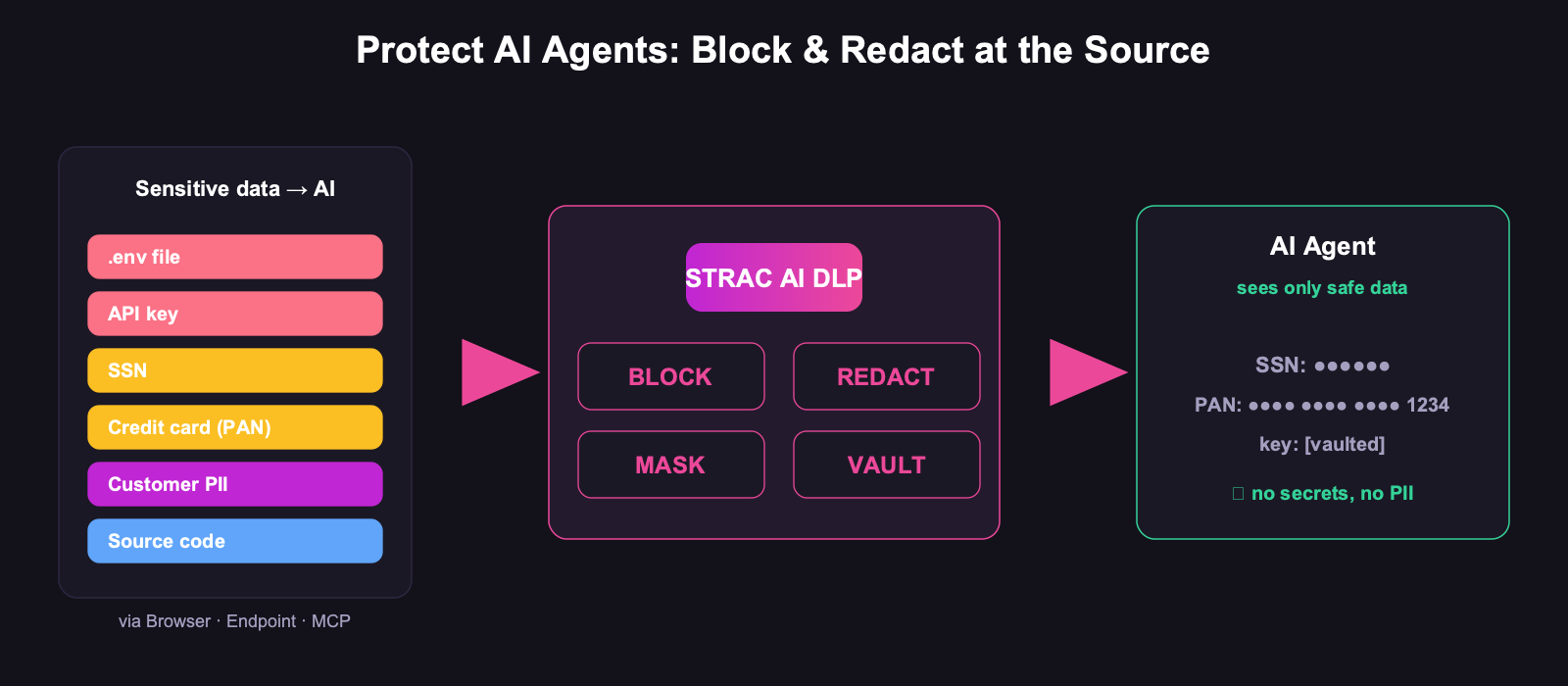
Risk treatment that proves itself: sensitive data is blocked, redacted, masked, or vaulted before the AI ever sees it.
Where ISO 27001 Stops and ISO 42001 Begins
Question
ISO 27001 (ISMS)
ISO 42001 (AIMS)
Is company data in AI protected?
Yes — core scope
Inherits it
Are AI vendors managed as suppliers?
Yes
Extends (AI-specific diligence)
Impact of AI decisions on people?
No
Yes — impact assessments
Bias, transparency, human oversight?
No
Yes — Annex A controls
Certifiable?
Yes
Yes
The efficient path if you hold 27001 and AI is material: extend to ISO 42001 via an integrated audit — the data-protection, access, supplier, and logging controls you already run satisfy both, and the risk methodology can follow ISO 23894. One control set, two certificates.
✨ Making AI Compliance Real: A Short Checklist
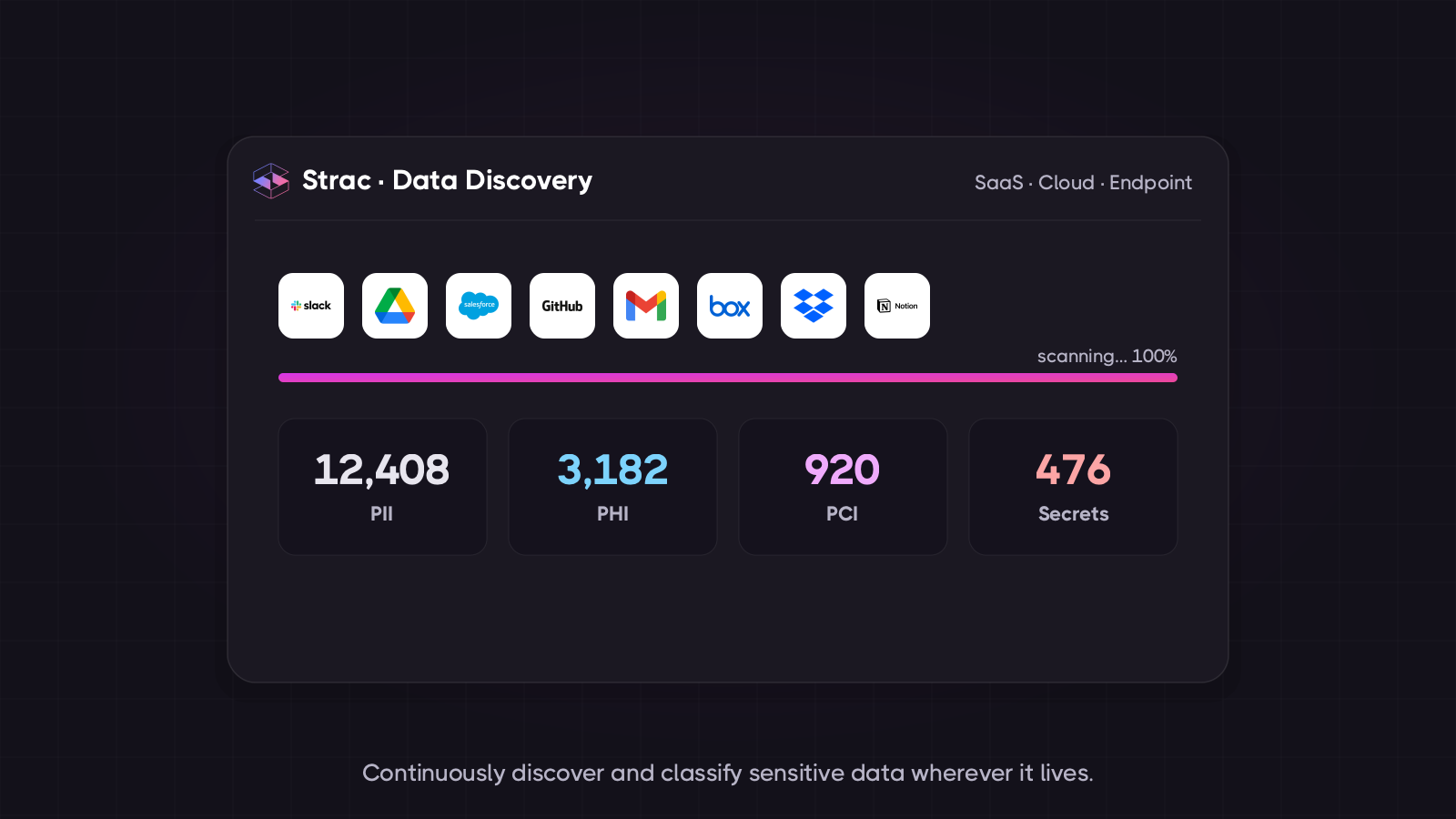
Classifying the flows: Strac maps which data classes reach which systems — the input your AI risk assessment needs.
Discover your actual AI surface — sanctioned tools, browser AI usage, agents, and connectors (find the shadow AI first).
Classify the flows — which data classes reach which AI systems (prompts, files, connectors); this is your risk assessment input.
Enforce at the point of use — redact, mask, warn, or block sensitive data before it reaches the model, in the browser, on the endpoint, and at the MCP layer.
Fold AI vendors into supplier management — including AI features switched on inside existing SaaS.
Collect evidence continuously — every detection and enforcement event, mapped to the control it satisfies. That mapping is exactly what Strac Comply automates for ISO 27001, and it carries forward to 42001 unchanged.
✨ Closing the ISMS's AI Gap with Strac
The gap in most ISO 27001 programs isn't missing controls — it's that the documented controls don't operate over AI usage. Strac retrofits enforcement onto the exact Annex A areas above:
Classification & data protection — classified data keeps its handling rules inside prompts, uploads, and agent tool calls: detected and redacted, masked, or blocked before it leaves policy.
Supplier & shadow AI — continuous discovery surfaces every AI tool and connector in use, so your supplier register matches reality instead of the approved-vendor list.
Logging & monitoring — AI usage events (who, which tool, what data class, what action) stream into your monitoring and into Strac Comply, mapped to the 27001 controls they evidence — surveillance-audit ready.
The 42001 on-ramp — the same enforcement and evidence carry unchanged into an AI Management System when you extend, which is why the integrated path costs a fraction of two programs.
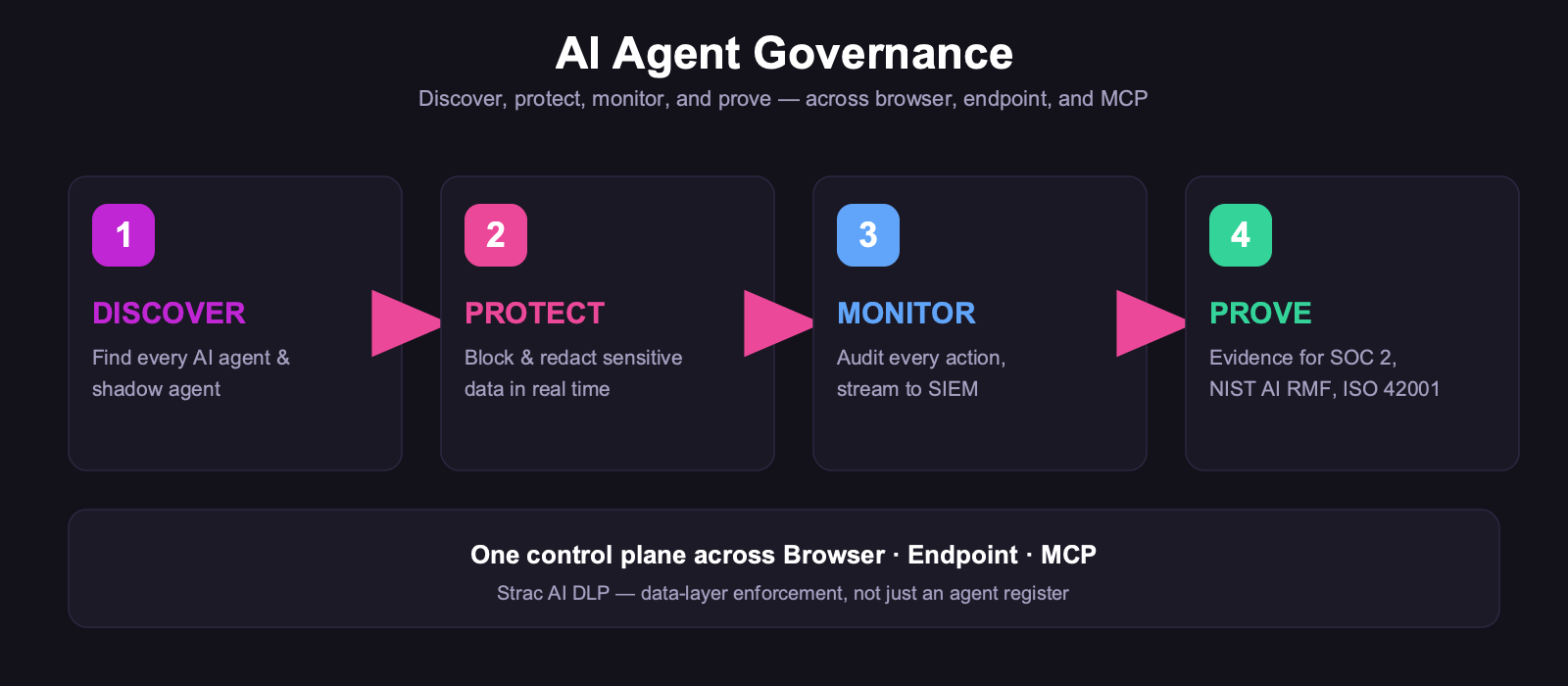
Discover → Protect → Monitor → Prove: the ISMS's existing control intent, enforced over AI.
🌶️ Spicy FAQs for ISO 27001 AI Compliance
Does ISO 27001 cover AI?
Yes — anywhere company information is processed is ISMS scope, and that includes AI tools, agents, and AI features inside SaaS. What ISO 27001 doesn't cover are AI-specific obligations like impact assessments, bias, and transparency; those live in ISO 42001. Practically: 27001 governs the data in your AI; 42001 governs the AI itself.
Do we need ISO 42001 if we have ISO 27001?
If AI is material to your product or operations — or your enterprise customers ask AI-governance questions — increasingly yes. The good news is the overlap: your 27001 data-protection, access, supplier, and monitoring controls carry much of 42001's weight, and integrated audits keep the cost increment modest.
What are the biggest ISO 27001 gaps with AI usage?
Three recur in audits: sensitive data entering AI tools with no enforcement behind the acceptable-use policy; AI vendors (and agents) missing from supplier management; and no logging of AI usage at all, so no evidence the controls operate. All three trace to the same root — nobody can see what data is actually flowing into AI.
How do we stop employees pasting sensitive data into AI tools without banning AI?
Enforce at the point of use rather than prohibiting the tools: detect sensitive data in the prompt or upload and redact it, warn the user, or block the submission based on policy. That keeps AI usable while keeping classified data inside its handling requirements — and every event doubles as audit evidence that the control operates.
Is using ChatGPT a breach of ISO 27001?
Not inherently — ISO 27001 doesn't ban any tool. It requires that information processing be risk-assessed and controlled. ChatGPT with enforced data protection and vendor assessment can be compliant; ChatGPT as an unmanaged shadow tool receiving unredacted customer data is a nonconformity waiting for an auditor to find it.
The Bottom Line
ISO 27001 AI compliance isn't a new framework — it's your existing ISMS meeting the way work actually happens now. The organizations that pass this test treat AI tools as what they are (suppliers processing classified information), put enforcement behind the acceptable-use policy, and let the controls log their own evidence. Do that, and the step up to ISO 42001 becomes an extension, not a second program.
Book a demo to see AI usage discovered, sensitive data protected at the point of use, and the evidence mapped to your ISO 27001 controls automatically.
Yes — anywhere company information is processed is ISMS scope, and that includes AI tools, agents, and AI features inside SaaS. What ISO 27001 doesn't cover are AI-specific obligations like impact assessments, bias, and transparency; those live in ISO 42001. Practically: 27001 governs the data in your AI; 42001 governs the AI itself.
Do we need ISO 42001 if we have ISO 27001?
If AI is material to your product or operations — or your enterprise customers ask AI-governance questions — increasingly yes. The good news is the overlap: your 27001 data-protection, access, supplier, and monitoring controls carry much of 42001's weight, and integrated audits keep the cost increment modest.
What are the biggest ISO 27001 gaps with AI usage?
Three recur in audits: sensitive data entering AI tools with no enforcement behind the acceptable-use policy; AI vendors (and agents) missing from supplier management; and no logging of AI usage at all, so no evidence the controls operate. All three trace to the same root — nobody can see what data is actually flowing into AI.
How do we stop employees pasting sensitive data into AI tools without banning AI?
Enforce at the point of use rather than prohibiting the tools: detect sensitive data in the prompt or upload and redact it, warn the user, or block the submission based on policy. That keeps AI usable while keeping classified data inside its handling requirements — and every event doubles as audit evidence that the control operates.
Is using ChatGPT a breach of ISO 27001?
Not inherently — ISO 27001 doesn't ban any tool. It requires that information processing be risk-assessed and controlled. ChatGPT with enforced data protection and vendor assessment can be compliant; ChatGPT as an unmanaged shadow tool receiving unredacted customer data is a nonconformity waiting for an auditor to find it.
Discover & Protect Data on SaaS, AI, MCP, Endpoints & Cloud
Strac provides end-to-end data loss prevention for all SaaS and Cloud apps. Integrate in under 10 minutes and experience the benefits of live DLP scanning, live redaction, and a fortified SaaS environment.


.webp)




.avif)



.gif)
