✨ Does ISO 27001 Require Penetration Testing?
Short answer: ISO 27001 never uses the words “penetration test” as a hard mandate — but you will not pass a credible certification audit without one. The 2022 revision of the standard concentrates security obligations in the Technological theme of Annex A, and two controls in particular are where auditors look for pentest evidence:
- Annex A.8.8 — Management of technical vulnerabilities. You must identify and evaluate technical vulnerabilities and take action. A penetration test is the strongest evidence you are actively finding them, not just running a scanner.
- Annex A.8.29 — Security testing in development and acceptance. Security testing must be defined and performed across the development lifecycle. Pentesting before release is the expected proof.
Add Clause 9.1 (monitoring, measurement, analysis and evaluation) and the picture is clear: your ISMS has to demonstrate it continuously evaluates security effectiveness, and a pentest is the most direct demonstration. An auditor who finds no penetration testing in your evidence will raise a nonconformity. For the broader platform view, see our ISO 27001 compliance software guide.

✨ Which ISO 27001 Controls Penetration Testing Maps To
A penetration test is not a single-control checkbox — its findings provide evidence across several Annex A controls and a clause. This is the mapping auditors expect to trace:
ISO 27001:2022 reference
What it requires
How a pentest provides evidence
A.8.8
Management of technical vulnerabilities
Identifies and validates real exploitable vulnerabilities, not just scanner output
A.8.29
Security testing in development & acceptance
Demonstrates security testing before and after release
A.8.25
Secure development lifecycle
Shows testing is built into your SDLC, not bolted on
A.8.9
Configuration management
Surfaces insecure configurations exposed to attack
Clause 9.1
Monitoring, measurement, analysis & evaluation
Provides measurable evidence of control effectiveness over time
How Often Should You Pentest for ISO 27001?
ISO 27001 does not set a fixed interval, but auditors and the implicit risk-based expectation converge on two triggers:
- At least annually. A yearly penetration test is the de facto baseline for a certified ISMS and aligns with the annual surveillance audit cycle.
- After any significant change. A major release, a new product, a cloud migration, or a shift in your threat landscape should trigger a fresh test — A.8.8 and A.8.29 are risk-based, not calendar-based.
The weakness of the annual model is obvious once you say it out loud: a single test certifies one day and leaves the other 364 unverified. That gap is exactly what continuous testing closes (more below).
What to Put in Scope
Your penetration test scope should match your ISMS boundary. For most SaaS companies that means:
- External network — internet-facing hosts, exposed services, and your perimeter.
- Web applications and APIs — the highest-value target: injection (SQLi, XSS, RCE), authentication (JWT, OAuth/SSO, MFA bypass), authorization (IDOR, broken function-level access), and business-logic flaws.
- Internal network — lateral movement and privilege escalation once an attacker is inside.
- Cloud configuration — misconfigured storage, IAM, and exposed secrets.
One scope point teams miss: data exposure. A pentest can prove an attacker could reach sensitive data, but ISO 27001 Annex A.8.12 (data leakage prevention) also wants proof you are actively preventing that exposure day to day — which is a DLP and DSPM job, not a pentest job. The two are complementary evidence.
What an ISO 27001 Pentest Report Must Contain
For the report to be audit-grade, an auditor will want to see:
- Scope and methodology — what was tested and how (e.g., OWASP-aligned).
- Findings with severity ratings — ideally with proof-of-concept evidence so there is no doubt a finding is real.
- Mapping to Annex A controls — so each finding connects to your ISMS.
- Remediation status and retest evidence — proof that high-severity findings were fixed and verified, which is what A.8.8 ultimately demands.
✨ From Annual Snapshots to Continuous AI Penetration Testing
The traditional pentest — a consultant, a one-week engagement, a PDF once a year — satisfies the letter of A.8.8 but leaves your ISMS blind between tests. The 2026 alternative is continuous, AI-driven penetration testing: autonomous agents that test daily instead of annually, verify every finding through actual exploitation (no false positives to chase), detect attack-surface drift as you ship, and automatically retest patches to confirm remediation.
This is the model Strac brought in-house by acquiring PentestMate, an AI penetration testing platform that tags every validated finding directly against ISO 27001 Annex A control objectives (and SOC 2 Trust Services Criteria), with executable proof-of-concept evidence and integrations into GitHub, GitLab, Jira, and Linear. Instead of a once-a-year snapshot, A.8.8 and A.8.29 evidence accrues every day — and remediation retests prove the fix, which is the part annual pentests rarely close cleanly. It is the same critique the market is having about pentest-led compliance, resolved by making the testing continuous rather than point-in-time.
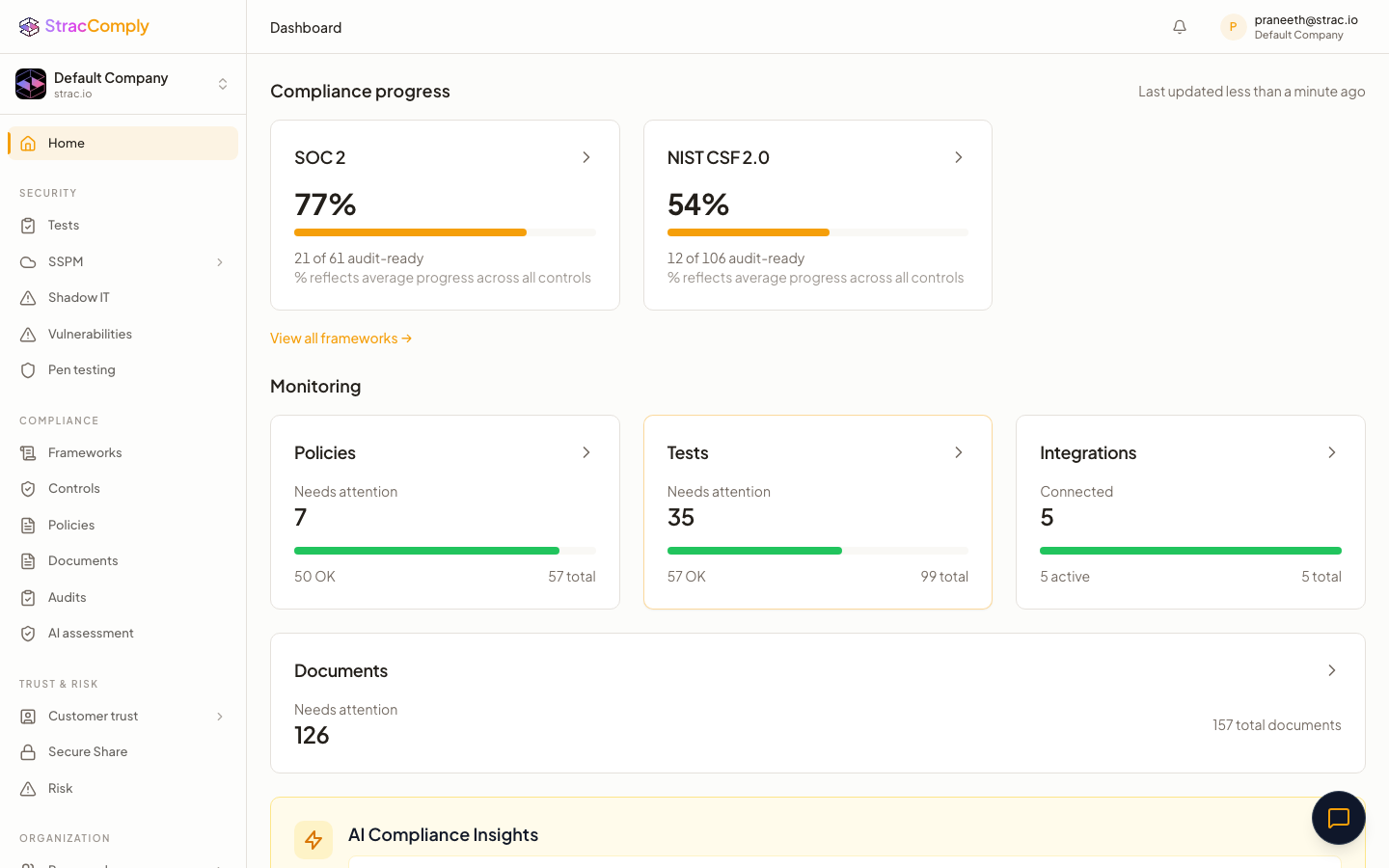
✨ How Strac Comply Turns Pentest Findings Into ISO Evidence
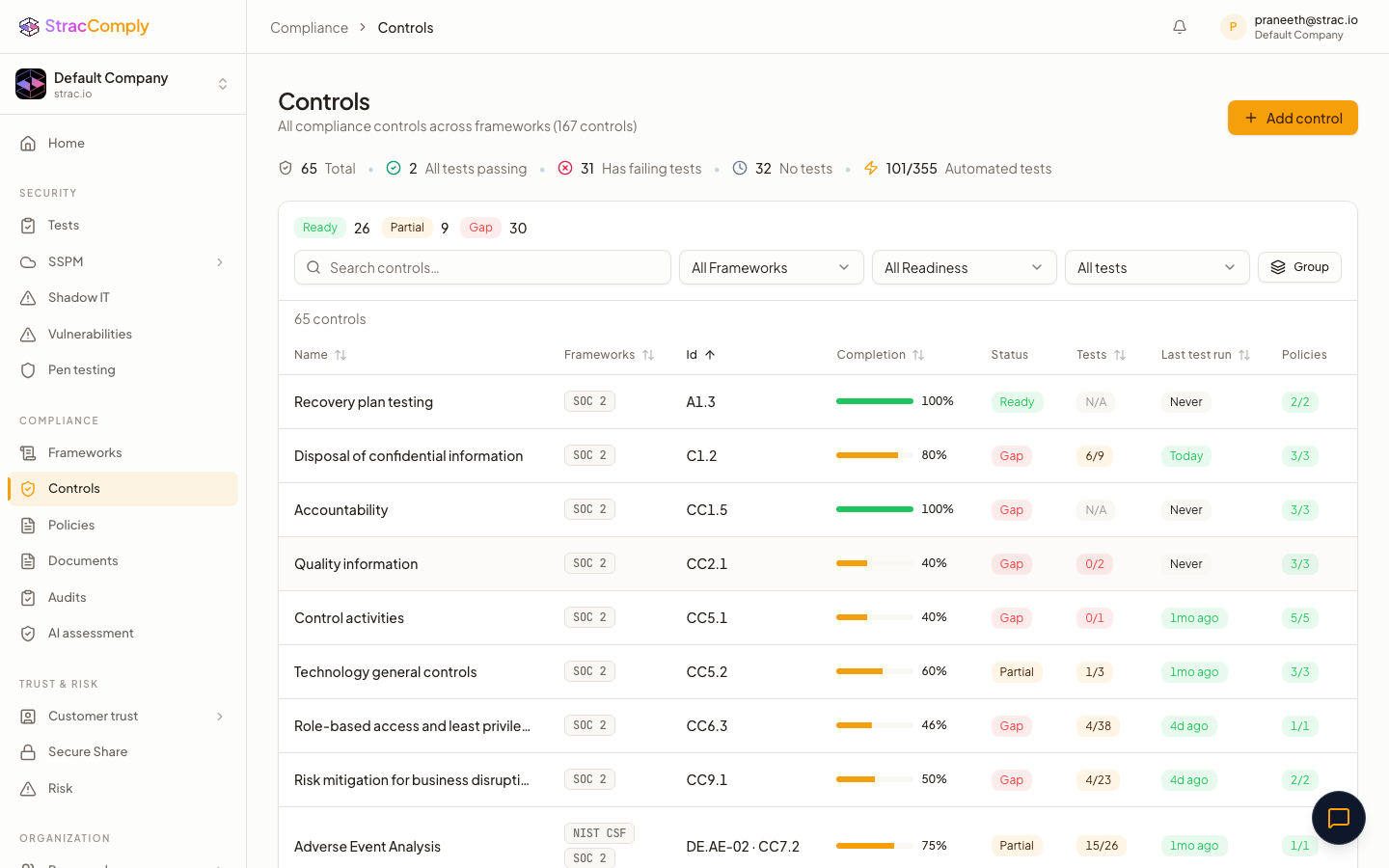
Finding a vulnerability is only half the job; ISO 27001 cares that the finding flows into your ISMS and gets remediated. Strac Comply closes that loop: penetration test findings — whether from Strac’s continuous AI testing or your existing pentest vendor — flow directly into your Annex A control evidence and remediation tracking, so A.8.8 and A.8.29 stay continuously satisfied instead of being reconstructed before each audit.
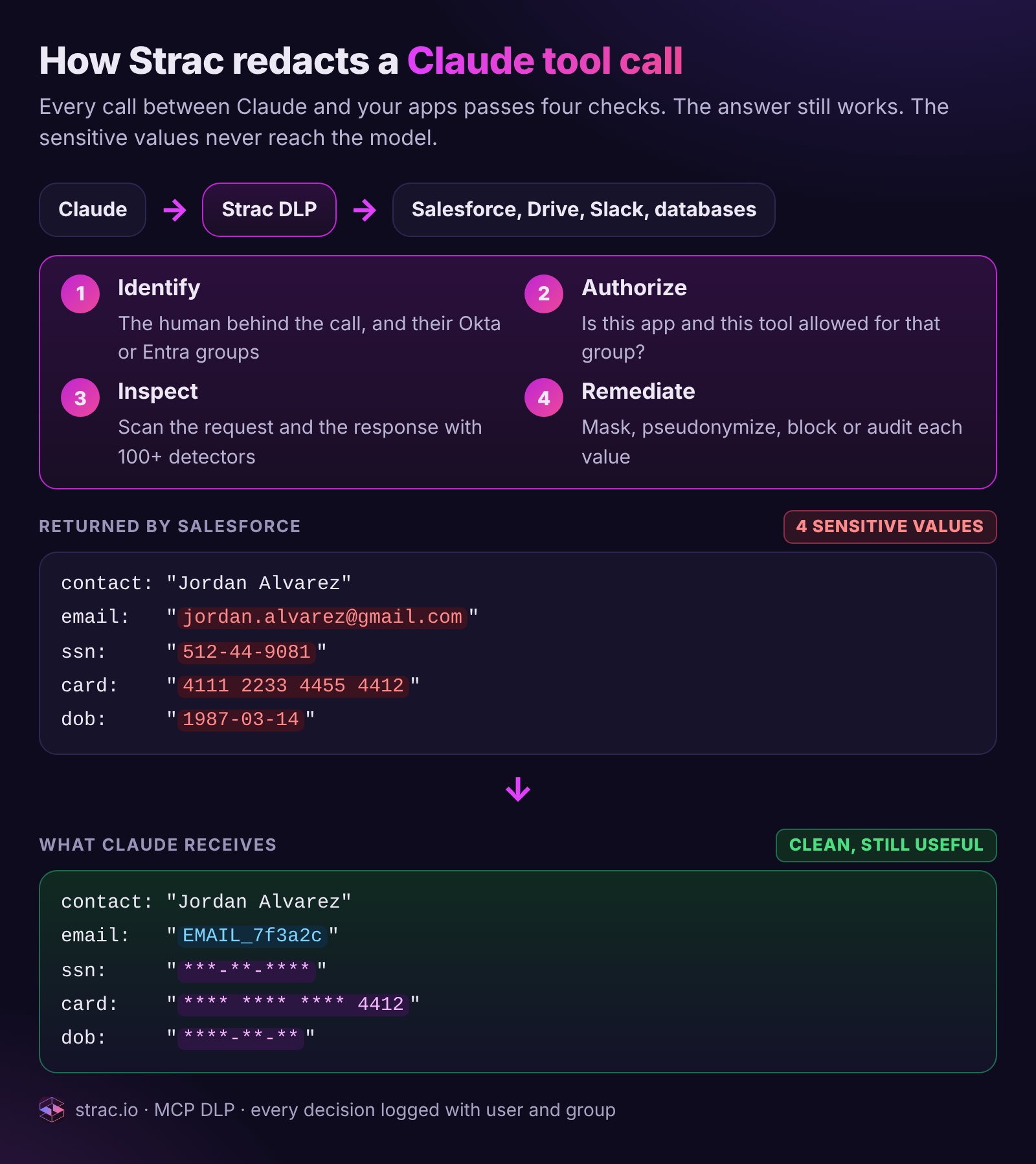
And because Strac Comply runs on Strac’s data security platform, it covers the control a pentest cannot: continuous data-leakage prevention (A.8.12) across SaaS, cloud, endpoint, and AI agents. Penetration testing proves attackers can’t get in; DLP and DSPM prove your data stays controlled once it’s inside. ISO 27001 wants both — and Strac is the rare platform that produces both as one evidence stream.
Continuous pentesting, mapped to ISO 27001 automatically
Strac Comply pairs AI-driven continuous penetration testing (built on PentestMate) with native DLP and DSPM — so Annex A.8.8, A.8.29, and A.8.12 evidence accrues every day, not once a year. The same platform that tests your security proves your compliance.
Start at comply.strac.io →
Pentesting is one 27001 obligation the AI era reshapes — for how the rest of your ISMS applies to AI tools and agents, see ISO 27001 AI compliance.
Related reading:
🌶️ Spicy FAQs for ISO 27001 penetration testing
Does ISO 27001 require penetration testing?
Not by that exact word, but effectively yes. ISO 27001:2022 Annex A.8.8 (technical vulnerability management) and A.8.29 (security testing in development and acceptance), together with Clause 9.1, make penetration testing the evidence auditors expect. A certified ISMS without any pentesting will typically receive a nonconformity at the Stage 2 audit.
How often do you need a pentest for ISO 27001?
At minimum annually, aligned to the surveillance audit cycle, plus after any significant change to your application, infrastructure, or threat landscape. Because A.8.8 is risk-based, continuous or more frequent testing is increasingly expected for fast-shipping SaaS — an annual snapshot leaves 364 days unverified.
Which Annex A controls does penetration testing cover?
Primarily A.8.8 (management of technical vulnerabilities) and A.8.29 (security testing in development and acceptance), with supporting evidence for A.8.25 (secure development lifecycle), A.8.9 (configuration management), and Clause 9.1 (monitoring and evaluation). A good report maps each finding to the control it affects.
What’s the difference between a vulnerability scan and a pentest for ISO 27001?
A vulnerability scan is automated and lists potential issues; a penetration test validates which are actually exploitable, often with proof-of-concept evidence. ISO 27001 A.8.8 wants more than a raw scanner report — it wants evidence you evaluate and act on real, prioritized risk. Continuous AI pentesting blends both: scanner-like frequency with exploit-verified findings.
Do you need an external (third-party) pentest for ISO 27001 certification?
ISO 27001 doesn’t strictly mandate a third party, but independence strengthens the evidence and most auditors expect either an external firm or a credible independent testing capability. AI-driven continuous testing platforms like Strac’s (built on PentestMate) provide that independent, exploit-verified evidence on an ongoing basis rather than once a year.


.webp)







.avif)



.gif)
