Free Data Loss Prevention Software: What It Can Do, Where It Breaks, and What to Use Instead in 2026
Discover the features modern DLP software needs to detect, classify, redact, block, and protect sensitive data across SaaS, cloud, endpoints, GenAI, and MCP workflows.
· Free and open-source DLP tools can help teamsbegin identifying sensitive data, but usually offer limited integrations,detection accuracy, remediation, support, and scalability.
· In 2026, DLP needs to cover more than email andfile shares. Sensitive data moves through SaaS apps, cloud storage, endpoints,browsers, GenAI tools, APIs, and MCP-connected workflows.
· The real question is not whether a tool canalert on a credit-card number; it is whether it can find sensitive dataeverywhere, understand the context, and stop or remediate exposure in realtime.
· Strac unifies DSPM and DLP to discover,classify, monitor, and protect sensitive data across modern businessenvironments.
· Teamscan begin with a free trial or a targeted proof of value, but should evaluatewhether the solution supports the data flows they actually use.
Searching for a free data loss prevention software download makes sense when you are trying to reduce risk without committing to a long procurement cycle. But “free DLP” can mean very different things: an open-source project, a limited free tier, a time-bound trial, or a tool that only covers one channel.
That distinction matters. Modern data leaks rarely happen in just one place. Customer support agents paste personal data into tickets, employees upload spreadsheets to cloud drives, developers share secrets in Slack, and teams use AI tools to summarize or generate content. A useful DLP strategy needs visibility and enforcement across all of those workflows.
What Is Free Data Loss Prevention Software?
Data loss prevention software helps organizations discover, classify, monitor, and protect sensitive data from unauthorized sharing, exposure, or exfiltration.
Free DLP tools can provide a starting point for organizations that want to:
Identify obvious PII, PCI, PHI, or secrets in files and communications
Test basic detection rules
Monitor a limited set of endpoints or applications
Create simple policies for email, web, USB, or file transfers
Assess whether DLP is a priority before investing in a broader program
However, free tools commonly rely on basic pattern matching, have limited integration coverage, and generate alerts without providing a practical remediation path. That can leave security teams with more findings but little ability to reduce the exposure quickly.
Why Basic DLP Is No Longer Enough
Sensitive data is no longer stored in a single database or shared only through corporate email. It moves constantly across tools employees use to get work done. A modern DLP program needs to account for:
Endpoints, including browsers, clipboard activity, screenshots, uploads, downloads, USB devices, and local files
GenAI tools and LLM APIs, where users may paste customer data, source code, financial information, or health data into prompts
APIs, webhooks, and custom applications that move data outside standard business tools
MCP workflows, where AI agents can connect to internal tools and data sources through Model Context Protocol servers
A tool that scans a folder once a month may be useful for an audit. It is not enough to protect a support agent who just pasted a patient record into a public AI tool or a developer who accidentally shared an API key in a chat channel.
✨ What to Look for in Free or Low-Cost DLP Software
If you are evaluating a free DLP download, free tier, or trial, use it to assess the capabilities that will matter once your data protection needs grow.
Accurate Sensitive Data Detection
The tool should detect more than simple regex patterns. Basic rules can identify a sequence that looks like a card number, but they often miss sensitive content in PDFs, spreadsheets, support tickets, screenshots, scanned documents, and free-form text.
Look for detection that supports:
PII, including names, addresses, Social Security numbers, passport numbers, and national IDs
PCI data, including cardholder data
PHI and healthcare identifiers
Secrets, API keys, tokens, credentials, and private keys
Custom confidential data, such as customer IDs, internal project names, or proprietary records
OCR for images and scanned documents
Structured and unstructured data classification
Broad Coverage Across Where Data Actually Moves
A DLP tool is only useful where it is deployed. Before selecting one, map your highest-risk data flows.
For example:
A healthcare company may prioritize Google Drive, Slack, Zendesk, Microsoft 365, and AI tools.
A fintech company may need coverage for customer support, CRM records, payment data, cloud storage, and developer tools.
A software company may care most about source code, secrets, internal documents, AI prompts, and browser uploads.
An enterprise with a distributed workforce may need endpoint and removable-media controls in addition to SaaS security.
Real-Time Remediation, Not Just Alerts
Detection without remediation creates a queue for already-overloaded security teams. A stronger DLP solution should let you act on violations automatically based on data type, user, application, destination, and policy.
Useful remediation options include:
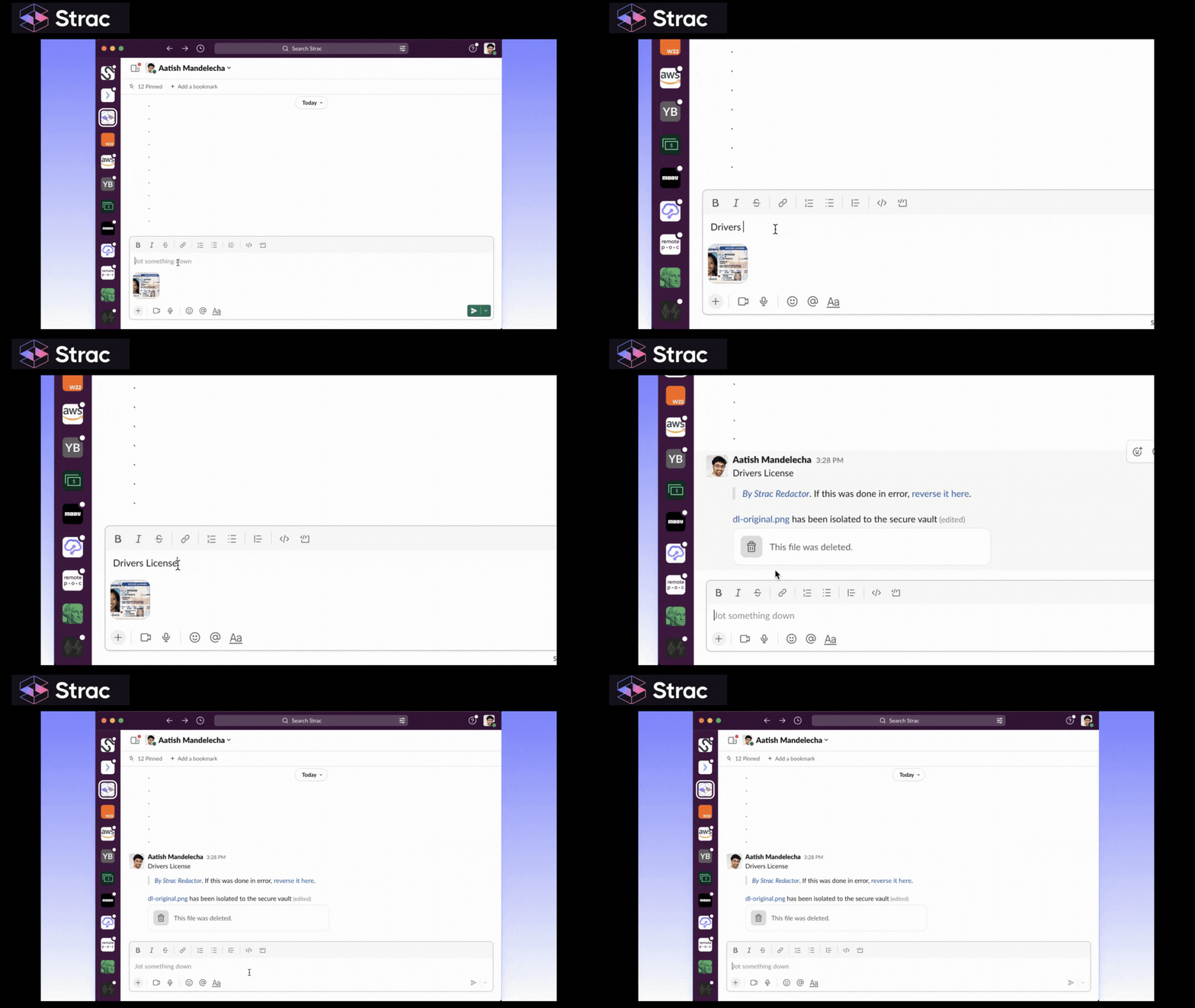
Redact or mask sensitive text
Blur sensitive information in attachments or images
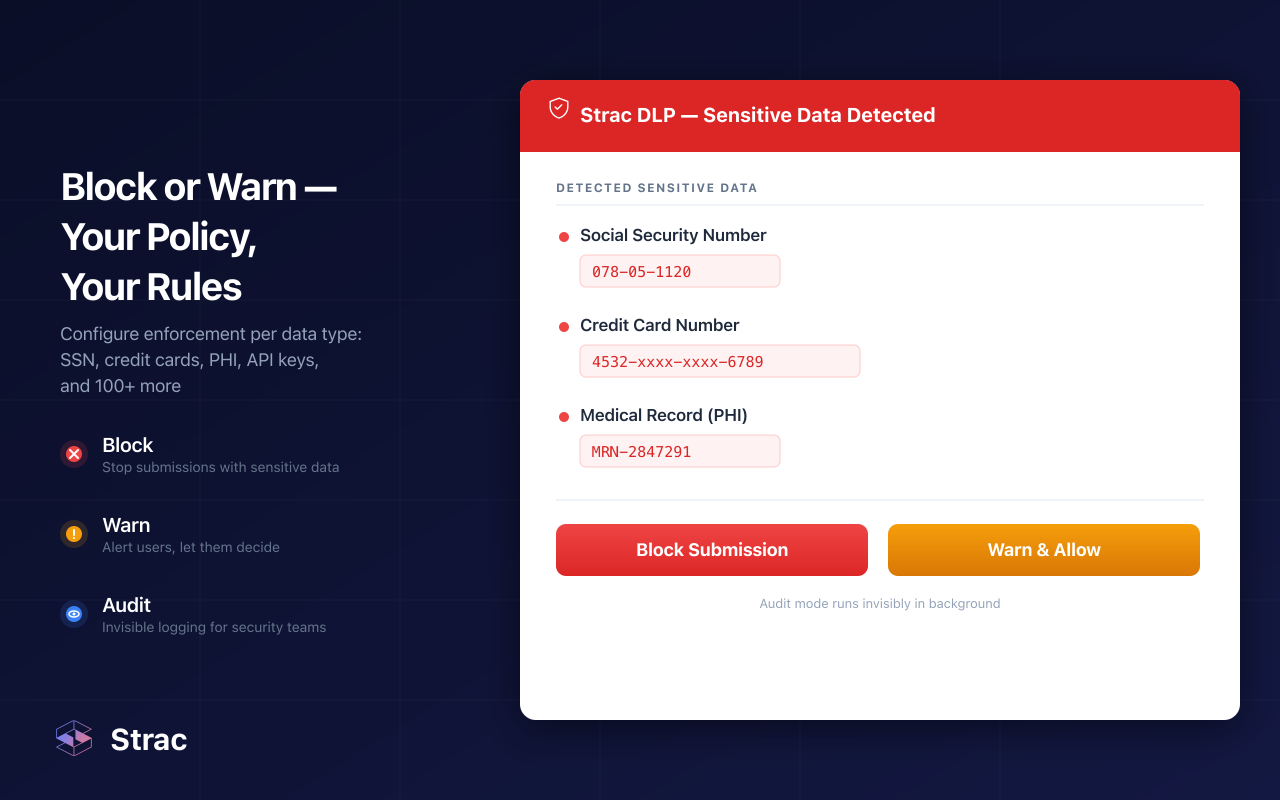
Block a risky upload, message, download, copy, or transfer
Quarantine a file
Delete or secure exposed content
Encrypt permitted transfers
Warn or coach the user before data leaves an approved environment
Create an audit trail for investigation and compliance evidence
Policy Flexibility
Every business has different risk tolerances. A developer may be allowed to send test data to a development environment but not production credentials to a third-party AI tool. A support representative may need to view customer information but should not retain full payment details in a ticket.
Look for policies that can be tailored by:
Sensitive-data type
Application or channel
User, group, department, or location
Destination and sharing method
Severity and remediation action
Compliance requirement
Evidence for Compliance and Security Reviews
Free tools may be useful for testing, but regulated organizations also need evidence that policies are working. Your DLP platform should make it easier to investigate incidents, show what was discovered, document remediation, and demonstrate control effectiveness.
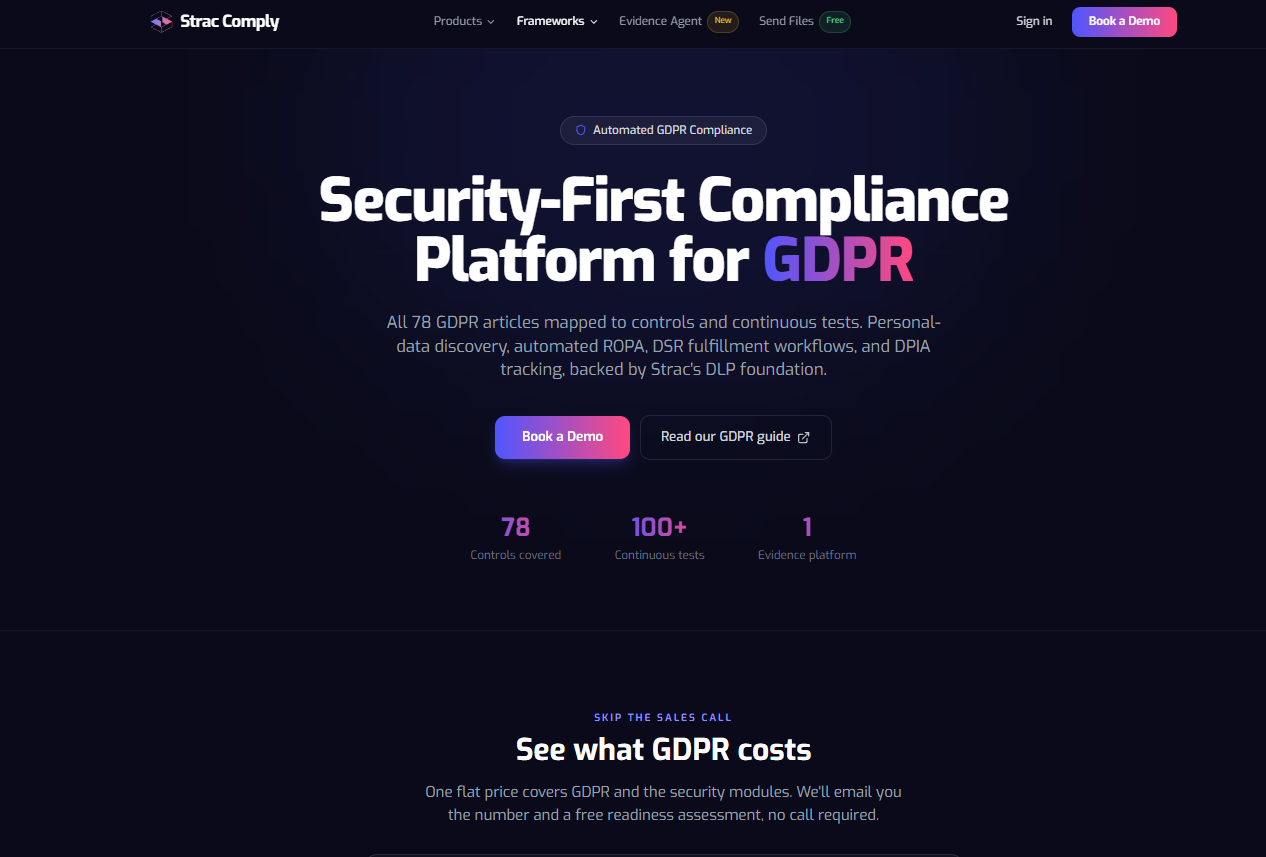
This is especially important for organizations managing obligations related to HIPAA, PCI DSS, GDPR, SOC 2, ISO 27001, CCPA, and internal compliance policies.
Best Practices for Implementing DLP
Whether you start with a free tool or an enterprise platform, a successful DLP program starts with business context.
Start With Your Highest-Risk Data Flows
Do not try to secure every system on day one. Identify where your organization handles the most sensitive data and where it is most likely to leave approved systems.
Start with workflows such as:
Customer support tickets and attachments
Cloud storage repositories
Internal chat and collaboration tools
Email and browser uploads
Employee use of ChatGPT, Copilot, Gemini, Claude, and other AI tools
Source-code repositories and developer communications
USB and external-device transfers
Discover Before You Enforce
Run discovery and audit policies first to understand what sensitive data exists, where it lives, and how it moves. This helps avoid overly aggressive controls that interrupt legitimate work.
Once you understand normal behavior, move high-confidence policies into warn, redact, block, quarantine, or encryption modes.
Use Context-Aware Policies
Not every instance of sensitive data has the same risk. A test card number in a controlled sandbox is not equivalent to an unredacted card number in a customer-support ticket or an external AI prompt.
Policies should account for the data type, app, destination, user role, and business purpose.
Treat GenAI as a Data Channel
AI governance cannot be separated from data security. If employees are using GenAI tools or internal AI agents, they need clear policies for what data can be entered, which tools are approved, and what should happen when sensitive content is detected.
The same applies to MCP. MCP can make AI agents much more useful by connecting them to company systems, but it can also create new routes for sensitive data to be accessed, copied, or shared. DLP controls should extend to these agentic workflows.
Review and Improve Continuously
DLP is not a one-time deployment. Review policies regularly, investigate trends, reduce false positives, and update controls as your SaaS stack, regulatory obligations, and AI usage evolve.
🎥 How Strac Helps Modern Teams Go Beyond Free DLP
Free DLP software can help you test the category. Strac is built for organizations that need to operationalize data protection across their modern environment without stitching together separate discovery, SaaS DLP, AI security, and endpoint tools.
A free DLP download can help you understand basic data-protection needs, but it should not become a substitute for a strategy that covers where sensitive data actually moves.
The strongest DLP programs in 2026 combine discovery, classification, real-time prevention, remediation, and evidence across SaaS, cloud, endpoints, browsers, GenAI, and MCP workflows. Book a demo with Strac to see how unified DSPM and DLP can reduce exposure without slowing down the business.
🌶️ Spicy FAQs DLP Softwares
Is free DLP software actually free?
Usually, only partly. Open-source tools may have no license fee but still require engineering time, infrastructure, policy tuning, maintenance, and incident response. Free trials are useful for evaluation, but rarely provide long-term, full-stack protection.
Can free DLP stop employees from pasting customer data into ChatGPT?
Most free DLP tools cannot reliably protect GenAI prompts, browser activity, or AI agent workflows. To control data exposure in ChatGPT, Copilot, Gemini, Claude, and similar tools, you need DLP designed for browser and GenAI channels.
Why is regex-based DLP not enough?
Regex can spot obvious patterns, such as a credit-card number, but it struggles with context, images, scanned PDFs, screenshots, fragmented records, and custom confidential data. That is how teams end up with alert fatigue while real exposure slips through.
Does DLP need to cover MCP servers and AI agents?
Yes. MCP gives AI agents access to internal tools and data, which creates a new path for sensitive information to move. MCP DLP helps ensure agents do not retrieve, expose, or send protected data where policy does not allow it.
Should we block all sensitive data sharing?
No. Blanket blocking encourages workarounds and slows legitimate work. Better DLP applies policy by data type and channel, then uses the right action: allow, audit, coach, redact, encrypt, quarantine, or block
Discover & Protect Data on SaaS, AI, MCP, Endpoints & Cloud
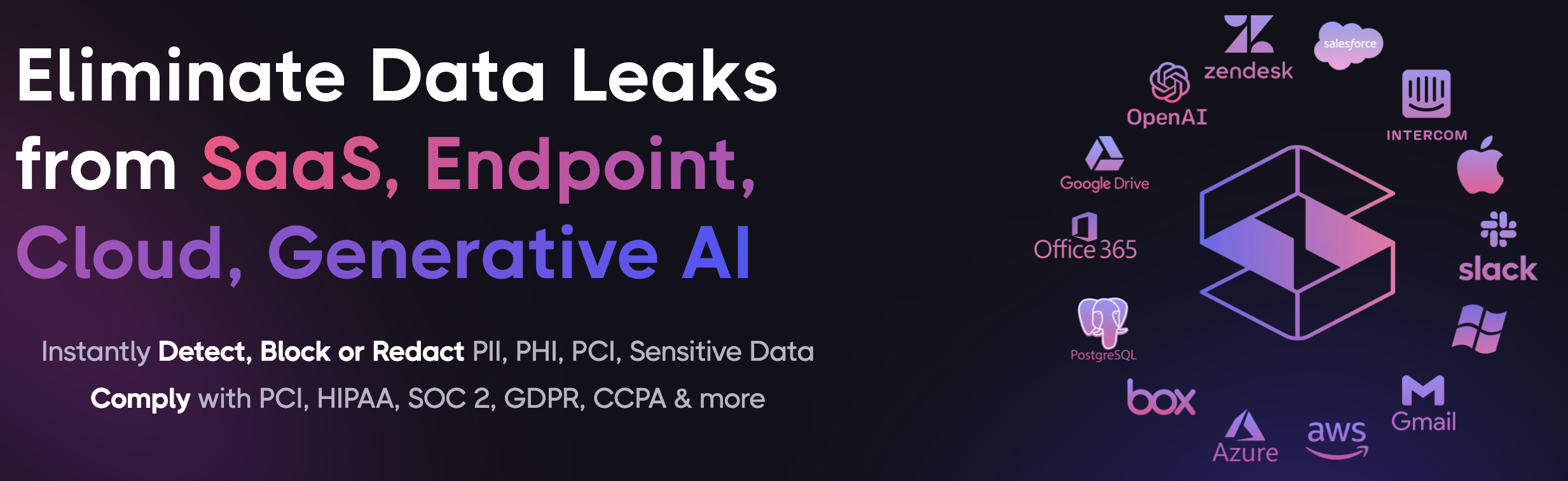
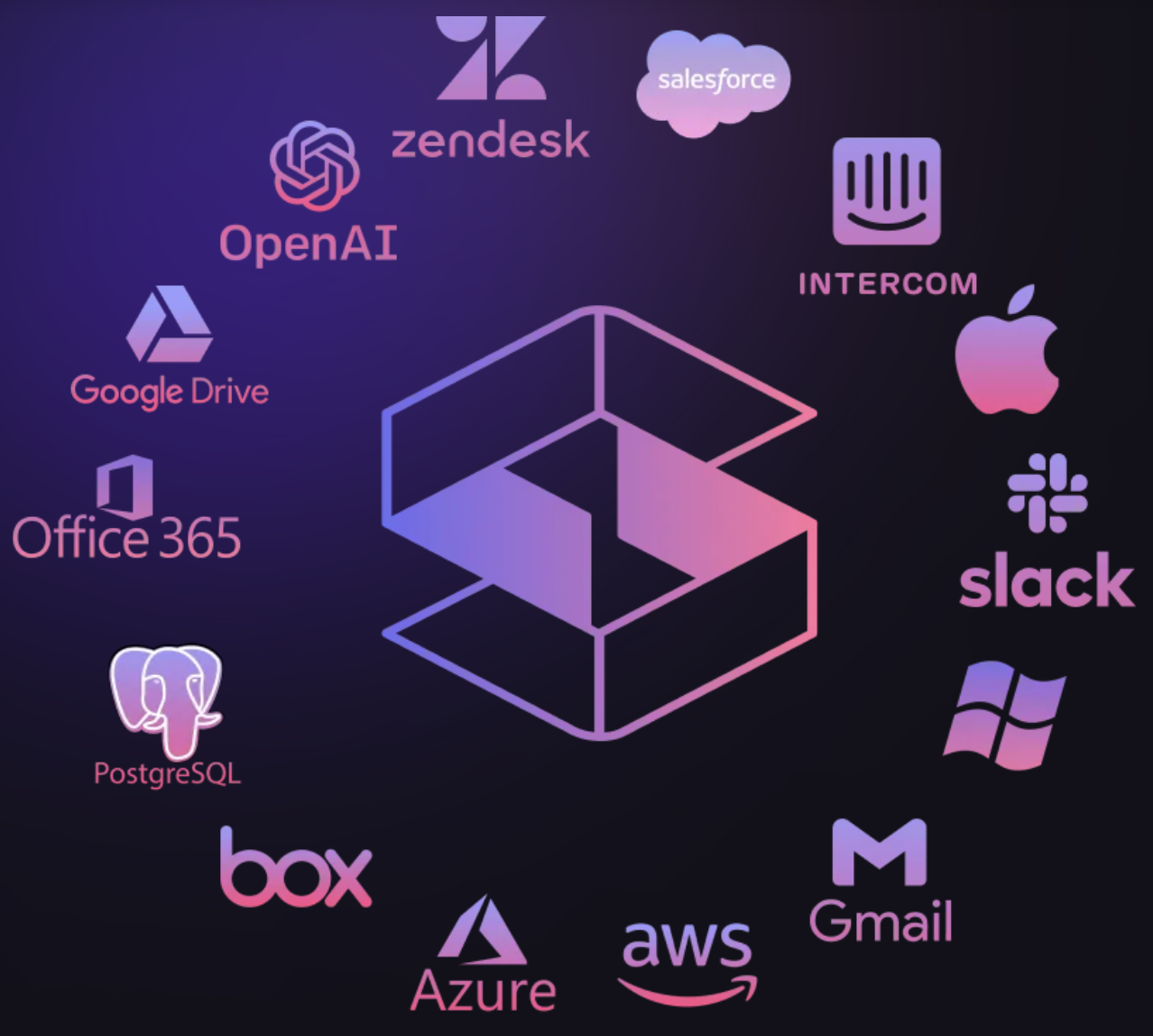
Strac provides end-to-end data loss prevention for all SaaS and Cloud apps. Integrate in under 10 minutes and experience the benefits of live DLP scanning, live redaction, and a fortified SaaS environment.


.webp)






.avif)



.gif)
