October 11, 2026

7
min read
Data Loss Prevention in Healthcare: Risks, Compliance, and Best Practices
Learn about the essentials of Data Loss Prevention in healthcare by understanding the risks it mitigates and discovering ideal solutions.
Data Loss Prevention (DLP) for Healthcare refers to strategies, tools, and processes designed to ensure that sensitive healthcare information, such as patient records, medical histories, and financial data, remains secure and inaccessible to unauthorized individuals. In the healthcare sector, protecting patient data is paramount, not only to comply with regulations like HIPAA but also to maintain patient trust and safety.
Last updated: July 2026
Data loss prevention in healthcare refers to the strategies, tools, and processes designed to protect sensitive healthcare information; including patient records, medical histories, and financial data; from unauthorized access, leakage, or misuse. As healthcare organizations increasingly rely on digital systems, SaaS platforms, cloud infrastructure, and AI-driven workflows, protecting patient data is no longer optional. It is a regulatory, operational, and ethical imperative.
Healthcare data loss prevention is essential not only for compliance with regulations such as HIPAA, but also for maintaining patient trust, ensuring continuity of care, and reducing the financial and reputational damage associated with breaches.
Healthcare organizations handle some of the most sensitive data of any industry. Patient records, medical histories, insurance information, and billing data are continuously accessed, shared, and stored across systems. As healthcare delivery expands into telemedicine, cloud platforms, and connected devices, the attack surface for sensitive data grows.
Without effective data loss prevention in healthcare, organizations face increased exposure to breaches, regulatory penalties, and operational disruptions. DLP provides the guardrails that ensure sensitive healthcare data remains protected wherever it moves.
Healthcare data loss prevention is tightly coupled with regulatory compliance. In the United States, HIPAA mandates strict safeguards for Protected Health Information (PHI). PHI includes any information that can identify a patient and relates to their health condition, treatment, or payment details.
Effective healthcare data loss prevention supports compliance by enforcing controls that prevent unauthorized disclosure, ensure proper access, and provide auditability. Regulations such as HIPAA, GDPR, and other global healthcare frameworks require organizations to demonstrate that sensitive data is actively monitored and protected, not just stored securely.
One of the most significant risks in healthcare is data breaches, which can occur through hacking, insider threats, or accidental data leaks. These breaches can lead to the exposure of sensitive patient information, resulting in legal repercussions and loss of patient trust. For example, a breach at a major hospital could expose thousands of patient records, leading to identity theft and financial fraud.

Healthcare organizations must comply with various regulations, such as HIPAA in the United States, which mandate the protection of patient information. Non-compliance can result in hefty fines and legal actions. DLP solutions help ensure that healthcare providers adhere to these regulations by monitoring and controlling the flow of sensitive data.
Insider threats, whether malicious or accidental, pose a significant risk to healthcare data. Employees may misuse their access to sensitive information or inadvertently share it with unauthorized individuals. DLP systems can detect and prevent these actions by monitoring user activities and restricting access based on roles and permissions.
Healthcare organizations implement data loss prevention across multiple layers of their infrastructure. This includes SaaS applications used for patient communication, cloud storage systems that hold medical records, endpoints accessed by clinicians, and AI-powered tools increasingly used in healthcare operations. Effective healthcare DLP combines visibility with enforceable controls to protect data across all these environments.
An effective DLP healthcare solution should offer extensive monitoring capabilities, tracking all data movements across networks, devices, and applications. This includes monitoring emails, file transfers, and even data shared through messaging apps to ensure that sensitive information is not exposed.
Ensuring that data is encrypted both at rest and in transit is crucial. Additionally, access controls should be robust, allowing only authorized personnel to access specific data based on their roles. This minimizes the risk of data exposure from both external attacks and internal mishandling.
It is essential to seamlessly integrate with existing healthcare IT systems, such as EHR platforms and telemedicine applications. The DLP solution should work harmoniously with these systems, providing an added layer of security without disrupting workflows.
The ability to detect and respond to threats in real-time is vital. An ideal DLP solution should provide instant alerts and automated responses to potential data breaches, such as blocking unauthorized access or encrypting data before it can be exfiltrated.
To help healthcare organizations stay compliant with regulations, the DLP solution should offer tools for compliance management. This includes audit trails, reporting features, and compliance templates that align with regulatory requirements like HIPAA, GDPR, and others.

Strac is a cutting-edge SaaS and Cloud-based Data Loss Prevention solution that excels in the healthcare industry. Here’s how Strac stands out:
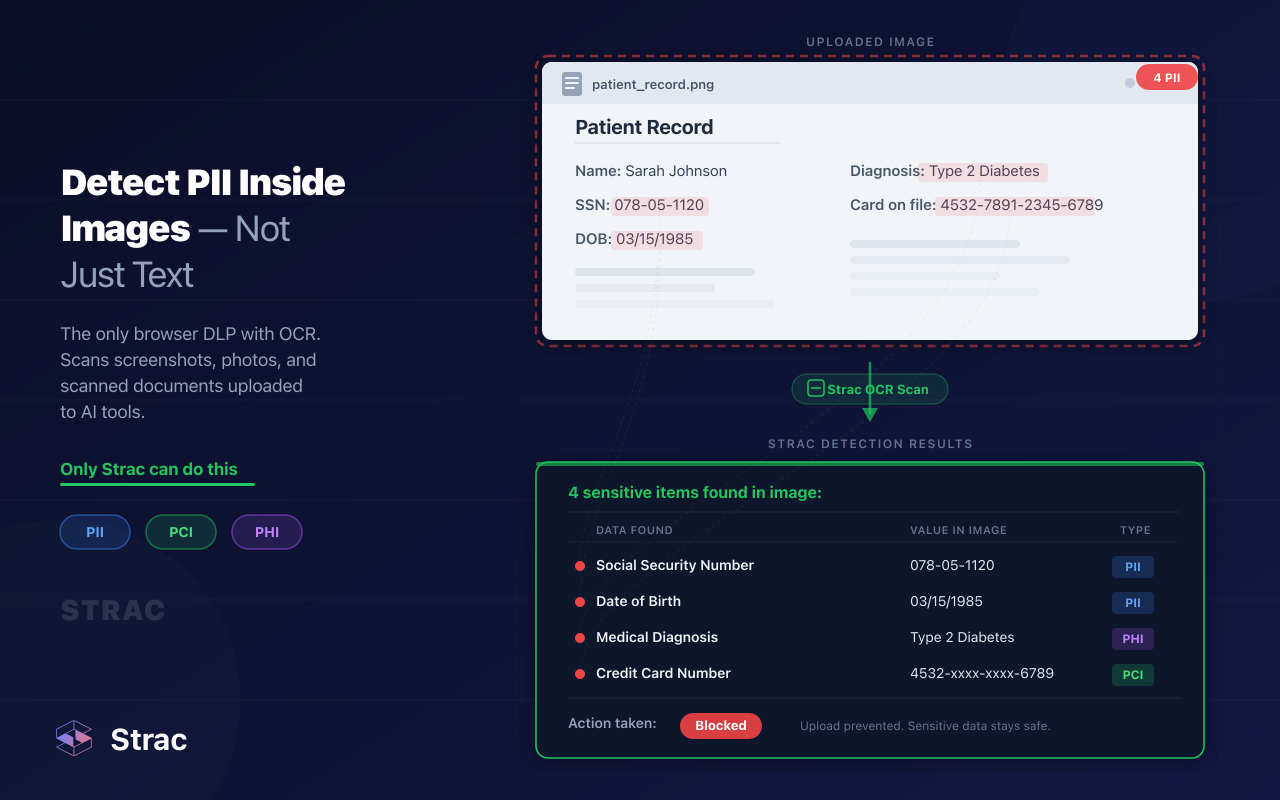
Strac supports all sensitive data elements detectors for PCI, HIPAA, GDPR, and other confidential data. It also offers customization, allowing healthcare organizations to configure their own data elements. Strac is unique in its ability to detect and redact sensitive information in images (jpeg, png, screenshots) and deeply inspect document formats like PDFs, Word docs, spreadsheets, and zip files. Explore Strac’s full catalog of sensitive data elements here.
Strac helps healthcare providers achieve compliance with multiple regulatory frameworks, including PCI, SOC 2, HIPAA, ISO-27001, CCPA, GDPR, and NIST. Each framework's compliance is supported with specific features tailored to meet regulatory standards. Learn more about Strac’s compliance capabilities for PCI, SOC 2, HIPAA, ISO 27001, CCPA, and NIST.
Healthcare providers can integrate Strac with their existing systems in under 10 minutes, gaining immediate benefits such as live scanning and redaction on their SaaS apps. This rapid deployment ensures minimal disruption to existing workflows.

Strac's machine learning models, trained on sensitive PII, PHI, PCI, and confidential data, ensure high accuracy with low false positives and negatives. This precision is crucial for maintaining data integrity and security in healthcare environments.
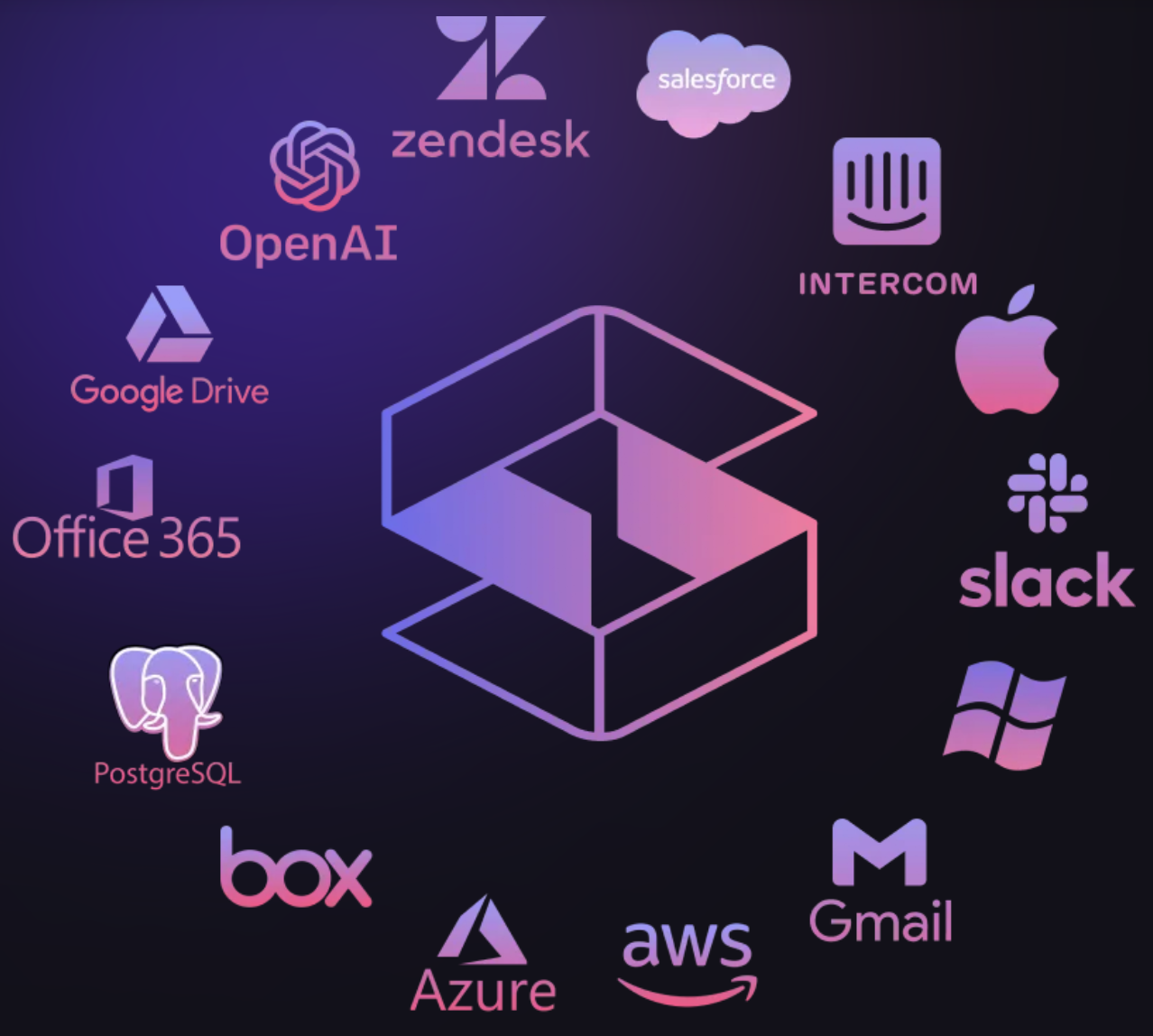
Strac offers a wide range of integrations with various SaaS and Cloud platforms, ensuring comprehensive coverage for healthcare providers. Check out all integrations here.
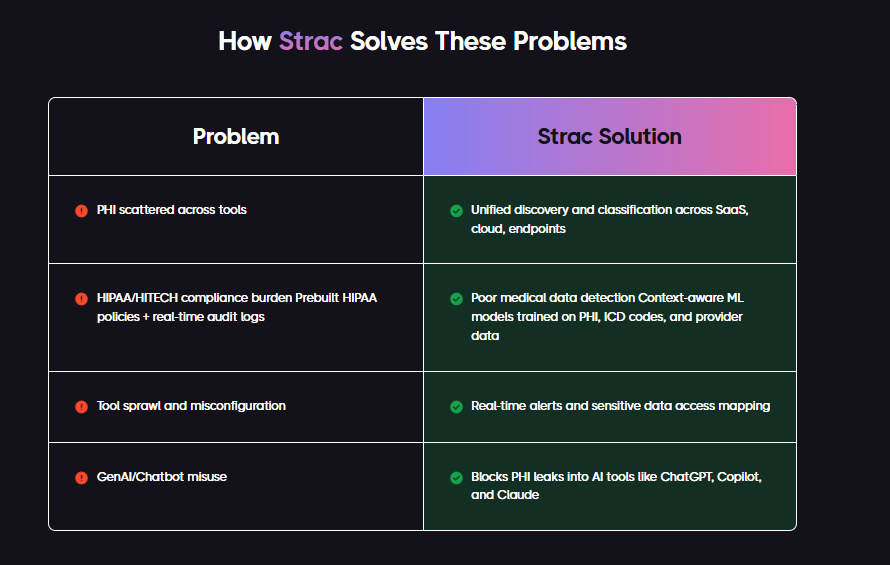
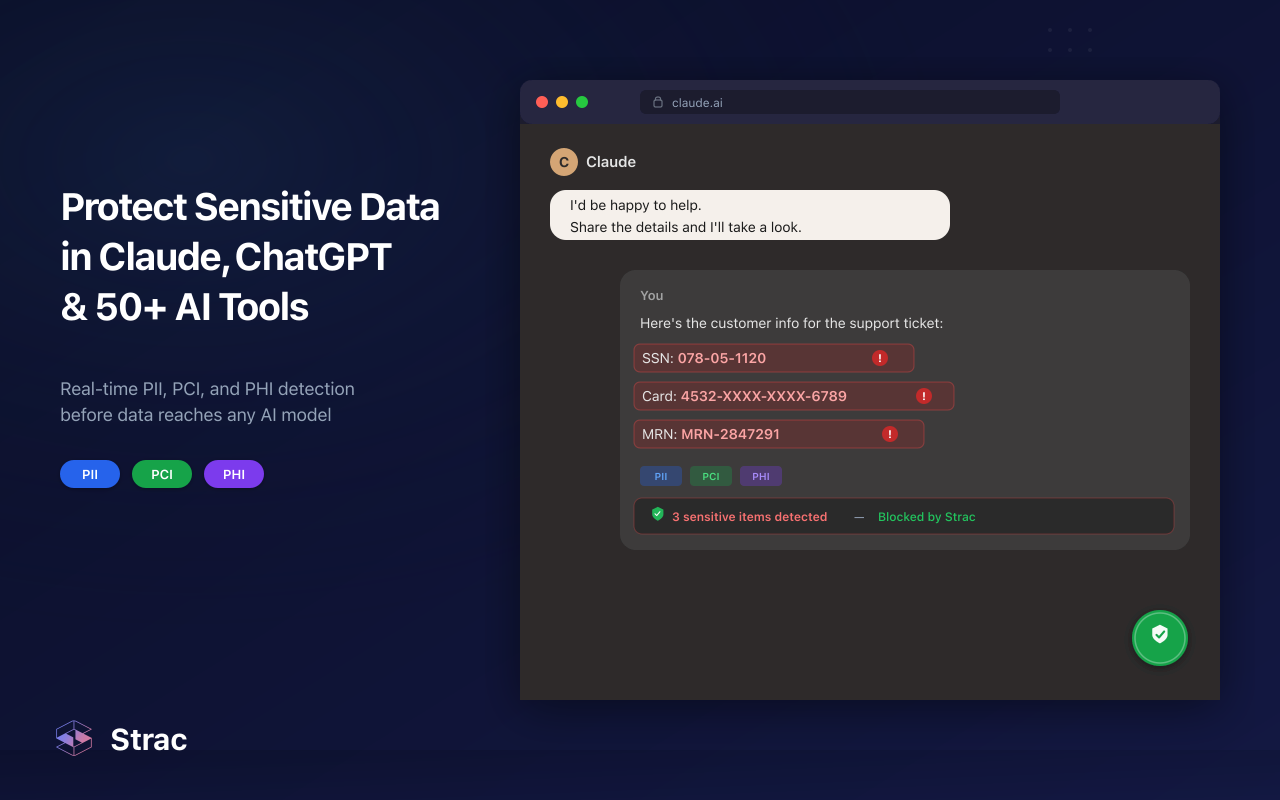
Strac integrates with LLM APIs and AI websites like ChatGPT, Claude, Gemini, and Microsoft Copilot to safeguard sensitive data in AI applications. Learn how Strac uses AI to protect data here.
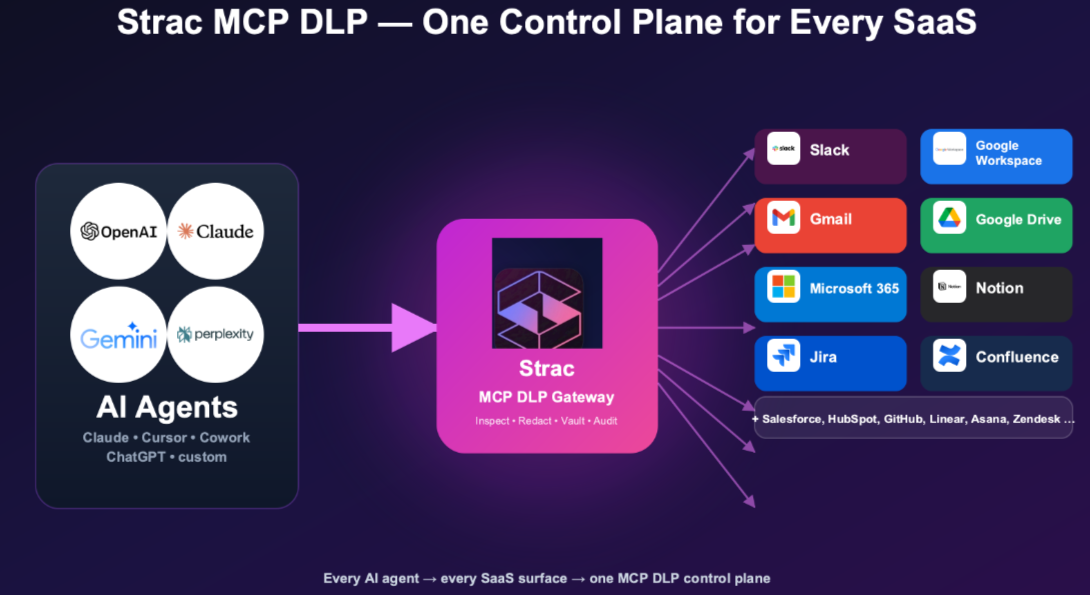
Detects, redacts, or blocks sensitive data flowing between AI agents (ChatGPT, Claude, Copilot, Cursor) and connected SaaS applications through MCP connector before data reaches the AI model.
Strac’s Endpoint DLP ensures comprehensive data protection across all endpoints, from desktops to mobile devices. This feature is critical for healthcare providers with distributed workforces. Discover more about Endpoint DLP here.
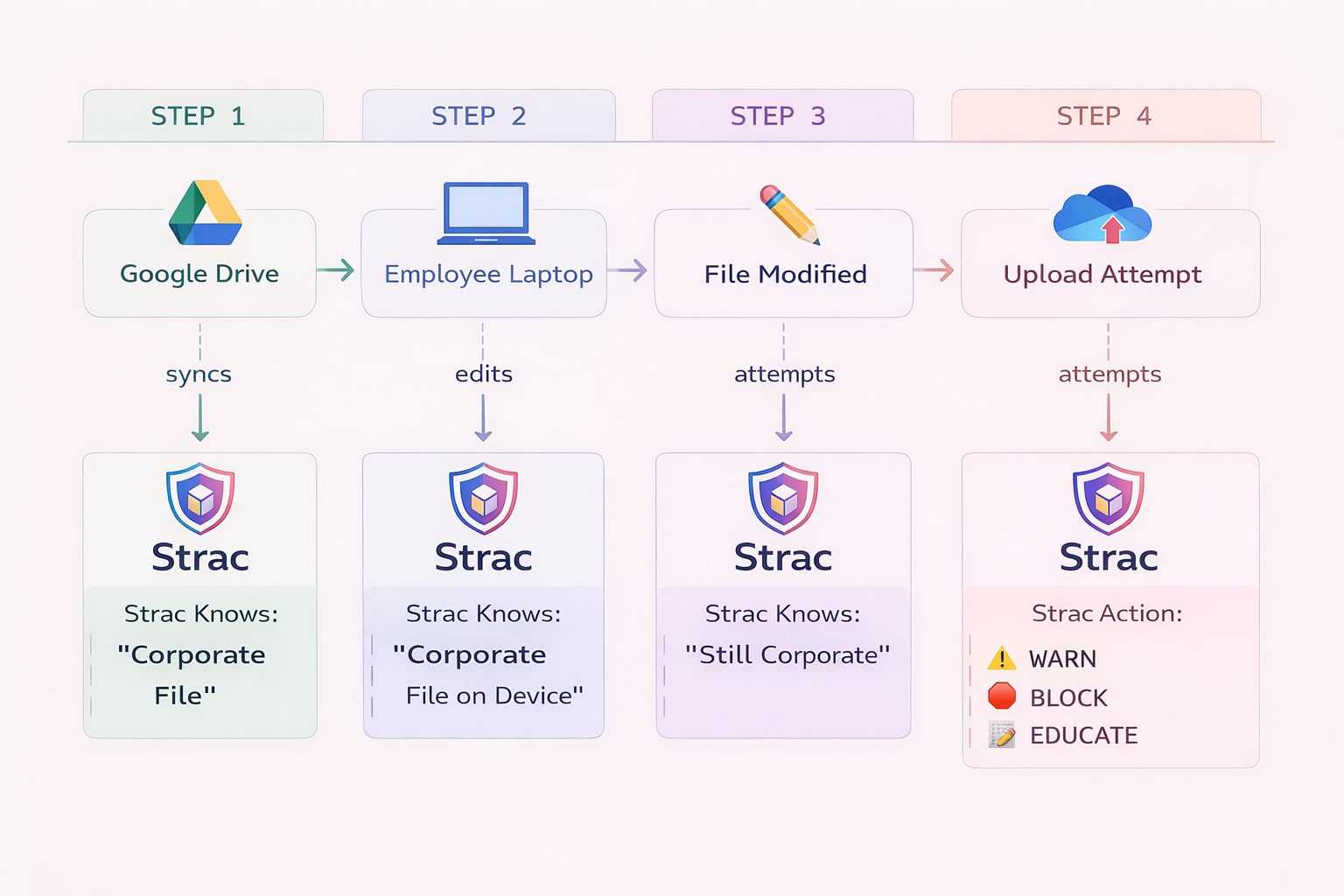
Strac offers robust APIs for developers to detect or redact sensitive data programmatically. This flexibility allows healthcare IT teams to integrate Strac’s capabilities into their custom applications. Explore Strac API Docs.
Strac can redact sensitive text within any attachment, providing an additional layer of security for documents shared within and outside the organization.
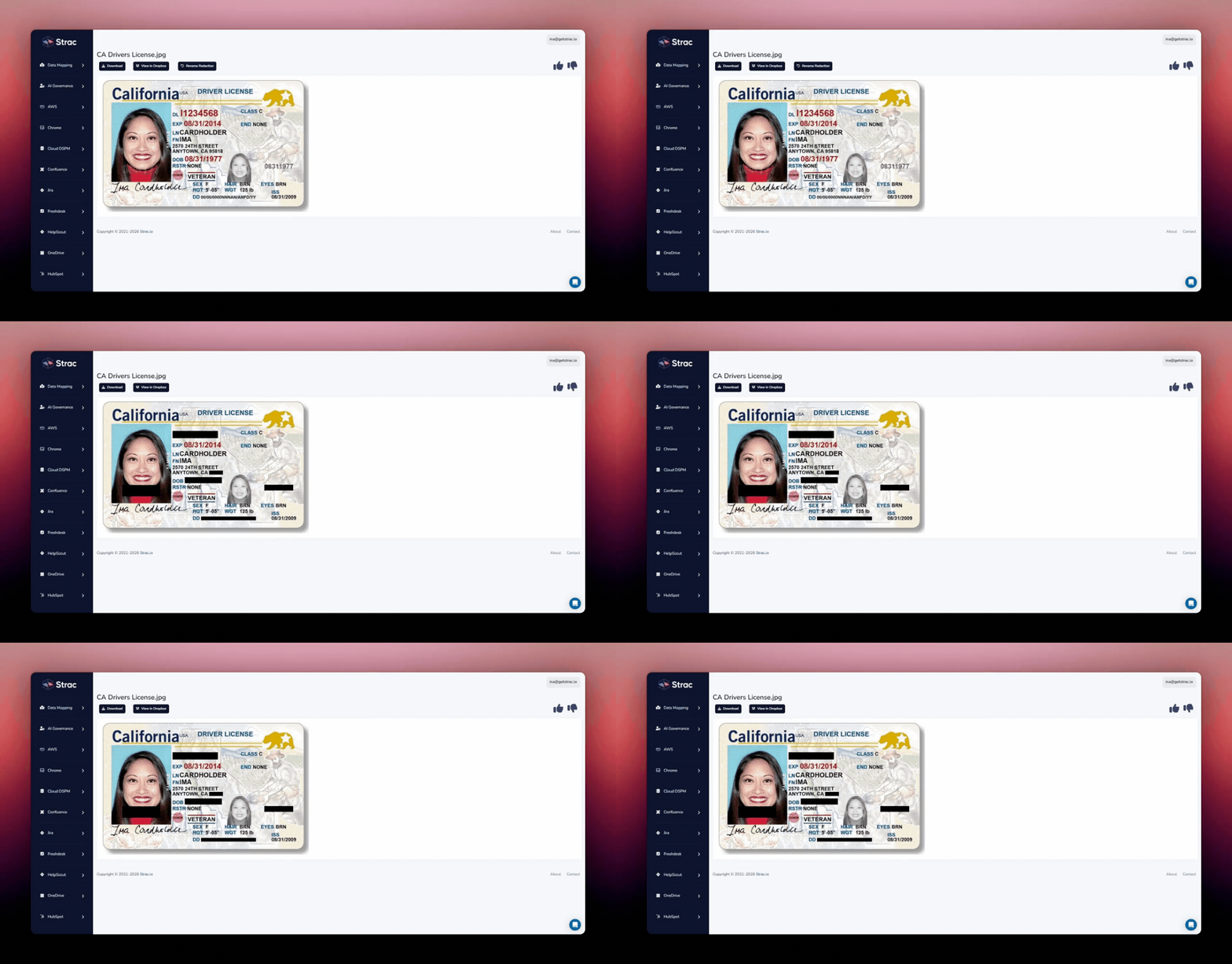
With out-of-the-box compliance templates and flexible configurations, Strac caters to healthcare providers' specific needs, ensuring that data protection measures align with individual requirements.
Strac has a track record of satisfied customers, as evidenced by positive reviews on G2. Check out their G2 Reviews to see how Strac has benefited other organizations.

In conclusion, Data Loss Prevention (DLP) is essential in healthcare for protecting sensitive patient data and ensuring compliance with regulations like HIPAA and GDPR. Effective DLP strategies, including data classification, encryption, access controls, and monitoring, help mitigate risks and maintain patient trust.
Strac's innovative DLP solutions provide healthcare providers with the tools needed to safeguard patient data efficiently. With features like built-in and custom detectors, real-time protection, and seamless integration, Strac enhances data security while ensuring regulatory compliance.
By adopting Strac, healthcare organizations can effectively protect their data, comply with regulations, and build a secure environment for patient information. For more details, visit Strac's official website.
HIPAA DLP is data loss prevention applied to the HIPAA Security Rule's specific demands: knowing where ePHI lives, restricting who and what can access it (the minimum-necessary standard), preventing unauthorized disclosure, and producing audit controls that survive an OCR investigation. A generic DLP policy isn't HIPAA DLP — the detection has to recognize PHI in context (MRNs, clinical notes, lab values, identifiers co-occurring with health data), and the enforcement has to leave an accounting trail.
Strac's HIPAA DLP does exactly that: contextual PHI detection (including OCR on scanned documents and images), remediation that redacts or blocks ePHI across SaaS, email, endpoints, and AI tools — including the consumer AI tiers that carry no BAA — and every event logged as evidence mapped to §164.312 access and audit controls. See the HIPAA compliance checklist for the full program this sits inside.
Related reading:
Protecting PHI specifically? See HIPAA DLP — how data loss prevention enforces the HIPAA Security Rule for ePHI.
Many teams ask about AI tools first: see is ChatGPT HIPAA compliant for the BAA reality and how to use it safely.
Data loss prevention in healthcare is designed to protect Protected Health Information (PHI) as well as other sensitive data types that healthcare organizations handle daily. This includes patient medical records, diagnostic results, insurance information, billing data, and identifiers such as names, dates of birth, and Social Security numbers. Modern healthcare DLP also extends protection to unstructured data like emails, chat messages, screenshots, scanned documents, and file attachments that frequently contain PHI outside of core EHR systems.
Healthcare organizations operate in highly complex, data-rich environments with large numbers of users, systems, and external partners. Sensitive data is constantly accessed by clinicians, administrators, insurers, and support teams across SaaS tools, cloud platforms, endpoints, and now AI-powered systems. This combination of high data volume, broad access needs, and strict regulatory requirements makes healthcare uniquely exposed to accidental leaks, insider threats, and compliance violations.
No. While HIPAA is a major driver, healthcare data loss prevention goes beyond HIPAA compliance alone. Effective healthcare DLP supports multiple regulatory frameworks such as GDPR, HITECH, SOC 2, PCI DSS, and regional privacy laws. More importantly, DLP enforces real-time controls that prevent sensitive data from being exposed in the first place, rather than simply helping organizations pass audits after an incident occurs.
This shift is critical in healthcare environments where delayed response can still result in regulatory violations.
Deployment time depends on the architecture of the solution. Traditional healthcare DLP tools may require weeks or months of configuration, agents, and tuning. Modern, SaaS-native and agentless DLP platforms can be deployed in minutes or hours, integrating directly with existing healthcare systems. Faster deployment allows healthcare organizations to reduce risk immediately without disrupting clinical workflows or patient care.
.avif)


.gif)


.webp)