October 3, 2026

6
min read
Data Discovery Platform
Learn how modern data discovery platforms secure SaaS, cloud, endpoints, and GenAI workflows with real-time detection, classification, remediation, and DSPM capabilities.
Data discovery changed dramatically over the last two years. Most organizations no longer store sensitive data in just databases or on-prem systems. Today, critical data lives across Slack, Google Drive, Salesforce, Zendesk, Snowflake, AWS, ChatGPT, endpoints, and dozens of SaaS applications simultaneously.
The problem is that most traditional data discovery tools were never built for modern SaaS sprawl, GenAI workflows, or real-time remediation. They were built for static environments. Modern security teams now need visibility across cloud apps, AI tools, endpoints, APIs, and unstructured collaboration platforms — all at once.
This is where modern platforms like Strac come in. Instead of simply discovering sensitive data, modern platforms continuously classify, monitor, remediate, and govern it across the entire organization.
A data discovery platform helps organizations identify, classify, monitor, and secure sensitive data across their infrastructure. This includes structured and unstructured data such as:

Traditional discovery tools focused heavily on databases and file servers. Modern environments are different. Sensitive data now spreads across collaboration tools, cloud storage, customer support systems, browsers, and AI workflows.
Modern data discovery platforms must continuously answer:
Most legacy DLP and discovery vendors were designed before SaaS adoption exploded and before generative AI became part of daily workflows.
This creates several major gaps:
Many tools detect sensitive data but stop there. Security teams still need to manually investigate and remediate issues.
Modern environments require automated actions such as:
Slack messages, Zendesk tickets, Google Docs, screenshots, PDFs, and AI prompts are much harder to scan than structured databases.
Regex-based systems generate massive false positives in these environments.
Employees now regularly paste sensitive information into:
Most legacy discovery platforms were never built to inspect or govern AI prompt flows.

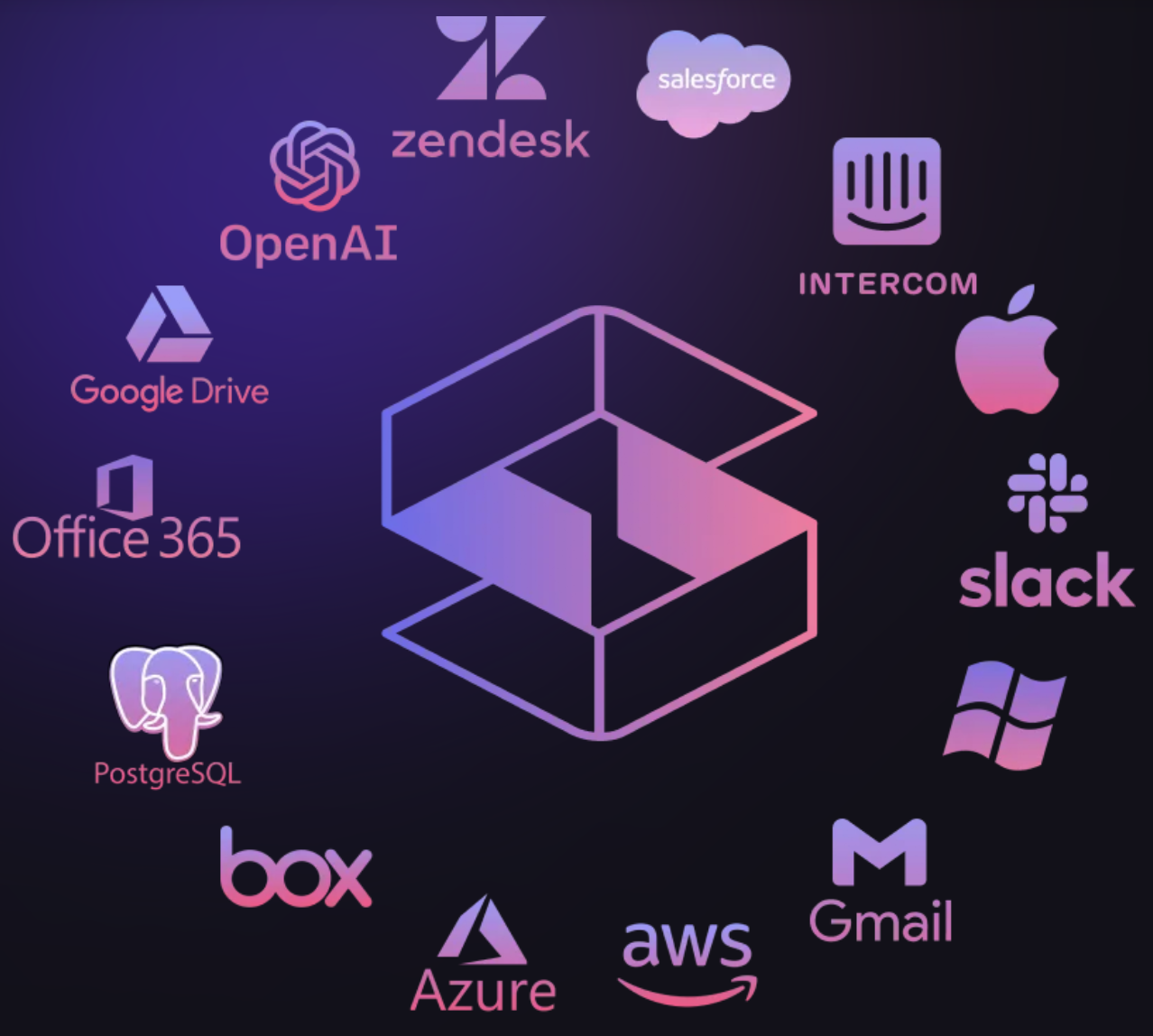
Sensitive data no longer lives in one place. A modern platform must scan across:
Strac Integrations supports environments including Slack, Google Workspace, Microsoft 365, Salesforce, Zendesk, Jira, Confluence, AWS, Snowflake, ChatGPT, and many others.
This unified visibility is critical because data constantly moves between systems.
For example:
Without unified discovery coverage, security teams lose visibility instantly.
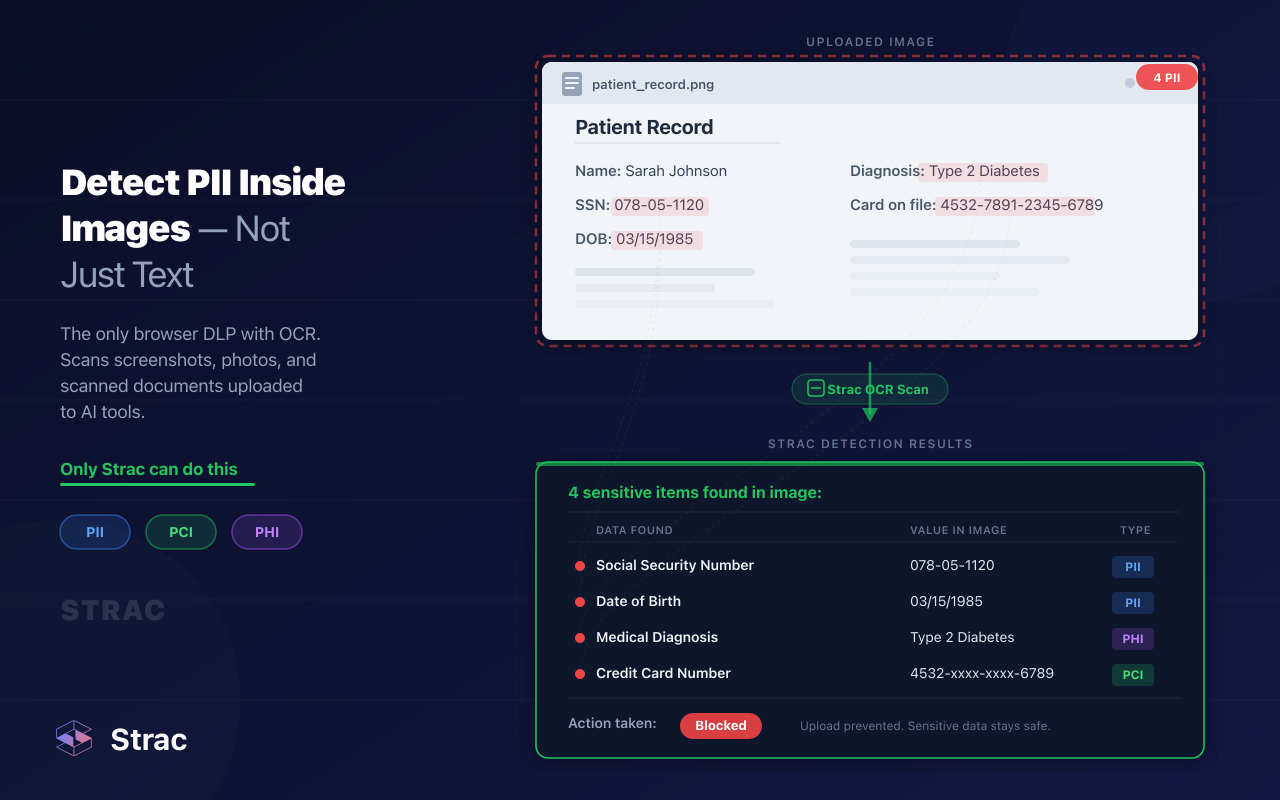
Modern data discovery platforms must go beyond regex.
Sensitive data appears in:
Modern ML-powered classification engines analyze context rather than relying only on static patterns. OCR support is especially important for detecting sensitive data hidden inside screenshots or scanned documents.
Strac Sensitive Data Discovery and Classification uses contextual ML and OCR detection across structured and unstructured environments.

Discovery without remediation creates alert fatigue.
Modern security teams need platforms that can automatically take action when sensitive data is exposed.
This includes:
Strac Data Lineage DLP extends this further by tracking sensitive files even after they are renamed, copied, moved, or uploaded elsewhere.
That is especially important in insider risk and shadow AI scenarios.
Most organizations still underestimate endpoint exposure.
Sensitive data constantly lands on:
Modern data discovery platforms need endpoint coverage across:
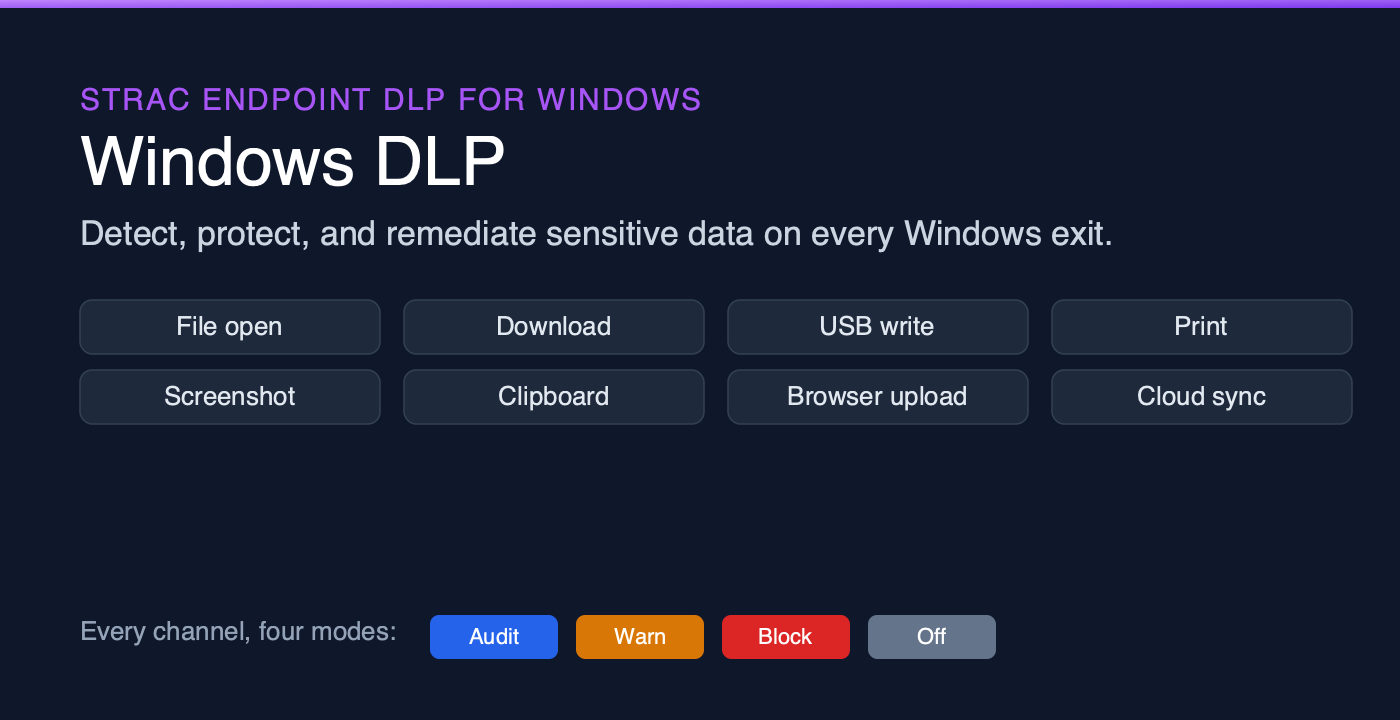
Strac Endpoint DLP provides visibility into uploads, downloads, screenshots, clipboard activity, removable devices, and local file movement across endpoints.
One of the biggest shifts in 2026 is the convergence of DSPM and DLP.
If you are evaluating tooling, compare the best data discovery tools and the leading DSPM vendors for 2026.
Organizations no longer want:
Modern platforms unify these workflows.
This allows security teams to:
All from one system.
Strac DSPM Platform combines posture management, discovery, classification, remediation, and DLP enforcement into a unified platform.

Organizations discover and remediate sensitive data across numerious SaaS applications:
This is especially important for customer support teams and GTM organizations handling large amounts of customer data.

Security teams scan different cloud enviroments:
to identify exposed or over-permissioned sensitive data.
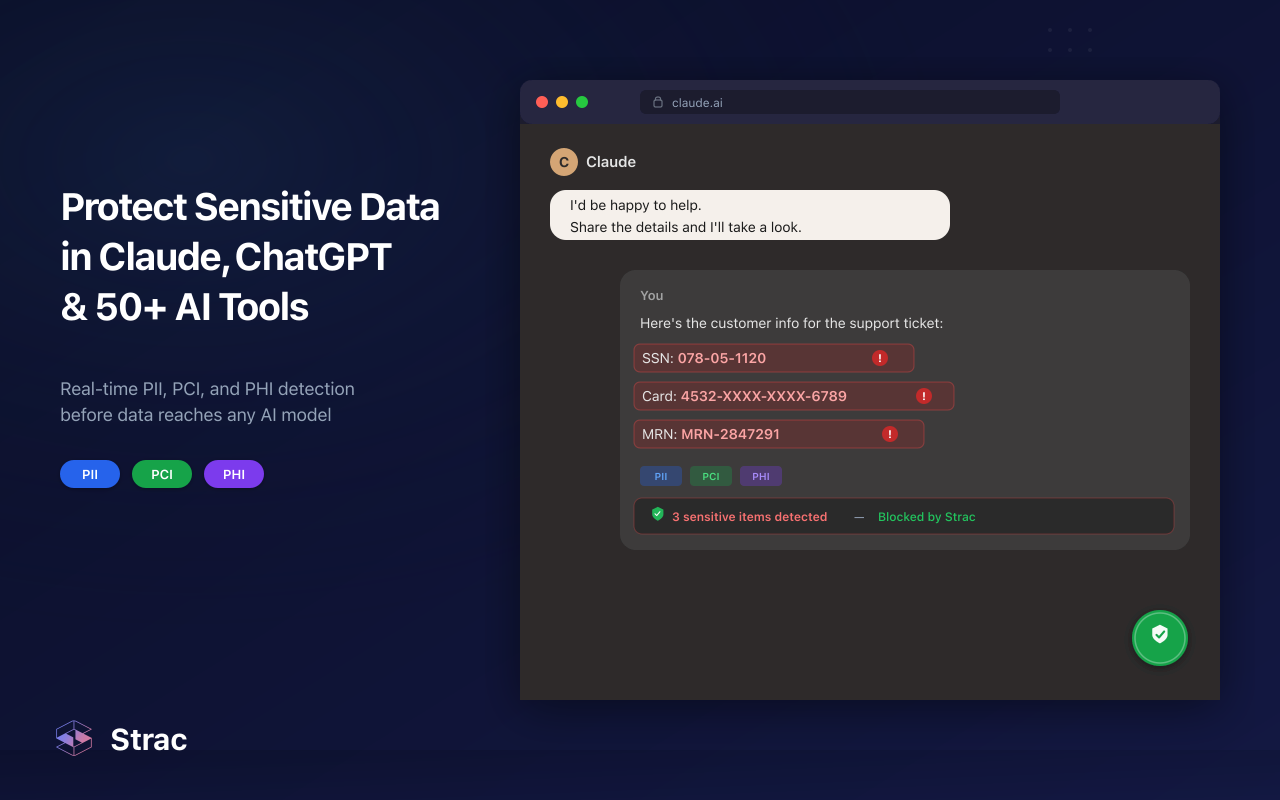
Modern discovery platforms now monitor:
This prevents employees from leaking confidential information into public AI models.
Endpoint visibility helps security teams detect:
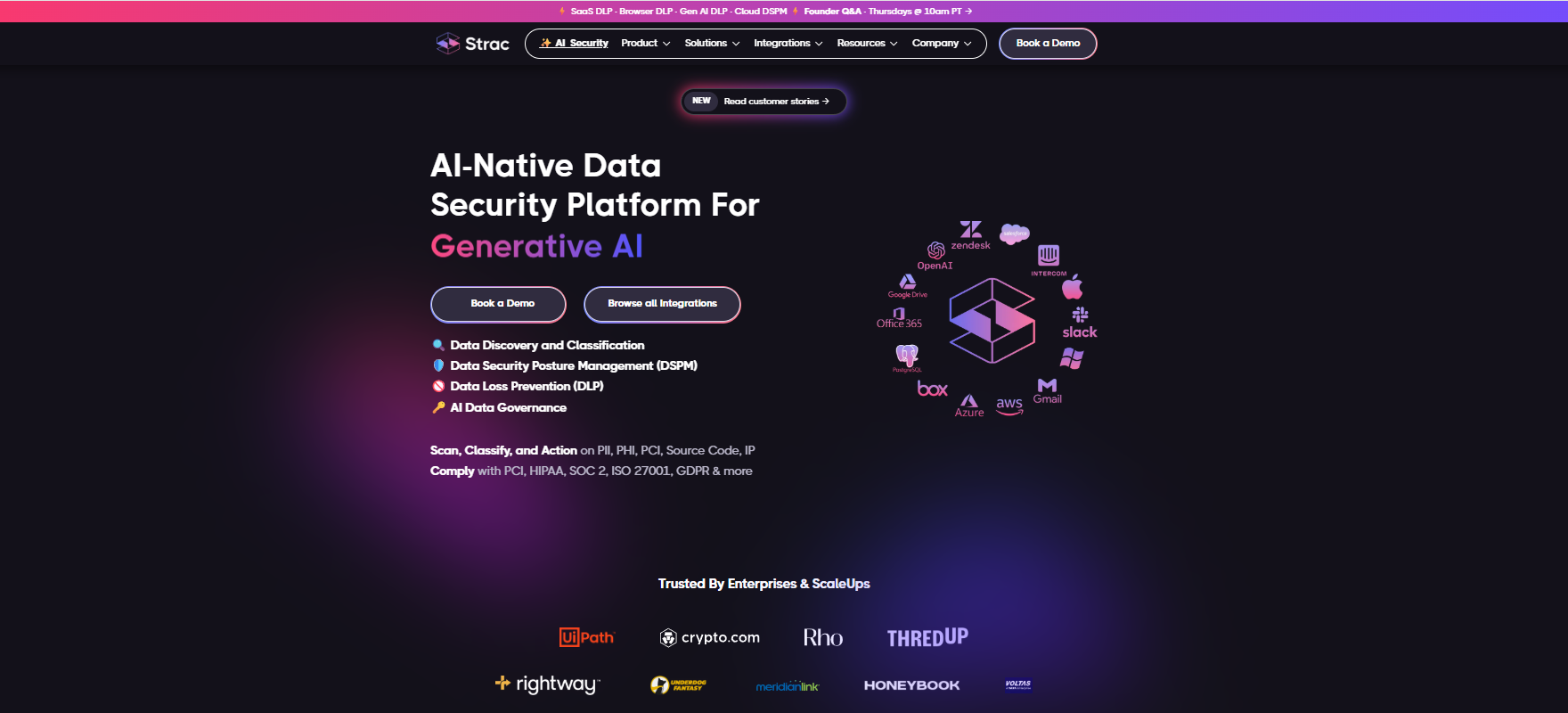
Several things make Strac different from legacy discovery and DLP tools.
Most vendors focus on either:
Strac combines all of them into one platform.

Most traditional systems alert.
Strac remediates.
This includes:
in real time.
Modern organizations need visibility into ChatGPT, Gemini, Claude, and Copilot usage.
Strac AI Data Governance provides browser and GenAI DLP capabilities designed specifically for modern AI workflows.
Deployment friction kills security projects.

Strac’s API-first and agentless architecture significantly reduces deployment complexity compared to legacy DLP vendors.
High-noise DLP systems are one of the biggest frustrations security teams face.
Modern ML and contextual classification dramatically reduce unnecessary alerts compared to regex-only approaches.
Data discovery in 2026 is no longer just about finding sensitive data.
Modern security teams need platforms that can:
across SaaS, cloud, endpoints, and generative AI environments simultaneously.
Legacy discovery tools were built for static infrastructure. Modern organizations need platforms built for dynamic SaaS ecosystems and AI-driven workflows.
Strac brings together DSPM, DLP, endpoint visibility, GenAI governance, AI-powered classification, and automated remediation into a single modern platform designed for how data actually moves today.
Before you move forward, scan your device for exposed sensitive data in seconds with Strac PII Scanner.
A data discovery platform focuses on finding and classifying sensitive data. DSPM goes further by analyzing exposure risks, permissions, posture issues, and remediation opportunities across cloud and SaaS environments.
Modern platforms can. Legacy DLP tools usually cannot. Platforms like Strac GenAI DLP monitor prompts, uploads, and AI interactions across ChatGPT, Gemini, Claude, and Copilot.
Most legacy DLP systems rely heavily on regex and static pattern matching. Modern ML-powered discovery platforms use contextual analysis and OCR to improve detection accuracy.
Yes. Modern platforms can redact, mask, block, quarantine, revoke access, remove public links, and apply labels automatically in real time.
Healthcare, fintech, SaaS, insurance, legal, and enterprise organizations handling PII, PHI, PCI, or regulated customer data benefit the most from modern discovery and DSPM platforms.
.avif)


.gif)


.webp)