AI Agent Security: Threats, Controls & Data-Layer Defense (2026)
AI agent security defends autonomous agents against prompt injection, excessive agency, and data exfiltration — with the data layer as the backstop when other controls fail.
AI agent security protects autonomous AI agents — and the systems and data they touch — from threats like prompt injection, excessive agency, tool misuse, and data exfiltration.
Agents are uniquely risky because they take actions: a compromised agent does not just leak an answer, it can move money, delete records, or exfiltrate a database over MCP.
Security and governance are two sides of one coin — controls stop the attack; governance proves the controls work.
The most under-served control is the data layer: MCP DLP redacts sensitive data on every agent action, so even a hijacked agent cannot exfiltrate raw PII, PHI, or secrets.
Strac delivers that data-layer defense across browser, endpoint, and MCP. Start from the pillar on AI agent governance.
✨ What Is AI Agent Security?
AI agent security is the discipline of defending autonomous AI agents against attack and abuse, and containing the damage when one is compromised. It overlaps with LLM security but adds the crucial dimension of action: an agent can read, write, call tools, and chain steps, so a security failure has real-world consequences. It is the enforcement half of AI agent governance; the governance half proves the controls are working.
AI agent security is layered: secure the model, the identity, the tools, and — critically — the data.
Why Agents Are a New Kind of Attack Surface
Traditional app security assumes a human in the loop and deterministic code paths. Agents break both assumptions: they interpret natural-language instructions and decide their own steps. That makes them susceptible to manipulation through their inputs, and dangerous when manipulated because they hold credentials and can act. The blast radius of a compromised agent is the sum of everything its identity can reach.
The Top AI Agent Threats
Threat
What it looks like
Prompt injection
Hidden instructions in a document, web page, or tool response hijack the agent's behavior
Excessive agency
An over-permissioned agent takes actions far beyond its intended task
Sensitive-data exfiltration
The agent pulls PII, PHI, or secrets out through an authorized tool call
Tool / function misuse
The agent is tricked into calling a dangerous tool (delete, transfer, email)
Credential & token theft
A leaked agent token is reused to impersonate the agent
Memory / context poisoning
Malicious content persists in the agent's memory and steers later actions
✨ Prompt Injection and Data Exfiltration over MCP
The two threats that matter most for data security combine dangerously. A prompt-injection payload hidden in a ticket, PDF, or web page can instruct an agent to gather sensitive records and send them somewhere — and because the agent is authenticated, its MCP DLP tool calls look legitimate. This is exfiltration by an insider that is really an attacker's puppet. Detecting the injection is hard; stopping the data from leaving is where you win.
Strac inspects the content of every agent action and redacts sensitive data before it can be exfiltrated.
A Controls Framework for AI Agent Security
Layer
Control
Identity
Distinct, least-privilege, short-lived credentials per agent (see identity governance)
Input
Treat all tool responses and documents as untrusted; sanitize where possible
Action
Human-in-the-loop or allow-lists for high-risk tools (delete, pay, email)
Data
Redact sensitive data on every read and write — the backstop when other layers fail
Monitoring
Attribute every action, alert on anomalies, and keep instant revocation ready
🎥 The Data Layer Is the Backstop
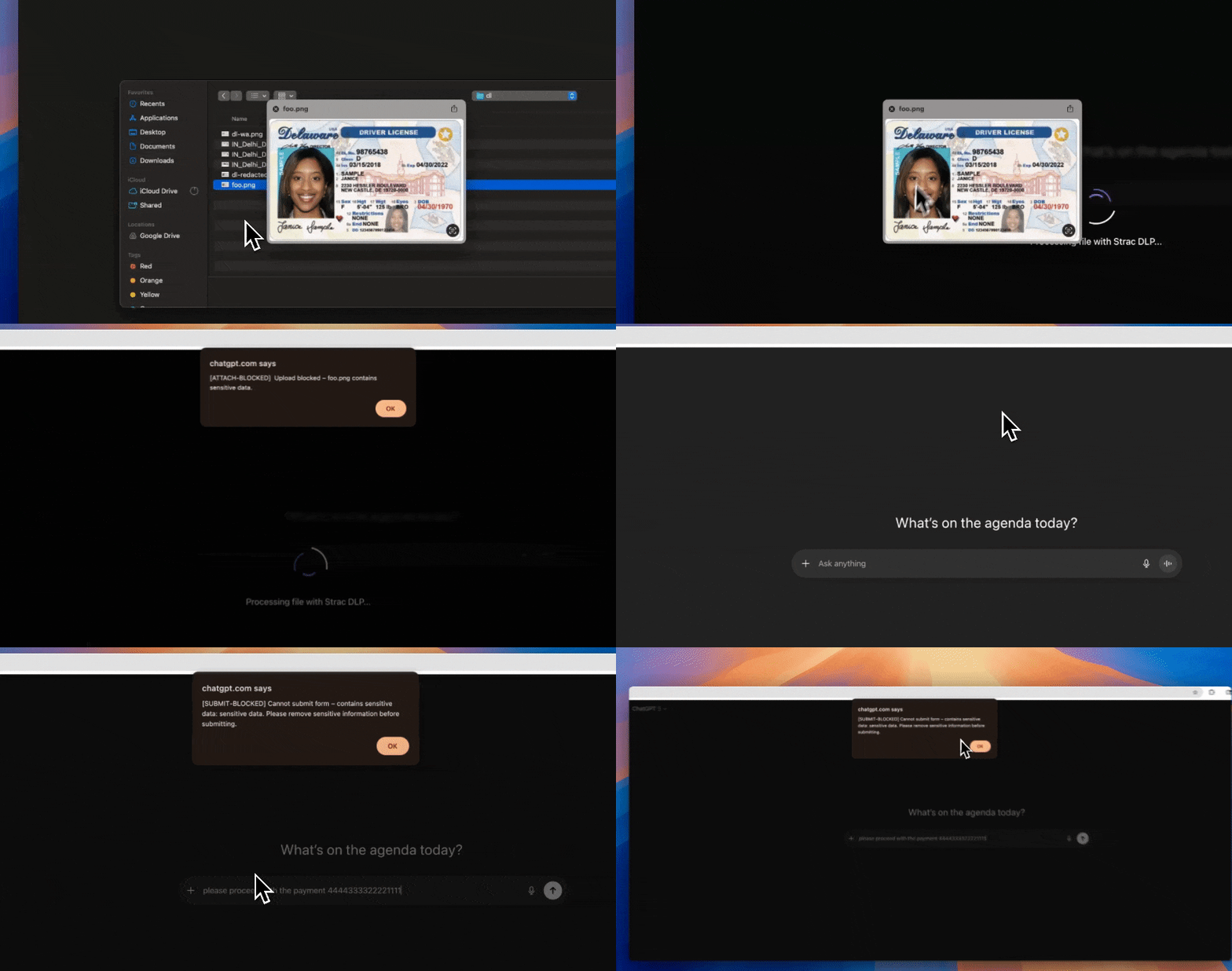
Every other control can fail: an injection slips through, a scope is too broad, a token leaks. The data layer is the control that still holds. If sensitive values are redacted the moment an agent tries to read or move them, a compromised agent exfiltrates nothing of value. Strac provides that backstop — inspecting and redacting PII, PHI, PCI, and secrets in real time across the browser, the endpoint, and every MCP DLP call, vaulting originals for authorized use.
Strac detects and redacts sensitive data in real time — the backstop when other agent controls fail.
✨ Strac: Data-Layer Defense for AI Agents
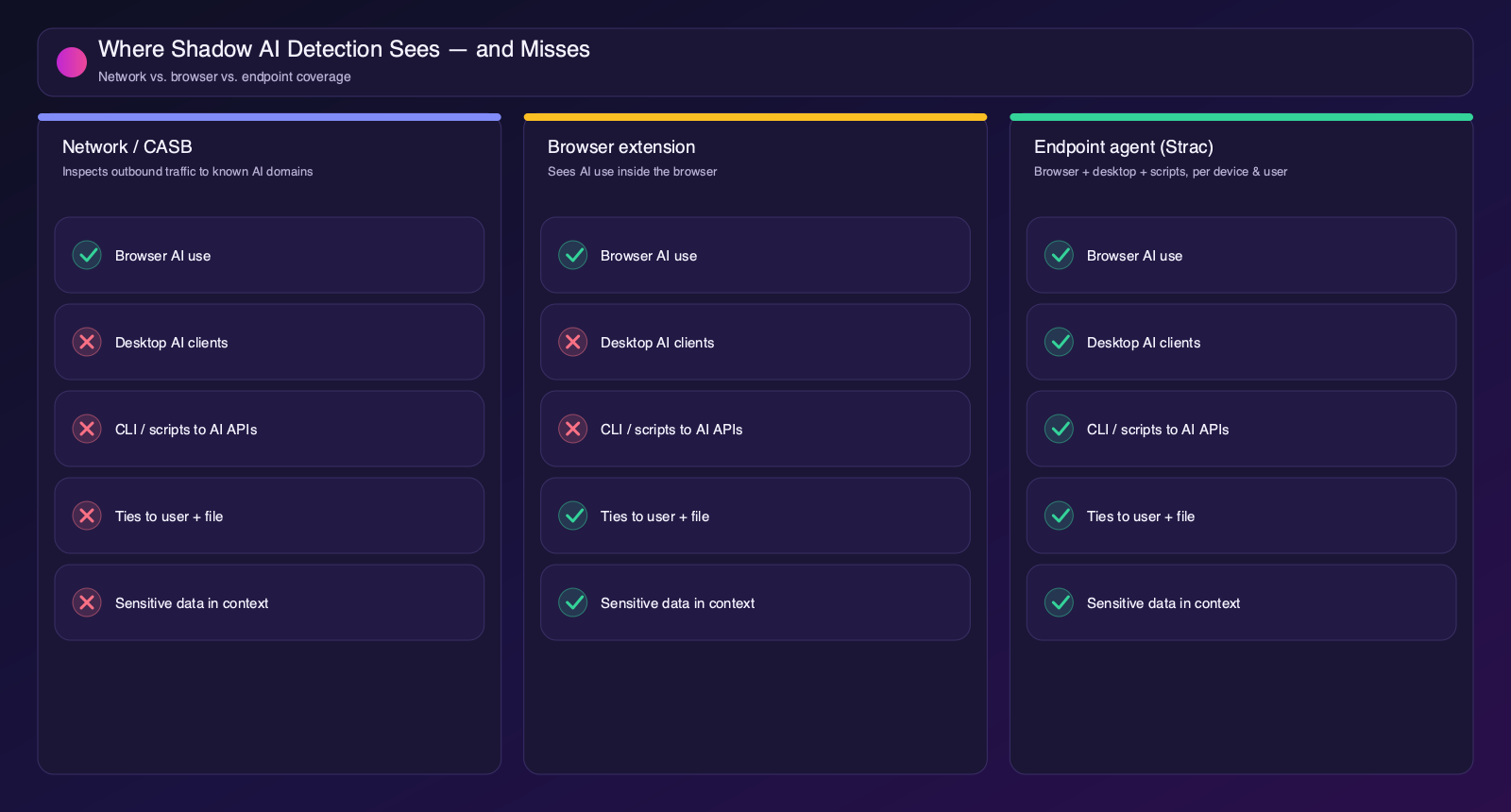
Strac secures the data an agent can touch across every surface: MCP DLP on tool calls, AI DLP in the browser for GenAI prompts, and endpoint DLP when agents drive local files — all under one policy and classifier. It does not replace your identity or monitoring stack; it adds the layer that ensures a security failure never becomes a data breach. Pair it with protect AI agents and monitor AI agents.
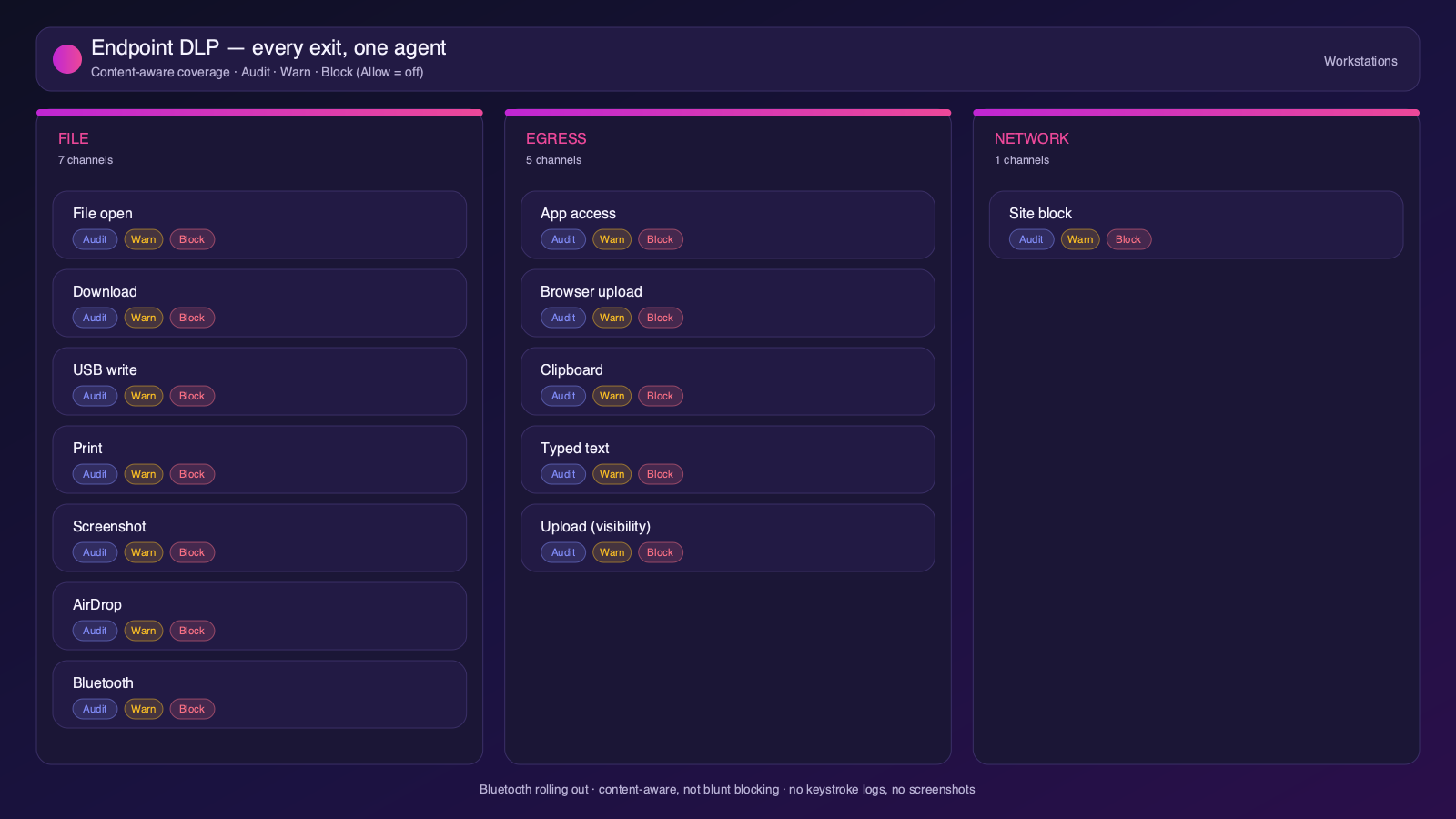
Strac enforces content-aware policy across every channel an agent can move data through.
AI Agent Security Checklist
Control
In place?
Each agent has a distinct, least-privilege identity
☐
Tool responses and documents are treated as untrusted
☐
High-risk tools require human approval or allow-lists
☐
Sensitive data is redacted on every agent read and write
☐
Every action is attributable and instantly revocable
☐
Detections and remediations are logged as evidence
☐
🌶️ Spicy FAQs for AI Agent Security
How is AI agent security different from LLM security?
LLM security focuses on the model's inputs and outputs. Agent security adds actions — agents call tools and hold credentials, so a failure can move money or exfiltrate data, not just produce a bad answer.
Can you fully prevent prompt injection?
Not reliably — injection is an open problem. That is why the data layer matters: if sensitive data is redacted on every action, a successful injection still cannot exfiltrate anything of value.
What is excessive agency?
An agent with more permissions or autonomy than its task needs. Combined with injection, excessive agency turns a small compromise into a large one. Least-privilege identity plus data-layer redaction contains it.
Does securing agents require blocking them?
No. Redaction and vaulting let agents keep working on non-sensitive content while sensitive values are protected, so security does not mean shutting agents off.
AI agents are powerful because they act — which is exactly why securing them matters. Layer your defenses (identity, input, action, monitoring), but make the data layer the backstop: redact sensitive data on every agent action so a compromise never becomes a breach. Book a demo to see Strac secure the data your agents touch.
How is AI agent security different from LLM security?
LLM security covers model inputs and outputs. Agent security adds actions — agents call tools and hold credentials, so a failure can move money or exfiltrate data, not just produce a bad answer.
Can prompt injection be fully prevented?
Not reliably. That is why data-layer redaction matters: if sensitive data is stripped on every action, a successful injection still exfiltrates nothing of value.
What is excessive agency?
An agent with more permission or autonomy than its task needs. Least-privilege identity plus data-layer redaction contains it.
Does securing agents mean blocking them?
No. Redaction and vaulting let agents keep working on non-sensitive content while sensitive values are protected.
How does agent security relate to governance?
Security is the controls; governance proves they work. Agent security is the enforcement half of AI agent governance.
Discover & Protect Data on SaaS, AI, MCP, Endpoints & Cloud
Strac provides end-to-end data loss prevention for all SaaS and Cloud apps. Integrate in under 10 minutes and experience the benefits of live DLP scanning, live redaction, and a fortified SaaS environment.


.webp)





.avif)



.gif)
