October 12, 2026

4
min read
Comprehensive RFP for Data Security, DSPM, and DLP Solutions
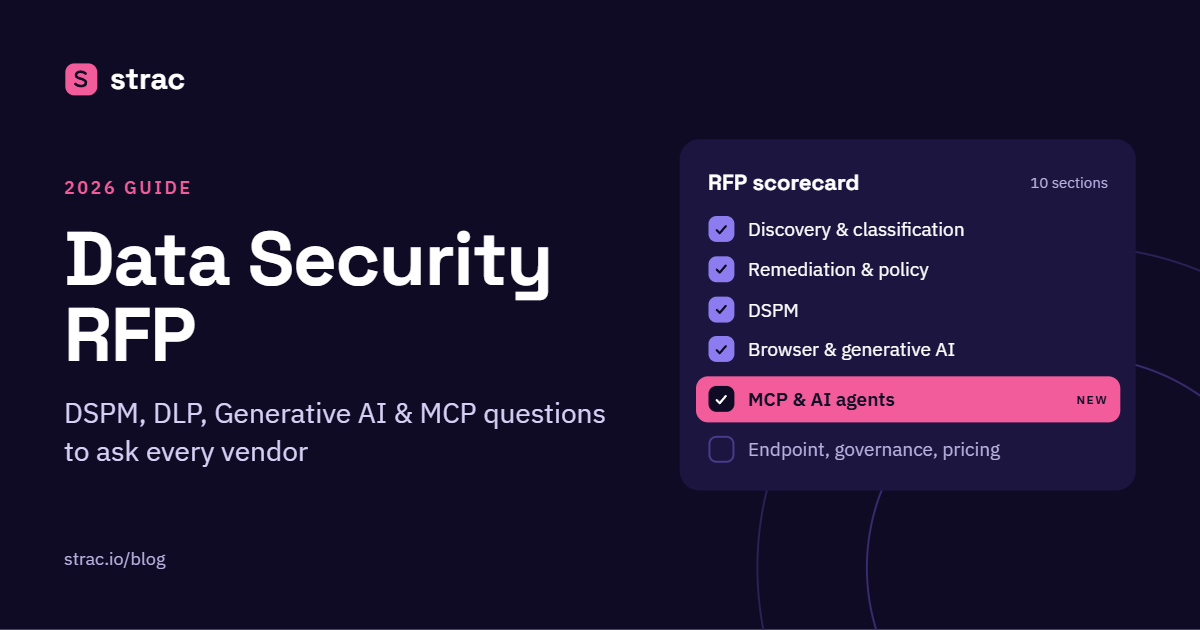
A 2026 data security RFP in 10 sections: what to ask DSPM and DLP vendors, from discovery to MCP, and how Strac answers each one
A data security RFP is a formal request for proposal that asks vendors to describe, in comparable terms, how their platform handles sensitive data from discovery to remediation. A security questionnaire is the narrower tool inside it: a fixed list of scored questions used to shortlist vendors before anyone books a technical session.
The two do different jobs. The questionnaire filters; the RFP decides. Send the questionnaire to eight vendors and the RFP to the three that survive it.
A good question set does three things. It forces vendors to name the applications they cover instead of claiming "all SaaS." It separates detection from remediation, because those are different products wearing the same label. And it makes pricing clear before a proof of concept, not after.
Write it once, for your own environment, and reuse it. Vendors will try to reshape your evaluation around whatever they happen to be good at. A fixed question set is how you stop that.
Open almost any data security questionnaire in circulation and you will find questions about network egress, USB ports, file shares and email attachments. Every one of those still matters. None of them describes where your data actually went this quarter.
Three paths broke the old template.
The browser became the workplace. Work happens in tabs, and a tab is where data leaves without touching a file server, a mail gateway or a network boundary. A questionnaire with no browser section cannot tell you whether a vendor sees a paste.
Generative AI became a destination. An analyst pasting a customer export into a free summarizer is not an attacker. It is an ordinary employee moving faster than policy, which is why shadow AI belongs in the RFP as its own scored section.
Agents became actors. A connector exposes a helpdesk, a repository or a warehouse to a model over the Model Context Protocol, and the tool response carries whatever the record contained. Ask a vendor how they inspect that response and you learn quickly how current their platform is.
A legacy questionnaire tests the perimeter you had; a 2026 questionnaire tests the data paths you have now. Read why legacy DLP fails for AI before you finalize the wording.
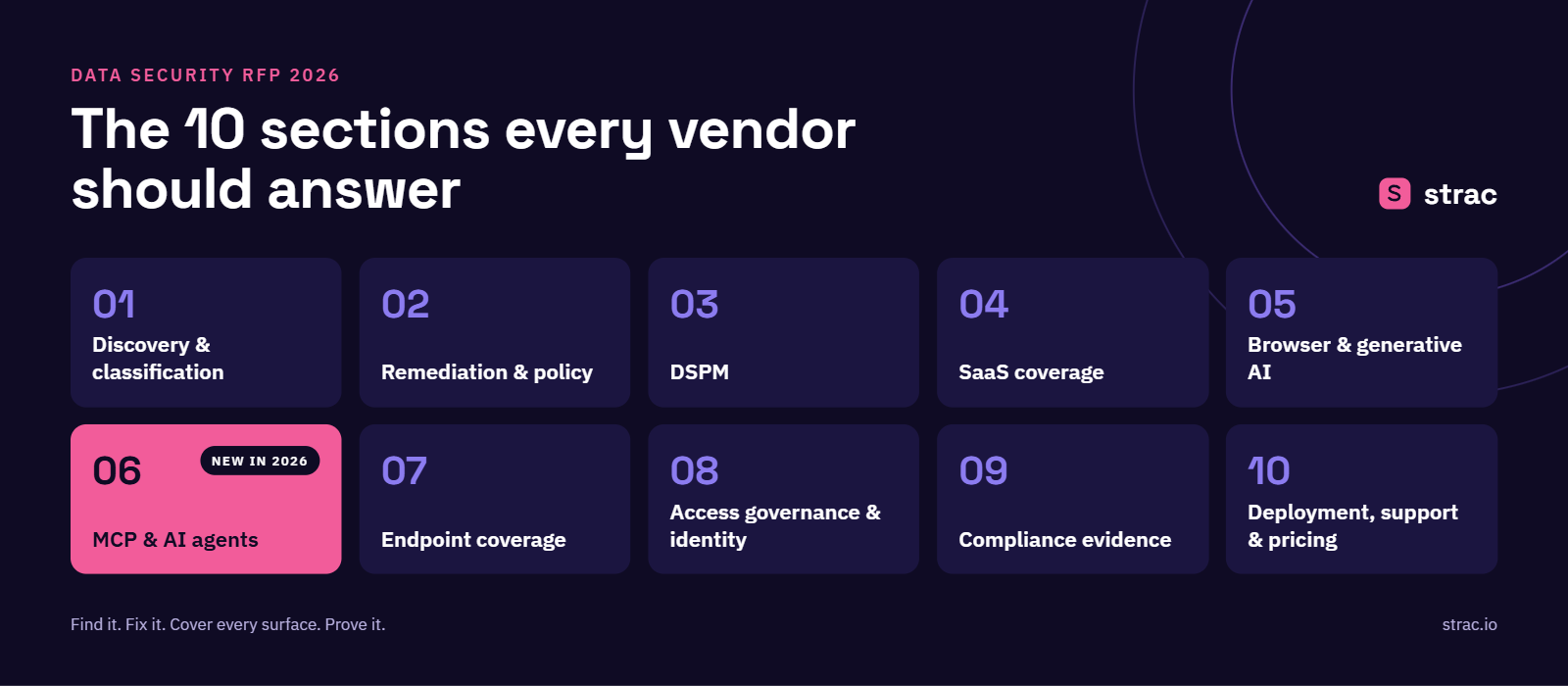
1. Data discovery and classification. Ask which stores are scanned by content rather than metadata, whether the historical back catalog is scanned or only new data, and whether images, scanned PDFs, Office files and ZIP archives are read with optical character recognition. Ask how a custom data type is defined without professional services. Accuracy on free text matters more than the length of the connector list.
2. Remediation and policy enforcement. Ask what the platform does in the second after a finding, and insist the answer names actions, not workflows. Ask whether the same data type can get different policies when it is shared externally, posted in a support tool or pasted into a generative AI prompt.
3. Data Security Posture Management (DSPM). Ask how the vendor shows who and what can reach a sensitive record today, how public links and stale external shares surface, and whether a posture finding can trigger remediation on its own. DSPM that only reports is a dashboard, not a control.
4. SaaS coverage. Ask for named applications: Slack, Microsoft Teams, Google Workspace, Microsoft 365, SharePoint, Salesforce, Zendesk, Intercom, Jira, Confluence, Notion, Box, Dropbox, GitHub. Ask whether inspection is real time and whether it covers attachments as well as message bodies. Slack DLP and Google Workspace DLP are good benchmarks for real depth.
5. Browser and generative AI coverage. Ask whether prompts, pastes and uploads are inspected before they leave the browser, and whether the platform can redact the sensitive part and let the rest through. Ask how it discovers unsanctioned tools and whether it tells a personal account from a corporate one. Compare answers against AI DLP and how to detect shadow AI.
6. MCP and AI agent coverage. This is the new section, and the one where answers diverge most. Ask whether the vendor discovers MCP servers nobody approved, inspects every tool response before it reaches the model, enforces the identity of the user behind the agent, scans responses for prompt injection, and logs which agent read what. Ask which clients and connectors are supported today. Benchmark against MCP DLP.
7. Endpoint coverage. Ask about operating systems, agent footprint, policy sync interval and offline behavior. Ask whether data lineage follows a file from download to USB to upload, and what the agent does not collect.
8. Access governance and identity context. Ask how classification joins to identity, whether policy can vary by role, group and contractor status, and how unmasking requests are approved and logged.
9. Compliance evidence. Ask which frameworks have built-in templates (SOC 2, ISO 27001, HIPAA, PCI DSS, GDPR) and whether the audit log covers AI agents as well as people.
10. Deployment, support and pricing. Ask for time to first finding, whether detected values are stored, and how support works day to day. Ask for pricing that tracks how your data moves; then ask what the price becomes when you add the browser, generative AI and MCP a year from now.
The fastest way to grade a vendor response is to stop reading it and watch one record move instead.
Take a single record holding a card number and a date of birth. Put it in a Slack message, a Zendesk ticket attachment, a paste into a chatbot, and an MCP tool response from a SharePoint file. Ask the vendor to handle all four in one session, on your data.
Strac inspects the content of each action as it happens. The card number is masked in place, the conversation and the ticket carry on with the masked value, the paste is redacted before it reaches the model, and the agent receives a tool response with the field already removed. The detection panel names the data type, the policy and the action taken.
Strac is a Data Loss Prevention (DLP), Data Discovery and DSPM platform covering SaaS, Cloud, Browser, GenAI and MCP, with automated remediation on every surface. It connects by API with no agents for SaaS and cloud, and a new integration goes live in under 10 minutes.
Discovery runs by content across more than 50 SaaS and cloud integrations, including a full historical scan of data already sitting there. Machine learning detectors and validation logic, such as Luhn checks on card numbers, keep false positives low. Optical character recognition reads sensitive data inside screenshots, scanned PDFs, Word, Excel and ZIP files. The same scans produce a live data inventory for GDPR and record of processing work.
Remediation runs in a fixed order:
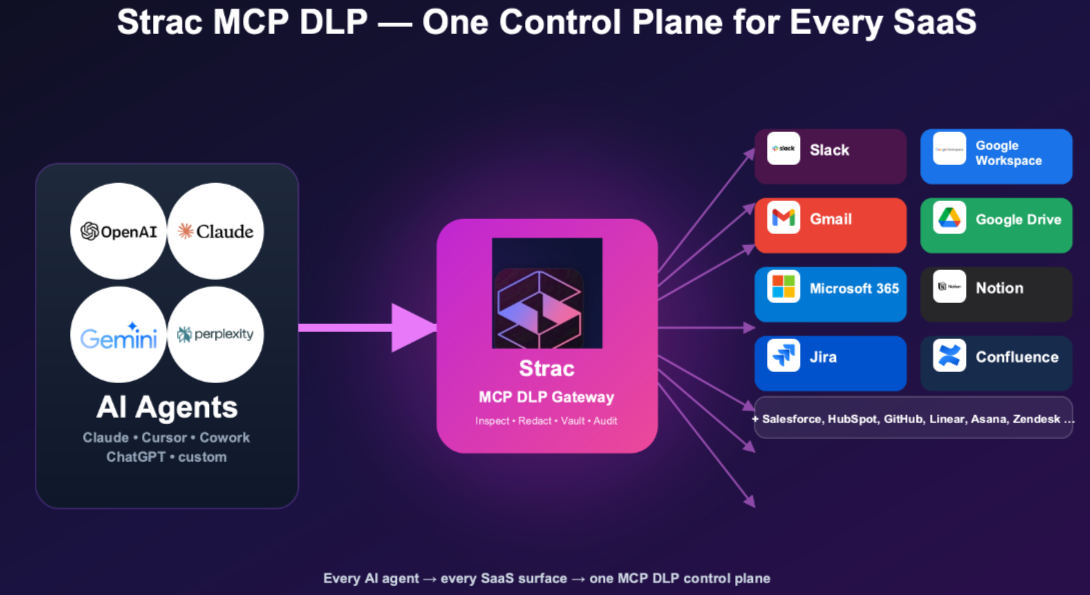
MCP DLP is the 2026 addition most RFPs now score. Strac inspects every tool call across 40+ MCP connectors, from Slack, SharePoint, Jira and GitHub to Postgres, Snowflake and Salesforce. It enforces the permissions of the user behind the agent, scans tool responses for prompt injection, and logs which agent read which field. It works with Claude, ChatGPT and Codex, Gemini CLI, Copilot Studio and Cursor.
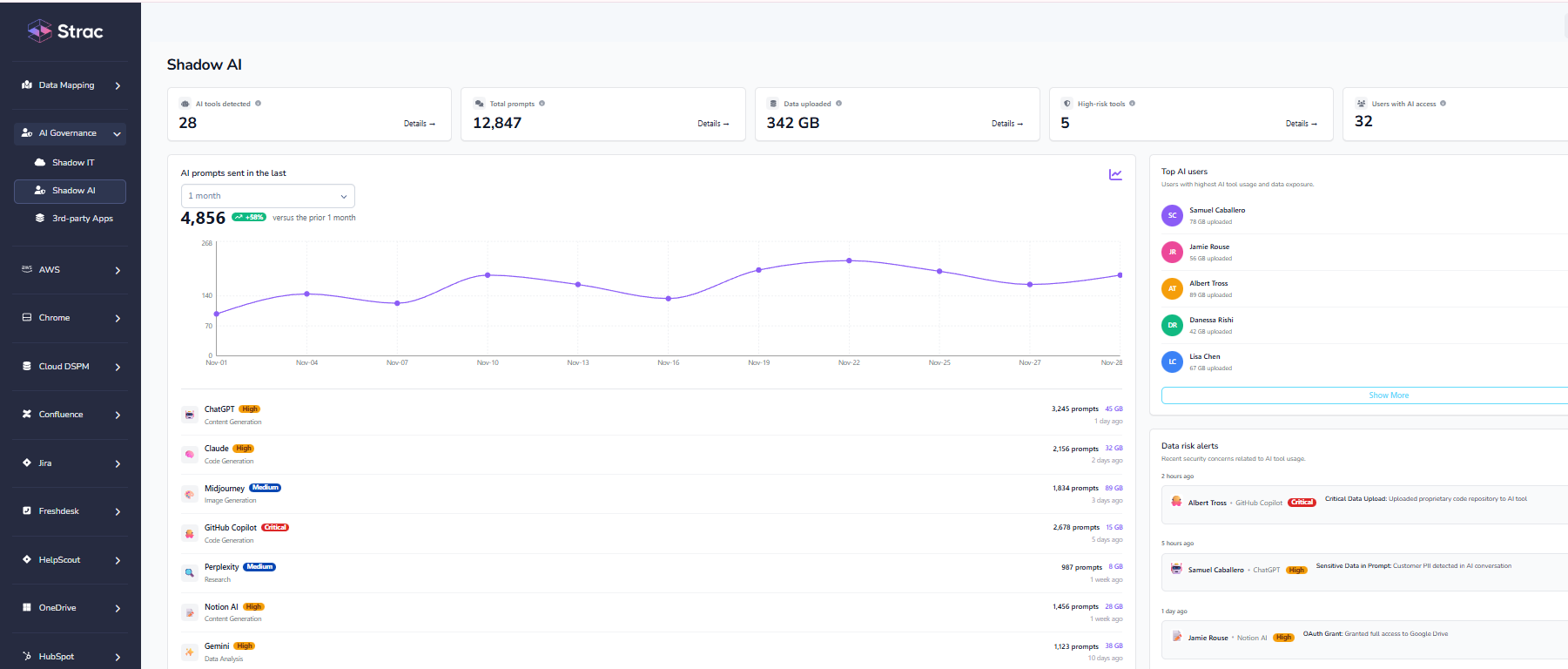
In the browser, AI DLP redacts prompts and uploads to ChatGPT, Claude, Gemini and Copilot before they are sent, and surfaces shadow AI nobody approved.
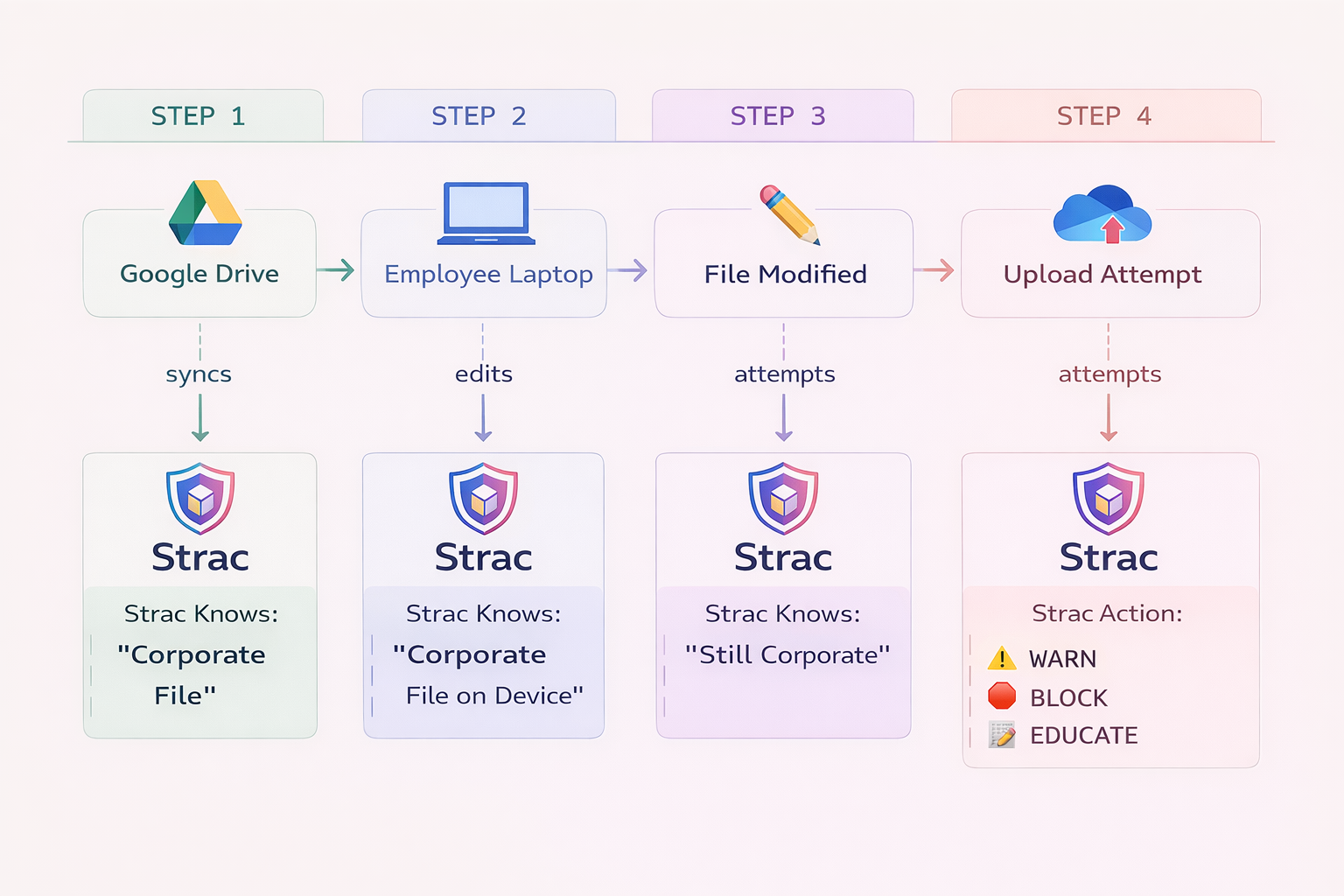
On the laptop, endpoint DLP covers Mac, Windows and Linux with data lineage that follows a file from source to destination. Compliance templates map findings to SOC 2, ISO 27001, HIPAA, PCI DSS and GDPR.
Weight each section by where your data actually moves, then score every vendor out of five per section. Give full marks only for what you saw working on your own data. Run this checklist before the RFP goes out:
An RFP is the one moment in a buying cycle where you define the criteria before anyone sells you theirs. Write it around the data paths you have in 2026, browser, generative AI and MCP included, and score remediation as heavily as discovery. Identity, model, prompt and network controls all fail eventually; the data layer is the backstop, and Strac redacts sensitive data on every action so a compromise never becomes a breach.
No. A questionnaire is a scored filter you send wide to shortlist vendors; an RFP is the longer technical and commercial document you send to finalists. Use the questionnaire to cut eight vendors to three, then run the RFP.
Most legacy DLP was built for the network, the file share and the inbox. It treats SaaS as a destination rather than a store and has no view of the browser, the prompt or the MCP tool call. See why legacy DLP fails for AI.
Only if you score blocking as the goal. Score redaction and vaulting first and blocking second. The right platform keeps work moving on masked values and saves hard blocks for the narrow cases that deserve them.
Not reliably; prompt injection is an open problem, and any vendor claiming otherwise should prove it live. That is why the data layer matters: when every tool response is redacted, a hijacked agent has no raw PII, PHI or secrets to leak.
DSPM finds and fixes sensitive data at rest; DLP stops it leaving through SaaS, browsers, prompts and tool calls. Score both, and favor one engine for both. For the AI sections, start from the pillar on AI data governance.