AI Firewall: The Data Firewall for AI (2026 Guide)
An AI firewall controls what reaches AI tools and agents. Strac is the data firewall for AI: it redacts and blocks PII, PHI, and secrets at the browser, endpoint, and MCP before they reach ChatGPT, Claude, Gemini, or any AI agent.
Short answer: An AI firewall is a security control between AI and your data that decides what is allowed. Strac is the data firewall for AI: it sits at the AI boundary, in the browser extension, the endpoint agent, and across MCP DLP, and redacts or blocks sensitive data like PII, PHI, card numbers, and secrets before it ever reaches ChatGPT, Claude, Gemini, Copilot, or any AI agent.
The data firewall for AI: sensitive data is caught before it reaches the model.
✨ What is an AI firewall?
An AI firewall sits between AI and your data and decides what is allowed through.
An AI firewall is the control layer that sits between AI tools or agents and the people and data they touch, and decides what is allowed through. As teams adopt ChatGPT, Claude, Copilot, and autonomous agents, an AI firewall is how security teams keep sensitive data and risky actions under control without blocking AI outright.
✨ The two kinds of AI firewall: network vs data
The term covers two different controls, and most organizations need both:
Sensitive data (PII, PHI, PCI, secrets) flowing into or out of AI
Strac
A network firewall for AI watches the traffic for attacks. A data firewall watches the data, and stops regulated or confidential data from reaching the model in the first place. They solve different problems, so running both is common.
Strac redacts sensitive data at the boundary, before the model ever sees it.
✨ How Strac works as a data firewall for AI
Strac enforces the data firewall at every place AI touches your data, under one policy:
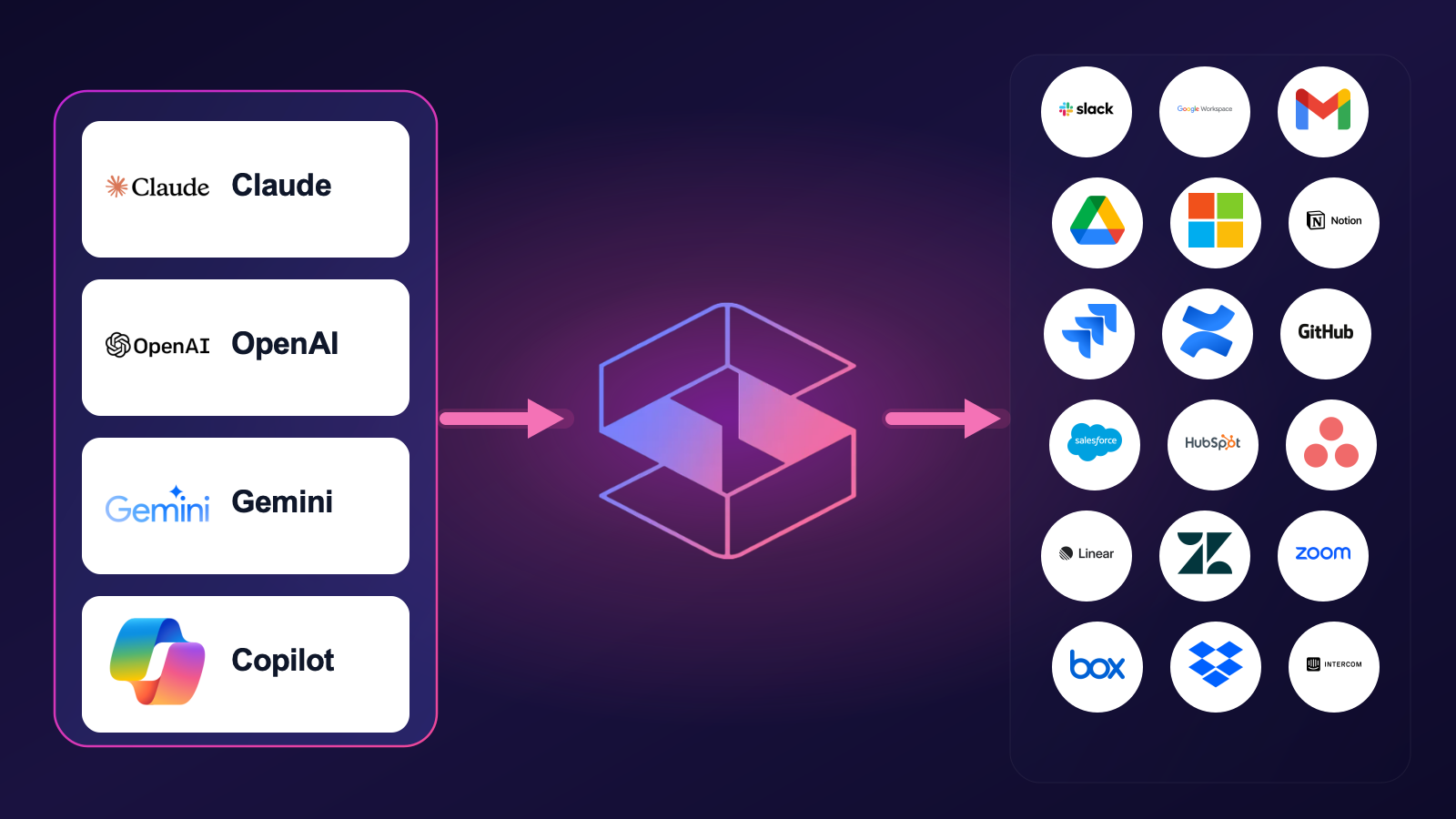
One data firewall for AI across the browser, the endpoint, and MCP agents.
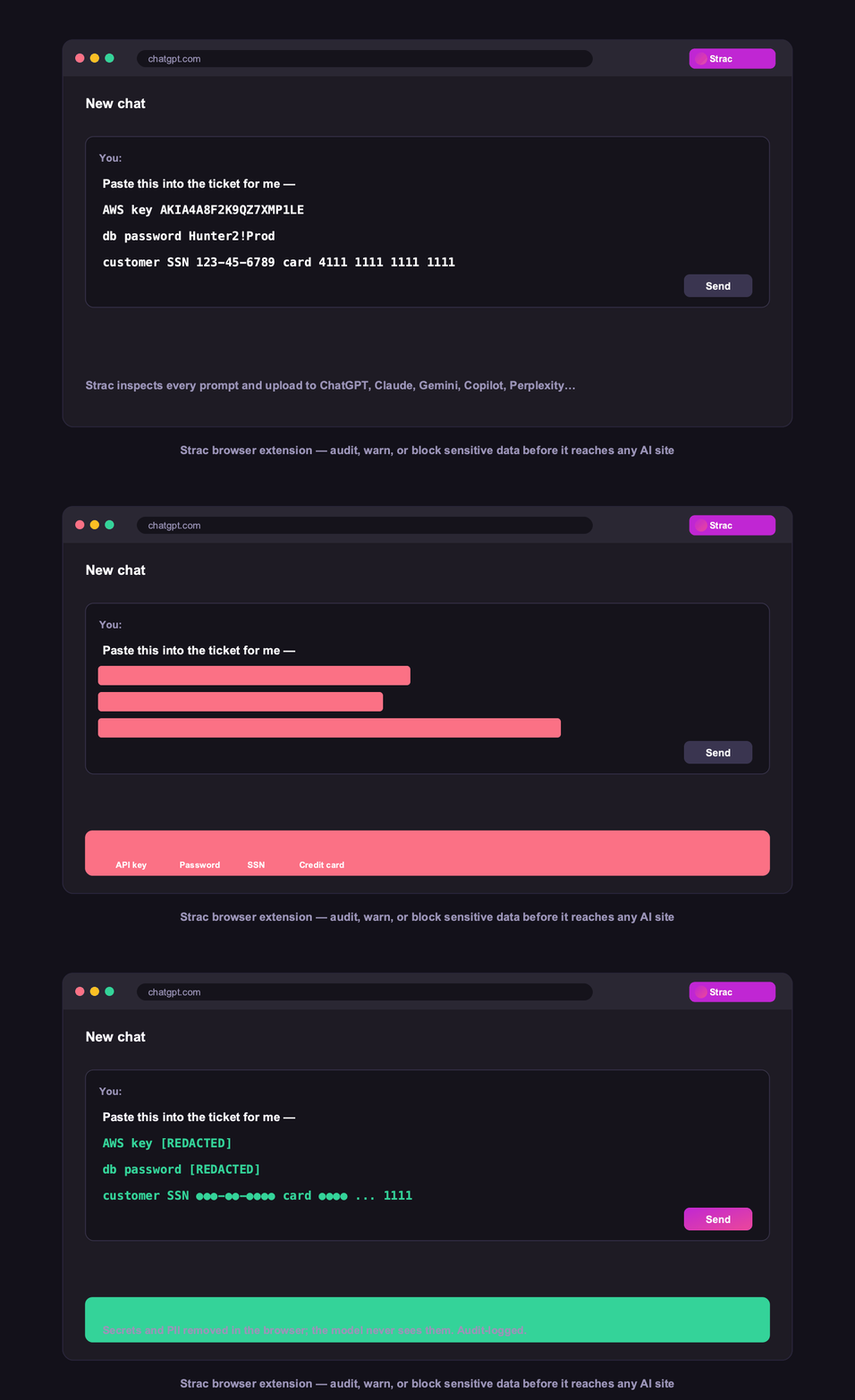
In the browser. The browser extension blocks or redacts sensitive uploads and pastes to any AI website, ChatGPT, Claude.ai, Gemini, Copilot, Perplexity.
On the endpoint. The endpoint agent covers desktop AI apps (Claude Desktop, Claude Code, ChatGPT desktop) with block, warn, allow, and audit modes, including screenshots via OCR.
Across MCP.MCP DLP sits in the agent-to-tool path as a reverse proxy and redacts sensitive values in tool responses before the model sees them, agentlessly.
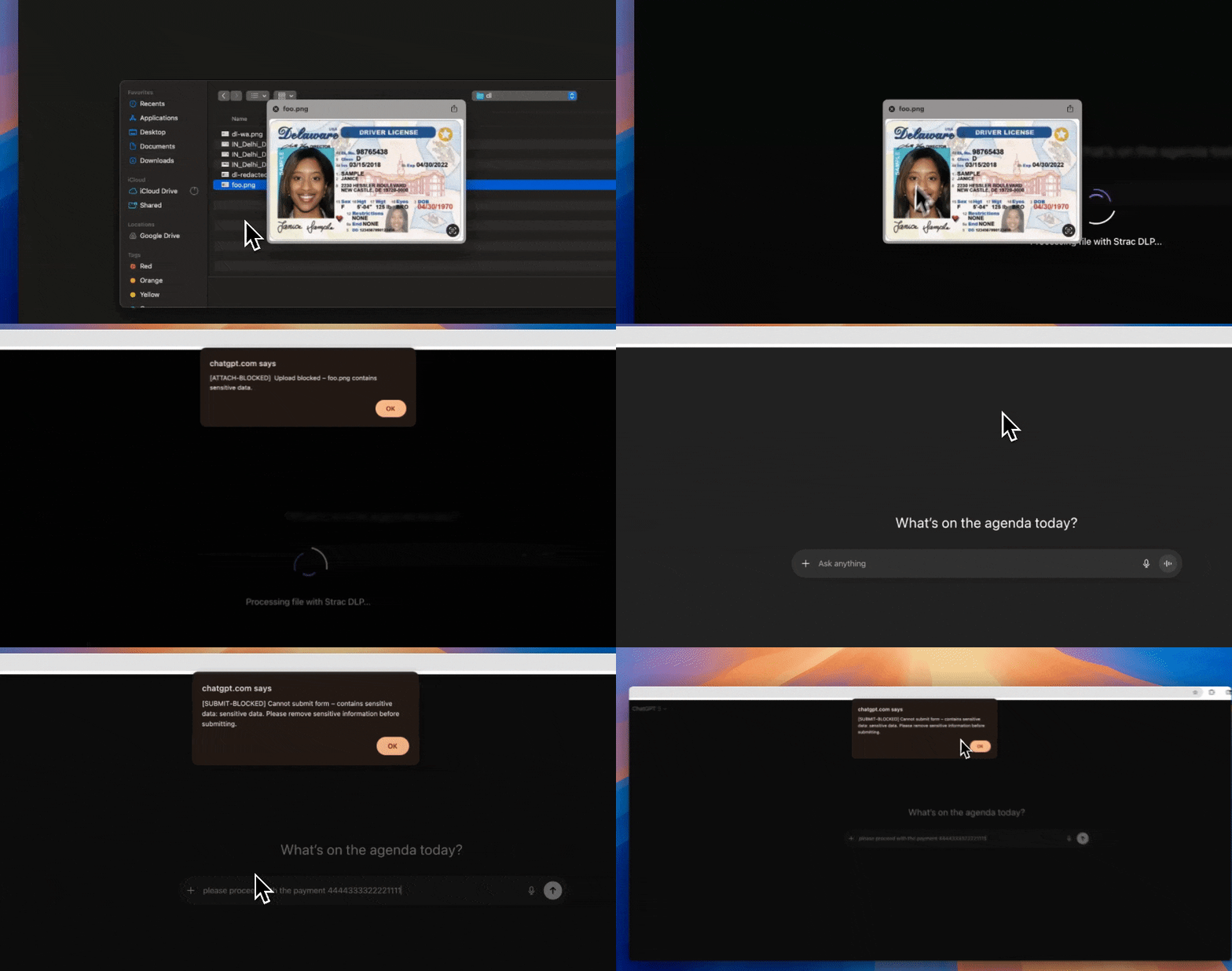
The data firewall in action: Strac blocks a sensitive upload to an AI tool, live.
✨ Control what each AI agent can access
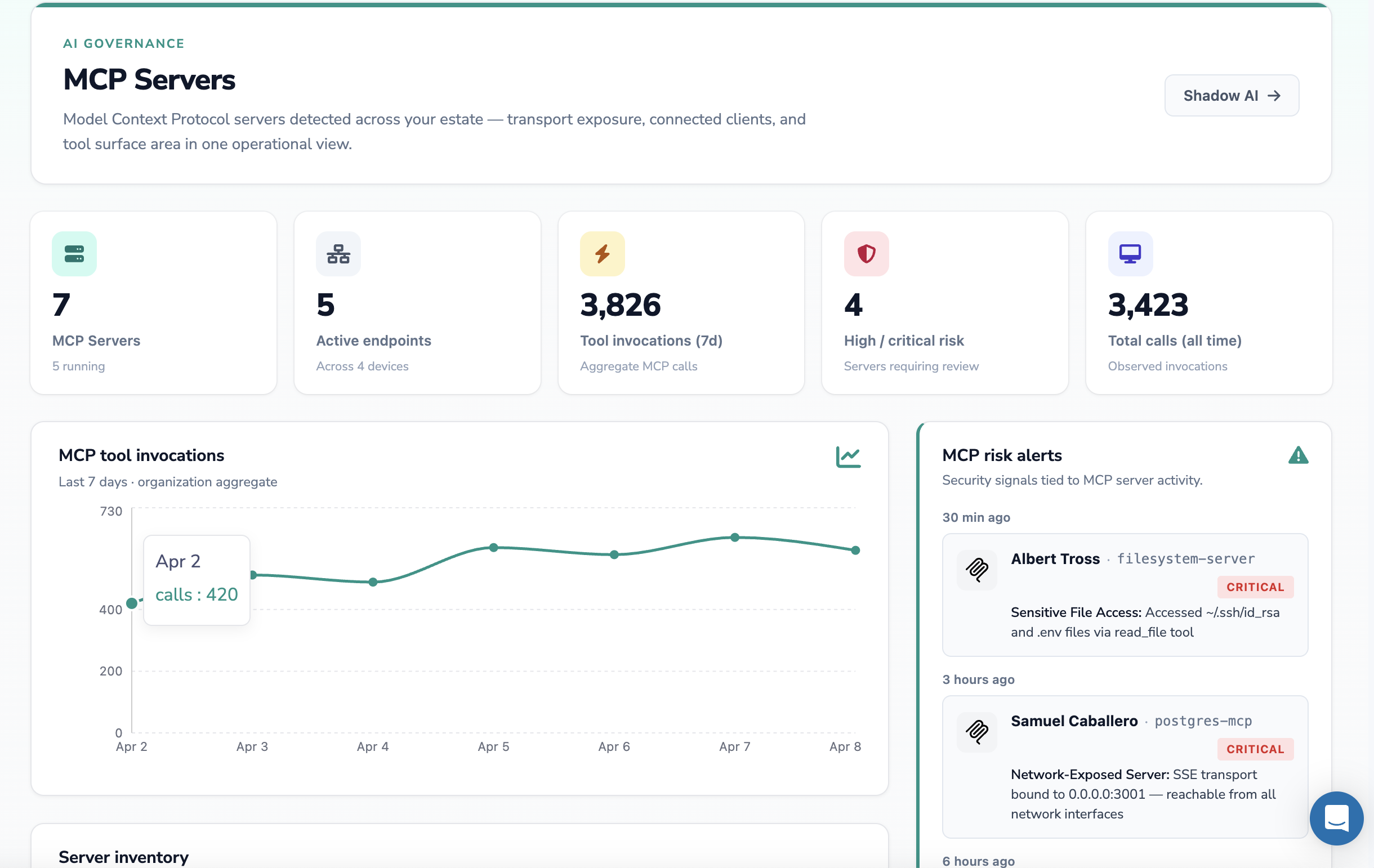
A firewall is also about access, not just content. Strac gives each AI agent only the data its task needs: it governs what an agent can reach over MCP, redacts sensitive values in every tool response, and lets you cut an agent’s access in one step. That is agent access control and data loss prevention in one layer. See MCP gateway and agentic AI security.
Govern access per agent and per tool: allow, block, or redact.
✨ What the AI firewall catches
Strac ships 100+ detectors and finds sensitive data even inside images, screenshots, and documents using OCR and ML:
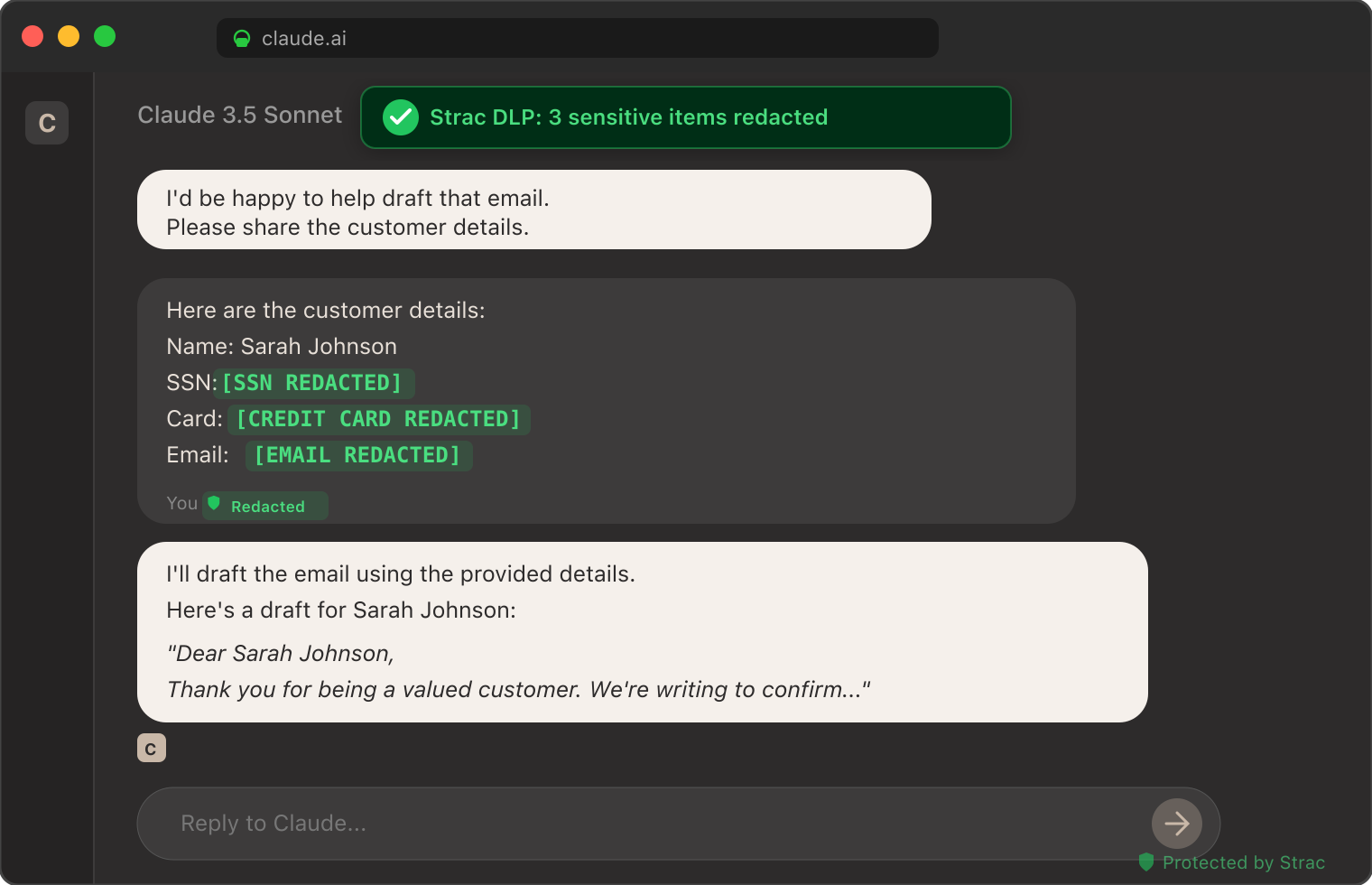
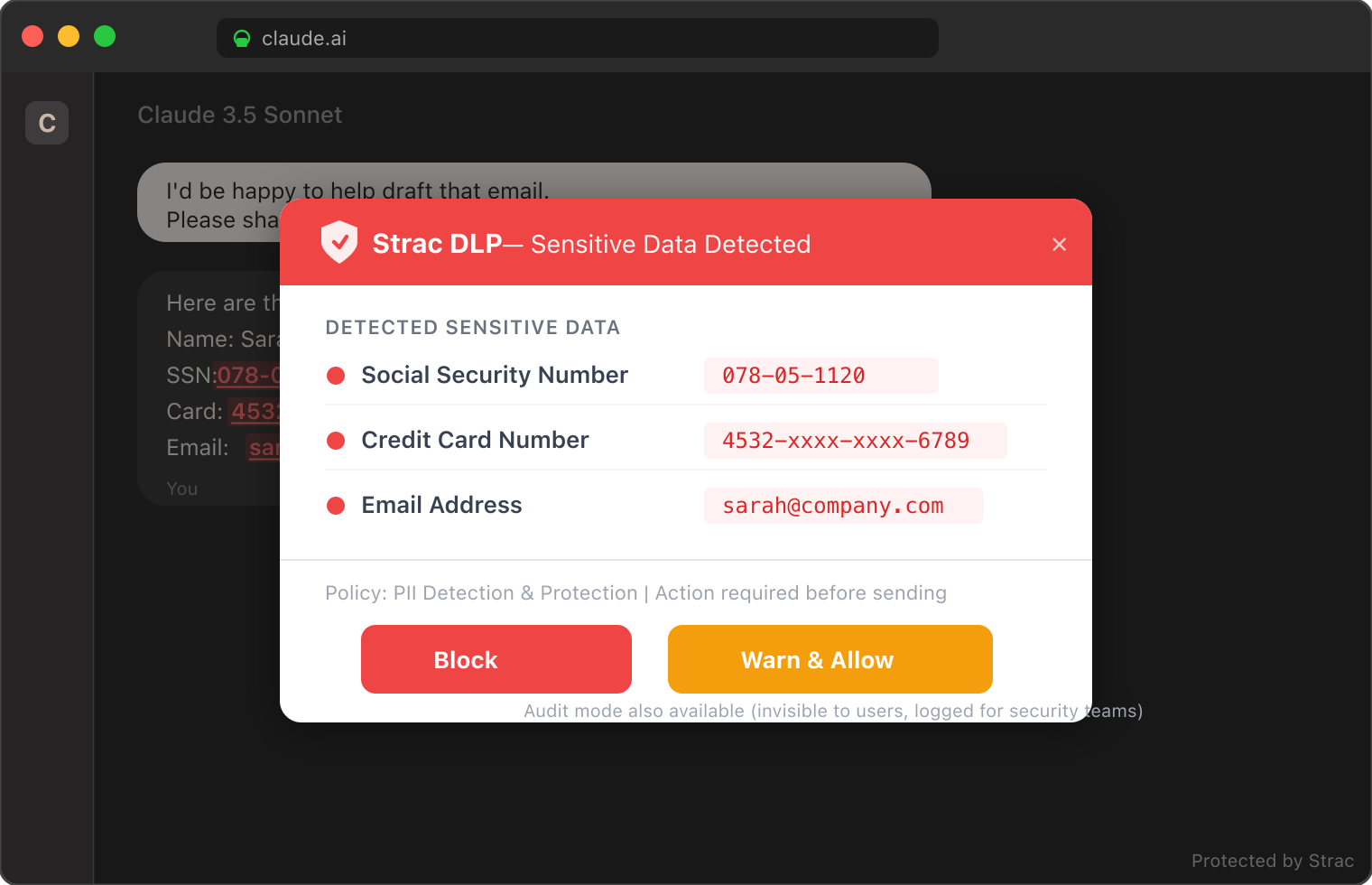
Strac flags the SSN, card, and email in an AI prompt and blocks before send.
PII: SSNs, passports, driver’s licenses, dates of birth, addresses.
PHI: medical records, ICD-10 codes, prescription data.
PCI: credit card numbers, bank accounts, routing numbers.
Secrets and code: API keys, credentials, and proprietary source code.
Custom: any pattern you describe in plain English.
✨ Catch the shadow AI your firewall does not know about
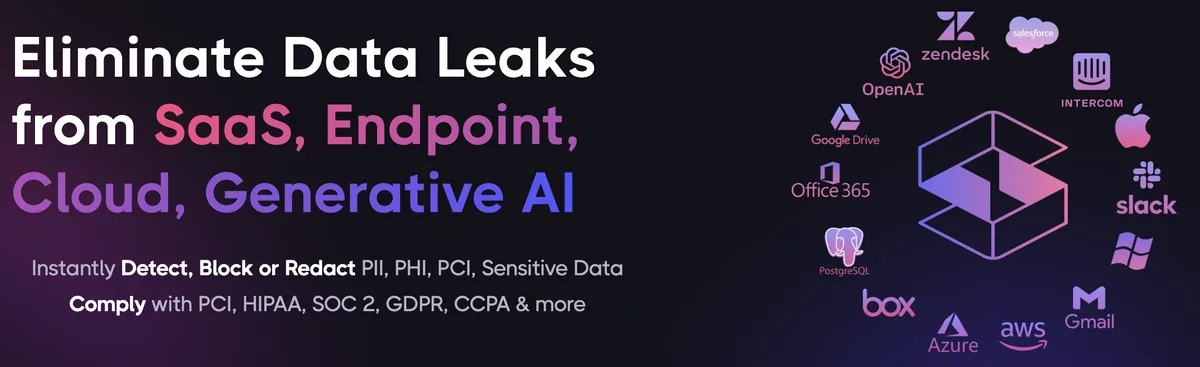
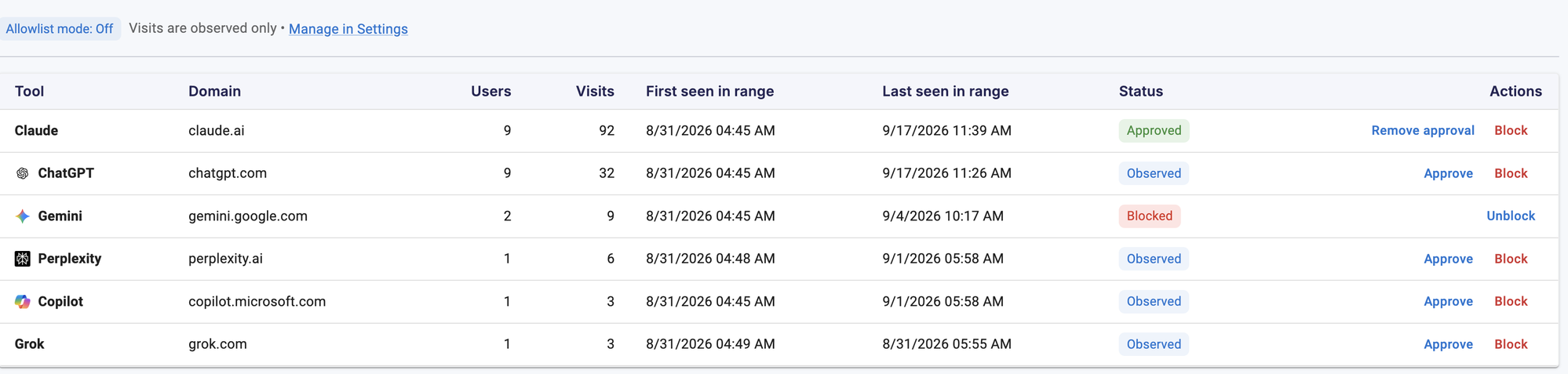
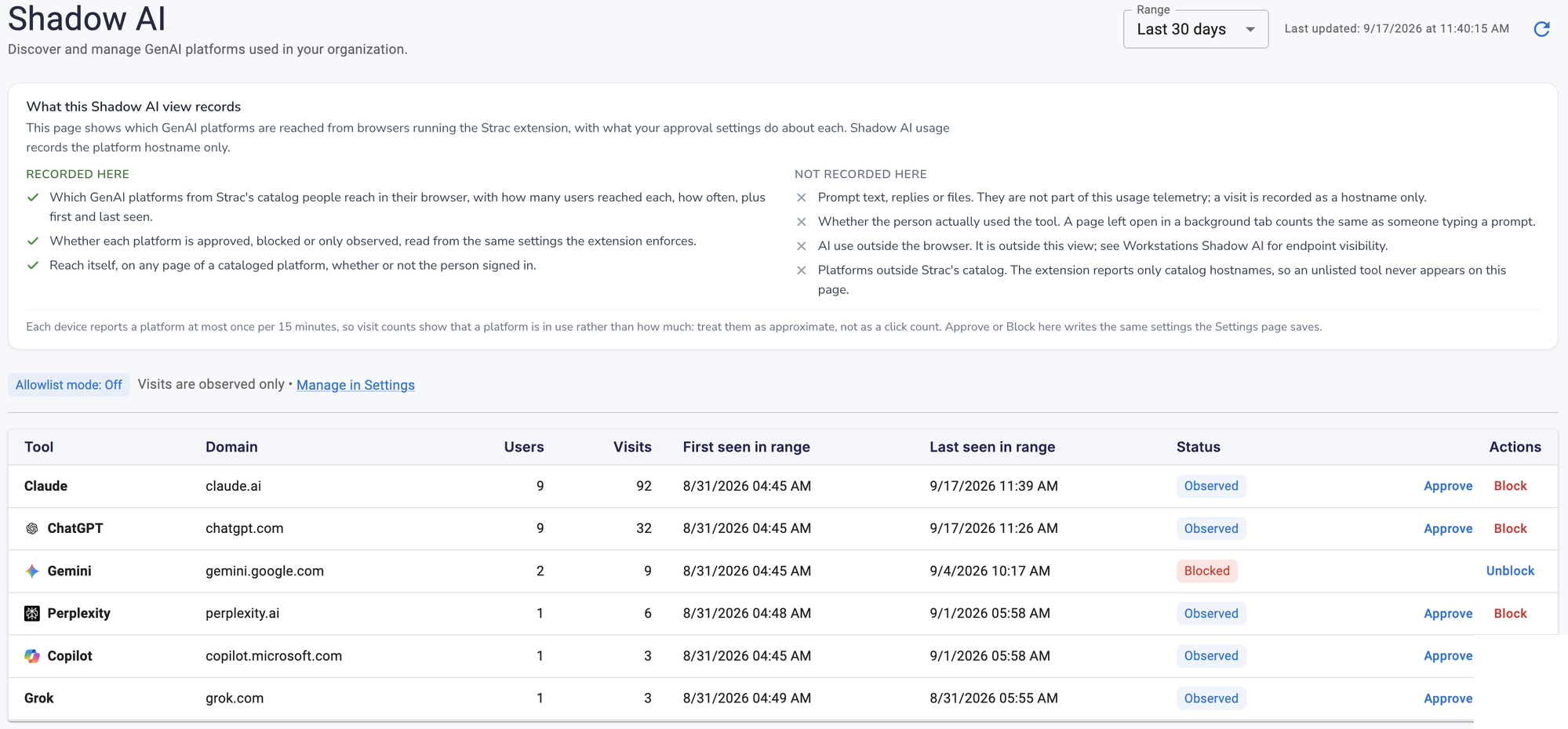
Strac surfaces shadow AI, so the firewall covers the AI you did not know about.
An AI firewall only works on the AI you know about. Strac surfaces shadow AI, the unsanctioned AI tools employees adopted, so the data firewall covers the whole AI surface, not just approved tools.
✨ Why you need an AI firewall now
AI adoption moved faster than the controls around it. Employees paste customer records into ChatGPT, developers drop source code into Claude, and autonomous agents pull data from your systems over MCP, all in channels traditional DLP never watched. The risk is specific:
One prompt can leak regulated data; the firewall catches it before it reaches the model.
Data retention. Sensitive data sent to a model may be logged, cached, or used for training, outside your control.
One prompt, one leak. A single paste can exfiltrate regulated data in seconds, with no file transfer to catch.
Agents at machine speed. An over-permissioned agent can move data across systems faster than a human reviewer can react.
Shadow AI. Teams adopt tools security never approved, so the leak happens where no one is looking.
An AI firewall closes these gaps by controlling the data at the AI boundary, so your team keeps using AI without sending regulated data to someone else’s model.
✨ AI firewall use cases
Where a data firewall for AI earns its place:
The data firewall redacts sensitive data in an AI prompt, live, so work keeps moving.
Use case
What the firewall does
Support teams using AI
Redacts customer PII and card data before it reaches an AI assistant drafting replies
Developers with AI coding tools
Blocks API keys and proprietary source code from going into Claude Code, Copilot, or Cursor
Healthcare and fintech
Keeps PHI and PCI out of ChatGPT and Gemini, with an audit trail for HIPAA and PCI DSS
AI agents over MCP
Redacts sensitive values in tool responses before an agent or model sees them
Enterprise AI rollout
One policy plane to deploy ChatGPT, Claude, and Copilot at scale without data exfiltration
How to choose an AI firewall
Not all AI firewalls do the same job. Use this checklist:
Data or network? Decide whether you need attack filtering (network/prompt firewall), data protection (data firewall), or both.
Coverage. Does it cover every AI tool across the browser, endpoint, and MCP, or just one approved model?
Remediation. Can it redact, block, warn, and allow, or only alert?
Detection depth. 100+ data types, custom detectors, and OCR for images and screenshots.
Agents. Does it govern what AI agents can access over MCP?
Shadow AI. Does it discover unsanctioned AI tools?
Audit. A full, exportable trail mapped to HIPAA, PCI DSS, SOC 2, and GDPR.
✨ How to deploy an AI firewall with Strac
Deploy once, govern every AI tool and agent, with a full audit trail.
Discover the AI tools and agents in use, including shadow AI.
Connect the browser extension, the endpoint agent, and MCP DLP for agents. No proxy or network re-architecture.
Set policy: which data types to redact, block, warn, or allow, per tool and per user.
Enforce and audit: sensitive data is caught at the boundary, and every decision is logged.
Most teams are enforcing across multiple AI tools within the first hour, with nothing to re-route at the network layer.
AI firewall vs guardrails vs DLP
These overlap. AI guardrails are the broad set of controls (content, accuracy, access, data) that keep AI safe; a data firewall is the data guardrail, enforced at the boundary; AI DLP is the detection-and-redaction engine underneath. Strac is all three for the data layer: the data firewall for AI, the data guardrail, and the AI DLP that powers them.
Why teams choose Strac as their AI firewall
Every AI tool, one policy. Browser, endpoint, and MCP, so new AI tools are covered on day one.
Remediate, not just alert. Redact, block, warn, allow, with a full audit trail.
Built by a data-security company. The same platform does SaaS, cloud, endpoint, and browser DLP, not a single-point AI tool.
Ready to put a data firewall in front of every AI tool and agent? Book a Strac demo.
🌶️ Spicy FAQs: AI firewall
Is an AI firewall the same as DLP?
An AI firewall is DLP applied at the AI boundary. Traditional DLP watched email, network, and files; an AI data firewall extends the same detect-and-redact logic to AI chat, pastes, uploads, screenshots, and agent tool calls, where data now actually leaks.
Do I need an AI firewall if I already have a network firewall?
Usually yes. A network firewall for AI blocks attacks and abusive traffic but does not stop your own employees or agents from sending sensitive data to a model. A data firewall for AI does, so many teams run both.
How fast can I deploy an AI firewall?
With Strac, most teams are enforcing across multiple AI tools within the first hour. There is no network re-architecture: you connect the browser extension, the endpoint agent, and MCP for agents, then set policy.
What is an AI firewall?
An AI firewall is a security control that sits between AI tools or agents and the people and data interacting with them, and decides what is allowed. There are two kinds: a network or prompt firewall that filters prompts and model output for attacks and abuse, and a data firewall that stops sensitive data from flowing into or out of AI. Strac is the data firewall.
What is a data firewall for AI?
A data firewall for AI inspects the data moving to and from AI tools and agents, and redacts, blocks, warns, or allows it by policy, so sensitive data like PII, PHI, card numbers, and secrets never reaches the model. Strac enforces this at the browser, the endpoint, and across MCP, so it covers every AI tool, not one approved model.
What is the difference between an AI firewall and an LLM firewall?
They describe the same idea at different scopes. An LLM firewall is scoped to a large language model; an AI firewall is the broader term covering any AI tool, including agents and embedded AI features. A data firewall like Strac applies to both.
Does an AI firewall stop data leaks?
A network or prompt firewall filters prompts and output for attacks, but does not stop your sensitive data from being sent to the model. Stopping data leaks requires a data firewall that inspects what is being sent. That is what Strac does: it redacts or blocks PII, PHI, and secrets before they leave your environment.
How is Strac different from a network firewall for AI?
Network firewalls for AI (and prompt firewalls) focus on blocking attacks, prompt injection, and abusive traffic. Strac focuses on the data: it discovers and redacts sensitive data at the AI boundary across the browser, endpoint, and MCP, and governs what AI agents can access. Many teams run both, a network firewall for attacks and Strac for data.
Does the AI firewall cover AI agents and MCP?
Yes. Strac sits in the MCP path between an AI agent and your tools as a reverse proxy, and redacts sensitive values in tool responses before the model sees them, agentlessly. See MCP DLP and MCP gateway.
Discover & Protect Data on SaaS, AI, MCP, Endpoints & Cloud
Strac provides end-to-end data loss prevention for all SaaS and Cloud apps. Integrate in under 10 minutes and experience the benefits of live DLP scanning, live redaction, and a fortified SaaS environment.