September 9, 2026

7
min read
Data Loss Prevention Providers
Learn what to look for with DLP providers across SaaS, cloud, endpoints, GenAI, MCP, DSPM, and real-time DLP.
.webp)
Learn what to look for with DLP providers across SaaS, cloud, endpoints, GenAI, MCP, DSPM, and real-time DLP.

· Modern DLP providers should protect sensitivedata across SaaS, cloud, endpoints, browsers, GenAI, and emerging AI agentworkflows.
· Detection alone is no longer enough. Look forreal-time enforcement such as block, redact, mask, quarantine, encrypt, delete,or warn.
· Strong DLP platforms should understand PII, PHI,PCI, credentials, secrets, intellectual property, and custom business-sensitivedata across text, files, images, and attachments.
· AI changes the DLP equation. Enterprises nowneed controls for prompts, uploads, Shadow AI, AI agents, and MCP-connectedtools.
· Straccombines DLP and DSPM across modern data surfaces, helping organizationsdiscover, classify, monitor, and remediate sensitive data from one platform.
Choosing a data loss prevention provider in 2026 is very different from choosing one a few years ago.
Sensitive data no longer lives mainly on corporate networks and managed laptops. It moves through SaaS applications, cloud storage, browsers, endpoints, GenAI tools, support tickets, APIs, and increasingly AI agents using MCP connections.
That means modern DLP cannot stop at discovering sensitive data or generating alerts. Organizations need visibility into where sensitive data lives, how it moves, who or what is accessing it, and the ability to enforce protection in real time.
A data loss prevention provider helps organizations identify sensitive information and prevent it from being exposed, misused, or moved somewhere it should not go.
Traditional DLP focused heavily on email, networks, and managed endpoints. Those controls still matter, but enterprise data now travels through a much broader environment.
A modern DLP provider should be able to protect data across:
The objective is no longer simply to answer, "Where is sensitive data?"
The better question is: Where is sensitive data, where is it going, and can we stop unsafe movement before exposure occurs?
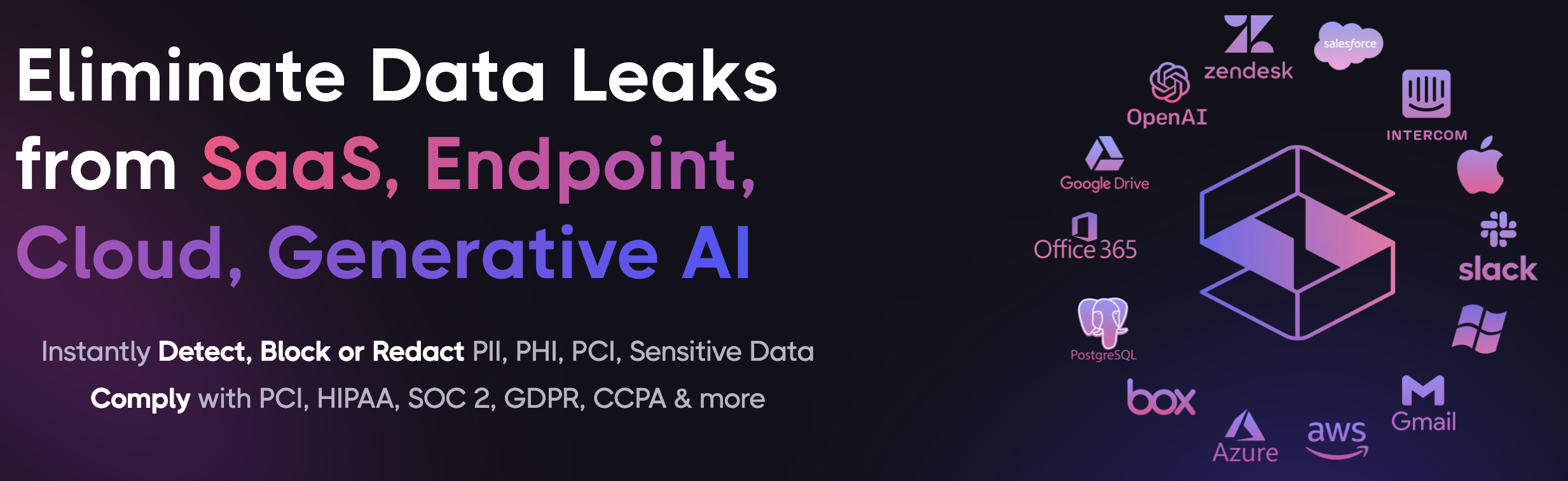
SaaS changed where companies stored data. Generative AI is changing how that data moves.
Employees can now paste customer information into ChatGPT, upload internal documents to AI tools, use browser-based applications outside the sanctioned stack, or connect AI agents to enterprise systems.
AI agents create another challenge. An agent may access several applications and move information between them without the traditional human workflow security teams are accustomed to monitoring.
This creates new data loss paths that legacy DLP architectures were not originally built around.
Modern DLP therefore needs to cover human activity and machine-to-machine data movement.
Start with coverage.
A DLP provider can have excellent detection technology and still leave major security gaps if it protects only a fraction of where employees actually work.
Evaluate whether the provider covers your critical SaaS apps, cloud services, browsers, endpoints, email, collaboration platforms, GenAI tools, APIs, and AI workflows.
For example, an organization may protect email perfectly while sensitive customer information is copied into Slack, uploaded to Google Drive, pasted into ChatGPT, downloaded to an endpoint, and transferred to a USB device.
DLP should follow the data rather than force security teams to think in individual application silos.
You cannot protect sensitive data if you do not know where it exists.
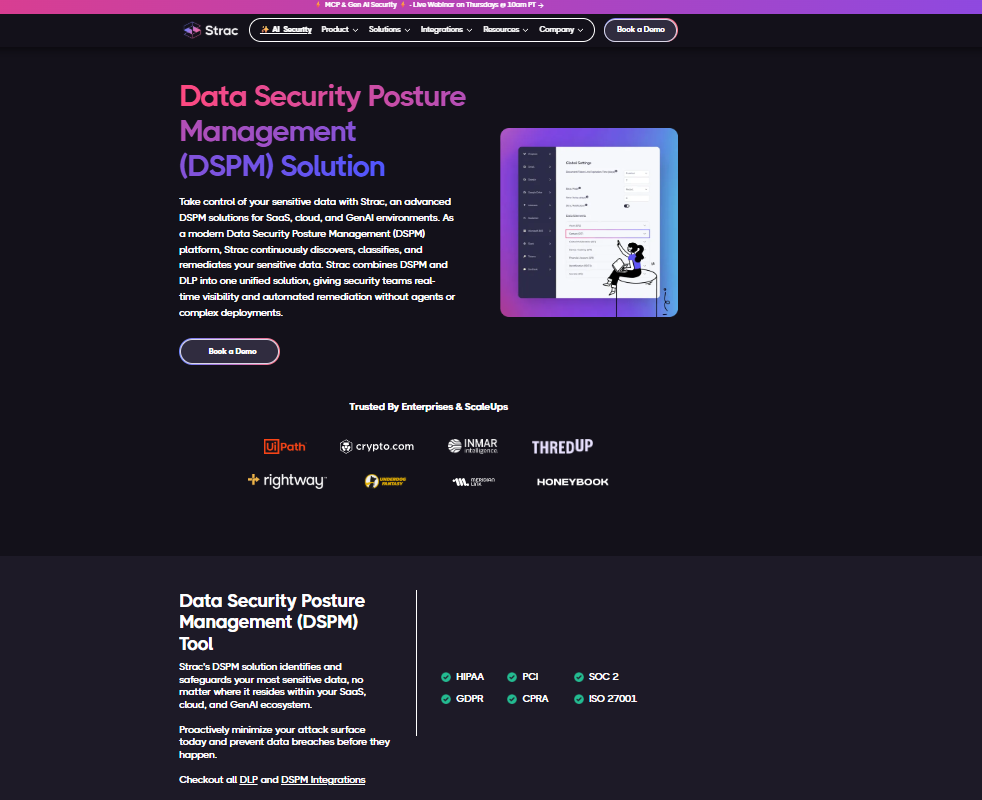
This is where Data Security Posture Management (DSPM) and DLP increasingly overlap.
Modern platforms should continuously discover sensitive information across connected systems and help security teams understand:
Combining discovery with enforcement is particularly valuable because security teams can move from identifying risk to actually reducing it.
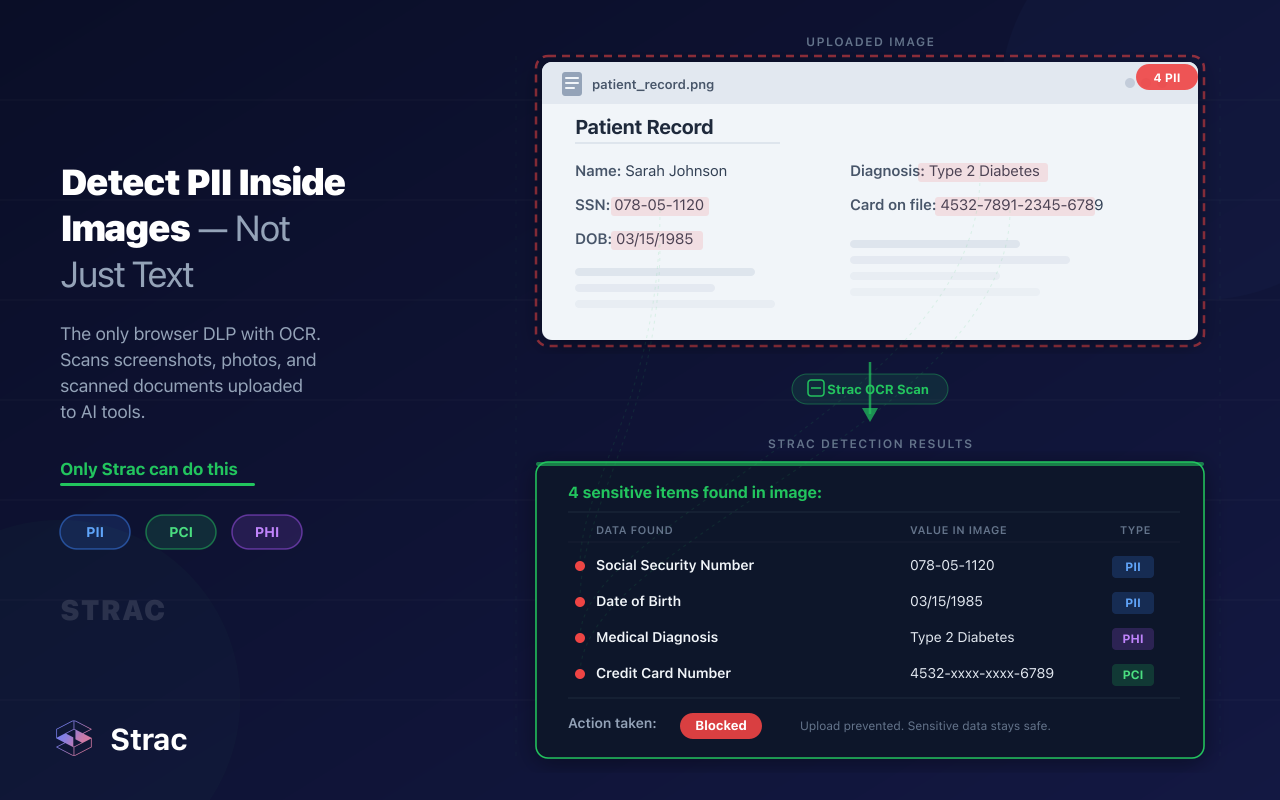
Regex remains useful for predictable patterns, but modern enterprise data is much messier.
Sensitive information can appear inside PDFs, spreadsheets, screenshots, scanned documents, images, support tickets, ZIP files, and unstructured conversations.
Look for DLP providers capable of inspecting both structured and unstructured content using technologies such as machine learning and OCR.
Detection should cover common sensitive data such as PII, PHI, PCI, credentials, API keys, secrets, financial information, and confidential business information.
Organizations should also be able to define custom data elements for information unique to their business.
Strac, for example, supports built-in and custom detectors across sensitive data categories. You can explore the full catalog of sensitive data elements.
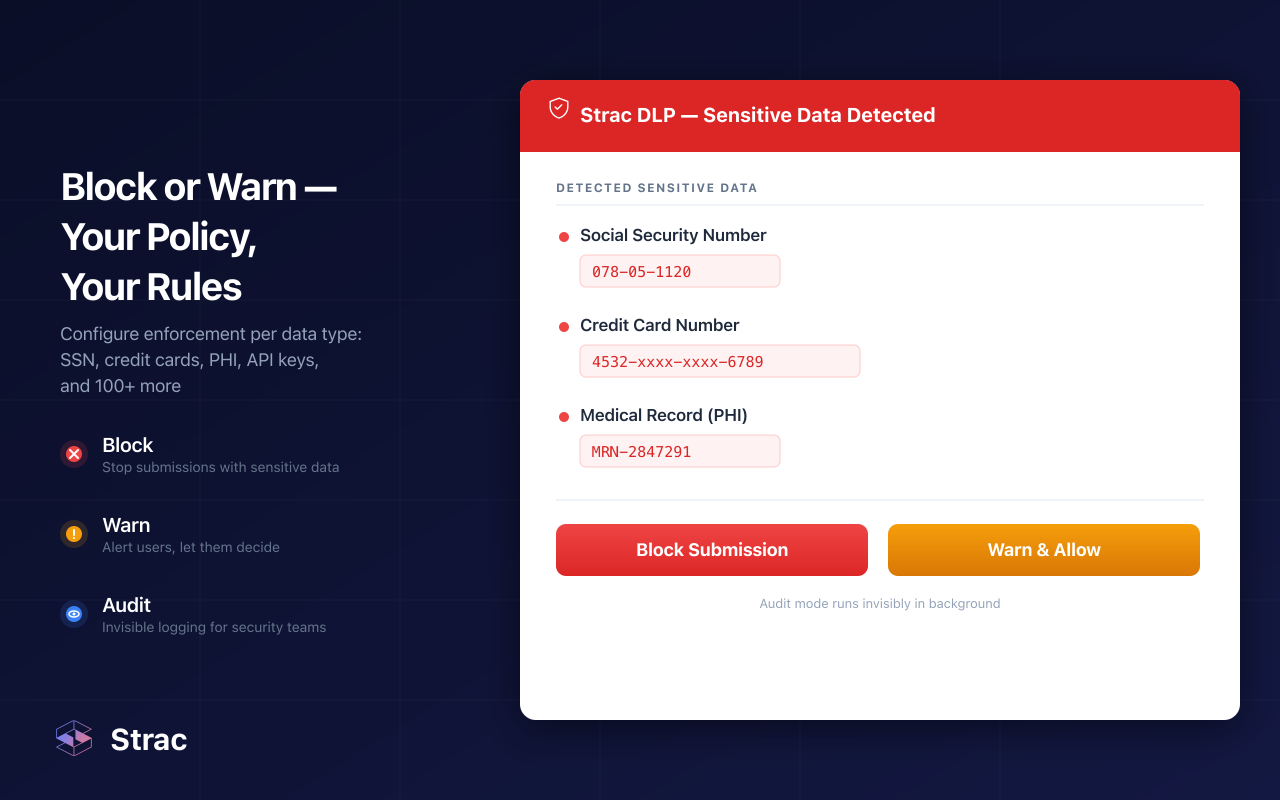
A dashboard showing that sensitive information leaked yesterday is useful for investigation. It does not undo the exposure.
Modern DLP should be able to intervene when risky activity happens.
Depending on the channel and policy, enforcement can include:
This distinction is important when comparing DLP providers.
Ask vendors what happens after sensitive data is detected.
If every event becomes another alert for the security team to investigate manually, the organization may simply be replacing data risk with alert fatigue.
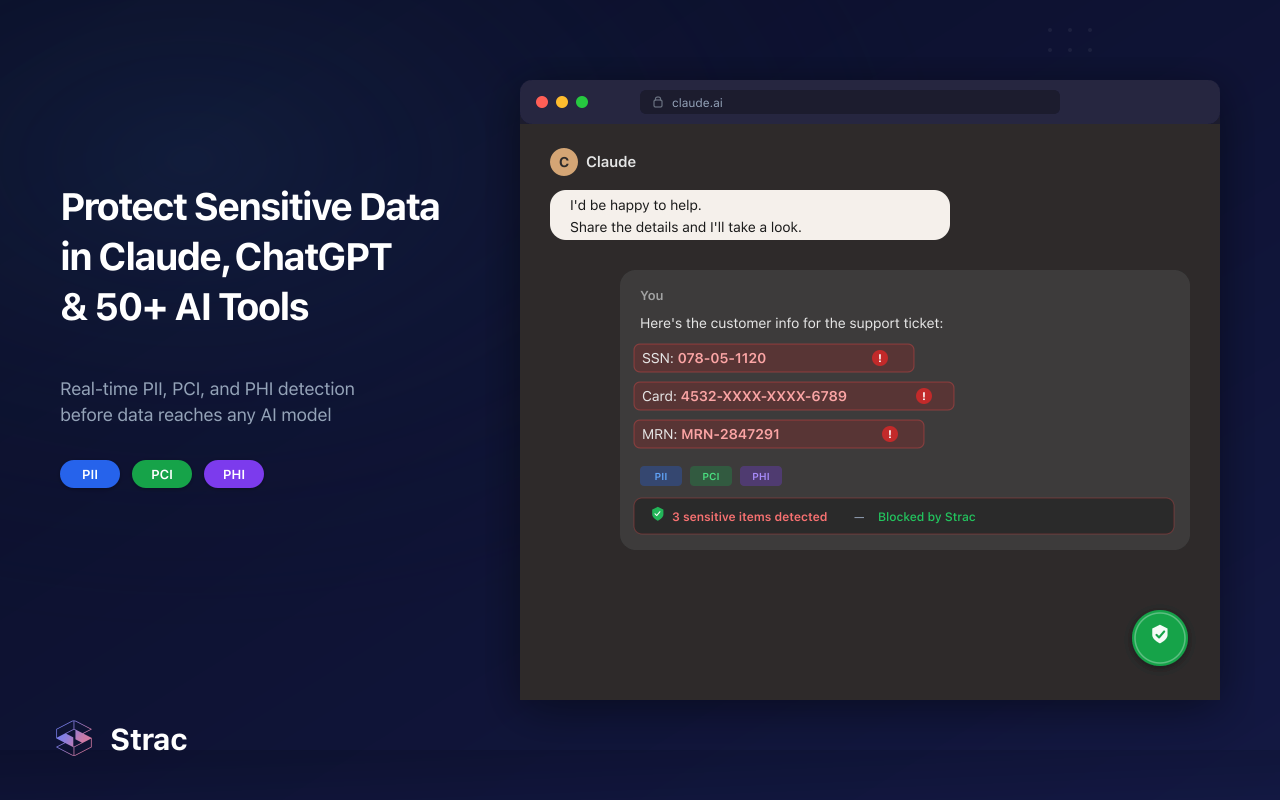
GenAI should now be a standard part of a DLP evaluation.
Employees routinely interact with AI through browsers, approved enterprise tools, copilots, and unsanctioned applications.
A modern DLP provider should help security teams detect sensitive information before it is exposed through AI prompts or uploads while maintaining enough flexibility for employees to use AI productively.
This is especially important for Shadow AI.
Blocking every AI application is rarely practical. Organizations instead need policies governing what information can be shared, with which AI services, and under what circumstances.
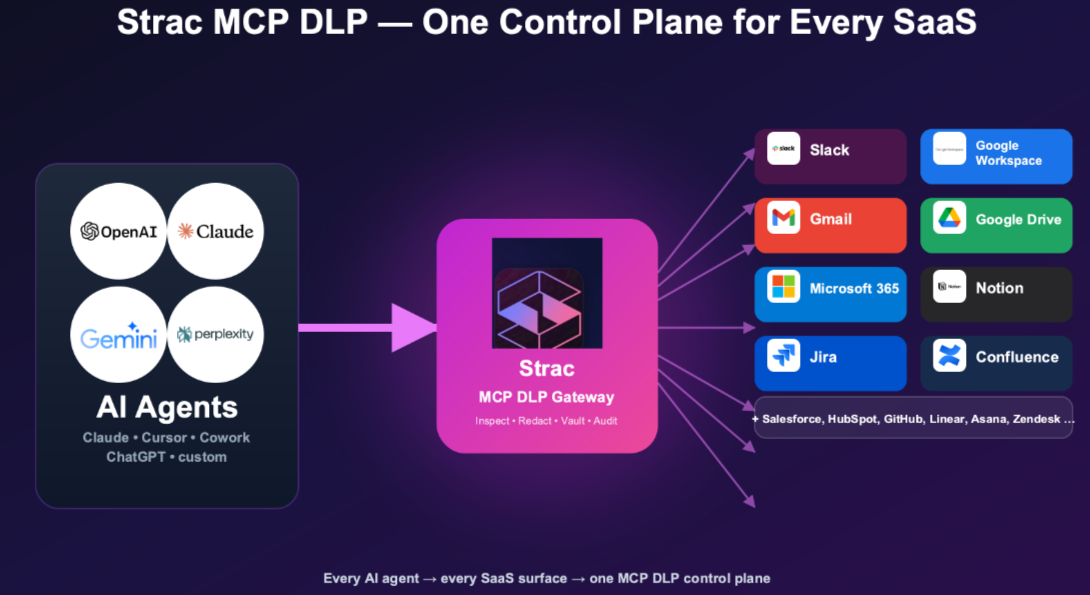
Model Context Protocol (MCP) introduces another important DLP surface.
MCP allows AI applications and agents to connect with external tools, data sources, and enterprise systems. That creates enormous productivity potential, but it also creates new paths for sensitive information to move between systems.
A modern security strategy should therefore consider DLP controls at the MCP layer.
MCP DLP can help organizations inspect sensitive data moving through AI agent interactions and apply policies before protected information reaches an unauthorized model, tool, or destination.
For organizations adopting AI agents at scale, this is quickly becoming part of the broader DLP architecture rather than a separate AI security problem.
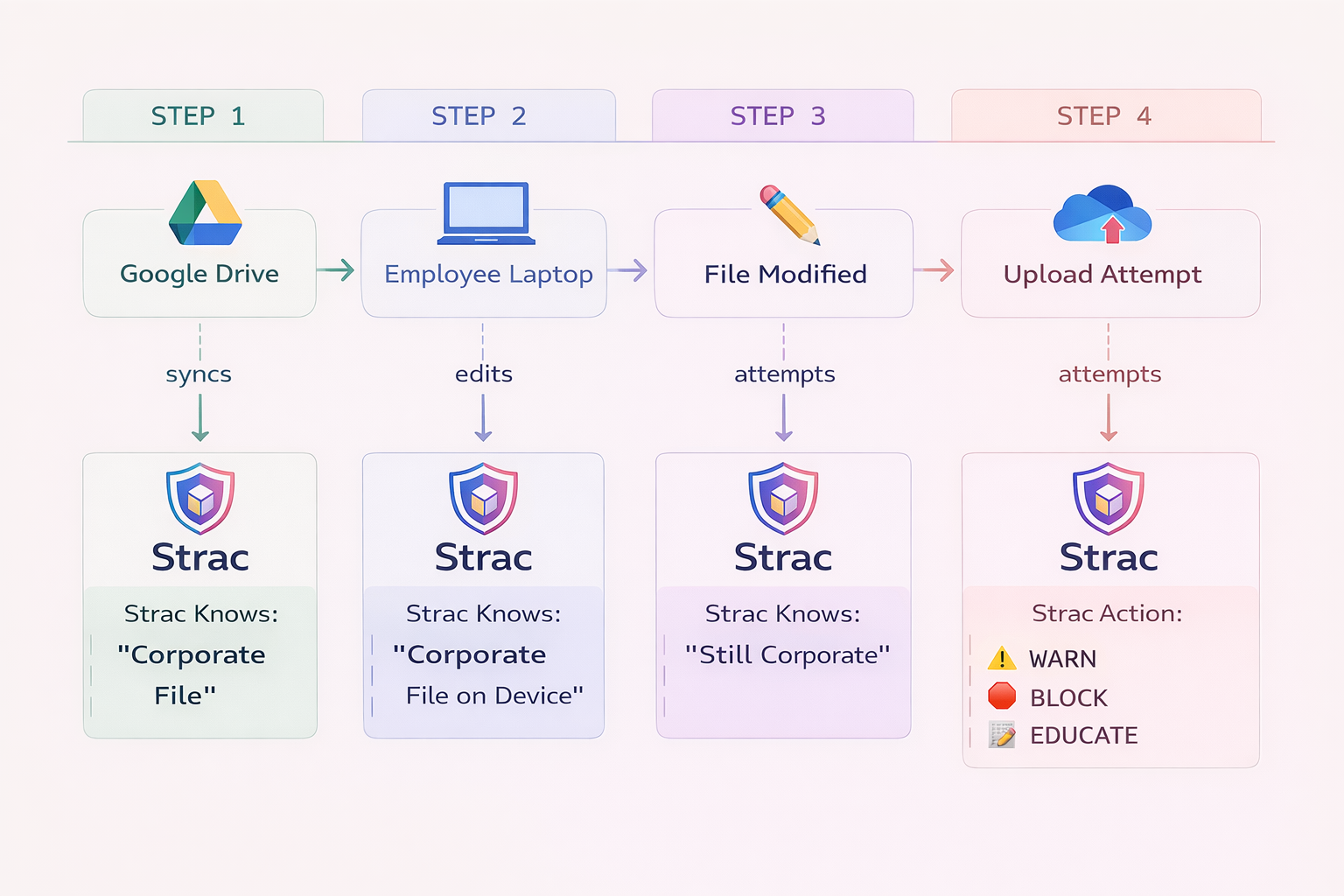
Endpoints remain one of the largest data exfiltration surfaces.
Employees can move information through browsers, clipboard actions, printing, screenshots, USB devices, local applications, and file transfers.
Look beyond simple application or device blocking.
Modern Endpoint DLP should understand the sensitive data involved and apply policy according to the content, destination, user, and action.
Data lineage adds another useful layer by helping security teams understand where sensitive information originated and how it moved across endpoint channels.
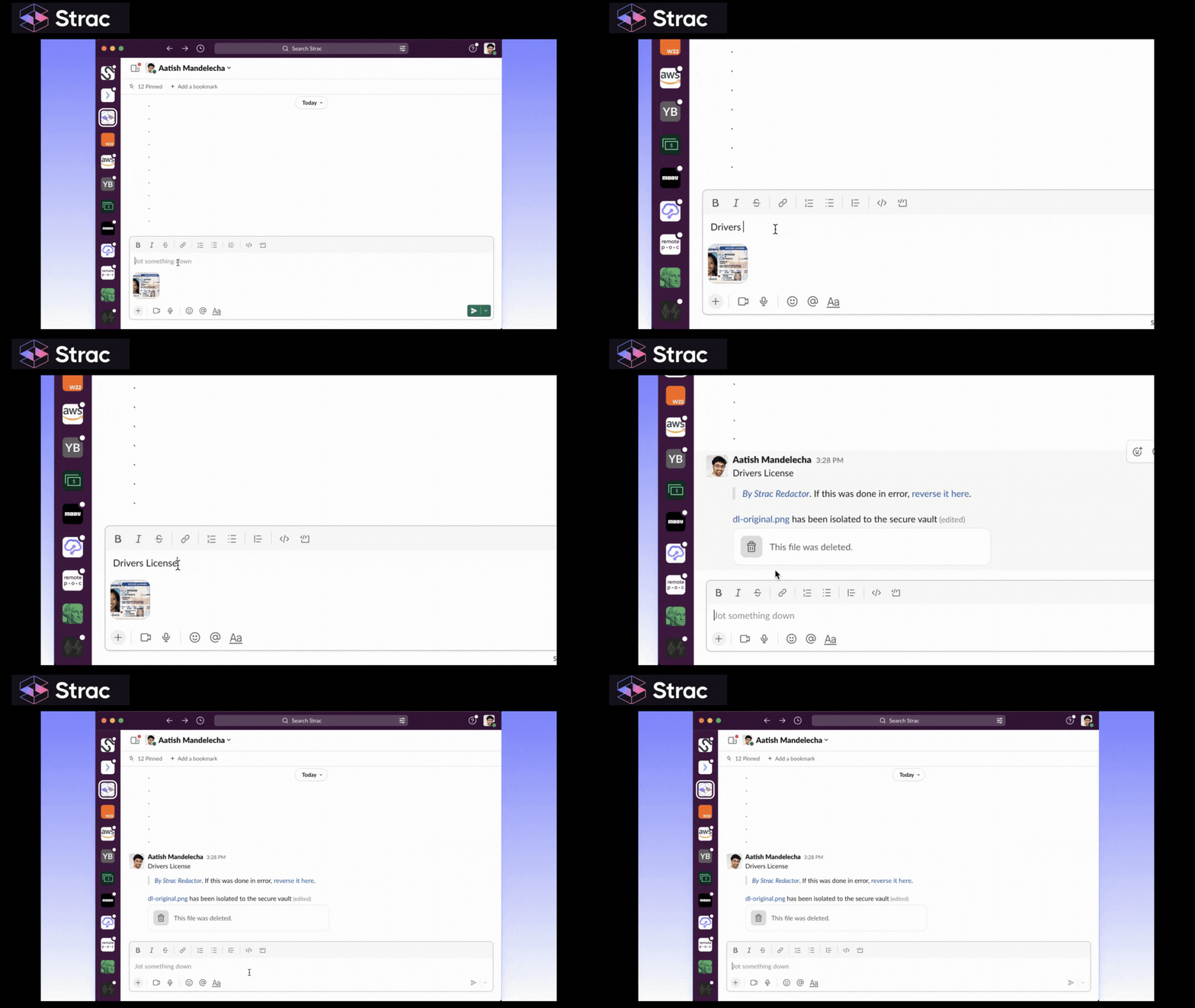
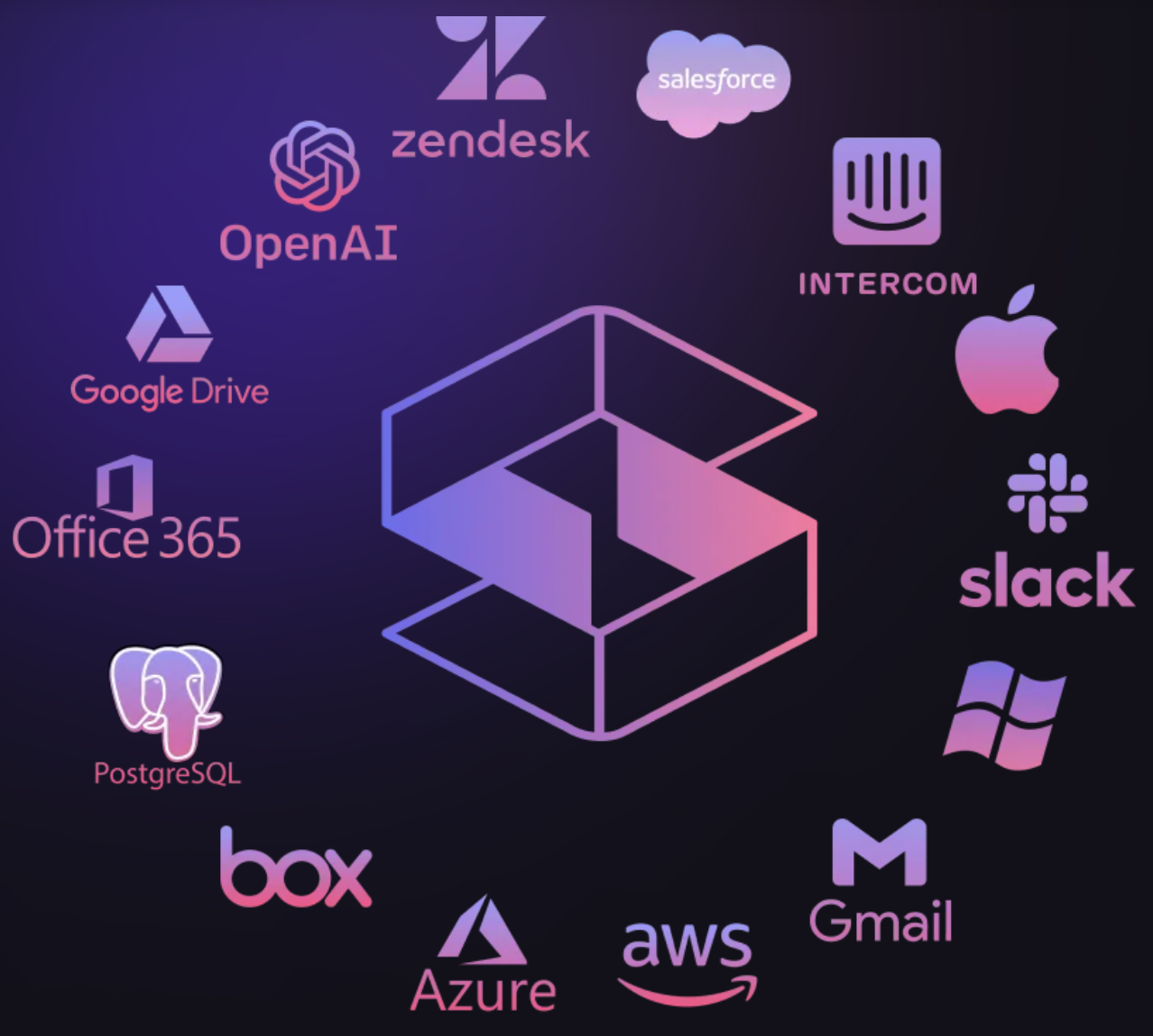
Critical business data now lives inside platforms such as Google Workspace, Microsoft 365, Slack, Salesforce, Zendesk, Box, and many other SaaS systems.
Your DLP provider should offer deep integrations rather than treating every SaaS application as generic web traffic.
API-level integrations can provide greater context around files, messages, tickets, records, users, and permissions.
Review the provider's available integrations against the applications that actually contain your sensitive information.
.gif)
Some of the most sensitive information inside SaaS applications is not in the message itself. It is inside an attachment.
DLP providers should therefore be evaluated on what they can actually inspect.
Look for deep inspection across formats such as:
OCR-based image inspection is especially important because sensitive information can bypass text-only controls when it appears inside screenshots or scanned documents.
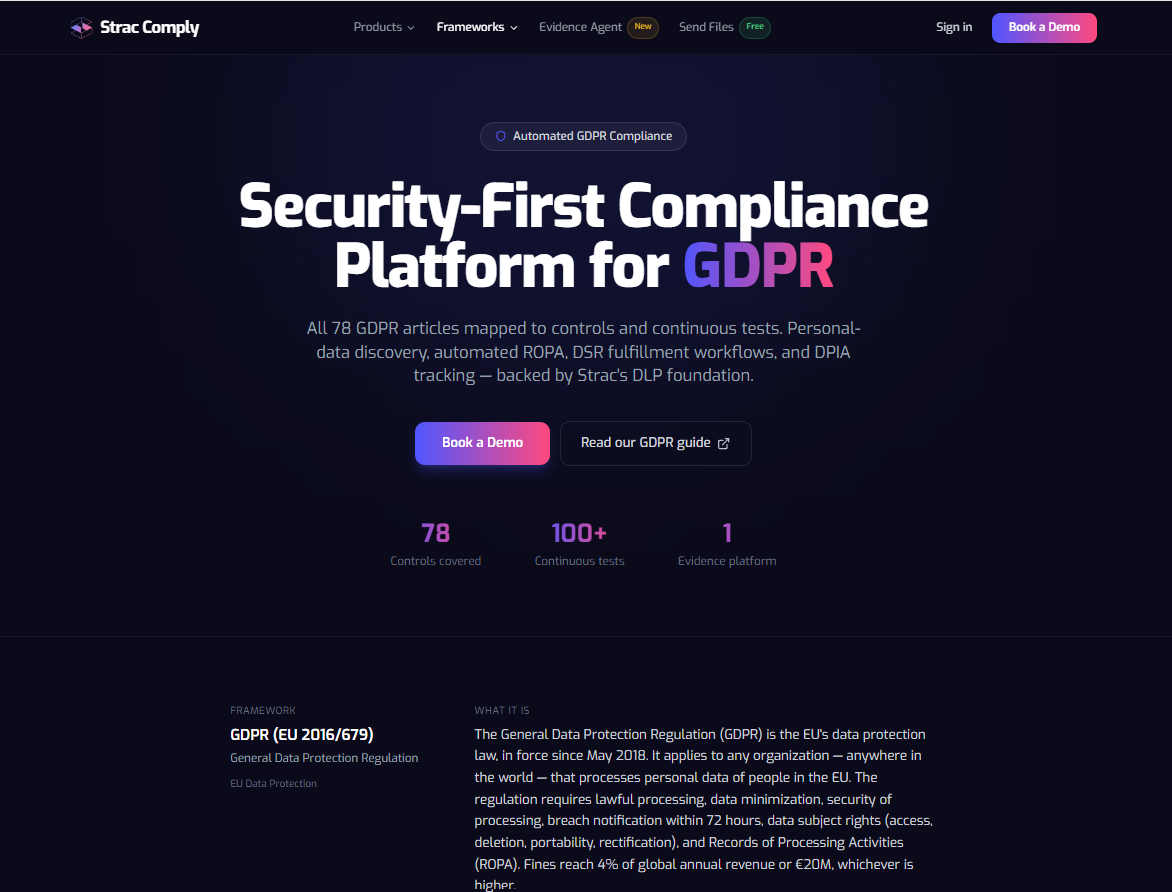
DLP is not compliance by itself, but it can make enforcing and demonstrating data protection controls significantly easier.
Organizations operating under frameworks such as PCI DSS, HIPAA, SOC 2, ISO 27001, CCPA, GDPR, and NIST should evaluate how well each provider maps detection, policies, enforcement, and reporting to their requirements.
The important distinction is enforcement.
Finding PHI is useful. Automatically preventing PHI from reaching an unauthorized destination is much more valuable.
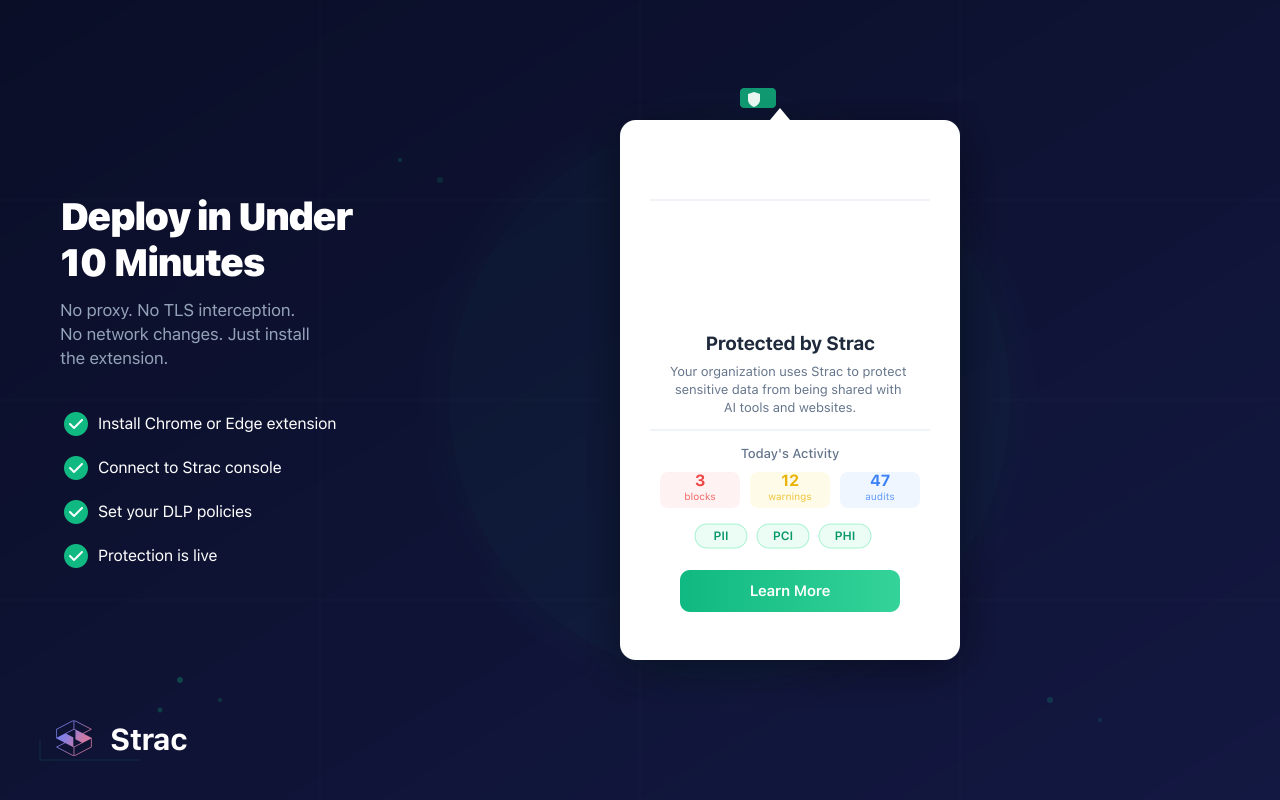
DLP has historically earned a reputation for lengthy implementations, complicated policy configuration, and noisy alerts.
That operational burden should be part of your vendor evaluation.
Ask:
How quickly can the platform be deployed?
How much engineering work is required?
How difficult is adding another SaaS application?
Can security teams create custom policies themselves?
How much policy tuning is required before the platform becomes useful?
A DLP platform should reduce security workload rather than create another system requiring constant babysitting.
Pricing models vary significantly among data loss prevention providers.
Some price by user, endpoint, integration, data volume, or feature set. Others separate SaaS, endpoint, cloud, or AI security into different products.
Look beyond the initial license cost.
Consider the total cost of ownership, including deployment, administration, engineering requirements, policy maintenance, incident investigation, and additional tools required to fill coverage gaps.
The right architecture should scale as your data footprint, employees, SaaS stack, and AI adoption grow.
Strac combines DLP and DSPM to protect sensitive data across the modern enterprise environment.
Rather than treating SaaS, cloud, endpoints, browsers, and AI as unrelated security problems, Strac provides security teams with a broader data-centric approach.
Strac discovers and protects sensitive information across business applications and cloud environments, including collaboration, storage, CRM, and customer support workflows.
Security teams can identify sensitive information and apply policies without relying entirely on employees to manually remove or protect it.
Strac extends enforcement to endpoints, helping organizations control sensitive data moving through channels such as browsers, clipboard actions, printing, USB devices, and local workflows.
Policies can be based on the data itself rather than simply blocking an entire application or device.
Strac helps organizations govern sensitive information entering GenAI applications.
Security teams can identify sensitive prompts and uploads and enforce policies designed to prevent PII, PHI, PCI, secrets, and confidential information from being shared with unauthorized AI tools.
This allows organizations to enable AI adoption without giving employees unrestricted paths for sensitive data exposure.
As enterprises connect AI agents to internal tools through MCP, Strac extends data protection into these emerging machine-to-machine workflows.
Sensitive information can be inspected as it moves through MCP-connected tools, giving organizations another enforcement point between enterprise data and AI systems.
Strac goes beyond discovery and alerting by supporting inline actions such as redaction, masking, blocking, quarantine, deletion, encryption, auditing, and user coaching depending on the integration and policy.
This turns DLP from a monitoring system into an active enforcement layer.
Organizations can use built-in detectors for common regulated data while creating custom detectors for proprietary information unique to their business.
This helps security teams protect both regulated information and confidential company data through the same policy framework.
Modern enterprises do not all operate under the same infrastructure requirements.
Strac supports SaaS and deployment models designed for organizations that need different levels of control, helping security teams implement DLP without rebuilding their existing environment around the security product.
Developers can also use Strac's API for custom workflows and integrations.
Strac can inspect sensitive information beyond plain text, including documents, attachments, images, and screenshots.
This is important in environments such as customer support where sensitive data frequently appears inside PDFs, spreadsheets, uploaded identification documents, or screenshots rather than directly inside a ticket.
The best data loss prevention provider in 2026 is not necessarily the vendor with the longest feature list. It is the provider capable of protecting sensitive information across the environments your organization actually uses without making employees and security teams fight the technology.
As SaaS, cloud, GenAI, Shadow AI, endpoints, and AI agents become part of the same data ecosystem, DLP must follow the data across all of them.
Strac brings DSPM and DLP together to help organizations discover sensitive information, understand its movement, and enforce protection across SaaS, Cloud, Endpoint, Browser, GenAI, and emerging MCP workflows.
.avif)


.gif)