October 1, 2026

7
min read
Top 5 Code42 Incydr Alternatives
Looking for Code42 Incydr alternatives? Compare top options in 2026 and see which platforms offer stronger SaaS, cloud, and AI data protection.
Quick answer: The top Code42 Incydr alternatives in 2026 are Strac, Cyberhaven, Proofpoint, DTEX, and Symantec DLP. Strac leads for teams that want more than insider-risk telemetry — it detects and remediates sensitive data (redact, mask, block) across SaaS, endpoint, browser, and AI/MCP surfaces, with compliance evidence built in.
If you're searching for Code42 Incydr alternatives, you're probably running into a familiar pattern. Incydr gives strong visibility into insider risk and suspicious behavior; but visibility alone doesn’t always equal protection.
Security teams in 2026 are dealing with Slack leaks, public Google Drive links, Salesforce attachments, AI prompts, and API-based data flows. The question isn’t just who accessed what; it’s whether your platform can actually stop or remediate sensitive data exposure in real time.
Before jumping into alternatives, let’s look at where organizations commonly struggle with Incydr.
Last updated: June 2026
If you are reading Code42 reviews, you are evaluating it as your insider risk and endpoint DLP solution. Code42 is a recognized insider risk and endpoint DLP vendor, and reviewers generally credit it with insider-risk visibility. Where reviews and hands-on evaluations tend to surface gaps, and where teams start comparing alternatives, is in-place remediation instead of alert-only workflows, plus SaaS, browser, GenAI, and MCP coverage. If those matter to you, the alternatives below, led by Strac, address exactly that: Strac pairs detection with in-place remediation (redact, mask, block, revoke), browser and endpoint DLP, GenAI and MCP DLP, and a 4.9/5 G2 rating.
Code42 Incydr is strong at spotting risky behavior. But spotting risk and actually stopping data loss are two different things. As teams move deeper into SaaS, cloud, and AI workflows, some gaps become obvious.
Here’s where security teams most often struggle:
1. Alerts, but not action
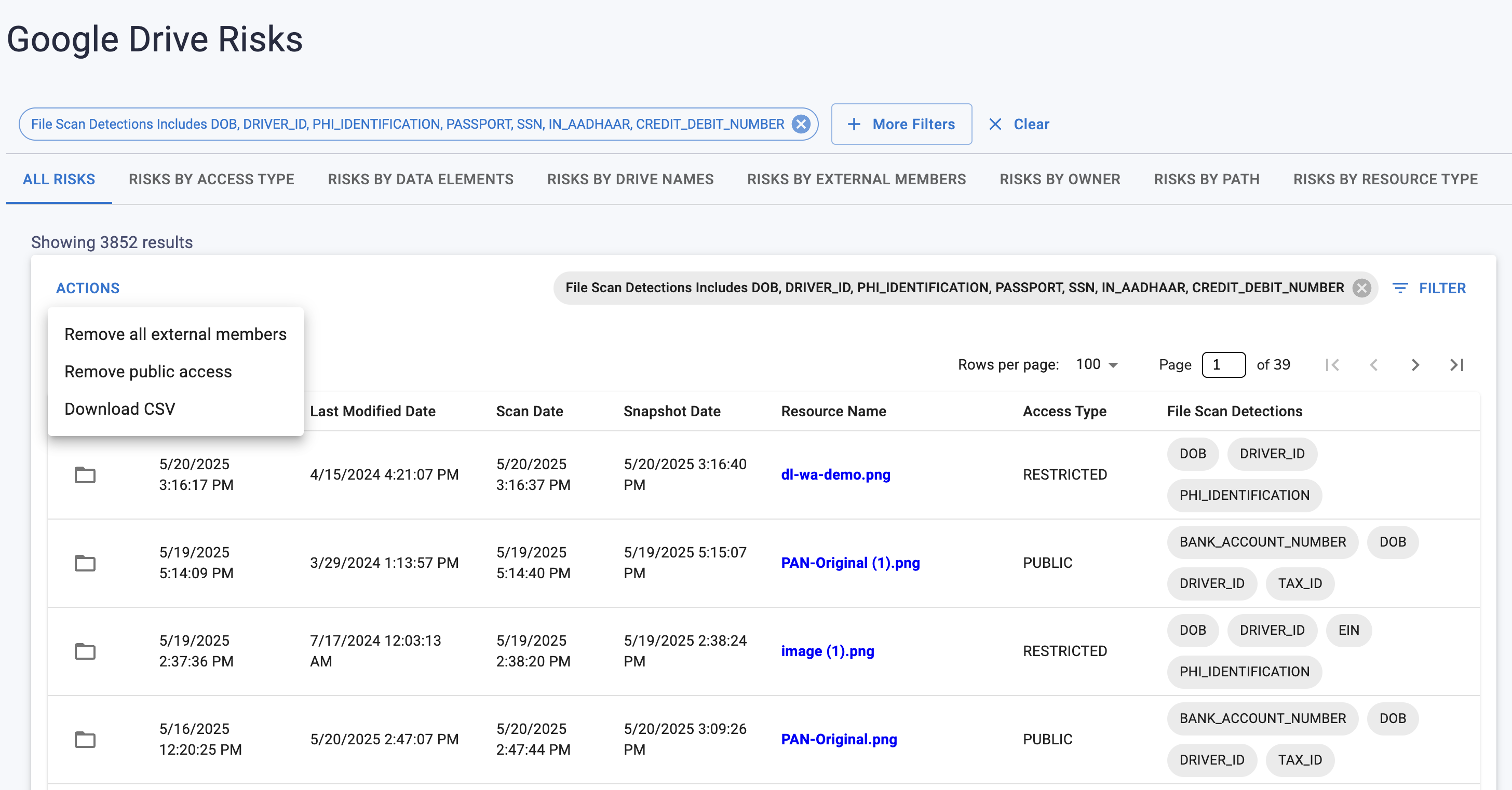
Incydr detects suspicious activity; it doesn’t redact, block, or automatically fix exposed data inside Slack, Google Drive, Salesforce, or support tools.
2. Behavior-first, data-second
It focuses heavily on user behavior signals. That can create noise; or miss the real issue, which is the sensitivity of the data itself.
3. Manual investigation workload
When an alert fires, security teams still need to dig. There’s limited inline remediation, which means more follow-up work.
4. Limited SaaS-native control
Modern data moves through chat apps, tickets, file shares, and APIs. Incydr wasn’t built as a SaaS-first DLP platform.
5. AI blind spots
LLM tools like ChatGPT and Copilot introduce new risk surfaces. Incydr doesn’t natively protect prompt and response flows.
For many organizations, these gaps aren’t deal-breakers. But for SaaS-heavy and AI-driven teams; they’re enough to start looking at alternatives.
Below are the top Code42 Incydr alternatives in 2026; ranked for modern SaaS, cloud, and AI-first environments.
Strac is not just an insider-risk visibility tool. It’s a unified DSPM + DLP platform built for SaaS-heavy organizations.
Where Code42 focuses on user behavior, Strac focuses on the data itself; and what happens to it in real time.
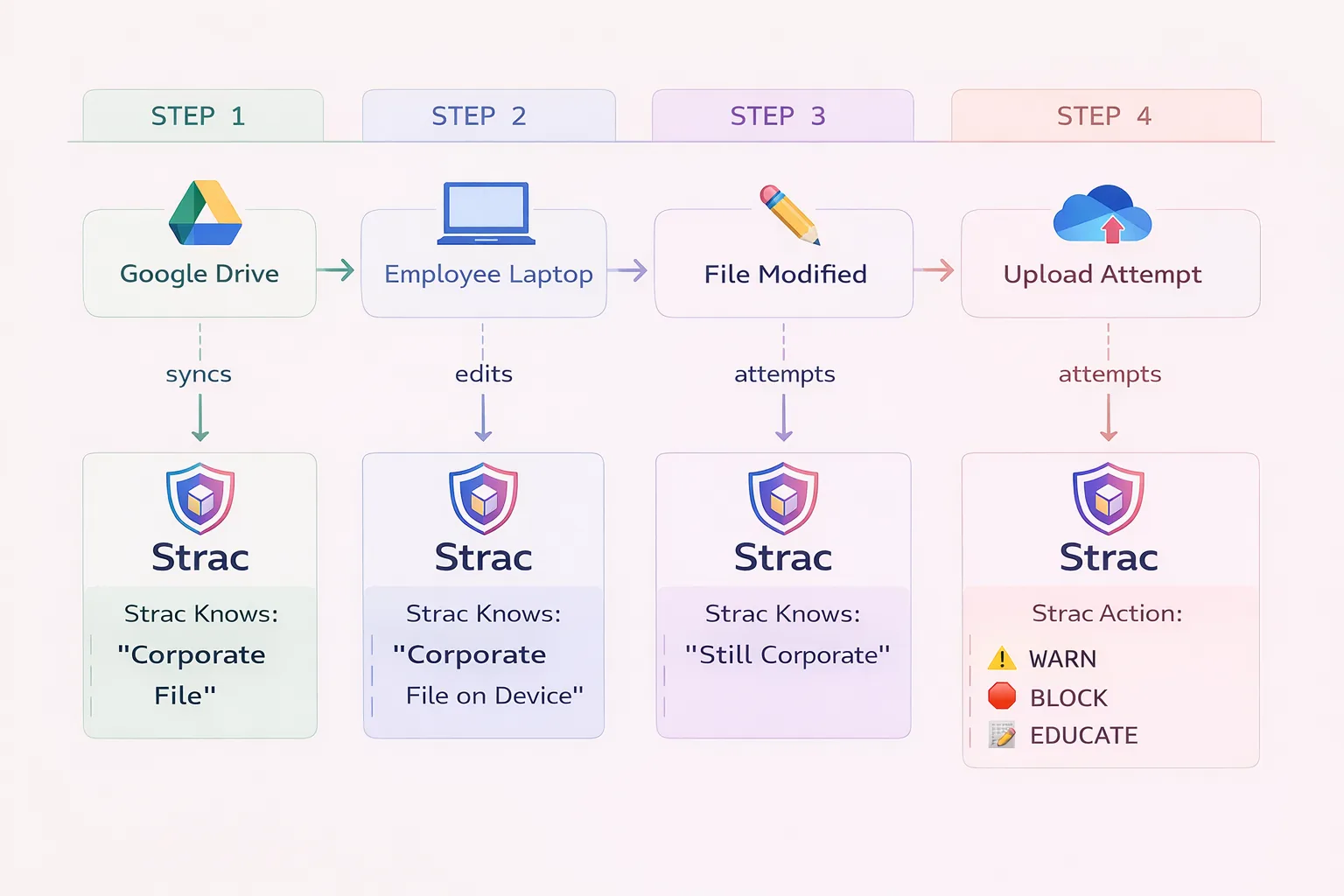
Strac’s endpoint agent enforces where network tools are blind — a file copied to USB, an AirDrop to a personal phone, a local print, a screenshot. It reads the content on the device and applies Block, Warn, or Audit per channel on Mac and Windows, coaching employees in the moment rather than only alerting after the fact.

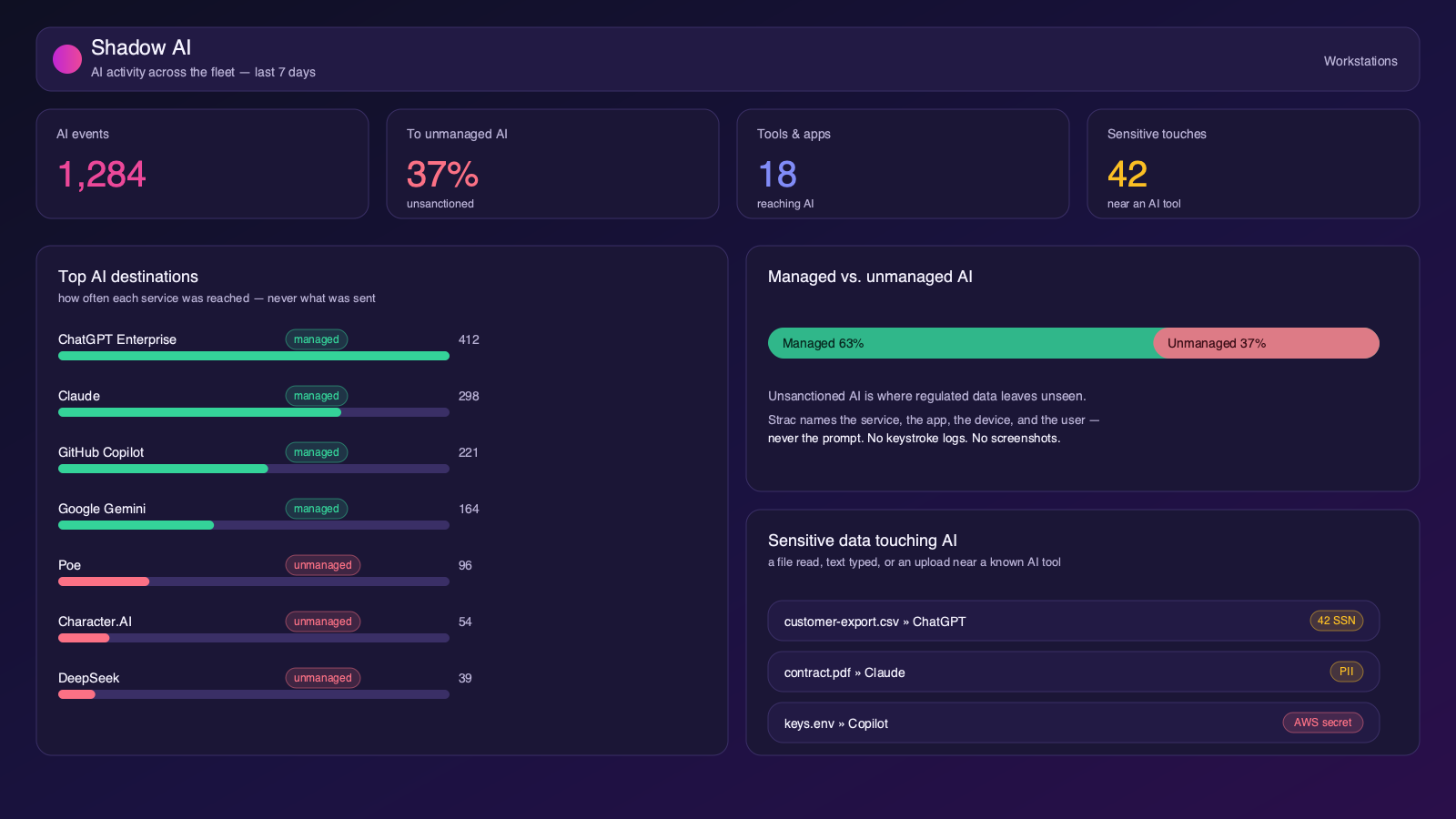
Strac turns Shadow AI from an unknown into a managed surface: it inventories the AI apps and agents in use, scores the data risk of each, and stops regulated content from reaching them — in the browser and at the MCP layer — while respecting employee privacy with no keystroke logs or screenshots.

Best for: SaaS-first companies, fintech, healthtech, AI-native teams, and security teams that want automated remediation; not just insider monitoring.
When companies move away from Code42, it’s usually because their data risk no longer lives only on laptops. It lives in collaboration tools, customer tickets, shared drives, APIs, and AI prompts.
Strac is often chosen by teams that want a platform aligned with how modern work actually happens.
For many teams, the shift isn’t about replacing insider monitoring. It’s about choosing a platform that matches today’s data movement; not yesterday’s.

Cyberhaven is one of the most commonly compared tools to Code42 because of its strong data lineage model.
It combines behavior monitoring with awareness of what the data is.
Best for: Enterprises prioritizing deep endpoint-based insider threat detection.
Proofpoint ObserveIT focuses on insider threat detection with behavioral analytics and session recording.
Best for: Large enterprises already invested in the Proofpoint ecosystem.
DTEX focuses heavily on user behavior intelligence.
Best for: Insider-risk-centric security programs.

Symantec (Broadcom) offers traditional enterprise DLP.
Best for: Legacy enterprise environments with traditional infrastructure.
Here’s the core issue:
Code42 excels at detecting suspicious behavior.
Modern SaaS security requires controlling sensitive data movement in real time.
In 2026, data doesn’t just move via USB drives. It moves through:
If your tool can’t redact, block, or remediate inline; you’re relying on alerts and manual investigation.
That’s the biggest shift pushing teams to look for Code42 alternatives.
If your main concern is insider behavior visibility, Code42 Incydr still does that well.
But if you need real control over sensitive data across SaaS, cloud, and AI tools, that’s where many teams start looking at Code42 Incydr alternatives.
In 2026, alerts alone aren’t enough. Security teams need platforms that can detect, redact, block, and remediate in real time; especially inside Slack, Google Drive, Salesforce, support tools, and AI workflows.
The real decision isn’t whether Code42 works.
It’s whether it works for how your data moves today.
Code42 Incydr is an insider-risk tool: it watches file movement off the endpoint and alerts after the fact. That is useful for investigations, but it is not prevention — it rarely inspects content, so it cannot tell a cat photo leaving on a USB stick from a customer PII export, and it stops nothing in the moment.
Where a legacy endpoint tool blocks bluntly or only alerts, Strac enforces content-aware policy across every exit on the machine — file opens and downloads, USB and removable-media writes, printing, screenshots, AirDrop, clipboard, browser uploads, and text typed directly into a GenAI prompt — each set independently to Block, Warn, or Audit on Mac and Windows.
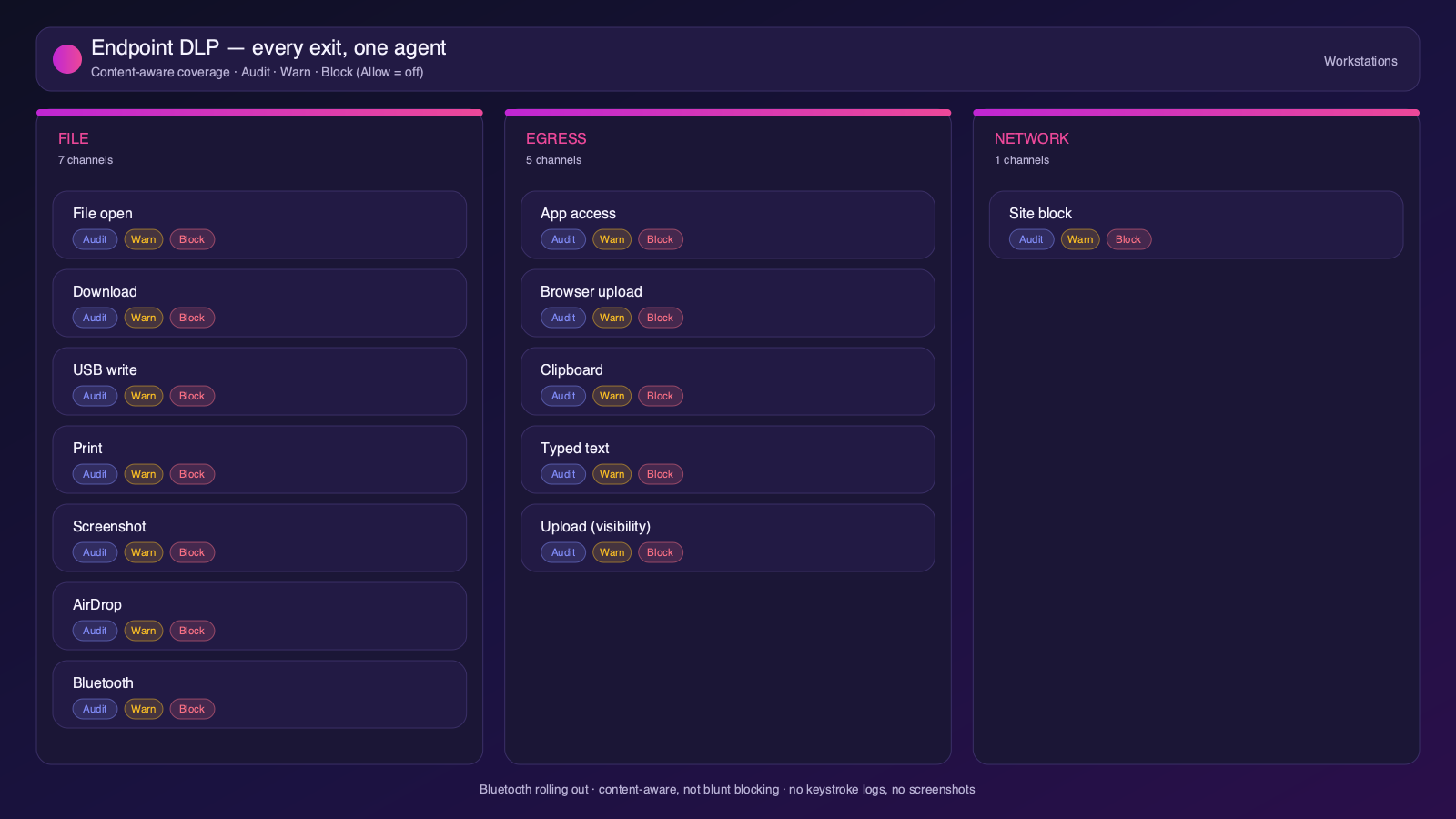
Strac's endpoint agent turns that model around. It reads the content of what is moving, so it can Block a regulated file being copied to removable media or uploaded to a personal drive while allowing everything benign — real-time prevention, not a next-morning alert. Warn mode also coaches the employee in the moment.
You still get the investigative trail Code42 users rely on — Data Lineage records where each file came from and where it went — plus Shadow AI detection, all in one agent that never logs keystrokes or screenshots the screen. It is unified with Strac's SaaS, browser, and MCP coverage under a single policy.
Code42 Incydr focuses on insider-risk and endpoint data exfiltration — a narrow lens that misses the SaaS, GenAI, and MCP surfaces where data now moves.
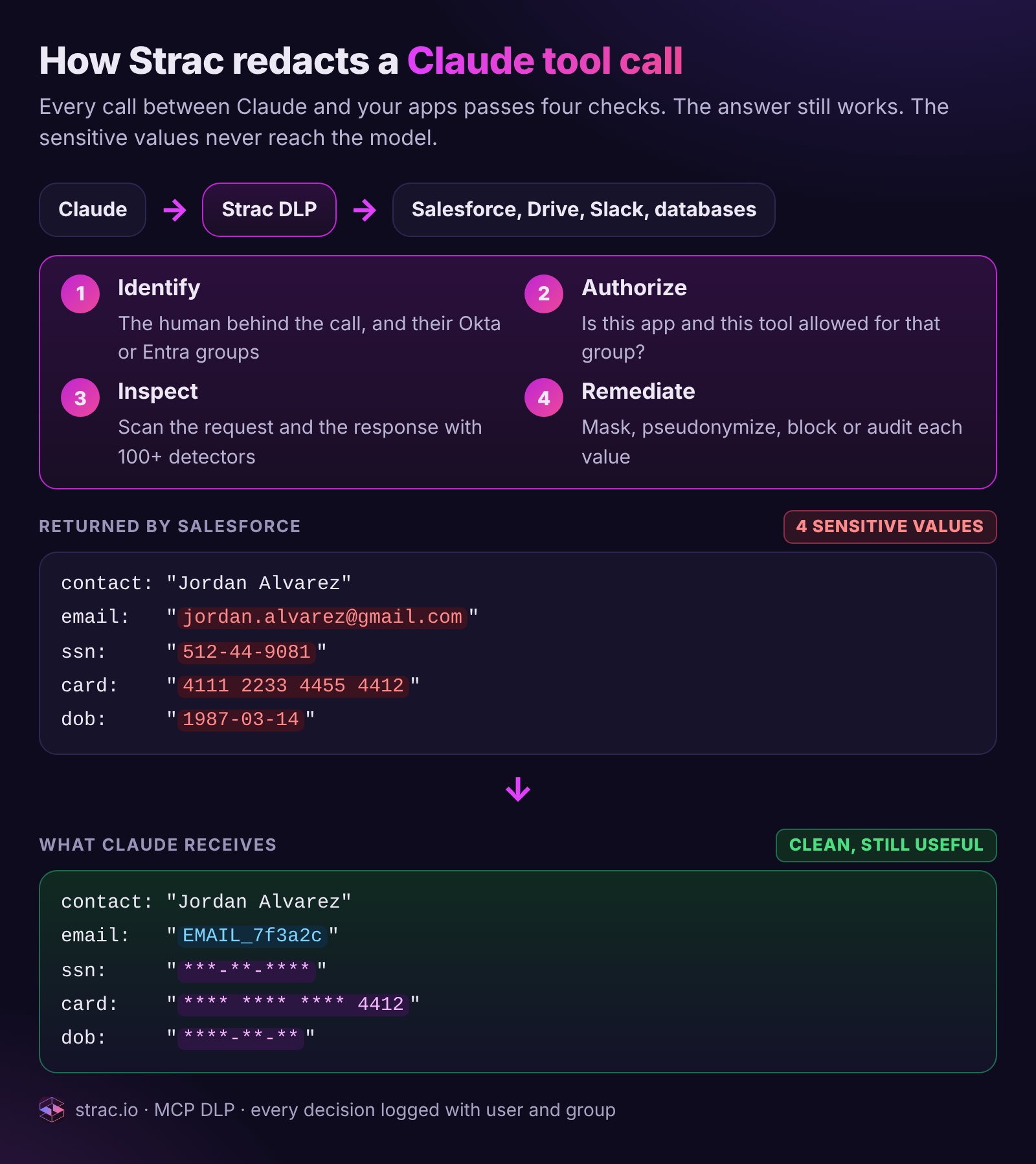
Where legacy tools guard the network exits, Strac secures the data where AI actually touches it: every Claude and ChatGPT prompt, and every agent tool call over MCP pulling data in from your systems. Detect, redact, mask, block, or revoke — across SaaS, cloud, GenAI, browser, endpoint, and the MCP connector directory, agentless and fast to deploy.
Most Code42 competitors fall into two camps. Insider-risk specialists (Cyberhaven, DTEX, Proofpoint ITM) match Incydr's telemetry-first model — watching file movement and flagging risky users for an analyst to chase. Data-security platforms take the other path: instead of only observing exfiltration, they classify the data itself and act inline. That second camp is where Strac sits — the sensitive file is redacted, blocked, or quarantined at the moment of movement, across SaaS, endpoint, browser, and AI agents, so the incident queue shrinks instead of growing. Which camp fits you depends on whether your bottleneck is visibility or response.
Weighing Code42 against Cyberhaven specifically? See the head-to-head: Cyberhaven vs Code42 Incydr.
Not in the traditional sense. It detects risky user behavior, but it does not offer full inline data loss prevention across SaaS and AI environments.
Lack of proactive controls. It identifies risky activity but does not automatically redact or block sensitive data across collaboration tools.
Strac is designed specifically for SaaS, support tools, cloud drives, and AI platforms; making it a strong fit for modern, cloud-native teams.
No native AI DLP coverage. Organizations using generative AI workflows typically need an additional solution for prompt/response monitoring.
.avif)


.gif)


.webp)