Strac Alternatives & Competitors: An Honest 2026 Comparison
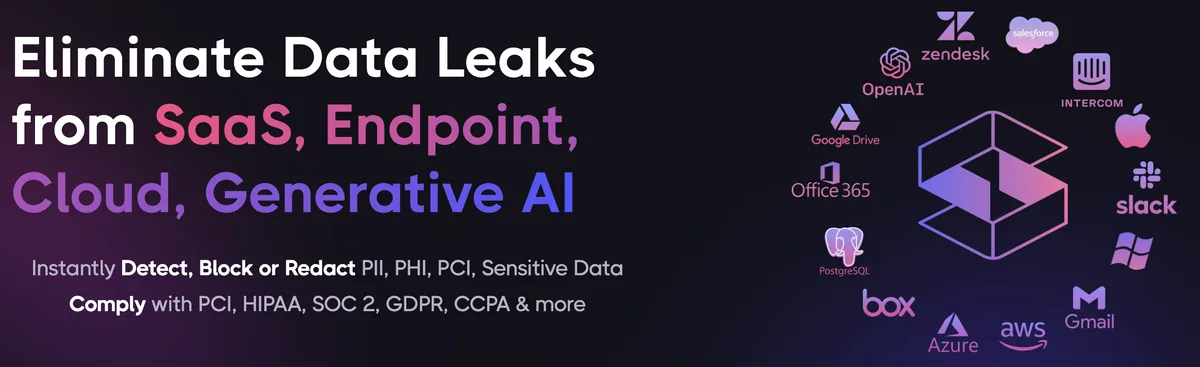
Comparing alternatives to Strac? Strac covers SaaS, cloud, endpoint, browser, GenAI, and MCP DLP in one platform, with remediation beyond redaction (masking, deletion, revoking access, labeling). See everything Strac does and how to choose.
Short answer: If you are evaluating alternatives to Strac, the honest comparison comes down to two things, breadth and remediation. Most tools labeled a Strac alternative protect one channel, SaaS-only, a browser extension, or a point GenAI tool, and stop at alerting. Strac protects data across SaaS, cloud, endpoint, browser, GenAI, and MCP in one platform, and remediates in place: not just redaction, but masking, deletion, quarantine, revoking public access, removing external members, labeling, and encryption. Below is every surface Strac covers, with the product in action, so you can compare honestly rather than on a feature list.
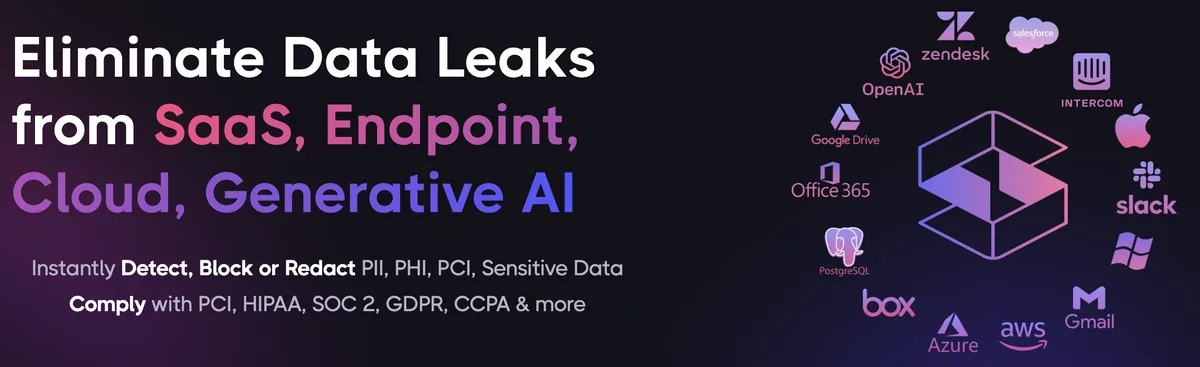
One platform across every surface: SaaS, cloud, endpoint, browser, GenAI, and MCP.
✨ Everything Strac does (what most alternatives only do a slice of)
The reason teams land on Strac after trying point tools is coverage. Each alternative tends to own a single lane: a SaaS-API scanner, a browser plugin, a desktop agent, or a GenAI gateway. Stitching four of them together means four consoles, four detection engines that disagree, four policies to keep in sync, and gaps in between where data actually leaks. Strac is one platform, agentless wherever it can be, across every place sensitive data lives and moves, with a single detection engine and one policy model behind all of it.
That consolidation is also why the remediation story is different. When discovery, classification, and enforcement run on the same platform, Strac can act the moment it finds something, redact it, revoke the share, remove the external collaborator, instead of handing you an alert to chase in another tool.
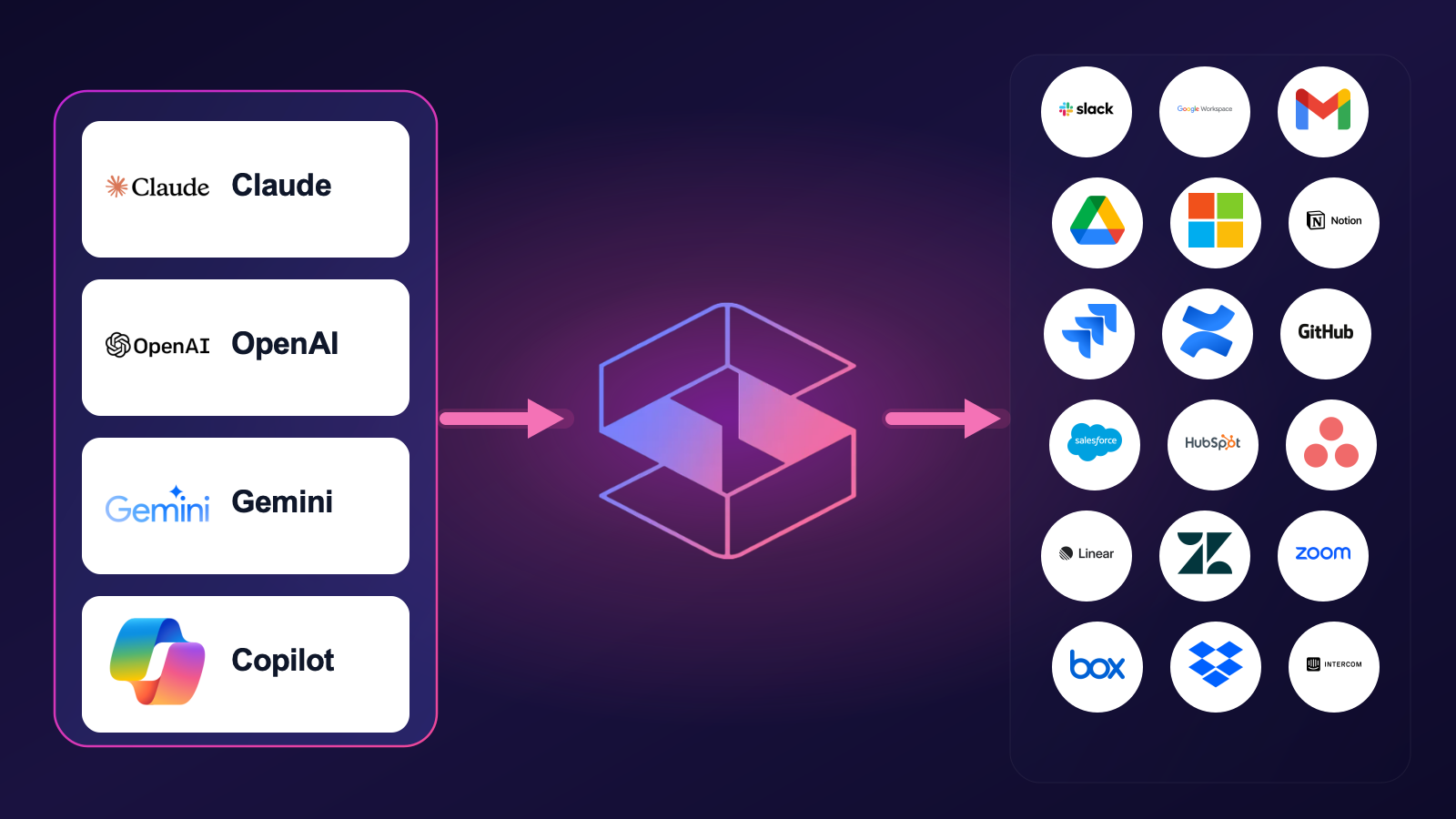
60+ integrations across SaaS, cloud, databases, endpoints, browsers, and AI.
✨ SaaS DLP
SaaS DLP connects agentlessly over APIs to 30+ apps, Slack, Google Workspace, Microsoft 365, Salesforce, Zendesk, Jira, Notion, Box, Dropbox, and more, detecting and redacting PII, PHI, PCI, and secrets in real time. There is no gateway to route traffic through and no agent to deploy on servers; Strac reads through the apps you already use and acts inside them.
Detection is ML and OCR based across 100+ data types, so it catches a Social Security number inside a scanned PDF or a screenshot attached to a ticket, not just text a regex can see. And because it is DLP, not just discovery, a match does not stop at a finding: Strac can redact the value in place and keep the original in an audited Secure Vault, or mask, quarantine, or revoke access under your policy.
Redaction in action: Strac detects and redacts PII, PHI, and secrets in real time.
✨ DSPM: discover and classify sensitive data
DSPM continuously discovers and classifies where sensitive data lives across your SaaS and cloud estate and maps it to real risk, who can reach it, whether it is shared publicly, and which compliance scope it falls under. It is the inventory layer that most point DLP tools skip entirely: they can block a specific action, but they cannot tell you where all your regulated data actually sits.
Strac builds that map automatically and keeps it current, so a new bucket, a newly shared folder, or a fresh export shows up as risk the day it appears, not at your next manual audit. See it run below.
✨ Cloud DSPM
Cloud DSPM scans and classifies data in AWS (S3, DynamoDB, CloudWatch), Azure Blob, Snowflake, Postgres, and Oracle, so sensitive data sitting in your data stores, warehouses, and pipelines is discovered and scored, not just the data moving through chat and email. It runs both historical, point-in-time posture scans and ongoing discovery as new data lands.
This is a capability most SaaS-only and point GenAI alternatives simply do not offer: they were built to watch an app or a prompt, not to inventory a cloud data lake. If your regulated data lives in S3 or Snowflake as much as in Slack, a tool with no cloud DSPM leaves your largest data store unmonitored.
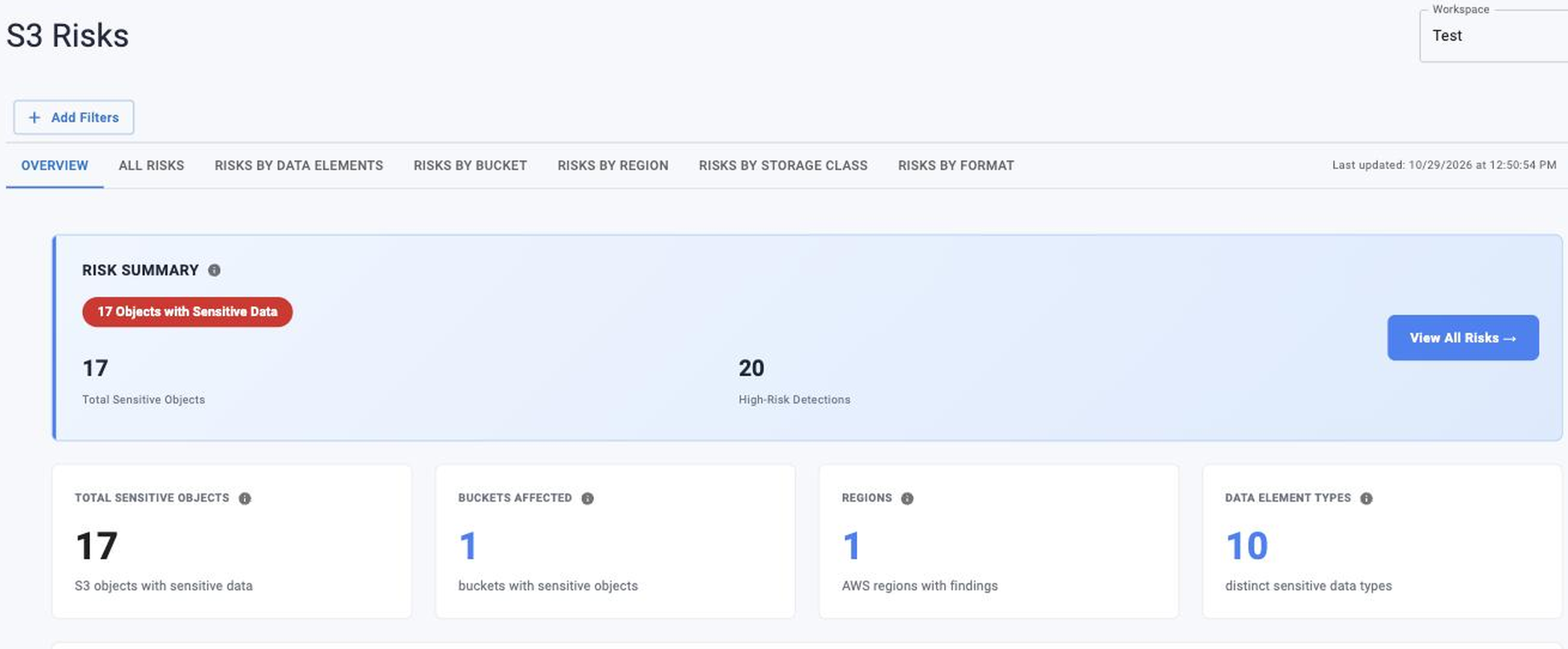
Cloud DSPM in AWS: Strac inventories sensitive objects, high-risk detections, buckets, regions, and data-element types.
✨ Endpoint DLP on Mac and Windows
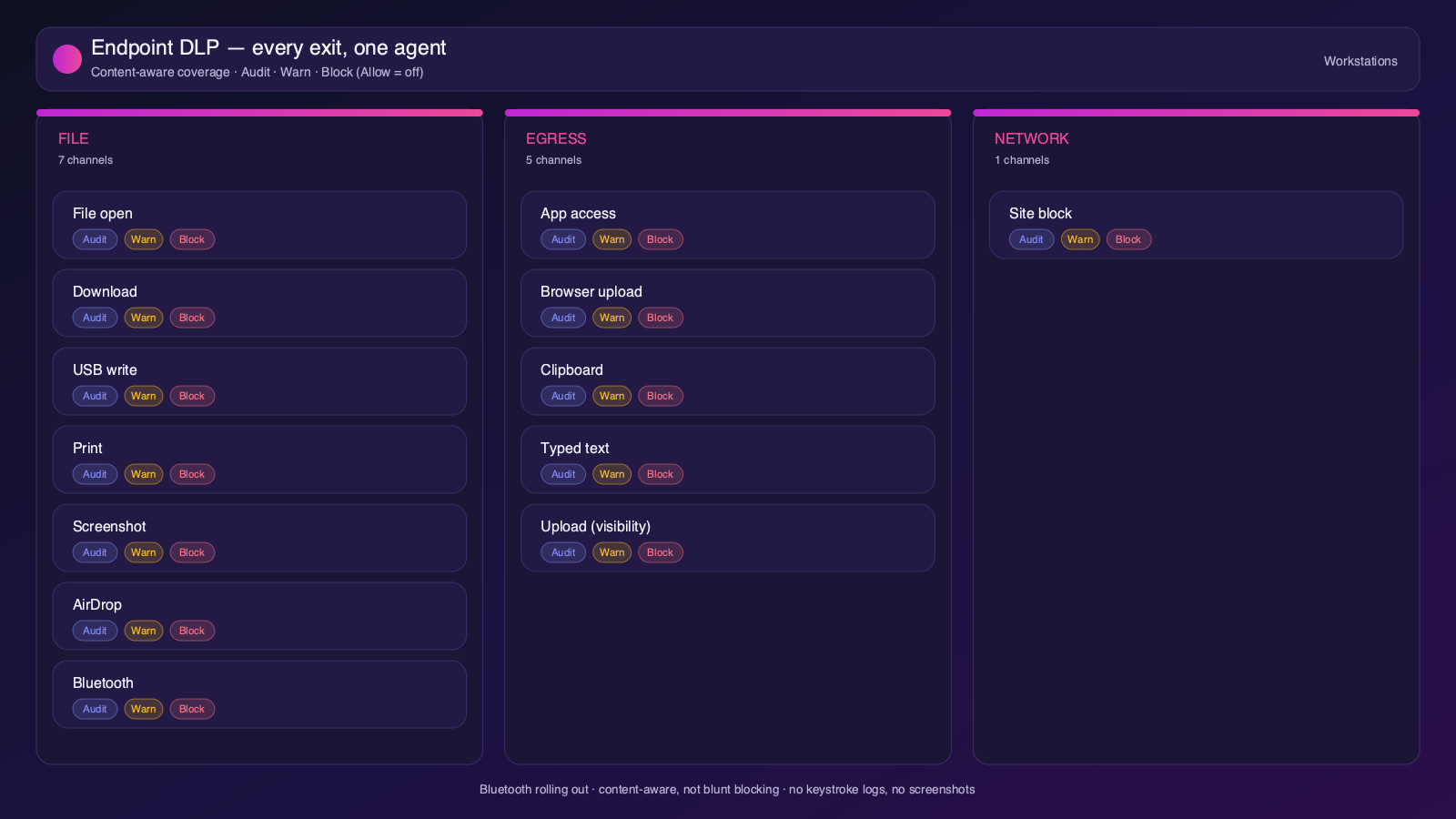
Endpoint DLP is a content-aware agent for Mac and Windows with four enforcement modes, block, warn, allow, and audit, across every desktop app, including pastes, file uploads, and screenshots read via OCR. You can start in audit to learn where data actually flows, then tighten specific channels to warn or block without a disruptive rollout.
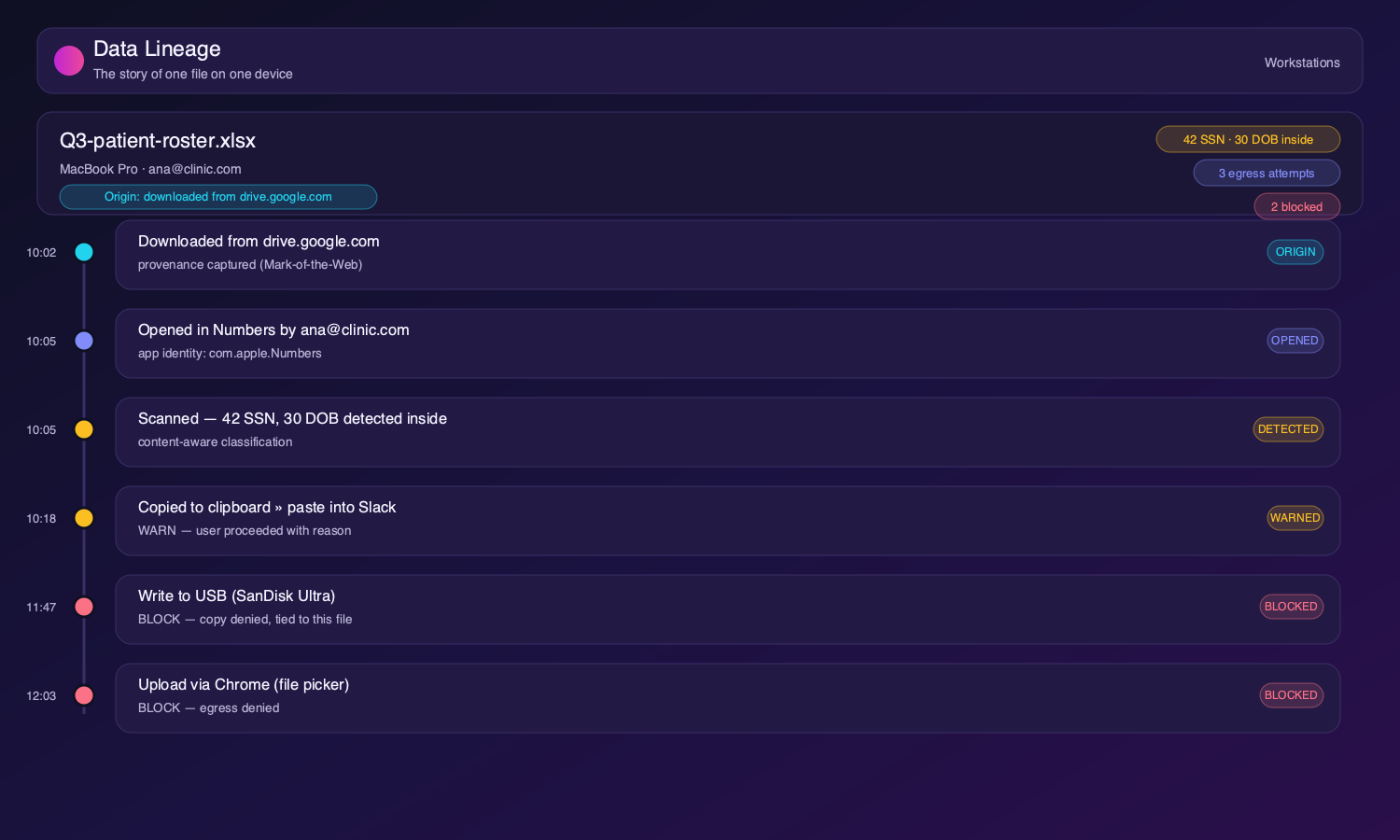
Unlike legacy endpoint DLP, it is content-aware rather than rule-by-filename, and it is light rather than a heavy kernel agent. It also traces data lineage, so you can see where a file originated and everywhere it went, the context an alert-only tool never gives you.
Content-aware endpoint DLP on Mac and Windows: block, warn, allow, or audit.
Endpoint data lineage: see where a file came from and everywhere it went.
✨ Browser DLP
The browser DLP extension for Chrome, Edge, Firefox, and Safari blocks or redacts sensitive uploads and pastes to any web app or AI tool, in real time, before the data ever leaves the browser. It covers the exact gap that API-based SaaS DLP cannot see: a user pasting a customer record into an unmanaged web app or a chatbot in a tab.
Because enforcement happens in the page, it works on tools you have no API for and no agreement with, including the shadow apps employees adopt on their own. Block the action, or redact just the sensitive span and let the rest through.
Browser DLP: block or redact sensitive uploads and pastes, live in the page.
✨ MCP DLP for AI agents
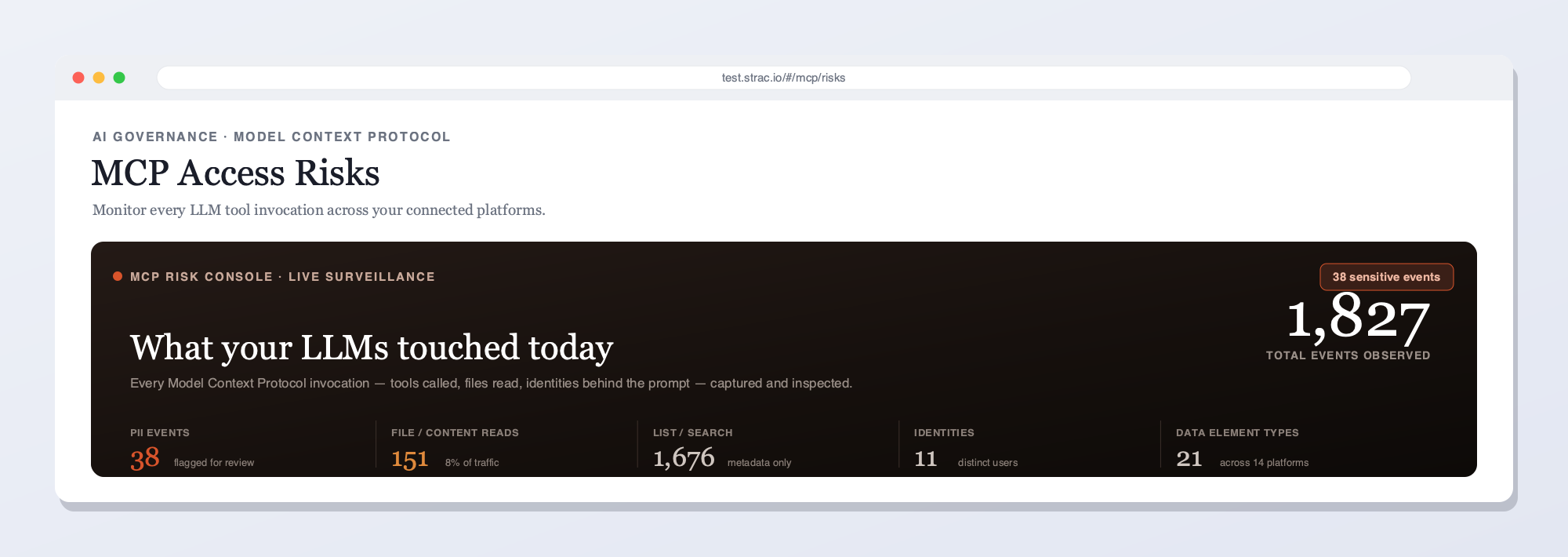
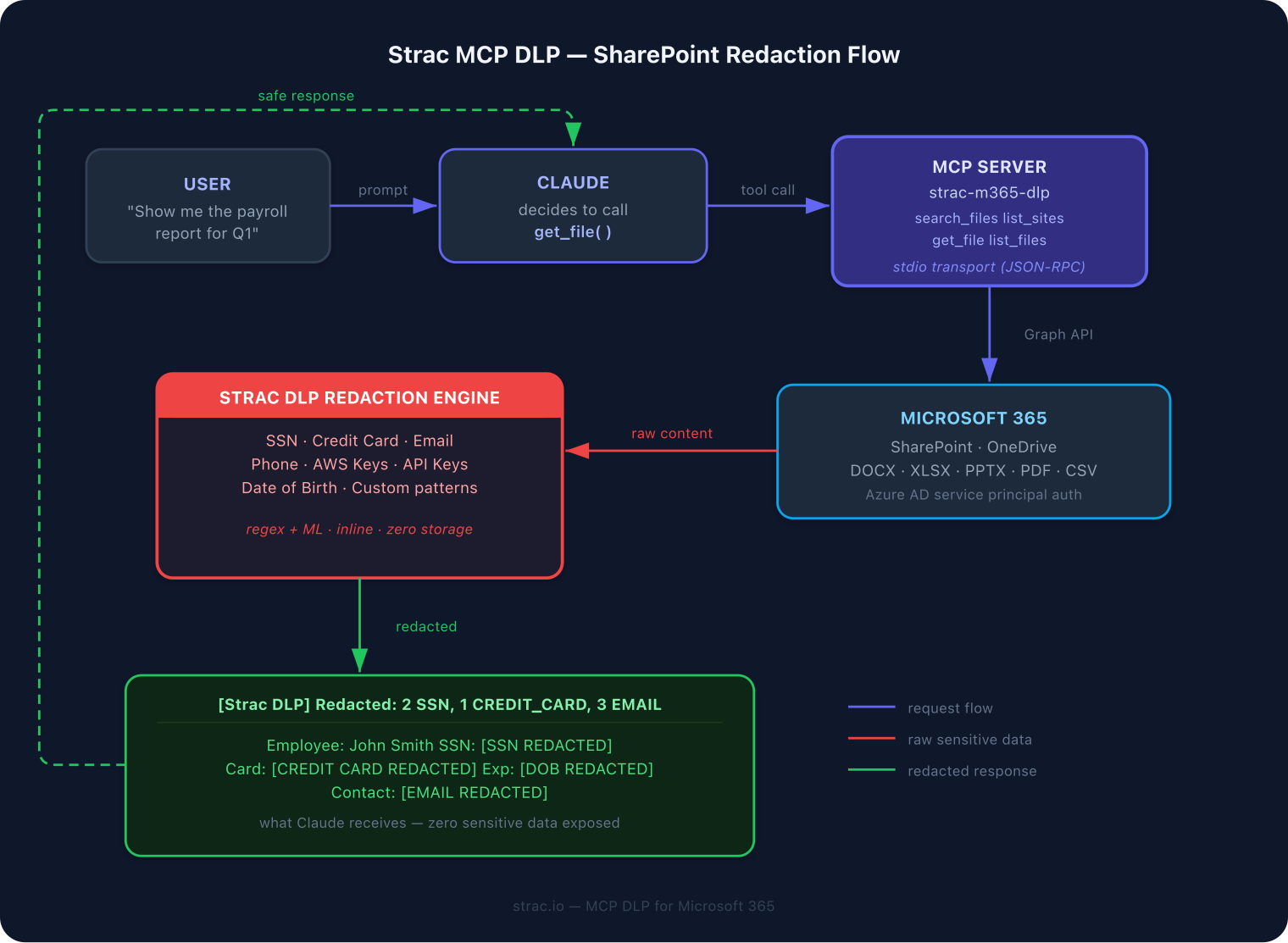
MCP DLP sits in the path between AI agents and your tools as a reverse proxy and redacts sensitive values in tool responses before the model ever sees them, agentlessly. It governs exactly which servers and tools each agent can reach, so an agent can be productive without being handed raw PII, PHI, or secrets. This is the newest data-exfiltration path, and most alternatives have no MCP coverage at all.
You connect your MCP servers once and Strac inspects every tool call flowing through, redacting on the way back and logging what each agent accessed. The result is agents that can use real systems while regulated data stays masked at the boundary.
Strac governs the MCP boundary: every AI agent tool call is inspected and redacted.
MCP console: govern and redact what every AI agent can pull, across servers.
Sensitive data redacted in the agent tool response, before the model sees it.
✨ GenAI DLP: ChatGPT, Claude, Gemini, Copilot
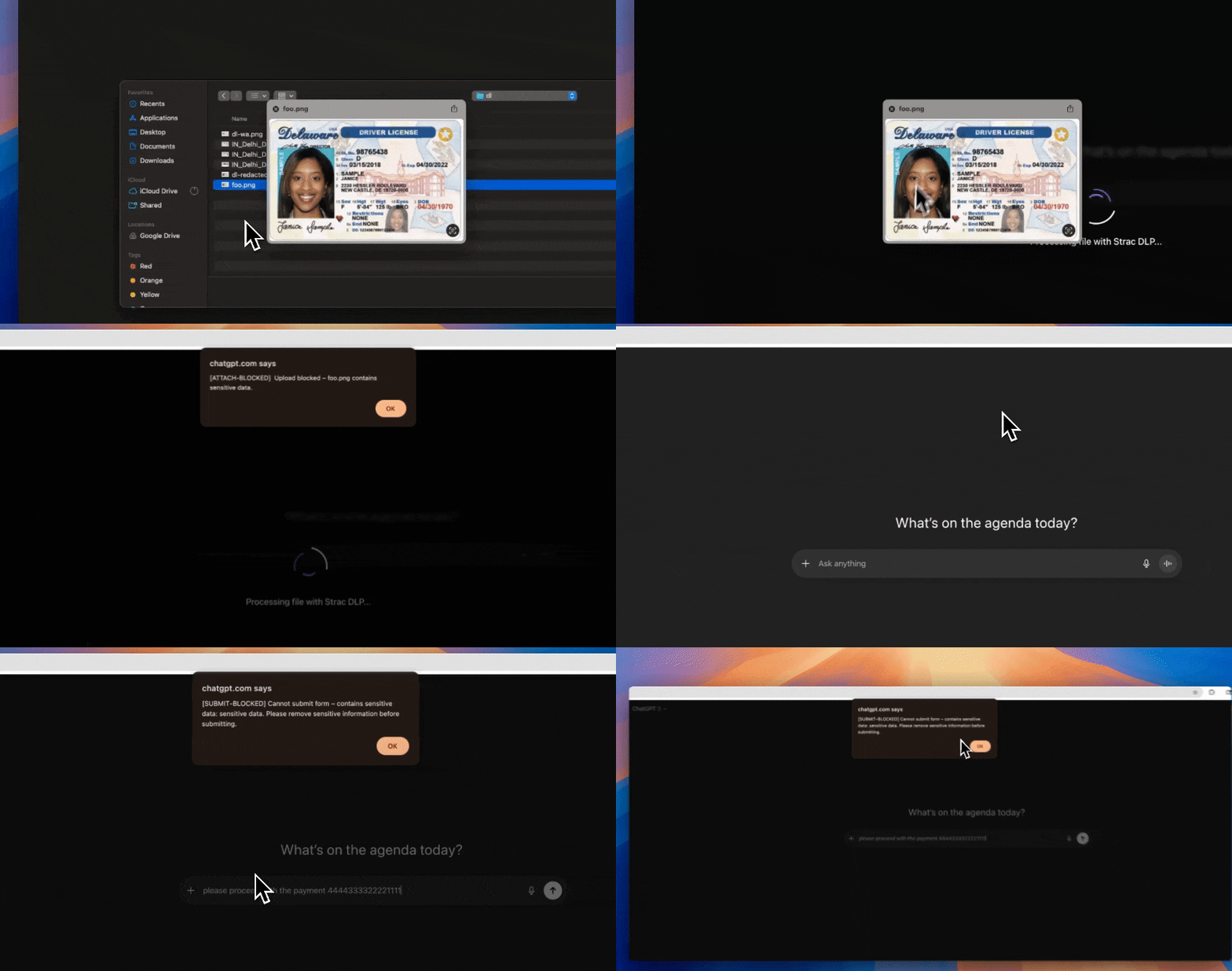
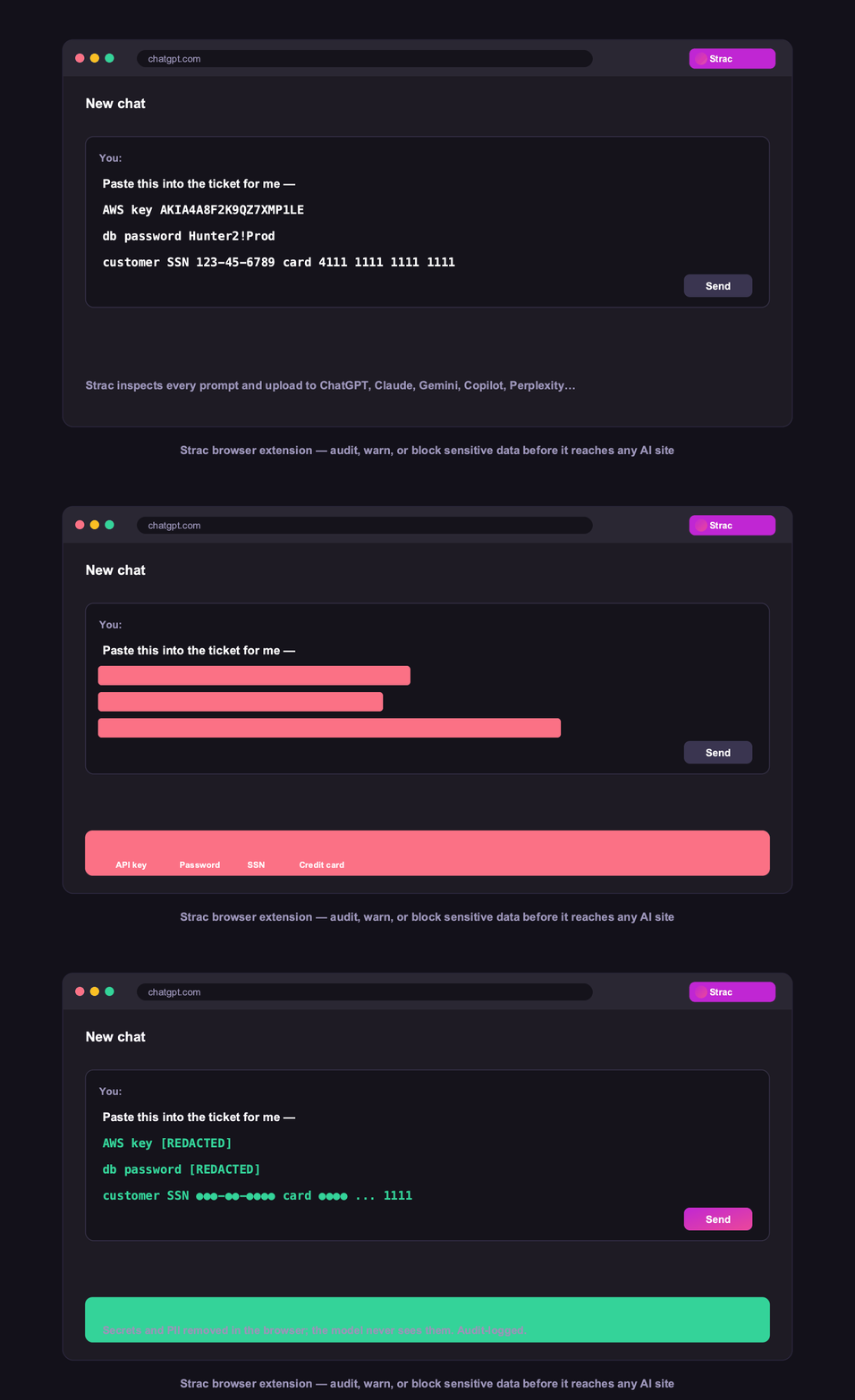
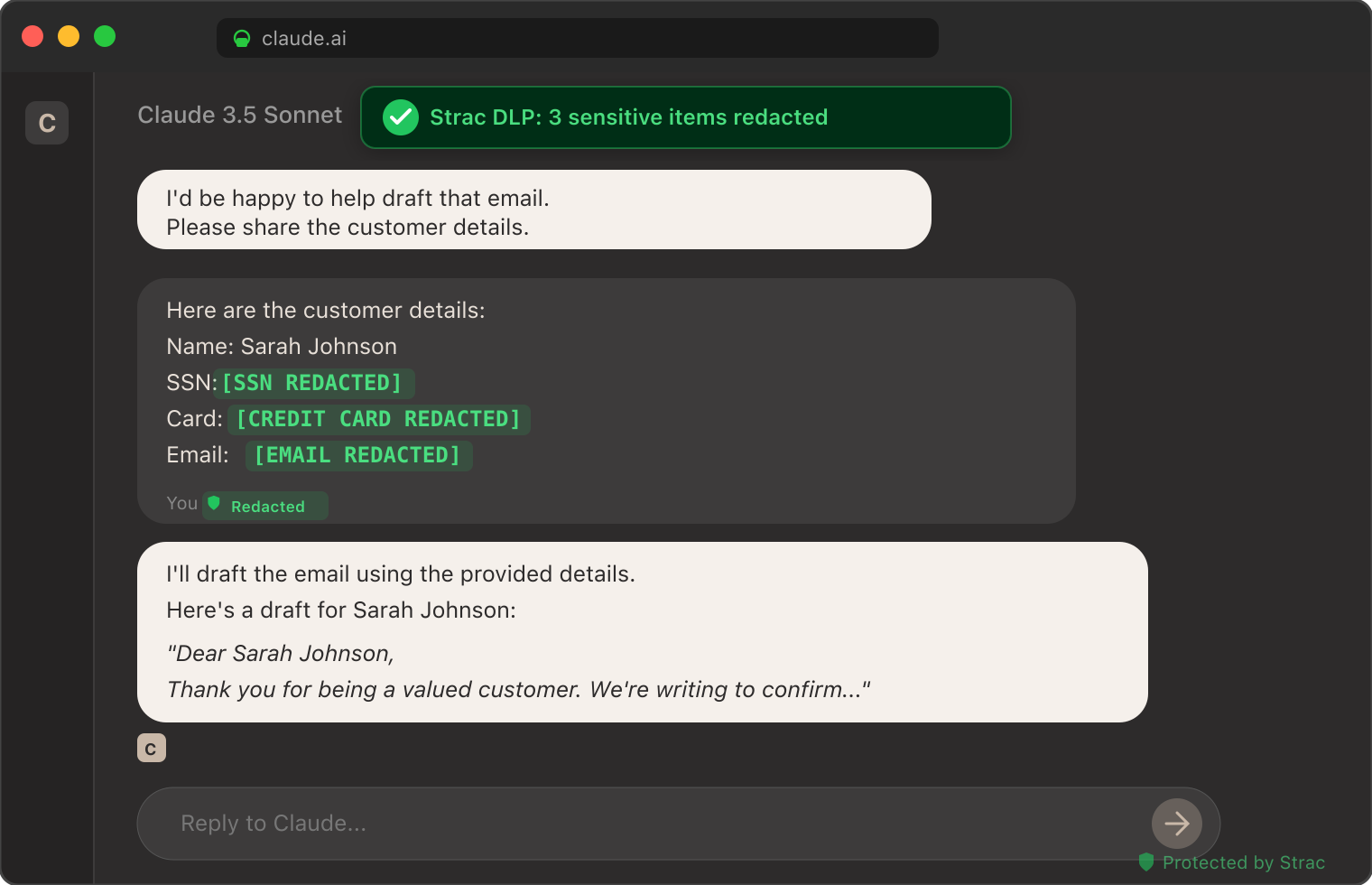
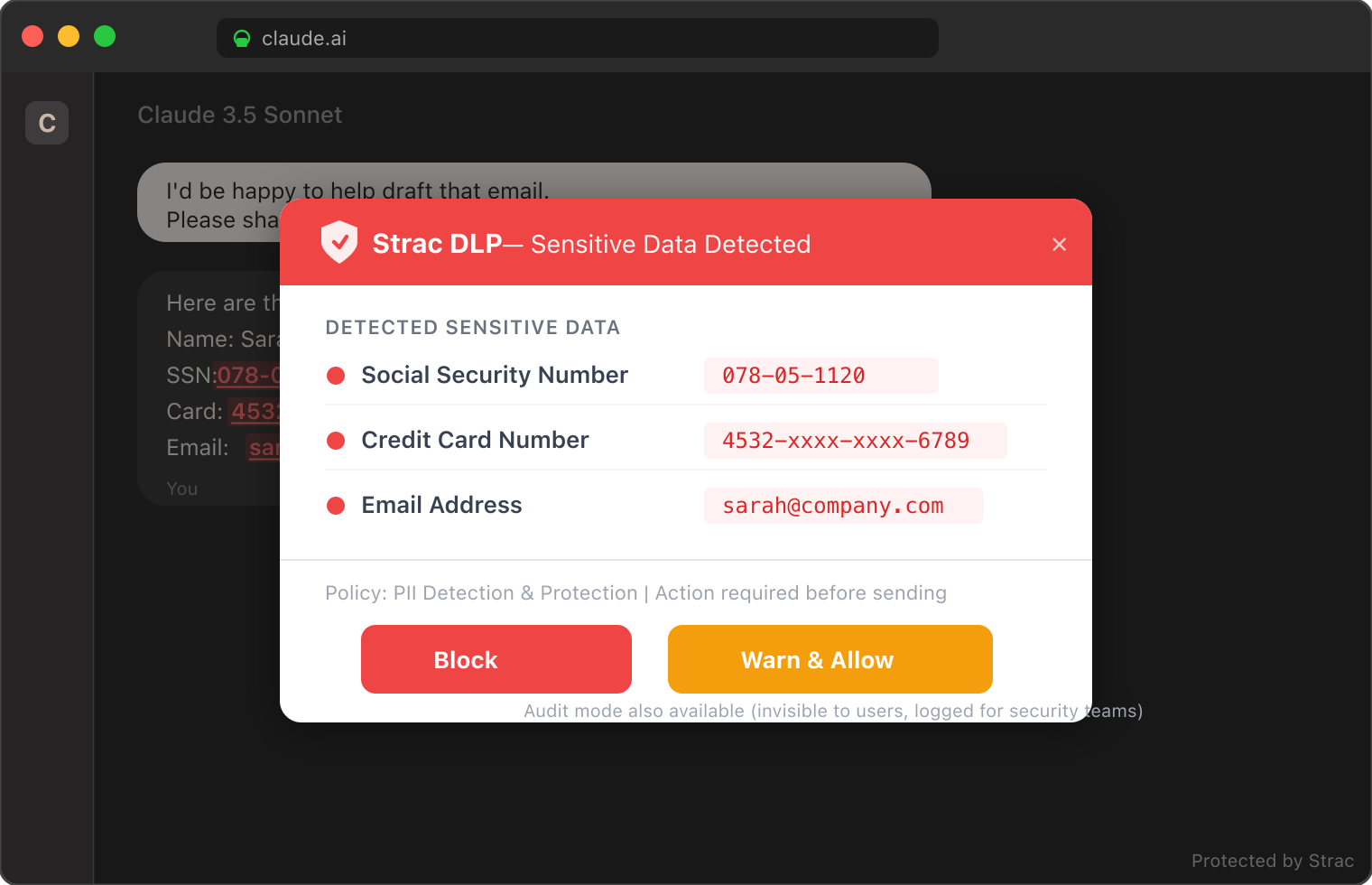
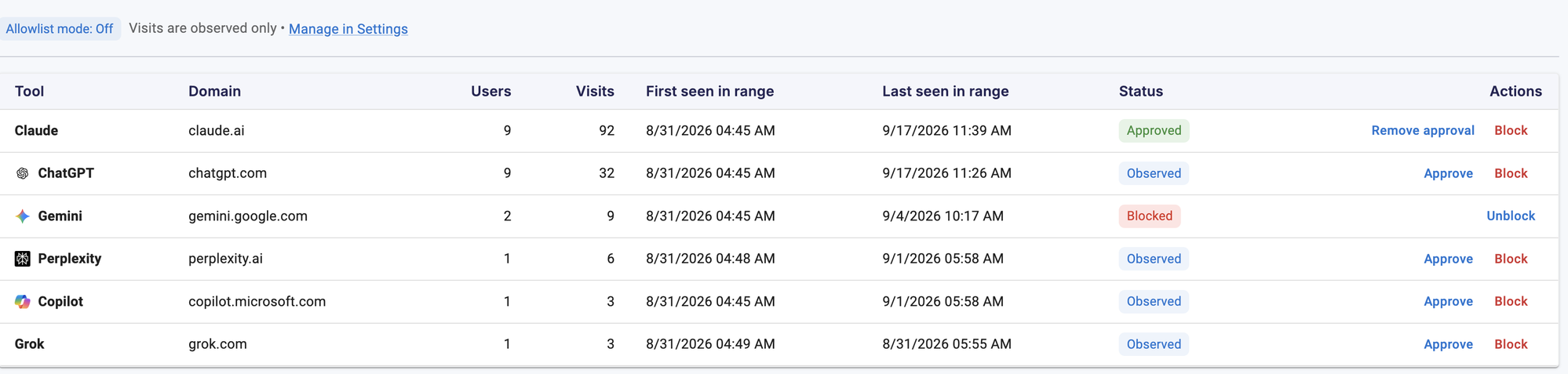
AI DLP redacts or blocks sensitive data before it reaches ChatGPT, Claude, Gemini, Copilot, Perplexity, or any AI tool, in the browser and on the desktop. Enforcement is per tool and per user, so you can approve Claude for a team while blocking an unvetted model, rather than choosing between a blanket ban and an open door.
This is where the breadth pays off: the same detection engine that protects Slack and S3 also inspects the prompt box, so your AI policy is not a separate product with separate rules.
GenAI DLP: block or redact PII, PHI, and secrets before they reach the model.
Govern AI access per tool and per user: allow, block, or redact.
✨ Shadow AI discovery
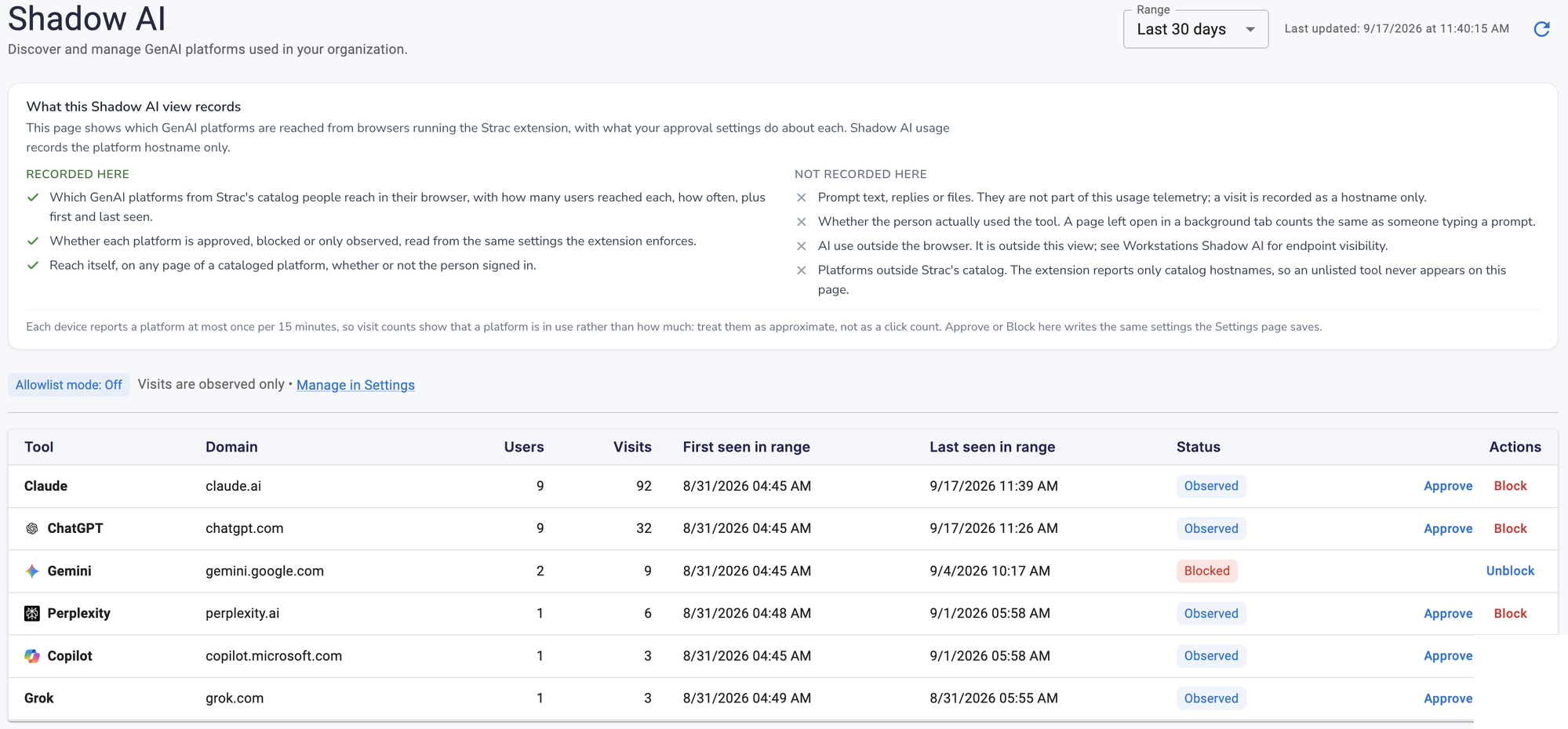
Beyond governing approved tools, Strac surfaces the shadow AI your team adopted without approval, the unsanctioned chatbots, AI browser extensions, and agents quietly handling company data. You see which tools are in use, who is using them, and what categories of sensitive data are flowing to each, then approve, block, or redact per tool.
This is a gap most alternatives do not even attempt. A SaaS-only or point GenAI tool protects the apps you already told it about; it is blind to the AI tool an employee signed up for yesterday. Strac finds it and brings it under policy.
Shadow AI discovery: find unsanctioned AI tools and the sensitive data flowing to them.
✨ Claude Compliance API integration (Anthropic partner)
Strac is a listed Anthropic Claude Compliance API partner, connecting directly to the Claude Compliance API to pull Claude Enterprise activity into one data-security view alongside the rest of your SaaS, cloud, endpoint, browser, and MCP coverage. For teams standardizing on Claude, that means AI usage and data exposure show up in the same place as everything else Strac protects, not in a separate silo.
Listed on Anthropic's Claude Support site as an official Claude Compliance API integration.
✨ Remediation, not just alerts: the real differentiator
Finding sensitive data is table stakes, every tool in this category can raise a flag. What separates a platform from a scanner is what happens next. Strac is built around remediation, and far more than redaction. Under your policy, Strac can:
Remediation in place: redact, mask, delete, quarantine, revoke, label, and more.
Redact the sensitive value in place and keep the original in an audited Secure Vault (the core action).
Mask to show only the last digits.
Delete or quarantine files and messages that should not exist where they are.
Revoke public access, kill "anyone with the link" sharing in Drive, SharePoint, Box, and Dropbox.
Remove external members from files, tickets, channels, and shared folders.
Label and classify with sensitivity tags that drive downstream access controls.
Encrypt or tokenize so raw regulated data never sits in the clear.
Alert and audit, to Slack, email, or your SIEM, with a full trail mapped to HIPAA, PCI DSS, SOC 2, ISO 27001, and GDPR.
Most alternatives stop at "detect and alert," which quietly moves the real work onto your team. Strac closes the loop. See how Strac remediates data everywhere.
What to look for in a Strac alternative
If you are comparing, judge every option on the same checklist Strac is built to pass. A tool that aces one row and fails the rest is a point tool, however good that one row is.
Coverage: does it span SaaS, cloud, endpoint, browser, GenAI, and MCP, or just one channel?
Remediation: can it redact, mask, delete, revoke sharing, and label, or only alert?
Detection: 100+ data types with ML and OCR on images and documents, or regex only?
AI and agents: does it cover GenAI tools, shadow AI, and MCP agents, or was it built before them?
Deployment: agentless over APIs where possible, with fast setup and self-hosted BYOC options?
Strac vs typical alternatives, at a glance
Use the same yardstick on every option you are weighing. Most tools called a Strac alternative are strong in one column and blank in the rest; Strac is built to be a Yes down the whole list.
Capability
Strac
SaaS-only DLP
Legacy enterprise DLP
Point GenAI tool
SaaS DLP
Yes
Yes
Partial
No
Cloud DSPM (AWS, Azure, Snowflake)
Yes
No
Partial
No
Endpoint DLP (Mac + Windows)
Yes
No
Yes, heavy agent
No
Browser DLP
Yes
No
Partial
Sometimes
GenAI DLP (ChatGPT, Claude, Gemini)
Yes
No
Rarely
Yes
MCP DLP for AI agents
Yes
No
No
Rarely
Shadow AI discovery
Yes
No
No
No
Remediation beyond alerting
Yes, full
Partial
Alert-heavy
Limited
Why teams choose Strac over the alternatives
The teams that evaluate Strac against point tools consistently choose it for the same reasons: one platform instead of five, remediation that actually fixes exposure instead of just flagging it, real ML and OCR detection across 100+ data types, native AI, shadow-AI, and MCP coverage built for how data moves in 2026, and self-hosted BYOC options so data never leaves your tenant. See SaaS DLP, endpoint DLP, MCP DLP, and AI DLP for the depth on each surface.
Ready to compare on your own data? Book a Strac demo and see the full platform in action.
🌶️ Spicy FAQs: Strac alternatives
What are the best alternatives to Strac?
Most tools positioned as Strac alternatives cover only one channel, SaaS-only DLP, a standalone browser extension, or a point GenAI tool. Strac covers SaaS, cloud, endpoint, browser, GenAI, and MCP in one platform, with remediation that goes beyond alerting (redact, mask, delete, quarantine, revoke sharing, remove external members, label, encrypt). If you only need one channel, a point tool may fit; if you want one platform across every surface, that breadth is the reason teams choose Strac.
Is there a free alternative to Strac?
Open-source and free DLP tools exist but are typically regex-only, single-channel, and alert-only, with no remediation, no OCR, and no AI or MCP coverage. Strac uses ML detection with OCR across 100+ data types and remediates in place, which is the gap free tools leave.
What makes Strac different from other DLP tools?
Three things: breadth (one platform across SaaS, cloud, endpoint, browser, GenAI, and MCP), remediation depth (not just redaction, but masking, deletion, quarantine, revoking public access, removing external collaborators, labeling, and encryption), and AI coverage (GenAI DLP, MCP DLP, and a native Claude Compliance API integration as a listed Anthropic partner).
Does Strac cover AI and MCP, or just traditional SaaS DLP?
Both. Beyond SaaS and cloud DLP, Strac protects data going into ChatGPT, Claude, Gemini, and Copilot, governs what AI agents can reach over MCP, and is a listed Anthropic Claude Compliance API partner. Most alternatives were built before AI agents and bolt this on later, if at all.
How does Strac handle data on endpoints and browsers?
Strac runs a content-aware endpoint agent on Mac and Windows with block, warn, allow, and audit modes across every desktop app including screenshots, plus a browser extension for Chrome, Edge, Firefox, and Safari that redacts or blocks sensitive uploads and pastes to any web app or AI tool.
Customer story
“Don’t just alert on problems, fix them.”
Scott Roberts, Chief Information Security Officer, UiPath
Discover & Protect Data on SaaS, AI, MCP, Endpoints & Cloud
Strac provides end-to-end data loss prevention for all SaaS and Cloud apps. Integrate in under 10 minutes and experience the benefits of live DLP scanning, live redaction, and a fortified SaaS environment.