September 10, 2026

13
min read
Best Cloud DLP Solutions in 2026: Top Tools Compared
Compare the best cloud DLP solutions for 2026. Covers SaaS, GenAI, endpoint, and network DLP tools — with pricing, pros/cons, and how to choose.
A cloud DLP (data loss prevention) solution discovers, classifies, and protects sensitive data stored or transmitted in cloud environments — SaaS applications, cloud storage, GenAI tools, Endpoints, web browsers and MCP connectors.
Looking for the complete DLP solutions comparison across every channel — not just cloud? This page focuses specifically on cloud DLP; for the full data loss prevention solutions roundup, start there.
Unlike traditional network DLP, which inspects traffic at the perimeter, cloud DLP integrates directly with the APIs of the tools your employees use. It finds sensitive data where it actually lives: in Slack messages, Salesforce records, Google Drive files, GitHub repositories, and employee prompts in ChatGPT.
The market for cloud data loss prevention is growing fast — projected to reach $27.5 billion by 2031 — driven by GenAI adoption, remote work, and rising regulatory pressure from HIPAA, PCI DSS, GDPR, and SOC 2.
For a deeper technical overview, see our guide: What Is Cloud DLP?
We assessed each tool across six dimensions:
Best for: Companies using Slack, Salesforce, GitHub, Google Workspace, and GenAI tools (ChatGPT, Copilot, Gemini) that need to actually fix data exposure — not just get alerted to it
Strac is a data security platform (DSPM and sensitive data discovery) built API-first for the modern cloud stack. Where most tools were designed for on-premises networks and retrofitted for cloud, Strac integrates natively with the SaaS tools your employees use daily — no network proxies, no endpoint agents, no professional services engagement.
Most customers connect their first integration and see live scanning within 10 minutes.
What makes it different:
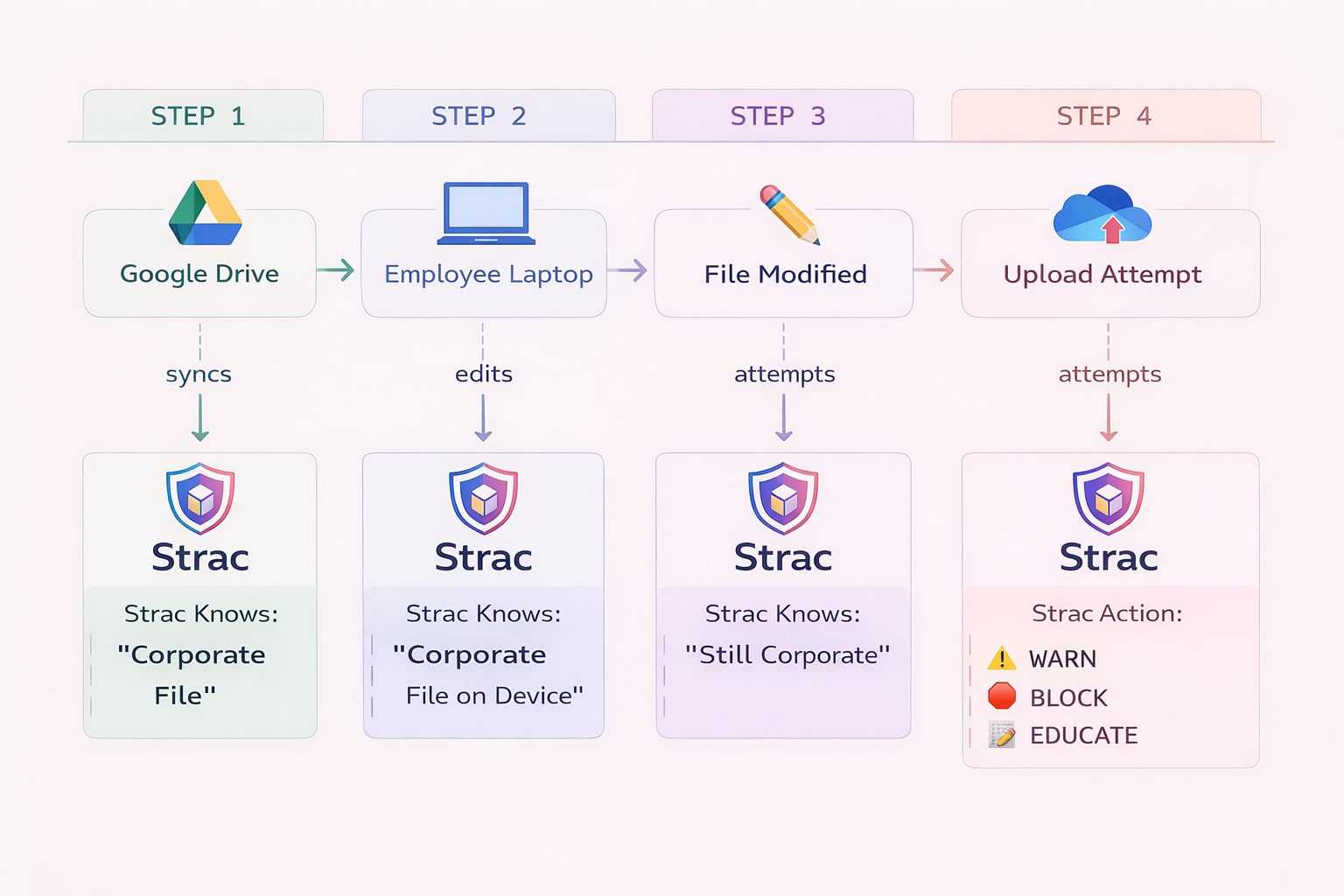
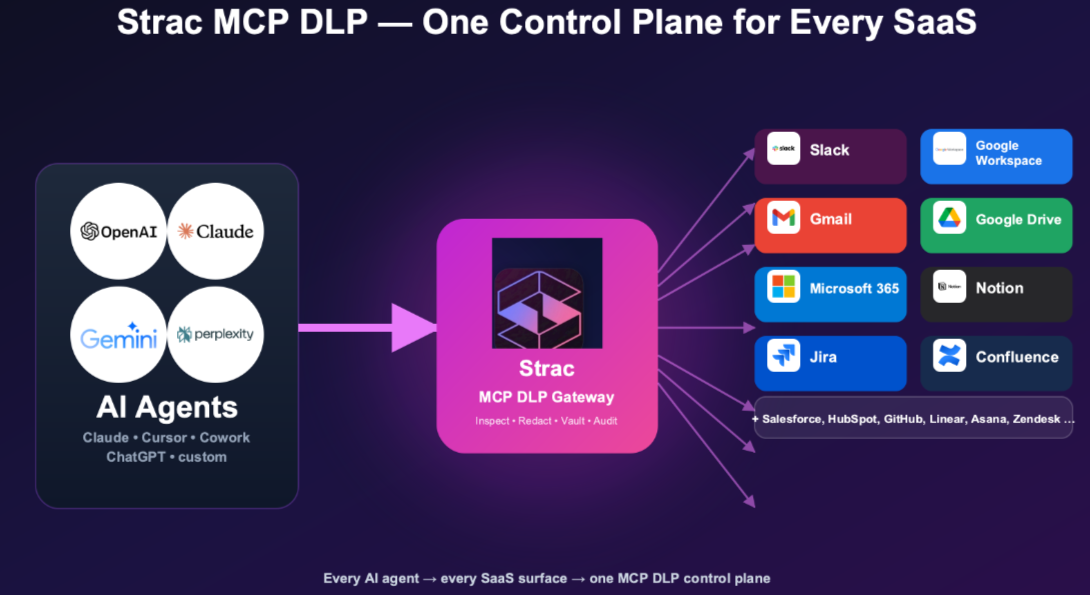

Full list: strac.io/integrations

Customer reviews: G2 Reviews
Best for: Organizations standardized on Microsoft 365, Teams, SharePoint, and OneDrive
Microsoft Purview (formerly Microsoft Information Protection + Compliance Center) is the natural choice if your entire stack runs on Microsoft. It offers tight integration with Teams, Exchange, SharePoint, OneDrive, and Azure — with unified policy management and eDiscovery built in.
Strengths
- Deep Microsoft 365 native integration
- Sensitivity labels that travel with documents across apps
- Built-in eDiscovery and audit trail for compliance
- Included in Microsoft 365 E3/E5 licensing — no additional cost for existing customers
Limitations
- Coverage drops sharply outside the Microsoft ecosystem — limited Slack, Salesforce, or Zoom integration
- No meaningful GenAI DLP for non-Microsoft AI tools
- Complex policy configuration; typically requires a dedicated compliance engineer or external consultant
- Remediation is largely manual; auto-remediation capabilities are limited compared to specialized DLP tools
Pricing: Included with Microsoft 365 E3 ($36/user/mo) and E5 ($57/user/mo). Advanced compliance features require Purview add-ons.
Best for: Engineering teams running data pipelines, BigQuery, Cloud Storage, or Datastore on Google Cloud Platform
Google's Sensitive Data Protection (formerly Cloud DLP API) is purpose-built for GCP workloads. It provides 200+ built-in detectors for PII, PHI, and financial data, with strong de-identification capabilities (masking, tokenization, bucketing) for structured and unstructured data.
Strengths
- Native integration with BigQuery, Cloud Storage, Datastore, and Pub/Sub
- 200+ pre-built detectors with high accuracy for structured data
- Strong de-identification primitives for data engineering use cases
- Pay-per-use API pricing, scalable for large data volumes
Limitations
- GCP-only — does not cover Slack, Salesforce, GitHub, or any non-Google SaaS tool
- No endpoint or browser coverage
- No GenAI DLP for ChatGPT, Copilot, or Gemini
- Remediation is primarily de-identification of data at rest, not real-time intervention in communication tools
- Requires engineering effort to implement; not a point-and-click solution
Pricing: $1–$3 per GB of data inspected (varies by inspection type). Additional costs for storage and compute.
Best for: Large enterprises with both on-premises infrastructure and cloud workloads requiring unified policy management
Forcepoint DLP is a mature enterprise platform that covers network, endpoint, and cloud channels under a single policy engine. It's a common choice for regulated industries (defense, government, financial services) that need deep control across hybrid environments.
Strengths
- Unified policy management across network, endpoint, and cloud
- Strong compliance reporting for HIPAA, PCI, GDPR, and government frameworks
- Long track record in regulated industries with reference customers
- Risk-adaptive protection that adjusts controls based on user risk score
Limitations
- Complex deployment requiring professional services engagement
- Agent-based on endpoints — significant IT overhead
- SaaS coverage is more limited than SaaS-native competitors
- Higher total cost of ownership including implementation and tuning labor
- Not suited for fast-growing companies that need quick time-to-value
Pricing: Per-user annually. Enterprise pricing, typically $51–$75/user/year depending on modules.
Best for: Companies with a Zero Trust Network Access (ZTNA) architecture already running Zscaler for network security
Zscaler's data protection layer sits inline in its SSE (Security Service Edge) platform, inspecting traffic passing through the Zscaler cloud proxy. If you're already a Zscaler customer, adding DLP is a natural extension of your existing investment.
Strengths
- Tight integration with Zscaler Internet Access (ZIA) and Zscaler Private Access (ZPA)
- Browser-based DLP without endpoint agents for managed devices
- Strong coverage for web uploads, email, and cloud app traffic
- Scales with Zscaler's global proxy infrastructure
Limitations
- Only covers traffic that flows through the Zscaler proxy — blind to API-to-API data movement within SaaS tools
- Requires Zscaler SSE as a prerequisite — not a standalone DLP purchase
- No direct SaaS API integration for scanning data at rest (e.g., files already in Google Drive)
- Limited remediation beyond block/alert for web traffic
Pricing: Add-on to Zscaler Business or Transformation packages. Contact for pricing.
Best for: Large enterprises with existing Broadcom/Symantec infrastructure investments
Symantec DLP is one of the longest-standing enterprise DLP platforms, covering network, endpoint, and cloud channels with a comprehensive policy engine. It remains a common choice for Fortune 500 companies with existing Symantec/Broadcom contracts.
Strengths
- Comprehensive coverage across network, endpoint, email, and cloud
- Mature policy framework with thousands of pre-built templates
- Strong eDiscovery and legal hold capabilities
- Deep integration with other Broadcom security products
Limitations
- Notoriously complex to deploy and maintain — typically requires a dedicated DLP team
- Architecture designed for on-premises, cloud coverage is bolt-on
- High total cost of ownership; implementation commonly runs 6–18 months
- Product investment has slowed post-Broadcom acquisition
- Not suited for companies under 1,000 employees
Pricing: $33–$50/user/year for core modules; implementation adds significant cost.
| Solution | SaaS Coverage | Image/Doc Scanning | GenAI DLP | Agentless | Remediation Depth |
|---|---|---|---|---|---|
| Strac | 50+ integrations | Yes — JPEG, PNG, PDF, DOCX, XLSX, ZIP | Yes (ChatGPT, Gemini, Claude, Copilot) | Yes | Redact, mask, delete, revoke access, remove members |
| Microsoft Purview | Microsoft 365 only | Partial (Office docs only) | Copilot only | Yes | Label, quarantine, alert |
| Google Cloud DLP | GCP only | Partial (GCS images) | No | Yes (API) | De-identify, mask |
| Forcepoint | Hybrid | No | Limited | No (agent) | Block, quarantine, alert |
| Zscaler | Web traffic only | No | No | Partial (proxy) | Block, alert |
| Symantec DLP | Network + cloud | No | No | No (agent) | Block, quarantine |
You need a SaaS-native DLP — not Google Cloud DLP (GCP only) and not Zscaler (proxy only). Strac is the right choice: 50+ integrations, agentless deployment, and remediation that goes beyond alerting to actually fix the exposure.
Start with Microsoft Purview — it's likely already included in your E3/E5 license. Add a SaaS-native tool if you need coverage for Slack, Salesforce, or GenAI tools outside the Microsoft ecosystem.
Google Cloud DLP (Sensitive Data Protection) is purpose-built for this use case. It's the right tool for BigQuery and Cloud Storage scanning. It is not a complete cloud DLP solution on its own if your employees also use SaaS tools.
ChatGPT, Copilot, and Gemini create a new data exfiltration surface that most legacy DLP tools don't cover. Strac monitors what employees type into GenAI tools in real time, with automated redaction before sensitive data leaves the browser. This is the use case that traditional network DLP tools are architecturally blind to.
Forcepoint or Symantec DLP may integrate well with your existing infrastructure. Expect longer deployment timelines and higher TCO. Consider augmenting with a SaaS-native layer like Strac to cover the gaps these tools leave in your collaboration and GenAI tooling.

The best cloud DLP solution is the one that actually covers where your sensitive data lives. For most companies in 2026, that means SaaS applications, GenAI tools, and cloud storage — not just the network perimeter.
If your team uses Slack, Google Drive, Salesforce, GitHub, or ChatGPT daily, a SaaS-native cloud DLP like Strac will protect more data, deploy faster, and require less operational overhead than legacy platforms designed for on-premises networks.
See how Strac compares to your current security stack →
Related reading:
- What Is Cloud DLP? A Complete Guide
- Data Loss Prevention Pricing in 2026
- Microsoft Purview Alternatives
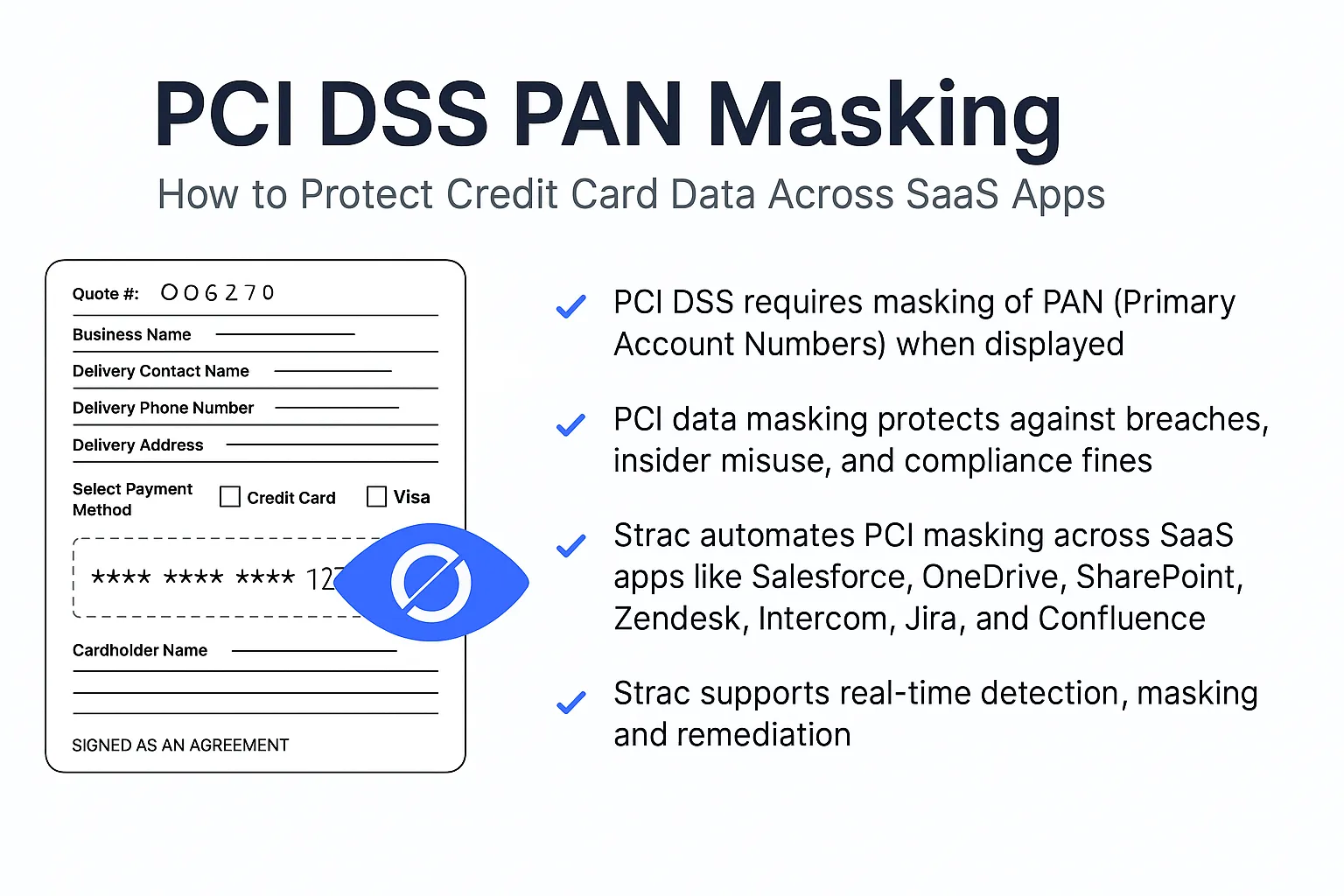
Strac is the best DLP for financial services teams that need PCI and PII caught everywhere — it Luhn-validates card numbers, masks or tokenizes them across SaaS, email, endpoint, and AI tools, and produces PCI DSS-mapped audit evidence. Netskope is a strong runner-up for banks standardizing on SSE.
For one policy across both surfaces, Strac covers SaaS apps agentlessly and endpoints with a lightweight agent, mapping every finding to SOC 2, HIPAA, and PCI evidence — so compliance coverage does not require two tools. Forcepoint suits organizations already invested in its endpoint stack.
Strac ships endpoint DLP for both macOS and Windows with the same detection engine used across its cloud connectors, catching sensitive files and clipboard data on either OS. Suite vendors like Trellix remain a fit where a legacy Windows fleet dominates.
For the Google Cloud-native option, see GCP DLP explained.
For the SASE-platform angle, see Zscaler vs Netskope.
Related reading:
Related: Data Detection and Response (DDR) — real-time detect-and-respond across SaaS, cloud, endpoints, and GenAI, the reactive complement to DSPM.
Traditional DLP inspects network traffic at the corporate perimeter — effective when all employees worked in an office on managed devices. Cloud DLP integrates directly with the APIs of cloud tools (Slack, Google Drive, Salesforce) and monitors data at rest within those platforms, not just in transit. Cloud DLP is the right approach for remote teams and SaaS-heavy organizations.
No. Google Cloud DLP (Sensitive Data Protection) is designed for GCP workloads — BigQuery, Cloud Storage, Datastore. It does not scan Slack, Salesforce, GitHub, or other SaaS tools your employees use. If your sensitive data lives in SaaS applications, you need a SaaS-native cloud DLP solution.
Most legacy DLP tools cannot — they inspect network traffic but are blind to the content of HTTPS-encrypted sessions with AI tools. GenAI-capable cloud DLP solutions like Strac use browser extensions and API integrations to monitor what employees type into ChatGPT, Copilot, and Gemini, and can automatically redact sensitive content before it's submitted.
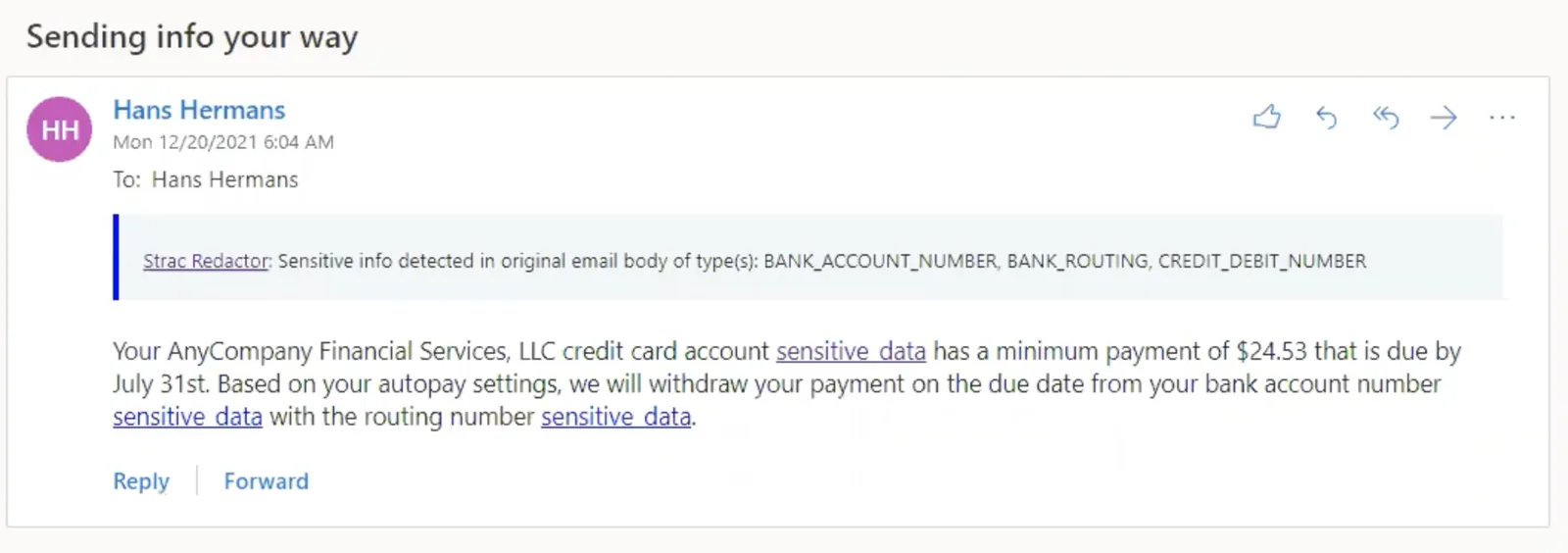
A comprehensive cloud DLP solution detects: PII (names, SSNs, addresses, phone numbers, email), PHI (medical records, diagnoses, insurance IDs), PCI data (credit card numbers, CVVs), credentials (API keys, passwords, tokens), financial data (bank account numbers, routing numbers), and custom data patterns specific to your organization. Detection should work across plaintext, documents, images, and scanned PDFs using OCR.
It depends on the architecture. Agentless, API-based solutions like Strac can connect to your SaaS tools and start scanning within hours. Agent-based solutions like Symantec DLP or Forcepoint typically require weeks to months of implementation work, including network architecture changes, policy tuning, and agent rollout across managed devices.
The major frameworks that cloud DLP tools address: HIPAA (PHI protection), PCI DSS (cardholder data), SOC 2 (data availability and confidentiality controls), GDPR/CCPA (PII discovery and deletion), and ISO 27001. Look for solutions that ship with pre-built policy templates for your relevant frameworks — building policies from scratch significantly increases time-to-compliance.
{"@context": "https://schema.org", "@type": "FAQPage", "mainEntity": [{"@type": "Question", "name": "What is the difference between cloud DLP and traditional DLP?", "acceptedAnswer": {"@type": "Answer", "text": "Traditional DLP inspects network traffic at the corporate perimeter — effective when all employees worked in an office on managed devices. Cloud DLP integrates directly with the APIs of cloud tools (Slack, Google Drive, Salesforce) and monitors data at rest within those platforms, not just in transit. Cloud DLP is the right approach for remote teams and SaaS-heavy organizations."}}, {"@type": "Question", "name": "Does Google Cloud DLP protect my SaaS applications?", "acceptedAnswer": {"@type": "Answer", "text": "No. Google Cloud DLP (Sensitive Data Protection) is designed for GCP workloads — BigQuery, Cloud Storage, Datastore. It does not scan Slack, Salesforce, GitHub, or other SaaS tools your employees use. If your sensitive data lives in SaaS applications, you need a SaaS-native cloud DLP solution."}}, {"@type": "Question", "name": "Can cloud DLP protect data in ChatGPT and other AI tools?", "acceptedAnswer": {"@type": "Answer", "text": "Most legacy DLP tools cannot — they inspect network traffic but are blind to the content of HTTPS-encrypted sessions with AI tools. GenAI-capable cloud DLP solutions like Strac use browser extensions and API integrations to monitor what employees type into ChatGPT, Copilot, and Gemini, and can automatically redact sensitive content before it's submitted."}}, {"@type": "Question", "name": "What sensitive data types can cloud DLP detect?", "acceptedAnswer": {"@type": "Answer", "text": "A comprehensive cloud DLP solution detects: PII (names, SSNs, addresses, phone numbers, email), PHI (medical records, diagnoses, insurance IDs), PCI data (credit card numbers, CVVs), credentials (API keys, passwords, tokens), financial data (bank account numbers, routing numbers), and custom data patterns specific to your organization. Detection should work across plaintext, documents, images, and scanned PDFs using OCR."}}, {"@type": "Question", "name": "How long does it take to deploy a cloud DLP solution?", "acceptedAnswer": {"@type": "Answer", "text": "It depends on the architecture. Agentless, API-based solutions like Strac can connect to your SaaS tools and start scanning within hours. Agent-based solutions like Symantec DLP or Forcepoint typically require weeks to months of implementation work, including network architecture changes, policy tuning, and agent rollout across managed devices."}}, {"@type": "Question", "name": "What compliance frameworks do cloud DLP solutions support?", "acceptedAnswer": {"@type": "Answer", "text": "The major frameworks that cloud DLP tools address: HIPAA (PHI protection), PCI DSS (cardholder data), SOC 2 (data availability and confidentiality controls), GDPR/CCPA (PII discovery and deletion), and ISO 27001. Look for solutions that ship with pre-built policy templates for your relevant frameworks — building policies from scratch significantly increases time-to-compliance."}}]}{"@context": "https://schema.org", "@type": "ItemList", "name": "Best Cloud DLP Solutions (2026)", "itemListElement": [{"@type": "ListItem", "position": 1, "name": "Strac — Best for SaaS, GenAI, and Multi-Cloud Coverage"}, {"@type": "ListItem", "position": 2, "name": "Microsoft Purview — Best for Microsoft 365 Environments"}, {"@type": "ListItem", "position": 3, "name": "Google Cloud DLP (Sensitive Data Protection) — Best for GCP-Native Workloads"}, {"@type": "ListItem", "position": 4, "name": "Forcepoint DLP — Best for Enterprise Network + SaaS Hybrid"}, {"@type": "ListItem", "position": 5, "name": "Zscaler Data Protection — Best for Browser and Web Channel DLP"}, {"@type": "ListItem", "position": 6, "name": "Symantec DLP (Broadcom) — Best for Large Enterprise Legacy Environments"}]}
.avif)


.gif)


.webp)