Is Gemini HIPAA Compliant? 2026 Guide (BAA, Workspace, Vertex AI, and the Gaps)
Is Google Gemini HIPAA compliant? The 2026 answer per product surface — Workspace, Vertex AI, AI Studio, consumer — plus the gap a signed BAA does not close.
Gemini is HIPAA compliant on specific Google products, not on Gemini as a whole. Google offers a Business Associate Agreement (BAA) for Gemini delivered inside Google Workspace and for Gemini accessed via Vertex AI on Google Cloud Platform — when the customer is on a covered plan and the BAA is in place. The consumer Gemini at gemini.google.com is not covered.
The right framing: which Gemini surface are your clinicians, analysts, or developers actually using? Workspace Gemini and Vertex AI Gemini can be deployed in HIPAA workflows. Consumer Gemini and Google AI Studio (the free developer playground) cannot.
A signed Google BAA only covers Google's processing of the data you send. It does not stop the model from receiving PHI in the first place — pasted into a Workspace chat, retrieved by an AI agent from a Drive folder, or attached as a screenshot to a Gmail thread.
Strac closes the data-layer gap across every Gemini surface. The Strac browser extension catches PHI before it reaches Gemini in the browser. Strac's Google Workspace MCP DLP, Gmail MCP DLP, and Google Drive MCP DLP redact sensitive data flowing between AI agents and Workspace data. Strac's endpoint DLP catches file-level exposure on Mac, Windows, and Linux.
The right Google product surface (Workspace with a covered SKU, or Vertex AI on GCP — not consumer Gemini, not AI Studio).
A signed Google BAA covering that surface, with the customer entity properly recorded under Google's HIPAA Implementation Guide.
A data-layer control that keeps PHI out of any Gemini surface where a BAA does not apply, and minimizes PHI exposure on the surfaces where a BAA does apply.
The rest of this guide walks through each Gemini surface and the controls a healthcare organization needs.
✨ What Google's HIPAA BAA Actually Covers for Gemini
Gemini in Google Workspace (Gemini for Workspace add-on, on covered SKUs)
Yes — under the Google Workspace BAA
Customer must execute the BAA via the Admin console. Covered SKUs are listed in Google's HIPAA Implementation Guide.
Gemini on Vertex AI (Google Cloud)
Yes — under the Google Cloud BAA
Customer must accept the Cloud BAA and configure logging/IAM per Google's HIPAA guidance.
Gemini via the Gemini API (paid tier)
Yes — under the Google Cloud BAA when the API is accessed via a GCP project under BAA
Free-tier Gemini API access is not covered.
Consumer Gemini (gemini.google.com, Gemini app on phones with a personal Google account)
No
Outside the Workspace/Cloud BAA scope.
Google AI Studio (the free aistudio.google.com developer playground)
No
Not a covered service under Google's HIPAA program.
NotebookLM
Varies by plan; verify with Google before assuming coverage
NotebookLM's coverage status has shifted; check the current implementation guide.
The single most common mistake: assuming a personal Gemini account ("free Gemini" or the Gemini app a clinician downloaded) is somehow covered because the same vendor offers a HIPAA-eligible product elsewhere. It is not. The BAA covers the surface, not the brand.
Yes, on a properly configured covered SKU, with the BAA executed. The Workspace BAA covers Google Workspace Core Services as defined in Google's HIPAA Implementation Guide. Gemini for Workspace (the AI assistant inside Gmail, Docs, Sheets, Slides, Meet, Drive) is covered when the customer is on a SKU listed in that guide and has executed the BAA through the Admin console.
The healthcare org responsibilities are non-trivial:
Verify the Workspace plan is on a covered SKU. Some lower-tier plans do not include Gemini or are not under the BAA.
Execute the BAA in the Admin console (the checkbox flow under Account → Compliance).
Restrict Gemini for Workspace to a subset of users via the Workspace org-unit / group controls if not every user has a clinical need.
Disable any unsupported services that fall outside the Core Services list.
Configure Vault retention and Workspace audit logging.
That gives Google's BAA-covered processing. It does not give you visibility into what PHI users are actually pasting into a Gemini chat, attaching to a Gmail thread that triggers a Gemini summary, or storing in a Drive doc that Gemini will later retrieve as context.
Execute the Google Cloud BAA at the organization level.
Use HIPAA-eligible services only (Vertex AI is on the list; check that every adjacent service in your pipeline is also covered).
Configure Cloud Audit Logs, IAM, and encryption per the Cloud HIPAA Implementation Guide.
Ensure no PHI flows into services that are not HIPAA-eligible (notably, do not pipe PHI to Cloud Functions or services that are not on the eligible list without verifying coverage).
Vertex AI Gemini is the right path for healthcare engineering teams building applications that call Gemini directly. It is not the same as "all our employees can use Gemini for healthcare workflows" — that requires the Workspace path or a controlled application.
No. Google AI Studio (aistudio.google.com) is a free developer playground. It is not covered by any Google BAA and is not intended for production use, let alone PHI. Engineers prototyping a healthcare app should move off AI Studio to Vertex AI before connecting any real data.
Is Consumer Gemini HIPAA Compliant?
No. Consumer Gemini (gemini.google.com under a personal Google account, the Gemini mobile app on a personal phone) is outside any BAA. A clinician who pastes a patient note into the Gemini app on their personal phone has transmitted PHI to a non-BAA-covered service.
This is the most-overlooked Gemini exposure in healthcare orgs. The org has Workspace under BAA — but employees use personal Gemini on the side. The data flow Google sees is from a personal account, not the covered Workspace tenant.
✨ The Gap: What Even a Signed Google BAA Doesn't Protect You From
A BAA is a contractual document. It commits Google to handle PHI under HIPAA's Privacy, Security, and Breach Notification rules. It does not:
Stop a user from pasting PHI into a Gemini prompt where it shouldn't have been pasted.
Stop a Gemini-summarized Gmail thread from generating a summary that includes patient names.
Stop a Drive doc with PHI from being retrieved by an AI agent as model context.
Provide your security team with a per-prompt audit log that maps to your existing SIEM and GRC pipeline.
De-identify PHI before it reaches the model.
A BAA covers Google's processing of the data you sent. It does not minimize, redact, or restrict the data you send. That responsibility is on the covered entity. Most healthcare organizations only realize this gap after a near-miss.
✨ How Strac Adds HIPAA-Grade Data Protection Across All Gemini Products
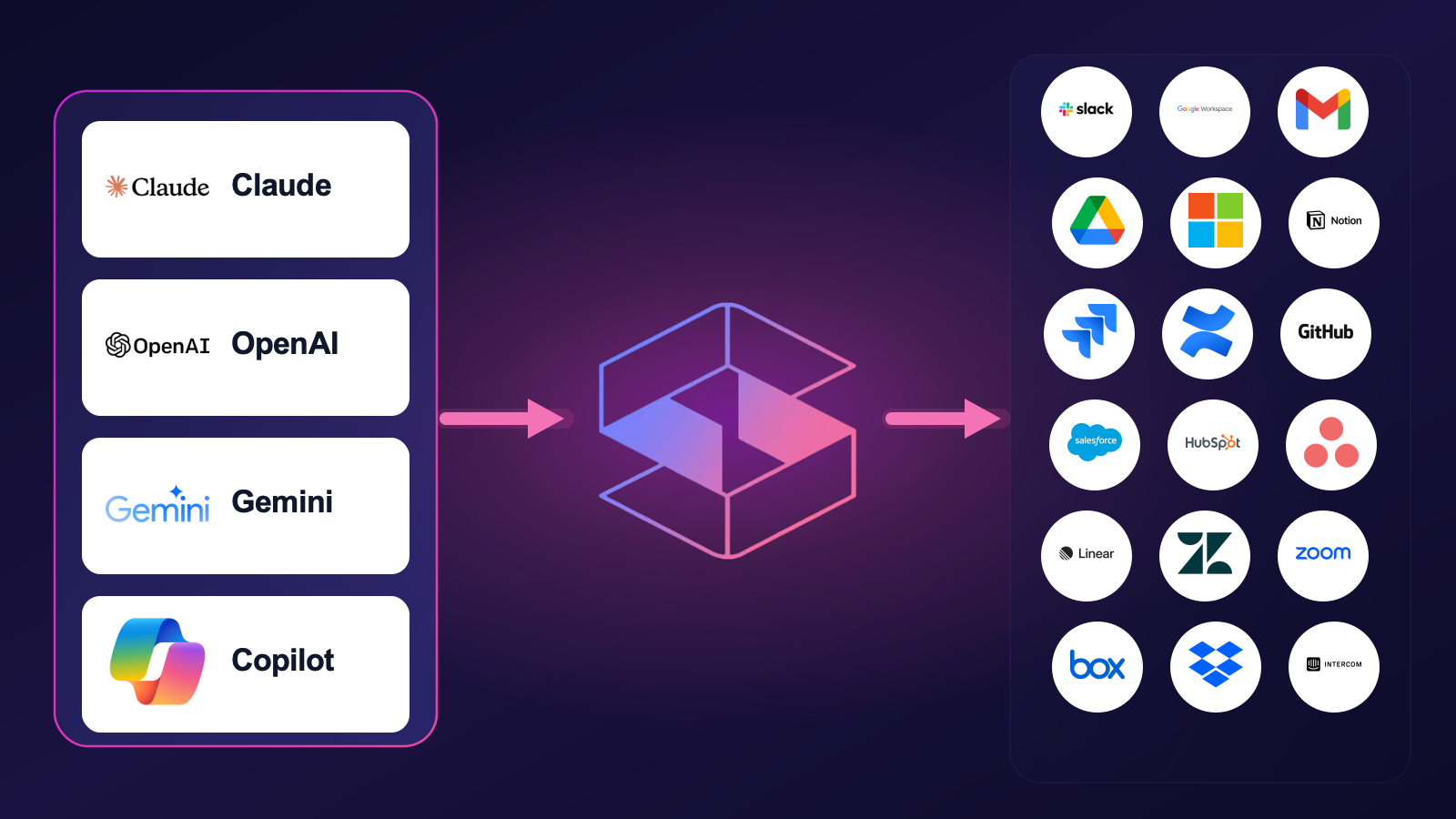
Strac is the data-layer control that closes the gap a BAA doesn't cover. Strac sits between users and Gemini surfaces, between AI agents and Google Workspace data, and between endpoints and the model.
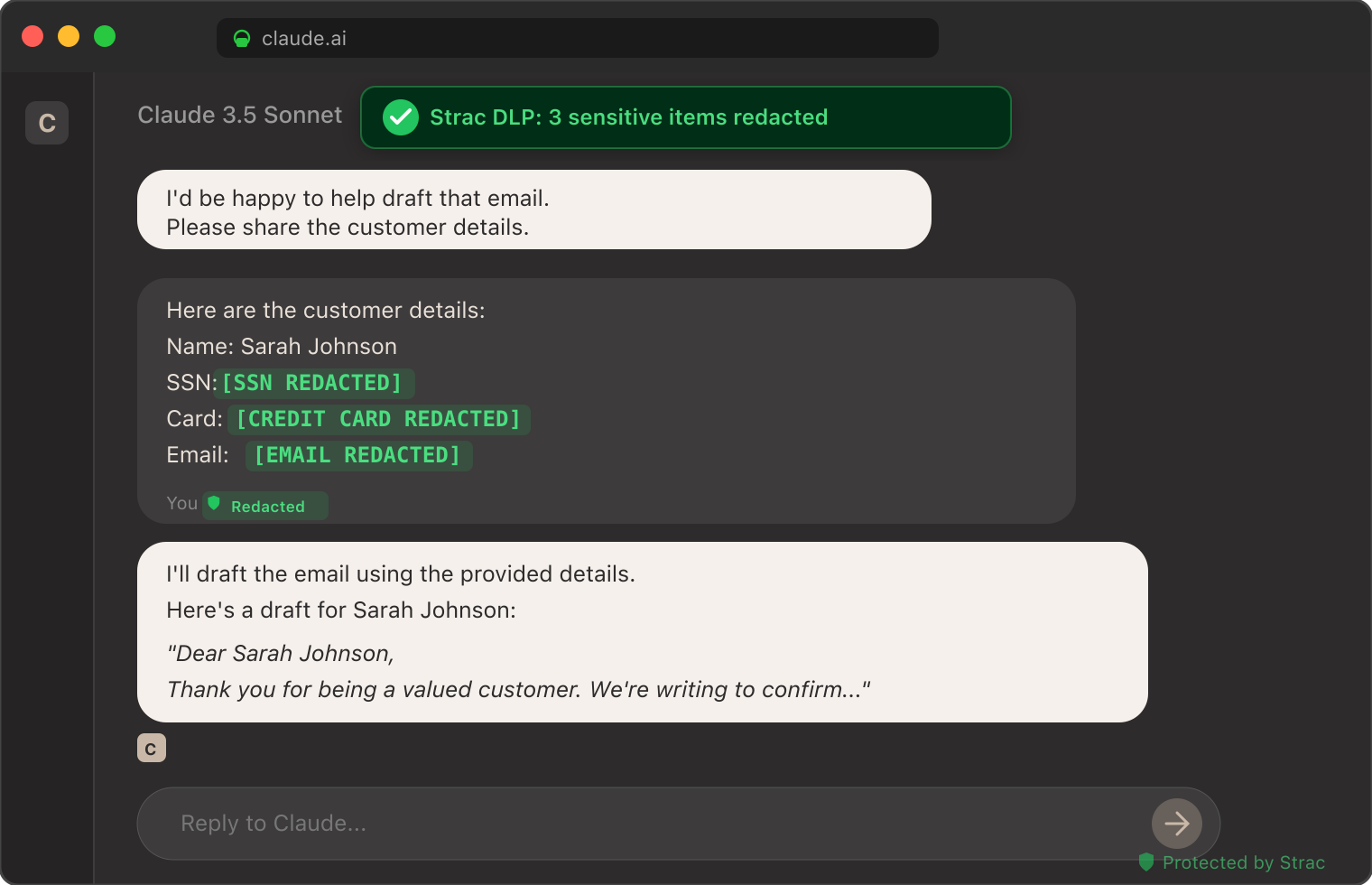
Browser extension for Gemini in the browser — Strac's GenAI browser DLP inspects copy/paste, typed text, and file uploads to gemini.google.com, the Gemini app in Workspace, and any other browser-based Gemini surface. Modes: alert, warn, block. PHI never crosses into the model context. Even on consumer Gemini, the browser extension enforces the same controls.
MCP DLP for Gemini-driven AI agents over Google Workspace data — Most modern AI workflows involve a Gemini-powered agent reading from Drive, Gmail, Calendar, Docs, and Sheets. Strac's Google Workspace MCP DLP intercepts those tool calls and redacts PHI inline:
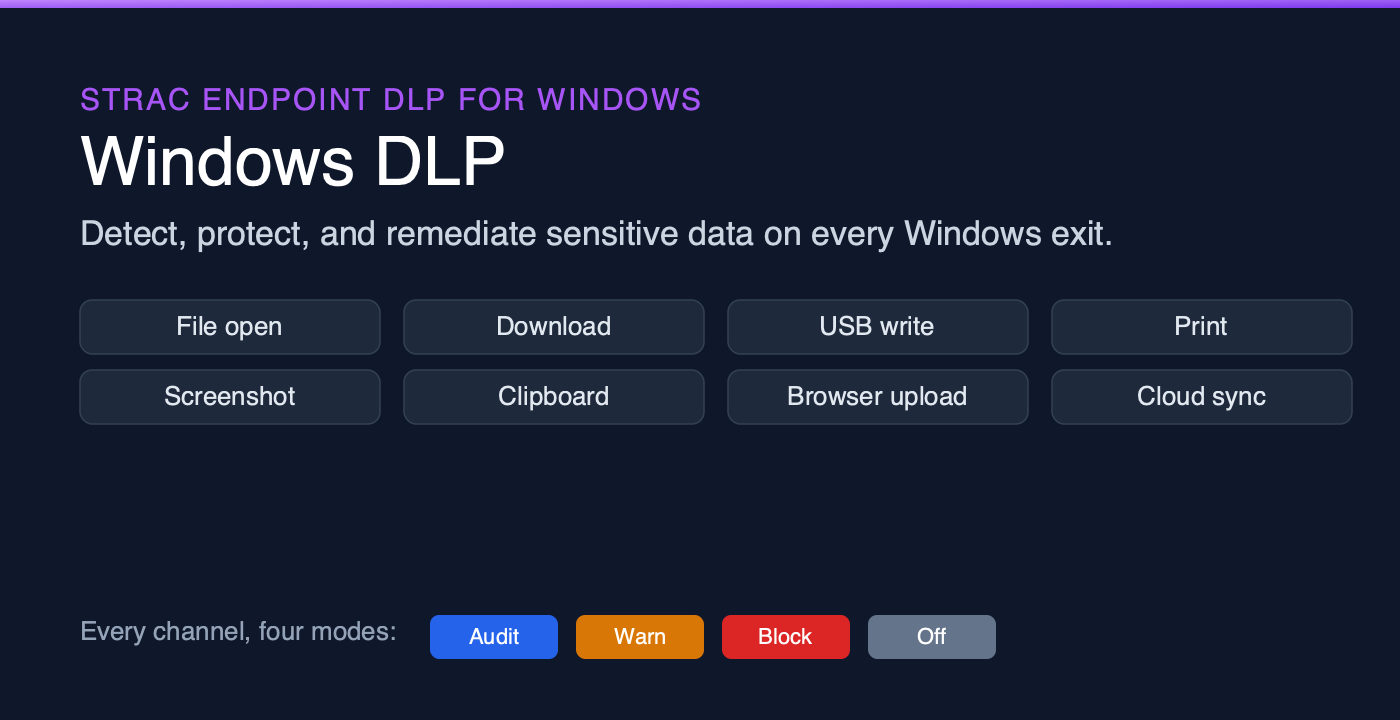
Endpoint DLP for Gemini desktop and CLI tools — Strac's endpoint DLP on Mac and Windows catches file-level exfil that browser controls miss — for example, a Gemini code assistant integrated into VSCode pulling in source files with embedded credentials.
Cloud DSPM for Vertex AI applications — For applications calling Gemini through Vertex AI, Strac's cloud DSPM keeps the upstream data stores classified, so engineering teams know which datasets are HIPAA-sensitive before piping them into a Gemini prompt template.
Compliance evidence pre-built — HIPAA mapping, audit log export, and per-event remediation evidence ready for your auditor without a custom integration.
Setup is agentless and under 10 minutes per workspace.
✨ A Practical Gemini HIPAA Deployment Checklist
Phase 1 — Inventory and BAA
[ ] Map every Gemini surface your org actually uses today. Workspace Gemini? Vertex AI? Gemini API? Consumer Gemini on personal phones?
[ ] Verify the Workspace plan is on a HIPAA-eligible SKU.
[ ] Execute the Workspace BAA in the Admin console.
[ ] Execute the Google Cloud BAA at the organization level if any Gemini API / Vertex AI use is in scope.
[ ] Block (or document the policy on) consumer Gemini access from work devices and SSO accounts.
Phase 2 — Data layer controls
[ ] Deploy Strac's browser extension across covered users for Gemini and other GenAI surfaces. See GenAI browser DLP.
Is consumer Gemini (gemini.google.com) HIPAA compliant?
No. Consumer Gemini is outside any Google BAA. Healthcare data sent to consumer Gemini is sent to a non-covered service.
Is Gemini for Workspace HIPAA compliant?
Yes, on covered Workspace SKUs with the Workspace BAA executed. Verify the SKU against Google's current HIPAA Implementation Guide before signing.
Is the Gemini API HIPAA compliant?
Only the paid Gemini API accessed via Vertex AI on a Google Cloud project covered by the Cloud BAA. The free Gemini API via AI Studio API keys is not covered.
Is Google AI Studio HIPAA compliant?
No. AI Studio is a free developer playground outside Google's HIPAA program. Move to Vertex AI before connecting any real healthcare data.
Is NotebookLM HIPAA compliant?
NotebookLM's coverage has shifted by plan tier. Check Google's current HIPAA Implementation Guide before using NotebookLM with PHI.
Does Google sign a BAA for free Gemini accounts?
No. Google's BAAs require a paid Workspace plan with the BAA executed by an authorized admin, or a paid Cloud project. Free consumer accounts are outside the program.
How is the Gemini HIPAA situation different from Claude?
The biggest practical difference is BAA coverage on the consumer-grade AI assistant. Google offers BAAs for Gemini inside Workspace and Vertex AI. Anthropic does not currently offer a BAA for Claude consumer or Claude Cowork plans — see Is Claude HIPAA compliant?. Both vendors leave the same data-layer gap that a BAA alone does not close.
How does Strac add HIPAA protection on top of Google's BAA?
Strac's browser DLP, endpoint DLP, and Google Workspace MCP DLP redact PHI before it reaches Gemini, regardless of which Gemini surface a user is on. A signed Google BAA covers Google's processing of the data you send. Strac controls what data gets sent in the first place. The combination — Google BAA + Strac data-layer protection — is what most healthcare auditors want to see.
What about Google's HIPAA Implementation Guide — is it enough on its own?
Google's HIPAA Implementation Guide tells you how to configure covered Google products under the BAA. It is necessary. It is not sufficient. The Guide does not enforce what your users actually paste into Gemini, what AI agents retrieve from Drive, or what file content reaches Gemini via the browser. That layer is where Strac sits.
Can I block Gemini entirely until we are compliant?
Yes. Strac's browser extension supports a block mode that prevents copy/paste and uploads into Gemini until you have the controls in place. Many healthcare orgs use a phased rollout: block in week one, warn-and-allow in week two after browser DLP is tuned, full rollout in week three.
Gemini can be deployed in HIPAA workflows — but only on covered Google surfaces with a signed BAA, and only with a data-layer control that minimizes PHI exposure on every surface in scope. Consumer Gemini and AI Studio are out. Workspace and Vertex AI are in, with the right SKUs and configuration. The remaining gap — what users paste, what agents retrieve, what files reach the model — is what Strac is built to close.
Is consumer Gemini (gemini.google.com) HIPAA compliant?
No. Consumer Gemini is outside any Google BAA. Healthcare data sent to consumer Gemini is sent to a non-covered service.
Is Gemini for Workspace HIPAA compliant?
Yes, on covered Workspace SKUs with the Workspace BAA executed. Verify the SKU against Google's current HIPAA Implementation Guide before signing.
Is the Gemini API HIPAA compliant?
Only the paid Gemini API accessed via Vertex AI on a Google Cloud project covered by the Cloud BAA. The free Gemini API via AI Studio API keys is not covered.
Is Google AI Studio HIPAA compliant?
No. AI Studio is a free developer playground outside Google's HIPAA program. Move to Vertex AI before connecting any real healthcare data.
Is NotebookLM HIPAA compliant?
NotebookLM's coverage has shifted by plan tier. Check Google's current HIPAA Implementation Guide before using NotebookLM with PHI.
Discover & Protect Data on SaaS, AI, MCP, Endpoints & Cloud
Strac provides end-to-end data loss prevention for all SaaS and Cloud apps. Integrate in under 10 minutes and experience the benefits of live DLP scanning, live redaction, and a fortified SaaS environment.


.webp)



.avif)




.gif)
