August 10, 2026

6
min read
Data Loss Prevention Security Policy
A Comprehensive Guide
.webp)
A Comprehensive Guide
Implementing a robust data loss prevention security policy is crucial for protecting sensitive information and maintaining regulatory compliance. This guide covers DLP policy best practices, key components, and steps for creating an effective data protection strategy.
TL;DR: A data loss prevention (DLP) security policy establishes rules for classifying, accessing, transmitting, and securing sensitive data. Key elements include access controls, encryption, monitoring procedures, training programs, and incident response plans. Following best practices for policy creation, classification, technical controls, and maintenance helps organizations avoid data leakage.
Data is a precious asset that demands vigilant protection, especially with cyber threats growing daily. Leaked intellectual property, customer data, or financial information can spur massive fines, legal liabilities, and reputation damage.
That's why every organization needs a layered data loss prevention (DLP) security policy for locking down sensitive information. But what exactly does an effective DLP policy entail?
At its core, a DLP security policy combines:
By bringing together these three pillars, organizations can take a proactive stance against data leakage. Now let's explore best practices for constructing a robust DLP security policy.
Follow these vital steps when instituting your DLP security strategy:
By instituting these 10 vital practices, organizations can implement layered DLP security policies that genuinely safeguard data. Now let's break down the key components within a robust policy.
While specific details will vary between organizations, robust DLP security policies contain several essential elements:
By bringing together these crucial components, organizations create a layered defense against data exfiltration. Next, let's walk through the process of constructing a DLP security policy.
Vigilance is required to keep your DLP security strategy current in the face of evolving threats and regulations. Follow these maintenance best practices:
With robust maintenance practices, organizations can ensure their DLP policies remain up to date over the long haul.
While creating a comprehensive data loss prevention security policy is crucial, implementing it effectively requires robust tools. Strac offers a state-of-the-art SaaS/Cloud DLP and Endpoint DLP solution that can help enforce your security policy across your entire digital ecosystem.
Strac's built-in and custom detectors support all sensitive data elements for PCI, HIPAA, GDPR, and any confidential data, aligning with your policy's data classification needs. Uniquely, Strac offers detection and redaction capabilities for images and deep content inspection for various document formats. Explore Strac's full catalog of sensitive data elementsto see how it can support your policy implementation.
For organizations concerned about compliance, Strac DLP helps achieve standards for PCI, SOC 2, HIPAA, ISO-27001, CCPA, GDPR, and NIST frameworks, ensuring your policy meets regulatory requirements. With easy integration, customers can implement Strac and see live scanning and redaction on their SaaS apps in under 10 minutes, quickly operationalizing your security policy.
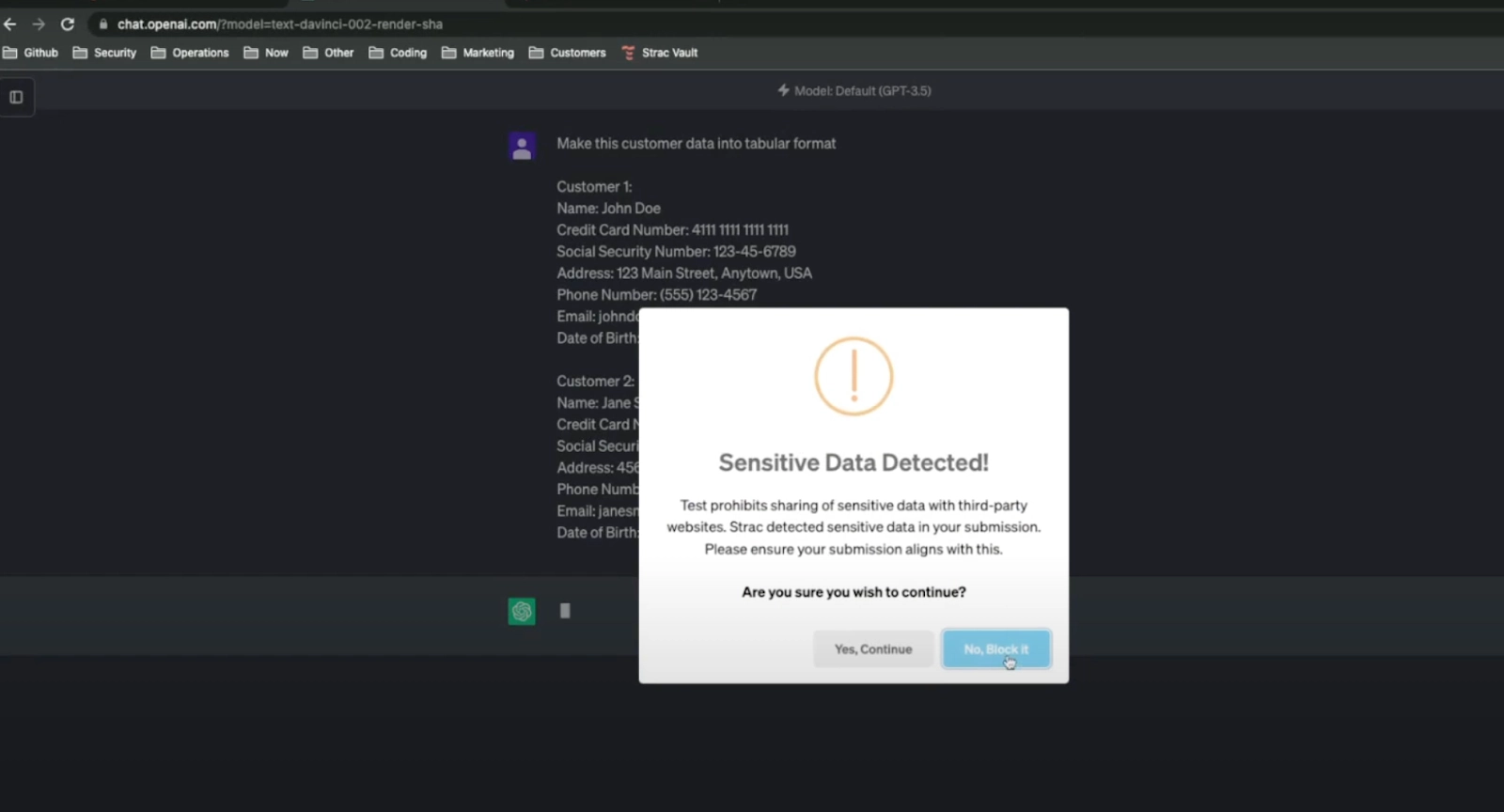
Strac's machine learning models ensure accurate detection and redaction of sensitive PII, PHI, PCI, and confidential data, minimizing false positives and negatives. The solution offers extensive SaaS integrations, including AI integration with LLM APIs and AI websites like ChatGPT, Google Bard, and Microsoft Copilot, providing comprehensive coverage for your policy.
For holistic protection, Strac provides Endpoint DLP that works across SaaS, Cloud, and Endpoint environments. Developers can leverage Strac's API support for custom implementations, while inline redaction capabilities ensure sensitive text is masked or blurred within attachments, aligning with your security policy requirements.
Strac's customizable configurations and out-of-the-box compliance templates allow for flexible, tailored data protection measures that can adapt to your specific security policy needs.

In today's data-driven world, sensitive information provides competitive advantage and requires vigilant security. A layered data loss prevention security policy delivers genuine protection by synthesizing people, processes and technology.
By methodically constructing policies, classifying data, implementing controls, and maintaining vigilance, organizations can lock down sensitive data against evolving threats. A proactive stance secures reputations and ensures regulatory compliance.
Ready to implement a robust data loss prevention security policy with cutting-edge tools? Book a demo with Strac to see how our comprehensive DLP solution can help enforce your security policy effectively across all environments. Join our satisfied customers who trust Strac for their most critical data security needs.
.avif)


.gif)