October 1, 2026

7
min read
Data Loss Prevention Audit
Learn how data loss prevention audits strengthen data security and ensure regulatory compliance. Explore Strac's specialized DLP solutions for proactive data protection.
· A Data Loss Prevention (DLP) audit helpsorganizations discover where sensitive data exists, how it moves, and where itis most at risk of being exposed.
· Modern DLP audits should cover SaaSapplications, cloud platforms, endpoints, browsers, email, GenAI tools, andMCP-connected AI workflows—not just traditional networks and file servers.
· Regular audits strengthen compliance with GDPR,HIPAA, PCI DSS 4.0, SOC 2, and other regulations while reducing the risk ofcostly data breaches and insider threats.
· The most effective DLP programs combinecontinuous data discovery, intelligent classification, and automatedremediation to identify and reduce risks before sensitive data is leaked.
· Strac helps organizations continuously discover,classify, monitor, and remediate sensitive data across SaaS, cloud, endpoints,browsers, GenAI, and MCP environments from a unified DSPM and DLP platform.
Protecting sensitive data is no longer just about securing email or blocking USB devices. Today's organizations manage confidential information across SaaS applications, cloud platforms, employee devices, browsers, AI assistants, and increasingly, AI agents connected through Model Context Protocol (MCP).
As data becomes more distributed, it also becomes more difficult to track and protect. That's why a Data Loss Prevention (DLP) audit has become one of the most valuable exercises an organization can perform. It helps security teams understand where sensitive information lives, how it's being used, and where the biggest risks exist before they become costly security incidents.
In this guide, we'll explain what a modern DLP audit looks like, what it should include, and how organizations can use the findings to build a stronger security and compliance program.

A Data Loss Prevention (DLP) audit is a structured review of how your organization discovers, stores, shares, and protects sensitive information. Its purpose is to identify where confidential data exists, how it moves through the business, and whether the right controls are in place to prevent leaks.
Unlike a traditional IT security audit that focuses on networks and infrastructure, a DLP audit focuses on the data itself. It looks at how sensitive information is handled across SaaS applications, cloud storage, endpoints, browsers, email, AI tools, and other systems where employees work every day.
A modern DLP audit typically answers questions such as:
The goal isn't just to find sensitive data—it's to reduce unnecessary exposure before it leads to a security incident.
Data no longer lives in one place. It moves constantly between collaboration tools, cloud platforms, customer support systems, employee devices, and AI assistants.
A customer might send payment information through Zendesk, an employee could upload a confidential spreadsheet to Google Drive, or a developer may paste source code into ChatGPT. AI agents connected through MCP can also access multiple business systems simultaneously, creating entirely new data exposure risks if they aren't properly governed.
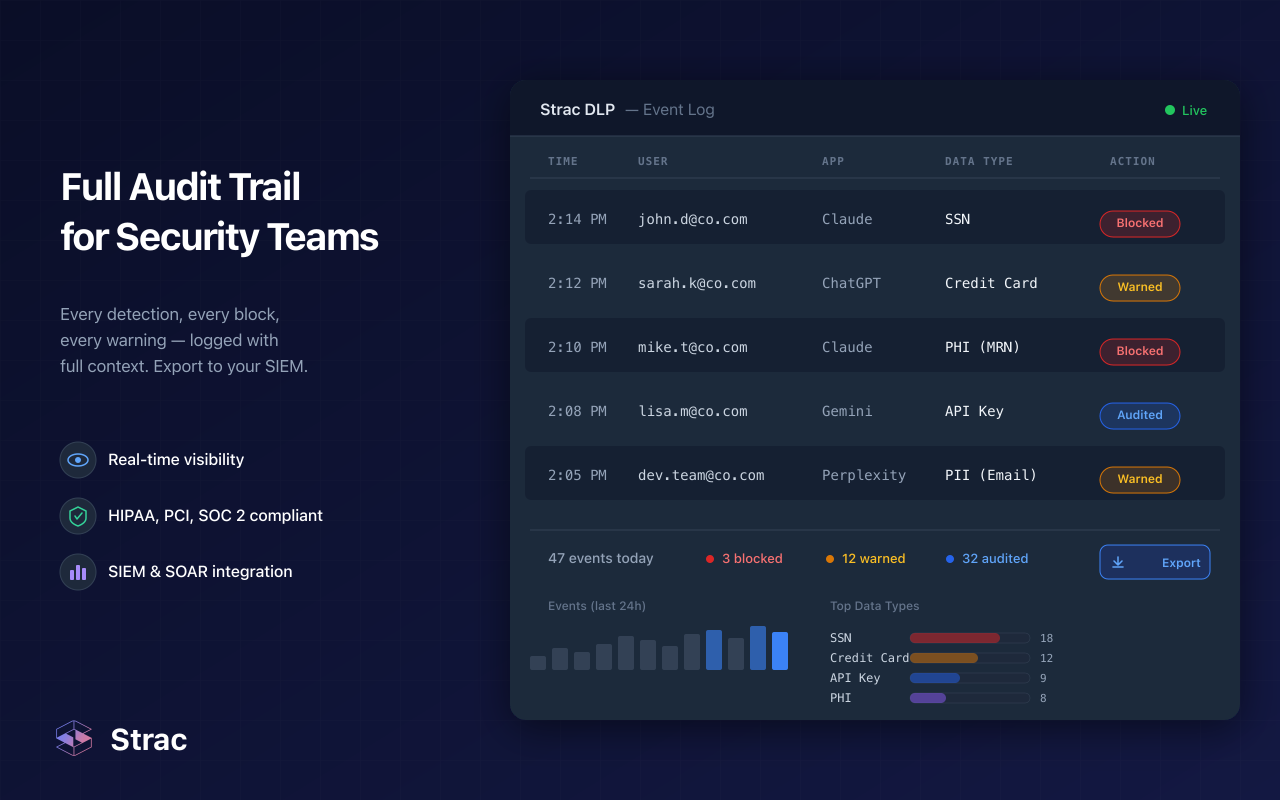
A DLP audit helps organizations understand where these risks exist so they can strengthen security before sensitive information is exposed.
Some of the biggest benefits include:
Rather than reacting to data breaches, organizations can proactively identify and fix security gaps.
Today's organizations rely on dozens of applications to run their business, which means sensitive data is spread across far more than email or file servers. A modern DLP audit should provide visibility across every location where confidential information is created, stored, or shared.
Every audit starts with understanding what sensitive data exists and where it's located. Organizations often discover regulated information in places they weren't expecting, including collaboration platforms, support tickets, cloud storage, AI conversations, and forgotten file repositories.

A comprehensive audit should identify information such as:
Modern discovery should analyze both structured and unstructured data using machine learning, OCR, and content-aware detection rather than relying solely on regex.
Business-critical data is constantly flowing through applications like Google Workspace, Microsoft 365, Slack, Salesforce, Jira, Confluence, Zendesk, and Notion.
A DLP audit should evaluate how sensitive information is stored, who has access to it, whether files are being shared externally, and whether old or unnecessary data should be removed.
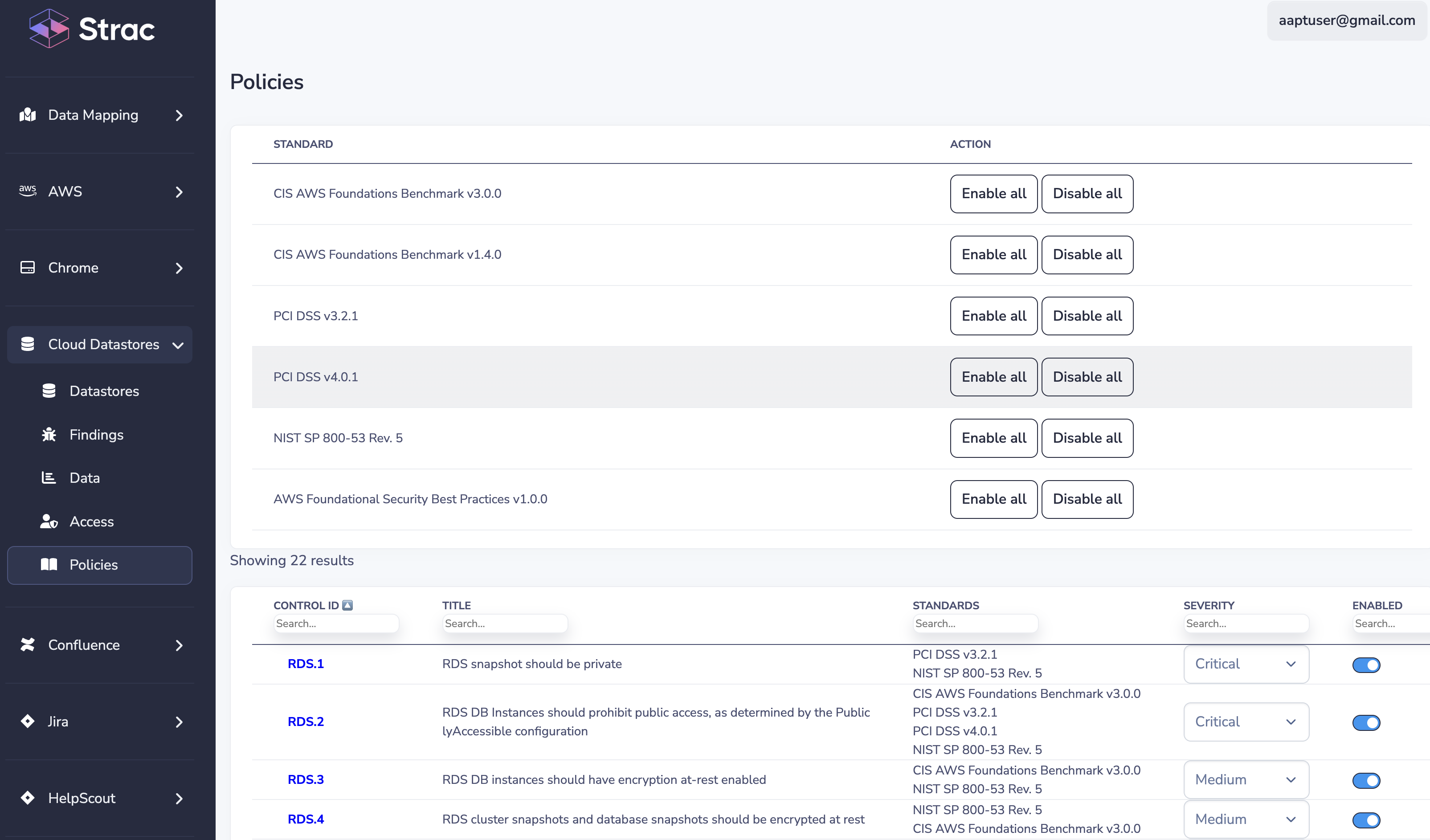
Cloud environments often contain forgotten backups, publicly accessible storage, excessive permissions, and sensitive databases.
Auditing AWS, Azure, and Google Cloud helps identify these risks before they become security incidents.
Employees frequently download files, copy sensitive information, upload documents through browsers, or transfer data between personal and corporate applications.
Modern DLP audits should evaluate endpoint activity alongside browser-based workflows, as browsers have become one of the most common channels for data movement.

Email continues to be one of the leading causes of accidental data exposure.
Audits should identify confidential attachments, external sharing, payment information, customer records, and other regulated data leaving the organization through email.
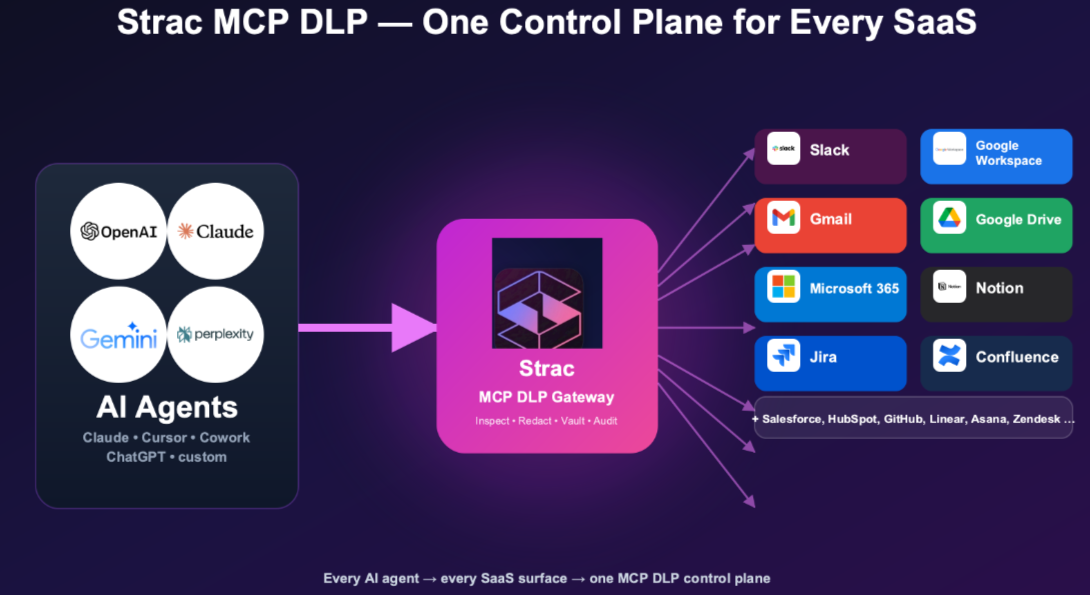
AI has created one of the fastest-growing data leakage vectors.
Employees now upload documents to ChatGPT, Claude, Gemini, and Microsoft Copilot every day. At the same time, MCP enables AI agents to connect directly to enterprise systems, allowing them to retrieve information from cloud storage, ticketing platforms, CRMs, and internal knowledge bases.
A modern DLP audit should examine AI prompts, uploads, generated responses, and MCP-connected workflows to ensure sensitive information isn't being unnecessarily exposed.
Conducting a DLP audit doesn't have to be overwhelming. Following a structured approach helps security teams identify risks efficiently while creating a roadmap for continuous improvement.
Start by deciding which environments will be included. A modern audit should extend beyond email and include SaaS applications, cloud infrastructure, endpoints, browsers, AI platforms, and MCP-connected services.
Automatically scan your environment to locate regulated and confidential information. The objective is to understand exactly what data exists and where it's stored.
Once sensitive information has been identified, determine how it moves throughout the organization. This includes file sharing, cloud synchronization, email, AI interactions, browser uploads, APIs, and integrations between business applications.
Evaluate who has access to sensitive information and whether those permissions are still appropriate. Excessive access rights remain one of the most common findings during DLP audits.
Compare your existing policies against current security and compliance requirements. This often uncovers missing encryption, outdated retention policies, excessive sharing permissions, or AI usage that isn't properly governed.
Not every finding carries the same level of risk. Prioritize issues based on business impact and implement controls that reduce exposure as quickly as possible.
Most organizations discover similar patterns during their first audit.
Common findings include:
Many of these risks remain invisible until organizations actively search for them.
A DLP audit shouldn't be treated as a one-time project. Sensitive data changes every day, which means your security posture changes with it.
Organizations should aim to:
Continuous monitoring provides significantly more protection than annual audits alone.
Finding sensitive data is only the first step. Organizations also need a fast and reliable way to protect it.
Strac combines Data Security Posture Management (DSPM) and Data Loss Prevention (DLP) into a single platform, giving security teams continuous visibility across SaaS applications, cloud environments, endpoints, browsers, email, databases, GenAI applications, and MCP-connected workflows.
With Strac, organizations can:
Instead of performing audits once a year, organizations can continuously monitor, discover, and reduce sensitive data exposure across their entire digital ecosystem.
A modern Data Loss Prevention audit is no longer just a compliance exercise—it's an essential part of managing organizational risk. As sensitive information spreads across SaaS applications, cloud platforms, employee devices, browsers, AI assistants, and MCP-connected systems, organizations need continuous visibility into where their data lives and how it's being used. By combining automated discovery, intelligent classification, and real-time remediation, organizations can reduce their attack surface, strengthen compliance, and prevent costly data leaks before they happen. Modern platforms like Strac make it possible to turn DLP audits from a periodic project into an ongoing security practice.
A Data Loss Prevention (DLP) audit helps organizations identify where sensitive data is stored, how it moves across the business, who has access to it, and whether appropriate security controls are in place. The goal is to reduce data exposure, improve compliance, and prevent accidental or malicious data leaks before they become security incidents.
A modern DLP audit should cover every location where sensitive data exists, including SaaS applications, cloud storage, endpoints, browsers, email, databases, collaboration platforms, and AI tools like ChatGPT, Microsoft Copilot, Claude, Gemini, and MCP-connected AI agents. It should also review access controls, sharing permissions, data classification, encryption, and automated remediation policies.
Most security experts recommend conducting a comprehensive DLP audit at least once a year. However, because sensitive data changes daily, organizations should continuously monitor and discover new data exposures throughout the year. Continuous data discovery and real-time monitoring provide significantly stronger protection than annual audits alone.
Common findings include customer PII stored in Slack conversations, public Google Drive links, payment card information in support tickets, excessive cloud permissions, sensitive files on employee devices, browser uploads to unauthorized websites, and confidential information being shared with AI assistants or MCP-connected applications. These hidden exposures often represent an organization's greatest security risk.
Strac helps organizations automate the entire DLP audit process by continuously discovering, classifying, monitoring, and remediating sensitive data across SaaS applications, cloud platforms, endpoints, browsers, email, databases, GenAI applications, and MCP workflows. Instead of simply alerting security teams, Strac can automatically redact, mask, block, quarantine, encrypt, or remove sensitive information, helping organizations maintain continuous compliance with regulations like GDPR, HIPAA, PCI DSS 4.0, SOC 2, and ISO 27001 while significantly reducing manual effort.
Related reading:
.avif)


.gif)


.webp)