September 11, 2026

7
min read
Data Loss Prevention Assessment
Explore the role of data loss prevention assessments in securing organizational data and ensuring compliance. Discover implementation tips and Strac's advanced DLP solutions.
Organizations no longer store sensitive data in a single database behind a firewall.
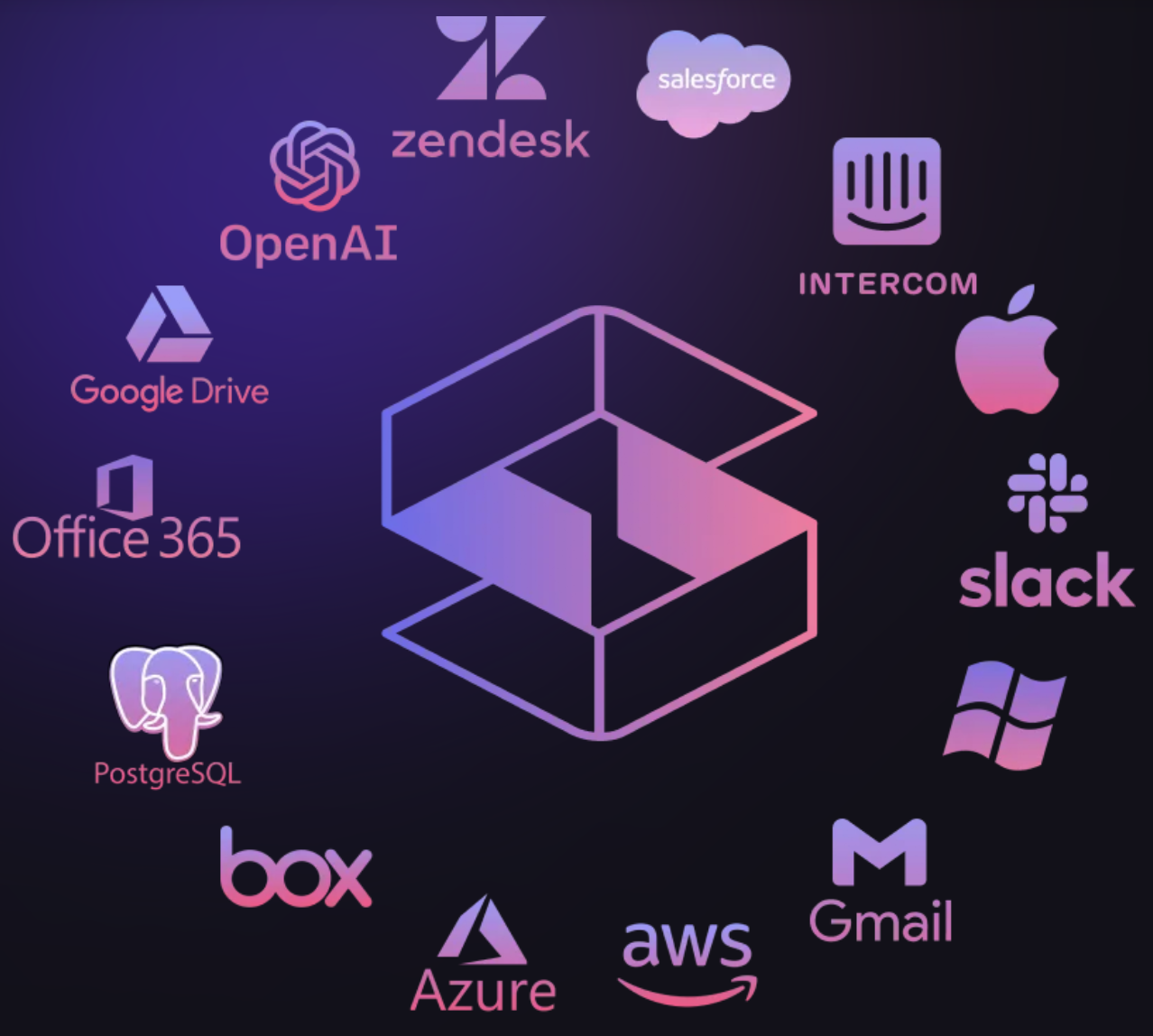
Customer records live in Salesforce. Employees collaborate in Slack and Microsoft Teams. Support agents work inside Zendesk and Intercom. Developers use GitHub and Jira. Teams upload files to Google Drive and SharePoint. Employees interact daily with ChatGPT, Microsoft Copilot, Claude, Gemini, and an increasing number of AI agents connected through MCP servers.
This explosion of data creates one fundamental challenge:
Do you actually know where your sensitive data is and whether it's protected?
That's exactly what a modern Data Loss Prevention (DLP) assessment is designed to answer.
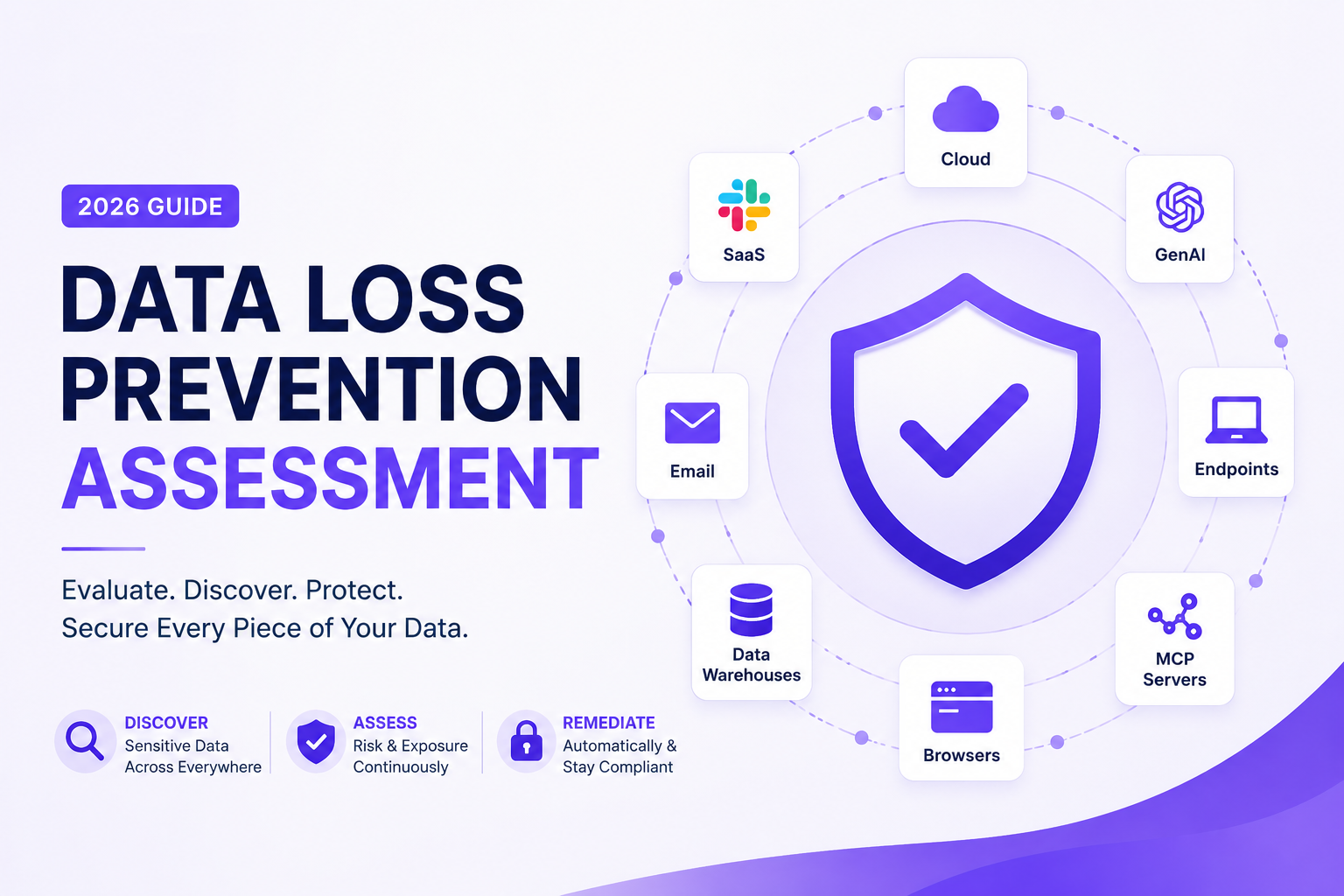
Unlike traditional assessments that focused primarily on endpoints and email, today's assessments evaluate your entire data estate—including SaaS applications, cloud storage, AI platforms, browsers, endpoints, and data warehouses—to identify security gaps before they become breaches.
A Data Loss Prevention assessment is a comprehensive evaluation of how your organization discovers, stores, shares, and protects sensitive information.
The goal isn't simply to find data.
It's to understand:
Modern assessments combine Data Security Posture Management (DSPM) with Data Loss Prevention (DLP), giving organizations both visibility into their data and the ability to automatically reduce risk.
A 2026 assessment should look far beyond traditional file servers.
Sensitive data now exists across:
If these environments aren't included in your assessment, you're likely missing significant areas of risk.
You can't protect what you don't know exists.
The first step is discovering sensitive information wherever it resides—not just structured databases, but documents, spreadsheets, PDFs, screenshots, customer conversations, tickets, emails, and AI prompts.
Modern platforms use machine learning and OCR to identify:
This provides a complete inventory of your sensitive information.
Once data is discovered, the next step is understanding how exposed it is.
Questions include:
Instead of simply detecting data, DSPM evaluates the overall security posture surrounding it.
Sensitive data rarely stays in one place.
A customer credit card may begin in Salesforce, appear in Slack, get copied into Zendesk, uploaded to Google Drive, and later shared with an AI assistant.
A modern assessment maps these movement patterns to identify unnecessary exposure and risky workflows before they become incidents.
Modern assessments should validate whether your organization is meeting requirements for regulations such as:
Instead of preparing for audits manually, organizations gain continuous visibility into where regulated data exists and how it is being protected.
Not every finding deserves immediate attention.
A mature assessment ranks risks based on:
This helps security teams focus on the highest-value remediation efforts first.

Organizations are often surprised by what assessments reveal.
Common findings include:
Many of these exposures exist for months—or even years—without being detected.
Finding sensitive data is only half the job.
The real value comes from reducing risk automatically.
Modern DLP platforms can take immediate action by:
Automated remediation dramatically reduces the time sensitive information remains exposed.
The rise of Generative AI has introduced entirely new data leakage risks.
Employees now paste confidential information into AI assistants, while AI agents connected through Model Context Protocol (MCP) servers can access documents, cloud storage, CRM systems, code repositories, and internal knowledge bases.
A modern DLP assessment should evaluate:
Without visibility into AI workflows, organizations are missing one of today's fastest-growing data exposure vectors.
Traditional assessments often end with a spreadsheet of recommendations.
Strac goes further by combining DSPM and DLP into a single platform that continuously discovers, monitors, and protects sensitive data across your environment.
Key capabilities include:
Rather than treating assessments as an annual exercise, Strac helps organizations continuously understand—and improve—their data security posture.
A Data Loss Prevention assessment is no longer just about checking whether sensitive files exist. It's about understanding where your organization's data lives, how it moves, who can access it, and whether it's continuously protected across SaaS, cloud, AI, browsers, endpoints, and emerging technologies like MCP. Organizations that combine DSPM with modern DLP gain the visibility needed to reduce risk before data leaks occur, improve compliance, and stay ahead of an increasingly complex threat landscape.
A traditional DLP assessment focuses on preventing sensitive data from leaving the organization through channels like email, endpoints, or file transfers. A DSPM (Data Security Posture Management) assessment goes further by continuously discovering sensitive data, identifying exposures, evaluating permissions, and monitoring data across SaaS applications, cloud storage, AI tools, and data warehouses. Modern organizations benefit most from combining DSPM and DLP into a single security strategy.
Annual assessments are no longer enough. Sensitive data is constantly created, shared, and moved across SaaS applications, cloud platforms, browsers, and AI tools. Organizations should continuously assess their data security posture to identify new exposures, monitor compliance, and remediate risks as they occur.
A comprehensive DLP assessment should identify any regulated or business-critical information, including:
Modern platforms use AI, machine learning, and OCR to detect both structured and unstructured sensitive data with greater accuracy than traditional regex-based approaches.
Absolutely. AI applications have become one of the fastest-growing sources of sensitive data exposure. Employees frequently paste confidential information into LLMs, while AI agents connected through MCP servers can access enterprise systems and sensitive documents. A modern DLP assessment should evaluate GenAI applications, browser activity, AI prompts, responses, and MCP-connected workflows alongside traditional SaaS and cloud environments.
The best solutions go beyond data discovery. Look for a platform that combines DSPM and DLP with continuous data discovery, AI-powered classification, real-time monitoring, automated remediation, compliance reporting, historical scanning, and coverage across SaaS, cloud, endpoints, browsers, email, GenAI applications, and MCP-connected systems. This provides complete visibility into your sensitive data while helping reduce risk automatically.
.avif)


.gif)


.webp)