August 21, 2026

min read
Zscaler vs Netskope: DLP, CASB & SASE Compared (2026)
Zscaler vs Netskope compared: Zscaler secures the connection, Netskope secures the data. DLP depth, CASB, architecture, and what a data-layer approach adds.
Last updated: July 2026
Zscaler secures the connection; Netskope secures the data. Both are cloud-proxy Security Service Edge (SSE) platforms — every request routes through the vendor’s point of presence for inspection before it reaches its destination. The difference is heritage and center of gravity:
There is a third question neither fully answers, and it is the one that matters most as work moves into SaaS apps and AI tools: what protects the sensitive data itself — at rest, in your SaaS, on endpoints, and inside AI prompts — rather than only the traffic passing through a proxy? More on that below.
| Dimension | Zscaler | Netskope |
|---|---|---|
| Core philosophy | Secure the connection (Zero-Trust proxy) | Secure the data (CASB-first) |
| Heritage | Web security, ZTNA, proxy | CASB, cloud DLP |
| Architecture | Cloud proxy — traffic terminates at nearest PoP | Cloud proxy on the NewEdge private network |
| DLP depth | Solid, part of the platform | Deeper — ML content inspection, strong on unstructured cloud data |
| CASB & SaaS visibility | Integrated, capable | Leading — API scanning of data at rest, shadow-IT discovery |
| Best fit | Large enterprises wanting pure zero-trust access | Cloud-first teams where DLP/CASB accuracy is critical |
| Trade-off | Traffic must route through the proxy (latency, TLS decryption) | Same inline-proxy model; heavier when full inspection is on |
The most important thing to understand about both platforms is that they are inline proxies. Every request from every device is routed to the vendor’s cloud, TLS is decrypted, inspection runs, and a fresh session is opened to the destination. That model is powerful for what it is built for — enforcing policy on traffic leaving the organization — and it is why both are leaders in the SASE and SSE markets.
It also defines the boundary of what they see: data in motion, through the proxy. Data sitting at rest in a Salesforce object, a support ticket, a SharePoint file, or a scanned attachment — and data an employee pastes into a personal ChatGPT tab on a network the proxy does not cover — is a different problem. Both vendors have added controls here, but it is adjacent to, not the center of, an inline-proxy architecture.
If the decision comes down to data protection specifically, the industry consensus is that Netskope has the edge. Its CASB origins give it deeper content inspection, machine-learning classification for unstructured cloud data, and API-based scanning of data already sitting in SaaS apps — not just traffic passing through. Zscaler’s DLP and CASB are genuinely capable and integrated into its Zero Trust Exchange, but they are one capability within a platform whose center of gravity is secure access, rather than the platform’s defining strength.
For a broader view of the category, see our guides to CASB solutions and cloud DLP solutions.
Zscaler and Netskope are the right shortlist when your problem is the network edge — controlling and inspecting traffic as it leaves the organization. But a growing share of data risk no longer crosses that edge in a way an inline proxy can catch:
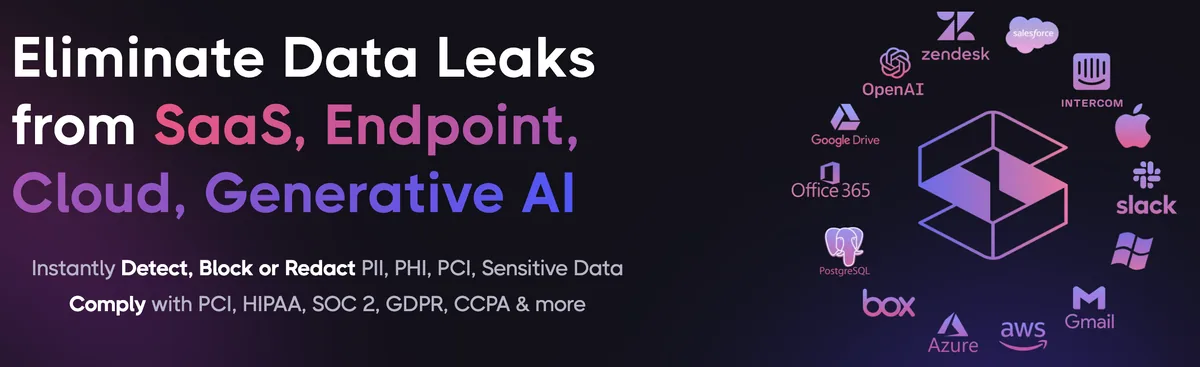
Strac operates at this data layer. It connects agentlessly to 60+ SaaS apps, AWS, Azure, and GCP, scans data at rest and in motion (including attachments via OCR), and remediates rather than only alerting — with browser and MCP coverage for the AI surfaces an inline proxy was never designed to govern. It is not a SASE replacement for Zscaler or Netskope; it is the data-security layer that sits alongside whichever edge platform you choose.
Whichever edge platform you choose, a data-layer control fills the gaps an inline proxy leaves — and the two work together rather than competing:

This is why a growing number of teams run a SASE platform for the network edge and a data-layer platform such as Strac for the data itself — across SaaS, cloud, endpoints, and AI.

For the network edge: Zscaler if you want the strongest pure zero-trust proxy for a large distributed workforce; Netskope if data protection and CASB depth are your first-order requirement. Both are strong; the choice follows your primary problem.
For the data itself — across SaaS, endpoints, and AI tools, with remediation and compliance evidence — that is a separate layer, and it is worth evaluating independently of the SASE decision.
Whether you lean toward Zscaler or Netskope, both are proxy-first architectures. They enforce beautifully on inline web and SaaS traffic and leave the same blind spot: local channels — USB, print, AirDrop, screenshots — and any activity that happens while a device is off the proxy path.
Where a legacy endpoint tool blocks bluntly or only alerts, Strac enforces content-aware policy across every exit on the machine — file opens and downloads, USB and removable-media writes, printing, screenshots, AirDrop, clipboard, browser uploads, and text typed directly into a GenAI prompt — each set independently to Block, Warn, or Audit on Mac and Windows.
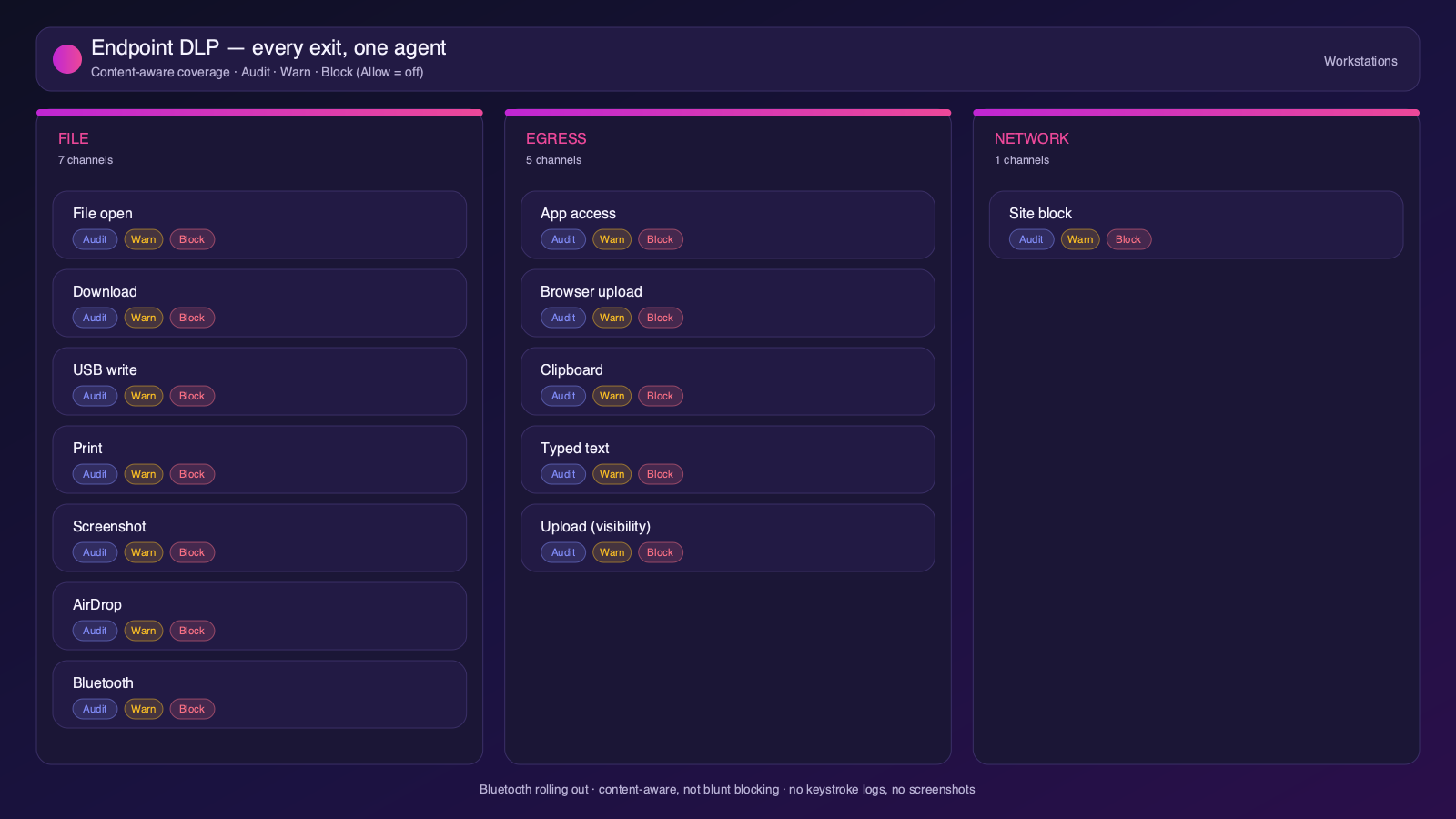
Strac's endpoint agent complements either choice. It inspects content on the device and enforces at every local exit, so regulated data is stopped even when it never crosses the network — with per-channel Block, Warn, or Audit.
The same agent adds Shadow AI detection and Data Lineage without keystroke logging or screenshots, and shares one policy with Strac's SaaS, browser, and MCP coverage. Instead of choosing which proxy to trust, you close the on-device gap both of them share.
A single lightweight Strac agent covers every exit on the device — downloads, USB and removable media, print, screenshot, AirDrop, clipboard, and browser upload. It classifies content locally, so a regulated file is stopped while everything benign keeps moving, with per-channel Block, Warn, or Audit and no kernel-heavy footprint or professional-services rollout.

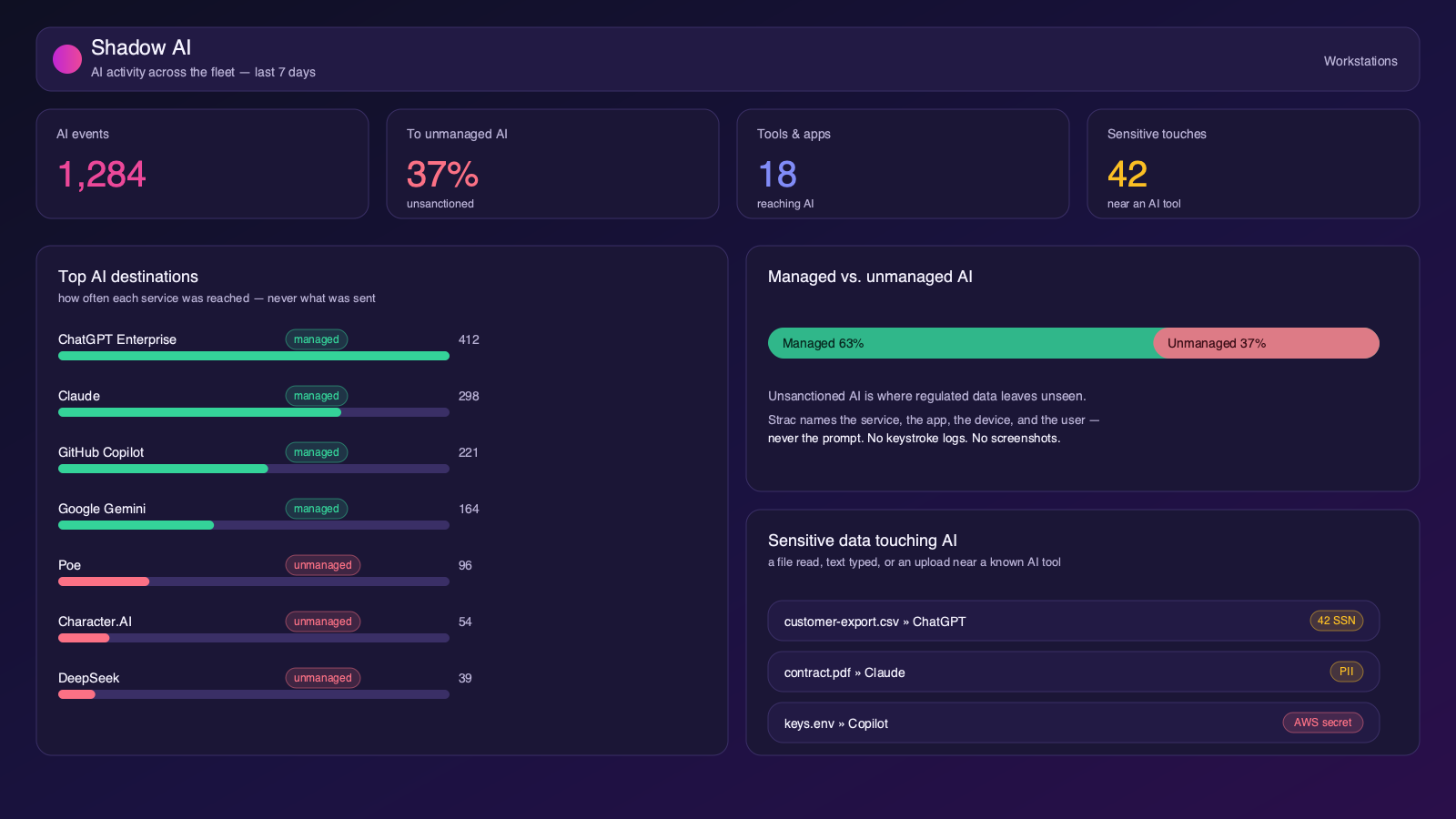
Beyond blocking a few known tools, Strac discovers the full picture of Shadow AI — the ChatGPT, Claude, Gemini, and agent usage happening across the org — and enforces on the data, not just the domain. Risky prompts are redacted or blocked in the browser, all without keystroke capture or screen recording.
Zscaler is built to secure the connection — a pure Zero-Trust proxy that inspects traffic leaving the organization. Netskope is built to secure the data, with CASB heritage that gives it deeper DLP and API-based scanning of data at rest in SaaS apps. Both are cloud-proxy SSE platforms; they differ in center of gravity, not in basic architecture.
For data loss prevention specifically, Netskope is generally considered stronger. Its CASB origins give it deeper content inspection, machine-learning classification for unstructured cloud data, and API scanning of data already resident in SaaS applications. Zscaler’s DLP is capable and integrated, but sits within a platform whose primary strength is secure access rather than data protection.
Largely yes — both are Security Service Edge (SSE) platforms delivering secure web gateway, CASB, ZTNA, and DLP through a cloud-proxy architecture. They compete directly in the SASE and SSE markets. The differences are in depth by capability: Zscaler leads on zero-trust proxy scale, Netskope on DLP and CASB accuracy.
Both offer controls here, but it is adjacent to their inline-proxy core. Sensitive data at rest in a Salesforce record or a support ticket, content inside scanned attachments, and prompts typed into a personal AI account are better addressed by an API-native data-security layer that scans and remediates the data directly — and covers the browser and AI-agent (MCP) surfaces a proxy does not.
It depends on where your risk lives. If it is traffic at the network edge, your SSE platform covers it. If it is sensitive data sitting in SaaS apps, on endpoints, and flowing into AI tools — and you need remediation such as redaction, masking, or vaulting plus compliance evidence — a dedicated data-security layer complements the edge platform rather than duplicating it.
.avif)


.gif)


.webp)