Data Detection and Response (DDR): What It Is & How It Works (2026)
Learn what Data Detection and Response (DDR) is and how Strac helps detect, classify, and remediate sensitive data across SaaS, cloud, endpoints, and GenAI in real time.
Data Detection and Response (DDR) helps organizations protect sensitive information by detecting threats in real-time, automating responses, and ensuring compliance with regulations like GDPR and HIPAA.
DDR is crucial for cybersecurity, offering real-time threat detection, swift responses, and regulatory compliance, reducing the risk of data breaches and privacy violations.
Strac enhances DDR by providing real-time monitoring, automated remediation, and seamless integration, helping organizations safeguard data and meet compliance standards efficiently.
DDR solutions focus on identifying data threats, responding quickly, and maintaining compliance, essential for minimizing financial losses and improving security posture.
DDR and Data Security Posture Management (DSPM) work together to protect data, with DDR focusing on immediate threats and DSPM on long-term risk management.
Data Detection and Response (DDR) continuously monitors sensitive data in motion and at rest, detects risky access or movement in real time, and automatically responds - alerting, blocking, redacting, or revoking - before data is exfiltrated.
DDR vs. DLP: legacy DLP mostly detects and alerts; DDR adds the automated response. DDR vs. DSPM: DSPM is proactive posture/discovery, DDR is real-time detect-and-act - you want both.
DDR shines where data actually leaks today: SaaS, cloud, endpoints, and GenAI tools like ChatGPT and Slack.
Strac delivers DDR and DSPM in one agentless platform - contextual ML + OCR detection across 191 data element types, with real-time redact/block/remediate.
Last updated: September 2026
Data detection and response (DDR) is a data security approach that continuously monitors sensitive data in motion and at rest, detects risky or anomalous access and movement in real time, and automatically responds — alerting, blocking, redacting, or revoking — before data is exfiltrated.
What it watches: sensitive data (PII, PHI, PCI, secrets) as it moves across SaaS, cloud, endpoints, and AI tools.
Detect + respond: DDR pairs real-time detection with automated action, not just logging or alerting after the fact.
How Strac does it: pre-built and custom detectors plus inline remediation (redact, block, delete, revoke) on every surface.
Data breaches and privacy violations are becoming alarmingly frequent, highlighting the urgent need for robust data protection strategies. Organizations must swiftly detect and respond to threats to safeguard sensitive information & maintain compliance with stringent regulations.
This raises an important question: What is Data Detection and Response (DDR)?
Strac addresses these challenges by offering comprehensive Data Detection and Response (DDR) solutions. With real-time monitoring, automated remediation, and seamless integration capabilities, Strac empowers organizations to protect their data effectively while ensuring compliance with standards like GDPR and HIPAA.
Data Detection and Response Explained
✨ Data Detection and Response Across Every Surface
DDR is only meaningful if it both sees and acts on data wherever that data actually moves. Strac runs detection and automated response together across every surface, pairing a historical discovery scan with real-time monitoring.
Strac detecting and responding to sensitive-data risk across SaaS, cloud, endpoint, and GenAI surfaces.
Surface
What DDR detects
Automated response
SaaS apps
Sensitive data shared, downloaded, or over-exposed
Redact, delete, revoke sharing, alert
Cloud stores
New or exposed sensitive objects
Redact, mask, quarantine, revoke access, alert
GenAI (browser, endpoint, MCP)
Regulated data in prompts, uploads, and agent calls
Redact, block, warn, revoke, alert
Endpoint (Mac, Windows)
Data leaving via file, USB, or app activity
Block, warn, encrypt, alert
Data Detection and Response (DDR) refers to a suite of technologies and practices designed to identify, monitor, and respond to data security threats in real-time. DDR solutions focus on the detection of anomalies or unauthorized access to sensitive data, followed by an appropriate response to mitigate risks.
This proactive approach is essential in today's digital landscape, where data breaches & privacy violations are increasingly common.
The Role of Data Detection and Response (DDR) in Cybersecurity
DDR plays a crucial role in cybersecurity by providing organizations with the ability to:
Detect Threats: Identify potential data breaches or unauthorized access swiftly.
Respond Effectively: Implement remediation actions to protect sensitive information.
Maintain Compliance: Assure adherence to regulatory standards such as GDPR, HIPAA, and PCI DSS.
By integrating DDR into their security frameworks, organizations can enhance their overall security posture & lower the risk of data loss.
✨ Why Do I Need Data Detection and Response (DDR)?
Organizations need DDR for several reasons:
Proactive Threat Management: DDR enables early detection of potential threats before they escalate into notable breaches.
Regulatory Compliance: Many industries require strict adherence to data protection regulations, which DDR helps facilitate.
Mitigating Financial Losses: By responding quickly to incidents, organizations can minimize the financial impact associated with data breaches.
What is Data Detection and Response (DDR)?: Strac Alert GDrive External File Sharing
DDR's Role in Mitigating Data Privacy Violations
DDR is integral in preventing data privacy violations by:
Monitoring Data Access: Continuous monitoring helps detect unauthorized access attempts.
Automated Responses: Implementing automated responses can quickly neutralize threats, such as blocking access or alerting security teams.
Data Classification: By classifying sensitive data, organizations can prioritize protection efforts based on the level of risk associated with different types of data.
Improving DSPM Solutions with Dynamic Monitoring
Dynamic monitoring enhances Data Security Posture Management (DSPM) by providing real-time visibility into data access patterns and potential vulnerabilities. This allows organizations to:
Identify Risks Promptly: Quickly spot unusual activities that may indicate a security threat.
Adjust Security Policies: Adapt policies based on current threat landscapes and data usage trends.
Strengthen Compliance Efforts: Ensure ongoing adherence to regulatory requirements through continuous oversight.
The Four Components of Data Detection & Response Solutions
Effective DDR solutions typically include four key components:
Data Discovery: Identifying where sensitive data resides within an organization.
Monitoring: Continuously observing access patterns and user behaviors.
Incident Response: Implementing actions to mitigate identified threats.
Reporting: Providing insights and analytics on data security incidents for future improvements.
What is DDR in Database?
In the context of databases, DDR refers specifically to the practices and tools used to monitor database activity for unauthorized access or anomalies. This includes:
Real-time Monitoring: Tracking database queries and user activities continuously.
Access Control Management: Ensuring only authorized users can access sensitive database information.
Audit Trails: Maintaining logs of all database interactions for compliance and forensic purposes.
✨ Key Benefits and Drawbacks of DDR
Benefits
Enhanced Security Posture: Proactive detection reduces the likelihood of successful breaches.
Improved Incident Response Times: Automated systems can respond faster than manual processes.
What is Data Detection and Response (DDR)?: Strac Alert Sharepoint External File Sharing
Drawbacks
Cost Implications: Implementing comprehensive DDR solutions can be expensive.
Complexity in Integration: Integrating DDR with existing systems may require significant effort.
False Positives: Automated systems may generate alerts for benign activities, leading to alert fatigue.
What is Important to Look for in a Data Detection and Response (DDR) Solution?
When selecting a DDR solution, consider the following features:
Real-time Monitoring Capabilities
Integration Flexibility with Existing Systems
Comprehensive Reporting Tools
User-friendly Interface for Security Teams
✨ What to Look for in a DDR Product
Key considerations when evaluating a DDR product include:
Scalability: Ability to grow with your organization’s needs.
Customization Options: Flexibility in configuring alerts and responses.
Integration with Other Security Tools: Compatibility with existing cybersecurity infrastructure.
Future of Data Detection and Response
The future of DDR will likely involve:
Increased Automation: More advanced AI-driven solutions that automate detection and response processes further.
Integration with Cloud Security Solutions: As more organizations move to cloud environments, DDR will evolve to address cloud-specific threats effectively.
How Does Data Detection and Response (DDR) Fit into a Cloud Data Security Platform?
In cloud environments, DDR integrates by providing:
Real-time Monitoring Across Cloud Services: Ensuring that sensitive data remains protected regardless of where it lives.
What is the Difference Between Data Detection & Response (DDR) and Other TDIR Solutions like EDR and XDR?
Data Detection and Response (DDR) focuses on identifying and responding to data-specific threats, primarily concerning sensitive information. It is designed to monitor data access patterns, detect anomalies, and implement remediation actions when unauthorized access occurs.
Endpoint Detection and Response (EDR), on the other hand, is concentrated on endpoint devices such as laptops, desktops, and servers. EDR solutions track endpoint activities to identify potential threats, isolate affected devices, and respond to incidents at the endpoint level.
Extended Detection and Response (XDR) provides a broader approach by integrating data from multiple security layers—such as network, endpoint, server, and email security—into a unified platform. This allows for more complete threat detection and response across an organization’s entire security landscape.
Scope: DDR: Limited to data. EDR: Focused on endpoints. XDR: Comprehensive across multiple layers.
Response Mechanism: DDR: Automated remediation actions for data breaches. EDR: Endpoint isolation and threat containment. XDR: Unified response across systems for a coordinated approach.
What is the Difference Between Data Detection & Response (DDR) and Data Security Posture Management (DSPM)?
Data Detection and Response (DDR) & Data Security Posture Management (DSPM) are two distinct approaches to data security, each with its own focus and methodology.
Data Detection and Response (DDR)
DDR is a reactive strategy that emphasizes:
Real-Time Monitoring: Continuously tracks data activities to identify suspicious behavior.
Threat Detection: Uses analytics and machine learning to spot anomalies indicating potential breaches.
Automated Response: Initiates immediate actions, such as blocking access, upon detecting threats.
In essence, DDR focuses on actively identifying and responding to data threats as they occur.
Data Security Posture Management (DSPM)
DSPM takes a proactive approach by:
Security Assessment: Evaluating the organization’s overall data security measures.
Vulnerability Identification: Finding gaps in security and prioritizing remediation efforts.
Long-Term Strategy: Aiming to improve security posture over time through best practices.
DSPM is about assessing and managing the overall security landscape to prevent incidents before they happen.
Strac provides a robust framework for enhancing Data Detection and Response (DDR) capabilities through several key features:
GenAI and Browser Protection: Strac extends DDR into GenAI workflows and browser activity. It can detect, block, or redact sensitive data in tools like ChatGPT, Gemini, and Copilot, ensuring employees don’t accidentally leak PII, PCI, or confidential data into AI systems.
👉 Read our blog on AI DLP to learn how AI DLP prevents sensitive data exposure in ChatGPT, Claude, Copilot, Gemini, and other AI applications.
Automated Remediation (Not Just Alerts): When risk is detected, Strac takes action instantly. It can redact, mask, revoke access, delete, block, or alert based on policy. This inline remediation is critical; detection without action leaves gaps, while Strac closes them in real time.
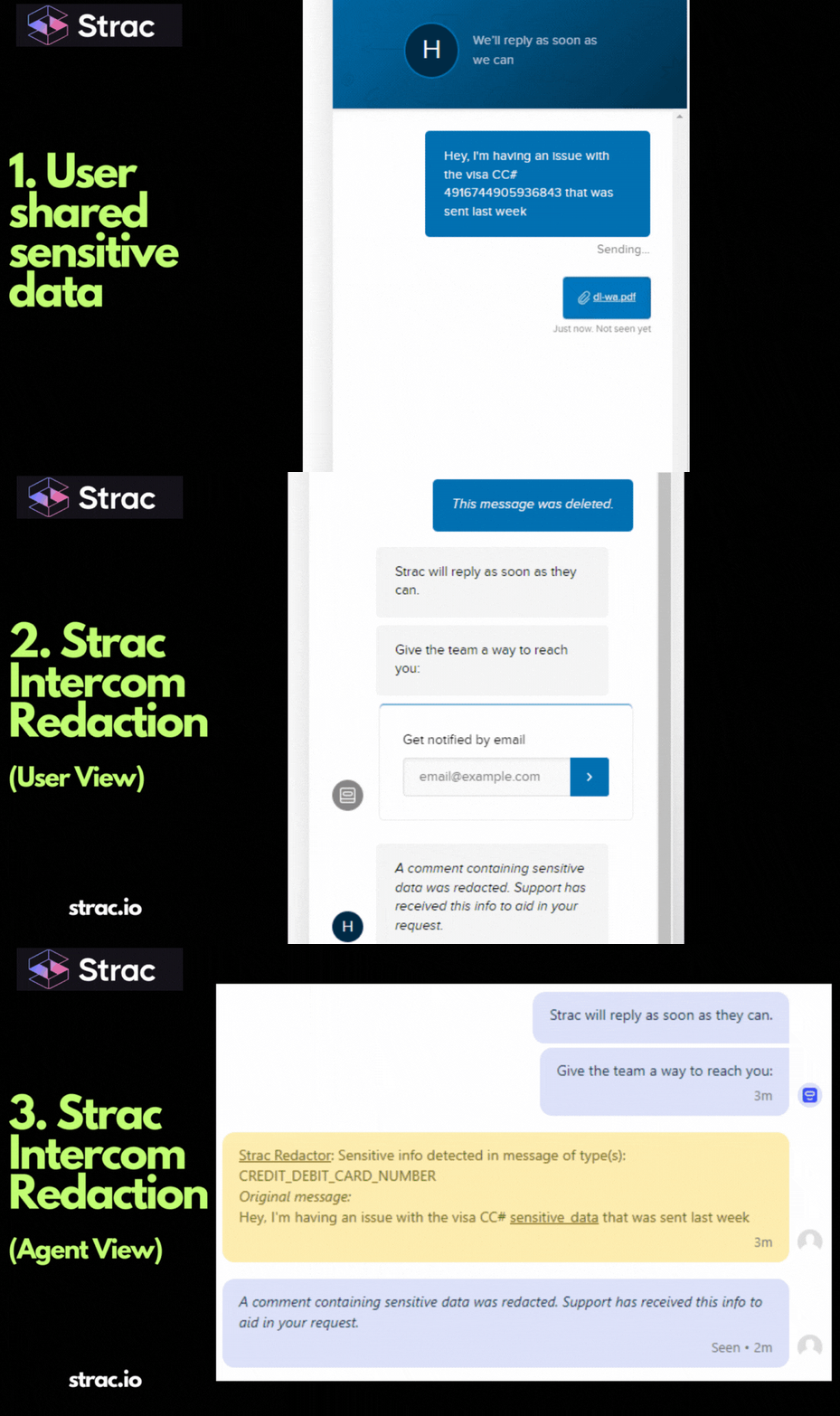
Inline Redaction Across All Data Types: Strac can automatically redact sensitive data inside messages and files, including PDFs, images, screenshots, Word docs, and spreadsheets. This works across chat tools, support tickets, and attachments; not just plain text.
Sensitive Data Discovery and Classification: Strac automatically discovers and classifies sensitive data across SaaS apps (Slack, Gmail, Google Drive, Salesforce, Zendesk, Notion), cloud (AWS S3, Azure, databases), endpoints, and file systems. It works across structured and unstructured data, including files, chats, tickets, and attachments. Using contextual ML (not just regex), it delivers high accuracy with low false positives, so teams can prioritize real risks instead of noise.
This eliminates blind spots and removes the need for multiple disconnected tools.
Custom Detection and AI Data Elements: Strac supports out-of-the-box detectors for PII, PHI, PCI, and compliance frameworks, plus custom data definitions. You can define organization-specific sensitive data and enforce policies globally.
Strac AI Data Elements
Compliance-Ready by Default: Strac helps enforce compliance with GDPR, HIPAA, PCI DSS, SOC 2, ISO 27001, CCPA, and NIST through built-in templates, audit trails, and automated enforcement.
Fast, Agentless Deployment: Strac is agentless and deploys in minutes, with minimal friction for security and engineering teams. No heavy infrastructure, no long rollout cycles; immediate visibility and control.
API and Integration Flexibility: Strac provides APIs and deep integrations, allowing teams to programmatically detect and remediate sensitive data across custom workflows and applications.
Proven at Scale: Strac is already deployed in production at companies like UiPath and others, handling real-world sensitive data across high-volume environments.
Conclusion
In conclusion, understanding What is Data Detection and Response (DDR) is essential for modern organizations to safeguard sensitive information against evolving cyber threats. By focusing on real-time monitoring, automated responses, and regulatory compliance, DDR solutions help minimize risks and protect data integrity.
Strac stands out as a comprehensive DDR solution, offering features such as sensitive data discovery, real-time monitoring, automated remediation, and integration with existing security tools. By leveraging Strac, organizations can enhance their security posture, ensure compliance, & build trust with customers by effectively protecting their valuable data assets.
🌶️Spicy FAQs on Data Detection and Response (DDR)
1. What makes Data Detection and Response (DDR) different from traditional DLP tools?
Most traditional DLP tools stop at detection and generate alerts; Data Detection and Response (DDR) goes further by automatically acting on threats in real time. With platforms like Strac, sensitive data is not just identified; it is instantly redacted, blocked, or remediated, closing the gap between detection and protection.
2. Can DDR actually prevent data leaks in tools like Slack, Gmail, or ChatGPT?
Yes; modern DDR solutions like Strac are built for SaaS and GenAI environments, where most data leaks happen today. They can detect and block or redact sensitive data in real time across chat, email, cloud storage, and AI tools, preventing exposure before it happens.
3. Why do most DDR tools fail in real-world environments?
Many DDR tools rely heavily on regex and static rules, which leads to high false positives and missed risks. Strac solves this with contextual machine learning and OCR, enabling accurate detection across files, images, and unstructured data with far less noise.
4. Is DDR enough on its own, or do I still need DSPM?
DDR alone is not enough. DDR is reactive (detect + respond), while DSPM is proactive (discover + assess risk). Strac combines DDR + DSPM in one platform, so you can find, monitor, and fix sensitive data risks across your entire data estate without tool sprawl.
5. How fast can a company actually deploy a DDR solution like Strac?
Unlike legacy tools that take months, Strac is agentless and deploys in minutes. Teams can start scanning, detecting, and remediating sensitive data almost immediately; without heavy infrastructure or complex setup.
What makes Data Detection and Response (DDR) different from traditional DLP tools?
Traditional DLP tools mostly stop at detection and generate alerts. DDR goes further by automatically acting on threats in real time - with platforms like Strac, sensitive data is instantly redacted, blocked, or remediated, closing the gap between detection and response.
Can DDR prevent data leaks in tools like Slack, Gmail, or ChatGPT?
Yes. Modern DDR solutions like Strac are built for SaaS and GenAI environments where most leaks happen today. They detect and block or redact sensitive data in real time across chat, email, cloud storage, and AI tools - before exposure happens.
Why do most DDR tools fail in real-world environments?
Many DDR tools rely on regex and static rules, which causes high false positives and missed risks. Strac uses contextual machine learning and OCR for accurate detection across files, images, and unstructured data with far less noise.
Is DDR enough on its own, or do I still need DSPM?
DDR alone is not enough. DDR is reactive (detect + respond) while DSPM is proactive (discover + assess risk). Strac combines DDR and DSPM in one platform, so you can find, monitor, and fix sensitive-data risks across your entire estate without tool sprawl.
How fast can a company deploy a DDR solution like Strac?
Unlike legacy tools that take months, Strac is agentless and deploys in minutes. Teams can start scanning, detecting, and remediating sensitive data almost immediately - without heavy infrastructure or complex setup.
Discover & Protect Data on SaaS, AI, MCP, Endpoints & Cloud
Strac provides end-to-end data loss prevention for all SaaS and Cloud apps. Integrate in under 10 minutes and experience the benefits of live DLP scanning, live redaction, and a fortified SaaS environment.


.webp)













.avif)




.gif)
