SOC 3 vs SOC 2 (and SOC 1): The Differences Explained (2026)
SOC 3 vs SOC 2 explained: same audit, different report. SOC 2 is the detailed, NDA-restricted report; SOC 3 is the public trust seal. Plus where SOC 1 fits and which you actually need in 2026.
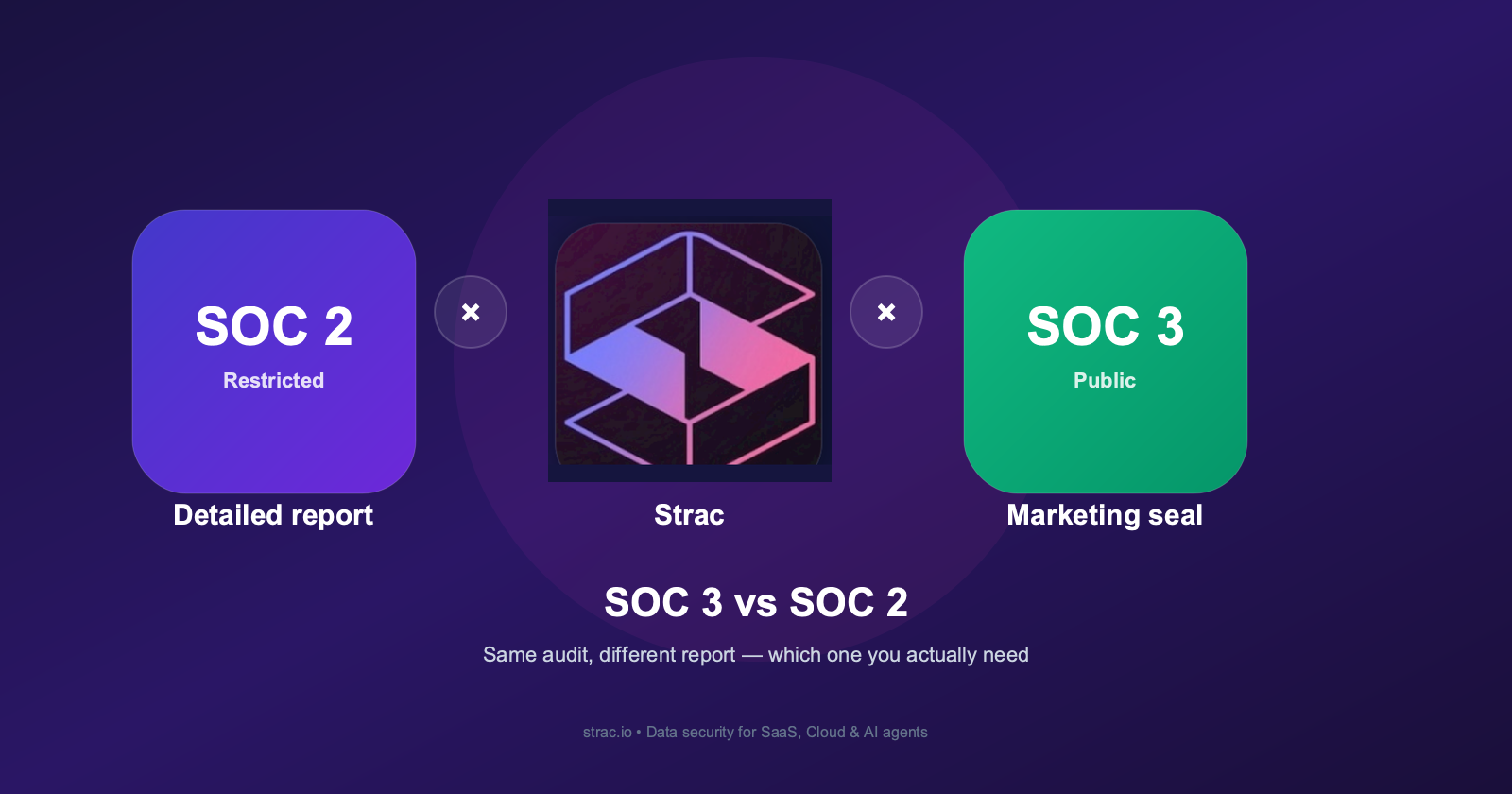
Same audit, different report. SOC 2 and SOC 3 are produced from the same examination against the AICPA Trust Services Criteria. The difference is the deliverable: SOC 2 is a detailed, restricted-use report; SOC 3 is a short, public-facing summary you can post on your website.
SOC 2 contains the auditor’s opinion, your system description, the controls tested, and (for Type II) the test results — shared under NDA with customers and prospects who ask.
SOC 3 contains the opinion and a system overview, with no control detail or test results — a marketing-grade seal of trust anyone can download.
SOC 1 is a different beast: it covers controls over financial reporting, for customers’ auditors, not security.
What most SaaS needs: a SOC 2 Type II. Add a SOC 3 if you want a public trust badge. Strac Comply automates the evidence for both.
✨ SOC 3 vs SOC 2: The Short Answer
If you only remember one thing: SOC 2 and SOC 3 come from the same audit. An auditor examines your security controls against the AICPA’s Trust Services Criteria once, then can issue two different reports from that single engagement. SOC 2 is the detailed, confidential version for customers who need proof. SOC 3 is the stripped-down, public version you can hand to anyone — a seal, not a dossier.
So “SOC 3 vs SOC 2” is less a choice between two audits and more a choice about how much detail you publish. Here is the one-line distinction before we go deeper:
SOC 2 = detailed report, restricted distribution (NDA), read by security teams and procurement.
SOC 3 = short summary, public distribution, used in marketing and on your trust page.
What Is SOC 2?
SOC 2 (System and Organization Controls 2) is an examination report defined by the AICPA that evaluates a service organization’s controls against five Trust Services Criteria: Security, Availability, Processing Integrity, Confidentiality, and Privacy. Security (the Common Criteria) is mandatory; the other four are optional based on what you commit to.
It comes in two flavors:
SOC 2 Type I — tests whether your controls are designed appropriately at a single point in time.
SOC 2 Type II — tests whether those controls operated effectively over a period (typically 3–12 months). Most enterprise buyers require Type II.
The SOC 2 report itself is detailed: the auditor’s opinion, a management assertion, a full description of your system, the specific controls tested, and — for Type II — the tests performed and their results. Because it exposes how your security actually works, it is a restricted-use document, shared under NDA. For the full breakdown of platforms, criteria, and the Type I vs Type II decision, see our SOC 2 compliance software guide.
What Is SOC 3?
SOC 3 is a general-use report produced from the same Trust Services Criteria examination as a SOC 2 Type II. The crucial difference: it omits the detailed system description, the specific controls, and the test results. What remains is the auditor’s opinion and a brief overview — enough to prove you passed, without revealing how your controls are built.
Because there is nothing sensitive to protect, SOC 3 can be published freely: posted on your website, linked from your trust center, included in sales decks, and downloaded by anyone. Think of it as the public trust badge version of your SOC 2. You cannot get a meaningful SOC 3 without doing the underlying SOC 2 Type II work first — the audit is the same; only the output you share with the world differs.
Where SOC 1 Fits (SOC 1 vs SOC 2 vs SOC 3)
People searching “SOC 3 vs SOC 2” often also wonder about SOC 1. SOC 1 is not a security report at all. It covers Internal Controls over Financial Reporting (ICFR) — relevant when your service could affect your customers’ financial statements (think payroll processors, payment platforms, or claims administrators). Its audience is your customers’ financial auditors, governed by the SSAE 18 / ISAE 3402 standards.
SOC 1 → financial reporting controls, for auditors.
SOC 2 → security/availability/privacy controls, for customers and security teams (restricted).
Customers, prospects, security & procurement teams
General public / anyone
Distribution
Restricted (NDA)
Restricted (NDA)
Public — post it anywhere
Level of detail
Detailed controls & tests
Detailed controls & tests
Opinion + overview only
Type I / Type II
Yes
Yes
Period-based (like Type II)
Best for
Fintech, payroll, payments
Almost every B2B SaaS
A public trust badge on top of SOC 2
Which Report Do You Actually Need?
You sell B2B SaaS and enterprises ask for proof of security. You need SOC 2 Type II. This is the default for almost every software company.
You want a public trust signal without handing out your detailed report. Add a SOC 3 on top of your SOC 2 — it’s a small incremental step since the audit is shared.
Your service touches customers’ financial statements. You may also need SOC 1, in addition to (not instead of) SOC 2.
You also sell internationally or want a certification, not a report. Consider ISO 27001 alongside SOC 2 — the control overlap is significant and a good platform maps both at once.
✨ How Strac Comply Gets You SOC 2 (and a SOC 3) Faster
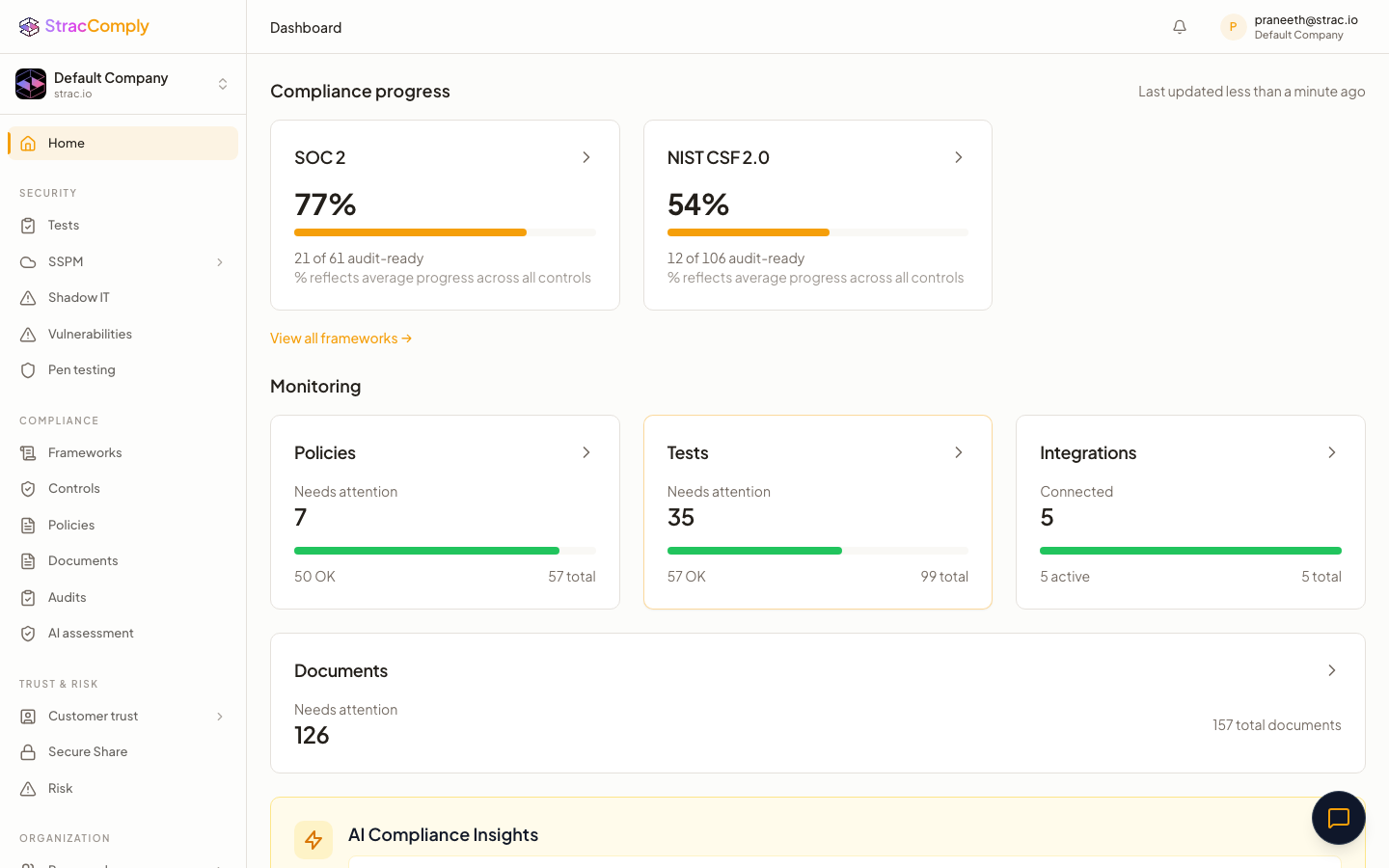
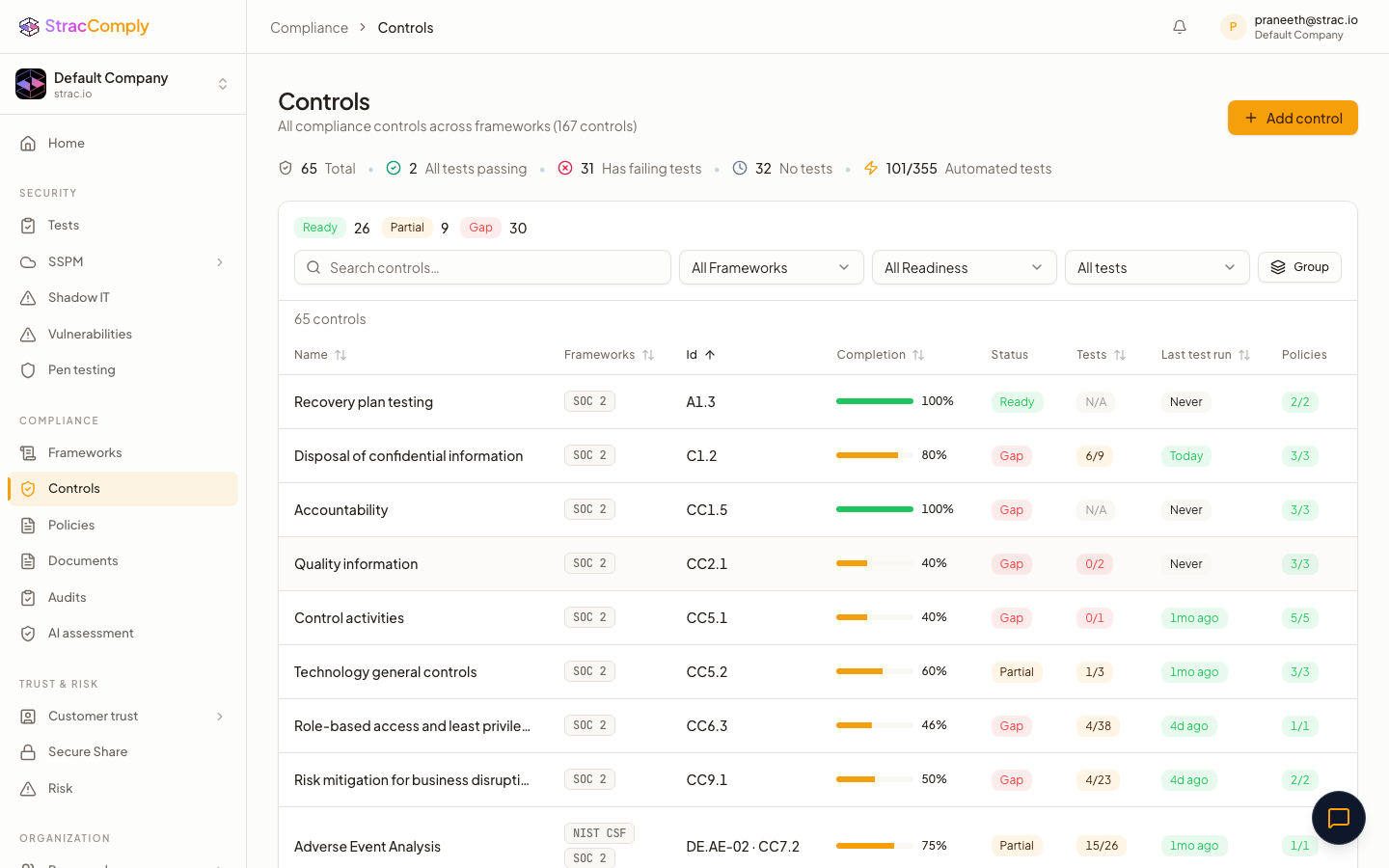
Whichever report you need, the hard part is the same: continuously collecting evidence that your controls work. Strac Comply automates that evidence layer across SOC 2, ISO 27001, HIPAA, GDPR, and PCI DSS — mapping live tests to each control so a Type II observation window builds itself instead of being reconstructed in spreadsheets.
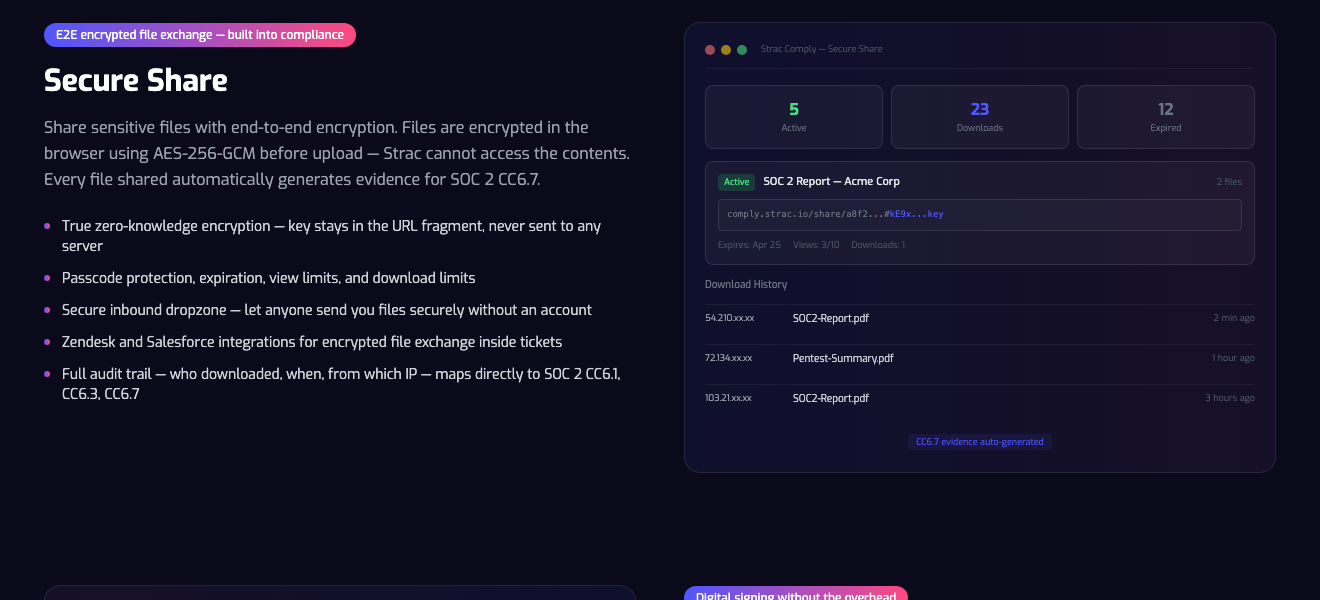
And because Strac Comply is built on Strac’s data security platform, the controls aren’t just documented — they’re enforced. Sensitive data is discovered, classified, and protected across SaaS, cloud, endpoint, and AI, so CC6.7 (data protection) is continuously true, not screenshotted once a year. When the audit is done, share the SOC 2 report securely and publish the SOC 3 from your trust center:
Ready to start your SOC 2 (and SOC 3)?
Strac Comply is AI-native compliance automation built for SOC 2, ISO 27001, HIPAA, GDPR, and PCI DSS — with continuous DLP-grade evidence across every SaaS, cloud, endpoint, and AI surface. The same platform that protects your data proves your compliance.
Effectively yes. SOC 3 is produced from the same Trust Services Criteria examination as a SOC 2 Type II. The auditor simply issues a second, general-use report that omits the system description, control detail, and test results. You can’t get a credible SOC 3 without doing the SOC 2 work first.
Can I get SOC 3 without SOC 2?
Not in any meaningful way. The SOC 3 opinion rests on the same examination that produces a SOC 2 Type II. In practice you complete the SOC 2 engagement and request the SOC 3 as an additional deliverable from the same auditor.
Do I need SOC 1, SOC 2, or SOC 3?
Most B2B SaaS companies need SOC 2 Type II. Add SOC 3 if you want a public trust badge. You only need SOC 1 if your service affects your customers’ financial reporting. They are not mutually exclusive — some companies hold all three.
Is a SOC 3 report public?
Yes. SOC 3 is a general-use report with no confidential control detail, so you can publish it on your website, link it from your trust center, and include it in sales materials freely — unlike SOC 2, which is shared under NDA.
What’s the difference between SOC 2 Type II and SOC 3?
Same audit period and criteria; different audience and detail. SOC 2 Type II gives the full control list and test results to a restricted audience under NDA. SOC 3 gives only the opinion and an overview to the general public. Think detailed report vs public seal.
Is SOC 3 the same audit as SOC 2?
Effectively yes. SOC 3 is produced from the same Trust Services Criteria examination as a SOC 2 Type II; the auditor issues a second general-use report that omits the system description, control detail, and test results. You can't get a credible SOC 3 without doing the SOC 2 work first.
Can I get SOC 3 without SOC 2?
Not meaningfully. The SOC 3 opinion rests on the same examination that produces a SOC 2 Type II. In practice you complete the SOC 2 engagement and request the SOC 3 as an additional deliverable from the same auditor.
Do I need SOC 1, SOC 2, or SOC 3?
Most B2B SaaS companies need SOC 2 Type II. Add SOC 3 for a public trust badge. You only need SOC 1 if your service affects customers' financial reporting. They are not mutually exclusive.
Is a SOC 3 report public?
Yes. SOC 3 is a general-use report with no confidential control detail, so you can publish it on your website, trust center, and sales materials freely — unlike SOC 2, which is shared under NDA.
What's the difference between SOC 2 Type II and SOC 3?
Same audit period and criteria; different audience and detail. SOC 2 Type II gives the full control list and test results to a restricted NDA audience. SOC 3 gives only the opinion and overview to the general public — a detailed report vs a public seal.
Discover & Protect Data on SaaS, AI, MCP, Endpoints & Cloud
Strac provides end-to-end data loss prevention for all SaaS and Cloud apps. Integrate in under 10 minutes and experience the benefits of live DLP scanning, live redaction, and a fortified SaaS environment.


.webp)



.avif)



.gif)
