Securing Sensitive Data in the Cloud: A Guide to SaaS Data Loss Prevention
Learn how modern SaaS Data Loss Prevention (DLP) protects sensitive data across cloud apps, AI tools, browsers, and endpoints. Discover SaaS DLP best practices, common risks, and how Strac helps organizations prevent data leaks with unified DSPM and DLP.
· SaaS applications have become the primarylocation where organizations create, share, and store sensitive business data.
· Traditional DLP solutions weren't designed fortoday's cloud-first, AI-powered workplace, leaving major security gaps acrossSaaS apps, browsers, endpoints, and AI assistants.
· Modern SaaS DLP combines Data SecurityPosture Management (DSPM) with real-time Data Loss Prevention to discover,classify, monitor, and remediate sensitive data before it leaks.
· Organizations should prioritize content-awaredetection, AI protection, inline remediation, and broad SaaS integrationsinstead of relying solely on native security features.
· Strac helps organizations secure sensitive dataacross SaaS applications, cloud storage, AI tools, browsers, and endpoints withagentless deployment, real-time remediation, and industry-leading detectionaccuracy.
The modern workplace no longer lives inside a corporate network.
Customer records sit inside Salesforce. Support conversations happen in Zendesk. Product roadmaps live in Notion. Engineers collaborate in GitHub. Employees upload files to Google Drive, communicate through Slack, and increasingly use ChatGPT, Claude, Microsoft Copilot, and dozens of AI applications to accelerate their work.
While SaaS applications have transformed productivity, they've also created an entirely new data security challenge.
Sensitive information now moves continuously between cloud applications, browsers, AI assistants, employee devices, contractors, and third-party integrations. Every collaboration, upload, prompt, and shared document becomes another opportunity for confidential data to escape organizational control.
This is why SaaS Data Loss Prevention (SaaS DLP) has become one of the most important components of a modern cybersecurity strategy.
🎥 Why SaaS Data Protection Looks Different in 2026
Just a few years ago, protecting SaaS data primarily meant monitoring cloud storage and email.
Today, organizations face a much broader attack surface.
Sensitive information is constantly moving between:
SaaS business applications
Cloud storage platforms
AI assistants and LLMs
Browser sessions
Customer support platforms
Developer tools
Endpoint devices
Internal APIs and automation workflows
At the same time, employees expect to work from anywhere using personal devices, contractors, remote teams, and AI-powered productivity tools.
Traditional perimeter security simply wasn't designed for this reality.
Modern SaaS security focuses on protecting the data itself, regardless of where it travels.
The Biggest SaaS Data Security Risks
As organizations adopt hundreds of cloud applications, security teams lose visibility into where sensitive information actually exists.
Some of today's biggest risks include:
Accidental Data Exposure
An employee uploads a spreadsheet containing customer PII into an AI chatbot for analysis.
A support agent pastes payment information into Slack.
A developer shares production credentials inside Jira.
None of these actions are malicious—but all create serious security risks.
Shadow SaaS and Shadow AI
Employees regularly adopt new SaaS and AI applications without IT approval.
These unsanctioned tools often bypass existing security controls, creating blind spots where confidential information can be stored or shared without oversight.
Overshared Cloud Data
Public links, excessive permissions, forgotten shared folders, and third-party integrations frequently expose sensitive business data to unintended audiences.
Without continuous monitoring, these risks often remain undetected for months.
Insider Threats
Whether intentional or accidental, employees already have legitimate access to sensitive information.
Modern DLP focuses on preventing risky actions before confidential data leaves approved environments.
Regulatory Compliance
Organizations handling healthcare, financial, payment, or customer information must comply with regulations like GDPR, HIPAA, PCI DSS 4.0, SOC 2, ISO 27001, and NIST.
Maintaining compliance across dozens of SaaS platforms requires continuous visibility and automated policy enforcement
Why Native SaaS Security Isn't Enough
Most SaaS vendors include basic security controls such as encryption, role-based access, and audit logs.
While valuable, these capabilities weren't built to prevent sensitive data loss across an organization's entire SaaS ecosystem.
Native controls typically cannot:
Discover sensitive data across multiple SaaS platforms
Apply consistent security policies everywhere
Inspect images, PDFs, Office documents, and attachments
Detect confidential information using AI and machine learning
Redact sensitive content automatically
Monitor AI interactions
Protect data moving between applications
As organizations adopt more SaaS applications, relying on dozens of separate security tools becomes difficult to manage.
Instead, many organizations are moving toward centralized SaaS DLP platforms that provide consistent protection across their entire cloud environment.
✨ Building a Modern SaaS DLP Strategy
Effective SaaS data protection goes far beyond blocking file downloads.
A modern strategy should include several key capabilities.
Discover Sensitive Data
You can't protect what you can't find.
Automatically discovering sensitive information across cloud applications helps security teams understand exactly where customer records, financial information, intellectual property, healthcare records, and confidential business documents reside.
Classify Information
Not every file requires the same level of protection.
Automatically classifying data enables organizations to apply different policies for PII, PCI, PHI, source code, financial records, contracts, or internal documents.
Monitor Data Movement
Organizations need continuous visibility into how sensitive information moves between applications, users, devices, and AI platforms.
Real-time monitoring makes it possible to identify risky behavior before it becomes a breach.
Enforce Policies Automatically
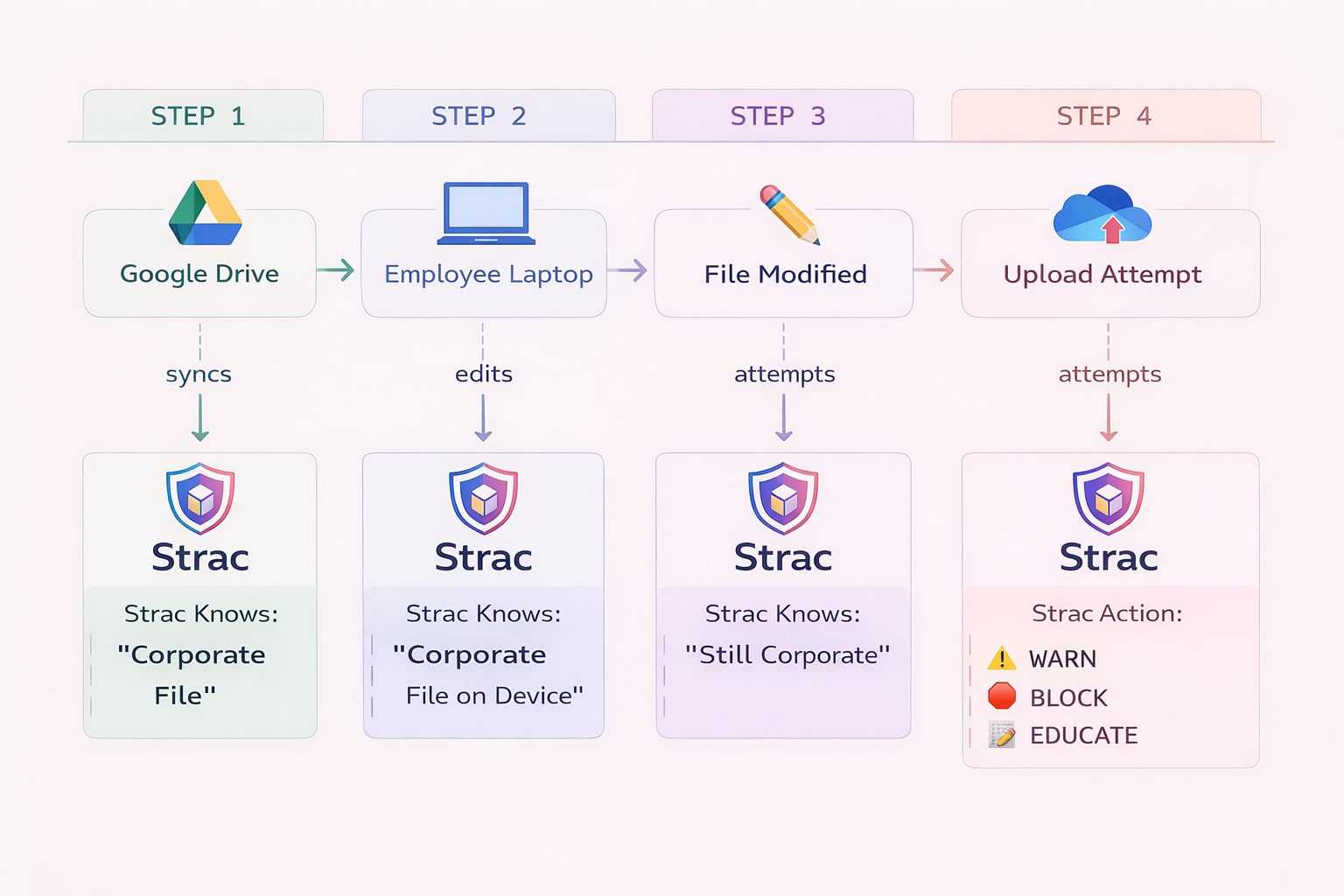
Modern DLP should respond immediately when sensitive data is detected.
Instead of simply generating alerts, organizations increasingly expect automated actions such as:
Redacting sensitive information
Masking confidential fields
Blocking unauthorized sharing
Quarantining files
Encrypting sensitive documents
Coaching users before risky actions occur
Automation significantly reduces both response time and operational workload.
🎥How Strac Modernizes SaaS Data Protection
Traditional DLP products were built around networks, email gateways, and endpoint agents.
Its unified DSPM and DLP platform automatically discovers, classifies, monitors, and protects sensitive information across SaaS applications, cloud storage, AI platforms, browsers, APIs, and endpoints from a single platform.
Instead of relying on legacy regex rules alone, Strac uses content-aware machine learning and OCR to accurately identify sensitive information inside structured and unstructured data—including PDFs, images, Office documents, spreadsheets, ZIP archives, attachments, and customer conversations.
When sensitive information is detected, organizations can automatically:
Redact confidential content
Mask sensitive fields
Block unauthorized actions
Delete or quarantine files
Apply custom remediation policies
Guide users with real-time coaching
Strac also helps organizations secure emerging AI workflows by providing:
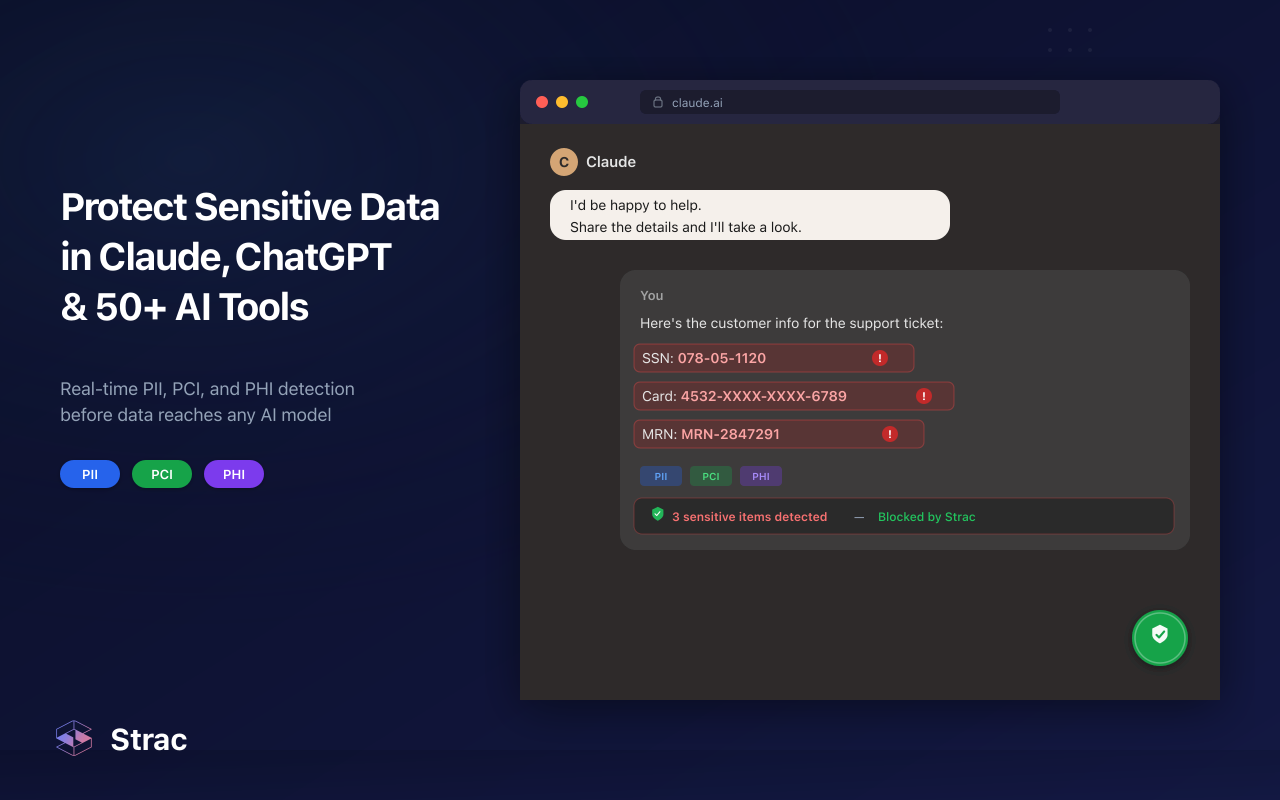
GenAI DLP:Detect and prevent sensitive data from being exposed through ChatGPT, Claude, Microsoft Copilot, Gemini, and other AI applications.
👉 Read our blog on AI DLP to learn how AI DLP prevents sensitive data exposure in ChatGPT, Claude, Copilot, Gemini, and other AI applications.
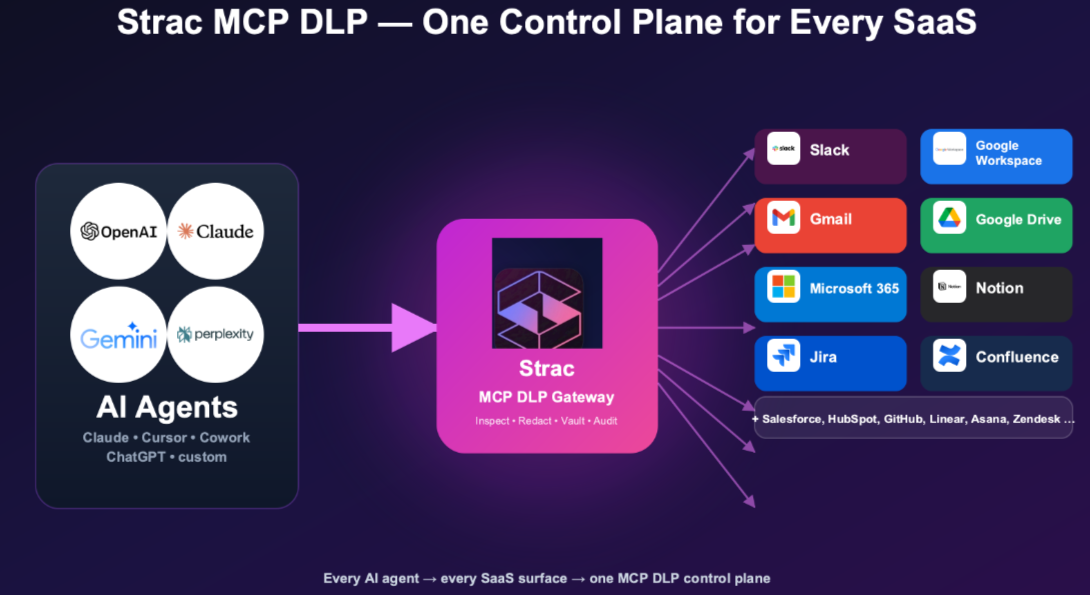
MCP DLP:Secure Model Context Protocol (MCP) servers by monitoring and enforcing policies on data exchanged between AI agents, internal systems, SaaS applications, and enterprise data sources.
👉 Read our Blog on MCP DLP: How to Prevent Data Loss in Model Context Protocol Deployments!
The platform integrates across modern SaaS environments while supporting compliance initiatives for GDPR, HIPAA, PCI DSS, SOC 2, ISO 27001, and other regulatory frameworks. With agentless deployment, unified DSPM and DLP, real-time remediation, and low false positives, organizations can secure SaaS applications, cloud storage, browsers, endpoints, AI platforms, and MCP-powered workflows from a single platform.
Bottom Line
The challenge of protecting sensitive data has shifted from securing corporate networks to securing cloud workflows.
As organizations embrace SaaS applications, AI assistants, remote work, and cloud collaboration, data is constantly moving beyond traditional security boundaries. Preventing data loss now requires continuous visibility into where sensitive information exists, intelligent detection that understands content rather than simple patterns, and real-time remediation that stops risky actions before data leaves approved environments. Organizations that combine SaaS DLP with Data Security Posture Management are far better positioned to reduce breach risk, simplify compliance, and safely adopt new technologies without sacrificing productivity. Modern platforms like Strac are helping security teams achieve exactly that by protecting sensitive data wherever work happens.
Spicy FAQs on Securing Sensitive Data in the Cloud
1. What is SaaS Data Loss Prevention (SaaS DLP)?
SaaS Data Loss Prevention (SaaS DLP) is a security solution that discovers, monitors, and protects sensitive information stored or shared across cloud applications like Google Workspace, Microsoft 365, Salesforce, Slack, Zendesk, Notion, and hundreds of other SaaS platforms. Modern SaaS DLP solutions can automatically detect, classify, redact, block, or encrypt sensitive data before it is exposed or shared with unauthorized users.
Most SaaS platforms provide essential security features such as encryption, authentication, and access controls, but they typically lack comprehensive content-aware data protection. Native controls often cannot discover sensitive data across multiple applications, inspect files and images, monitor AI interactions, or automatically remediate data leaks. A dedicated SaaS DLP solution provides centralized visibility and consistent policy enforcement across your entire cloud environment.
3. How does SaaS DLP help organizations using AI tools like ChatGPT and Microsoft Copilot?
Employees increasingly paste customer records, source code, contracts, financial information, and other confidential data into AI assistants. Modern SaaS DLP solutions monitor AI interactions, inspect prompts and uploaded files, detect sensitive information in real time, and automatically redact or block confidential data before it reaches external AI models. This enables organizations to safely adopt AI without increasing the risk of data leakage.
4. What features should organizations look for in a SaaS DLP solution in 2026?
The best SaaS DLP platforms combine Data Security Posture Management (DSPM) with real-time Data Loss Prevention. Key capabilities include automated sensitive data discovery, content-aware machine learning detection, OCR for images and documents, AI and browser protection, endpoint coverage, real-time remediation, low false positives, broad SaaS integrations, and built-in compliance support for frameworks such as GDPR, HIPAA, PCI DSS 4.0, SOC 2, ISO 27001, and NIST.
5. How does Strac protect sensitive data across SaaS applications?
Strac combines DSPM and Data Loss Prevention in a single platform to discover, classify, monitor, and remediate sensitive data across SaaS applications, cloud storage, browsers, endpoints, APIs, and AI platforms. Using content-aware machine learning instead of relying solely on regex, Strac can accurately detect sensitive information within structured and unstructured data, then automatically redact, mask, block, quarantine, or encrypt content in real time. Its broad integrations, fast deployment, and unified visibility help organizations reduce data leakage while simplifying compliance and security operations.
Discover & Protect Data on SaaS, AI, MCP, Endpoints & Cloud
Strac provides end-to-end data loss prevention for all SaaS and Cloud apps. Integrate in under 10 minutes and experience the benefits of live DLP scanning, live redaction, and a fortified SaaS environment.


.webp)







.avif)



.gif)
