September 4, 2026

5
min read
PII Redaction Software
`Unveiling Strac's PII Redaction Software: Comprehensive Data Security for Modern Organizations
· PII redaction software removes or maskssensitive information such as names, emails, SSNs, payment data, health data,and customer identifiers.
· In 2026, redaction needs to work across SaaSapps, cloud storage, support platforms, endpoints, browsers, GenAI tools, andemerging agent/MCP workflows.
· Modern platforms should support more than staticblack-box redaction. They should also offer masking, deletion, blocking,quarantining, and automated remediation.
· Strac is built for this newer environment: itcombines content-aware discovery, inline remediation, and redaction acrossSaaS, cloud, endpoint, AI, and MCP-connected workflows rather than treatingredaction as a one-off document task.
· For teams handling customer, employee,financial, or healthcare data, strong PII redaction software reduces exposurerisk, improves compliance, and keeps sensitive information from spreadingacross business systems
Personally identifiable information doesn’t just live in one place anymore. It shows up in support tickets, CRM notes, Slack threads, PDFs, screenshots, browser uploads, AI prompts, internal docs, and cloud storage. That makes PII redaction much harder than simply blacking out a few lines in a PDF.
Modern organizations need redaction software that can do more than clean up documents after the fact. They need a system that can find sensitive data across the tools employees already use, redact it automatically, and help prevent that data from being exposed in the first place.
That’s where PII redaction software has evolved. And it’s why platforms like Strac now sit at the intersection of redaction, DLP, DSPM, and AI Data protection rather than acting as standalone document tools.
PII redaction software is used to detect and remove, hide, mask, or replace personally identifiable information before it is exposed to the wrong person, system, or workflow.
That includes data such as:
Historically, redaction software was mostly used for legal documents, medical records, and PDFs. But that definition is too narrow now. PII flows constantly through SaaS apps, support systems, chat tools, spreadsheets, screenshots, transcripts, and AI prompts. As a result, modern redaction software has to work across structured and unstructured data, not just static files.
Most organizations already know they need to protect sensitive data. The problem is where that data now lives.
A support agent may paste a customer address into Slack. A recruiter may upload resumes with phone numbers and IDs into an AI summarizer. A sales rep may attach a spreadsheet full of contacts to a CRM ticket. A developer may send a production log containing emails and tokens into ChatGPT. A finance team may leave PCI or payroll data in shared cloud folders for months without realizing it.
In all of those cases, redaction is no longer just a “document review” feature. It becomes an operational control that helps reduce exposure before sensitive data spreads across the business.
That is why PII redaction software is increasingly tied to broader data security programs such as DLP, DSPM, AI governance, and SaaS security.
A modern redaction platform should do four things well:
The first challenge is detection. PII can appear in:
If the software only works on one file type or one application, it will miss a large part of the problem.
Basic regex can catch some things, but it often creates noise. Modern platforms increasingly use machine learning, OCR, and content-aware classification to identify sensitive information more accurately across messy, real-world business data. That matters when you are scanning customer support conversations, screenshots, invoices, HR files, or mixed documents rather than neat, structured records.
A redaction tool that only tells you sensitive data exists is helpful, but incomplete. In practice, teams often need the system to take action. That can include:
This is one of the biggest shifts in the market. The best tools are not just scanners. They are remediation engines.
PII redaction software has to work where data already moves: collaboration apps, support platforms, cloud drives, data warehouses, email, browsers, endpoints, and AI tools. If it requires a narrow manual workflow or only works after the fact, it will not keep up with how modern teams actually handle data.

Strac is not positioned as a simple “PDF redaction tool.” Its 2026 positioning is closer to a modern, content-aware data security platform that combines redaction, DLP, and data discovery across the systems where sensitive information actually moves. That includes SaaS apps, cloud storage, endpoints, browsers, GenAI tools, and MCP-related workflows.
At a high level, Strac’s approach to PII redaction centers on a few ideas:
A lot of sensitive data exposure happens inside business apps rather than inside formal documents. Strac is built to identify and remediate PII across modern business systems such as support platforms, collaboration apps, CRM tools, cloud repositories, and productivity environments. That matters because customer and employee data is often copied into tickets, comments, chats, attachments, and internal notes rather than living neatly inside one database. This broader SaaS and workflow coverage is one of Strac’s core differentiators
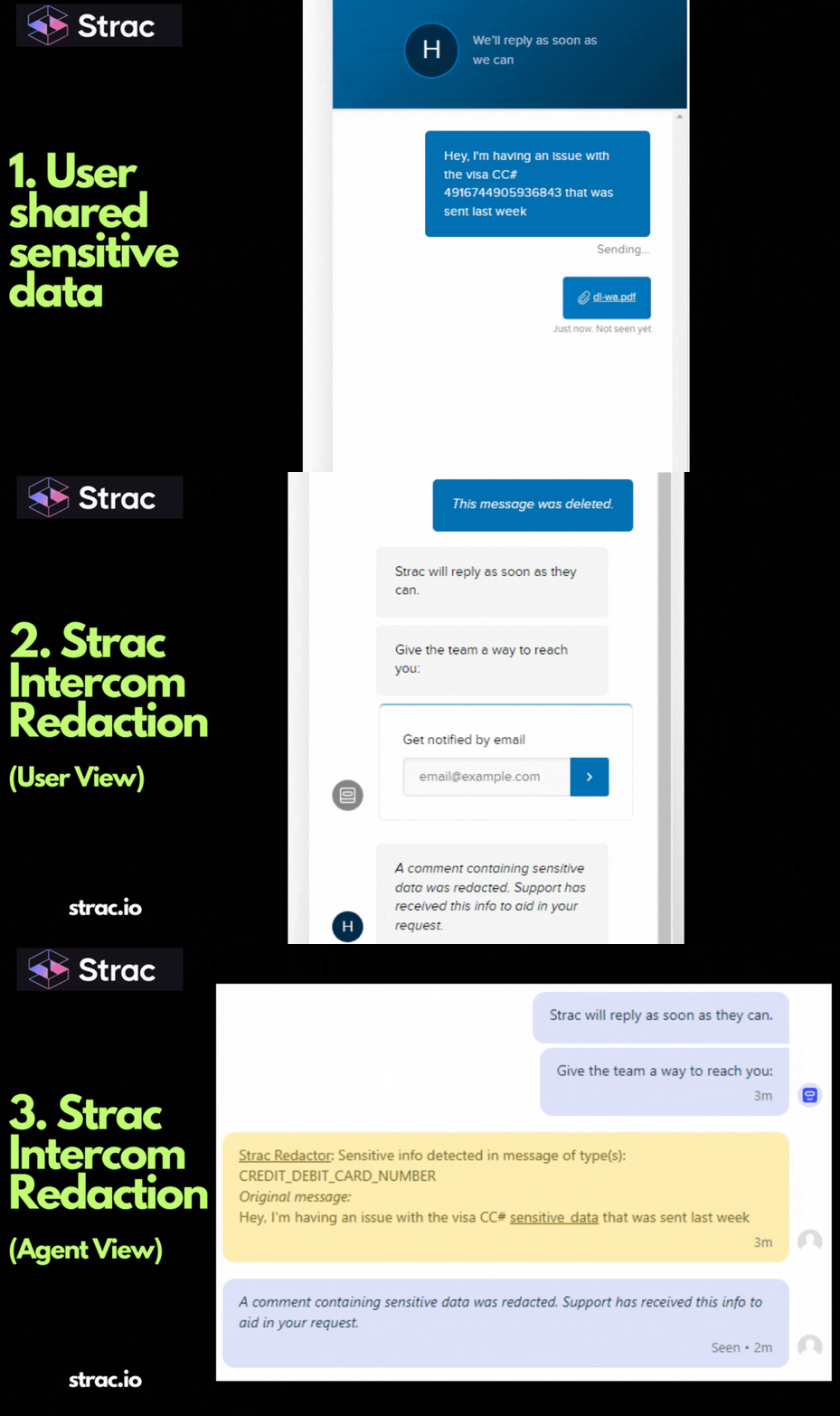
Strac’s model is not just “scan and alert.” It is built around inline remediation actions such as redaction, masking, blocking, deleting, quarantining, or otherwise controlling sensitive content once detected. That’s a meaningful distinction because detection alone still leaves the organization to clean up the exposure manually. Strac’s positioning emphasizes acting on the data, not just reporting on it.

The data redaction problem no longer stops at SaaS or cloud storage. Employees move sensitive data through browser uploads, AI prompts, endpoint files, and increasingly through agentic workflows and MCP-connected tools. Strac’s current positioning reflects that reality by covering SaaS apps, cloud platforms, endpoints, GenAI workflows, and MCP-related data movement in one broader platform rather than treating each as a separate silo

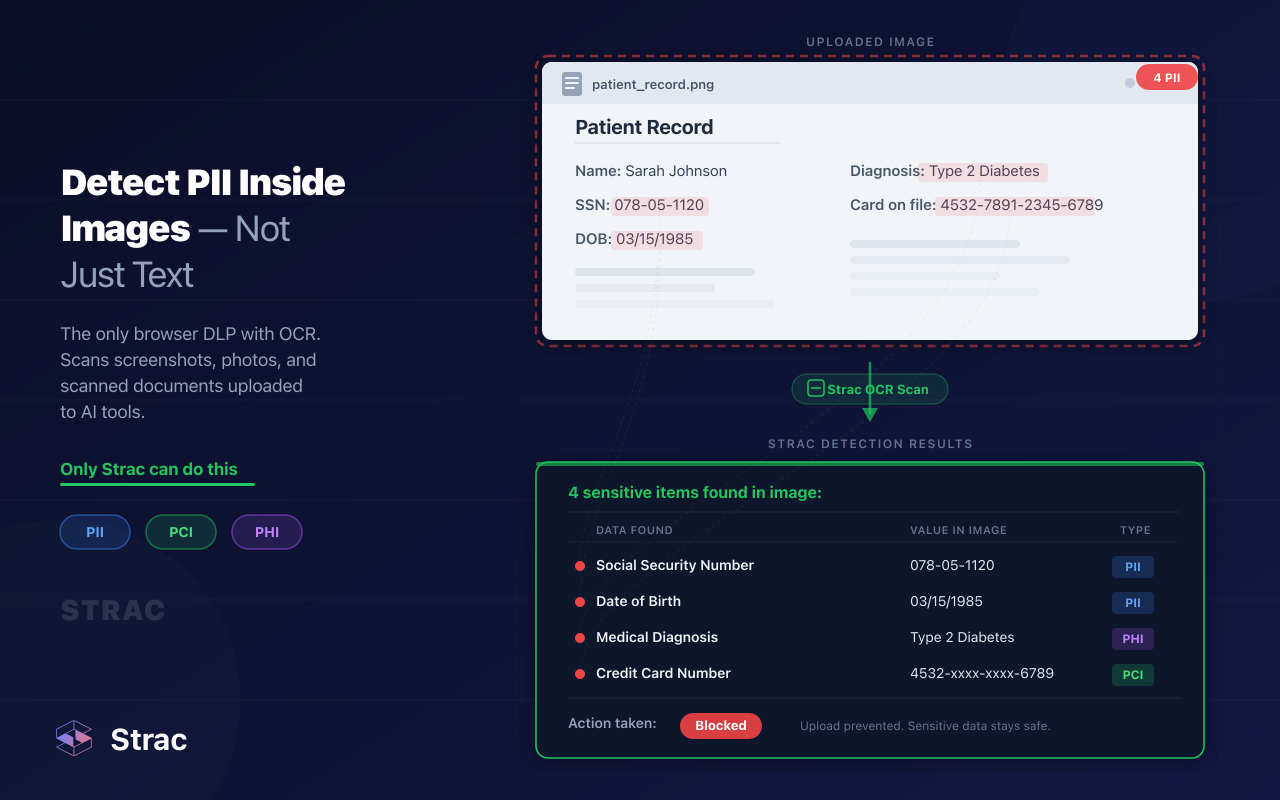
Strac’s messaging consistently leans into content-aware detection, ML, and OCR rather than only traditional regex-based rules. That is important for redaction use cases because PII often appears in screenshots, scans, attachments, customer messages, and unstructured text where simple pattern matching is not enough. Better detection quality directly affects how useful redaction software is in production.
Another part of Strac’s positioning is fast deployment without the operational burden of legacy tooling. For many teams, especially those trying to secure modern SaaS environments quickly, lower-friction rollout matters almost as much as the redaction capability itself. Strac’s agentless architecture is positioned as a way to reduce complexity while still giving teams visibility and remediation controls across their data environment

When evaluating PII redaction software, it helps to think in terms of remediation methods rather than one generic “redact” button.
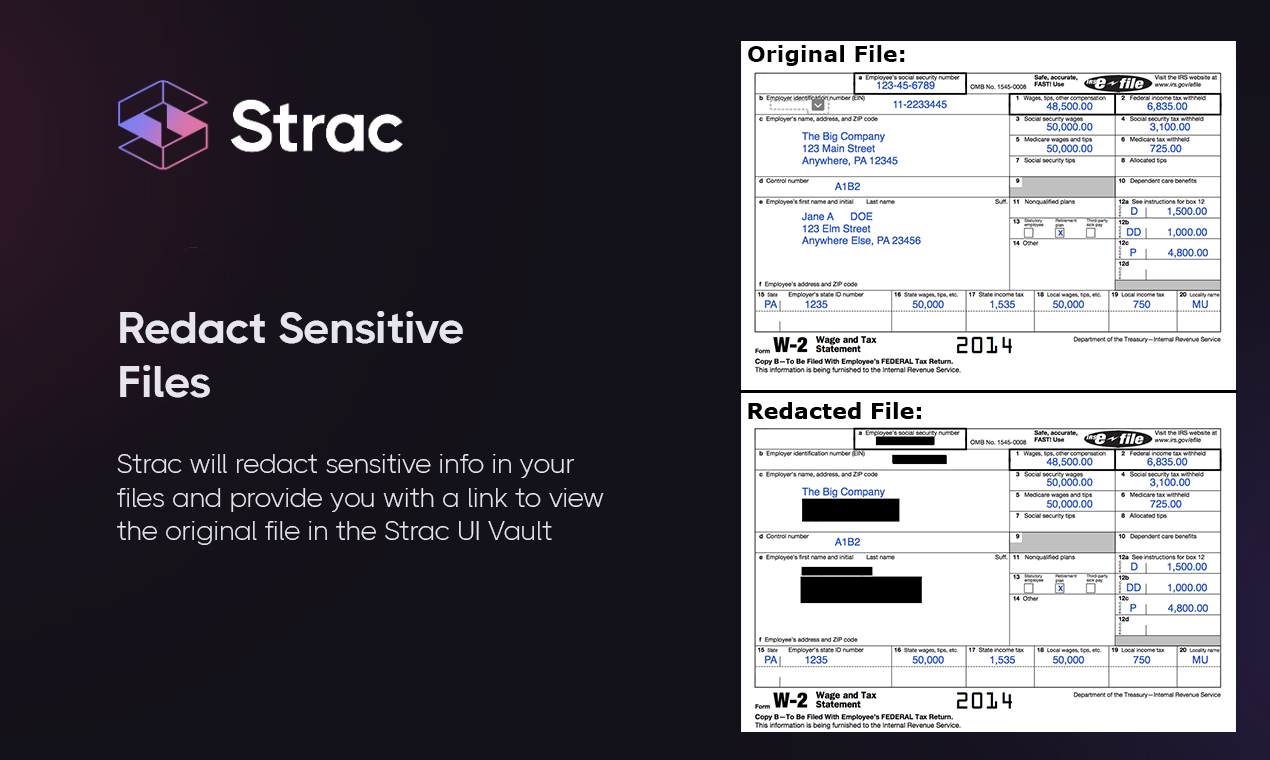
This is the classic approach: sensitive text is fully obscured and no longer visible to the viewer. It is useful for legal documents, exported reports, forms, medical records, and any workflow where the data should be permanently hidden from downstream readers.
Masking partially hides data while preserving some readability. For example, a card number might become **** **** **** 1234, or an email address might keep only a few visible characters. This is useful when teams still need context without full exposure.
In some workflows, it is better to replace real data with safe but realistic substitutes. This is common in testing, analytics, training, and sandbox environments where teams want usable data structure without exposing actual individuals.
Sometimes the safest option is not to redact a field inside a file, but to remove the file, attachment, or message entirely. This is especially relevant for stray spreadsheets, old exports, or sensitive documents left in cloud storage, shared drives, or support systems.
One of the most important 2026 use cases is preventing sensitive data from being pasted, uploaded, or sent into the wrong place in the first place. That includes browser uploads, GenAI prompts, support tools, chat platforms, and MCP-connected agent actions.
The best PII redaction software increasingly supports several of these controls rather than forcing organizations into a single remediation model.
Support systems are full of personal data: names, addresses, account numbers, screenshots, refund details, policy records, and medical or financial information depending on the industry. Redaction software can automatically clean sensitive content from tickets, comments, transcripts, and attachments before that data spreads to more users or third-party tools.
Google Drive, OneDrive, SharePoint, Notion, and similar systems often become long-term storage for exported reports, HR documents, customer files, and finance spreadsheets. Redaction and remediation tooling helps teams find exposed PII in those environments and clean it up at scale.
Employees frequently paste sensitive customer or employee information into Slack, Teams, email, and internal notes because it is convenient. Redaction software can reduce the risk of those day-to-day leaks without waiting for a breach review months later.
Sales and support teams often move customer records, contracts, lead lists, and onboarding details between CRM systems and adjacent tools. That creates multiple places where personal data can persist beyond where it was meant to live.
This is one of the fastest-growing categories. Teams paste source material, customer records, transcripts, spreadsheets, and screenshots into ChatGPT, Copilot, Claude, Gemini, and internal AI tools every day. If those prompts contain PII, redaction or blocking controls become essential.
As companies adopt AI agents and MCP servers to connect internal systems, a new problem appears: agents can pull data from one system and send it into another in seconds. That may include customer records, HR data, support conversations, or internal documents. Redaction and policy enforcement are becoming important here because sensitive data can move across tools without a human manually copying it.
Traditional redaction software usually starts and ends with files. You upload a document, highlight text, and export a sanitized version. That still has value, but it does not solve how modern organizations actually leak PII.
Strac’s differentiation is that it approaches redaction as part of a broader sensitive data control layer:
This broader positioning is consistent with how Strac differentiates itself overall: unified sensitive data discovery and DLP across SaaS, cloud, AI, and endpoints, with built-in remediation rather than detection alone
.png)
PII redaction software is no longer just a legal or document-processing tool. In 2026, it is part of a larger effort to stop sensitive data from spreading across SaaS apps, cloud storage, support systems, endpoints, browsers, and AI workflows.
That is the lens Strac fits into today. Rather than treating redaction as a standalone feature, Strac positions it as part of a broader content-aware data protection platform that can discover, redact, mask, block, delete, and remediate sensitive information across the systems modern organizations rely on every day.
For teams dealing with customer data, employee records, financial information, healthcare data, or regulated internal workflows, that shift matters. The question is no longer whether you can redact a document. It is whether you can control PII everywhere it moves.
PII redaction usually means removing or fully obscuring sensitive information so it cannot be viewed. Data masking typically means partially hiding or transforming the data while keeping some of its structure visible. In practice, modern platforms often support both because different workflows need different levels of protection.
Yes, but not every tool does. Some redaction tools are document-only products, while modern platforms can detect and remediate sensitive data directly inside SaaS applications, support tools, collaboration apps, and cloud storage systems.
Not by itself. If employees are pasting sensitive data into AI tools, you usually need broader controls such as prompt inspection, browser or endpoint visibility, DLP enforcement, and policy-based blocking or redaction. Redaction is part of the answer, but not the entire AI security strategy.
At minimum, it should identify common personal data such as names, addresses, phone numbers, email addresses, account numbers, IDs, payment data, and health-related identifiers. In many environments it should also support industry-specific data such as payroll information, insurance numbers, or support records tied to an individual.
Strac is positioned less like a traditional file-redaction tool and more like a modern sensitive data protection platform. It combines content-aware detection with inline remediation across SaaS, cloud, endpoint, browser, GenAI, and MCP-related workflows so teams can reduce exposure where PII actually moves, not just inside exported documents.
.avif)


.gif)


.webp)