September 15, 2026

5
min read
How Strac’s AI Agent Reduces DLP False Positive Alert Noise in Trellix (McAfee) Enterprise DLP
Learn about how Strac AI Agent works with Trellix (McAfee) Enterprise DLP
A Trellix DLP false positive is an incident that satisfied a policy condition without representing real data loss. The nine digit string was an order number, not a Social Security number. The spreadsheet of card-like values was a test fixture. The PDF that tripped a PHI rule was a vendor invoice with a patient name in the footer and nothing else.
Trellix (McAfee) Enterprise DLP is good at what it was designed for. The engine inspects email, endpoint file activity, and network traffic against pattern and classification rules, and it generates an incident whenever a rule matches. The engine has no opinion about whether the match mattered, because context is not what a rule evaluates.
That is the whole problem in one sentence. A rule tells you a pattern appeared; only context tells you whether data was exposed.
Four patterns account for almost all of it.
Pattern matches without context. Account numbers, internal IDs, tracking codes, and test data all satisfy the same structural rules as regulated identifiers. The check digit passes. The meaning does not.
Sanctioned business processes. Billing exports to a payment processor, HR files moving to a benefits vendor, engineering logs going to a support portal. These are approved flows that look identical to exfiltration at the rule layer.
Images and scans. Screenshots, faxed forms, photographed documents, and scanned contracts either trigger on partial extracted text or slip through entirely. Both outcomes cost you: one adds noise, the other adds risk.
Volume with no prioritization. A queue of several hundred incidents with no confidence signal is triaged in queue order or not at all. The oldest incident gets closed because it is old, not because it was reviewed.
The cost is not the wasted hours. The cost is what alert fatigue does to judgment. A team that closes incidents in bulk to keep the queue manageable will eventually bulk-close the one that mattered, and there is no way to tell from the outside which day that happened.
Strac installs as a browser extension on the analyst's workstation. When an analyst opens the DLP Incident Manager in Trellix ePO, the extension recognizes the incidents rendered on the page and scores them in place.
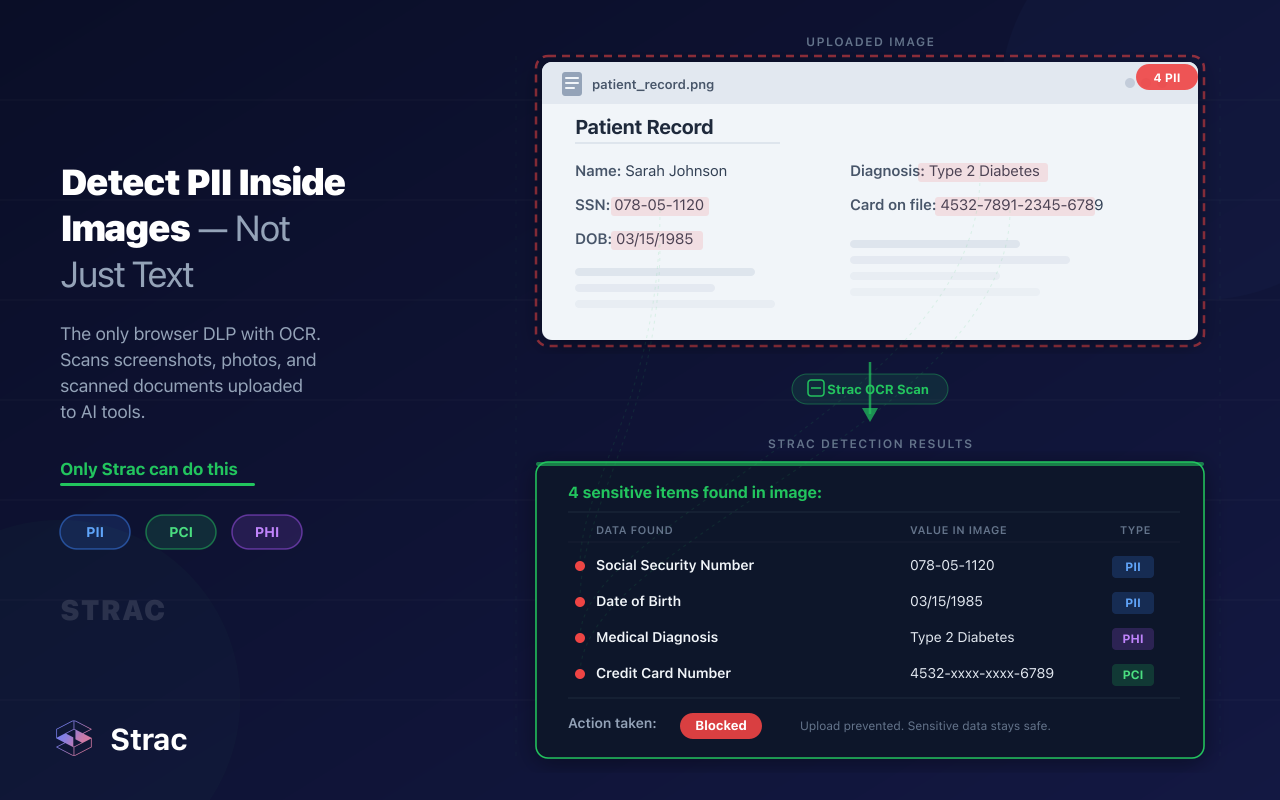
The scoring runs on the same signals a senior analyst would use:
Each incident gets a verdict and a confidence score rendered directly in the incident list and the detail pane. The analyst sorts by it, works the high-confidence true positives first, and bulk-resolves the low-confidence tail with a record of why.
Nothing changes in Trellix. Your policies, your detection rules, your remediation workflows, and your escalation paths all stay exactly as they are. Strac reads and annotates; it does not rewrite.
Cleaning the queue is worth doing. It is also not the reason your 2026 risk profile looks different from your 2024 one.
Trellix (McAfee) Enterprise DLP was architected around email, endpoint file operations, and network egress. In 2026, the fastest path for a customer record to leave your company is none of those. It is a paste into a chat window, a file dropped into a model's upload box, or an agent calling a tool over Model Context Protocol and returning raw rows.
Those actions are encrypted, they are browser-native or agent-native, and they never touch an SMTP gateway or a monitored file share. A network rule sees a TLS session to an allowed domain. That is all it sees.
So the queue tells a reassuring story. Incidents are down, the rules are quiet, and the actual data movement has relocated to a layer the console does not render. A clean queue and a covered environment are not the same thing, and only one of them is a security outcome.
This is the same structural gap covered in depth in why legacy DLP fails for AI and in the comparison of endpoint DLP solutions.
Strac is a Data Loss Prevention, Data Discovery, and DSPM platform covering SaaS, Cloud, Browser, GenAI, and MCP with automated remediation. Against a Trellix estate it does two distinct jobs.
Job one: quiet the queue you have. The extension scores Trellix incidents in place, as described above, so your existing investment produces a shorter and better ordered list of things to look at.
Job two: cover the surfaces the queue does not represent.
.gif)
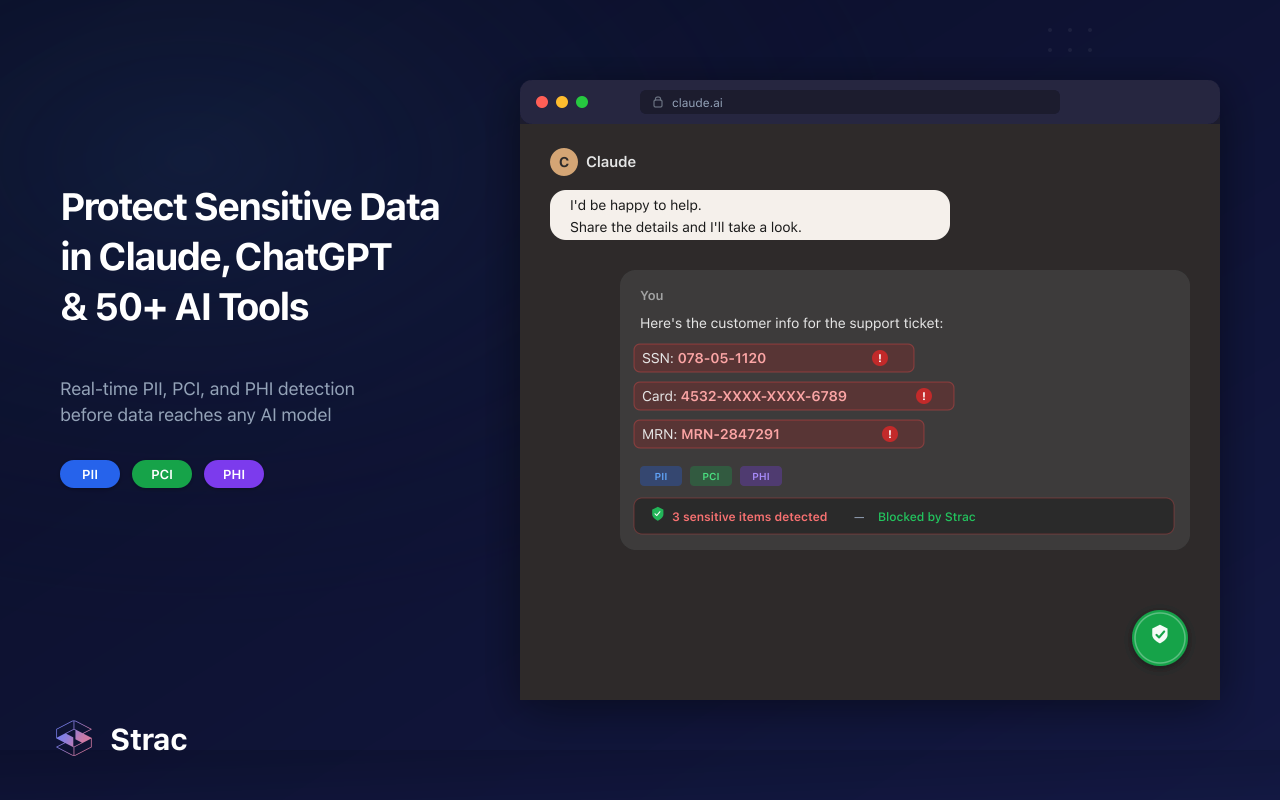
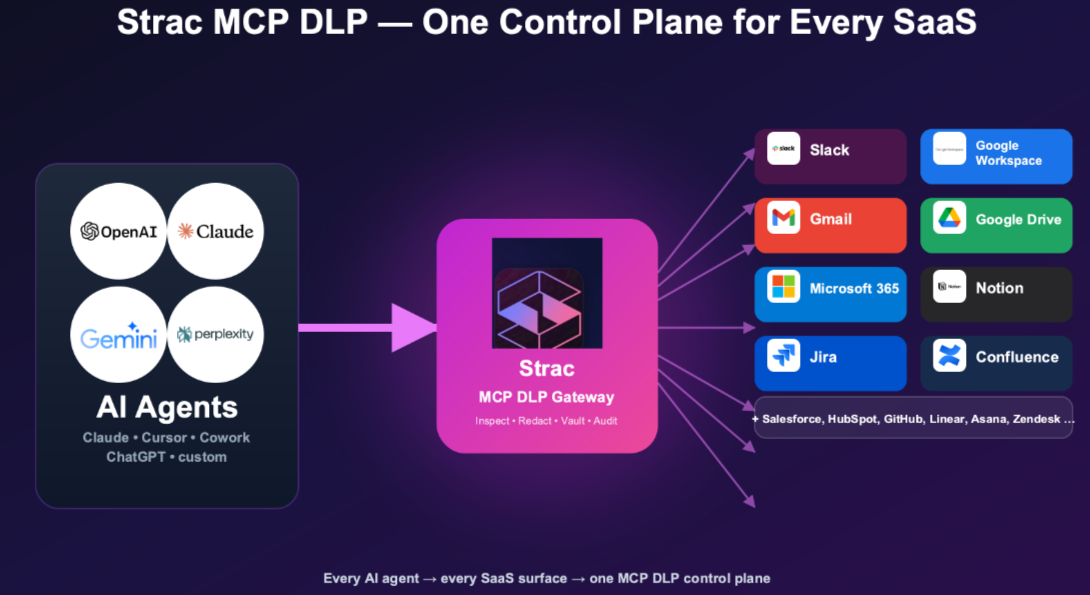
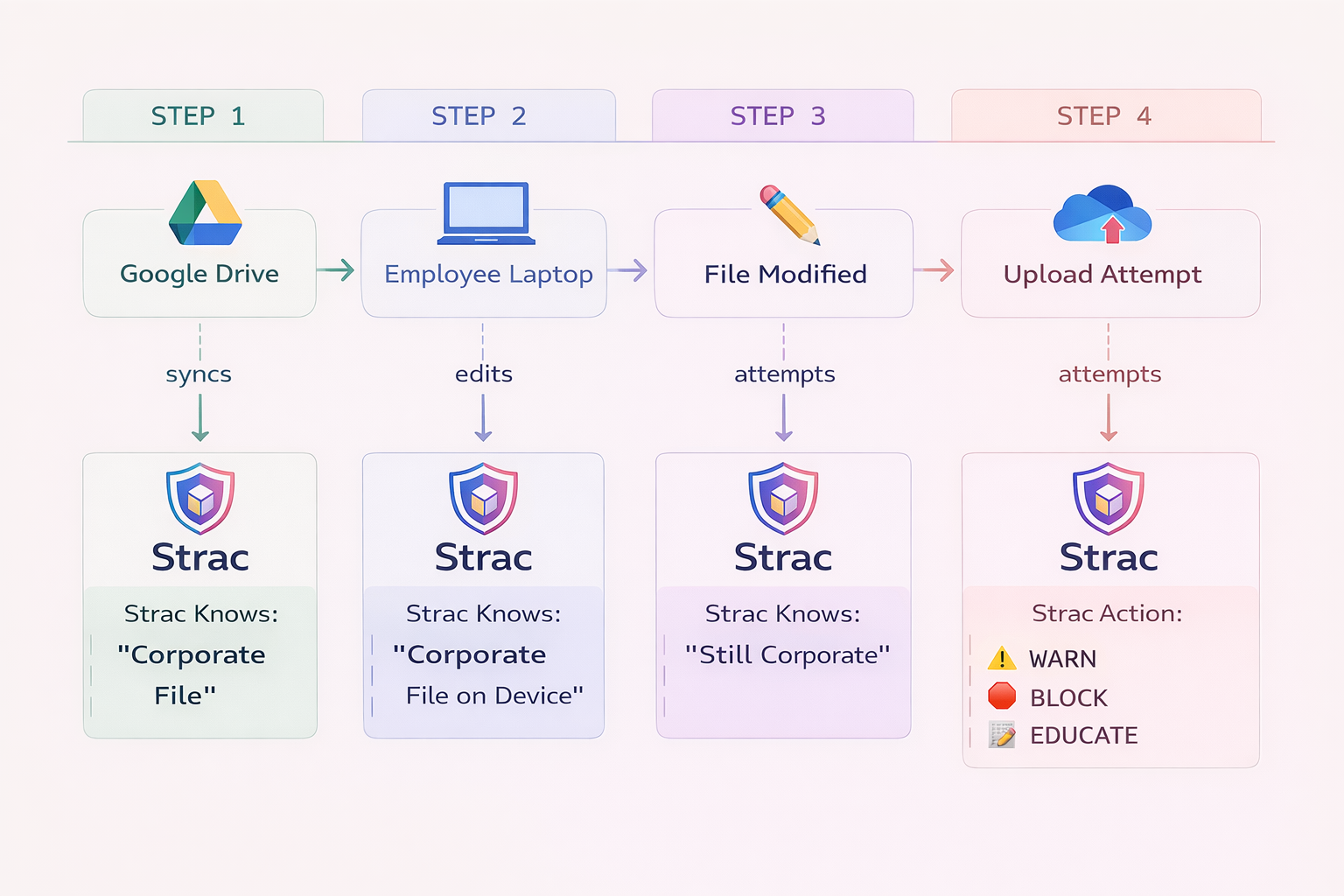
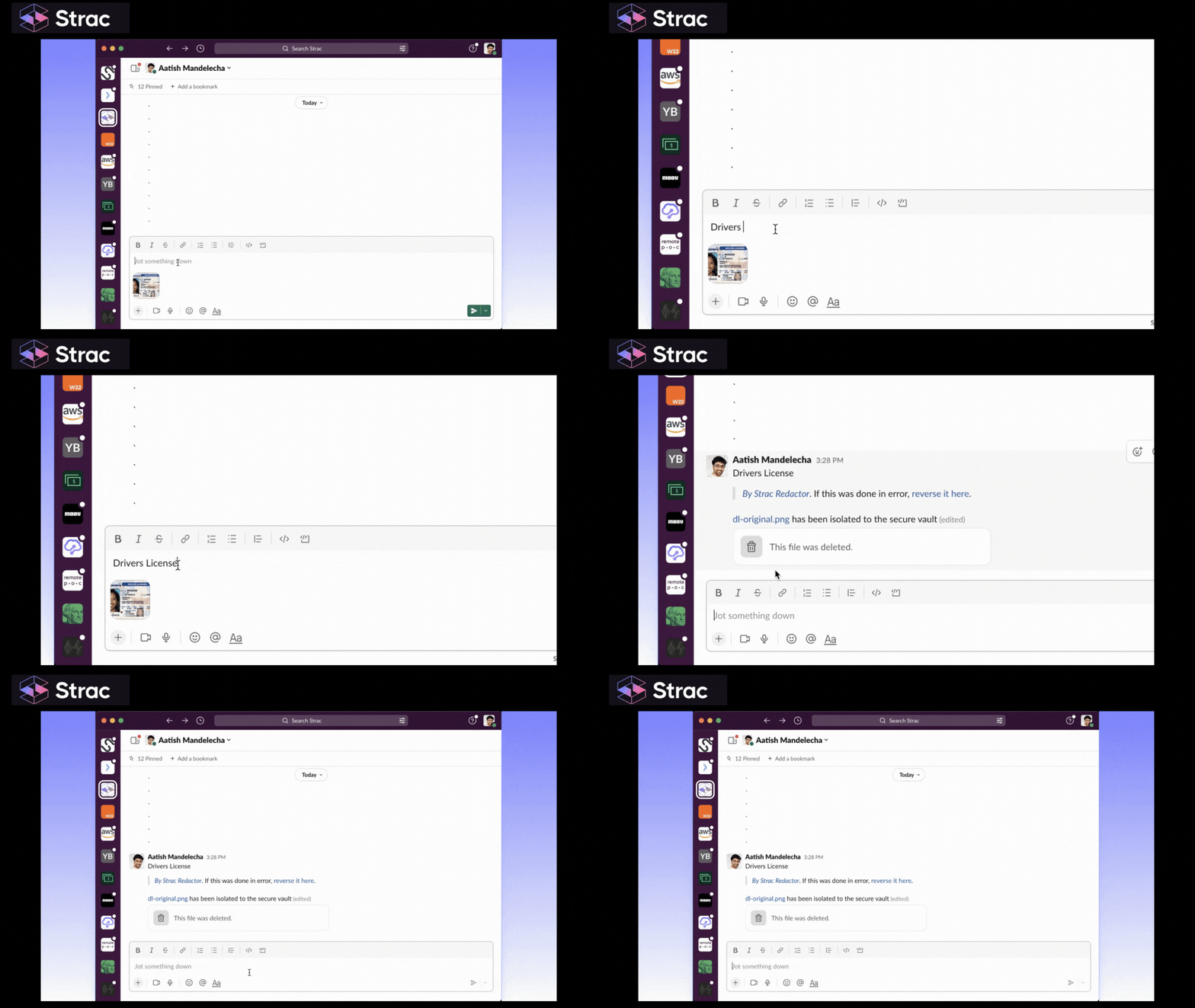
Remediation on every one of those surfaces runs in the same order:
Redact or mask. Sensitive values are replaced in place in Slack messages, email, tickets, docs, Google Drive, SharePoint, and Box, so the work continues and the data does not travel.Block. The upload, paste, share, or tool call is stopped before it completes.Warn and coach. The user sees what was detected and why, at the moment of the action, which is the only moment the lesson lands.Revoke access. Over-shared links and standing permissions are pulled back automatically.
Detection tells you a policy matched. Redaction is what stops the record from leaving.
Trellix (McAfee) Enterprise DLP generates incidents; it does not rank them, and it does not watch the browser, the model, or the agent. Strac's triage agent gives your analysts an ordered queue inside the console they already use, and Strac's endpoint DLP, Browser DLP, generative AI DLP, and MCP DLP cover the paths that produce no incident at all. Identity, model, prompt, and network controls all fail eventually. The data layer is the backstop: redact sensitive data on every action and a compromise never becomes a breach.
No. Tuning trades noise for coverage. Narrow the rule and the queue shrinks along with your detection of the cases that matter. Triage is the better lever because it changes how incidents are ranked without changing what Trellix detects.
Not for email and network, which Trellix handles. Strac scores the incidents Trellix generates and covers the browser, endpoint, SaaS, and MCP paths it was not built for. Teams consolidating later usually start with endpoint DLP solutions.
No. The verdict renders inside the ePO Incident Manager the analyst already has open, with no second dashboard and no tab switching. Trellix policies, workflows, and escalations are untouched.
No, and Strac does not claim certainty. It returns a confidence score, so analysts spend their attention where it pays and bulk-resolve the low-confidence tail with an audit record. Certainty is not available; better ordering is.
Triage improves the signal from the tooling you have. Coverage of prompts, uploads, and agent calls is the part that governs where regulated data is allowed to go. Start from the pillar on AI DLP, and see HIPAA DLP if PHI is in scope.
.avif)


.gif)


.webp)