September 18, 2026

10
min read
Data Loss Prevention(DLP) Policy and Best Practices
Discover the essential steps to create a Data loss prevention Policy in to secure PII, PHI and confidential data in saas ,cloud and endpoints
A data loss prevention policy is the set of rules that defines what counts as sensitive data, where it is allowed to go, and what happens automatically when someone tries to move it somewhere it should not — enforced consistently across every channel where data lives or travels.
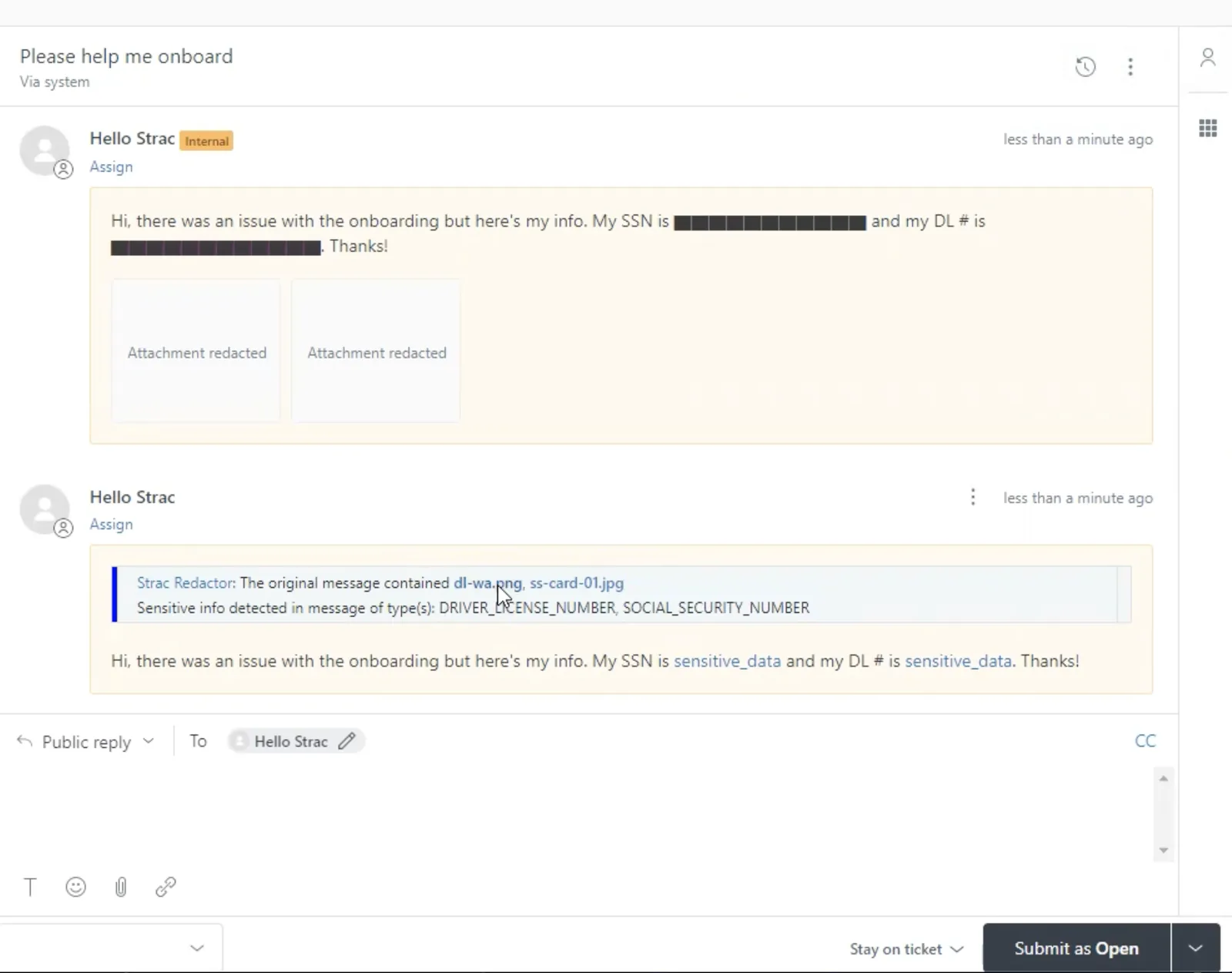
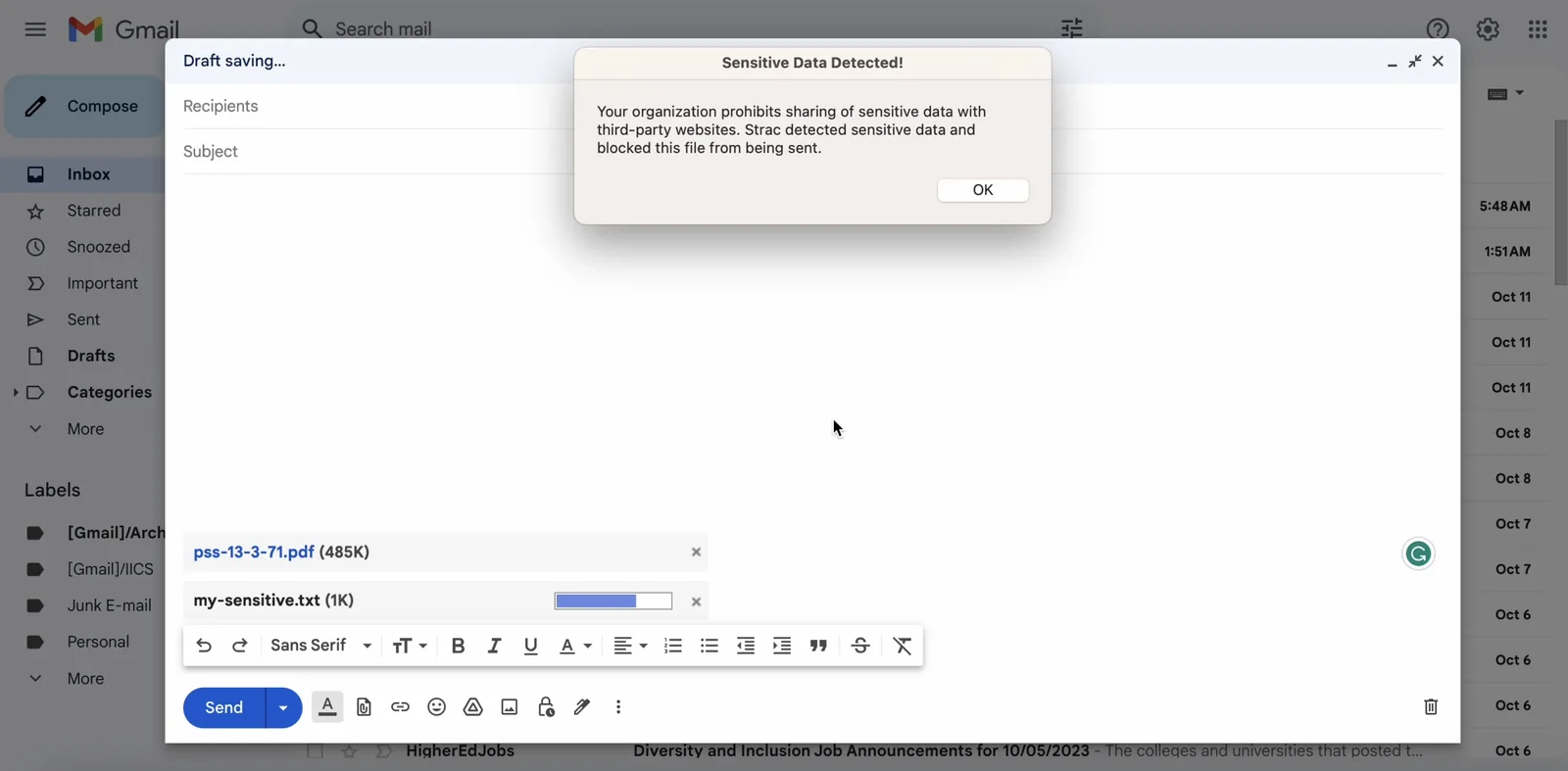
A policy that only watches email or a single app is not a data loss prevention policy — it is a blind spot with rules attached. A real one enforces the same intent everywhere data can leak, and pairs it with a historical scan so existing violations are caught, not just future ones. This is how Strac turns one policy into full coverage.

Enforcement surfaceFinds existing violationsStops new ones livePolicy actionsSaaS appsDiscovery scan flags sensitive data already stored or over-sharedYes, at upload and share timeRedact, mask, delete, encrypt, tokenize, revoke sharing, label, alertCloud storageScans existing objects across AWS, GCP, AzureYes, on new writesRedact, mask, delete, encrypt, quarantine, revoke access, alertGenAI browser—Yes, on prompts and uploadsRedact in-prompt, block, warn, alertGenAI endpoint & MCPLocal and connector scanYes, on desktop AI apps and agent callsBlock, warn, redact in-transit, revoke, alertEndpoint devicesLocal disk scanYes, on file, USB, and app activityBlock, warn, encrypt, alert
Data Loss Prevention (DLP) policies refer to a set of guidelines and procedures designed to protect sensitive data from disclosure, use, or access. To say otherwise, the primary function of a DLP policy is to prevent data loss, whether done intentionally or accidentally.
DLP policies, further, include implementing proactive measures and controls. These policies have a range of strategies and involve technological solutions, employee training, and ongoing monitoring to ensure the highest degree of security of valuable data assets.
Termed as “the new oil”, data across organizations now hold more importance than ever before. This includes data from purpose-centric organizations that work with sensitive customer information, proprietary trade secrets, and other crucial aspects of the business. In scenarios, such as this, businesses need to understand that data plays a pivotal role in driving operations and maintaining a competitive edge over others.
However, one cannot overlook the risk of data breaches and information leaks which have been at an all-time high. This has led to the creation and regularization of laws called the Data Loss Prevention (DLP) policies.
In this article, we at Strac help you explore what DLP policies are and why they are so important. Additionally, we find out how these policies work, along with the steps and best practices for creating an effective DLP policy.

Losing crucial information can lead to severe consequences. Substantial financial penalties and potential criminal repercussions are just two of it. Additionally, it can lead to inflicting significant harm on an organization’s operations and may even lead to its closure.
A notable example of this is the curious case of Equifax. In 2017 the company lost personal and financial data and records of more than 150 million people. The company’s failure to promptly address the vulnerability and the subsequent delayed breach disclosure compounded the damage. Consequently, in July 2019, Equifax was fined a staggering $575 million.
On the other hand, critical data losses also put executives at risk. For instance, executives could face dire professional consequences due to data loss incidents. One such notable incident involves top executives of Target who had to resign their way out.
Some of the important factors that qualify as the key driving force of DLP Policies are as follows:
Sensitive data, such as Personally Identifiable Information (PII) and financial records, are prime targets for cybercriminals. DLP policies play a vital role in safeguarding this information, mitigating the risk of data breaches, and protecting customers and organizations from potential harm.
Numerous industries face strict data privacy and security regulations. DLP policies help organizations adhere to these rules, such as the Health Insurance Portability and Accountability Act (HIPAA) in the United States or the General Data Protection Regulation (GDPR) in the European Union. Compliance not only prevents legal complications but also ensures the organization is handling sensitive data responsibly.
For many organizations, their intellectual property, including trade secrets, patents, and proprietary information, is their most valuable asset. DLP policies are crucial in preventing unauthorized access or disclosure of these materials, thus safeguarding an organization's competitive edge.
Data breaches can have severe reputational consequences, potentially leading to customer attrition, financial losses, and legal actions. With robust DLP policies, organizations can protect their brand reputation and maintain the trust of their stakeholders.
With the rising trend of remote work and BYOD (Bring Your Own Device) policies, ensuring secure data handling has become more challenging. DLP policies are essential in managing these evolving workplace dynamics without compromising on data security.
Not all data breaches are from external actors; sometimes, they can be due to careless or malicious insiders. DLP policies help identify and mitigate such insider threats by monitoring data usage and controlling access.
Usually, DLP policies involve the know-how of technology, processes, and employee awareness to ensure comprehensive protection of sensitive data.
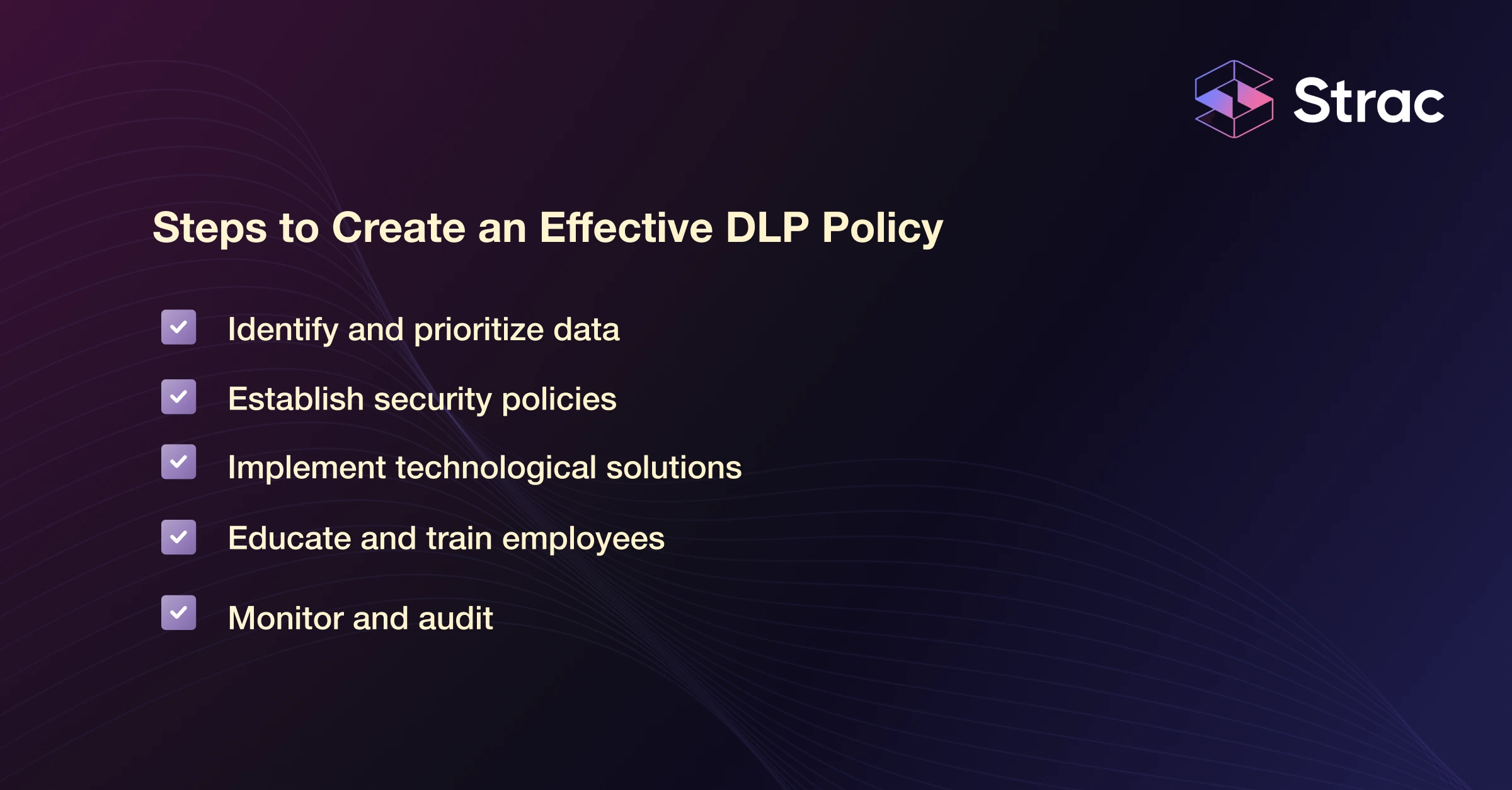
Here are the primary components for the effective working of DLP policy.
This comprehensive guide is all you need if you’re looking for data security solutions. It covers data loss prevention (DLP) policies and important aspects of data privacy. Strac eliminates the highest degrees of risks with its proprietary AI-based solutions and hence is loved and used by companies of all sizes. For more information on Strac, visit Strac DLP (Data Loss Prevention) - Redact (Mask) PII.
Explore more DLP and Cloud Access Security solutions:
Most companies still treat DLP policies as alert-only systems. Modern DLP policies need real-time remediation; not just notifications after sensitive data has already been exposed. In 2026, strong DLP policies should automatically redact, block, mask, revoke access, or remediate sensitive data across SaaS apps, cloud storage, endpoints, and AI tools like ChatGPT or Microsoft Copilot.
Yes; but only if the DLP platform supports GenAI and browser-based protection. Traditional DLP policies were not designed for AI prompt flows or LLM interactions. Modern platforms like Strac help organizations detect and redact sensitive data before it reaches tools like ChatGPT, Claude, Gemini, or Copilot; reducing AI-related data leakage risks.
Most legacy DLP tools were built for email and network monitoring; not modern SaaS ecosystems like Slack, Google Drive, Salesforce, Notion, Zendesk, or Jira. As companies move sensitive workflows into cloud apps, outdated DLP policies struggle with visibility, remediation, and unstructured data protection. Modern SaaS DLP platforms focus on real-time scanning and remediation directly inside these tools.
Healthcare, fintech, SaaS, legal, insurance, government, and e-commerce companies benefit heavily from modern DLP policies because they handle large volumes of PHI, PII, PCI, and confidential customer data. Industries dealing with compliance frameworks like HIPAA, PCI DSS, GDPR, SOC 2, and ISO 27001 increasingly require automated DLP controls to reduce operational and regulatory risk.
The best DLP solutions today go beyond detection. Organizations should prioritize platforms that support SaaS + Cloud + Endpoint + GenAI coverage, real-time remediation, OCR and ML-based classification, low false positives, fast deployment, compliance-ready policies, and automated workflows. Unified DSPM + DLP platforms like Strac are becoming popular because they combine discovery, posture management, classification, and remediation in one system.
.avif)


.gif)


.webp)
.webp)