September 13, 2026

6
min read
Endpoint DLP: What It Is and How to Choose (2026 Guide)
Endpoint DLP explained: what the agent sees on the device, how it differs from network and cloud DLP, why redaction beats block-only, and what to require in 2026.
Last updated: July 2026
Endpoint DLP only earns its keep if it covers every way data leaves the device — and does it by content, not by breaking the hardware. Strac’s Mac and Windows agent governs every exit channel and lets you set enforcement independently for each data type.
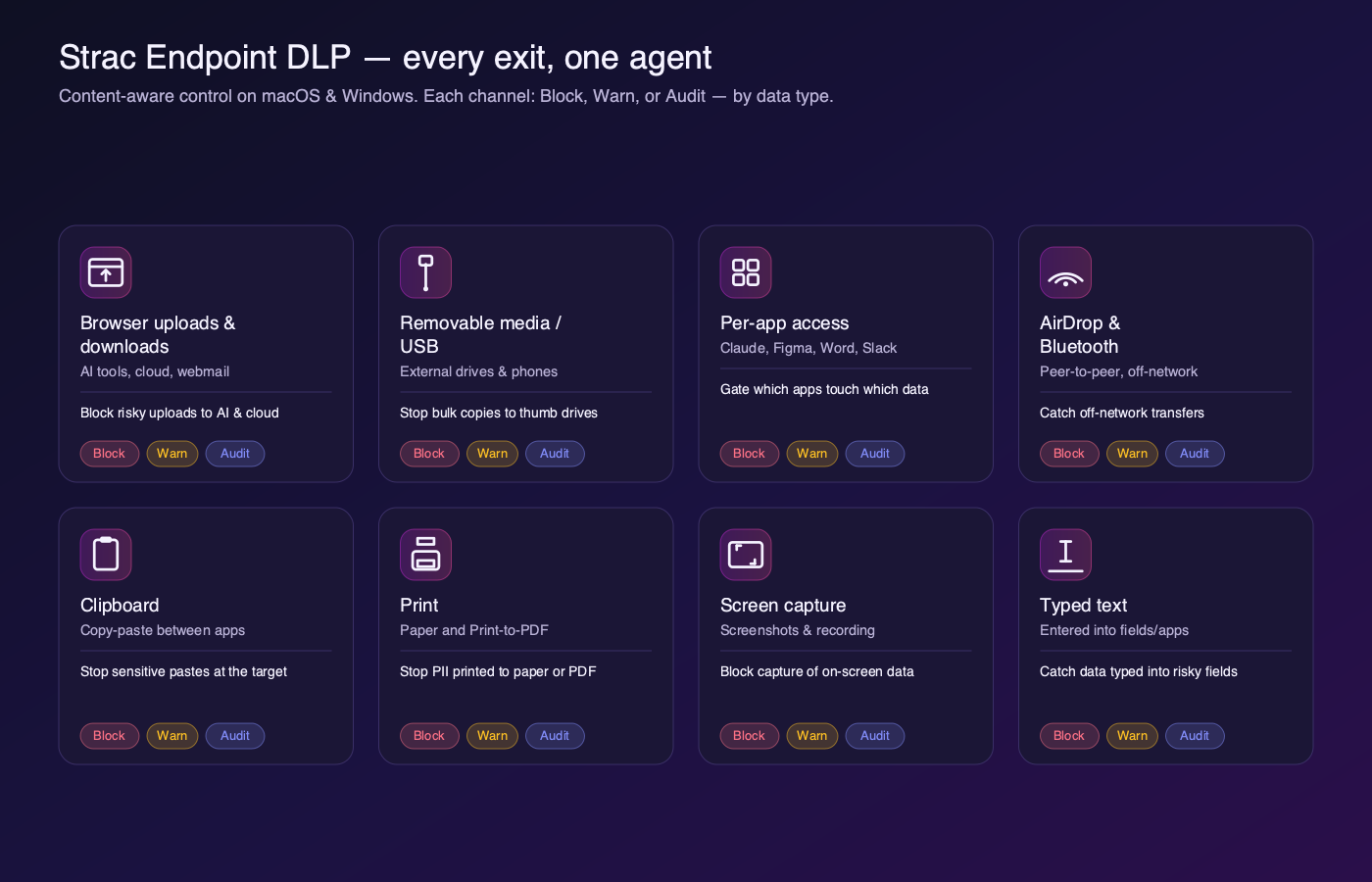
Block, Warn, or Audit — per data type, per channel. See the full channel-by-channel breakdown in the endpoint DLP agent guide.
Endpoint DLP solutions protect sensitive data on laptops and desktops — watching files, USB drives, printing, and the apps employees run — and block, warn, or encrypt before regulated data leaves the device. The best endpoint DLP solutions are one surface of a broader platform, not a silo.
Endpoint DLP that cannot see where data goes after it leaves the laptop is only half a control. Strac runs endpoint protection as one surface inside a platform that also covers SaaS, cloud, and GenAI — each with its own discovery scan and real-time enforcement — so a policy set once follows the data everywhere.
| Surface | Historical discovery | Real-time DLP | Remediation actions |
|---|---|---|---|
| Endpoint (Mac, Windows) | Scans the local disk for regulated data | Watches file, USB, print, and app activity | Block, warn, encrypt, alert |
| SaaS (50+ apps) | Scans stored files, messages, records | Inspects new uploads and shares | Redact, mask, delete, encrypt, revoke sharing, label, alert |
| Cloud (AWS, GCP, Azure) | Scans data stores at rest | Monitors new objects | Redact, mask, delete, quarantine, revoke access, alert |
| GenAI (browser, endpoint, MCP) | Local and connector scan | Inspects prompts, desktop AI apps, and agent calls | Redact, block, warn, revoke, alert |
Endpoint DLP (Data Loss Prevention) protects sensitive data on the device itself — the laptop, not the network or the cloud. It runs where the data is created and used, so it can stop a leak that never touches your corporate network at all: a file copied to a USB drive, a document dragged into a personal cloud sync folder, source code pasted into a personal ChatGPT tab, a screenshot uploaded from a home Wi-Fi connection.
The three questions that decide an endpoint DLP purchase:
Endpoint DLP is one of several DLP layers. It pairs with network and cloud DLP, and for buyers comparing products, our endpoint DLP solutions guide ranks the tools.
The endpoint security market is experiencing rapid growth, reflecting the escalating importance organizations place on safeguarding their digital perimeters. A recent study by Data Horizon Research found that this market, valued at $13.9 billion in 2022, is projected to expand to $32.4 billion by 2032.
It's a wake-up call highlighting the critical importance of endpoint security in our digital world. But what is endpoint DLP solution, and how does it function to protect our digital assets? Let’s explore this in the blog below.

Endpoint Data Loss Prevention involves implementing a suite of strategies and technologies to safeguard devices connected to a network. These devices, a.k.a endpoints, can range from traditional computers and laptops to modern smartphones and Internet of Things (IoT) devices.
Different types of endpoints face distinct challenges in terms of security. For example, traditional computers are more susceptible to malware and viruses, while mobile devices are prone to app-based or network threats. IoT devices, conversely, can present unique challenges due to their diverse nature and integration into everyday objects.
A breach in one endpoint can lead to a cascading effect, compromising the entire network's security. This makes endpoint protection a critical component of your cybersecurity strategy.
But here’s what most definitions miss:
Endpoint DLP is not just about protecting devices; it’s about controlling how sensitive data moves at the exact moment of risk.
This includes:
The endpoint is where real data exfiltration happens. Not your cloud. Not your policies. The device.
A DLP endpoint agent is a lightweight software component installed directly on user devices (Windows, macOS, Linux) that monitors and controls sensitive data movement in real time.
Think of it as your on-device enforcement layer.
It monitors actions like:
Unlike network-based controls, endpoint agents enforce policies even when the device is offline or outside the corporate network.
Real-world example:
A user attempts to upload a spreadsheet with PII to ChatGPT → The endpoint agent detects sensitive data → blocks or redacts it instantly
This is the difference between visibility and actual prevention.
👉 Read our blog on What is a DLP Endpoint Agent?
Endpoint DLP encompasses various types of security measures, each designed to address specific aspects of endpoint protection. The three main types of endpoint security are Endpoint Protection Platforms (EPP), Endpoint Detection and Response (EDR), and Extended Detection and Response (XDR).
EPPs are at the forefront of these security measures. EPPs are comprehensive solutions that detect, investigate, and neutralize various threats. Their primary role is to combat malware and identify suspicious activities.
By continuously scanning and monitoring endpoint activities, EPPs can pinpoint anomalies that may signal a security breach, such as irregular file access or unexpected network connections. The EPP can immediately intervene upon detecting a threat, isolating a malicious file, or severing a risky connection to avert potential damage.
EDR systems provide enhanced monitoring and response capabilities. They detect sophisticated threats that might bypass traditional security measures. EDR systems analyze endpoint data to identify patterns indicative of malicious activity, enabling quicker and more effective responses to security incidents.
XDR extends the capabilities of EDR by integrating various security products into a cohesive system. This approach provides broader visibility across all endpoints and network segments, enabling more comprehensive threat detection and response.
Additionally, machine learning (ML) and artificial intelligence (AI) integration in endpoint tools marks a significant advancement in this field. These technologies enable security solutions to identify threats with greater speed and accuracy. ML algorithms, trained on extensive datasets of known security threats, can recognize even the most subtle indications of malicious activity, enhancing the capabilities of an endpoint security management.
| Capability | What to require |
|---|---|
| Coverage on device | USB, peripherals, cloud sync, browser, AI tools, print, clipboard |
| Works off the corporate network | Yes — the whole point of an endpoint agent |
| Sees data inside files (OCR) | Required for scanned PDFs, images, screenshots |
| Remediation | Redact, mask, block, quarantine — not block-only |
| AI / GenAI coverage | Prompts and uploads to ChatGPT, Claude, Gemini, Copilot |
| Beyond the endpoint | Should extend to SaaS, cloud, and MCP from one console |
| Deployment | Lightweight agent for Mac, Windows, Linux |
| Evidence | Every action logged and mapped to SOC 2, HIPAA, PCI, GDPR |
While both endpoint DLP and traditional antivirus play crucial roles in preventing malicious attacks, they operate in fundamentally different ways and offer varying levels of protection. To illustrate the differences more clearly, here’s a comparison table:
| Feature | Endpoint Security | Traditional Antivirus |
|---|---|---|
| Scope of Protection | Protects a network of devices, including computers, mobile devices, and IoT devices. | Primarily focuses on individual computers. |
| Type of Threats Addressed | Provides protection against malware, ransomware, phishing attacks, and advanced persistent threats (APTs). | Mainly targets malware and viruses. |
| Method of Detection | Utilizes advanced techniques like behavioral analysis, machine learning, and AI for threat detection. | Relies on signature-based detection for known malware. |
| Response to Threats | Offers proactive measures like automatic isolation of infected devices and real-time threat response. | Typically provides reactive measures like scanning and removing infected files. |
| Integration with Other Security Measures | Often integrates with other security systems for a more comprehensive defense (e.g., firewalls, intrusion prevention systems). | Usually operates as a standalone product focusing on virus detection and removal. |
| Management and Control | Centralized management for policies and updates, allowing for uniform security across all endpoints. | Managed individually on each device, requiring manual updates and configurations. |
| Adaptability to New Threats | Continuously updates and adapts to new and emerging threats, often using cloud-based intelligence. | Updates are based on known virus signatures, which may not cover the latest threats immediately. |
We don’t operate behind a perimeter anymore.
Data moves across:
And most of that movement happens at the endpoint.
Key realities:
Traditional DLP fails here because it reacts too late.
Modern endpoint DLP must:
If enforcement doesn’t happen at the endpoint; it doesn’t happen at all.
👉 Read our blog on Top 10 Endpoint DLP Solutions for 2026
Endpoint DLP best practices are no longer just about visibility. They are about controlling data movement in real time across endpoints, SaaS, and AI environments.
As the number and variety of endpoint devices continue to grow, the complexity of the threats they face also increases. Adopting a set of well-defined best practices will maintain the security and integrity of these devices.
A thorough asset discovery is a fundamental step in any comprehensive endpoint protection strategy. It involves identifying and cataloging every device connected to your network to assess vulnerabilities and apply appropriate security measures. This process includes traditional computing devices and extends to mobile and IoT devices.
Monitor devices for unusual activities or deviations from normal operation patterns, which could indicate a security breach. Organizations can quickly detect and respond to anomalies by understanding typical device behavior, thereby mitigating risks before they escalate into serious security incidents.
Beyond basic security measures such as multi-factor authentication, fortifying end-user device security involves deploying advanced security solutions like endpoint detection and response (EDR) systems. These systems provide enhanced monitoring and response capabilities, allowing the detection of sophisticated threats that might bypass traditional security measures.
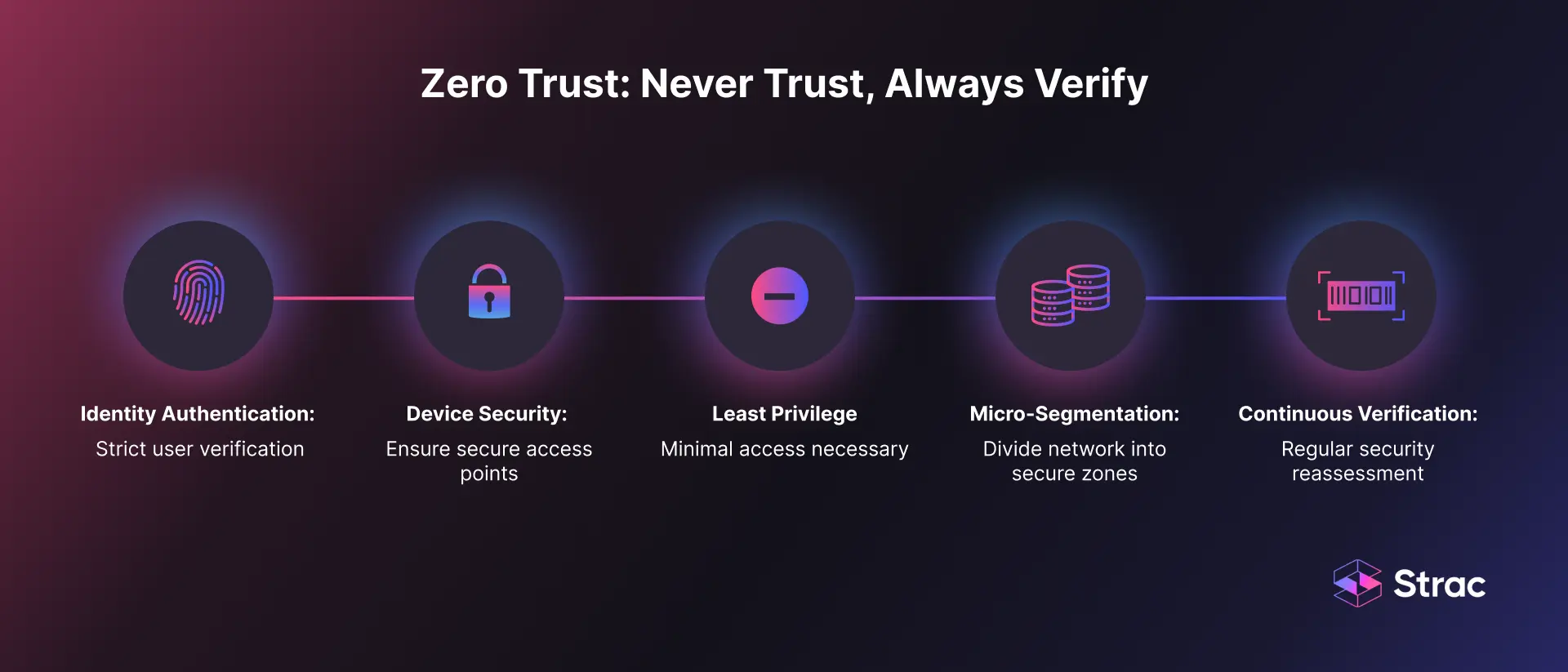
Adopting the principles of least privilege and zero trust is essential for minimizing the potential impact of a security breach. The least privilege principle ensures that users and devices have only the access necessary to perform their functions.
On the other hand, zero trust operates on the assumption that no user or device, whether inside or outside the network, should be trusted by default.
Effective endpoint Data Loss Prevention requires robust antivirus and antimalware solutions. These tools form the first line of defense against cyber threats, ranging from everyday viruses to highly sophisticated malware attacks. The selection of these solutions should be tailored to meet your network environment's specific requirements and challenges.
Software updates and patches are often released to address security vulnerabilities. Regularly updating operating systems, applications, and firmware closes these vulnerabilities, making it harder for attackers to exploit them. A systematic approach to patch management will ensure that updates are applied promptly, enhancing your security posture.
Regularly reviewing and updating security policies is essential to adapt to the evolving threat landscape and organizational changes. This process should encompass all aspects of endpoint DLP, including revising access controls, data protection strategies, and incident response plans.
Most endpoint strategies stop at blocking actions.
But that’s not enough.
Security teams need to understand:
This is where data lineage becomes critical.
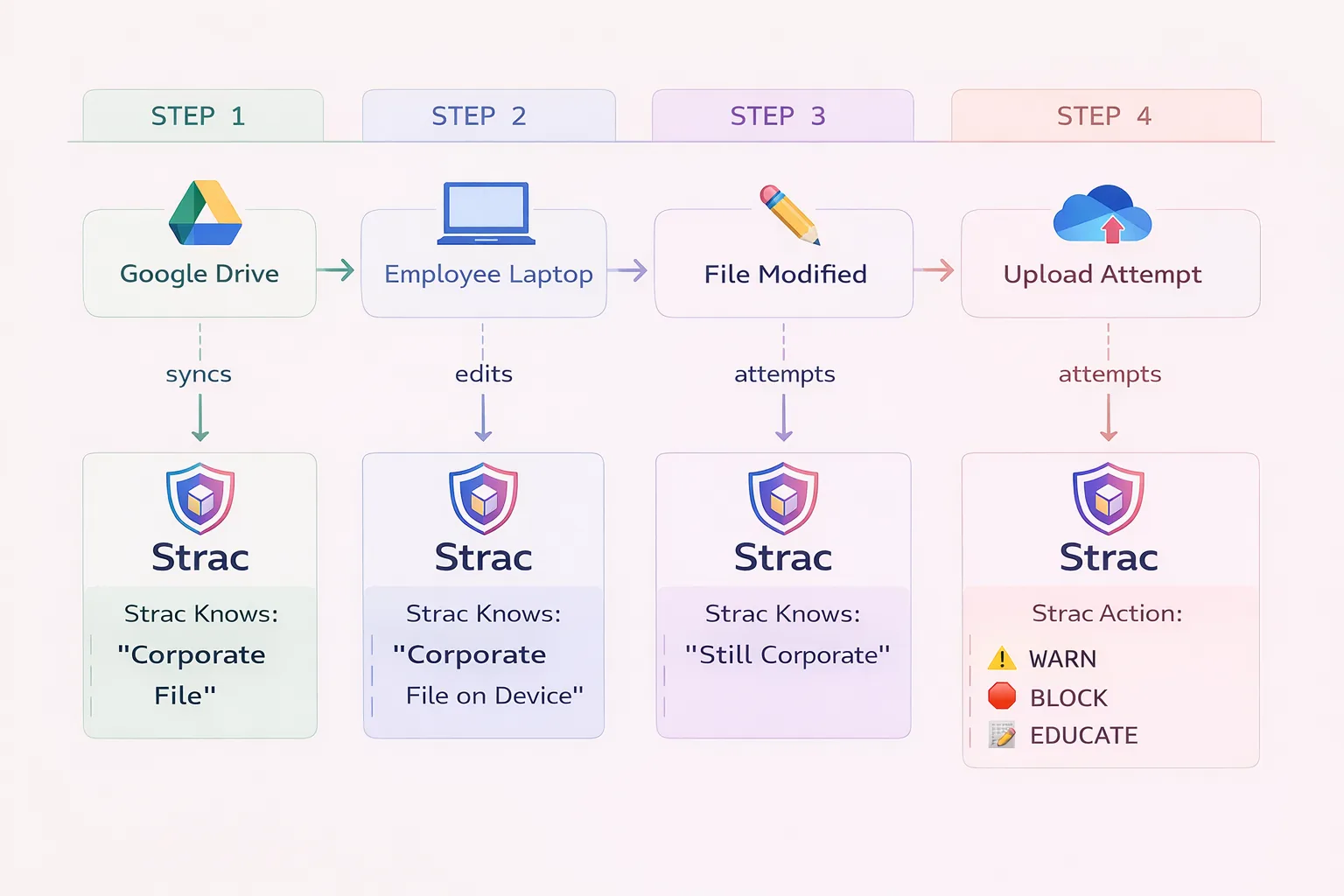
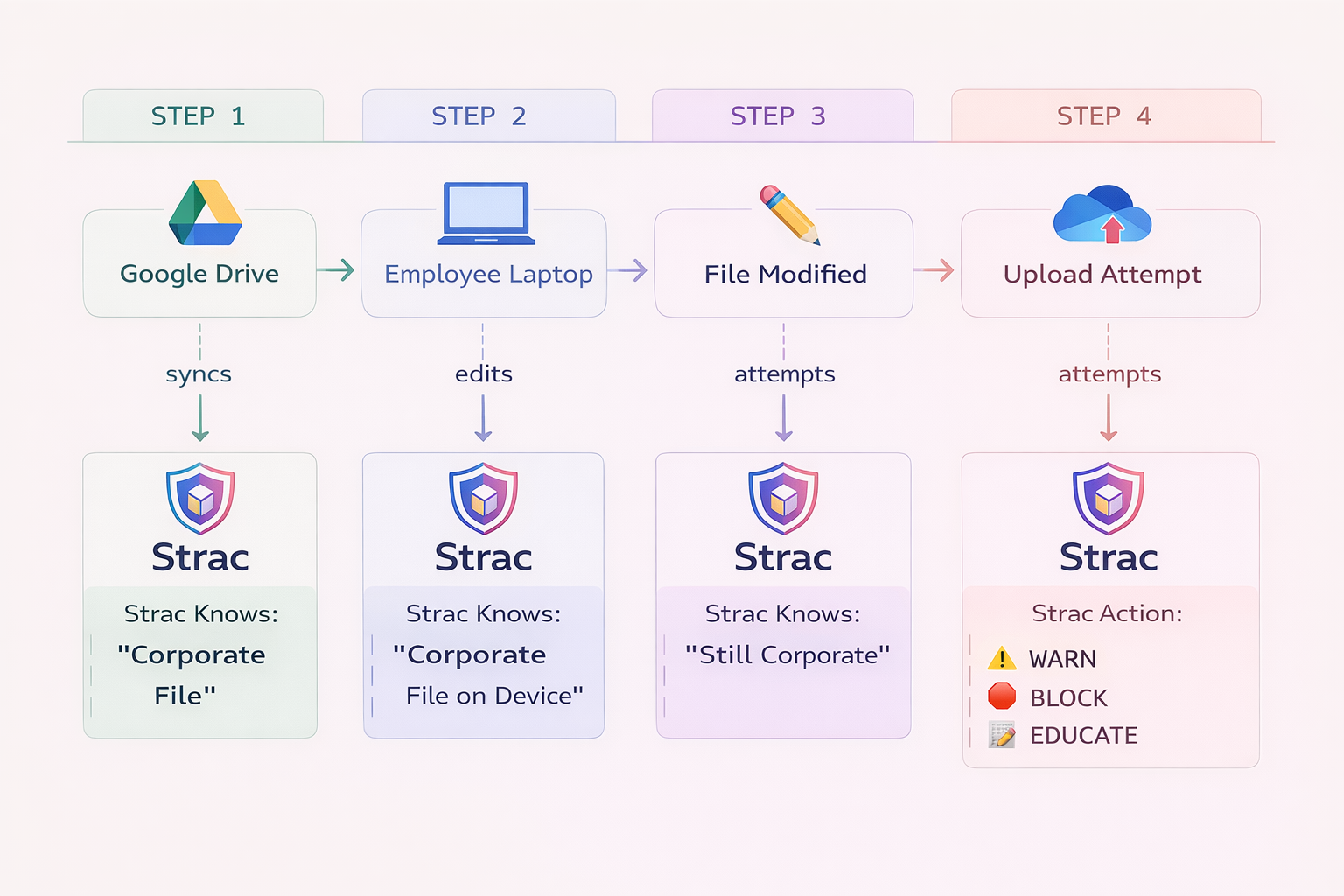
Example:
A file is downloaded from Google Drive → edited locally → uploaded to ChatGPT
Without lineage:
With lineage:
This is what turns DLP from a reactive tool into a system of record for data risk.
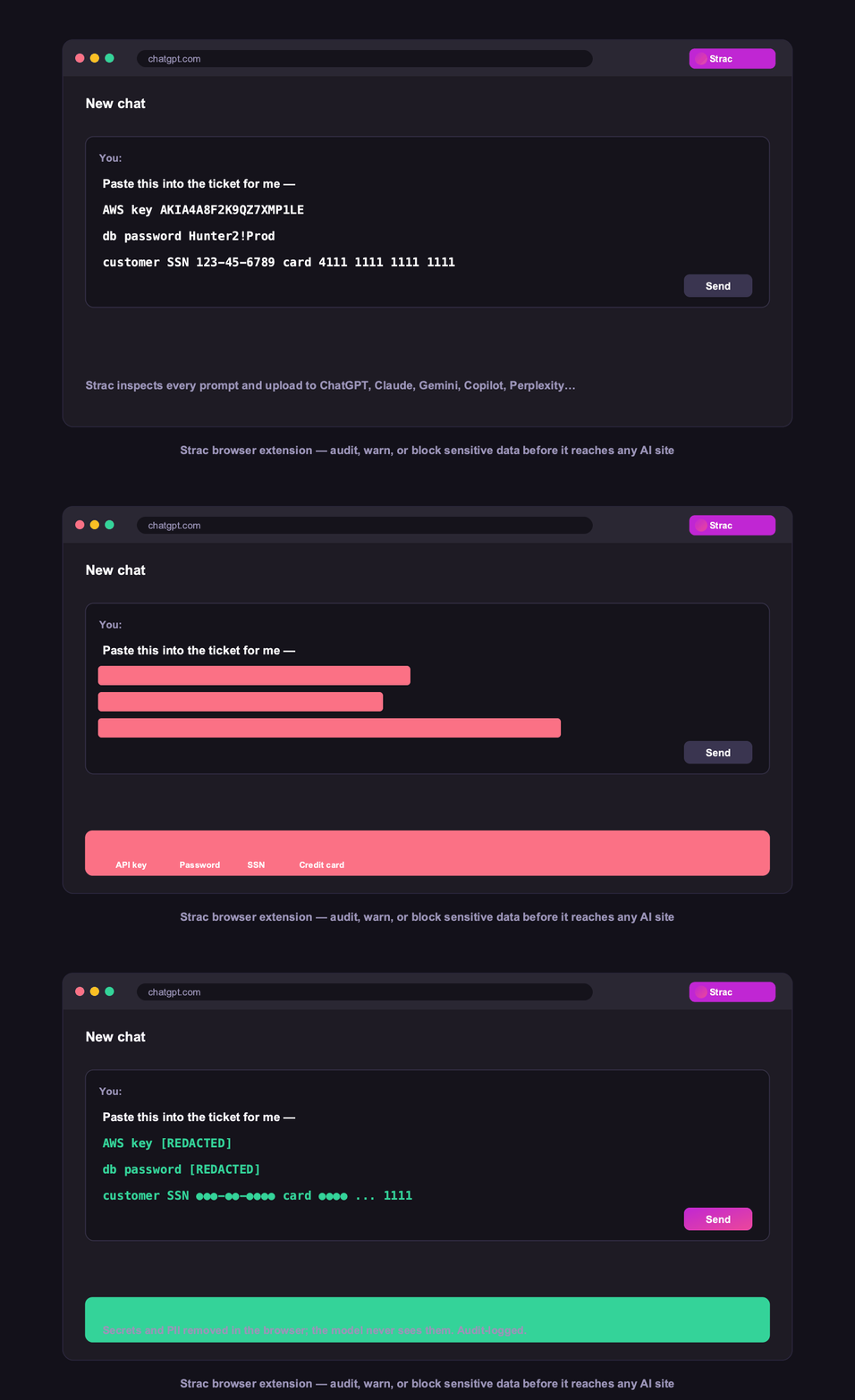
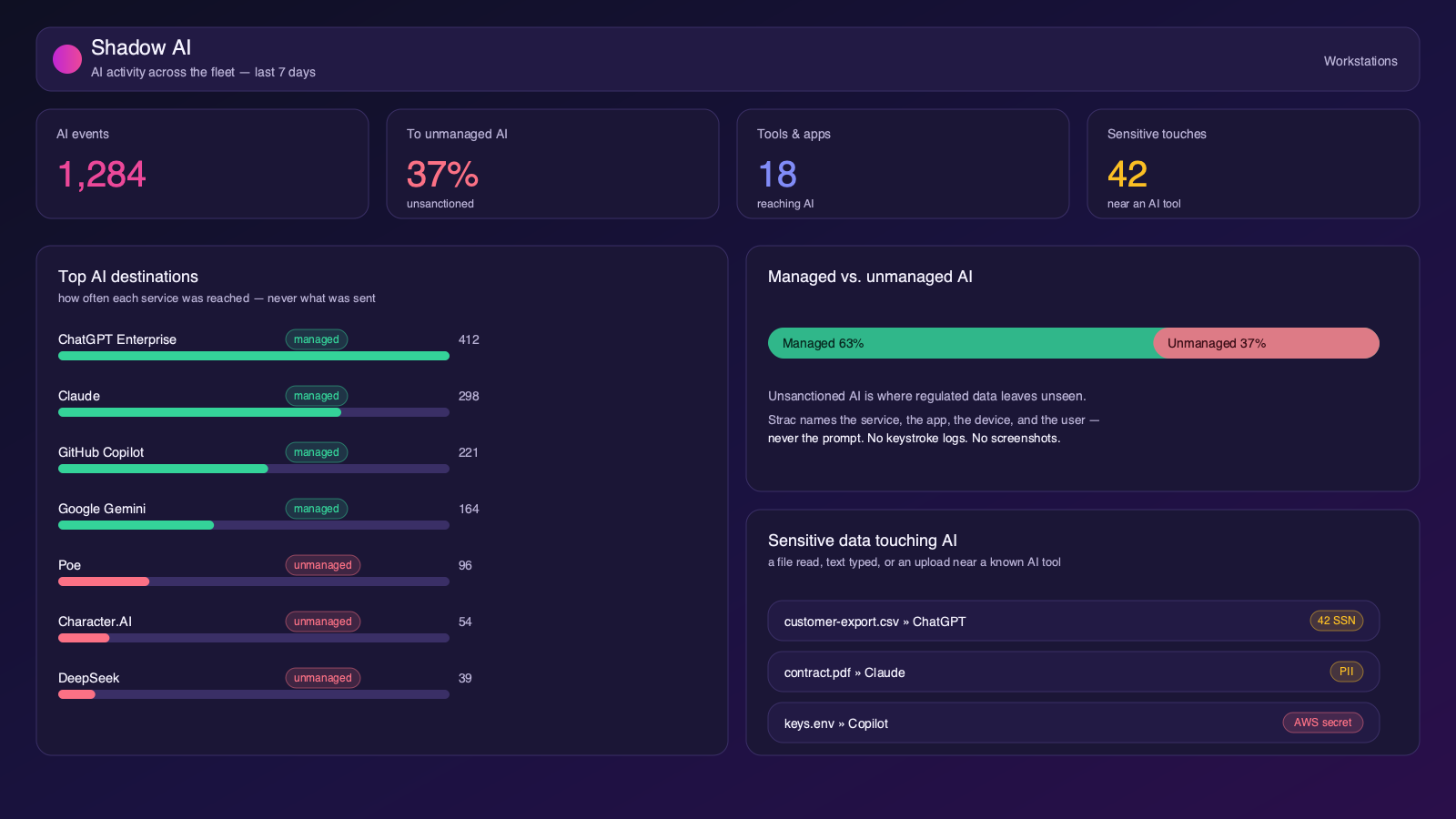
Modern endpoint DLP is really three jobs in one lightweight agent: core DLP (audit, warn, block) across every egress channel, Shadow AI discovery, and Data Lineage. Shadow AI is now the fastest-growing endpoint risk — employees paste regulated data into ChatGPT, Claude, Gemini, and Copilot, and connect unsanctioned AI agents, all from the device.
Strac’s endpoint agent surfaces every AI tool actually in use, scores the data risk of each, and governs the sensitive data flowing into them — blocking or warning in the browser at the moment a risky prompt is sent. It does this privacy-first: no keystroke logging and no screenshots of an employee’s screen.
One dashboard turns Shadow AI from an invisible problem into a managed surface, alongside the core DLP and data-lineage signals from the same agent. Learn more about Shadow AI and how to detect it.
Strac’s endpoint DLP runs as a lightweight agent built on OS-native frameworks — an Apple system extension (using Apple’s Endpoint Security framework) on macOS, and a file-system minifilter driver on Windows. The moment a user opens, saves, copies, pastes, prints, uploads, or moves a file to USB, Strac performs deep content inspection on the actual content in real time — classifying PII, PHI, PCI, secrets, and source code — and applies the right remediation inline: coach, warn, or block (or silently audit for lineage).
Critically, there is no proxy, no TLS/SSL interception, and no certificates to install. Inspection happens on the endpoint at the point of use, not by decrypting network traffic — so coverage extends to browsers, SaaS apps, GenAI tools, USB devices, and local files without the fragility, latency, or blind spots of a network-interception approach.
Strac is a data loss prevention (DLP) solution that offers a comprehensive approach to securing your endpoints, ensuring that your data remains protected.
Strac's DLP solutions enable organizations to implement stringent access controls on all endpoint devices with endpoint encryption. This means establishing robust authentication protocols to prevent unauthorized access to sensitive information.
Regular data scans are crucial for identifying and protecting sensitive information stored across various endpoints. Strac's DLP system conducts thorough scans of all devices within the network, detecting and classifying sensitive data. This proactive approach ensures that all critical data is identified and encrypted, reducing the potential for accidental exposure or malicious attacks.
Email and cloud storage are common attack methods for data breaches. Strac helps fortify these communication channels, applying stringent security measures to prevent unauthorized access and data leaks. This includes encrypting emails, monitoring file transfers, and securing data stored in the cloud, ensuring that your communications and stored data remain secure.

Applications frequently share data, requiring a solution like Strac to monitor and regulate these interactions, ensuring that sensitive data isn't inadvertently shared or exposed through third-party applications.
Security doesn't stop when devices go offline. Strac includes policies that remain effective even when devices are not connected to the network. This ensures continuous protection of sensitive data, regardless of the device's connectivity status.
Protecting data also means controlling physical outputs like printing and USB device usage. Strac can restrict these activities, preventing the unauthorized transfer or printing of sensitive information and thereby safeguarding data from physical theft or loss.
Strac uses Optical Character Recognition (OCR) technology to identify and protect sensitive information within images and scanned documents. This feature expands the scope of data protection beyond traditional text files.
The platform also offers self-remediation tools that allow users to proactively identify and rectify potential data security issues. This enhances security and fosters a culture of data protection awareness within the organization.
Endpoint DLP is no longer optional.
It is the layer where:
Without endpoint enforcement:
Modern solutions like Strac extend DLP across:
Giving you full control over how sensitive data moves; everywhere it exists.
Endpoint DLP (Data Loss Prevention) is a security approach that monitors, detects, and controls sensitive data directly on user devices such as laptops, desktops, and mobile endpoints. Unlike traditional DLP, which focuses on network traffic or cloud storage, endpoint DLP enforces protection at the exact point where data is created, copied, uploaded, or shared.
This means endpoint DLP can block actions like copying data to USB drives, uploading files to SaaS apps, or pasting sensitive content into AI tools like ChatGPT; all in real time. Traditional DLP often detects risks after the fact, while endpoint DLP prevents exposure before it happens.
Endpoint DLP is critical for AI security because most sensitive data leaks into GenAI tools happen directly from user devices. Employees frequently paste contracts, source code, customer data, or financial information into tools like ChatGPT, Copilot, or Gemini; and this behavior happens outside traditional security controls.
Modern endpoint DLP solutions inspect and control these interactions in real time by detecting sensitive data in prompts, redacting it, or blocking the action entirely. Without endpoint DLP, organizations have no control over how data is shared with AI systems, making it one of the biggest emerging risks in 2026.
Endpoint DLP prevents real-world data leaks that typically go undetected by traditional tools. These include insider threats, accidental data sharing, and intentional exfiltration during offboarding.
For example, endpoint DLP can:
These risks occur at the device level; which is why endpoint DLP is considered the last and most critical control layer in modern data security.
Endpoint DLP works by deploying a lightweight agent or browser-level control that continuously monitors user actions involving data. It uses machine learning, pattern recognition, and contextual analysis to identify sensitive information such as PII, PHI, PCI data, or secrets.
When risky behavior is detected, endpoint DLP enforces policies instantly through actions like:
This real-time enforcement ensures that sensitive data is protected before it leaves the device, not after exposure has already occurred.
A modern endpoint DLP solution must go beyond basic monitoring and provide real-time, context-aware enforcement across all environments where data moves.
Key capabilities to look for include:
Solutions that only provide visibility without enforcement will not meet modern security or compliance requirements.
Related: DLP agent and insider risk management.
Related reading:
Run an MSP or MSSP? See MSP DLP — how to deliver data loss prevention as a recurring managed service.
Endpoint DLP is data loss prevention that runs on the device — laptop or desktop — rather than on the network or in the cloud. An agent monitors how sensitive data is used locally (USB transfers, cloud-sync uploads, browser and AI-tool activity, printing, clipboard) and enforces policy even when the device is off the corporate network, which is where most work now happens.
Network DLP inspects traffic as it crosses the network perimeter; endpoint DLP acts on the device before data ever reaches the network. The distinction matters because remote and hybrid work made the perimeter porous — a file copied to USB or synced to personal cloud from a home network never passes a network sensor. See network vs cloud vs endpoint DLP.
It is the lightweight software installed on each device that does the actual monitoring and enforcement. A good agent is low-overhead, sees data inside files (OCR for scanned documents and images), and remediates rather than only blocking. See what is a DLP endpoint agent.
The good ones do. Because the agent sits on the device, it can see and control what an employee pastes or uploads into ChatGPT, Claude, Gemini, or Copilot — including on personal accounts — and redact sensitive data before it is submitted. Endpoint DLP that predates the AI era usually cannot.
It depends on whether you need endpoint-only or unified coverage. For a ranked comparison of the leading tools — Strac, Symantec, Forcepoint, Digital Guardian, Trellix and more — see our endpoint DLP solutions guide.
.avif)


.gif)


.webp)