Calendar Icon White
May 5, 2026
Clock Icon
7
 min read

Data Loss Prevention Software Open Source

Open source DLP tools offer flexibility but fall short in modern SaaS, cloud, and GenAI environments. Learn the 2026 approach to DLP and how to secure sensitive data in real time.

LinkedIn Logomark White
Data Loss Prevention Software Open Source
ChatGPT
Perplexity
Grok
Google AI
Claude
Summarize and analyze this article with:

TL;DR

  • Open source DLP tools give flexibility, but lack real-time remediation and scale
  • Most are detection-heavy and require manual tuning and maintenance
  • They struggle with SaaS, GenAI, and modern data flows
  • Enterprises now need DSPM + DLP combined, not just scanning tools
  • Modern platforms like Strac solve this with real-time redaction, agentless deployment, and full coverage across SaaS, Cloud, GenAI, and Endpoints

What is Open Source Data Loss Prevention Software?

Open source data loss prevention (DLP) software refers to tools that help organizations discover, classify, and monitor sensitive data across systems using freely available and customizable codebases.

Traditionally, these tools focus on:

  • Scanning data at rest and in motion
  • Detecting sensitive patterns (PII, PCI, PHI)
  • Logging and alerting on policy violations
  • Allowing custom rule creation (regex, keywords)

This model worked well in on-prem and network-centric environments.

But in 2026, data no longer lives in one place.

It lives in:

And this is where traditional open source DLP starts to break.

✨The Reality of Open Source DLP in 2026

Open source DLP still has value, but it operates in a very different reality today.

Where it works well

  • Low-cost environments
  • Custom security research setups
  • Basic data discovery projects
  • Teams with strong internal security engineering

Where it breaks

  • Real-time SaaS data protection
  • AI/GenAI data leakage prevention
  • Inline remediation (not just alerts)
  • Cross-platform visibility
  • Enterprise-scale compliance workflows

Most open source tools detect risk, but they don’t fix it.

And that’s the gap modern security teams are solving.

Top Open Source DLP Tools

MyDLP Community Edition

  • Network + endpoint monitoring
  • Basic predefined data classifiers
  • Regex-based detection
  • Limited reporting

OpenDLP

  • Strong at data discovery (data at rest)
  • Database and file system scanning
  • Scheduled scans with reports

Security Onion

  • Network traffic monitoring
  • Intrusion detection (Snort/Suricata)
  • Behavioral analytics

Snort

  • Real-time packet inspection
  • Custom rule-based detection
  • Alerting and blocking

These tools are still useful — but they require heavy customization and manual workflows to reach enterprise-grade protection.

✨Key Capabilities to Look For

If you’re evaluating open source DLP today, you need to think beyond traditional checklists.

1. Data Discovery Across Modern Surfaces

You need visibility across:

  • SaaS apps
  • Cloud storage
  • Data warehouses
  • Endpoints
  • AI tools

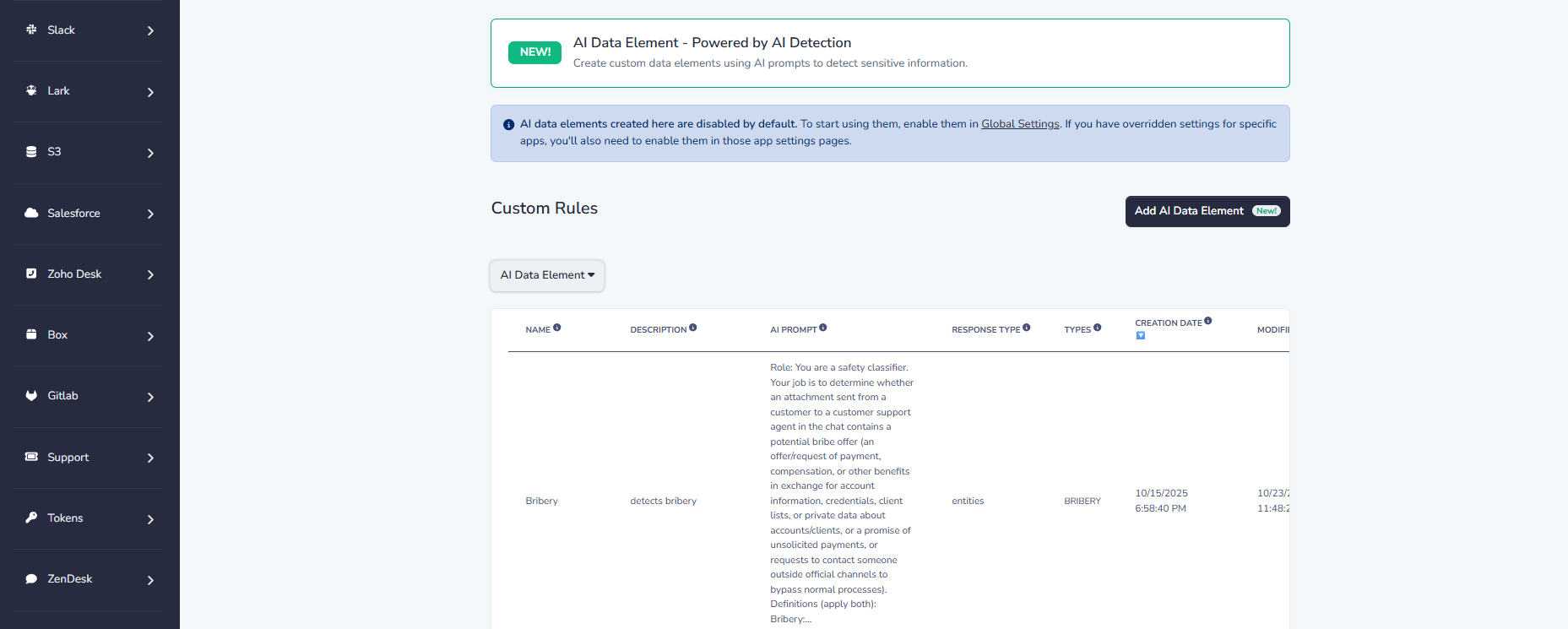
2. Content-Aware Detection (Not Just Regex)

Legacy systems rely on patterns. Modern systems require:

  • ML-based classification
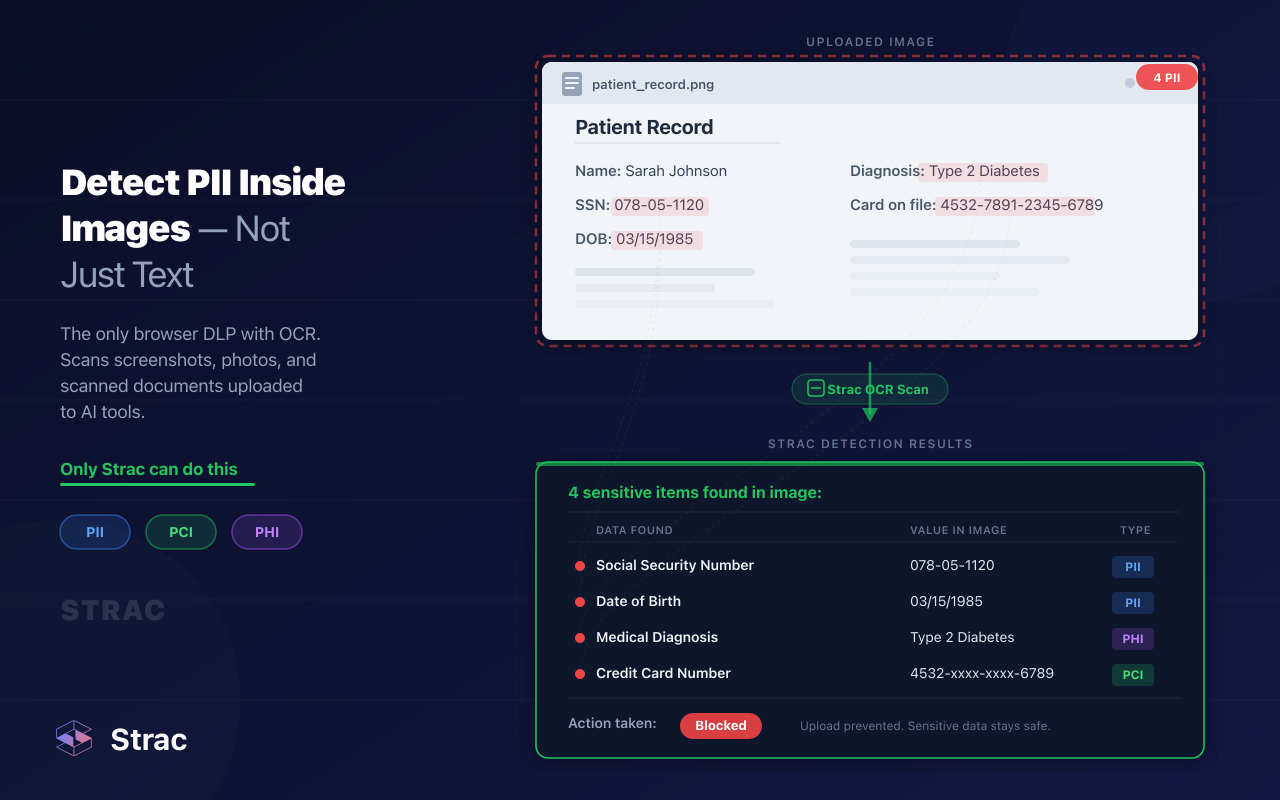
  • OCR for images/screenshots
  • Context-aware detection

3. Real-Time Remediation

Detection is not enough.

You need:

  • Redaction
  • Masking
  • Blocking
  • Access revocation

4. Unified DSPM + DLP

Separate tools create gaps.

Modern security requires:

  • Data discovery
  • Classification
  • Posture management
  • Enforcement

All in one workflow.

5. GenAI & Shadow AI Protection

This is the newest attack surface.

You need:

  • Prompt scanning
  • Output redaction
  • Sensitive data masking before AI exposure

Why Open Source DLP Falls Short Today

Open source DLP was built for a different era.

Here’s where it struggles most:

  • No real-time remediation → alerts without action
  • Limited SaaS coverage → misses where data actually lives
  • No GenAI protection → blind to the fastest-growing risk vector
  • High operational overhead → constant tuning and maintenance
  • Fragmented visibility → no unified data view

This creates a dangerous gap:

👉 You know data is leaking
👉 But you can’t stop it fast enough

🎥What Modern DLP Looks Like in 2026

Modern DLP is no longer just DLP.

It’s:

DSPM + DLP + GenAI Security + Real-Time Remediation

This shift is driven by:

  • SaaS-first organizations
  • AI adoption across teams
  • Compliance pressure (PCI, HIPAA, GDPR)
  • Insider risk and data sprawl

The goal is no longer just monitoring data.

It’s:

👉 Understanding where data lives
👉 Controlling how it moves
👉 Fixing risk instantly

🎥How Strac Solves This

While open source DLP gives flexibility, modern teams need speed, coverage, and automation.

This is where Strac operates differently.

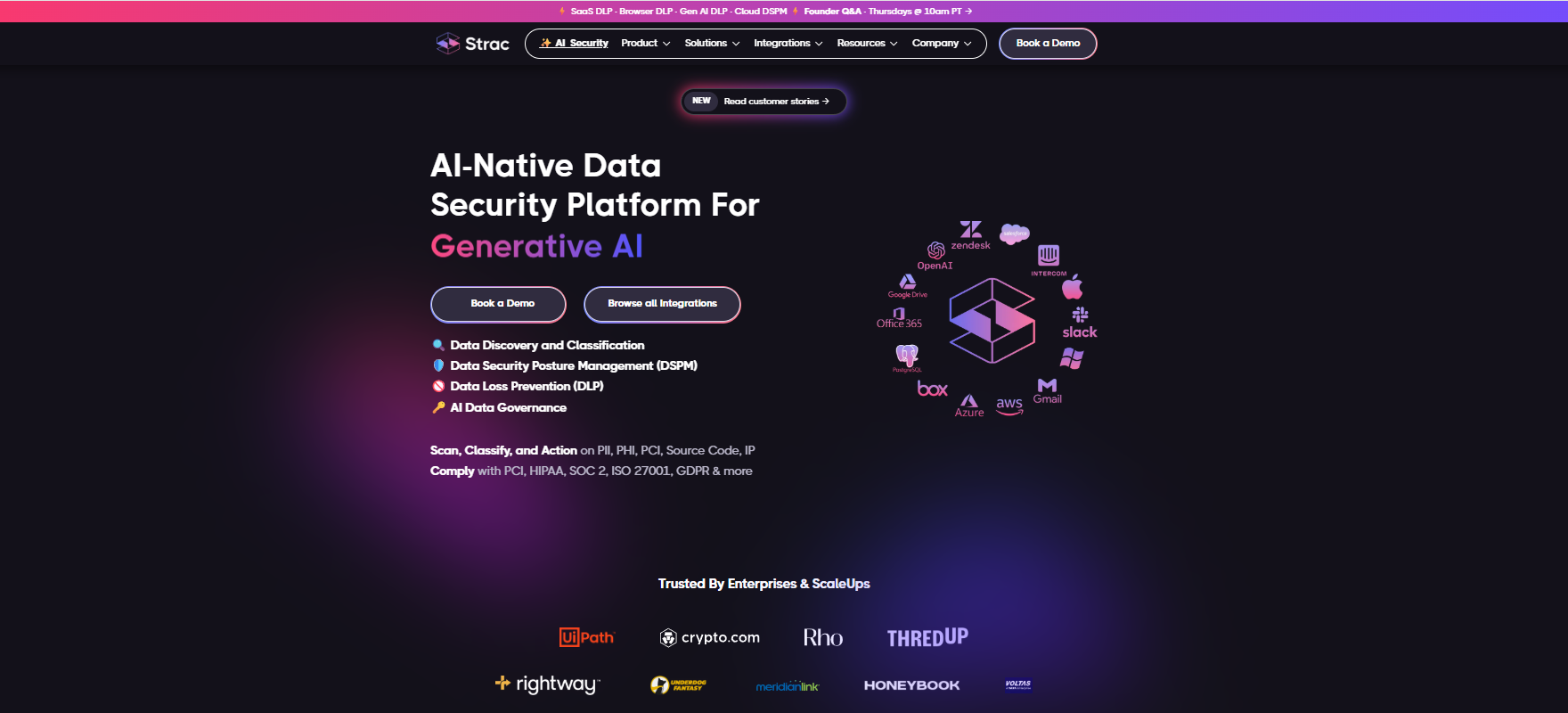
Strac is the unified DLP + DSPM solution built for SaaS, Cloud, Browser / GenAI, and Endpoints.

1. Agentless Deployment (Minutes, Not Months)

  • No agents, no heavy setup
  • Connect SaaS apps instantly
  • Works across cloud, endpoints, and AI

2. Full Data Coverage

  • SaaS (Slack, Google Drive, Salesforce, etc.)
  • Cloud (S3, Snowflake, databases)
  • Endpoints (Mac, Windows, Linux)
  • Browser + GenAI tools

3. Real-Time Remediation (Not Just Alerts)

Strac GenAI DLP
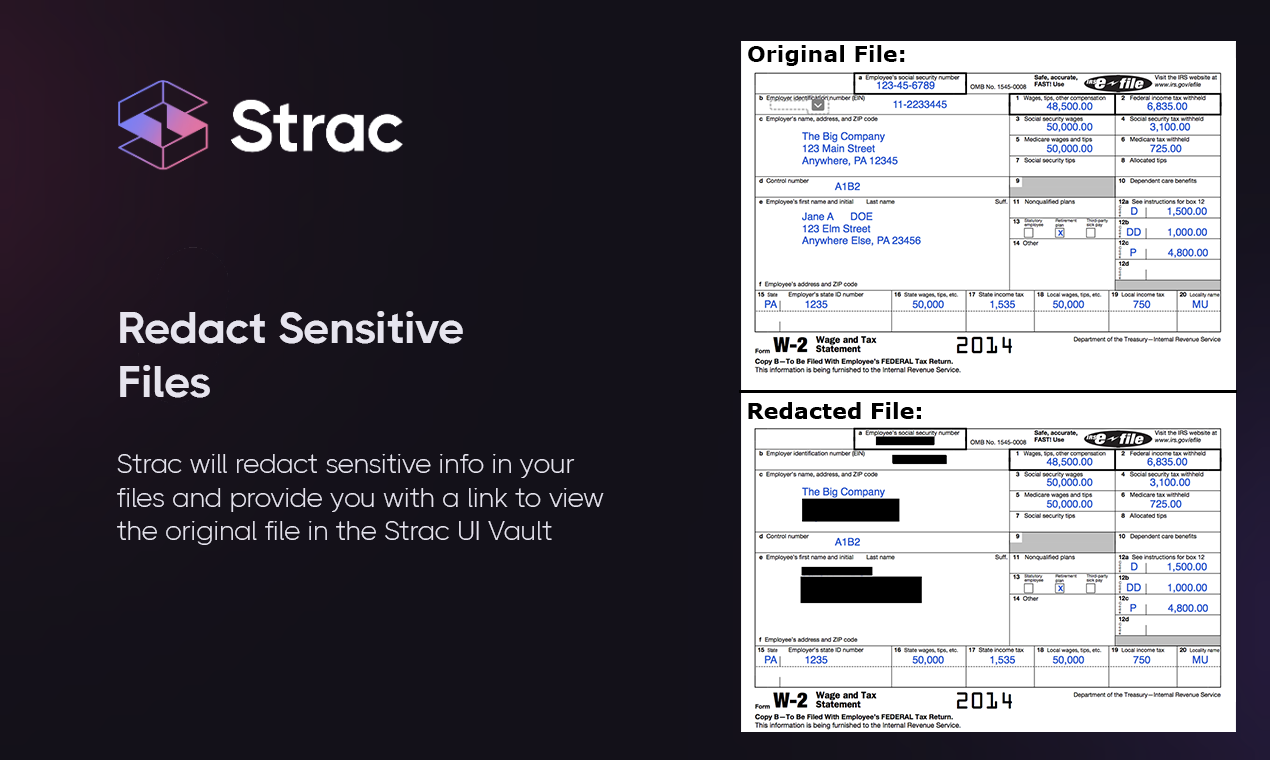
  • Redact sensitive data instantly
  • Mask PII/PHI/PCI
  • Block risky actions
  • Revoke access or delete exposure

4. ML + OCR Detection (Beyond Regex)

  • Detect data in:
    • Images
    • PDFs
    • Screenshots
    • Attachments
  • Reduce false positives and noise

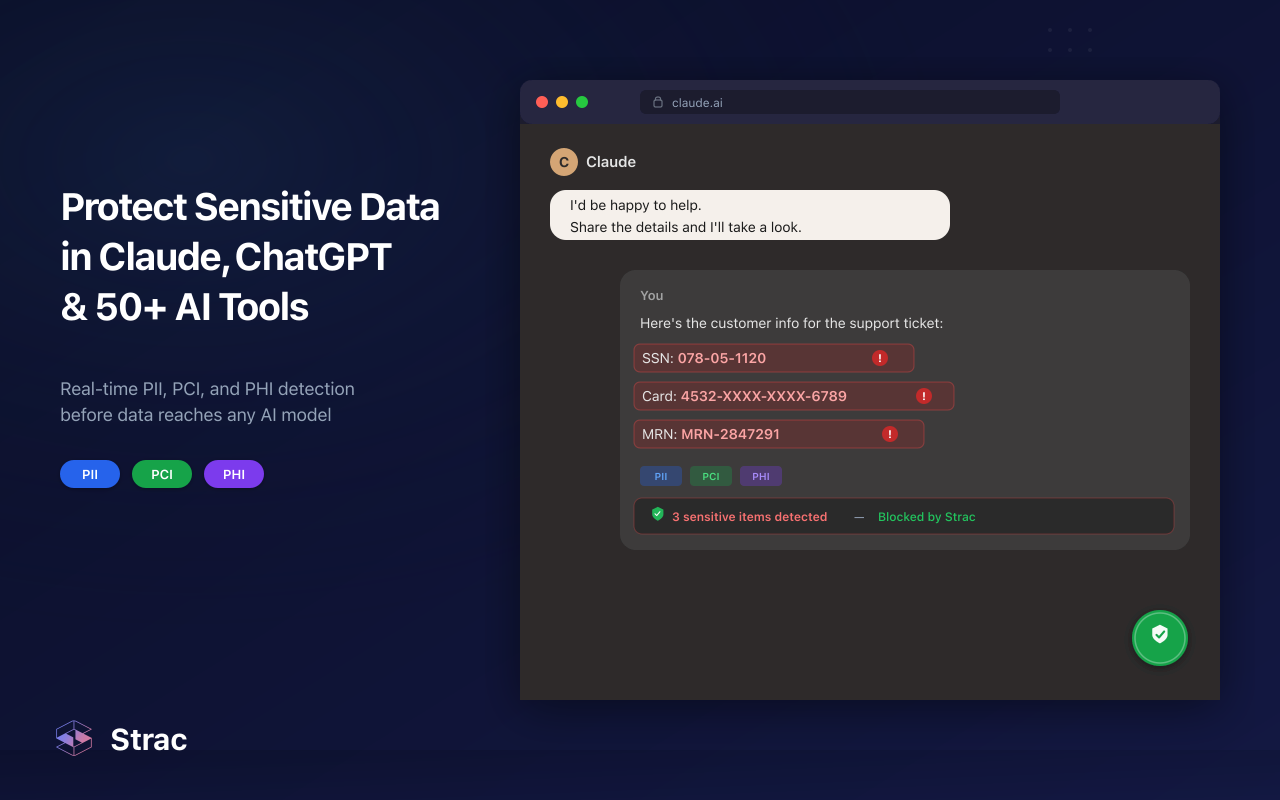
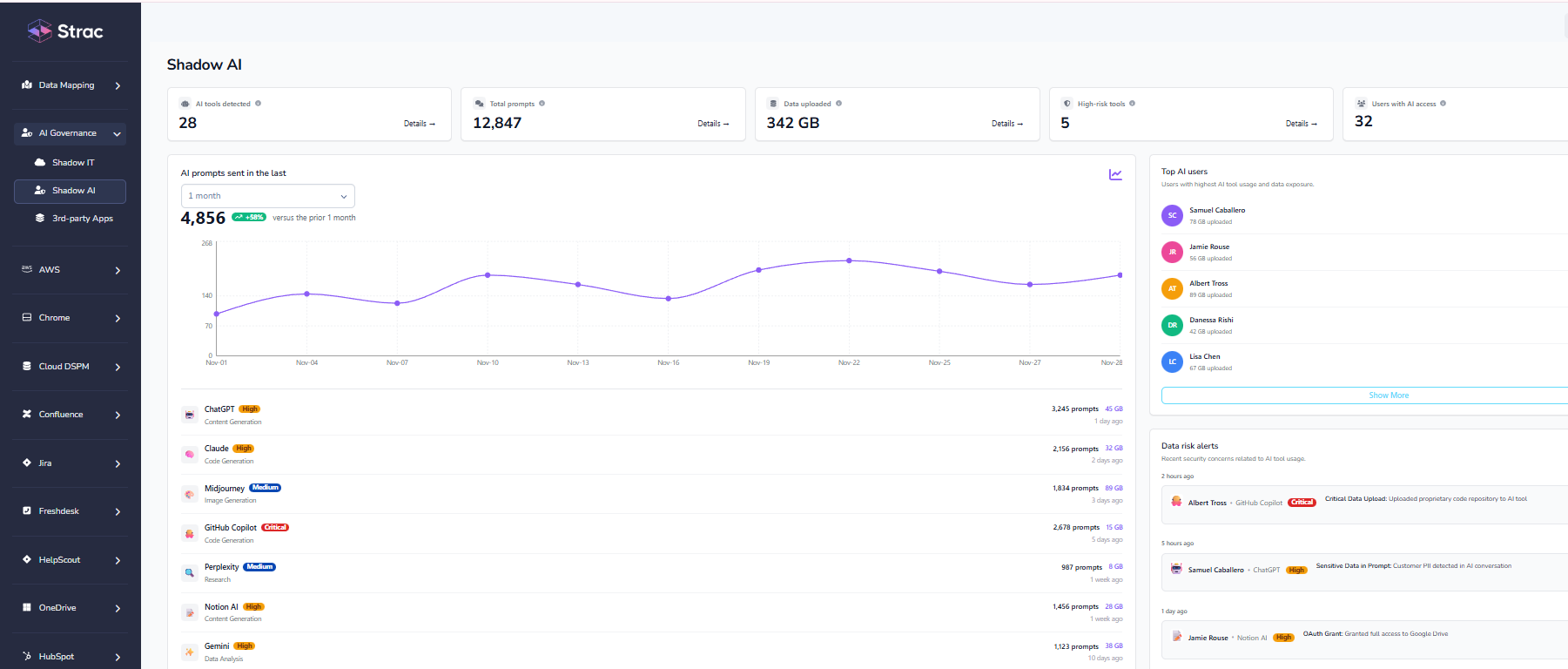
5. Built for GenAI Security

  • Scan prompts and outputs
  • Redact before data reaches AI
  • Prevent leakage in ChatGPT, Copilot, etc.

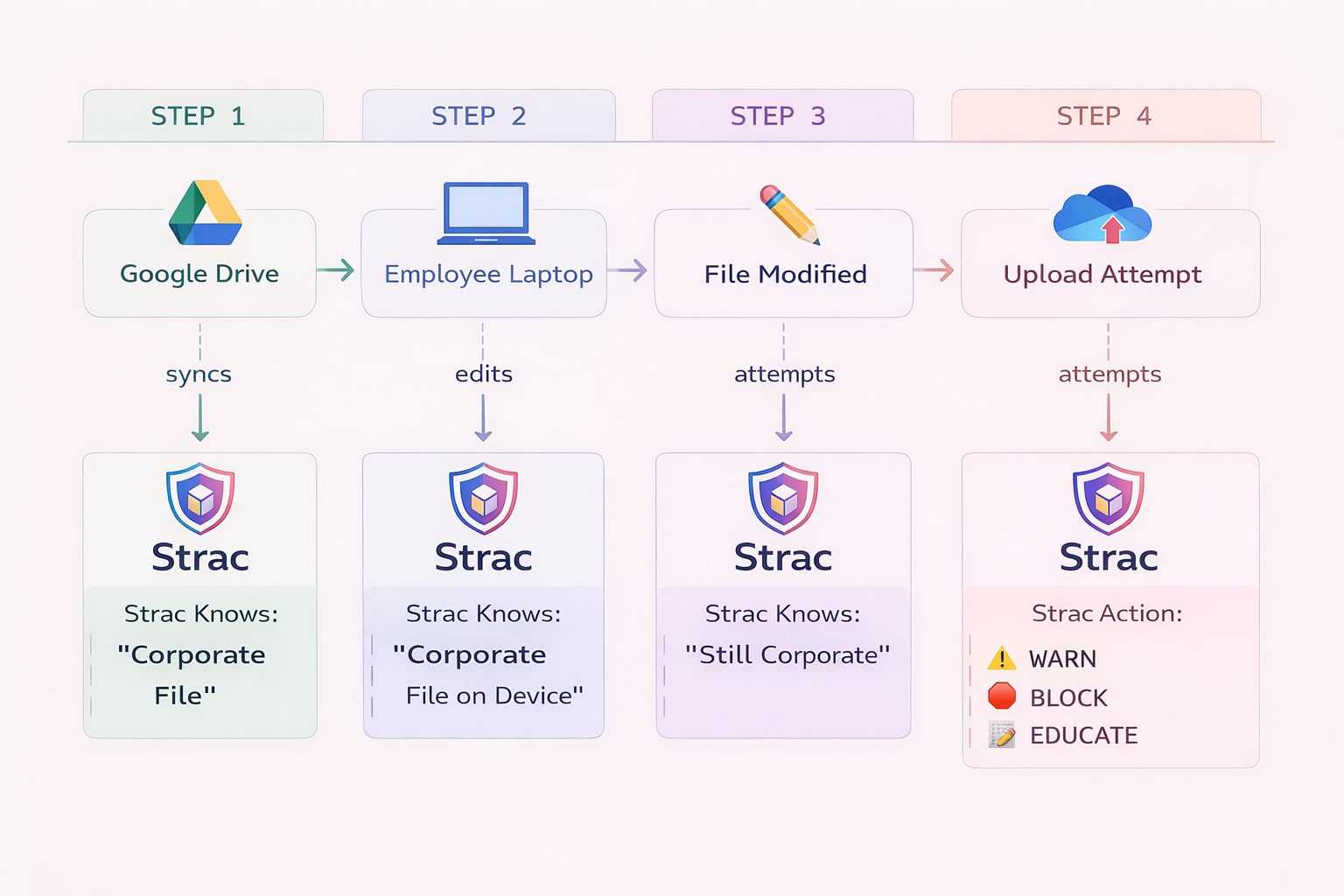
6. Data Lineage (Key Differentiator)

Strac Endpoint Data Lineage
  • Track data across:
    • Copy
    • Rename
    • Move
    • Upload

This solves one of the biggest gaps in traditional DLP.

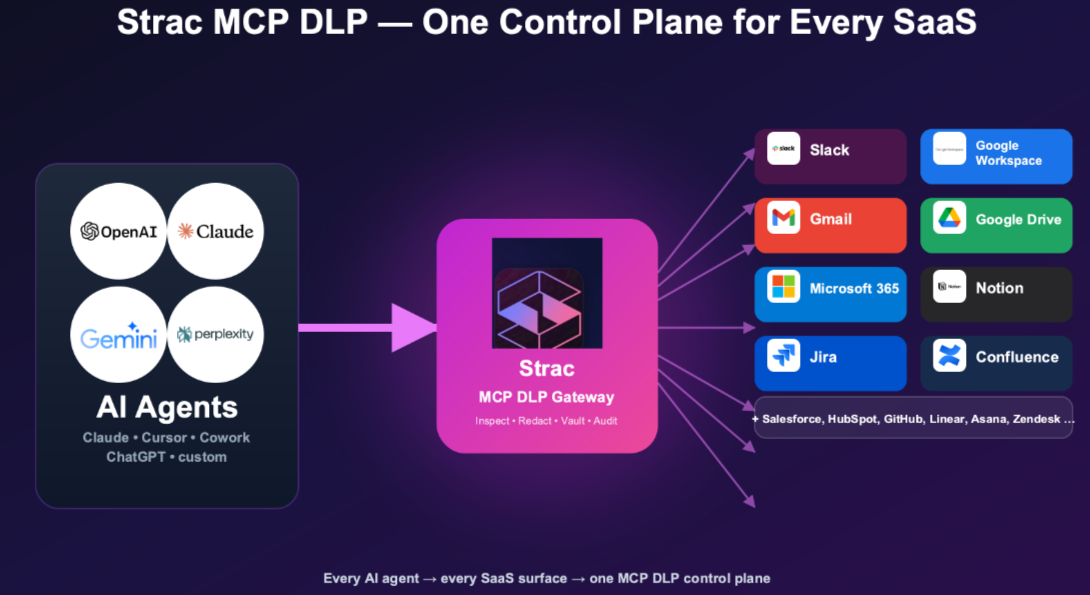
7. MCP & AI Agent DLP

One of the biggest blind spots in traditional and open source DLP is AI agents and MCP (Model Context Protocol) workflows.

Strac MCP DLP

As companies adopt agent-based systems that can:

  • Access internal data
  • Call APIs
  • Move data across tools automatically

…they introduce a completely new data leakage surface.

Strac addresses this by:

  • Monitoring data flowing through AI agents and MCP pipelines
  • Detecting sensitive data inside agent context and tool calls
  • Redacting or blocking exposure before it leaves the system
  • Enforcing policies across autonomous workflows, not just users

This is critical because AI agents don’t behave like employees — they move faster, touch more systems, and can expose data at scale if not controlled.

8. Unified DSPM + DLP

  • Discover → Classify → Remediate
  • One platform, not multiple tools

All of this aligns with what modern security teams actually need today.

Implementing DLP in 2026 (Best Practices)

If you’re starting today, your approach should evolve beyond traditional methods:

  • Start with visibility across SaaS + cloud
  • Identify where sensitive data actually lives
  • Move from monitoring → remediation
  • Prioritize real-time controls
  • Include GenAI in your security scope
  • Reduce tool sprawl with unified platforms
  • Automate wherever possible

The biggest mistake teams make is treating DLP as a compliance checkbox instead of an active control system.

The Bottom Line

Open source data loss prevention software still has a place — especially for cost-conscious or highly technical teams.

But for most modern organizations, it’s no longer enough.

Data today moves:

  • Across SaaS apps
  • Through APIs
  • Into AI systems
  • Across endpoints and cloud storage

And protecting it requires more than detection.

It requires real-time action, full visibility, and unified control.

That’s the shift from traditional DLP → modern DSPM + DLP platforms like Strac.

🌶️ Spicy FAQs on DLP Software Open Source

What is the biggest limitation of open source DLP?

Open source DLP tools lack real-time remediation. They can detect sensitive data exposure, but they cannot automatically redact, block, or fix it.

Can open source DLP protect SaaS applications like Slack or Google Drive?

Not effectively. Most open source tools were not built for SaaS environments and require heavy customization to even partially support them.

Is open source DLP enough for compliance (HIPAA, PCI, GDPR)?

It can help with discovery, but compliance requires audit trails, remediation, and enforcement — which are often missing or manual.

How does GenAI change DLP requirements?

GenAI introduces a new risk: data leakage through prompts and outputs. Traditional DLP tools don’t cover this, but modern platforms do.

What should companies use instead of open source DLP?

Most companies are moving toward unified DSPM + DLP platforms that provide real-time remediation, SaaS coverage, and AI security in one system.

Discover & Protect Data on SaaS, Cloud, Generative AI
Strac provides end-to-end data loss prevention for all SaaS and Cloud apps. Integrate in under 10 minutes and experience the benefits of live DLP scanning, live redaction, and a fortified SaaS environment.
Users Most Likely To Recommend 2024 BadgeG2 High Performer America 2024 BadgeBest Relationship 2024 BadgeEasiest to Use 2024 Badge
Trusted by enterprises
Discover & Remediate PII, PCI, PHI, Sensitive Data

Latest articles

Browse all

Get Your Datasheet

Thank you! Your submission has been received!
Oops! Something went wrong while submitting the form.
Close Icon