Learn how to build a successful DLP implementation strategy for 2026. Discover best practices, deployment steps, common challenges, and how to protect sensitive data across SaaS, cloud, AI, browsers, and endpoints.
· A successful DLP implementation starts withdiscovering and classifying sensitive data across SaaS apps, cloud storage,endpoints, browsers, and AI tools.
· Roll out DLP in phases by identifying criticaldata, creating policies, testing them, and gradually automating enforcement.
· Modern DLP solutions should go beyond alerts byautomatically redacting, masking, blocking, or quarantining sensitive data inreal time.
· Choose a platform with broad integrations,AI-powered detection, and built-in support for compliance frameworks like GDPR,HIPAA, PCI DSS, SOC 2, and ISO 27001.
· Strachelps organizations implement modern DLP with agentless deployment, unifiedDSPM and DLP, AI protection, and real-time remediation across cloud, SaaS,endpoints, browsers, and AI applications.
Data no longer stays in one place. Employees work across SaaS apps, cloud storage, AI tools, browsers, and endpoints, creating more opportunities for sensitive information to be exposed. That's why implementing Data Loss Prevention (DLP) today is about much more than deploying security software. It requires a strategy that protects data wherever it moves without disrupting productivity.
This guide explains how to build a modern DLP implementation strategy, the key stages of a successful rollout, common mistakes to avoid, and what to look for in a DLP solution.
What Is a DLP Implementation Strategy?
A DLP implementation strategy is a plan for discovering, classifying, monitoring, and protecting sensitive data across your organization. The goal is to understand where sensitive data lives, who can access it, how it's being shared, and automatically prevent unauthorized exposure.
Instead of simply detecting risks, modern DLP solutions help stop them before they become data breaches.
Where Organizations Use DLP
Today's DLP platforms protect sensitive data across multiple environments, including:
SaaS applications like Microsoft 365, Google Workspace, Slack, Salesforce, Jira, and Zendesk.
Cloud storage such as Box, SharePoint, OneDrive, Dropbox, and Google Drive.
AI applications including ChatGPT, Claude, Gemini, and Microsoft Copilot.
Endpoints and browsers, where employees upload, download, copy, and share sensitive information.
Why Traditional DLP Isn't Enough
Traditional DLP focused on email and network traffic. Modern businesses need visibility across cloud applications, AI tools, and endpoints.
A modern DLP implementation should include:
Continuous sensitive data discovery
Accurate AI and ML-powered classification
Real-time remediation through redaction, masking, blocking, or quarantine
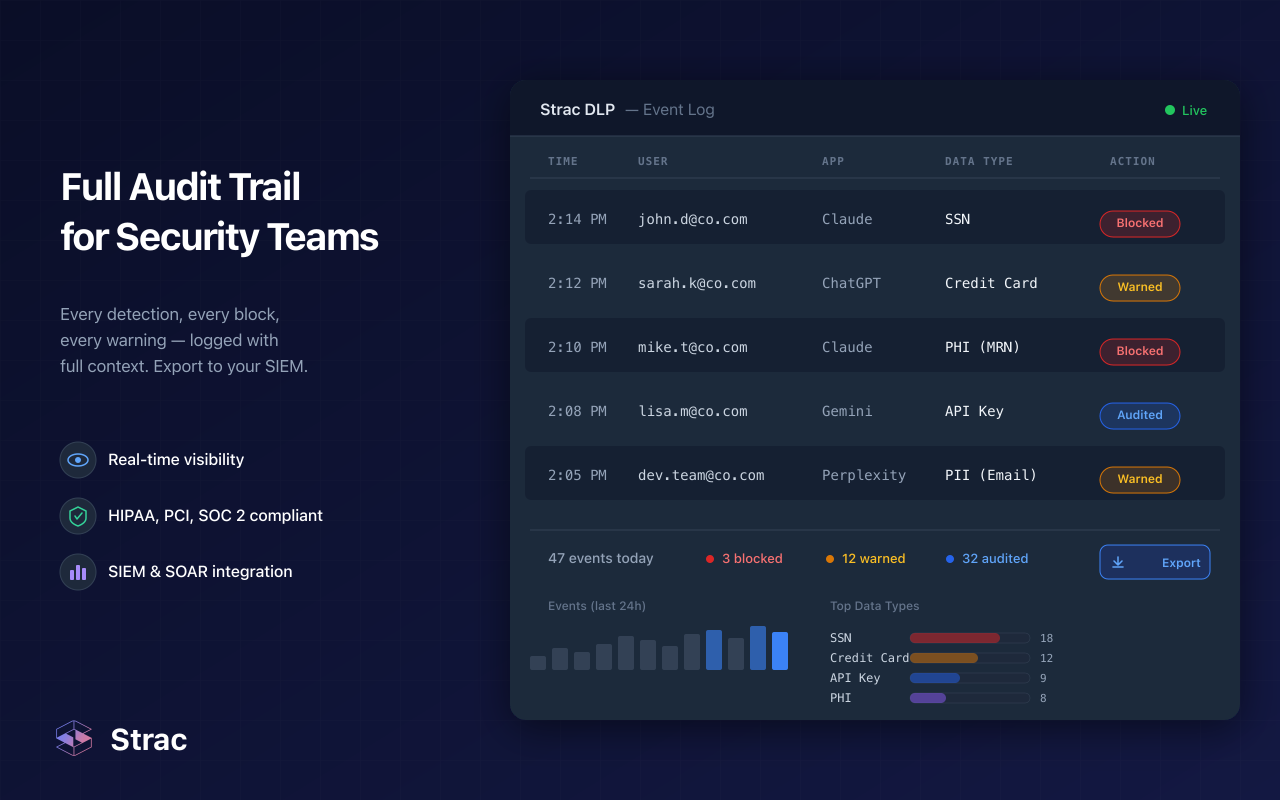
Centralized visibility across all business applications
Support for compliance frameworks like GDPR, HIPAA, PCI DSS, SOC 2, and ISO 27001
What Does a DLP Implementation Project Look Like?
Most organizations implement DLP in phases instead of trying to secure everything at once. A typical rollout includes:
Discover sensitive data.
Classify regulated and confidential information.
Create protection policies.
Monitor critical applications.
Test and refine policies.
Automate remediation.
Continuously review and improve.
This phased approach helps improve security while minimizing disruption to employees.
✨ Key Phases of a Successful DLP Implementation
Rolling out a DLP solution isn't just about installing software. The most successful implementations start by understanding where sensitive data lives and then gradually applying policies that reduce risk without disrupting the business.
1. Discover and Classify Sensitive Data
Before you can protect data, you need to know where it exists. Start by scanning your SaaS applications, cloud storage, endpoints, databases, and AI tools to identify sensitive information such as PII, PHI, PCI data, financial records, source code, and intellectual property.
Automated data discovery and classification gives security teams visibility into what needs protection and helps prioritize the highest-risk areas.
2. Define Data Protection Policies
Once sensitive data has been identified, create policies based on your business and compliance requirements. These policies determine what data should be monitored, who can access it, and what happens when a policy is violated.
For example, you may want to block payment card data from being shared in Slack, automatically redact personal information from support tickets, or prevent confidential documents from being uploaded to AI applications.
3. Start With Monitoring
Rather than enforcing policies immediately, begin by monitoring user activity. This allows you to understand how data moves through your organization and fine-tune policies before blocking legitimate work.
Running in monitor mode first also helps reduce false positives and improves user adoption.
4. Automate Remediation
Once policies have been validated, automate your response to reduce manual work.
Depending on the risk, a DLP solution should be able to:
Redact or mask sensitive information
Block unauthorized sharing
Quarantine exposed files
Encrypt sensitive content
Alert security teams when needed
Automating remediation helps stop data leaks before they become incidents.
5. Continuously Improve
Your environment will constantly change as employees adopt new SaaS applications, AI tools, and workflows. DLP policies should be reviewed regularly to account for new risks, changing compliance requirements, and evolving business needs.
Organizations that continuously monitor and refine their DLP strategy are far better prepared to prevent data loss over time.
Common DLP Implementation Challenges
Even with the right technology, DLP projects can fail if they're rolled out too aggressively or without clear planning.
Some of the most common challenges include:
Too Many False Positives
Overly broad policies generate unnecessary alerts and quickly lead to alert fatigue. AI-powered classification and policy tuning help improve accuracy.
Limited Visibility
Many organizations protect email but overlook SaaS applications, cloud storage, AI tools, browsers, and endpoints where sensitive data is also shared.
Poor User Adoption
If security controls interrupt everyday work, employees often look for workarounds. Modern DLP should work quietly in the background while only intervening when necessary.
Compliance Complexity
Meeting requirements for GDPR, HIPAA, PCI DSS, SOC 2, ISO 27001, and other regulations becomes difficult without centralized visibility and automated policy enforcement.
Managing Multiple Security Tools
Using separate tools for data discovery, classification, DLP, and AI security creates complexity and operational overhead. A unified platform simplifies management while providing consistent protection across the organization.
🎥 What to Look for in a Modern DLP Solution
Not all DLP platforms offer the same level of protection. As organizations adopt more SaaS applications, AI tools, and cloud services, it's important to choose a solution that protects data wherever it lives without adding unnecessary complexity.
Here are the capabilities to prioritize.
Broad Data Discovery and Classification
A modern DLP platform should automatically discover and classify sensitive data across SaaS applications, cloud storage, endpoints, browsers, AI tools, and databases. Look for support for PII, PHI, PCI, financial data, source code, secrets, and custom data types.
Real-Time Detection and Remediation
Detecting sensitive data isn't enough. The platform should automatically respond by masking, redacting, blocking, quarantining, encrypting, or deleting sensitive information before it can be exposed.
AI-Powered Detection
Traditional regex-based detection often creates false positives. AI and machine learning improve accuracy by understanding context and identifying sensitive information in text, documents, images, PDFs, spreadsheets, screenshots, and other unstructured content.
Broad Integration Coverage
Choose a platform that integrates with the applications your teams already use, including Microsoft 365, Google Workspace, Slack, Salesforce, Jira, Zendesk, SharePoint, OneDrive, Box, Dropbox, ChatGPT, Claude, Gemini, Microsoft Copilot, and endpoint devices.
Built-In Compliance Support
If your business operates in a regulated industry, look for built-in policies that support frameworks such as GDPR, HIPAA, PCI DSS, SOC 2, ISO 27001, CCPA, and NIST.
🎥 Why Organizations Choose Strac
Strac is a modern DSPM and DLP platform that helps organizations discover, classify, monitor, and protect sensitive data across cloud, SaaS, endpoints, browsers, and AI applications from a single platform.
Key capabilities include:
Agentless deployment with minimal setup.
Unified DSPM and DLP for complete data visibility.
AI-powered detection for structured and unstructured data.
Real-time remediation through redaction, masking, blocking, quarantine, encryption, or deletion.
Protection for AI applications and LLMs like ChatGPT, Claude, Gemini, and Microsoft Copilot.
Support for documents, PDFs, spreadsheets, images, screenshots, and source code.
100+ integrations across SaaS, cloud, endpoints, browsers, and developer tools.
Built-in compliance templates for GDPR, HIPAA, PCI DSS, SOC 2, ISO 27001, CCPA, and NIST.
APIs and flexible policy controls to fit different security requirements.
Whether you're implementing DLP for the first time or replacing a legacy solution, Strac helps security teams reduce data exposure while keeping deployment simple and productivity high.
Bottom Line
A successful DLP implementation is an ongoing process, not a one-time project. The right strategy starts with understanding where sensitive data lives, building policies around business risk, and automating protection across every environment where data moves.
As organizations continue to adopt SaaS applications, AI tools, and cloud services, choosing a modern DLP platform with broad visibility, real-time remediation, and built-in compliance support is essential. Solutions like Strac help organizations simplify DLP implementation while protecting sensitive data wherever employees work.
🌶️ Spicy FAQs on DLP Implementation Strategy
1. What is a DLP implementation strategy?
A DLP implementation strategy is a structured plan for discovering, classifying, monitoring, and protecting sensitive data across your organization. It typically includes data discovery, policy creation, monitoring, automated remediation, and ongoing optimization to reduce the risk of data loss and ensure compliance.
2. How long does it take to implement a DLP solution?
The timeline depends on the size and complexity of your environment. Many modern, cloud-native DLP platforms can be deployed within days, while larger enterprise rollouts may take several weeks as policies are tested and refined.
3. What should be protected with DLP?
A DLP solution should protect any sensitive or regulated data, including personally identifiable information (PII), protected health information (PHI), payment card data (PCI), financial records, source code, intellectual property, credentials, API keys, and confidential business documents across SaaS, cloud, endpoints, browsers, and AI applications.
4. What features should a modern DLP solution include?
Look for automated data discovery, AI-powered classification, real-time remediation, broad SaaS and cloud integrations, endpoint and browser protection, AI security, compliance templates, and centralized visibility across your entire data environment.
5. How does Strac simplify DLP implementation?
Strac combines DSPM and DLP in a single, agentless platform that discovers, classifies, and protects sensitive data across SaaS applications, cloud storage, endpoints, browsers, and AI tools. With AI-powered detection, real-time remediation, and built-in compliance policies, organizations can deploy DLP quickly while reducing operational overhead.
Discover & Protect Data on SaaS, AI, MCP, Endpoints & Cloud
Strac provides end-to-end data loss prevention for all SaaS and Cloud apps. Integrate in under 10 minutes and experience the benefits of live DLP scanning, live redaction, and a fortified SaaS environment.


.webp)









.avif)



.gif)
