What the Conduent Breach Actually Reveals About Modern Data Security
The Conduent breach exposed over 25 million records after 83 days of undetected data exfiltration. Learn what it reveals about modern data security and why legacy DLP fails.
The Conduent breach was not just an intrusion problem; it was a data visibility problem that lasted 83 days.
Attackers used legitimate access paths, allowing massive data exfiltration without triggering alerts.
Legacy security architectures often monitor networks and identities, but not the content of data leaving systems.
Modern environments spread sensitive data across SaaS apps, cloud storage, endpoints, and AI tools, expanding the attack surface.
Effective modern data security requires continuous discovery, classification, lineage tracking, and real-time remediation, not just alerts.
The Conduent breach highlights a real gap in modern data security. For 83 days, attackers moved through the company’s systems and quietly exfiltrated about 8 terabytes of sensitive data, including Social Security numbers and healthcare records affecting millions of people.
What stands out is how long the activity went unnoticed. By the time the breach was discovered, the data had already left the environment. Lets dive in!
What Actually Happened in the Conduent Breach
Conduent, a contractor that processes healthcare and benefits data, was breached in October 2024. Attackers remained inside the environment for nearly three months, quietly exfiltrating about 8 TB of sensitive data, including Social Security numbers, addresses, and medical records.
By the time the breach was discovered in January 2025, more than 25 million people had been affected.
Why the Exfiltration Went Undetected
Attackers used legitimate credentials and normal workflows, which made the activity look like regular system use.
Without visibility into the actual sensitive data moving through systems, large-scale data exfiltration can easily go unnoticed.
✨ The Real Problem: Data Visibility
The Conduent breach also highlights a growing challenge in modern environments; sensitive data is everywhere, and much of it is poorly tracked.
Today, organizations store sensitive information across many different systems, including:
SaaS platforms
cloud storage
collaboration tools
developer environments
support systems
employee endpoints
Over time, this creates massive amounts of scattered data. Some files are archived, some duplicated, some shared externally, and much of it ends up unclassified or forgotten.
That creates a large attack surface.
Attackers don’t need to compromise the entire environment. They just need to locate a valuable data repository and slowly move the data out without attracting attention.
Why Legacy DLP Often Fails in These Scenarios
The Conduent breach shows why many legacy DLP programs struggle to stop real-world data exfiltration. Most traditional tools rely on:
pattern-matching rules
static classification policies
perimeter monitoring
These approaches work in limited situations but break down in modern environments.
Pattern rules miss transformed data. Sensitive information can be compressed, embedded in files, or stored in formats that bypass detection rules.
Too many alerts create fatigue. Thousands of low-confidence alerts force teams to loosen policies just to reduce noise.
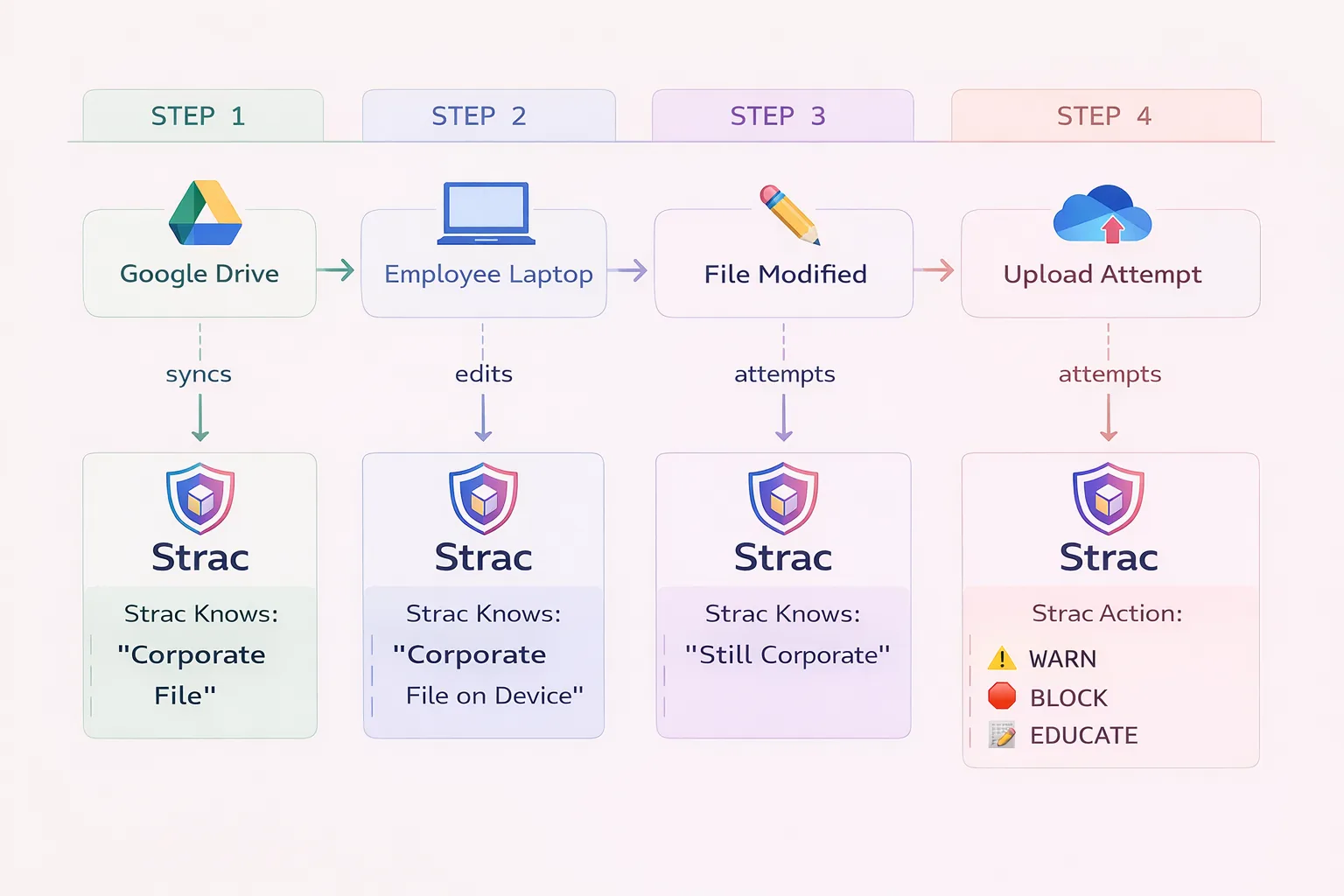
Lack of context across systems. A file downloaded from one system, compressed locally, and uploaded elsewhere may appear normal unless the platform understands the full sequence of events.
Modern data exfiltration often happens through normal workflows, which means security teams need visibility into the content and movement of sensitive data, not just network traffic.
✨ What Modern Data Security Requires
The Conduent breach makes one thing clear: organizations need continuous visibility into how sensitive data moves across their environment.
Strong data security programs rely on a few core capabilities:
Continuous data discovery
Automatically identify sensitive data across SaaS apps, cloud storage, and collaboration tools.
Automated classification
Continuously categorize data based on sensitivity.
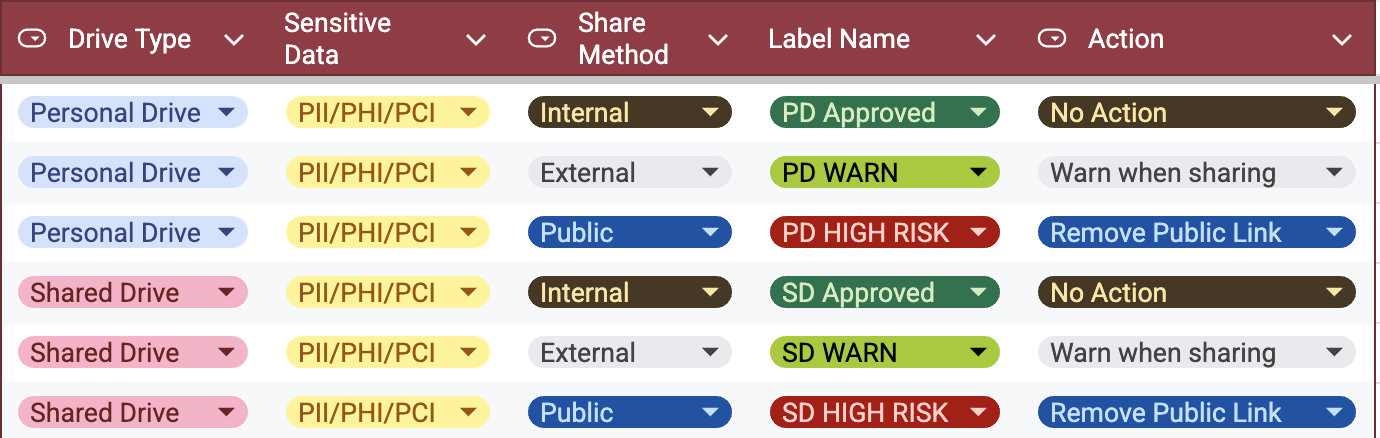
Block transfers, revoke sharing permissions, redact sensitive data, or alert security teams when risky activity occurs.
Strac Slack Redaction
Together, these capabilities help organizations move from detecting breaches after the fact to preventing data exfiltration in real time.
🎥 How Modern DLP Platforms Stop Attacks Like the Conduent Breach
Breaches like the Conduent incident happen when organizations lack visibility into how sensitive data moves across systems. Attackers often use legitimate credentials and normal workflows, which means traditional network alerts rarely trigger. The only reliable signal becomes the data itself and where it is going.
Platforms like Strac address this attack pattern in several key ways:
Continuous sensitive data discovery Automatically discovers and classifies sensitive data across SaaS platforms such as Slack, Gmail, Google Drive, Zendesk, Salesforce, and Notion, as well as cloud infrastructure like AWS S3, Azure Blob, and cloud databases. Strac scans both historical and real-time data, helping organizations identify sensitive data that may already exist in their environment.
Visibility across modern data channels Sensitive data today moves through SaaS tools, cloud storage, endpoints, and AI platforms. Strac provides SaaS, Cloud, Endpoint, and Generative AI DLP, helping security teams monitor how data moves across these environments.
Real-time remediation instead of just alerts When risky activity is detected, security teams can automatically:
redact sensitive information
block data transfers
revoke external sharing permissions
delete risky files
alert security teams
High detection accuracy with lower noise Strac uses contextual machine learning to detect sensitive data such as PII, PHI, PCI, and confidential business information while reducing false positives that typically overwhelm security teams.
By combining discovery, classification, data movement tracking, and automated response, modern DLP platforms help detect and stop the type of slow, quiet data exfiltration that allowed attackers to operate undetected in the Conduent breach.
The Expanding Attack Surface: SaaS, Cloud, and AI
Another important takeaway from the Conduent breach is how much the modern data perimeter has expanded.
Sensitive information now moves across a growing set of tools and platforms, including:
collaboration platforms
customer support systems
developer tools
cloud storage services
AI and LLM applications
Strac GenAI DLP
Every new platform introduces additional data flows that can potentially be abused by attackers.
Sensitive information may move through:
file uploads
cloud synchronization
browser downloads
API integrations
AI prompts or document uploads
If these data flows are not monitored at the content level, organizations may unintentionally expose sensitive data through completely legitimate workflows.
✨ What Security Leaders Should Take Away
The Conduent breach shows how modern attacks work; attackers gain access, stay quiet, and move sensitive data through normal systems until it leaves the environment.
Three lessons stand out:
Detect data exfiltration at the content level, not just the network layer.
Continuously discover and classify sensitive data across SaaS and cloud systems.
Automate response so risky data movement is stopped immediately.
Platforms like Strac address this by discovering sensitive data, tracking how it moves across SaaS, cloud, endpoints, and AI tools, and automatically remediating exposure before it turns into a breach.
👉 See how Strac detects and stops data exfiltration before it becomes a security incident. Scheduale your demo today!
Bottom Line
The Conduent breach was a visibility failure in modern data security architecture.
Attackers succeeded because the movement of sensitive data went unnoticed for nearly three months.
As organizations continue expanding their SaaS, cloud, and AI ecosystems, the ability to discover, classify, monitor, and remediate sensitive data flows in real time will become one of the most important pillars of cybersecurity.
Discover & Protect Data on SaaS, AI, MCP, Endpoints & Cloud
Strac provides end-to-end data loss prevention for all SaaS and Cloud apps. Integrate in under 10 minutes and experience the benefits of live DLP scanning, live redaction, and a fortified SaaS environment.


.webp)







.avif)



.gif)
