What Is AI Data Security? How Enterprises Secure AI Systems
AI data security explains how sensitive data actually flows through AI systems, where exposure happens, and how enterprises enforce control during prompts, inference, and outputs.
AI data security is the practice of keeping sensitive information safe as it moves through AI tools, from what employees type in to what those tools send back.
AI tools do not just store data. They read it, rework it, and produce new content from it, which is why older security models struggle to keep up.
The biggest risks show up in what people paste into AI tools, what those tools pull from connected systems, and what they write back out. Stored files are only part of the picture.
Access controls and traditional DLP fall short because they cannot see what happens inside an AI conversation while it is happening.
Strong AI data security needs three things working together: knowing where your sensitive data lives, clear rules for how AI can use it, and controls that act in real time. Teams that act during the conversation stay in control. Teams that rely on alerts find out after the data is already gone.
Most security programs were never built for tools that take in data, reshape it, and hand back something new within seconds. That is what makes AI data security a blind spot for so many businesses.
The moment an AI agent or assistant is connected to SaaS apps, cloud storage, company databases, or internal systems, sensitive data stops sitting still in a file. It becomes part of a live, constantly moving workflow. That shift is where most traditional security approaches quietly break down.
This guide covers where AI data exposure actually happens today, why older approaches fall short in real environments, and what enterprise teams need to keep AI use safe as it grows.
Key Takeaways
AI data security is no longer a future concern. It is a day-to-day requirement for any company using AI across SaaS, cloud, and internal workflows.
The real challenge is not whether the AI tool itself is safe. It is how data behaves once it enters that tool. AI systems keep taking in, changing, and producing information in ways that traditional controls were never designed to watch or stop.
AI data security is about how data is used, not only where it is stored
What people type into tools like ChatGPT, what the AI pulls from other systems, and what it writes back are all new ways for data to leak
Finding sensitive data without acting on it leaves the risk in place
Stopping exposure in real time through DLP remediation is the only reliable way to reduce AI-driven data loss
✨ What Is AI Data Security?
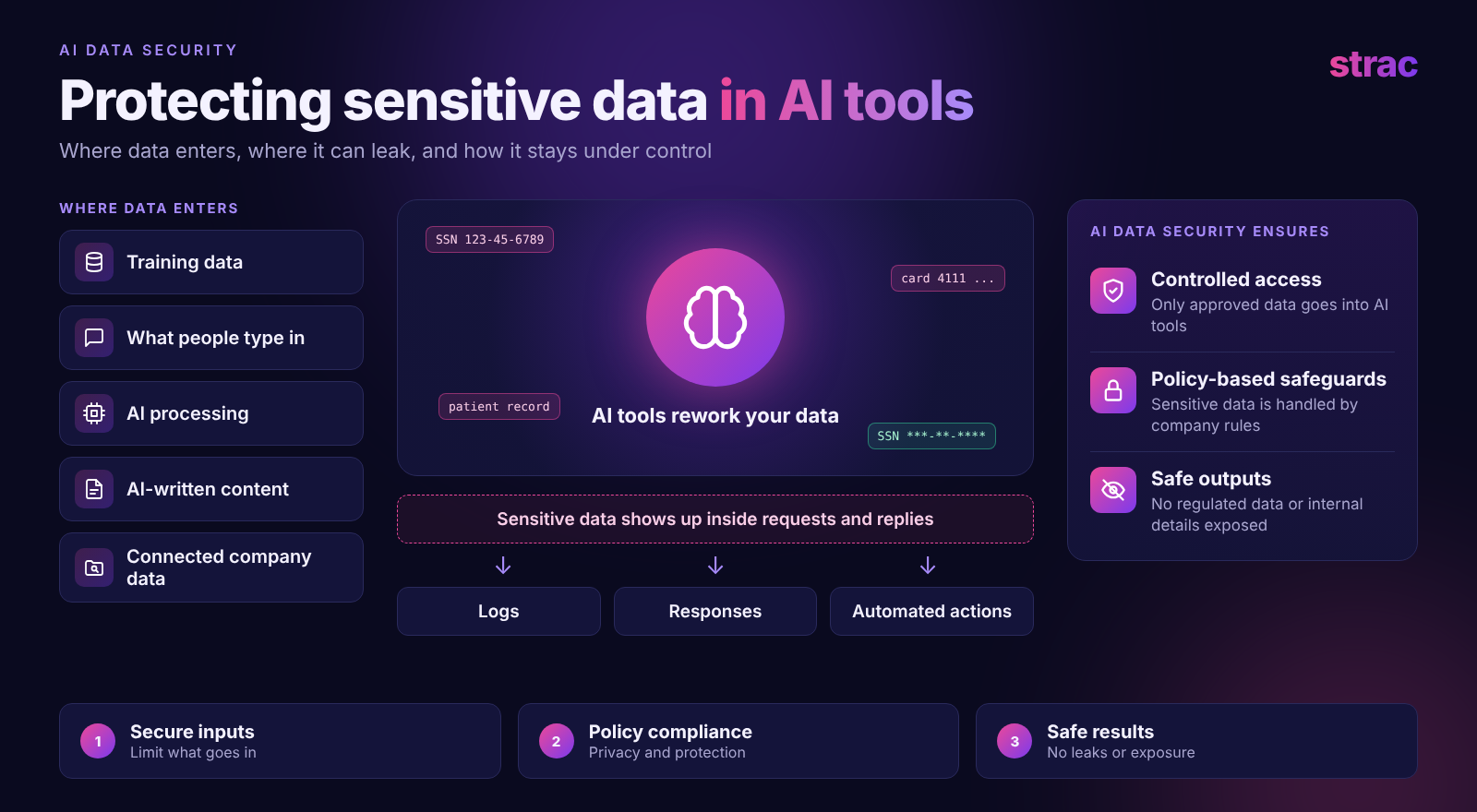
AI data security is the set of controls that protect sensitive information as it moves through AI tools. That covers the data used to train or customize a model, the questions and files employees share with it, the company records it looks up to answer, and the content it produces.
Sensitive data enters AI tools from many directions and leaves through responses, logs, and automated actions. AI data security controls every step in between.
Unlike traditional software, AI tools do not simply save or send data along. They actively rework it. A customer's account number might appear in a request for only a moment, yet show up again later in a reply, a system log, a support ticket, or an automated task.
In practice, AI data security makes sure that:
only approved data goes into AI tools
sensitive information is handled according to company policy while the AI is working with it
the content AI produces does not expose regulated data, intellectual property, or internal details
Why Traditional Security Methods Fall Short
Traditional security was designed for environments where data stays put. AI environments are constantly in motion.
Most older approaches assume that:
data lives in files or databases
the paths data takes are predictable
checks happen before or after data is used
AI breaks every one of these assumptions. Data passes through quickly. It is handled in memory rather than saved to disk. It moves between systems faster than audits or alerts can follow.
Common gaps include:
access controls that decide who can open an AI tool but not what data passes through it
DLP tools that scan files, when much of the data shared with AI never becomes a file
alert-only tools that flag the problem after the data has already been exposed
IBM's annual Cost of a Data Breach report shows that breaches get more expensive as environments grow more complex and as detection slows down. AI speeds up both. A single pasted request or a single connected app through MCP can now spread sensitive data much further than before.
✨ Core Components of AI Data Security
Effective AI data security is built from multiple layers that operate together across the AI lifecycle. Each layer addresses a different failure mode introduced by AI systems.
Discovery and Classification
Enterprises must first understand what sensitive data exists before connecting it to AI workflows. Discovery must span:
structured sources (databases, CRMs, data warehouses)
Key requirement: continuous discovery. Periodic scans fail in SaaS and AI-driven environments where data changes daily.
Strac Discovery and Classificaiton
AI Data Governance
AI data governance defines which data types are allowed in specific AI use cases, models, and user groups. Governance translates legal, regulatory, and business intent into enforceable policy.
remediation at the source (redaction, masking, removal)
Without runtime enforcement, discovery and governance remain theoretical.
MCP DLP for AI Agents
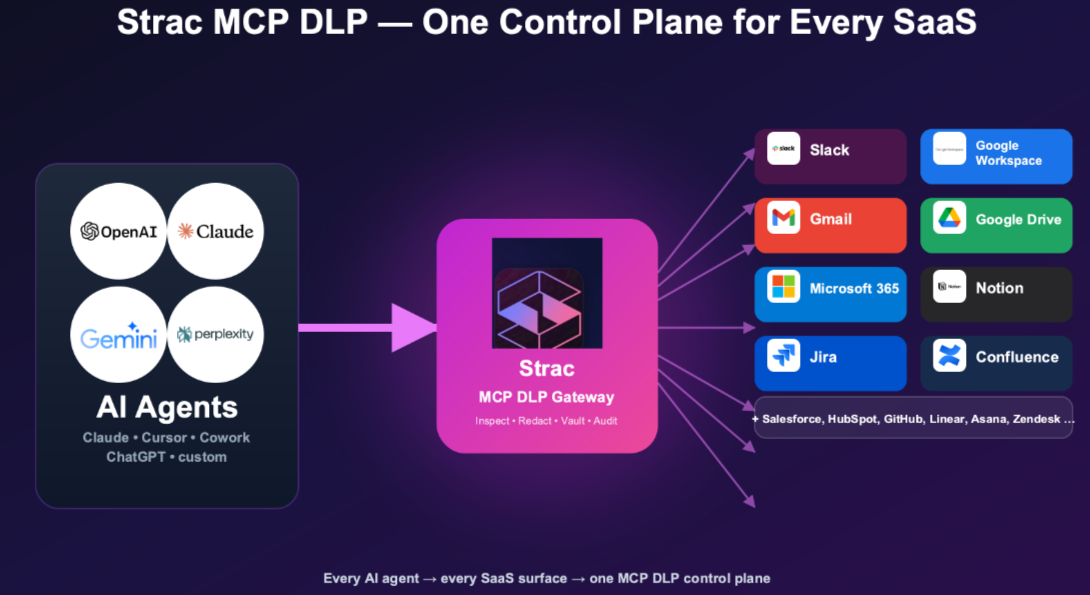
AI agents increasingly use MCP to connect directly to SaaS apps, databases, APIs, and internal tools. That creates another path for sensitive data to move into or out of AI systems.
MCP DLP helps secure that layer by inspecting these interactions in real time and detecting, redacting, or blocking sensitive data before it reaches the wrong model, tool, or user.
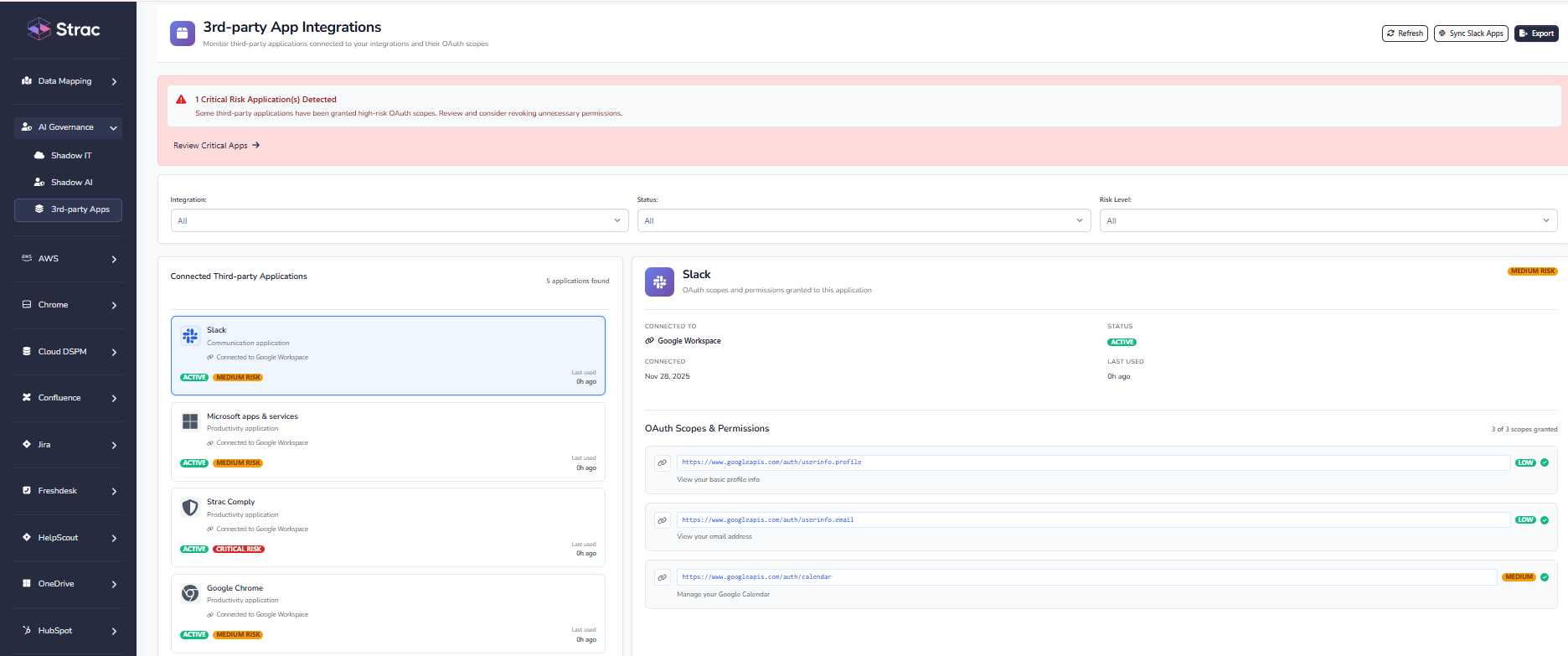
AI usage evolves rapidly. New prompts, models, integrations, and workflows continuously reshape exposure. Security controls must adapt in real time rather than relying on static policies.
Strac Monitoring
How Is AI Used in Data Security?
AI introduces new data risks; but it also enables stronger security controls when applied intentionally.
Security teams increasingly rely on AI-powered classification to identify sensitive data across everyday workflows, including:
chat messages and screenshots
support tickets and attachments
documents, PDFs, and images
AI-generated content
AI is also embedded directly into enforcement workflows. AI-aware DLP inspects prompts and responses in real time, preventing sensitive data from being shared with external models or exposed in outputs.
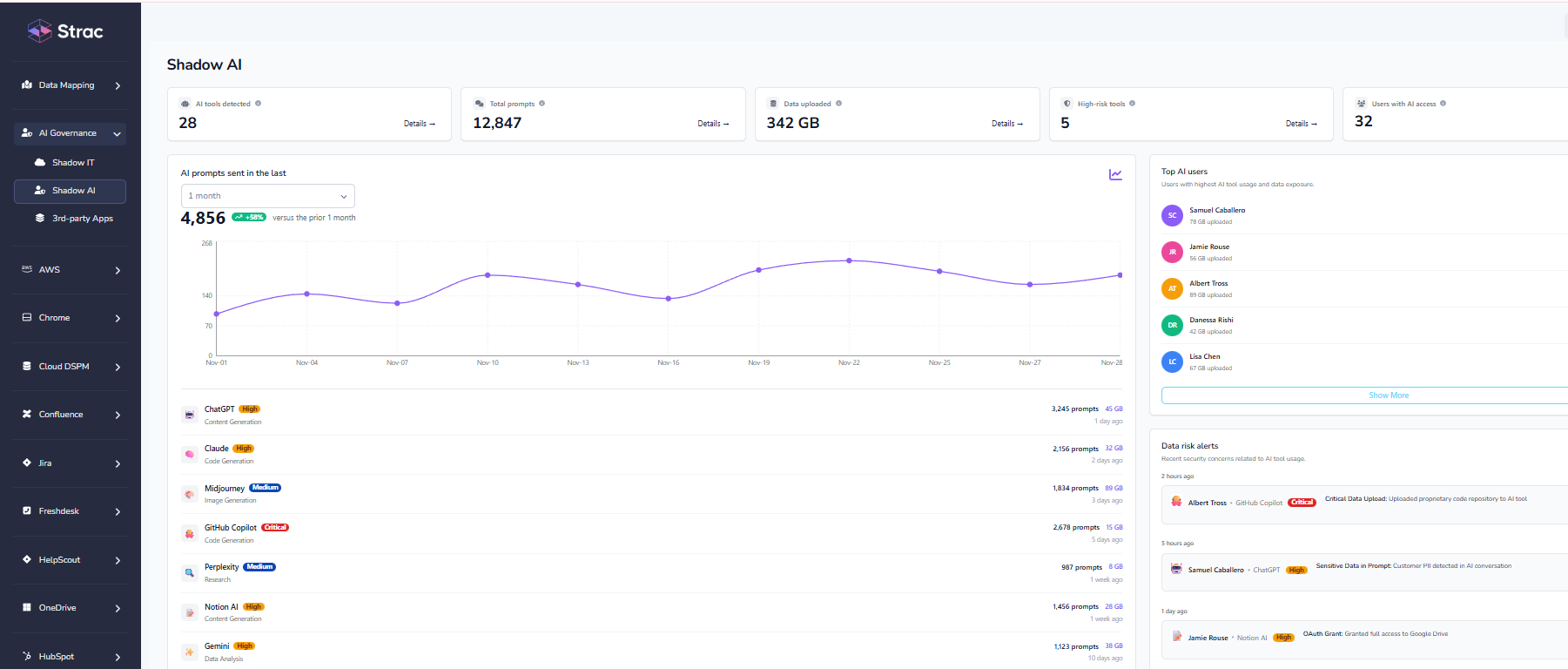
In practice, this means inspecting prompts and responses as they happen and applying policy before sensitive data leaves the organization. For example, controlling what employees paste into tools like ChatGPT and what those tools return prevents accidental leakage long before alerts or audits would surface it.
Strac ChatGPT DLP
When discovery, runtime enforcement, and continuous monitoring operate together across AI workflows, security teams gain posture-level visibility into AI risk. At that point, they know what data AI can access, how it is being used, and where enforcement is applied in real time; which is what AI security posture management looks like in production environments.
Keeping Data Safe in an AI-Driven World
Keeping data safe in an AI-driven world requires a shift from perimeter-based security to workflow-based enforcement.
In practice, this means:
securing data flows, not just storage locations
enforcing policy at runtime rather than post-incident
treating AI data security as an ongoing operational discipline
Enterprises that adopt AI-aware governance and enforcement early gain control as AI usage scales. Those that delay often find themselves reacting to exposure after it has already propagated across systems.
Summary: Why AI Data Security Actually Matters
AI data security matters because AI systems are now embedded in everyday work. Employees paste data into prompts. Models pull context from internal systems. Outputs get copied into tickets, documents, and downstream workflows. Once that starts happening at scale, small mistakes turn into systemic risk.
The problem is not that teams lack policies or intent. It is that traditional security controls were never designed for systems that think in context, operate in memory, and generate new content on the fly. Scanning files or reviewing alerts after the fact does not stop sensitive data from moving through AI systems.
Real AI data security comes down to a few practical truths. In real environments, teams that stay in control do a small number of things consistently well:
They know what sensitive data exists before it ever reaches an AI system
They define clear rules for what data AI is allowed to access and use
They enforce those rules while prompts and outputs are being generated; not hours later in a dashboard
Teams that approach AI data security this way gain confidence as AI adoption grows. Teams that do not usually discover the gaps only after data has already escaped. At this point, AI data security is not about preparing for the future; it is about staying in control of how work actually gets done today.
👉 Read our blog on AI DLP to learn how AI DLP prevents sensitive data exposure in ChatGPT, Claude, Copilot, Gemini, and other AI applications.
🌶️ Spicy FAQ on AI Data Security
Is AI data security the same as traditional DLP?
No. Traditional DLP focuses on files, emails, and known data repositories. AI data security goes further, covering sensitive data inside prompts, context windows, embeddings, retrieval pipelines, and AI-generated outputs. AI systems reshape data dynamically, which legacy DLP was never designed to control.
Are access controls enough to secure AI systems?
No. Access controls define who can use an AI system, not what data the system processes once access is granted. AI data security requires content-level controls that inspect, redact, or block sensitive data during inference and output generation.
Do enterprises need DSPM for AI data security?
Yes. DSPM for AI provides foundational visibility into where sensitive data lives and how it feeds AI systems. However, DSPM alone is not sufficient; it must be paired with runtime enforcement to prevent real-time AI data exposure.
Is AI data security only relevant for regulated industries?
No. Any organization using AI with customer data, internal documents, source code, or proprietary IP faces AI data exposure risk. AI data security applies to SaaS companies, enterprises, and startups alike, not just regulated sectors.
How often should AI data security controls be updated?
Continuously. AI usage patterns, models, integrations, and prompts change far faster than traditional applications. AI data security controls must evolve in real time to remain effective as AI systems and workflows expand.
Discover & Protect Data on SaaS, AI, MCP, Endpoints & Cloud
Strac provides end-to-end data loss prevention for all SaaS and Cloud apps. Integrate in under 10 minutes and experience the benefits of live DLP scanning, live redaction, and a fortified SaaS environment.


.webp)





.gif)
.avif)


.gif)
