The Essential Guide to Financial Data Security and DLP for Fintech (2026)
Learn how financial services and fintech companies protect sensitive data with modern DLP. Discover how Strac secures financial data across SaaS, cloud, and AI tools.
Financial services DLP protects sensitive data like PII, payment card information, and financial records across SaaS apps, cloud storage, and internal systems.
Fintech environments increase data exposure risk because sensitive financial data is scattered across CRMs, messaging tools, support platforms, and spreadsheets.
Modern DLP strategies require visibility, monitoring, and automated remediation to prevent sensitive data leaks before they become breaches.
Strac provides AI-powered financial data protection, discovering and classifying sensitive data across SaaS, cloud, endpoints, and GenAI tools.
Real-time redaction, compliance-aware policies, and continuous monitoring help fintech companies reduce breach risk and maintain regulatory compliance.
Financial services and fintech companies handle some of the most sensitive data in the world. Customer identities, payment data, financial records, and transaction histories move across CRMs, SaaS apps, support platforms, and cloud storage every day.
Without strong data protection, this information can easily leak through internal communication tools, shared files, or third-party systems.
Data Loss Prevention (DLP) helps financial organizations detect and stop sensitive data exposure before it becomes a breach. Modern solutions like Strac protect financial data across SaaS, cloud, endpoints, and AI tools; helping fintech companies maintain compliance and protect customer trust.
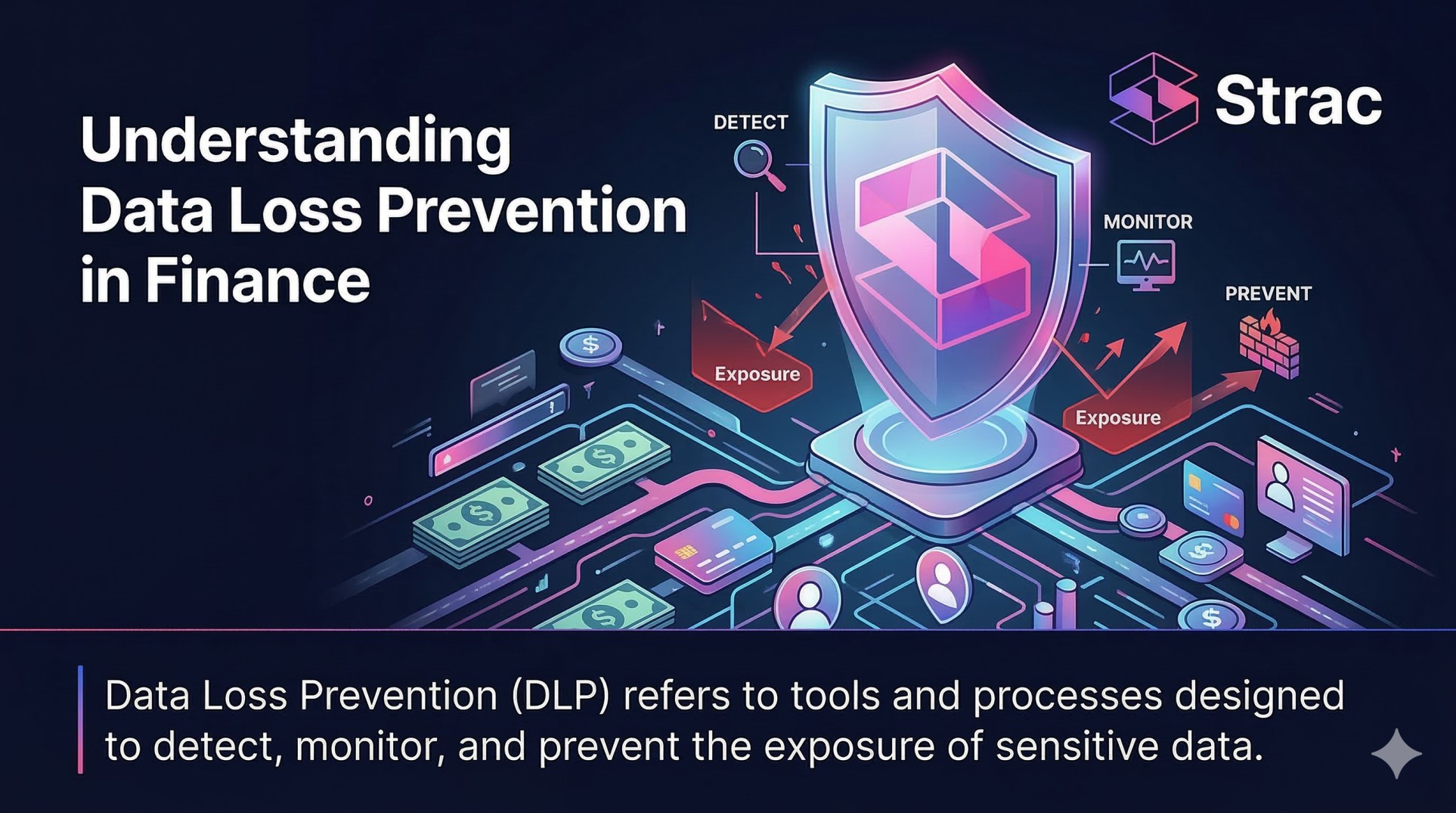
✨ Understanding Data Loss Prevention in Finance
In fintech environments, DLP typically protects:
Personally identifiable information (PII)
Credit card and payment data
Banking and transaction records
Customer identity information
Financial reports and internal data
A strong DLP program helps financial institutions reduce breach risk, meet regulatory requirements, and maintain customer trust.
Financial companies operate in fast-moving cloud environments where sensitive data spreads quickly across systems.
Scattered Sensitive Data
Financial data often lives across:
CRMs and support systems
Slack or email conversations
Cloud storage and spreadsheets
internal tools and APIs
Without centralized visibility, security teams cannot easily track where sensitive data is stored or shared.
Strac Data Discovery and Classificaton
Heavy Regulatory Pressure
Fintech organizations must comply with strict regulations such as:
PCI DSS
GLBA
SOX
GDPR
SOC 2
These frameworks require strong controls over data access, storage, and sharing.
Legacy DLP Fatigue
Many traditional DLP tools generate too many alerts and false positives, making them difficult for security teams to manage.
Customer Trust Risks
Financial data leaks can lead to fines, legal exposure, and loss of customer trust, which can be devastating for fintech companies.
✨ Key Components of a Modern Financial DLP Strategy
A strong DLP strategy combines data discovery, policy enforcement, and continuous monitoring.
Data Discovery and Classification
The first step in protecting financial data is identifying where it exists.
Modern DLP platforms scan SaaS apps, cloud storage, and internal systems to detect sensitive information such as PII, cardholder data, and financial records.
Strac automatically discovers and classifies sensitive data across SaaS, cloud,endpoints, and AI tools, providing visibility into where financial data lives.
Policy Creation and Enforcement
Security policies define how financial data should be handled across the organization.
These policies control:
who can access sensitive data
where it can be shared
how it must be stored
Strac enforces these rules in real time, allowing teams to automatically redact, mask, or block sensitive information before it spreads.
Continuous Monitoring and Detection
Financial data security requires ongoing monitoring across digital systems.
Modern DLP platforms track activity across:
SaaS applications
cloud storage
messaging platforms
internal APIs
AI tools
Strac continuously monitors these environments to detect and stop sensitive data exposure early.
Regulatory Compliance in Fintech
Financial organizations must meet strict security requirements across multiple regulatory frameworks.
Common compliance standards include:
PCI DSS
GLBA
SOX
GDPR
SOC 2
ISO 27001
Meeting these requirements requires data visibility, audit logs, and strict access controls.
Strac supports compliance by providing automated data discovery, real-time redaction, and centralized security logs, helping organizations stay audit-ready.
🎥 How Strac Protects Financial Data
Fintech companies store sensitive financial data across CRMs, cloud apps, support systems, and collaboration tools. Without strong visibility and protection, this data can easily be exposed. Strac provides AI-powered financial data security that discovers, monitors, and protects sensitive information across modern fintech environments.
Unified Sensitive Data Discovery
Financial data often becomes scattered across SaaS apps, cloud storage, support tools, and spreadsheets. Strac automatically discovers and classifies sensitive data across SaaS, cloud, GenAI tools, and endpoints, giving security teams a clear view of where financial data lives.
Compliance-Aware Security Policies
Fintech organizations must meet strict regulations such as PCI DSS, SOX, GLBA, GDPR, SOC 2, and ISO 27001. Strac provides built-in compliance policies and customizable rules that enforce protections in real time while generating logs and audit-ready reports.
AI-Powered Detection With Fewer False Positives
Traditional DLP tools generate excessive alerts. Strac uses machine learning and context-aware classification to detect financial data such as PII and cardholder information more accurately, reducing false positives and alert fatigue.
Real-Time Redaction and Protection
Sensitive data often appears in Slack messages, emails, support tickets, or shared documents. Strac automatically redacts, masks, or blocks sensitive data before it spreads, preventing accidental exposure.
Strac Slack DLP
Continuous Monitoring Across SaaS Apps
Employees frequently share data through platforms like Slack, Gmail, Jira, Zendesk, and cloud drives. Strac continuously monitors these environments, detecting sensitive data exposure and triggering alerts or automated remediation.
Risk Insights by User and Application
Many financial data exposures occur through internal workflows. Strac provides risk insights by user and application, helping security teams quickly identify high-risk activity.
Agentless Deployment With Zero User Impact
Legacy DLP tools often require heavy endpoint agents. Strac uses an agentless deployment model, securing SaaS environments without slowing devices or disrupting employee productivity.
✨ Emerging Trends in Financial Data Security
Financial data protection is evolving as organizations adopt new technologies.
AI and Generative AI Security
Employees increasingly interact with AI tools, which can expose sensitive financial data if not properly monitored.
Modern DLP platforms must protect AI prompts and responses.
Most financial data now lives in SaaS platforms rather than traditional on-premise systems.
Security strategies must adapt to protect these environments.
Zero-Trust Data Protection
Zero-trust models assume no user or system is automatically trusted, requiring continuous monitoring and strict access controls.
Best Practices for Fintech Data Protection
Financial organizations can strengthen their data security posture by following several best practices.
Conduct regular risk assessments to identify sensitive data exposure.
Implement automated DLP across SaaS, cloud, and endpoints.
Train employees on secure handling of financial data.
Monitor collaboration and support platforms where sensitive data often appears.
Use automated remediation to reduce breach risk.
Bottom Line
Fintech companies manage highly sensitive financial data across complex digital environments. Protecting this data requires modern DLP solutions that provide visibility, automation, and real-time protection.
Platforms like Strac help financial organizations discover, monitor, and protect sensitive data across SaaS, cloud, endpoints, and AI systems, reducing security risk while maintaining regulatory compliance.
🌶️Spicy FAQs on FinTech DLP
What is Data Loss Prevention (DLP) for financial services?
Data Loss Prevention (DLP) for financial services refers to technologies and processes that detect, monitor, and prevent the exposure of sensitive financial data. This includes protecting information such as credit card numbers, banking records, personally identifiable information (PII), and financial transactions.
Financial institutions rely on DLP to reduce breach risks, maintain regulatory compliance, and protect customer trust. Modern DLP platforms monitor data across SaaS applications, cloud storage, endpoints, and collaboration tools where sensitive financial data is often shared.
Why is DLP critical for fintech companies?
Fintech companies process large volumes of highly sensitive financial data across distributed systems. Without strong protection, this data can easily leak through internal tools, support platforms, messaging apps, or cloud storage.
DLP solutions help fintech organizations detect sensitive data exposure early, prevent unauthorized sharing, and maintain compliance with regulations such as PCI DSS, GLBA, SOX, and GDPR.
What types of financial data should DLP protect?
Financial services DLP solutions should protect several categories of sensitive information, including:
Credit card and payment card data
Personally identifiable information (PII)
Bank account numbers and financial records
Transaction histories and financial statements
Customer identity information
Protecting this data helps organizations prevent fraud, regulatory penalties, and reputational damage.
How does modern DLP differ from legacy DLP tools?
Traditional DLP tools focused primarily on email gateways and network monitoring. Modern fintech environments rely heavily on SaaS applications, cloud storage, and AI tools, which traditional systems struggle to monitor effectively.
Modern platforms like Strac extend DLP protection across SaaS, cloud, endpoints, and generative AI environments while using machine learning to reduce false positives and automate remediation.
How does Strac protect financial data?
Strac provides AI-powered DLP that discovers, classifies, and protects sensitive financial data across SaaS applications, cloud platforms, endpoints, and AI systems.
Key capabilities include:
Sensitive data discovery across SaaS apps and cloud storage
Machine learning-based detection of financial data
Real-time redaction and masking of sensitive information
Continuous monitoring across collaboration tools
Compliance-ready policies for regulations like PCI DSS and GDPR
This helps fintech organizations reduce risk while maintaining regulatory compliance.
Discover & Protect Data on SaaS, AI, MCP, Endpoints & Cloud
Strac provides end-to-end data loss prevention for all SaaS and Cloud apps. Integrate in under 10 minutes and experience the benefits of live DLP scanning, live redaction, and a fortified SaaS environment.


.webp)






.avif)


.gif)
