Learn how healthcare organizations can achieve HIPAA compliance in 2026 by securing PHI across SaaS, cloud, endpoints, AI tools, browsers, and AI agents while reducing risk and maintaining regulatory compliance.
· HIPAA compliance requires organizations to continuously discover, classify, monitor, and protect PHI across SaaS applications, cloud environments, endpoints, AI tools, and AI agents.
· Healthcare organizations must address moderndata exposure risks from platforms like Slack, Microsoft 365, Google Workspace,Zendesk, Salesforce, ChatGPT, Claude, and MCP-connected AI agents.
· Key HIPAA requirements include risk assessments,employee training, access controls, encryption, audit logging, and breachresponse procedures.
· Modern HIPAA programs rely on automated data discovery, real-time remediation, and continuous monitoring rather than manual audits and periodic reviews.
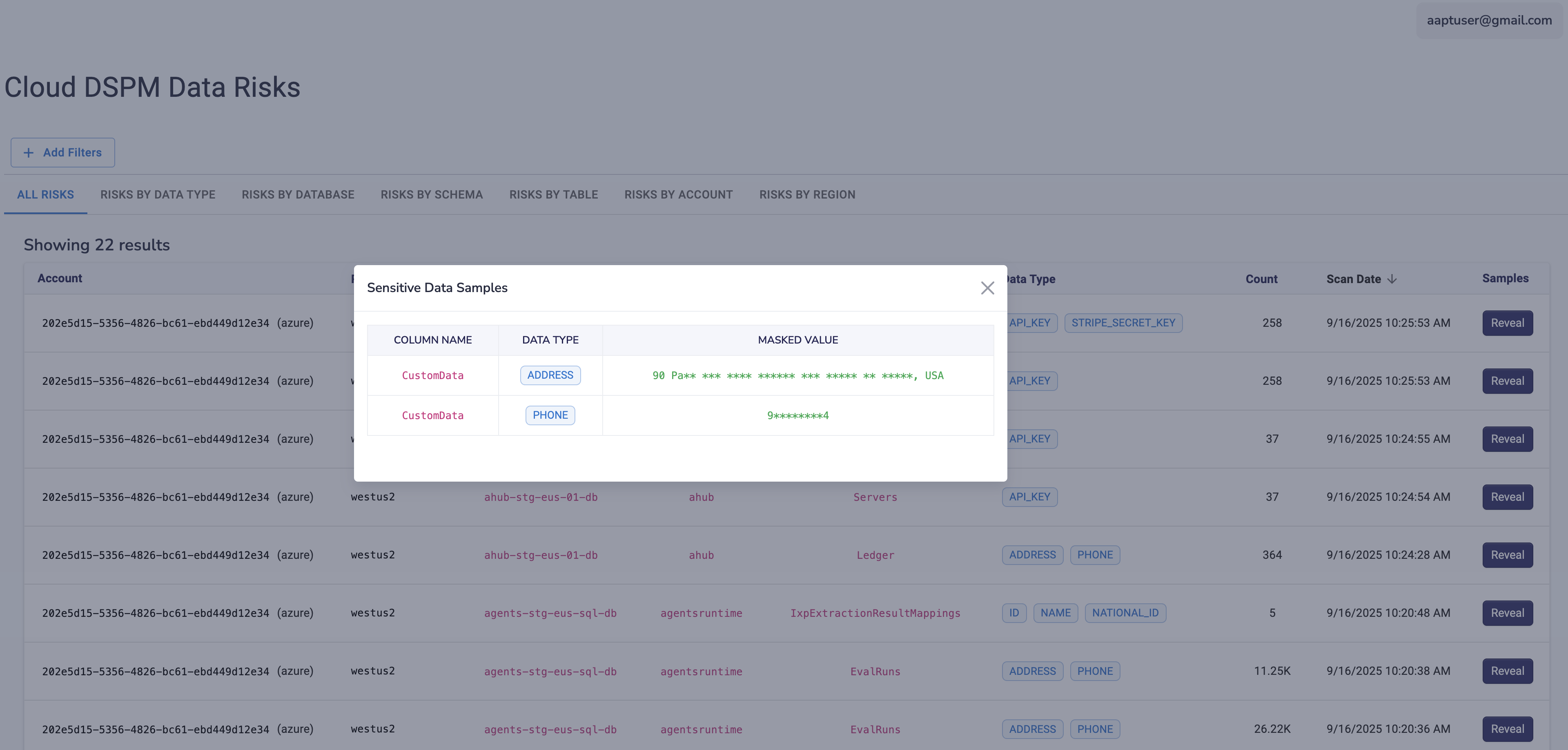
· Strac helps healthcare organizations protect PHIacross SaaS, Cloud, Endpoints, Browser, GenAI, and MCP environments throughunified DSPM and DLP capabilities.
The Health Insurance Portability and Accountability Act (HIPAA) was enacted in 1996 to protect sensitive patient health information (PHI). HIPAA establishes national standards for safeguarding PHI and electronic protected health information (ePHI), requiring covered entities and business associates to implement appropriate administrative, physical, and technical safeguards.
HIPAA compliance remains one of the most important regulatory obligations for healthcare organizations because it protects patient privacy, reduces security risks, and helps prevent identity theft and healthcare fraud.
Key components of HIPAA include:
Privacy Rule
The Privacy Rule governs how PHI can be used, disclosed, and shared while giving patients rights over their health information.
Security Rule
The Security Rule establishes administrative, physical, and technical safeguards for protecting electronic protected health information (ePHI).
Breach Notification Rule
The Breach Notification Rule requires organizations to notify affected individuals and the Department of Health and Human Services (HHS) when certain types of breaches occur.
Why HIPAA Compliance Is Important
HIPAA compliance is more than a regulatory requirement. It is a foundational component of patient trust and organizational security.
Healthcare organizations manage some of the most sensitive data in existence. A breach involving medical records can lead to identity theft, financial fraud, reputational damage, and significant regulatory penalties.
Strong HIPAA compliance programs help organizations:
Protect patient privacy
Reduce data breach risk
Maintain patient trust
Avoid costly penalties and legal action
Strengthen overall cybersecurity posture
Which Organizations Need to Adhere to HIPAA?
HIPAA compliance applies to two primary groups:
Covered Entities
Covered entities include:
Healthcare providers
Health plans
Health insurance companies
Healthcare clearinghouses
These organizations must comply with HIPAA whenever they create, receive, maintain, or transmit PHI electronically.
Business Associates
Business associates include organizations and individuals that process, access, store, or manage PHI on behalf of covered entities.
Examples include:
SaaS vendors
Cloud providers
IT service providers
Revenue cycle management companies
Customer support platforms
Healthcare analytics providers
Organizations that indirectly handle PHI may also need to comply with HIPAA depending on their relationship with covered entities.
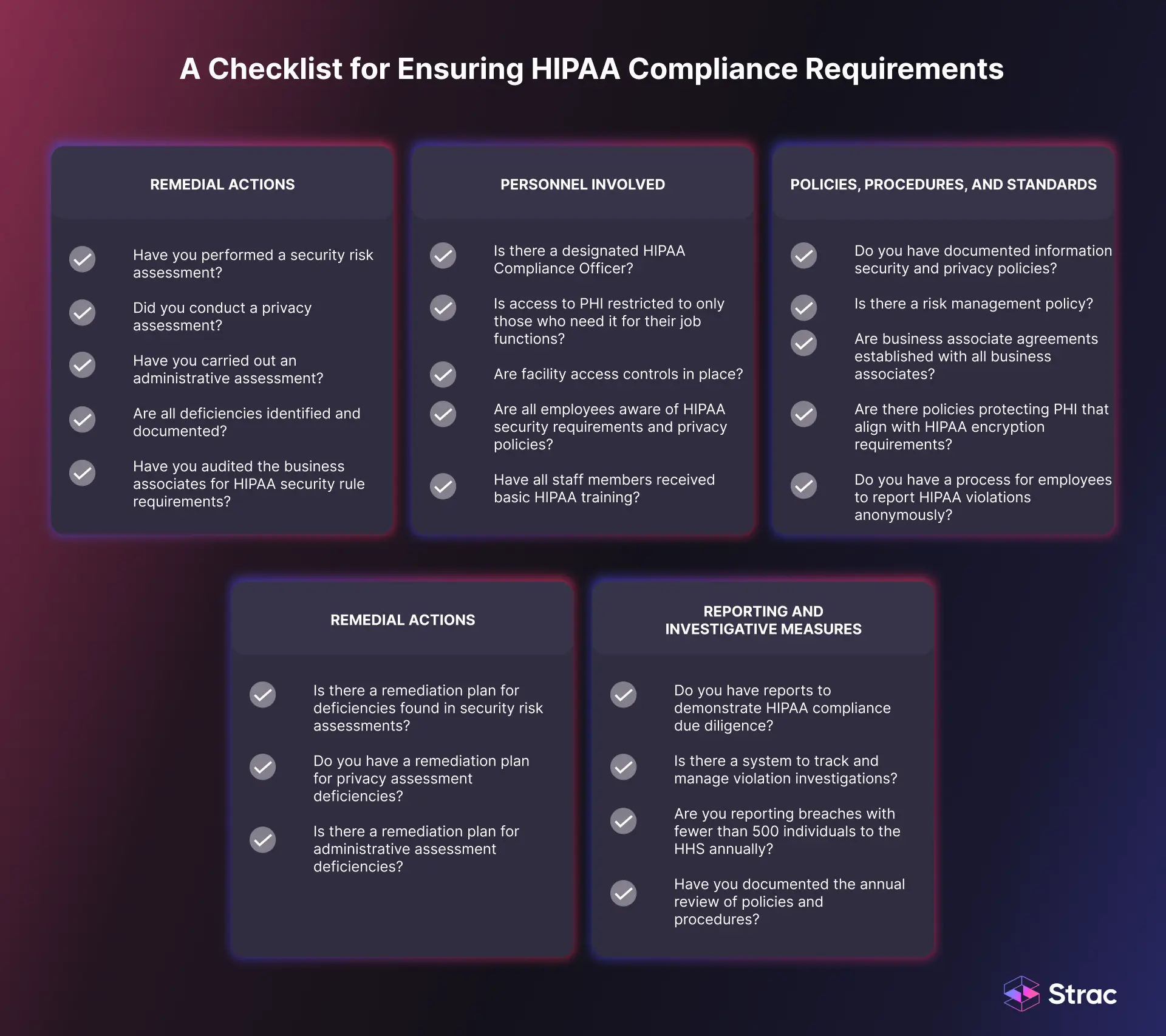
✨HIPAA Compliance Checklist for Organizations
Achieving HIPAA compliance requires a combination of people, processes, and technology.
Conduct a Risk Assessment
Identify potential vulnerabilities and threats to PHI and ePHI across systems, applications, and workflows.
Develop Policies and Procedures
Establish documented processes for collecting, storing, accessing, transmitting, and disposing of PHI.
Implement Security Measures
Deploy administrative, physical, and technical safeguards that align with HIPAA requirements.
Train Employees
Provide HIPAA awareness and security training for all employees who interact with PHI.
Establish Business Associate Agreements (BAAs)
Ensure all business associates are contractually obligated to protect PHI according to HIPAA requirements.
Monitor Compliance
Regularly review controls, policies, and security practices to ensure ongoing compliance.
Who Must Achieve HIPAA Compliance?
HIPAA compliance is mandatory for:
Healthcare providers transmitting health information electronically
Health insurance providers
Managed care organizations
Healthcare clearinghouses
Business associates handling PHI
Organizations that fail to comply may face significant financial penalties and reputational consequences.
How Do You Maintain HIPAA Compliance?
HIPAA compliance is not a one-time project. It requires continuous monitoring and improvement.
Conduct Regular Risk Assessments
Organizations should regularly evaluate risks to the confidentiality, integrity, and availability of ePHI and implement controls to address identified vulnerabilities.
Develop and Maintain Policies
Policies should be reviewed regularly to ensure alignment with changing regulations, technologies, and business practices.
Provide Ongoing HIPAA Training
Training should include:
Data handling procedures
Security awareness
Phishing prevention
Social media usage
Incident reporting
Appoint a HIPAA Compliance Officer
A dedicated compliance officer should oversee HIPAA initiatives, audits, training, and risk management activities.
Implement Administrative, Physical, and Technical Safeguards
Examples include:
Access controls
Encryption
Audit logging
Data backup procedures
Secure disposal methods
Establish and Monitor BAAs
Business associates should be evaluated regularly to ensure they continue meeting HIPAA requirements.
Document Compliance Activities
Maintain records of:
Risk assessments
Training programs
Security incidents
Audits
Policies and procedures
Documentation is critical during investigations and compliance audits.
HIPAA IT Compliance
Modern HIPAA compliance extends far beyond traditional healthcare systems.
Healthcare organizations now operate across SaaS applications, cloud infrastructure, endpoints, browsers, AI tools, and AI-powered workflows. As a result, IT teams must secure PHI wherever it resides or travels.
Key HIPAA IT requirements include:
Encryption of sensitive data
Access controls and identity management
Security monitoring and logging
Vulnerability management
Secure backups and disaster recovery
Continuous auditing and compliance reporting
Organizations should also maintain incident response and breach notification procedures to address emerging threats.
The Need for HIPAA Compliance
The need for HIPAA compliance continues to grow as healthcare organizations become increasingly digital.
Protection of Sensitive Data
HIPAA helps prevent unauthorized access to medical records and patient information.
Legal Obligations
Non-compliance can result in substantial fines, enforcement actions, and lawsuits.
Trust Building
Patients are more likely to trust organizations that demonstrate strong data protection practices.
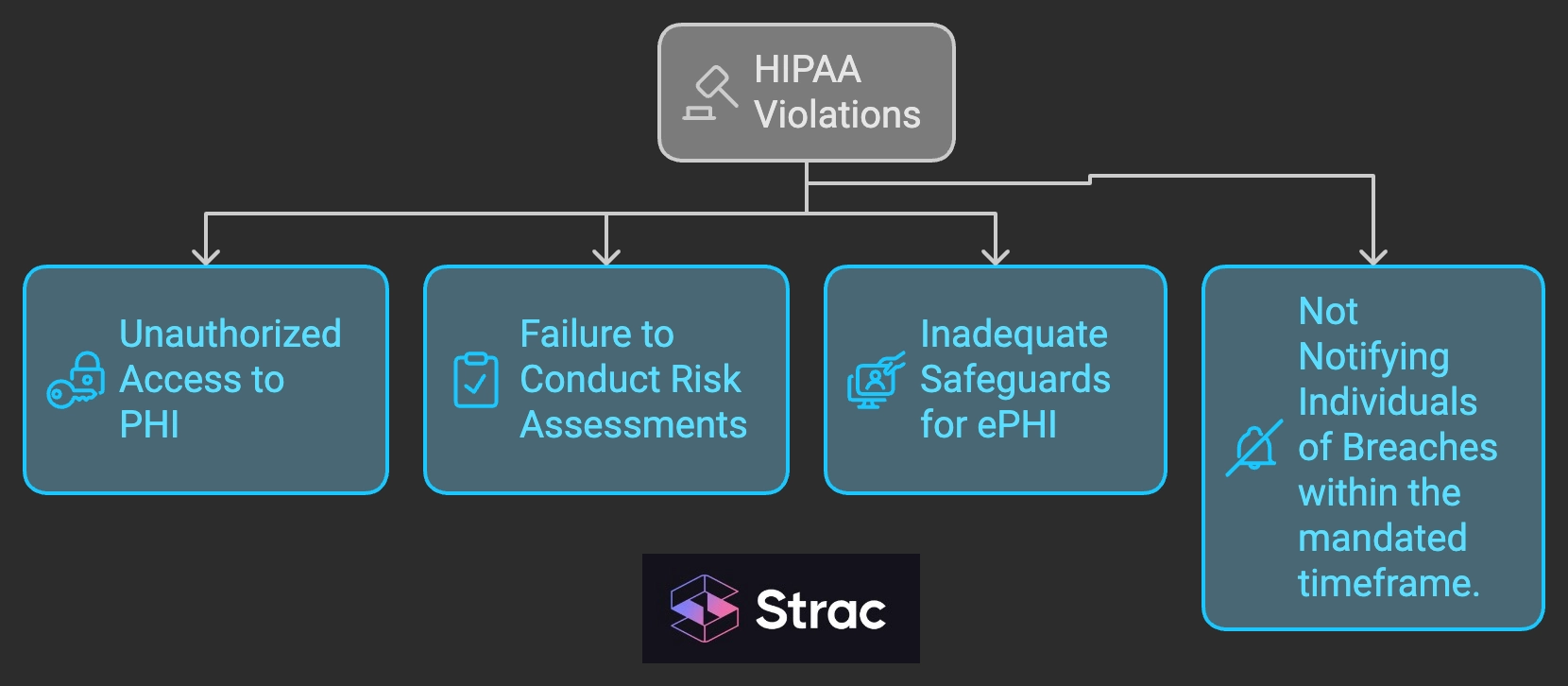
What Are HIPAA Violations?
HIPAA violations occur when organizations fail to comply with HIPAA requirements.
Common violations include:
Unauthorized access to PHI
Improper disclosure of patient information
Lost or stolen devices containing PHI
Insufficient employee training
Failure to conduct risk assessments
Lack of access controls
Failure to report breaches
Important HIPAA Terms
Protected Health Information (PHI)
Any health-related information that can identify an individual.
Electronic Protected Health Information (ePHI)
PHI that is created, stored, transmitted, or received electronically.
Business Associate
A person or organization performing services involving PHI on behalf of a covered entity.
HIPAA Compliance vs GDPR Compliance
Organizations operating internationally may need to comply with both HIPAA and GDPR.
HIPAA
Focuses on healthcare information
Applies primarily within the United States
Governs PHI and ePHI
GDPR
Covers all personal data
Applies to EU residents
Requires broader privacy controls and consent management
Organizations handling healthcare data for EU residents may need to comply with both regulations simultaneously.
How to Create a HIPAA Compliance Program
Creating a strong HIPAA compliance program starts with understanding where sensitive healthcare data exists and how it moves throughout the organization.
Assess Current Practices
Evaluate how PHI is collected, stored, shared, and protected.
Ensure staff understand HIPAA obligations and security best practices.
Implement Monitoring Mechanisms
Use auditing, monitoring, and reporting tools to identify risks and policy violations.
Continuously Improve
Update controls and policies as technologies, regulations, and business processes evolve.
HIPAA Compliance Risks from AI Tools and AI Agents
One of the biggest challenges facing healthcare CISOs in 2026 is the rapid adoption of AI.
Employees increasingly use AI platforms such as ChatGPT, Claude, Gemini, Copilot, coding assistants, and custom AI applications to improve productivity. At the same time, AI agents can now access business systems through Model Context Protocol (MCP) integrations.
This creates new HIPAA risks:
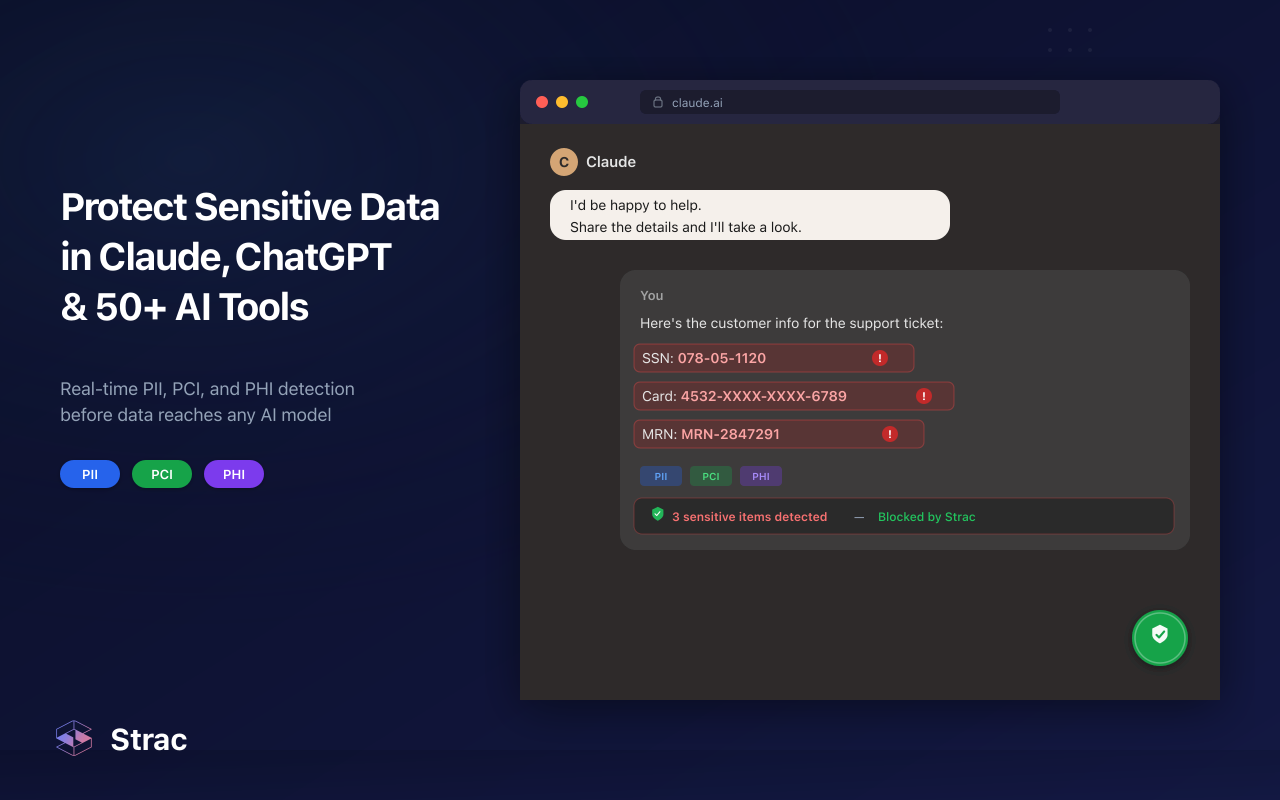
Employees pasting PHI into AI prompts
Uploading medical records into AI tools
AI-generated summaries containing sensitive information
AI agents accessing healthcare data through SaaS integrations
PHI exposure through MCP-connected systems
Shadow AI usage outside approved workflows
Traditional HIPAA controls were not designed for these emerging data flows.
Healthcare organizations must now secure PHI across both human and AI interactions while maintaining visibility into how sensitive information moves between applications, cloud services, and AI systems.
How Healthcare CISOs Achieve HIPAA Compliance in 2026
Healthcare environments have evolved significantly beyond traditional EHR systems.
Today, PHI moves across SaaS applications, cloud storage, support platforms, collaboration tools, browsers, endpoints, AI systems, and AI agents. Modern HIPAA compliance requires organizations to protect sensitive data across all of these environments.
A successful HIPAA strategy in 2026 includes:
Continuous sensitive data discovery
Real-time protection and remediation
SaaS security monitoring
Cloud data protection
Endpoint visibility
AI governance
MCP security controls
Compliance automation
Organizations that rely solely on periodic audits and manual processes often struggle to keep pace with modern healthcare workflows.
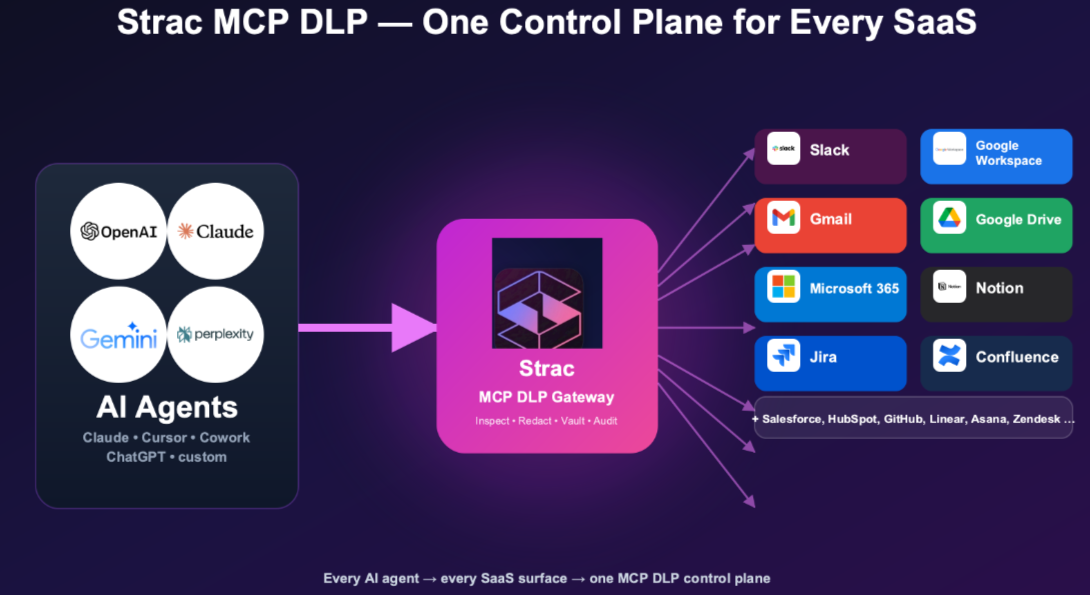
AI agents can now connect directly to SaaS applications through Model Context Protocol (MCP).
Strac helps protect PHI flowing between AI agents and connected systems by detecting, redacting, masking, and blocking sensitive data before it reaches AI workflows.
Audit Trails and Compliance Reporting
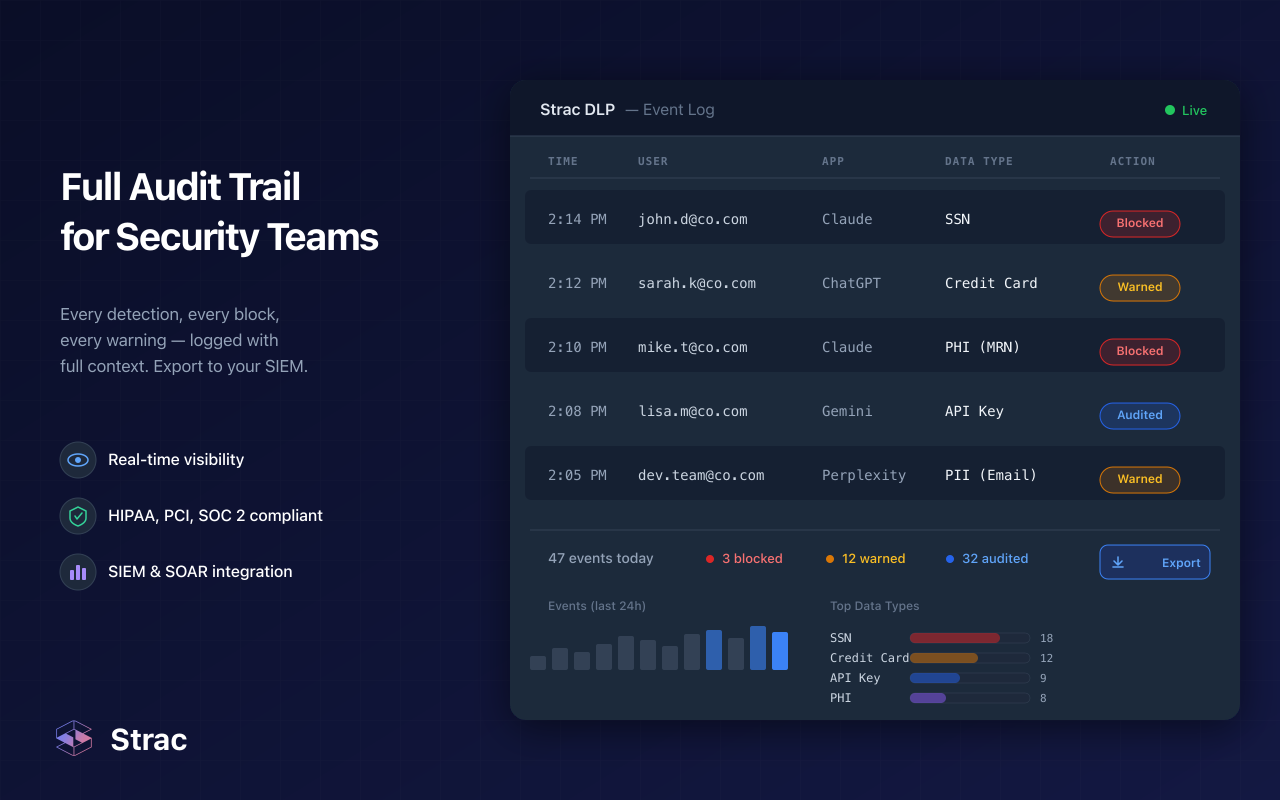
Comprehensive activity logging
Detailed audit trails
Compliance reporting
Security investigations
Risk management support
Benefits of Using Strac for HIPAA Compliance
Healthcare organizations use Strac to:
Reduce HIPAA compliance risk
Discover PHI across modern environments
Prevent accidental data exposure
Secure AI adoption initiatives
Improve compliance visibility
Simplify audits
Protect sensitive healthcare data in real time
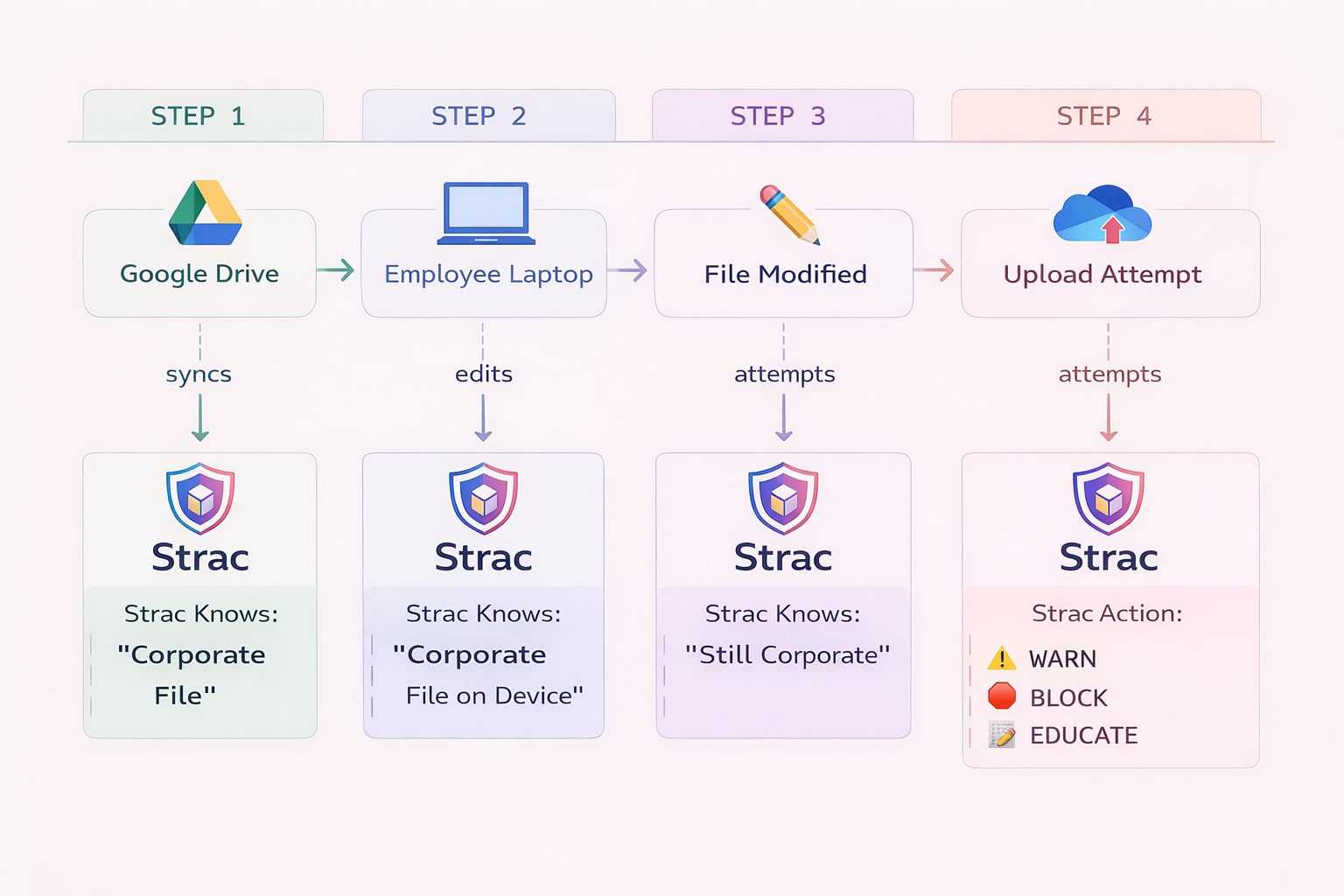
By combining DSPM, DLP, SaaS security, Cloud security, Endpoint DLP, Browser DLP, GenAI DLP, and MCP DLP into a unified platform, Strac helps organizations address the modern realities of HIPAA compliance.
Conclusion
HIPAA compliance remains one of the most important responsibilities for healthcare organizations.
However, the compliance landscape has changed significantly. PHI no longer exists only in EHR systems and databases. It now moves across SaaS applications, cloud platforms, employee devices, browsers, AI tools, and AI agents.
Maintaining HIPAA compliance requires continuous visibility, automated protection, and proactive risk management across all of these environments.
Strac helps healthcare organizations meet these challenges through automated data discovery, real-time remediation, AI governance, and comprehensive data protection across SaaS, Cloud, Endpoints, Browsers, GenAI, and MCP-connected workflows.
As healthcare organizations continue to adopt modern technologies, protecting PHI everywhere it travels will remain essential for maintaining compliance, reducing risk, and preserving patient trust.
Documentation tools are rarely in scope on paper and often in scope in practice. See is Notion HIPAA compliant?
🌶️Spicy FAQs on HIPPA Compliance
Is ChatGPT HIPAA Compliant for Handling Patient Data?
Not by default. While some AI providers offer enterprise security controls and compliance features, healthcare organizations remain responsible for ensuring PHI is not exposed through prompts, uploads, responses, or connected applications. As AI adoption grows, many organizations are implementing GenAI DLP controls to detect, redact, and block sensitive healthcare data before it reaches AI tools.
What Is the Biggest HIPAA Compliance Risk in 2026?
The biggest HIPAA risk is no longer limited to email or electronic health record systems. Patient data now moves across SaaS applications, cloud storage, collaboration platforms, support tickets, browsers, AI tools, and AI agents. Organizations need continuous visibility and real-time protection to prevent PHI from being exposed across these modern workflows.
How Can Healthcare Organizations Prevent PHI Leaks Through AI Agents and MCP?
AI agents can now connect directly to business systems through Model Context Protocol (MCP), accessing data from platforms such as Slack, Google Drive, Salesforce, Jira, Zendesk, Notion, and Microsoft 365. To reduce risk, healthcare organizations should implement controls that inspect, classify, redact, and block PHI before sensitive information reaches AI-powered workflows.
Is Encryption Alone Enough for HIPAA Compliance?
No. Encryption is a critical safeguard, but it only addresses part of the compliance challenge. Organizations must also implement access controls, risk assessments, monitoring, audit logging, employee training, incident response procedures, and data protection measures across SaaS applications, cloud environments, endpoints, browsers, and AI systems.
What Should CISOs Look for in a HIPAA Compliance Solution in 2026?
Modern HIPAA compliance requires more than traditional security tools. CISOs should look for solutions that provide automated PHI discovery, DSPM, DLP, SaaS security, Cloud DLP, Endpoint DLP, Browser DLP, GenAI DLP, MCP DLP, real-time remediation, compliance reporting, and continuous monitoring. The objective is to protect sensitive healthcare data wherever it resides or moves, not just during periodic audits.
Discover & Protect Data on SaaS, AI, MCP, Endpoints & Cloud
Strac provides end-to-end data loss prevention for all SaaS and Cloud apps. Integrate in under 10 minutes and experience the benefits of live DLP scanning, live redaction, and a fortified SaaS environment.


.webp)







.png)


.avif)



.gif)
