October 1, 2026

7
min read
GDPR for SaaS: Essential Compliance Guide
Ensure GDPR compliance for your SaaS product with our step-by-step guide. Learn about data protection, vendor risk management, and best practices.
GDPR for SaaS companies is no longer optional; it is a regulatory requirement for every product that collects, stores, or processes data from EU users. The regulation exists to protect user privacy, enforce transparent data handling, and ensure businesses take measurable steps to secure personal data throughout its lifecycle. SaaS platforms operate on continuous data flows across multiple apps, surfaces, and locations; which makes GDPR obligations especially complex.
This guide provides SaaS teams with a practical and actionable path to GDPR compliance; from data mapping and access governance to consent management, vendor oversight, and real-time security. Throughout the guide, we highlight where Strac helps accelerate GDPR readiness with automated data discovery, classification, and remediation.
GDPR for SaaS companies matters because the regulation applies to any organization that processes the personal data of EU residents; regardless of where the business is incorporated or operates. SaaS platforms serve global users; rely on integrations; and continuously move data across internal and external systems; which places them squarely within GDPR’s jurisdiction. This makes GDPR a global compliance requirement; not just a European one. SaaS leaders must treat GDPR as a core part of product governance; engineering design; and risk management.
The financial consequences of violating GDPR can be extreme. Under Article 83 of the General Data Protection Regulation, supervisory authorities can impose administrative fines of up to €20 million or up to 4% of the company’s total worldwide annual turnover from the previous financial year; whichever is higher. These penalties apply to serious infringements such as unlawful data processing; insufficient security; or failure to uphold data subject rights. For SaaS companies operating on thin margins or depending on enterprise trust, the financial exposure alone is reason to prioritize compliance.
Reputation risk adds another layer. SaaS customers; particularly enterprise buyers; routinely assess privacy posture before purchasing or renewing software. Demonstrating GDPR compliance reinforces trust, accelerates procurement, and signals that a vendor is mature enough to handle sensitive data responsibly. A single incident of improper data handling can result in customer churn; brand damage; and increased scrutiny during future sales cycles.
A compelling real-world example involves Clearview AI, a facial recognition SaaS platform that processed biometric data scraped from the internet without a lawful basis. Data protection authorities across multiple EU states concluded the company violated core GDPR principles related to transparency and data rights. Clearview AI faced multimillion-euro fines; orders to delete all EU-sourced data; and restrictions on further processing. This case illustrates how severe enforcement can be for SaaS platforms operating without full GDPR compliance.
How Strac Helps: Automated discovery, classification, and real-time redaction help SaaS companies prevent exposure of personal data across SaaS tools such as Slack, Google Drive, Salesforce, and Jira; significantly reducing GDPR risk and supporting compliance with Article 5 and Article 32.
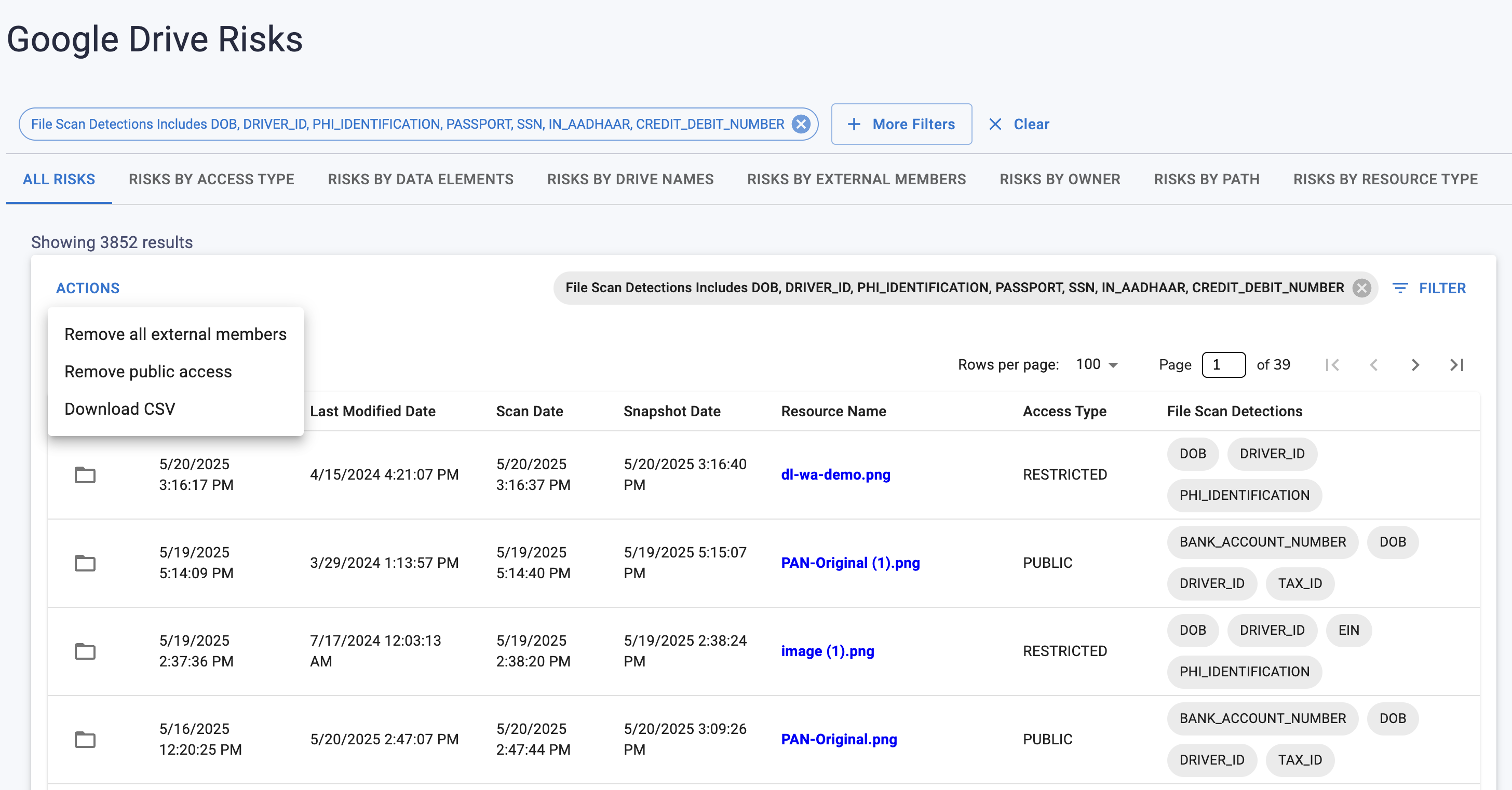
GDPR for SaaS introduces a structured set of privacy and security principles that dictate how personal data must be collected, processed, stored, and protected. These principles are not abstract guidelines; they directly influence how SaaS products are architected, how integrations handle data, and how internal teams access and process user information. For SaaS companies operating across multiple tools and cloud environments, implementing these principles consistently becomes essential for maintaining a compliant data posture.
Understanding these GDPR principles helps SaaS leaders build systems that are lawful, predictable, and secure. These rules shape everything from onboarding flows to database structures and third-party vendor management. When applied correctly, they reduce compliance risks, strengthen trust with enterprise clients, and ensure that personal data is handled responsibly across the entire SaaS ecosystem.
SaaS platforms must collect and process data under a lawful basis; such as consent, contract necessity, or legitimate interest. Users must clearly understand what data is collected and why.
Strac tie-in: Automated discovery helps verify that data stored across SaaS apps aligns with documented lawful bases.
Data can only be used for the specific purposes declared at the time of collection. Reusing data for new features or integrations requires new justification or consent.
Strac tie-in: Continuous scanning ensures teams know exactly where personal data flows when new tools or processes are added.
SaaS companies should collect only what is necessary to deliver the service; nothing more. Storing excess data increases both compliance and security risks.
Strac tie-in: Real-time redaction removes unnecessary personal data from support tickets, chats, and files across Slack, Zendesk, Drive, and Jira.
Personal data must be kept accurate and up to date. Inaccurate or outdated information can harm users and violate GDPR obligations.
Strac tie-in: Discovery and classification help teams identify stale or inconsistent data across SaaS systems that need correction or deletion.
Data should not be kept longer than needed for its original purpose. Retention schedules are required; including auto-deletion when data no longer serves a purpose.
Strac tie-in: Automated alerts highlight where personal data sits in SaaS tools longer than retention policies allow.
SaaS vendors must protect personal data with appropriate technical and organizational measures; including encryption, access controls, monitoring, and breach prevention.
Strac tie-in: Inline redaction, blocking, and masking strengthen confidentiality by preventing unauthorized exposure in real time across SaaS workflows.
SaaS companies must demonstrate compliance; not just claim it. This includes documentation of processing activities, audits, training, vendor oversight, and incident response.
Strac tie-in: Unified DSPM + DLP visibility helps teams prove where data is stored, who has access, and how risks are remediated; supporting ongoing GDPR accountability obligations.
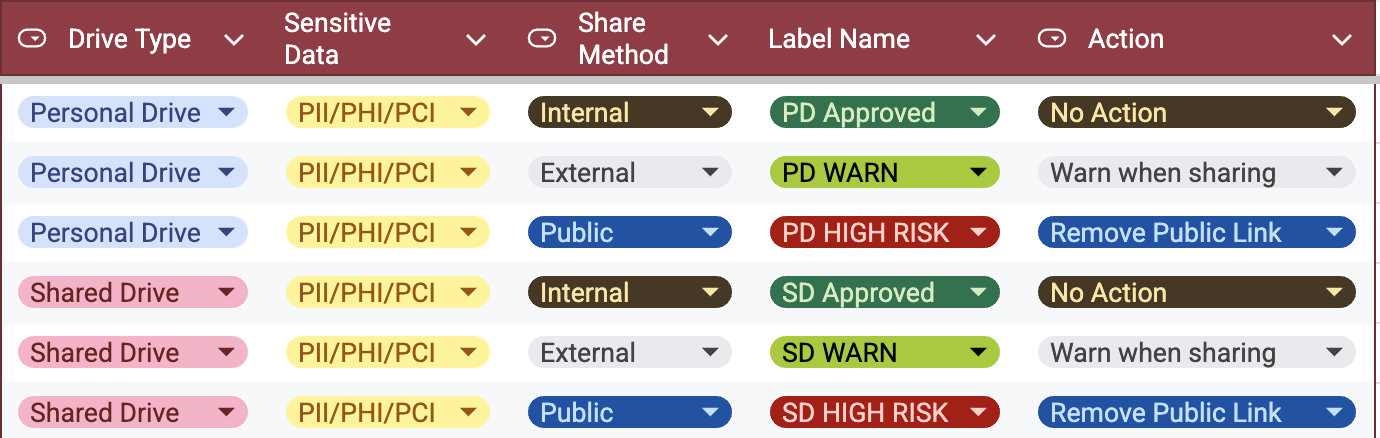
Understanding the distinction between controllers and processors is critical for GDPR for SaaS companies; because compliance obligations differ depending on which role the business plays in each data flow. SaaS platforms often perform multiple functions simultaneously across various features, integrations, and customer implementations; making role clarity essential for determining legal responsibilities. Each role impacts documentation requirements, contractual obligations, and how a product must be architected to ensure lawful and secure data processing.
In practice, SaaS vendors rarely operate as only controllers or only processors; most modern SaaS businesses fall into hybrid categories depending on the specific data activity. This duality increases the importance of accurate mapping, transparent communication, and strong contractual frameworks such as Data Processing Agreements (DPAs). Knowing when your organization is a controller; when it is a processor; and when it may be both helps SaaS teams avoid misclassification errors that could lead to regulatory penalties or customer disputes.
A data controller determines the purpose and means of processing personal data. In a SaaS context, controllers typically include the customers using the software; since they decide why user data is collected and how it is used. Controllers bear primary responsibility for ensuring the processing is lawful; transparent; and aligned with GDPR principles.
A data processor processes personal data on behalf of the controller. Most SaaS vendors are processors for the data that customers upload, store, or manage within the platform. As processors, SaaS companies must follow the controller’s documented instructions, maintain appropriate security, support data subject rights, and implement policies that meet GDPR Article 28 obligations.
Many SaaS companies simultaneously act as controllers and processors. For example, when handling customer-uploaded data, they act as processors; but for product analytics, billing information, support interactions, or marketing operations, they may be controllers. Each role must be documented separately, and each must have its own lawful basis, policies, and retention rules.
Strac tie-in: Unified visibility across SaaS tools helps teams identify where they act as controllers vs processors, ensuring they apply the correct GDPR obligations for each role and avoid accidental unlawful processing.
A Data Processing Agreement is mandatory whenever a processor handles personal data on behalf of a controller. For SaaS companies, DPAs must exist with:
DPAs outline responsibilities, security measures, breach notification timelines, access controls, and the legal boundaries of data usage. High-quality DPAs are essential for building customer trust and passing enterprise procurement checks.
Strac tie-in: Automated discovery and classification across integrations help prove compliance with DPA requirements by showing where data lives, who has access, and how it is protected in real time.
Strac Advanced Access
GDPR for SaaS requires platforms to give users full control over their personal data through a set of enforceable rights. SaaS companies must design product features, backend workflows, and customer support processes that allow users to easily request access, rectification, erasure, portability, restriction, or objection. These rights must be supported operationally; technically; and contractually, because failing to honor them can lead to violations under Articles 12–23 of the GDPR.
SaaS companies must provide mechanisms that allow customers and end users to exercise these rights without friction. This includes building UI pathways for exporting or deleting data; creating APIs that allow customers to pull or modify user records; and setting up workflows that route requests to the appropriate internal teams. Designing these rights into the product strengthens trust and helps SaaS platforms pass privacy assessments during enterprise sales cycles.
SaaS providers need internal systems to log, timestamp, and track GDPR requests. This includes referencing the lawful basis, verifying identity, recording actions taken, and maintaining an audit trail for regulators. Automated systems are ideal because manual tracking does not scale in multi-tenant environments.
Strac tie-in: Strac helps SaaS teams locate all places where personal data appears across Slack, Drive, Jira, and Salesforce so they can fulfill access and erasure requests accurately; ensuring no data is missed or retained unlawfully.

GDPR for SaaS introduces unique technical and operational challenges because SaaS platforms operate across shared infrastructure, multiple vendors, and dynamic data flows. Multi-tenant architectures must separate customer data reliably; vendor ecosystems must meet GDPR standards; and cross-border transfers must follow strict legal frameworks. Addressing these challenges early supports faster enterprise adoption and reduces long-term compliance debt.
SaaS teams must also adopt data minimization principles without compromising product utility. This requires designing features that collect only what is necessary; implementing controls that detect unnecessary personal data; and regularly auditing storage locations to prevent over-collection. A thoughtful compliance strategy combines infrastructure design, legal safeguards, and automated data governance.
SaaS platforms typically serve thousands of customers on the same infrastructure.
How Strac helps: Tenant-level discovery shows exactly where personal data resides; ensuring no cross-tenant exposure occurs in collaboration tools or storage environments.
SaaS companies rely on third-party systems such as hosting providers, analytics tools, CRMs, ticketing platforms, and communication tools.
How Strac helps: Automated discovery highlights data flows into external SaaS apps; ensuring vendors do not receive unauthorized personal data.
Many SaaS companies store or process data in the US or other non-EU jurisdictions.
How Strac helps: Classification and redaction reduce the exposure of personal data during cross-border transfers; supporting safer and more compliant flows.
Collecting unnecessary personal data increases risk and limits scalability.
How Strac helps: Real-time masking and redaction automatically remove unnecessary personal data from support chats, tickets, and files; enforcing minimization at scale.

GDPR for SaaS requires a structured, repeatable, and transparent compliance program built into the product, infrastructure, and daily operations of the company. Because SaaS platforms process data continuously across multiple tools, integrations, and global environments, compliance cannot be a one-time project; it must be an ongoing operational discipline. This roadmap provides a clear, step-by-step framework for SaaS companies to achieve compliance, demonstrate accountability, and maintain GDPR readiness as the product evolves.
Each step corresponds directly to GDPR articles that define how personal data must be collected, processed, protected, and governed. SaaS companies that adopt this roadmap early benefit from shorter enterprise procurement cycles, improved trust with customers, and significantly reduced risk of fines or reputational damage. With the right tools and automation, these compliance steps can be implemented at scale without slowing development or product innovation.
Map all personal data entering and moving through your SaaS platform; including logs, analytics, integrations, customer uploads, and support channels.
Strac tie-in: Strac automates sensitive data discovery across SaaS apps, storage systems, and collaboration tools so teams immediately know where personal data lives.
For each processing activity, identify whether the lawful basis is consent, contract necessity, legitimate interest, or another defined basis under GDPR Article 6. Document each basis and link it to specific data flows or product features.
Design product features that collect the least data necessary, restrict access automatically, and enforce secure defaults. Engineering teams should consider privacy at every stage of development and architecture planning.
Ensure users can give, withdraw, or modify consent at any time. Consent must be specific; clear; and trackable, and the product must document when and how consent was obtained.
Create repeatable workflows for handling access, rectification, deletion, portability, restriction, and objection requests. These should include identity verification, response timelines, and automated routing.
Apply encryption, access controls, monitoring, and real-time DLP to protect personal data from unauthorized access or leaks.
Strac tie-in: Inline redaction and masking prevent accidental exposure of personal data in support chats, files, and messages across Slack, Drive, Zendesk, Jira, and Salesforce.
All sub-processors must meet GDPR standards. Review contracts, DPAs, SCCs, and security controls for every analytics tool, database provider, CRM, support system, and integration partner.
Develop an incident response plan that includes detection, reporting, mitigation, and user notifications. GDPR requires regulators to be notified within 72 hours of identifying a qualifying breach.
GDPR for SaaS is not only a legal framework but also a technical standard that must be reflected in the architecture of the product. SaaS vendors must implement strong security and privacy controls to ensure that personal data remains protected during transmission, storage, processing, and deletion. This requires a blend of infrastructure-level safeguards, application-layer controls, and secure engineering practices.
Architecting a GDPR-aligned SaaS platform significantly reduces the risk of data breaches, unauthorized access, or retention violations. These best practices support enterprise customer expectations and help SaaS companies pass stringent security assessments during sales cycles. When implemented correctly, they enhance product reliability, operational integrity, and customer trust.
Encrypt data using industry-standard protocols such as TLS 1.2+ for transit and AES-256 for storage. Ensure encryption keys are rotated and stored securely.
Implement granular permissions so that users and internal employees only access what they strictly need. RBAC is core to GDPR’s principle of integrity and confidentiality.
Require MFA for administrative access, internal dashboards, and engineering tools. MFA reduces the likelihood of unauthorized access through compromised credentials.
Remove or obfuscate identifiers for analytics, testing, and machine learning workflows. This reduces risk and supports GDPR’s minimization and confidentiality requirements.
Track who accessed data, when, and why. Apply strict retention schedules so data does not remain stored longer than necessary. Logs are essential for accountability and breach investigations.
Ensure APIs authenticate requests, validate inputs, and restrict unnecessary data exposure. Follow secure coding practices and conduct regular penetration tests to identify vulnerabilities.
Strac tie-in: Strac’s agentless DSPM and DLP automatically remediates sensitive data exposure across APIs, files, and collaboration tools; reinforcing encryption, RBAC, and secure processing across SaaS environments.
GDPR for SaaS is not only a responsibility for vendors; it is also a critical evaluation criterion for buyers choosing software that will process their customer or employee data. Modern SaaS buyers, especially enterprise and regulated industries, expect transparency, robust security controls, and documented GDPR compliance before approving a vendor. Buyers increasingly use GDPR questions as part of due diligence; meaning vendors who are prepared can close deals faster and stand out against competitors.
When buyers assess SaaS vendors, they look for evidence that personal data is handled securely; lawfully; and with clear accountability across systems and sub-processors. This evaluation includes understanding how data flows in and out of the product, the safeguards protecting it, and the maturity of the vendor’s security program. SaaS companies that anticipate these questions can demonstrate trustworthiness early and reduce procurement friction throughout the sales cycle.
GDPR compliance builds trust with enterprise buyers and accelerates procurement cycles. Vendors that can articulate their data governance, security posture, and privacy principles stand out against competitors who struggle to answer basic compliance questions. Demonstrating GDPR readiness can convert cautious buyers into long-term customers.
Strac tie-in: Strac provides the visibility, discovery, and automated redaction that SaaS vendors use to strengthen their GDPR posture; giving them a clear advantage during security and privacy evaluations.

Related reading:
GDPR for SaaS companies refers to the regulatory framework that governs how Software-as-a-Service platforms collect, process, store, and protect personal data belonging to EU residents. It applies globally; meaning even SaaS companies based outside the EU must comply if they handle EU user data. SaaS vendors must implement lawful processing bases, strong security controls, accountability documentation, and support mechanisms for data subject rights.
Strac tie-in: Strac automatically identifies personal data across Slack, Drive, Zendesk, Salesforce, and Jira; enabling SaaS companies to maintain GDPR visibility and reduce compliance risk.
GDPR for SaaS covers any information that can identify an individual directly or indirectly. SaaS systems move data rapidly across logs, APIs, files, support channels, and multiple integrations; which makes tracking all personal data a constant challenge.
Personal data protected under GDPR includes:
Strac tie-in: Strac’s ML-powered discovery finds regulated data inside text, files, screenshots, and attachments—far beyond regex; ensuring full GDPR awareness.
Cross-border transfers happen when personal data moves from the EU to a country without an EU adequacy decision. SaaS companies frequently trigger these transfers through hosting providers, analytics tools, customer support systems, or global engineering teams. GDPR Chapter V requires strict legal and technical safeguards.
Cross-border transfers require:
Strac tie-in: Strac automatically identifies personal data before it leaves the EU and applies redaction or masking; reducing exposure during international transfers.
Non-compliance exposes SaaS companies to severe penalties. Under GDPR Article 83, regulators can issue fines up to €20 million or 4% of global annual revenue, whichever is higher. In addition, companies risk processing bans, forced deletion of unlawfully collected data, reputational damage, enterprise contract losses, and mandatory reporting obligations that can cause long-term trust erosion.
Strac tie-in: Strac’s automated remediation prevents sensitive data from leaking within SaaS ecosystems; significantly reducing the likelihood of violations that trigger investigations or fines.
GDPR tools for SaaS must automate visibility, protection, and governance across all SaaS apps, cloud storage, and AI workflows. Manual compliance cannot keep up with multi-tenant architectures, complex integrations, and high-velocity data flows.
Key GDPR tool capabilities include:
Strac tie-in: Strac.io delivers agentless DSPM + DLP across SaaS, cloud, APIs, and AI tools; giving SaaS companies continuous GDPR compliance with zero engineering overhead.
.avif)


.gif)


.webp)