Data loss prevention risks now extend far beyond email mistakes and lost devices. Learn the biggest modern DLP threats across SaaS, AI tools, cloud storage, and endpoints; plus how Strac helps reduce exposure with automated remediation.
Modern DLP risks go beyond email; today’s biggest exposures happen in SaaS apps, cloud drives, AI tools, browsers, and endpoints.
Insider threats remain one of the top risks; accidental sharing and intentional exfiltration both cause major incidents.
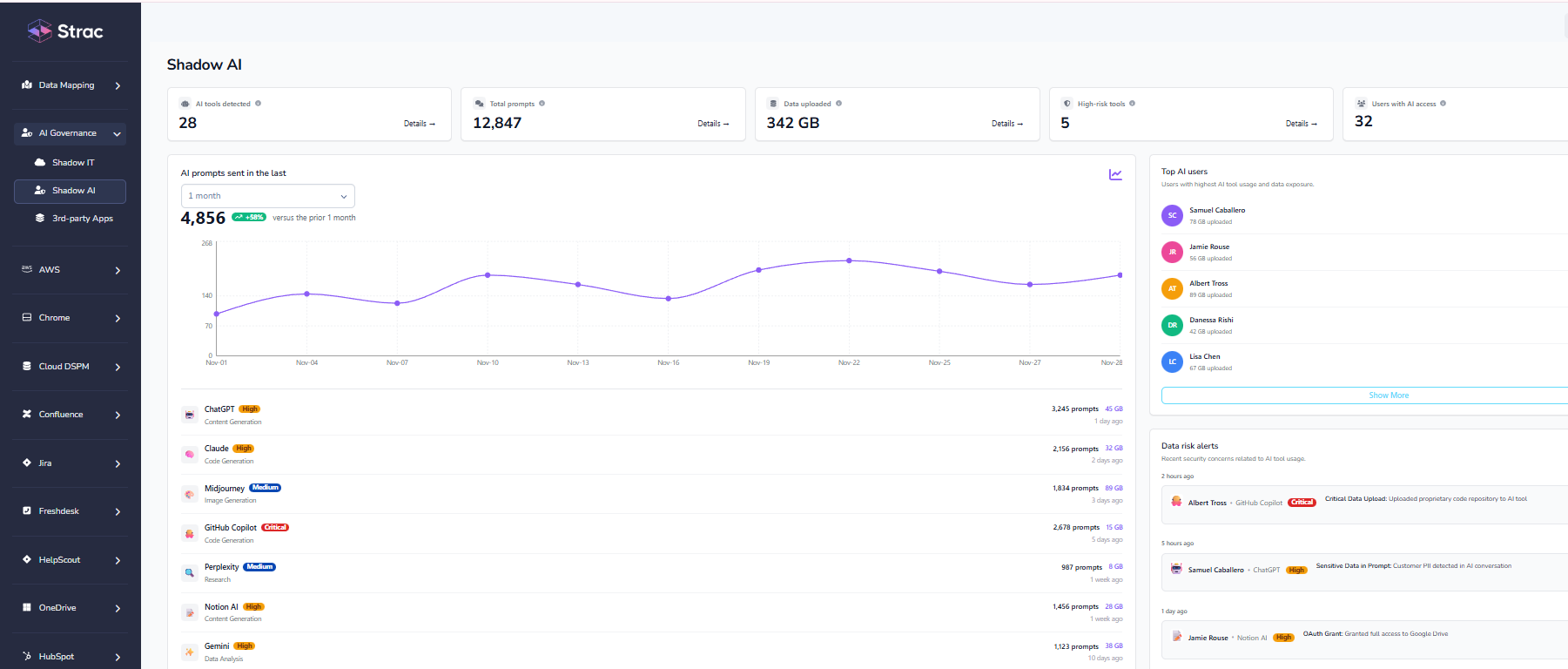
Shadow AI is growing fast; employees often paste sensitive data into tools like ChatGPT or Copilot without approval.
Detection alone is not enough; organizations need real-time remediation like redaction, blocking, access revocation, and quarantine.
Strac unifies DSPM + DLP across SaaS, cloud, endpoints, and GenAI to reduce modern data loss prevention risks faster.
Data loss prevention risks have evolved far beyond accidental emails and lost laptops. Today, sensitive data moves across SaaS applications, cloud storage, AI tools, browsers, endpoints, and third-party integrations at a speed many organizations struggle to monitor. As companies adopt more digital workflows, the number of places where confidential data can leak continues to grow.
Modern businesses need to understand where data loss prevention risks come from, what damage they cause, and how to reduce them with practical controls. This guide explains the most common risks, their consequences, and how Strac helps organizations protect sensitive data across modern environments.
✨Defining Data Loss Prevention Risks: When Data Gets Compromised
At its core, DLP aims to prevent confidential or sensitive data from being lost, stolen, altered, or accessed by unauthorized parties. DLP risks stem from data breaches, leaks, corruption, or outright unavailability—each carrying legal, financial and reputational consequences.
Key DLP risks include:
Data breaches - Malicious attacks or insider threats leading to data access by cybercriminals. Hacking, malware, and exploitation of vulnerabilities are common attack vectoDefining Data Loss Prevention Risks: When Data Gets CompromisedAt its core, DLP aims to prevent confidential or sensitive data from being lost, stolen, altered, or accessed by unauthorized parties. Data loss prevention risks stem from breaches, leaks, corruption, or outright unavailability; each carrying legal, financial, and reputational consequences.Key risks include:
Data breaches; malicious attacks or insider threats leading to unauthorized access
Data leakage; accidental sharing through email, SaaS apps, or removable media
Data corruption; sensitive information altered or rendered inaccurate
Data deletion; permanent loss caused by error, hardware damage, or crashes
Non-compliance; failure to meet regulatory requirements
Reputational damage; erosion of trust after a public incident
Understanding these risks is the first step toward building a stronger security posture. Organizations that ignore early warning signs often pay far more later.
👉 Before you move forward, scan your device for exposed sensitvie data in seconds!
Exploring the Origins of Data Loss Prevention Risks: An Inside Perspective
DLP vulnerabilities stem from various sources, including:
Insider Threats - Authorized Access Gone Rogue
Insiders like employees, contractors, and partners with approved access can still expose data intentionally or accidentally:
Data theft - Malicious insiders stealing proprietary information for financial gain.
Accidental sharing - Employees emailing sensitive data to incorrect recipients or misconfigured cloud storage.
Policy violations - Well-meaning insiders sharing data against company protocols.
Departing employees - The risk of data exfiltration right before employment ends still lingers.
External Threats - The Perimeter Under Siege
External threat actors like hackers employ an array of techniques to infiltrate defenses and exfiltrate data:
Phishing - Using fraudulent emails or websites to dupe users into revealing credentials.
Malware - Infecting systems with viruses, ransomware, or spyware designed to steal data.
Network attacks - Exploiting vulnerabilities to gain unauthorized access to systems and data.
Shoulder surfing - Physically observing users to steal passwords or other sensitive info.
Social engineering - Manipulating users psychologically to divulge confidential details.
Technology Gaps - When Controls Come Up Short
Shortcomings in data security controls also heighten DLP risks:
Weak access controls - Granting excessive user permissions and privileges.
Unpatched systems - Running outdated software riddled with known vulnerabilities.
Poor encryption - Failing to encrypt sensitive data at rest and in transit.
Outdated security tools - Relying on legacy DLP and antivirus solutions past their prime.
Lack of monitoring - Not logging or analyzing user activities and network traffic.
Cloud misconfigurations - Erroneous settings for cloud access and data storage.
Compliance Failures - When Regulations Get Violated
Non-compliance with data protection laws creates substantial legal and financial risks:
Weak data classification - Failing to properly identify and label sensitive data like PII and PHI.
Policy gaps - Lacking formal data handling policies aligned with regulations.
Audit failures - Inability to demonstrate compliance to regulators.
Data retention issues - Not adhering to prescribed data retention schedules.
Navigating the Consequences of Data Loss Prevention Risks: Rebuilding After the Fall
Failure to control DLP risks inflicts damage on multiple fronts:
Financial Loss - The Hard Costs
Fines and legal costs - For non-compliance and regulatory actions.
Business disruption - From downtime and recovery post-breach.
Lost revenue - Due to customer defections following a breach.
Remediation costs - Like forensic investigations and security improvements.
Reputational Harm - The Trust Deficit
Loss of customer trust - From negative publicity following high-profile breaches.
Brand damage - Compromised reputation makes attracting talent and investors challenging.
Partner/supplier impact - Data leaks can undermine confidence handling third-party data.
Legal Liabilities - Accountability Under the Law
Regulatory penalties - Authorities impose heavy fines for violations like HIPAA non-compliance.
Lawsuits - Customers, partners or investors may file legal action for damages.
Contract breaches - Data leaks can violate contracts, incurring financial liabilities.
Strategic Risks - Undermining the Competitive Edge
IP theft - Loss of proprietary data like trade secrets and R&D can erode competitive advantage.
Business disruption - Critical systems being unavailable due to ransomware or outages.
Decision paralysis - Inaccurate analytics and reporting due to compromised data integrity.
🎥Why Legacy DLP Misses Modern Data Loss Prevention Risks
Many traditional tools were built for email gateways, static file servers, and network perimeters. Modern data loss prevention risks now happen inside collaboration tools, cloud drives, AI platforms, browsers, and connected SaaS workflows where data moves instantly.
Common examples include:
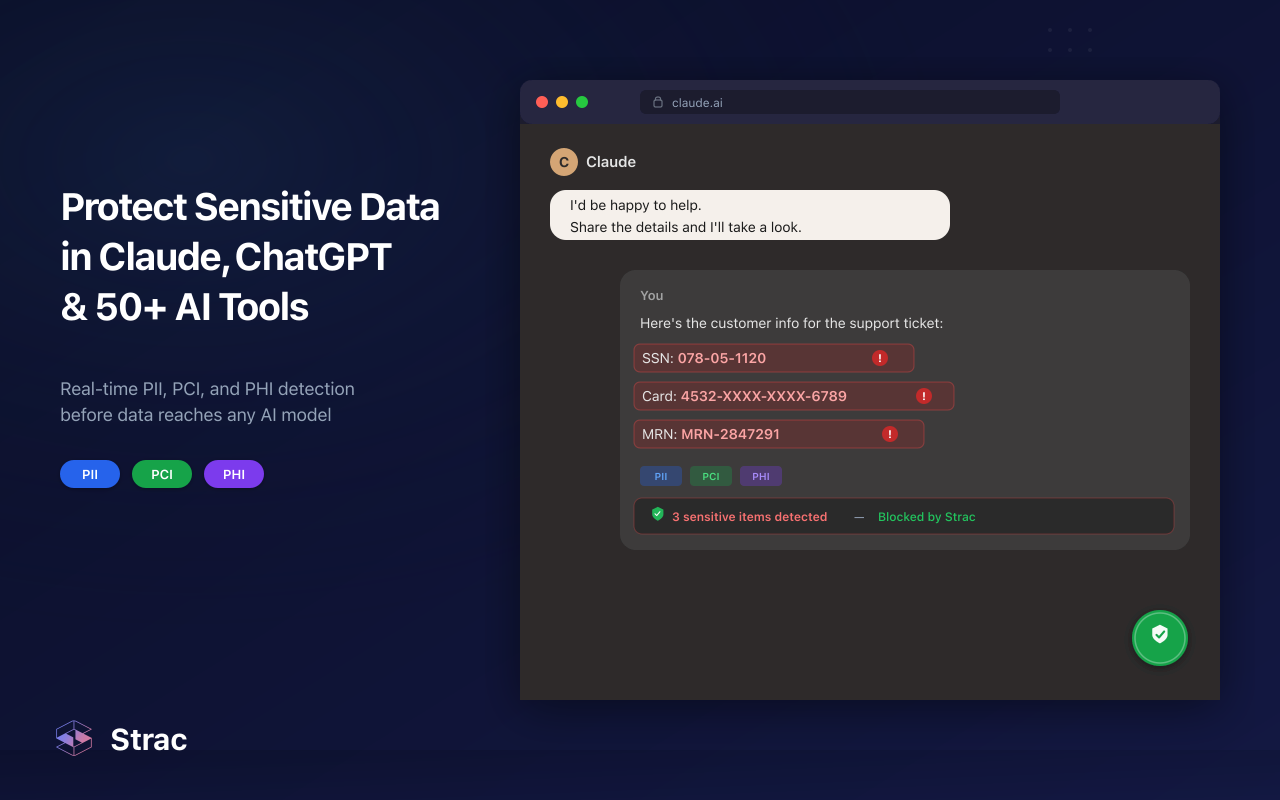
Employees pasting source code into AI tools
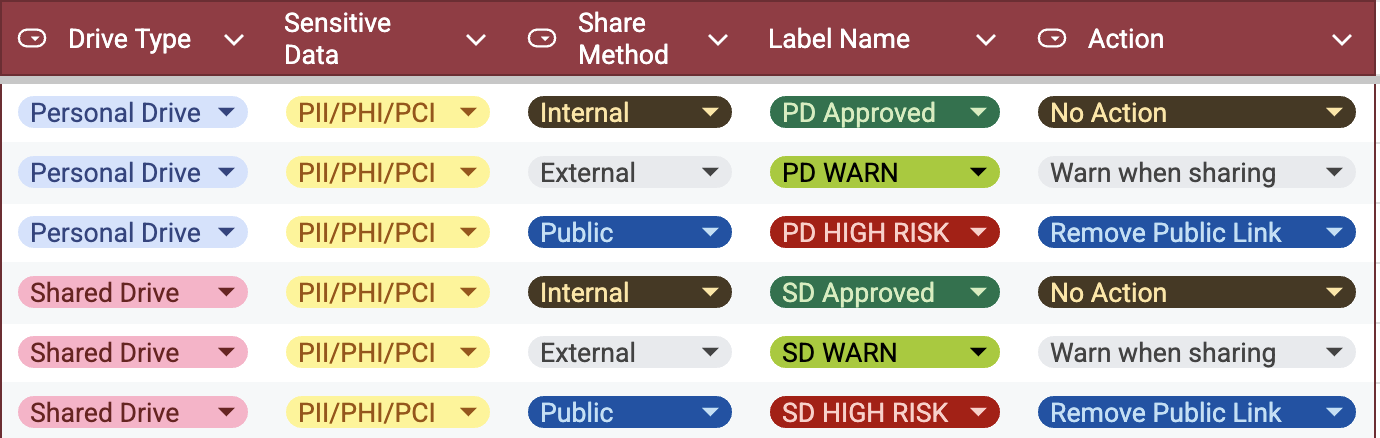
Public cloud links exposing confidential files
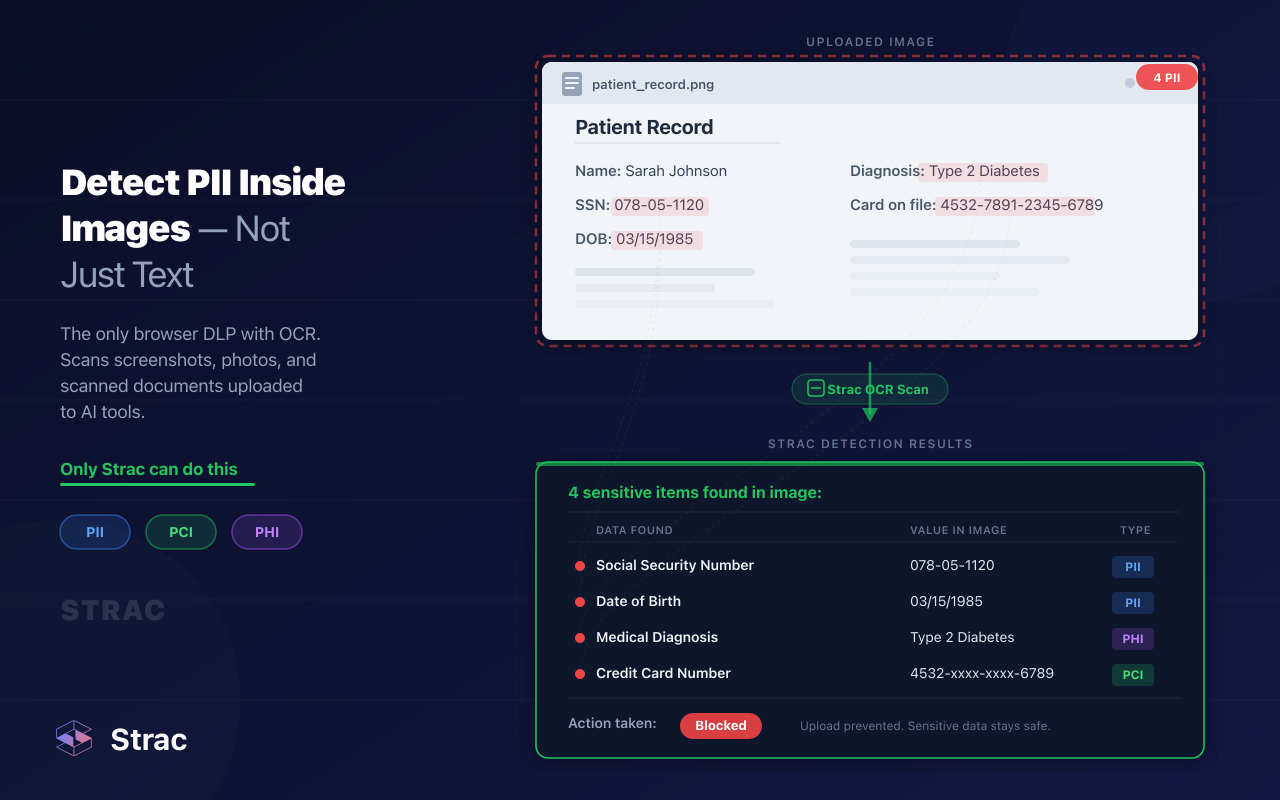
Sensitive data inside screenshots or PDFs
Customer PII in tickets or CRM notes
Over-permissioned third-party apps
Files moved to personal accounts after download
Strac was built for this newer environment with unified protection across SaaS,cloud, browser,endpoint, and GenAI surfaces. Modern risk requires modern visibility.
Navigating the Consequences of Data Loss Prevention Risks: Rebuilding After the Fall
When organizations fail to manage data loss prevention risks, the impact reaches far beyond IT. Financial loss, legal exposure, reputational damage, and operational disruption often follow.
Financial Loss
Fines and penalties
Incident response costs
Revenue loss from churn
Recovery and remediation spend
Reputational Harm
Loss of customer trust
Brand damage
Difficulty winning new business
Partner concern over shared data
Legal Liabilities
Regulatory actions
Lawsuits
Contract breaches
Disclosure obligations
Strategic Risks
Intellectual property theft
Business downtime
Poor decision-making due to corrupted data
For many businesses, the indirect cost of lost trust can exceed the direct cost of the breach itself.
Preventing Data Loss Prevention Risks: Effective Strategies and Safeguards
Reducing DLP risks requires a resilient, defense-in-depth strategy:
Secure Endpoints - The First Line of Defense
Install endpoint protection on all devices to:
Block malware via antivirus, firewalls, and threat intelligence.
Encrypt local data and restrict removable media like USB drives.
Monitor user activities and data movement to prevent unauthorized actions.
Control Access - The Power of Least Privilege
Limit data access only to authorized personnel:
Implement least privilege and separation of duties for access control.
Enforce strong passwords, multi-factor authentication, and access reviews.
Institute secure remote access policies for employees and third parties.
Revoke access promptly for departing employees.
Protect Networks - Guarding the Perimeter
Harden network perimeters and traffic flows:
Filter traffic via next-gen firewalls, web proxies, IDS/IPS, and email security.
Encrypt network traffic end-to-end and implement secure VPNs.
Segment networks to restrict lateral movement post-breach.
Continuously monitor networks to rapidly detect threats.
Secure the Cloud - New Frontiers, New Risks
Prevent cloud data leaks and threats:
Configure access controls, encryption, and user activity monitoring for cloud apps.
Enforce data retention policies and legal holds on cloud data.
Conduct periodic audits of cloud data security controls.
✨Data Loss Prevention Risks in AI Tools and Shadow AI
One of the fastest-growing data loss prevention risks is unsanctioned AI usage. Employees increasingly use OpenAI ChatGPT, Microsoft Copilot, Google Gemini, and Anthropic Claude for daily work tasks.
Examples include:
Uploading contracts for summarization
Pasting customer records into prompts
Sharing internal forecasts
Using AI to rewrite confidential emails
Debugging code with proprietary source files
Strac helps reduce this risk with GenAI DLP controls that can audit, warn, block, redact, or pseudonymize sensitive data before exposure. This allows organizations to adopt AI without sacrificing security.
👉 Read our blog on AI DLP to learn how AI DLP prevents sensitive data exposure in ChatGPT, Claude, Copilot, Gemini, and other AI applications.
🎥How Strac Can Hep
Strac addresses modern data loss prevention risks through a unified Discover → Classify → Remediate platform designed for today’s digital environments.
With fast deployment and agentless architecture, many teams can begin scanning quickly with minimal operational lift.
✨ Data Lineage DLP for Insider Risk and Exfiltration
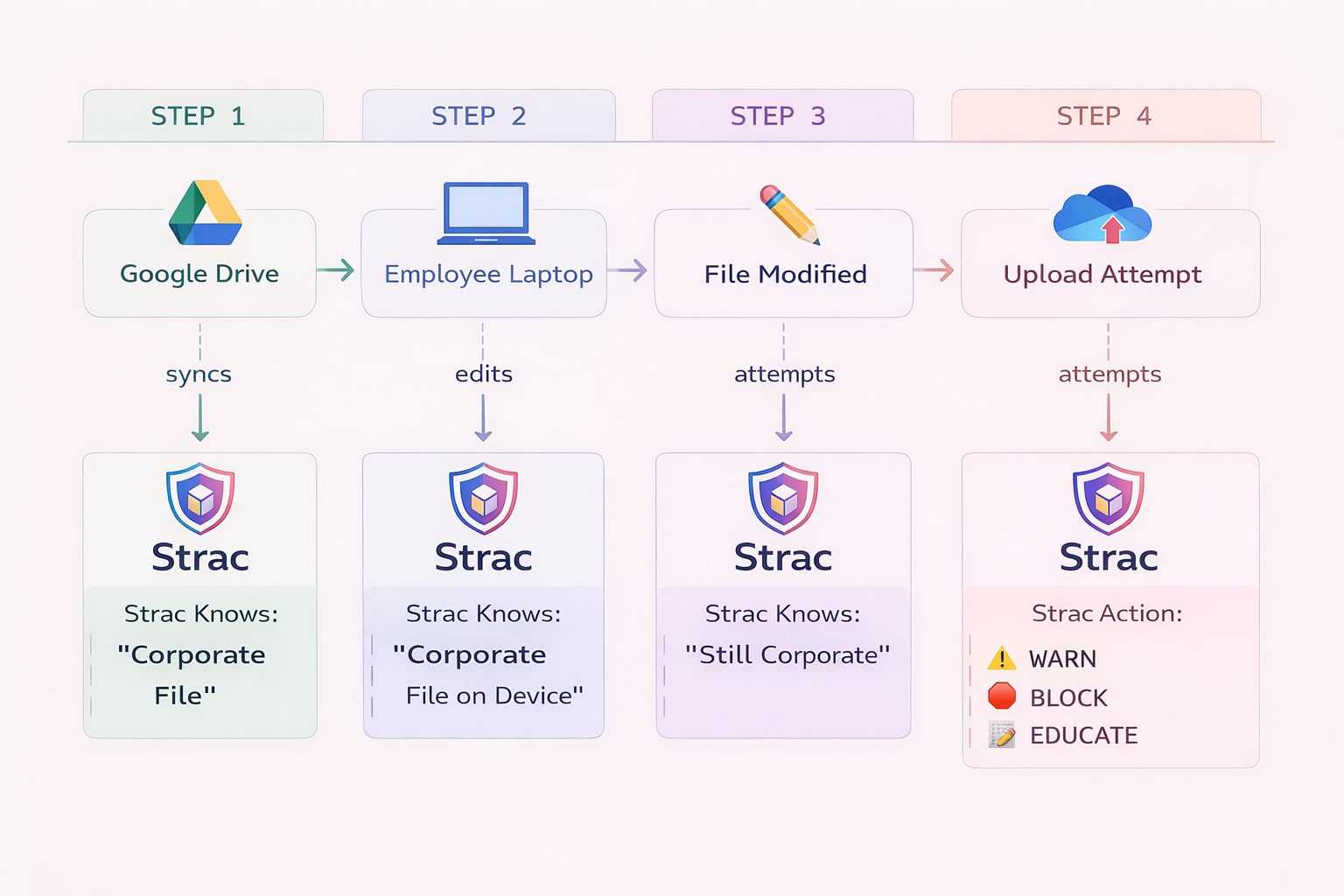
Some of the hardest data loss prevention risks happen after a file is downloaded. Once renamed, copied, or moved, many traditional tools lose visibility.
Strac Data Lineage DLP helps organizations track sensitive file movement across events such as:
Renaming files
Duplicate copies
Uploading elsewhere
External sharing
Transfers to personal accounts
This provides stronger protection against insider threats and silent exfiltration.
Ready to fortify your defenses against data loss risks? Book a demo with Strac and see how our innovative DLP solution can safeguard your sensitive data against modern threats. Join the satisfied customers who rely on Strac for robust risk mitigation.
Looking Ahead: The Future of Data Loss Prevention Risks
As organizations adopt more AI, automation, and SaaS tools, data loss prevention risks will continue to expand. Security leaders need solutions that move at the speed of modern workflows and reduce risk automatically.
Waiting for manual investigations or relying on outdated controls is no longer enough. Businesses that modernize now will be better positioned to scale securely.
Ready to strengthen your defenses? Book a demo with Strac and see how modern DLP can help safeguard sensitive data across your environment.
Bottom Line
Data loss prevention risks now span email, SaaS apps, AI tools, cloud storage, browsers, endpoints, and third-party integrations. That means companies using only legacy controls often miss where exposure actually happens.
Strac helps organizations reduce risk faster with unified discovery, classification, and automated remediation across the environments employees use every day.
🌶️Spicy FAQs on Data Loss Prevention Risks
What are the biggest data loss prevention risks today?
AI leakage, insider threats, public cloud sharing, SaaS sprawl, screenshots with sensitive data, and unmanaged endpoints.
Can DLP tools stop ChatGPT data leaks?
Modern tools can help monitor, warn, block, redact, or pseudonymize sensitive prompts and outputs.
Why do older DLP tools struggle today?
Many were built for email and network traffic, not SaaS apps, browsers, cloud storage, or AI workflows.
Which industries need DLP most?
Healthcare, fintech, SaaS, legal, insurance, government, and any business handling confidential customer data.
What is the fastest way to identify risk?
Use automated discovery tools like Strac that continuously scan SaaS, cloud, endpoints, and AI environments.
Discover & Protect Data on SaaS, AI, MCP, Endpoints & Cloud
Strac provides end-to-end data loss prevention for all SaaS and Cloud apps. Integrate in under 10 minutes and experience the benefits of live DLP scanning, live redaction, and a fortified SaaS environment.


.webp)









.png)
.avif)


.gif)
