September 9, 2026

8
min read
Data Loss Prevention Methods
Discover the importance of data loss prevention methods in safeguarding sensitive information and achieving regulatory compliance.
· Data loss prevention methods are the individualcontrols that detect sensitive data and act on it, including classification,pattern and machine-learning detection, redaction, masking, tokenization,encryption, access control, and inline user coaching.
· The method matters less than where it runs: apolicy that inspects email but not a browser paste into a chatbot is a policywith a hole in it.
· Most stacks over-invest in prevention methodsthat assume a file and a perimeter, then discover that the modern leak is acopy, a paste, a screenshot, or a tool call.
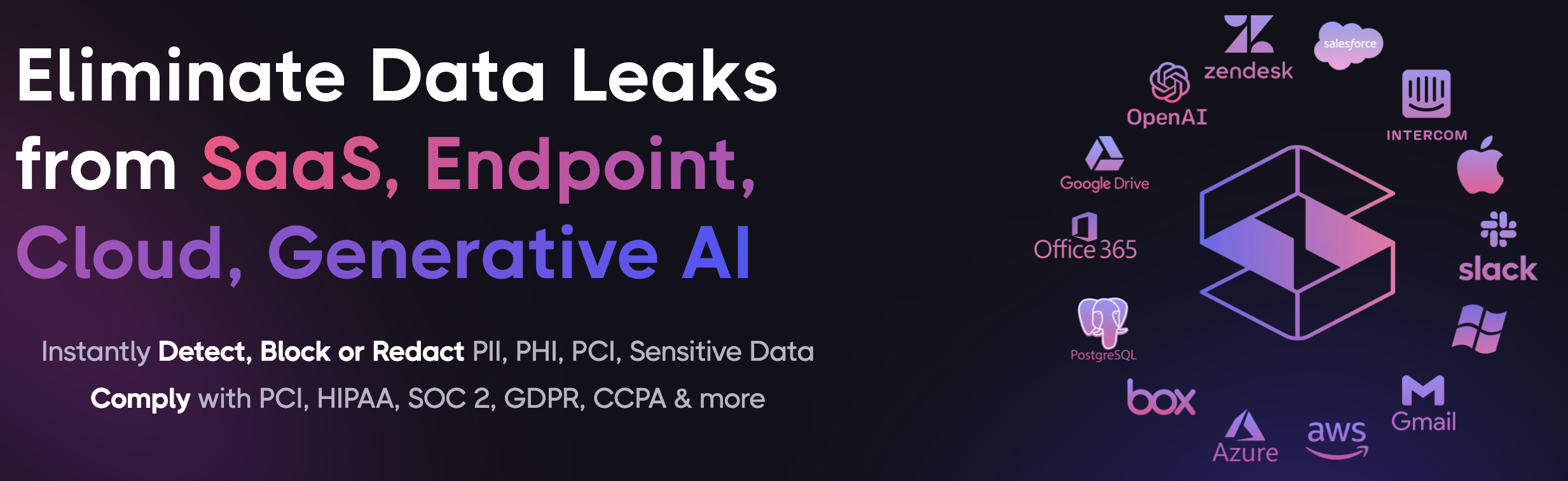
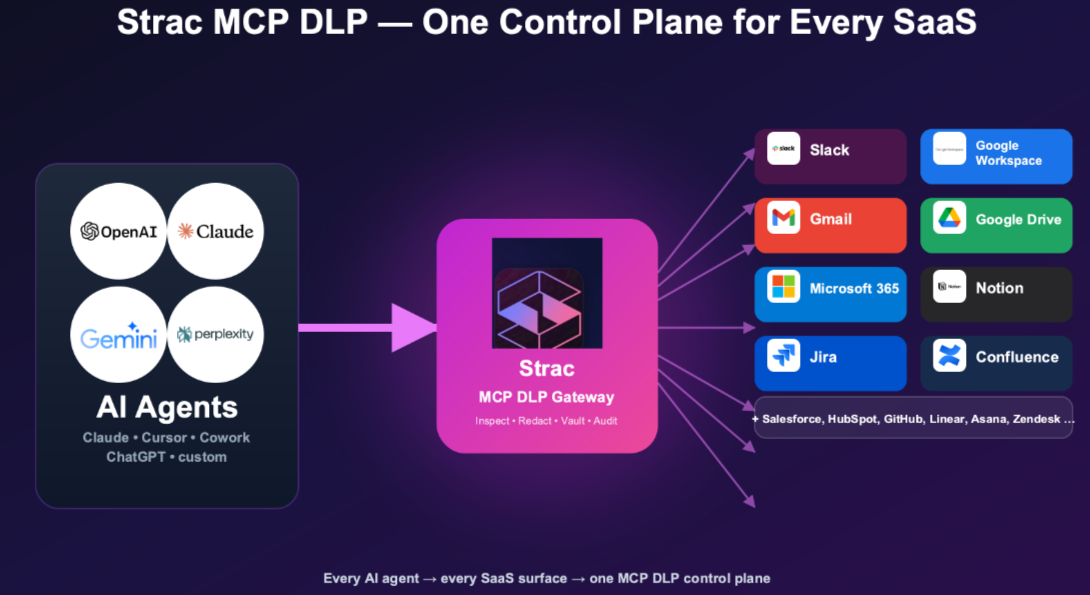
· Strac runs the same detection and remediationmethods across browser, endpoint, SaaS, cloud, and MCP, so the control followsthe data instead of the network.
· Startfrom the pillar on data lossprevention, then compare the surface-level types of DLP.
Most teams inherit a data loss prevention program built around a file crossing a network boundary, then find that the leaks arrive as a paste, a screenshot, or an agent tool call. The methods themselves are sound. The question is which one runs where, and at what moment. This guide separates the detection methods from the remediation methods, shows where each holds and where each quietly stops working, and maps them onto the surfaces that matter now: endpoint DLP, SaaS DLP, AI DLP in the browser, and MCP DLP for autonomous agents. If you are still deciding between deployment models rather than controls, start with the types of DLP; if you are building the operating cadence, the DLP process covers it.
Data loss prevention methods are the techniques a DLP program uses to identify sensitive data and stop it from reaching an unauthorized person, system, or destination. A method is a control, not a product category. Classification is a method. Redaction is a method. Blocking an upload is a method.
The distinction matters because buyers routinely confuse methods with deployment surfaces. Network DLP, endpoint DLP, and cloud DLP describe where inspection happens. Encryption, masking, and tokenization describe what happens to the data. A complete program needs both answers, and most incomplete programs have only one.
Every method falls into one of two halves. Detection methods answer the question of whether this content contains regulated or confidential data. Remediation methods answer the question of what to do about it in the next few hundred milliseconds. Detection without remediation produces alerts; remediation without detection produces friction. The program only works when both halves run on the same surface.
The classic DLP method set was designed around a file crossing a boundary. Inspect the attachment, scan the SMB share, watch the egress gateway. That model assumed data moved as documents, through networks the security team owned, at a pace that allowed a queue and a reviewer.
Sensitive data no longer moves that way. It moves as a paste into a browser tab, a screenshot dropped into a ticket, a customer export summarized by a chatbot, an agent reading a database over an MCP connector. None of those events produce a file crossing a gateway, so none of them trigger a method that watches for one.
Three failures follow, and they are consistent across every stack that still relies on file-and-perimeter methods. The first is coverage: unstructured content in images, PDFs, and screenshots goes uninspected because the method reads text only. The second is timing: batch scanning finds the exposure after the data has already been shared. The third is precision: broad regex fires on every number that looks like a card, the team drowns in false positives, and the policy quietly gets set to monitor-only.
The result is a program that reports well and protects poorly. Why legacy DLP fails for AI covers the AI-specific version of the same gap, and it is the sharpest version of it.
Pattern matching is the oldest method and still the workhorse. Regular expressions plus checksums identify structured identifiers such as credit card numbers, Social Security numbers, and API keys. It is fast and cheap, and on its own it is noisy.
Exact data matching and document fingerprinting narrow that noise. Instead of asking whether content looks like a card number, these methods ask whether it matches a known record from your customer database or a known internal document. Precision rises sharply. Maintenance cost rises with it, because both methods depend on a current index.
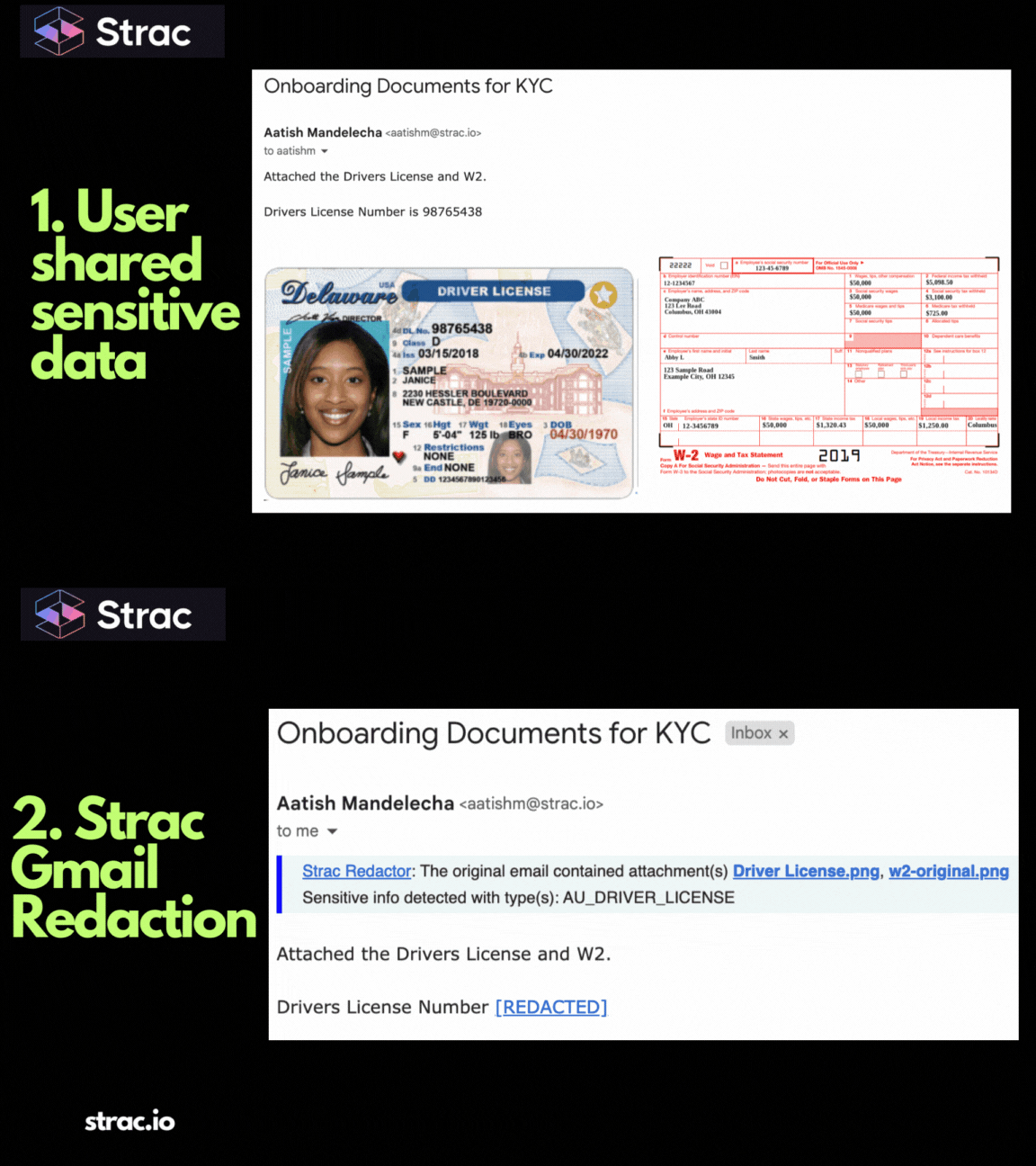
Optical character recognition extends detection to the formats where sensitive data actually hides now. A driver's license photo, a screenshot of a billing page, and a scanned intake form are all images, and a text-only method sees nothing in them. OCR plus image classification is the difference between inspecting content and inspecting only the part of content that happens to be typed.
Machine-learning classification handles what the other methods cannot express as a rule: medical narrative, salary discussion, contract language, source code with embedded secrets. Context carries the decision. The same nine-digit number is a false positive in a shipping manifest and a genuine PCI DSS violation in a support ticket, and only context tells them apart.
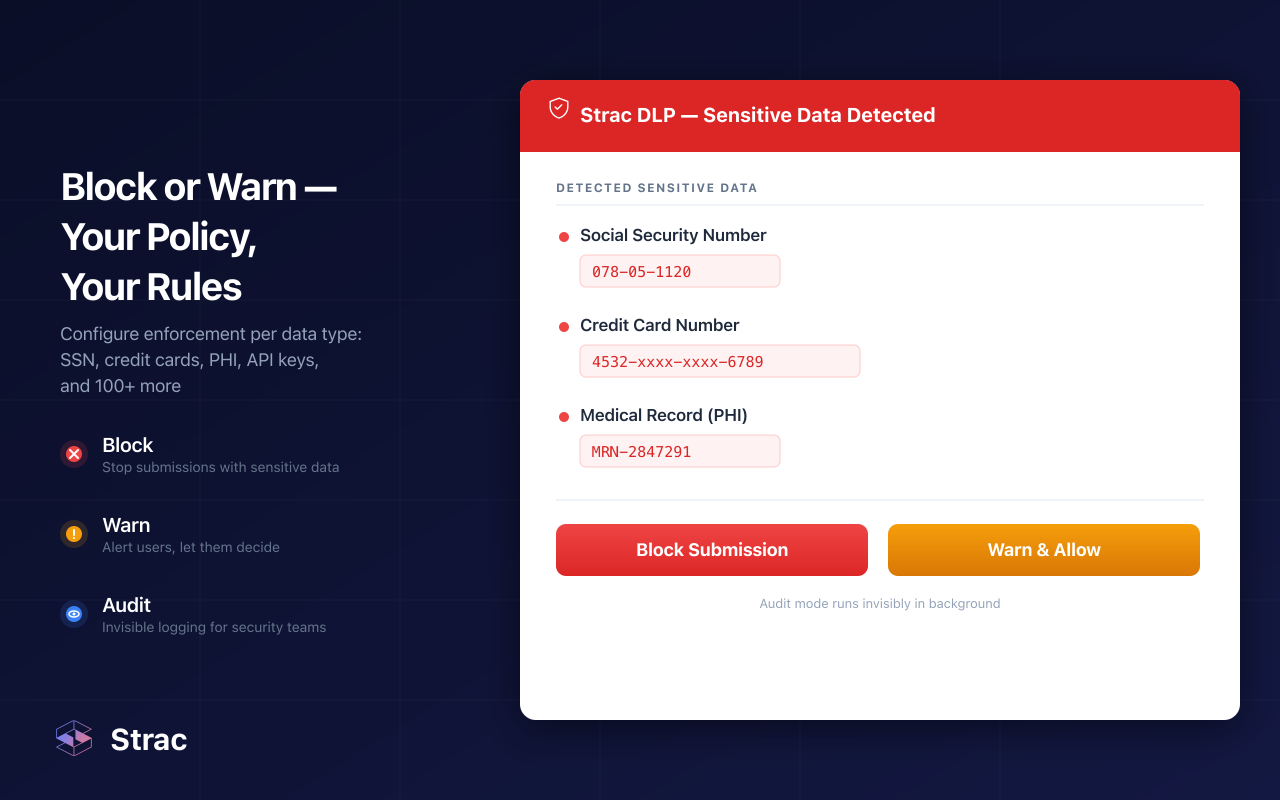
Four remediation actions cover almost every real policy, and they are worth naming in order of preference.
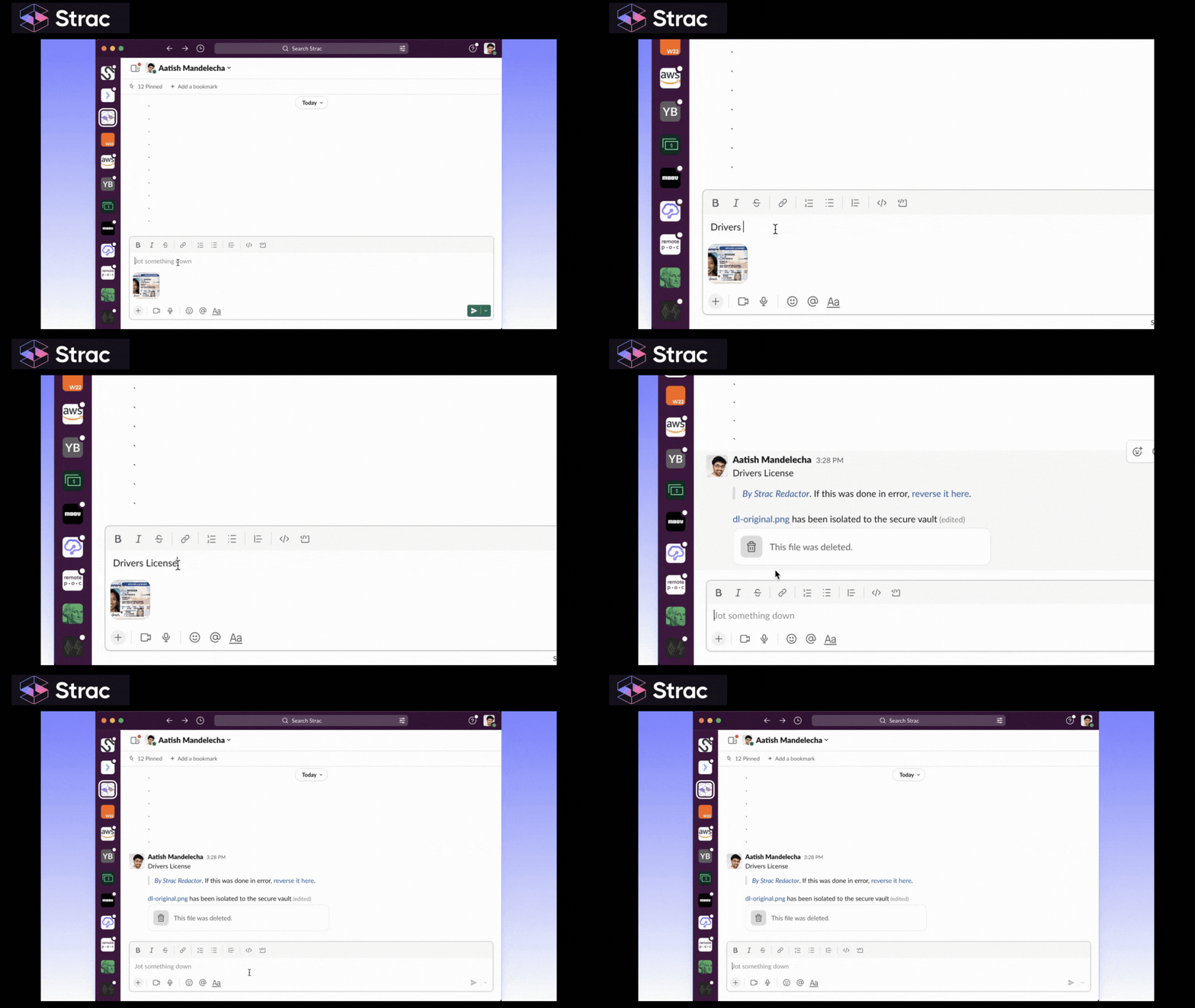
Redact and mask. Replace the sensitive element in place and leave the rest of the message intact, across Slack, email, tickets, docs, Google Drive, SharePoint, and Box. The conversation continues; the identifier does not travel. This is the default because it is the only action that protects data without stopping work.
Block. Stop the upload, the paste, or the send outright. Reserve it for the destinations that are never acceptable, such as an unsanctioned generative AI tool handling a full customer export, because a blocking policy applied broadly is a policy users route around.
Warn and coach. Show the user what was detected and why the destination is risky, then let them proceed or cancel. Coaching converts a policy into training at the moment it is relevant, and it is the cheapest way to reduce repeat incidents.
Revoke access. Pull the sharing link, the third-party app grant, or the over-broad permission that made the exposure possible in the first place. Detection finds the file that is public; revocation is what makes it stop being public.
Encryption and tokenization sit alongside these as data-state methods rather than event-time actions. Encryption protects data at rest and in transit against an attacker who reaches the store. Tokenization and vaulting replace the value with a reference so that the sensitive original never sits in the application at all. Neither method inspects an outbound paste, which is why neither one substitutes for redaction.
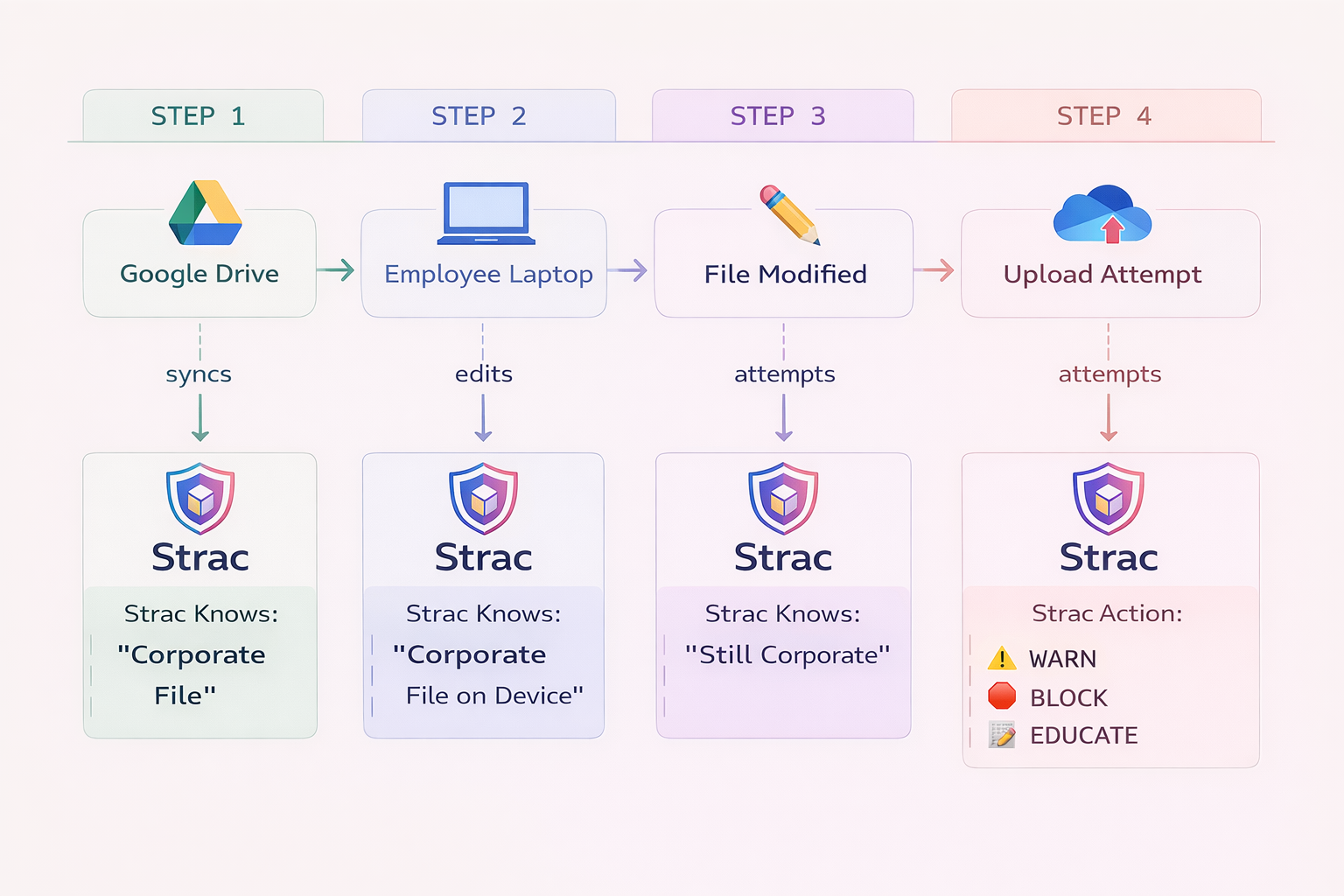
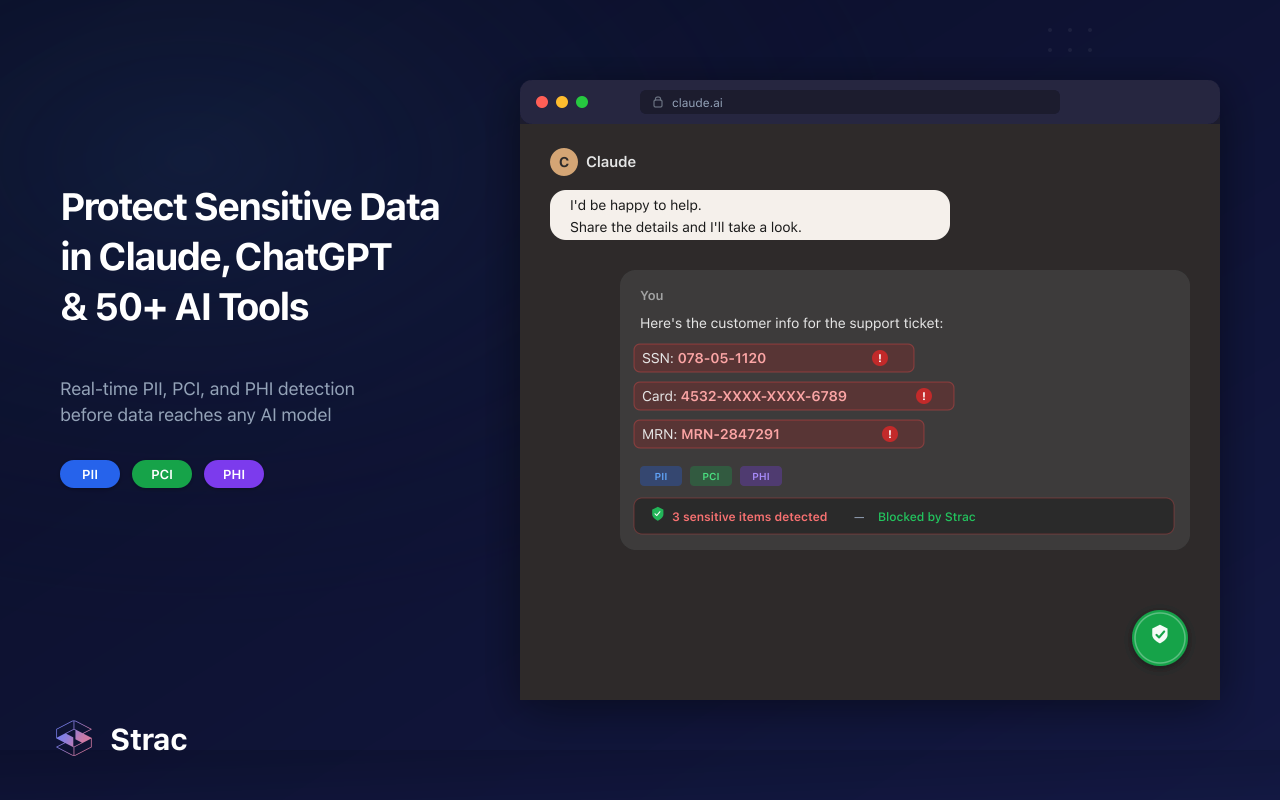
Strac runs the full method set as one platform rather than as six disconnected tools. Detection covers structured identifiers, exact records, documents, and images, with OCR and machine-learning classification applied to JPEGs, PNGs, screenshots, and PDFs alongside plain text. Detectors ship prebuilt for PII, PHI, PCI DSS, HIPAA, and GDPR obligations, and they are configurable when the data is specific to your business.
Remediation runs inline at the moment of the action, on every surface the data actually moves through.
.gif)
The point is not that Strac has more methods. It is that the same detector and the same policy follow the data from a Google Drive file to a Slack message to a browser paste to an MCP DLP tool call, with one console and one audit trail behind them. A method that only exists on one surface is a method attackers and hurried employees simply walk around.
Data loss prevention methods are not a menu to pick one item from. Detection without remediation is an alert queue, and remediation on one surface is a detour for everyone else. Identity, model, prompt, and network controls all fail eventually, and the data layer is the backstop: redact sensitive data on every action and a compromise never becomes a breach.
Methods are the controls, such as classification, redaction, encryption, and access revocation. Types describe the deployment surface: network, endpoint, cloud, browser. You choose methods to decide what happens to data, and types of DLP to decide where it happens.
Because it inspects files crossing a boundary, and a prompt is neither. A paste into a browser chatbot produces no attachment, no SMTP hop, and no gateway event, so the method never fires. Browser-level inspection is what closes that gap.
Yes, if redaction is the default and blocking is the exception. Masking the identifier and letting the message through preserves the workflow while removing the risk. Blocking everything trains users to find an unmonitored path instead.
No. Encryption protects data against someone who reaches the store, but an authorized user pasting decrypted data into an AI tool is doing so through the application, with valid credentials. Encryption never sees that event, which is why inline redaction is the complement rather than the alternative.
Discovery and classification, because you cannot redact what you have not found. Once the top three data classes and their destinations are known, redaction on the browser and your busiest SaaS app delivers the largest exposure reduction. See data loss prevention and AI data governance for the full picture.
.avif)


.gif)


.webp)