September 16, 2026

7
min read
What is a DLP Provider?
Discover the importance of choosing the right DLP provider to protect sensitive data and ensure compliance.
· A modern DLP provider should protect sensitivedata across SaaS, cloud, endpoints, browsers, GenAI applications, andMCP-connected workflows.
· The best DLP solutions go beyond alerts byautomatically redacting, masking, blocking, quarantining, or encryptingsensitive data in real time.
· GenAI, Shadow AI, and Model Context Protocol(MCP) introduce new data leakage paths that traditional DLP tools were notdesigned to secure.
· When evaluating DLP providers, look for broadintegrations, accurate content-aware detection, AI and MCP protection, fastdeployment, and strong compliance support.
· Straccombines DLP, DSPM, GenAI security, and MCP protection in one platform builtfor modern data environments.
A Data Loss Prevention (DLP) provider helps organizations discover, monitor, and protect sensitive data before it is exposed, shared, or stolen.
Modern DLP platforms secure information like PII, PHI, PCI, financial data, source code, API keys, and other confidential business information across the tools employees use every day.
In 2026, that means protecting data not only in email and cloud storage, but also across SaaS applications, browsers, endpoints, AI assistants, and MCP-connected systems.
Not sure where sensitive data is exposed? Run Strac's free DLP Test to identify potential risks across your environment and see how well your current controls perform.
The way employees work has changed.
Sensitive data now moves through Slack, Microsoft 365, Salesforce, Google Workspace, ChatGPT, Claude, Copilot, and hundreds of other business applications. AI agents and MCP servers can also access multiple systems, creating new paths for sensitive data to move between applications.
Legacy DLP tools were designed for email and network traffic. Modern DLP must protect data wherever it travels, including AI prompts, AI responses, and agentic workflows.
Not all DLP solutions provide the same level of protection. Many legacy platforms still focus on email and endpoints, while modern organizations need visibility across SaaS applications, cloud storage, AI tools, browsers, and MCP-connected workflows.
Here are the capabilities that matter most when evaluating a DLP provider in 2026.
You can't protect data you don't know exists.
A modern DLP provider should continuously discover and classify sensitive data across your entire environment, including SaaS applications, cloud storage, endpoints, browsers, AI tools, and connected data sources.
Look for support for both structured and unstructured data, including documents, PDFs, images, screenshots, spreadsheets, and customer records.
Traditional DLP tools often rely on regular expressions and keyword matching, leading to high false positives.
Modern platforms use machine learning, OCR, and content-aware detection to accurately identify PII, PHI, PCI, API keys, source code, credentials, financial data, and custom data types, even inside images and documents.
Generative AI has become a standard business tool, and Model Context Protocol (MCP) is rapidly expanding how AI agents access business systems.
A modern DLP provider should protect sensitive data shared with AI assistants, monitor AI workflows, and secure data moving through MCP-connected tools before it leaves your environment.
Detection alone isn't enough.
The best DLP providers automatically respond when sensitive data is found by redacting, masking, blocking, quarantining, encrypting, or deleting content based on your organization's policies.
This helps reduce risk immediately instead of relying on manual intervention.
Sensitive data moves across dozens of business applications every day.
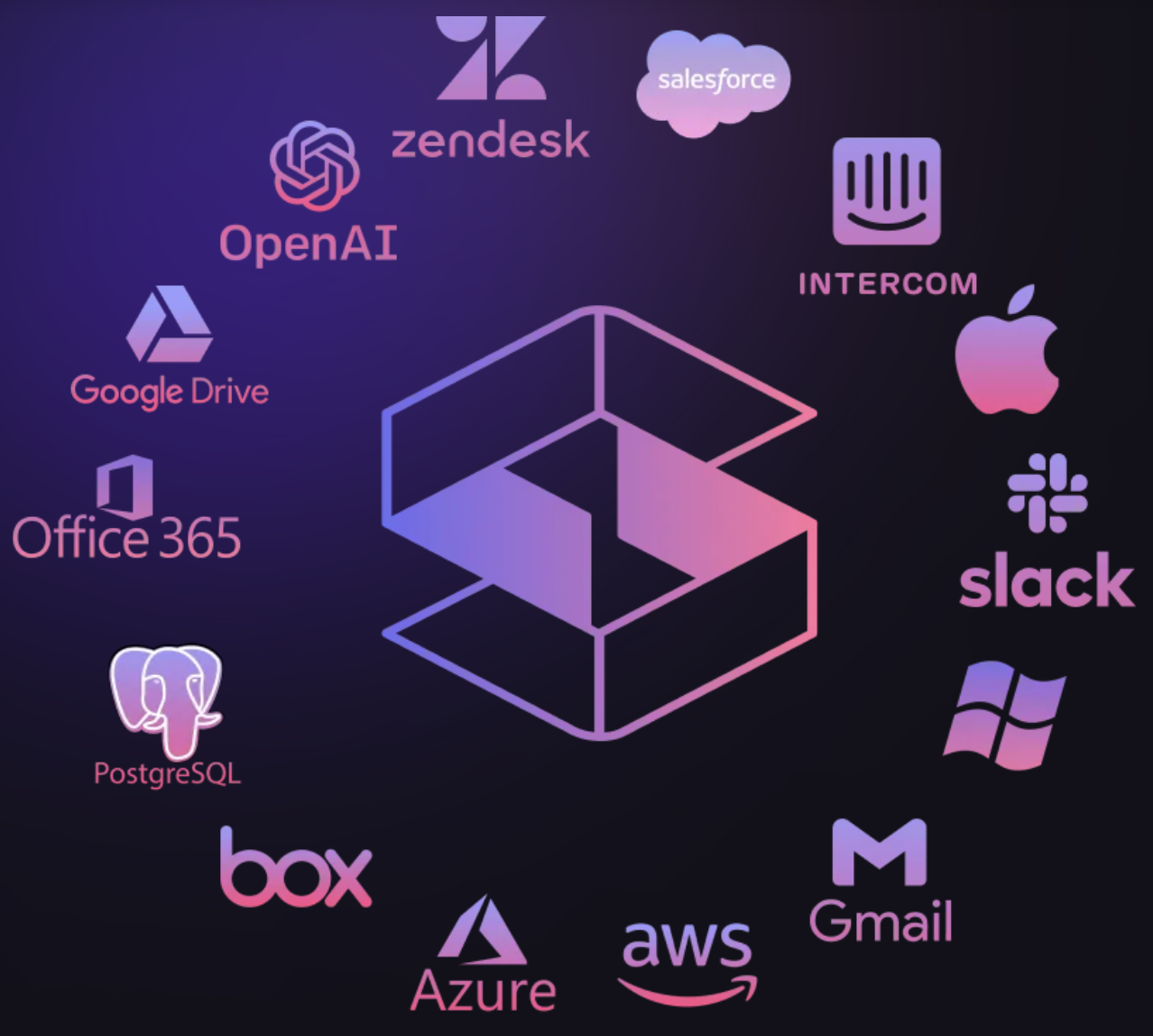
Look for a provider that integrates with collaboration tools, cloud storage, CRM platforms, customer support software, browsers, endpoints, AI applications, and developer tools from a single platform.
The broader the coverage, the fewer security gaps your organization has to manage.
A DLP solution should make compliance easier, not more complicated.
Built-in policies and detectors for standards such as PCI DSS, HIPAA, GDPR, SOC 2, ISO 27001, and CCPA can help organizations identify regulated data and demonstrate compliance during audits.
Choosing a DLP provider isn't just about the number of features. It's about finding a platform that fits the way your business works today and can adapt as your security needs evolve.
When comparing vendors, ask questions like:
The right provider should improve security without adding unnecessary complexity for employees or IT teams.
Strac is built for how organizations work today.
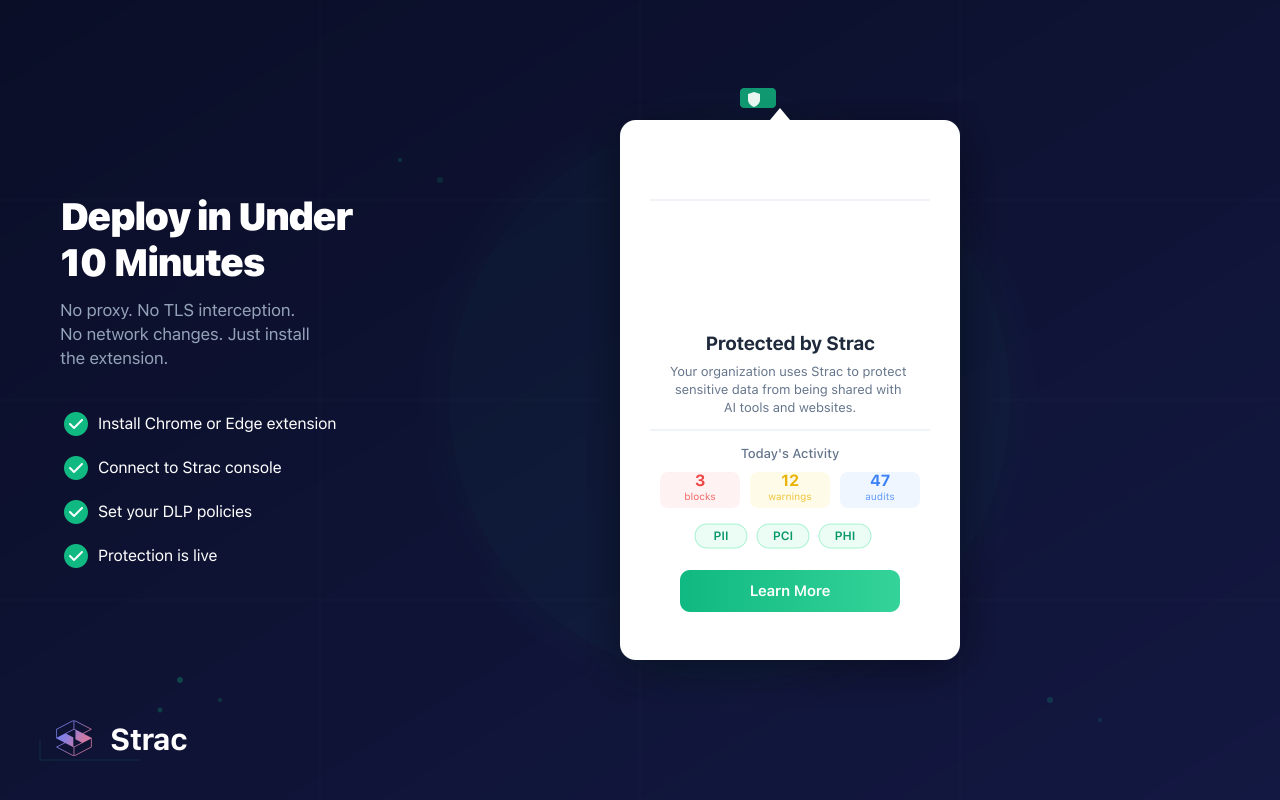
Instead of focusing only on traditional DLP, Strac combines Data Loss Prevention (DLP), Data Security Posture Management (DSPM), AI security, and browser and endpoint protection into a single agentless platform.
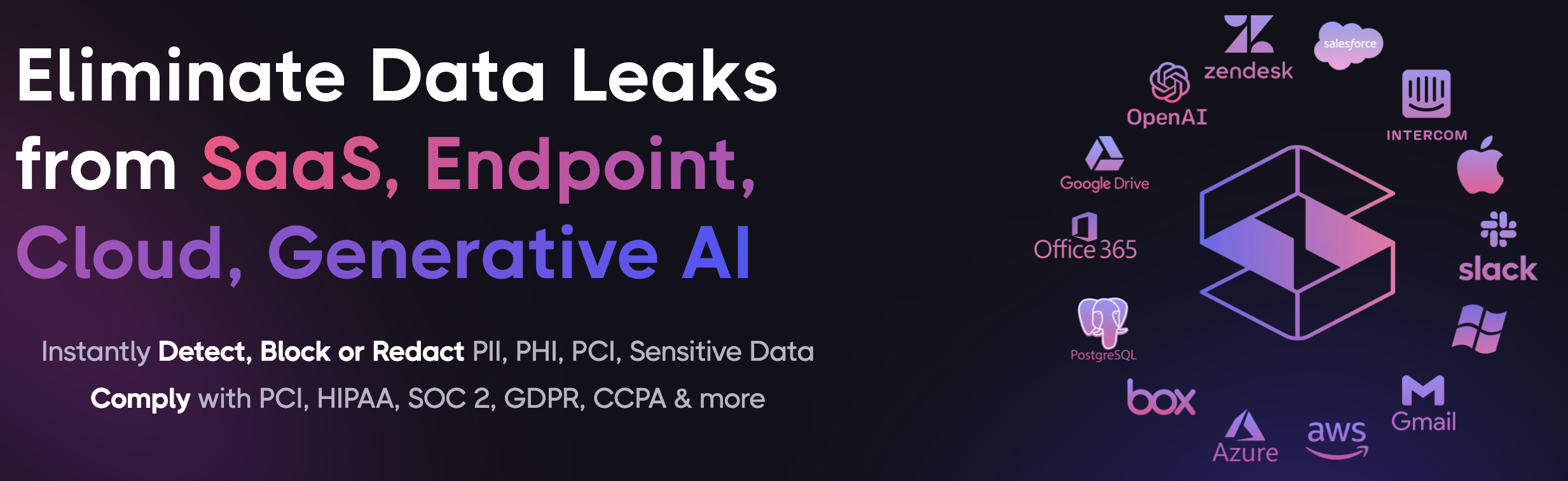
Strac secures sensitive information across SaaS applications, cloud storage, endpoints, browsers, AI assistants, APIs, and MCP-connected workflows, giving security teams a unified view of where sensitive data lives and how it moves.
Strac uses AI-powered, content-aware detection to identify PII, PHI, PCI, secrets, credentials, source code, financial data, and hundreds of other sensitive data types across structured and unstructured content, including images and documents.
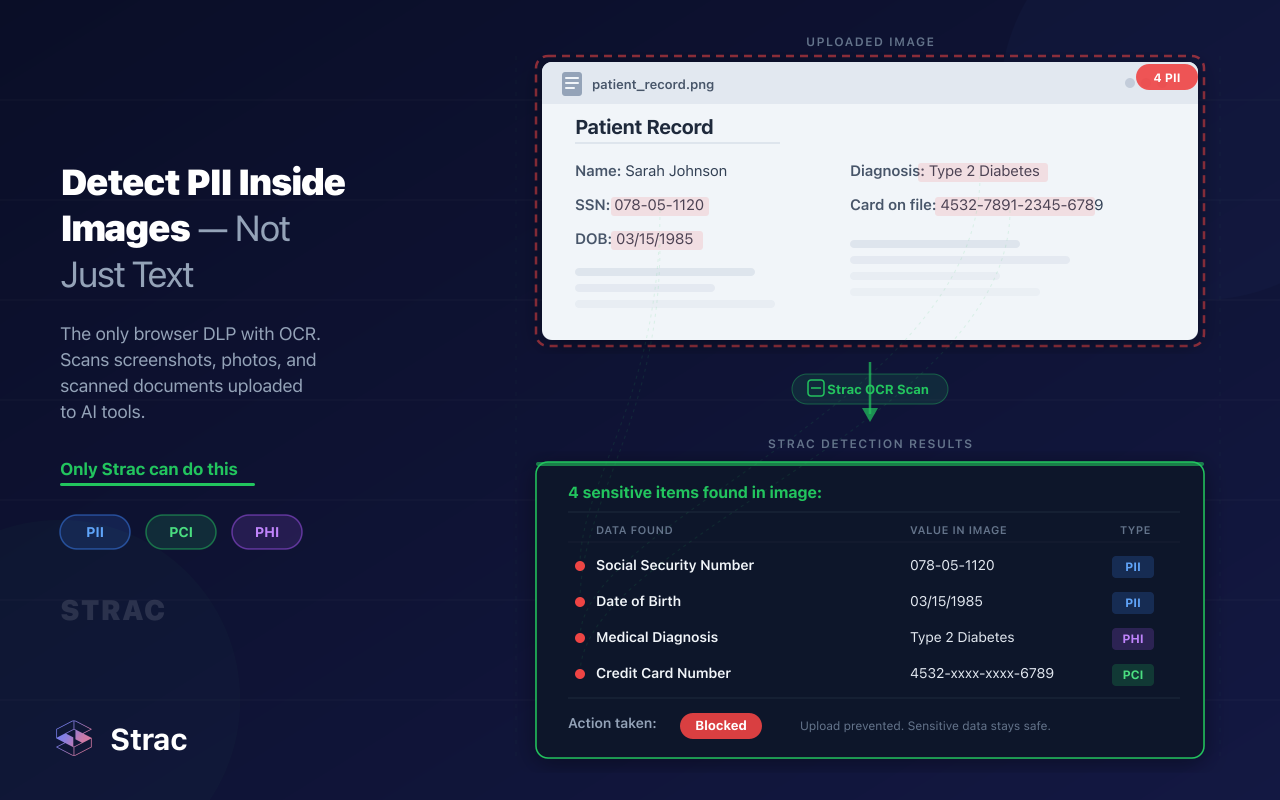
Rather than simply generating alerts, Strac can automatically redact, mask, block, quarantine, encrypt, or delete sensitive information in real time, helping organizations reduce risk before data is exposed.
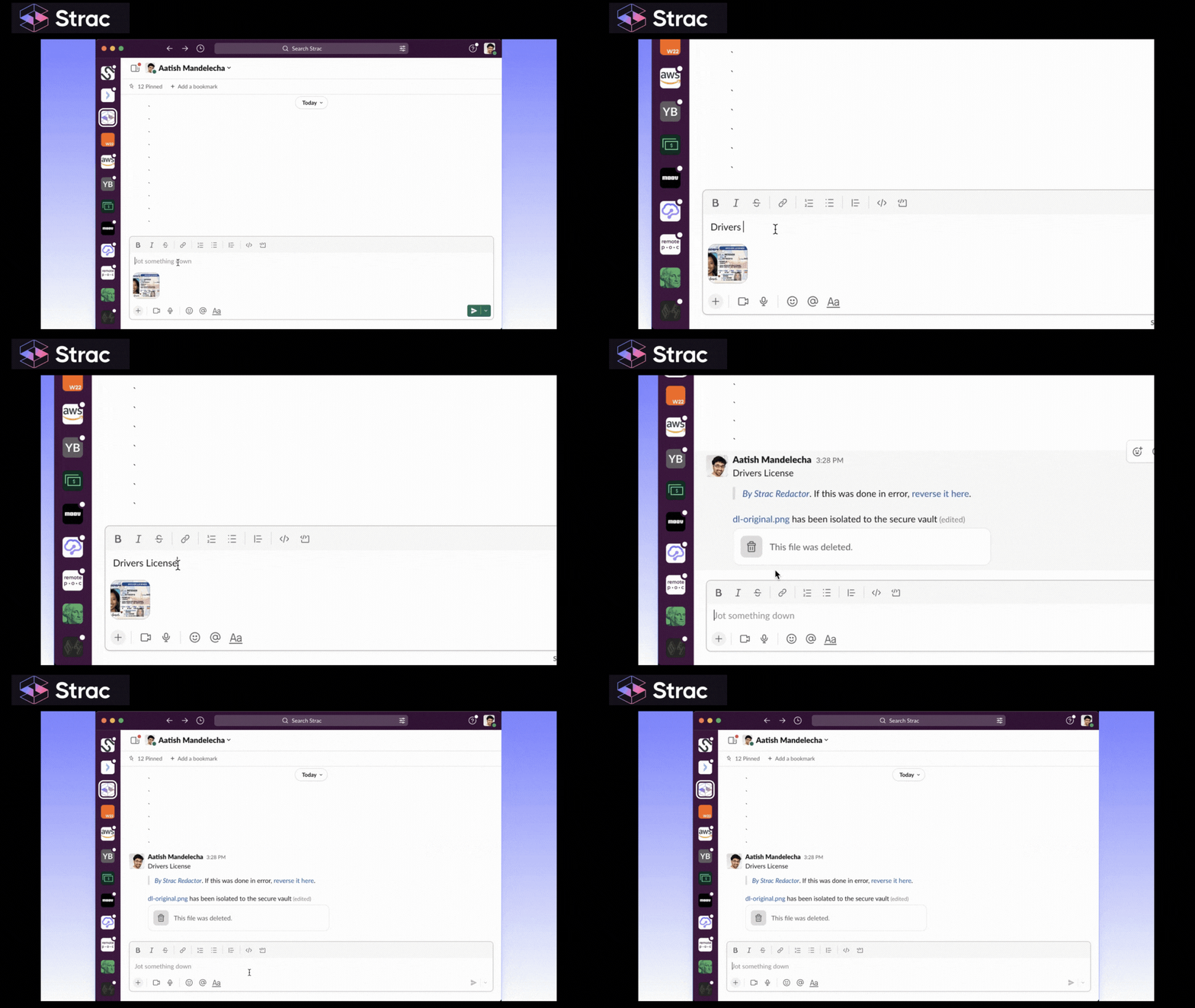
Strac's agentless architecture integrates with existing SaaS applications without complex infrastructure or endpoint agents, allowing organizations to start protecting data quickly with minimal operational overhead.
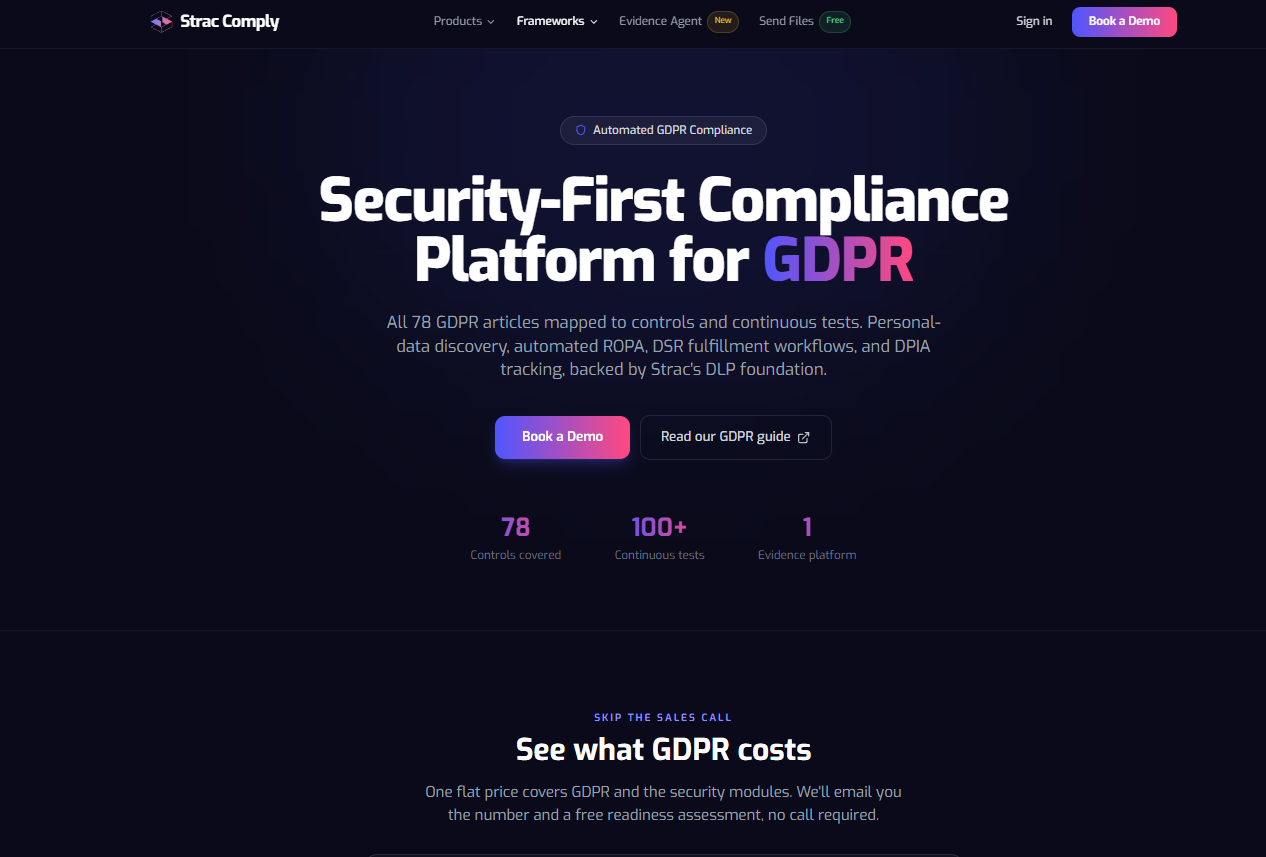
Whether your organization needs to comply with PCI DSS, HIPAA, GDPR, SOC 2, ISO 27001, or other frameworks, Strac provides built-in detection policies and flexible controls to help simplify compliance while reducing data exposure.
Today's organizations need more than a solution that scans email or blocks file transfers. They need a platform that protects sensitive data wherever it lives and wherever it moves, whether that's across SaaS applications, cloud storage, endpoints, browsers, AI assistants, or MCP-connected workflows.
The best DLP providers combine accurate detection with automated remediation, broad integration coverage, and support for today's compliance requirements. They also help organizations embrace AI safely by reducing the risk of sensitive data exposure without slowing innovation.
Strac brings these capabilities together in a single, agentless platform. By combining DLP, DSPM, AI security, browser and endpoint protection, and real-time remediation, it helps organizations protect sensitive data across their entire modern data ecosystem.
A DLP (Data Loss Prevention) provider offers software that helps organizations discover, monitor, and protect sensitive data from unauthorized access, accidental sharing, or data breaches. Modern DLP platforms protect data across SaaS applications, cloud storage, endpoints, browsers, AI tools, and MCP-connected workflows.
Look for a solution that offers broad integration coverage, AI-powered detection, automated remediation, strong compliance support, and protection for modern environments, including SaaS applications, GenAI tools, browsers, and endpoints.
Traditional DLP focused primarily on email, endpoints, and network traffic. Modern DLP protects sensitive data across cloud applications, collaboration platforms, browsers, AI assistants, APIs, and MCP-connected systems while providing real-time remediation and better visibility into how data moves.
Employees increasingly use AI tools to summarize documents, write code, and automate work. Without proper controls, sensitive information can be exposed through prompts or AI-generated workflows. Modern DLP solutions help detect and protect sensitive data before it reaches AI models.
Model Context Protocol (MCP) allows AI assistants to connect with business systems, databases, SaaS applications, and developer tools. While this makes AI more capable, it also creates new paths for sensitive data to move between systems. A modern DLP provider should monitor and protect these workflows to reduce the risk of data exposure.
.avif)


.gif)


.webp)