October 1, 2026

5
min read
Is Slack PCI Compliant?
Exploring PCI Compliance in Slack for Sensitive Data Security
Storing PCI (Payment Card Industry) data in Slack is not recommended. Slack's primary function is as a communication and collaboration tool, not as a secure data storage service.
While Slack employs robust security measures, it's not specifically designed to meet the stringent requirements for storing PCI data.
Companies should avoid using Slack to store or share sensitive information like Primary Account Number (PAN) or other cardholder data to ensure compliance with PCI DSS standards.

The risk of PCI data leakage from Slack exists, as with any platform where information is shared and stored.
Slack is designed to include encryption both during data transmission and while stored. These protocols are intended to safeguard data from external threats.
However, the collaborative nature of Slack can inadvertently become a vulnerability when it comes to the handling of sensitive information. The platform's flexibility and user-friendliness, while beneficial for productivity and communication, also open avenues for potential data exposure.
Common risks include:
Each of these factors significantly raises the risk of PCI data leakage, emphasizing the need for stringent internal security policies, continuous education on data protection practices, and robust monitoring and detection systems to promptly address any potential data breaches within Slack.
Slack PCI Compliance: Strac Slack DLP integration does automatic redaction aka masking of PCI data (PAN aka Credit Card) and other sensitive data
PCI DSS 4.0 introduces more stringent requirements, impacting how PCI data is managed in cloud platforms like Slack. Below are the critical updates and their implications for Slack users:
Requirement 3.4.2 aims to protect PAN from unauthorized copying or relocation. Slack users must ensure that controls are in place to prevent unauthorized data actions.
This includes strict permissions and monitoring of channels and private messages where PAN could be shared.
Under Requirement 3.5.1.1, PAN must remain unreadable when stored. For Slack, this translates to not storing PANs directly on the platform.
Instead, any reference to PAN should be encrypted or handled through secure integrations that comply with the encryption standards outlined in PCI DSS Requirements 3.6 and 3.7.

Requirement 12.10.7 requires proactive incident response plans for detecting PAN in unauthorized locations. For Slack, this involves setting up alerts and integrating with security tools that can monitor and respond to data incidents in real-time.
Organizations should avoid storing any cardholder data on Slack. Ensuring digital security involves:
These measures are crucial for maintaining a secure environment in Slack and adhering to the latest PCI compliance standards.

Strac is a cutting-edge SaaS/Cloud DLP, Endpoint DLP solution, GenAI, Browser, MCP DLP & DSPM Platform that delivers powerful features to enhance data protection:

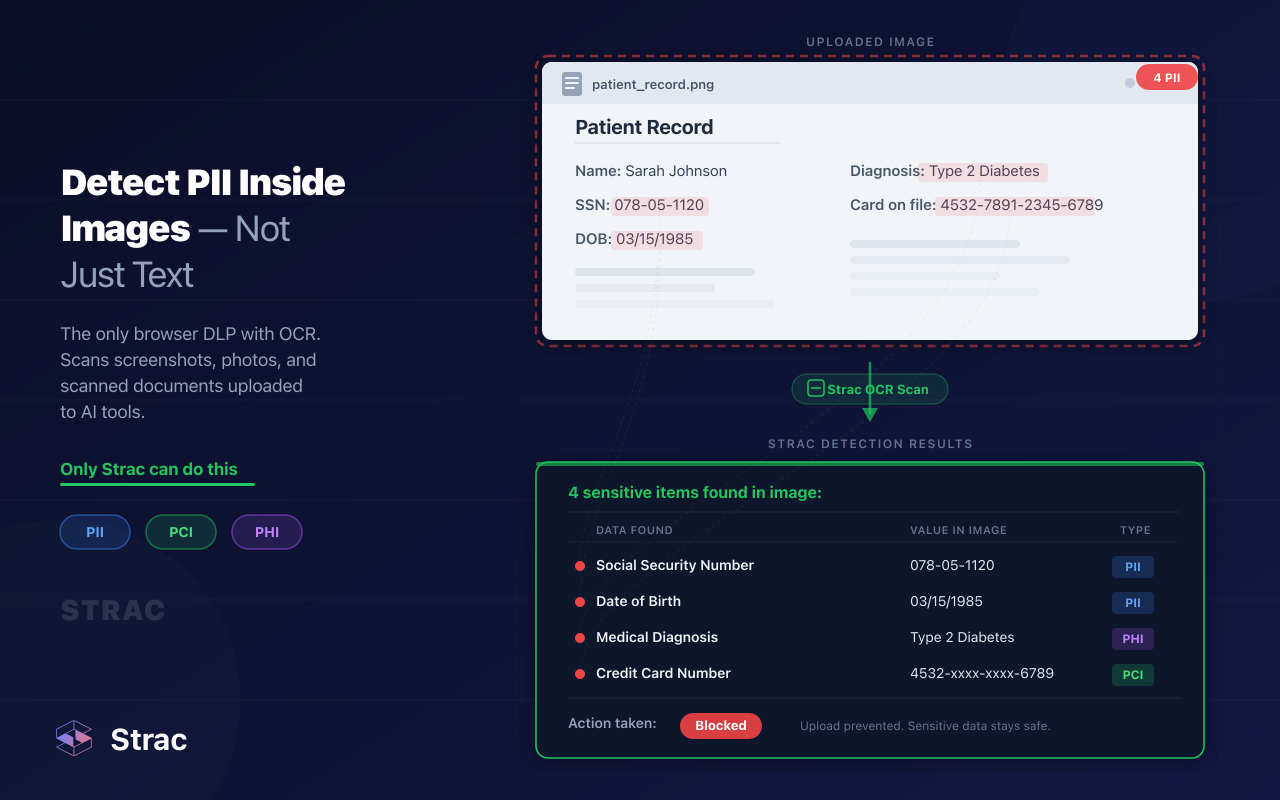

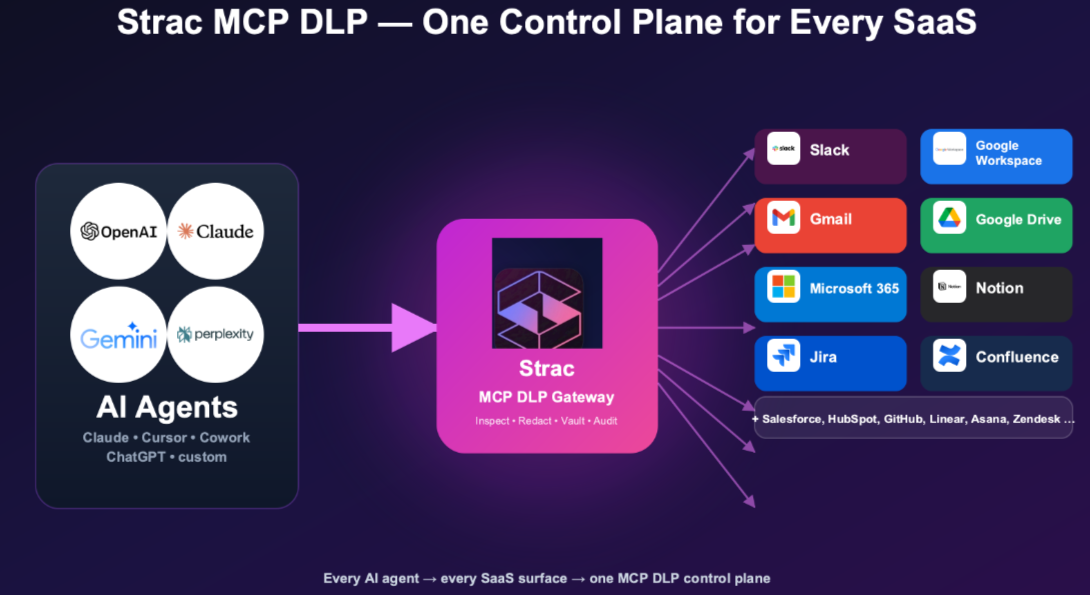

Strac’s Slack DLP integration ensures ongoing compliance with industry standards, including PCI. For more details, see our PCI Compliance guide.
Discover more about how Strac can protect your data with a free 30-minute demo.

Related reading:
No — Slack should not be used to store or share raw PCI data such as credit card numbers, CVVs, expiration dates, or other cardholder data. Slack is a collaboration platform, not a PCI-compliant cardholder data environment (CDE). If employees paste payment details into messages, tickets, or shared files, that can create serious PCI DSS compliance risks. The safer approach is to use a DLP solution that can detect, redact, block, or quarantine PCI data before it spreads across Slack channels, DMs, files, or integrations.
Slack offers strong security controls, but using Slack does not automatically make your organization PCI DSS compliant. PCI DSS compliance depends on how your company handles payment data across Slack, connected SaaS apps, support tools, cloud storage, endpoints, and AI workflows. If employees or contractors share PANs or payment data in Slack, you may still violate PCI DSS 4.0 requirements unless you have controls in place to detect, restrict, and remediate that exposure.
The most relevant PCI DSS 4.0 requirements for Slack are the ones focused on protecting stored PAN, preventing unauthorized copying of cardholder data, and responding quickly when sensitive payment data appears in unapproved locations. In practice, that means organizations need visibility into Slack messages, private channels, attachments, screenshots, and connected workflows where PCI data could be pasted or uploaded. Modern DLP controls help enforce this by monitoring Slack in real time and automatically redacting or blocking sensitive data before it becomes a compliance issue.
The best way to prevent PCI data leaks in Slack is to combine employee policy controls with real-time DLP enforcement. That means monitoring Slack messages, attachments, screenshots, and integrations for cardholder data; restricting who can access sensitive channels; educating users not to share payment details in chat; and automatically remediating violations when they happen. A modern platform like Strac can scan Slack content in real time, detect PCI data using content-aware ML/OCR, and take inline action such as redacting, masking, blocking, deleting, or quarantining exposed data.
Yes — modern DLP tools can automatically detect and remediate PCI data in Slack, including credit card numbers in messages, PDFs, spreadsheets, screenshots, and uploaded files. The most effective platforms go beyond regex by using machine learning, OCR, and content-aware detection to reduce false positives and catch payment data hidden in unstructured content. This is especially important for support, finance, and operations teams that frequently handle invoices, receipts, customer screenshots, or pasted payment information inside Slack.
.avif)


.gif)


.webp)