October 20, 2026

8
min read
The Importance of Data Loss Prevention Consulting
Data loss prevention consulting maps sensitive data, sets DLP policy and enforces it across SaaS, cloud, endpoint, browser and AI. See how Strac speeds it up.
Data loss prevention consulting is a specialist engagement that helps a company protect sensitive data from leaving through the wrong channel. A consultant, a managed security service provider, or an internal security architect maps the data, picks the controls, writes the policies, and hands over a program that runs.
The sensitive data in scope is familiar: PII, PHI, payment card data, credentials and API keys, source code, and intellectual property. The catalog of sensitive data elements is a useful baseline for what a scoping exercise should cover.
A good engagement answers four questions. Where does sensitive data live? How does it move? Which movements are acceptable? What happens automatically when one is not? A consultant who answers only the first question has delivered an inventory, not a program.

For a decade, a DLP consulting project followed the same arc: install network and email gateways, push agents to laptops, write regex rules, then spend a year tuning out the noise. That arc assumed data lived on file servers and left through email.
It no longer does, for three reasons.
The old consulting playbook secured the perimeter. The 2026 playbook secures the data wherever it goes.
The work breaks into five stages. Each one is still worth expert attention; what changed is how long each should take.
1. Scope and discovery. Find sensitive data across SaaS, cloud storage, databases, managed endpoints and the browser. Discovery in 2026 also means finding the tools: unsanctioned AI apps, OAuth grants to unvetted software, and the MCP servers your agents connect to. A structured data loss prevention risk assessment turns this into a ranked register.

2. Classification and detector tuning. Label findings by data type and sensitivity. Regex alone drowns a team in alerts, so detection needs context-aware models, OCR for screenshots and scanned PDFs, and custom detectors for identifiers unique to the business.
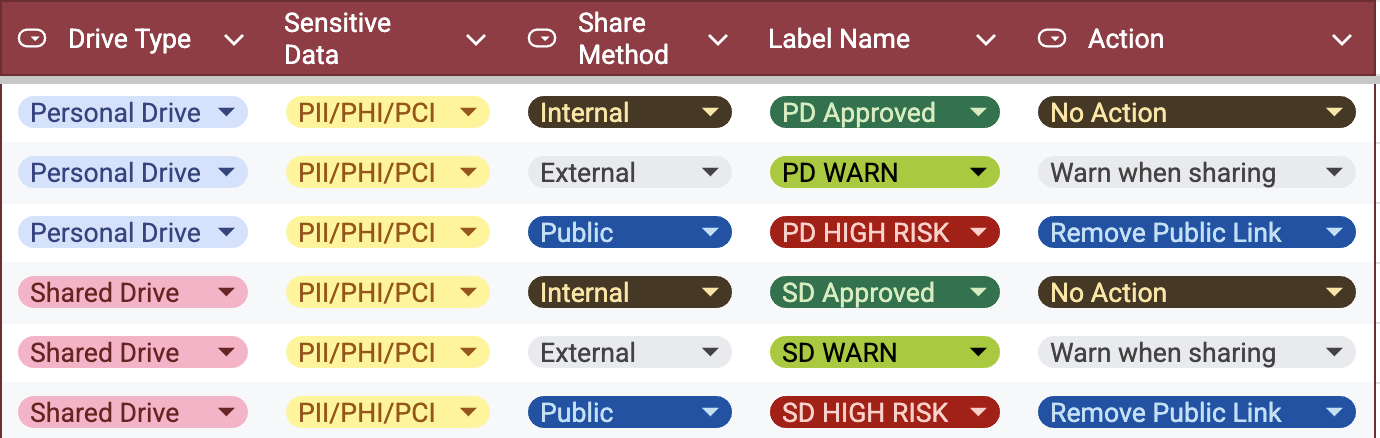
3. Policy design. Decide which data classes may travel to which destinations, and what happens when a rule fires. The strongest policies default to redaction and reserve blocking for the narrow set of flows that are never acceptable.
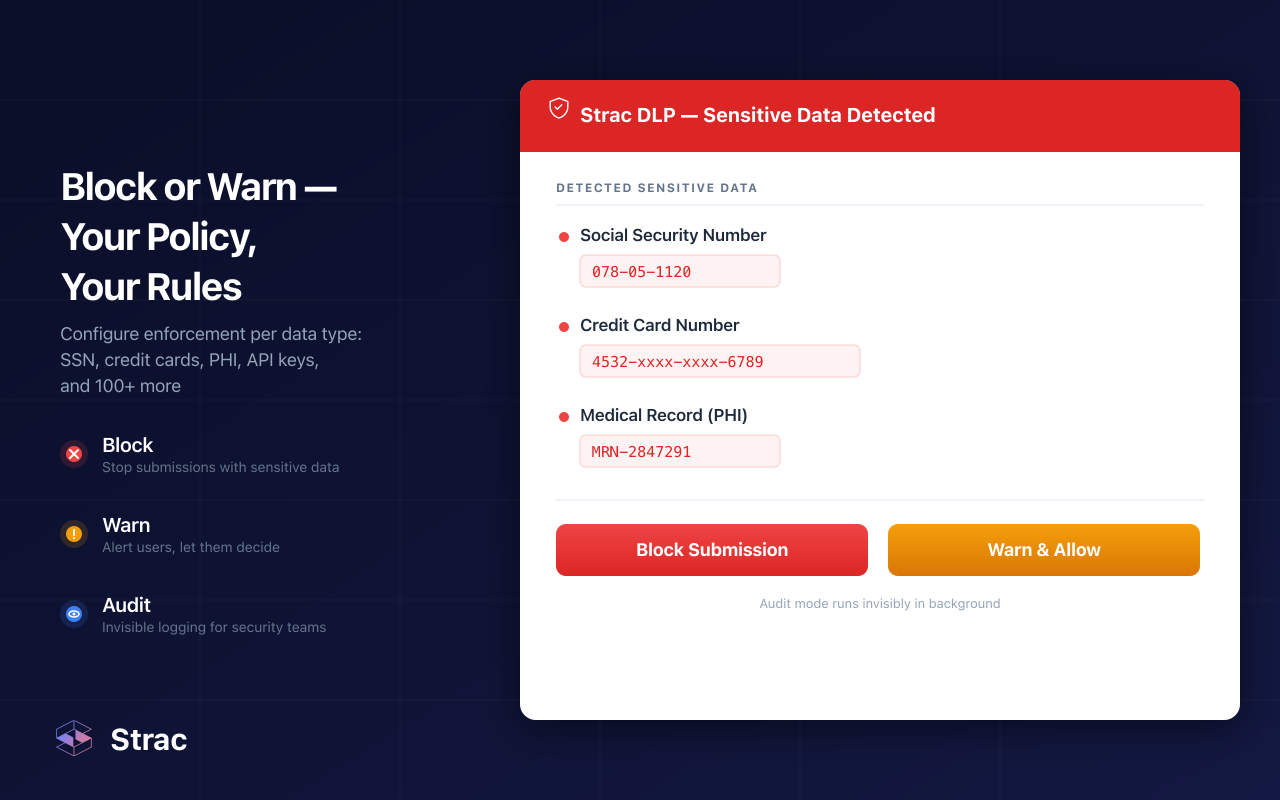
4. Deployment and remediation. Roll out controls channel by channel and wire in the remediation ladder, in this order:
5. Compliance evidence and handover. Map every control to the frameworks in scope, including HIPAA, PCI DSS, SOC 2, ISO 27001, CCPA and GDPR, then train the team that will run it. The data loss prevention compliance guide covers the proof side in detail.
Most DLP programs do not fail at design. They fail in the gap between design and enforcement.
The first stall is deployment. Proxy-based tools and heavy endpoint agents take months to roll out, and every month is a month of unprotected data. The second is noise. A policy set that fires on every nine-digit number trains analysts to ignore alerts, and the consultant's time goes to tuning rather than protecting. The third is the handover. When the engagement ends, the program depends on a platform the internal team finds too complex to maintain.
A consultant's hours should go to judgment, not plumbing. Judgment decides which data matters; plumbing is what the platform should already do.
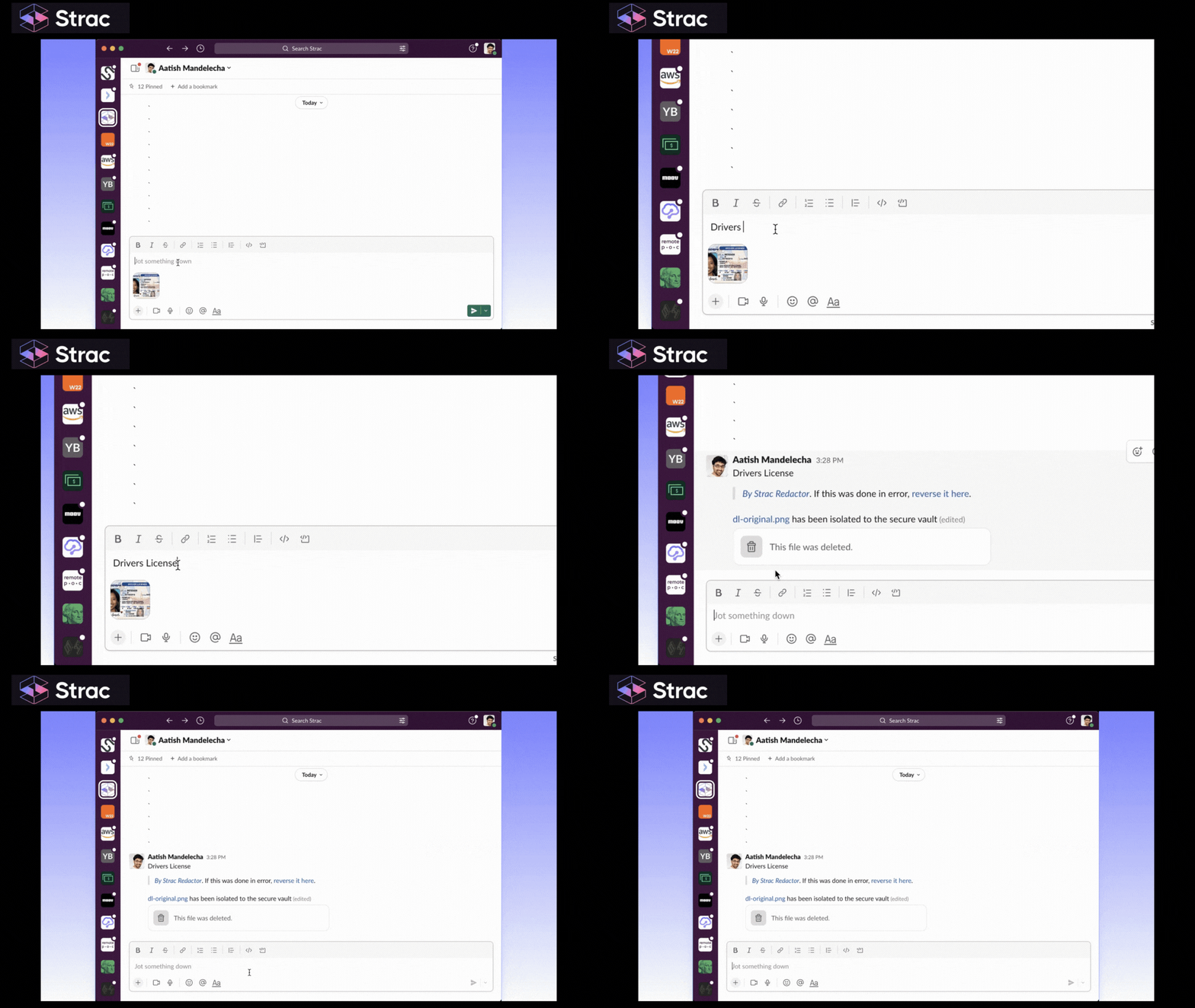
Watch Strac detect a card number in a Slack message, classify it, and redact it inline before anyone else in the channel sees it.
A policy that enforces itself on day one is worth more than a perfect policy that ships in month six.
This is where the consulting timeline collapses. When discovery, detection and remediation run on one platform that connects through APIs, the consultant moves straight from scoping to live enforcement, then spends the rest of the engagement tuning outcomes instead of infrastructure.
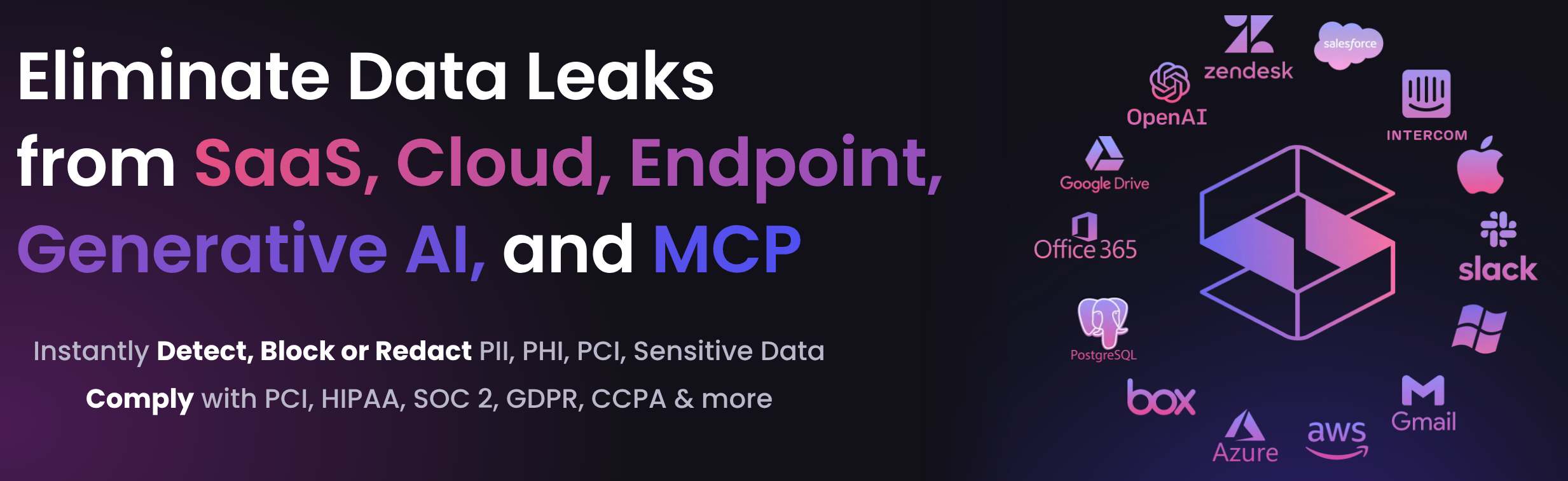
Strac is a DLP, Data Discovery and DSPM platform that covers SaaS, cloud, browser, endpoint, generative AI and MCP from one console, with automated remediation on every surface.
Agentless SaaS coverage in minutes. Strac connects to Slack, Google Workspace, Microsoft 365, Salesforce, Zendesk, Jira, Box, Notion, HubSpot, Intercom and more through APIs, and scans both historical and real-time data. Slack DLP, Google Drive DLP and Gmail DLP go live the same day, and all integrations follow the same pattern.
Detection that holds up. Built-in detectors cover PII, PHI, PCI data, secrets and source code, backed by machine learning and OCR for images, PDFs, Word files, spreadsheets and ZIP archives. Custom detectors handle the identifiers only your business uses. Sensitive data discovery and classification extends that to cloud storage and databases.
Every exit, including AI. Endpoint DLP enforces policy on macOS, Windows and Linux DLP. Browser DLP inspects pastes and uploads, which is where AI DLP stops sensitive data from reaching ChatGPT, Claude, Gemini and Copilot. MCP DLP redacts sensitive data from tool responses before it reaches the model, so a hijacked agent still cannot exfiltrate raw records.
Posture and lineage. Data security posture management (DSPM) surfaces public links, overexposed files and excessive access, then fixes them automatically. Data lineage follows corporate files from their origin across endpoints, even after they are renamed or modified.
Built for partners. Out-of-the-box compliance templates give consultants a defensible starting policy for each framework, and every detection and fix is logged as audit evidence. Firms that run DLP for many clients can deliver it as a managed service through the MSSP partner program.
The difference is structural. A traditional engagement ends with a design document. A Strac engagement ends with the leaks already stopped.
Before you sign, check that the partner and the platform they propose meet each of these:
Consultants bring judgment, and judgment still matters: which data counts, which flows are acceptable, and what the business can live with. But identity, network and policy controls all fail eventually, and the data layer is the backstop. Redact sensitive data on every action across SaaS, cloud, endpoint, browser, GenAI and MCP, and a compromise never becomes a breach.
No. Consulting designs and deploys the program, then hands it over. A managed service runs the program on an ongoing basis. Many firms offer both, and Strac supports each model through one platform and its MSSP partner program.
Because most legacy DLP inspects network traffic, email and files on disk. A message posted inside Slack, a paste into a chat assistant, or an agent tool call over MCP never crosses those checkpoints, so the data leaves without inspection.
Not if it redacts instead of blocks. Blocking pushes people to personal devices and unsanctioned tools. Redaction removes the sensitive element and lets the message, ticket or prompt go through, so work continues and the data stays put.
No. Detection has false negatives, and new tools appear faster than any inventory. That is why enforcement belongs at the data layer: when something slips past a policy, redaction on every action keeps a mistake from becoming a breach.
Weeks, not quarters, when the platform connects through APIs. Discovery and first enforcement can start in days, leaving time for tuning and training. See AI data governance for how the program fits the wider picture.