ChatGPT DLP: How to Prevent Data Leaks in ChatGPT (2026)
How to prevent data leaks in ChatGPT: the 4 places sensitive data escapes, 5 prevention methods compared, and how Strac redacts PII, PHI, PCI, and secrets in the prompt before it reaches OpenAI.
What it is. ChatGPT DLP detects and redacts sensitive data — PII, PHI, PCI, secrets, and source code — before the prompt reaches OpenAI.
The 4 leak paths. The web UI paste, the desktop app, browser extensions and MCP connectors, and shadow / personal ChatGPT accounts.
What works. Real-time browser and endpoint redaction plus pseudonymization. Blocking the site alone does not — employees move to a personal login.
What leaks most. Source code and credentials, customer PII, and regulated PHI / PCI.
Strac. Redacts PII, PHI, PCI, and secrets in the prompt in real time across browser, endpoint, and MCP, with configurable Audit, Alert, Block, and Redact actions.
To prevent data leaks in ChatGPT, you put a data loss prevention (DLP) layer between your employees and OpenAI that detects and redacts sensitive data — PII, PHI, PCI card numbers, API keys, secrets, and source code — before the prompt is ever submitted. Three controls actually work in 2026: (1) a browser or endpoint DLP that strips sensitive values from the prompt in real time; (2) redaction or pseudonymization so ChatGPT still returns useful answers without ever seeing the real data; and (3) coverage of both sanctioned and shadow ChatGPT accounts so nothing slips through a personal login. Simply blocking the site rarely holds — employees switch to a personal device or account. Below: exactly where ChatGPT data leaks, and how to stop each path. For the broader question of whether the tool itself is enterprise-ready, see Is ChatGPT Safe?
How to Prevent Data Leaks in ChatGPT: 5 Approaches Compared
Buyers evaluating how to stop sensitive data from leaking into ChatGPT usually weigh five approaches. Only a real-time DLP layer stops the accidental paste and keeps ChatGPT useful:
Approach
What it does
Stops accidental paste?
Keeps ChatGPT useful?
Coverage
Strac browser + endpoint DLP
Detects & redacts sensitive data in the prompt in real time
Yes
Yes — redact or pseudonymize
Web app, desktop app, extensions
Redaction & pseudonymization
Swaps PII/PCI for realistic tokens before submit
Yes
Yes
Any surface with a DLP layer
Block ChatGPT (firewall / SWG)
Denies access to chatgpt.com
Only on-network
No — blocks the tool
Corporate network only
Employee training / AUP
Policy asking staff not to paste secrets
No — relies on humans
Yes
No technical enforcement
ChatGPT Enterprise controls
No-training pledge, SSO, retention limits
No — does not scan content
Yes
Sanctioned workspace only
In 2024, the global average cost of a data breach reached $4.88 million, marking a 10% increase from the previous year, and representing the highest total ever recorded.
A staggering 67% of companies acknowledge they are vulnerable to insider threats, highlighting the importance of robust DLP strategies to mitigate these risks.
The advent of conversational AI platforms, such as ChatGPT, has significantly altered the digital communication landscape. These platforms have become indispensable business tools, enhancing customer service, streamlining operations, and even driving content creation. However, with these advancements come new challenges in data security and privacy, spotlighting the critical role of Data Loss Prevention (DLP) strategies.
✨ What are the security risks of LLM tools like ChatGPT?
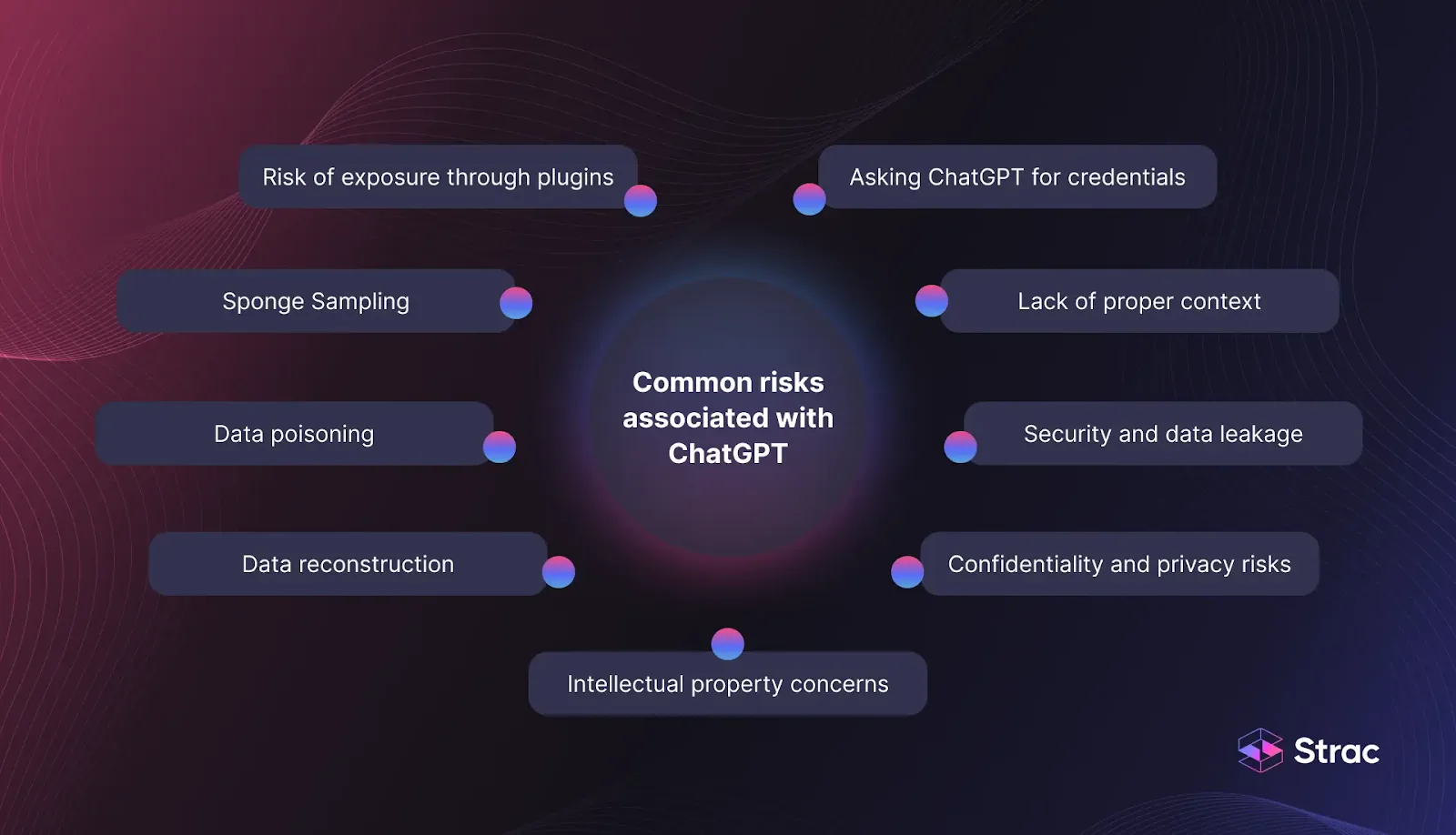
Using large language models (LLMs) like ChatGPT in organizational settings poses several significant security risks:
Exposure of Sensitive Data: LLMs can inadvertently recall and reproduce sensitive information from their training datasets, leading to data leakage. This risk is heightened when employees input proprietary or confidential information into the model.
LLM Injection Attacks: Adversaries can manipulate inputs to elicit unauthorized responses from the model, potentially exposing sensitive information or causing the system to behave unexpectedly. This could lead to data breaches or misinformation dissemination.
Malware Generation: Threat actors may use ChatGPT to create or refine malware, lowering the barrier for less technically skilled criminals. The AI’s capabilities can be exploited to generate malicious code, increasing the complexity of cyber threats.
Accidental Data Leakage: Employees may unknowingly share sensitive data while using ChatGPT, which could be stored or processed in ways beyond the organization’s control. For instance, incidents have occurred where employees shared confidential data with ChatGPT, resulting in unintentional exposure.
ChatGPT Security Risk and Concerns in Enterprise
Benefits of Implementing DLP Solutions for ChatGPT
Implementing DLP solutions in ChatGPT interactions brings a multitude of benefits to businesses, including:
Enhanced Data Security:
DLP solutions prevent data breaches and unauthorized access by identifying and protecting sensitive information.
Compliance with Data Protection Laws:
DLP helps organizations comply with stringent data protection regulations such as GDPR, HIPAA, and others, avoiding hefty fines and legal repercussions.
Maintaining Customer Trust:
Protecting customer data enhances trust in the brand, as customers feel confident that their information is handled securely and responsibly.
Navigating Data Security with ChatGPT: The Role of DLP
Integrating DLP with ChatGPT is pivotal in navigating the complex data security landscape. DLP solutions play a crucial role in:
Real-time Monitoring and Protection: Continuously scanning ChatGPT interactions for sensitive data, ensuring real-time protection against potential threats.
Adaptable Policy Enforcement: Businesses can implement customizable DLP policies that reflect their specific data protection needs and compliance requirements.
Incident Response and Management: We provide tools to effectively respond to and manage data security incidents, minimize potential damage, and facilitate prompt resolution.
Exploring ChatGPT's Native Data Protection Capabilities
ChatGPT, developed by OpenAI, incorporates several data privacy and security measures to safeguard user interactions. However, the platform's native capabilities primarily focus on user privacy and the ethical use of data rather than traditional Data Loss Prevention (DLP) mechanisms.
1. ChatGPT and Data Privacy
OpenAI emphasizes the importance of trust and privacy, stating that it does not use content submitted by customers to its business offerings, such as the API, ChatGPT Team, and ChatGPT Enterprise, to improve model performance. This distinction ensures that business-related data remains confidential and is not utilized for model training purposes.
OpenAI has introduced features allowing users to manage their data more effectively, including the option to turn off chat history. This ensures that conversations started with this setting will not be used to train and improve models, nor will they appear in the user's history sidebar.
2. Options When Native DLP Support is Absent in ChatGPT
Given ChatGPT's design and operational framework, businesses looking for comprehensive DLP solutions to safeguard sensitive data during interactions must consider third-party integrations or additional security measures. Here are some strategies companies can employ:
Third-Party DLP Solutions: Businesses can integrate ChatGPT with third-party DLP solutions designed to monitor and protect sensitive information in real time. These solutions can provide an additional layer of security by detecting and redacting sensitive data from conversations.
Custom Security Protocols: Developing custom protocols and using ChatGPT's API can allow for more granular control over data processing and handling, enabling businesses to implement bespoke security measures tailored to their specific needs.
Enhanced User Training and Policies: Educating users on data privacy best practices and establishing strict policies on the type of information that can be shared through ChatGPT interactions can help minimize risks.
Utilizing Enterprise Features: For businesses, utilizing features provided by ChatGPT Enterprise, such as enterprise-level authentication and fine-grained control over access, can enhance data security and privacy. OpenAI's commitment to not using business data for model training and providing options for data control and retention further supports data protection efforts.
While ChatGPT itself offers limited native DLP functionalities, OpenAI's privacy measures and the ability to integrate with third-party DLP solutions present viable paths for businesses to secure their ChatGPT interactions against data breaches and unauthorized disclosures.
How can your organization stay secure while using ChatGPT?
Organizations can adopt several strategies to mitigate risks associated with using ChatGPT:
Implement Data Loss Prevention (DLP) Policies: DLP technologies can monitor and control sensitive data, preventing unauthorized access and ensuring compliance with data protection regulations.
Educate Employees: Regular training on the responsible use of generative AI tools is essential. Employees should be instructed not to share sensitive information and to verify any AI-generated content before use.
Use Zero-Trust Security Models: Implementing zero-trust principles can help secure interactions with ChatGPT across various devices and networks. This includes role-based access control and content filtering to prevent data uploads containing sensitive information.
🎥 Introducing Strac DLP for ChatGPT: A Tailored Solution
As ChatGPT becomes increasingly integral to business operations, ensuring the security and privacy of the data being processed by this AI chatbot is paramount. Strac DLP for ChatGPT is designed to address this challenge, providing a comprehensive solution that seamlessly integrates with ChatGPT to safeguard against unintended data leaks and breaches.
✨ Key Features of Strac DLP for ChatGPT
Immediate Risk Alerts: Strac's system is finely tuned to immediately alert users if any sensitive information—such as Personally Identifiable Information (PII), Protected Health Information (PHI), Payment Card Information (PCI), or confidential data including code snippets—is detected within ChatGPT prompts. This proactive approach ensures businesses can quickly respond to potential data breaches or misuse.
Automated Sensitivity Analysis: Leveraging proprietary Machine Learning technology, Strac continuously monitors and analyzes interactions with ChatGPT for sensitive content. This automated process flags and categorizes data that may be considered confidential, offering businesses an additional layer of protection.
Message Redaction: To ensure data integrity and user privacy, Strac is adept at masking or redacting any sensitive portions of ChatGPT dialogues. This feature plays a crucial role in maintaining the confidentiality of interactions on the platform.
Configurable Chat Security Settings: Recognizing the diverse needs of modern enterprises, Strac enables companies to define their own data sensitivity rules for interactions with ChatGPT. This customizable framework allows for a tailored data protection strategy that aligns with specific business requirements.
Configurable Remediation Actions: Strac offers various remediation actions, including Audit, Alert, Block, and Redact, which businesses can configure based on their preference. This flexibility allows companies to maintain secure and efficient use of ChatGPT in their operations.
Pseudonymization: An innovative feature of Strac DLP is the ability to replace original sensitive data with fictitious data, known as pseudonyms. This process allows ChatGPT to generate valuable responses without accessing actual sensitive information, enhancing both security and functionality.
Strac DLP's Commitment to Security and Compliance
Protection Against Accidental Shares: Strac understands that accidental disclosures can occur. By mitigating unintentional data exposure during ChatGPT interactions, Strac helps protect internal information that employees might inadvertently share.
Real-time Data Anonymization: Strac promptly anonymizes sensitive information within ChatGPT prompts, ensuring that Personally Identifiable Information (PII) and Payment Card Information (PCI) remain confidential.
Compliance Assurance: With Strac, businesses can interact with ChatGPT while staying compliant with privacy regulations like GDPR and CCPA. Strac's solution anonymizes sensitive information before it's processed by ChatGPT, safeguarding against potential penalties for non-compliance.
Advanced Classification Mechanisms: Strac employs a blend of large language model-based algorithms and regular expressions to effectively identify and categorize sensitive details, offering robust multi-layered protection.
Chrome Extension for Seamless Integration: Strac provides a secure browser extension compatible with major web browsers, enabling businesses to utilize ChatGPT securely without compromising data security standards.
✨ How Strac Covers Every AI Surface
ChatGPT DLP is one piece. The full set of AI exits:
Shadow AI — the personal accounts nobody sanctioned.
The browser surface: sensitive data stripped from the prompt before it is submitted.
🌶️ Spicy FAQs for ChatGPT DLP
Isn't ChatGPT DLP just regex that breaks on real data? Regex-only tools miss context and flood users with false positives. Strac pairs validated detectors with ML classification, so a real credit-card or SSN gets caught but a random 16-digit order number does not.
Won't redaction make ChatGPT's answers useless? No — that is what pseudonymization is for. The real values are swapped for realistic tokens that preserve structure, so ChatGPT still reasons correctly and you re-identify the output on the way back.
We already block ChatGPT at the firewall — aren't we covered? Blocking the domain only works on the corporate network. The moment someone opens ChatGPT on their phone or a personal login, the data is gone. That is why shadow AI is the leak path that actually bites.
Strac DLP for ChatGPT emerges as a beacon of security in this scenario, offering a sophisticated, real-time solution designed to protect and monitor sensitive information shared in ChatGPT interactions.
By implementing Strac DLP, businesses can not only prevent accidental data exposure but also ensure compliance with stringent data protection regulations, thereby maintaining customer trust and upholding their reputation. Strac’s innovative features, including automated sensitivity analysis, message redaction, and real-time data anonymization, provide a comprehensive shield against data security threats.
Getting started with Strac DLP is easy, as the platform is designed to integrate seamlessly with your business’s existing workflows. Get in touch with us today to secure your ChatGPT interactions.
How do I stop employees from pasting sensitive data into ChatGPT?
The control that reliably works is a browser or endpoint DLP that inspects the prompt as it is typed or pasted and redacts sensitive values before submission. Training and site-blocking alone fail because employees simply move to a personal account or an unmanaged device. Strac inspects the prompt client-side and redacts PII, PHI, PCI, API keys, and source code before ChatGPT ever sees it.
Can a DLP tool redact data before it reaches OpenAI?
Yes. Strac's browser and endpoint DLP detects sensitive data in the prompt and redacts or pseudonymizes it on the client, so OpenAI only ever receives the sanitized text. With pseudonymization, ChatGPT still returns a useful answer because the structure of the data is preserved — only the real values are swapped for realistic tokens.
Does ChatGPT Enterprise prevent data leaks?
ChatGPT Enterprise stops OpenAI from training on your data and adds SSO and retention controls, but it does not scan prompt content for sensitive data, and it only covers the sanctioned workspace — not personal accounts or the desktop app. You still need a DLP layer to catch what employees actually paste.
What kinds of sensitive data leak into ChatGPT most often?
The three most common are source code and secrets (API keys, tokens, .env files), customer PII (names, emails, SSNs, addresses), and regulated PHI and PCI card data. Strac classifies all of these with a mix of ML models and validated detectors so it flags real sensitive data without drowning users in false positives.
How do I monitor shadow ChatGPT usage?
Shadow AI — personal ChatGPT accounts on unmanaged logins — is the hardest leak path because it never touches your sanctioned workspace. A browser-level DLP combined with Shadow AI discovery catches sensitive data leaving through accounts and sessions your admin console cannot see.
Discover & Protect Data on SaaS, AI, MCP, Endpoints & Cloud
Strac provides end-to-end data loss prevention for all SaaS and Cloud apps. Integrate in under 10 minutes and experience the benefits of live DLP scanning, live redaction, and a fortified SaaS environment.


.webp)
.png)



.png)
.avif)



.gif)
