October 1, 2026

4
min read
USB Blocking: A Critical Component in Data Loss Prevention
Learn how USB DLP goes beyond basic USB blocking by detecting and stopping sensitive data transfers across removable devices and endpoints.
· USB blocking prevents removable devices frombeing used, while USB DLP applies policies based on the content beingtransferred.
· Modern USB DLP should inspect files for PII,PHI, PCI data, credentials, secrets, and confidential business informationbefore they leave the endpoint.
· Organizations should be able to Block, Warn,Audit, or apply other remediation actions depending on the sensitivity ofthe data.
· USB protection should be part of a broaderEndpoint DLP strategy covering other exfiltration channels, not treated as anisolated control.
· Straccombines Endpoint DLP with broader sensitive data protection across SaaS,Cloud, GenAI, and other modern data surfaces.
USB drives are still one of the simplest ways for sensitive data to leave an organization. An employee can copy thousands of customer records, source files, financial documents, or healthcare records to removable storage in seconds.
But simply disabling every USB port is rarely the best answer. Modern endpoint security needs to understand what data is being transferred, where it is going, and whether that specific transfer should be allowed.
That is where USB Data Loss Prevention (USB DLP) comes in.
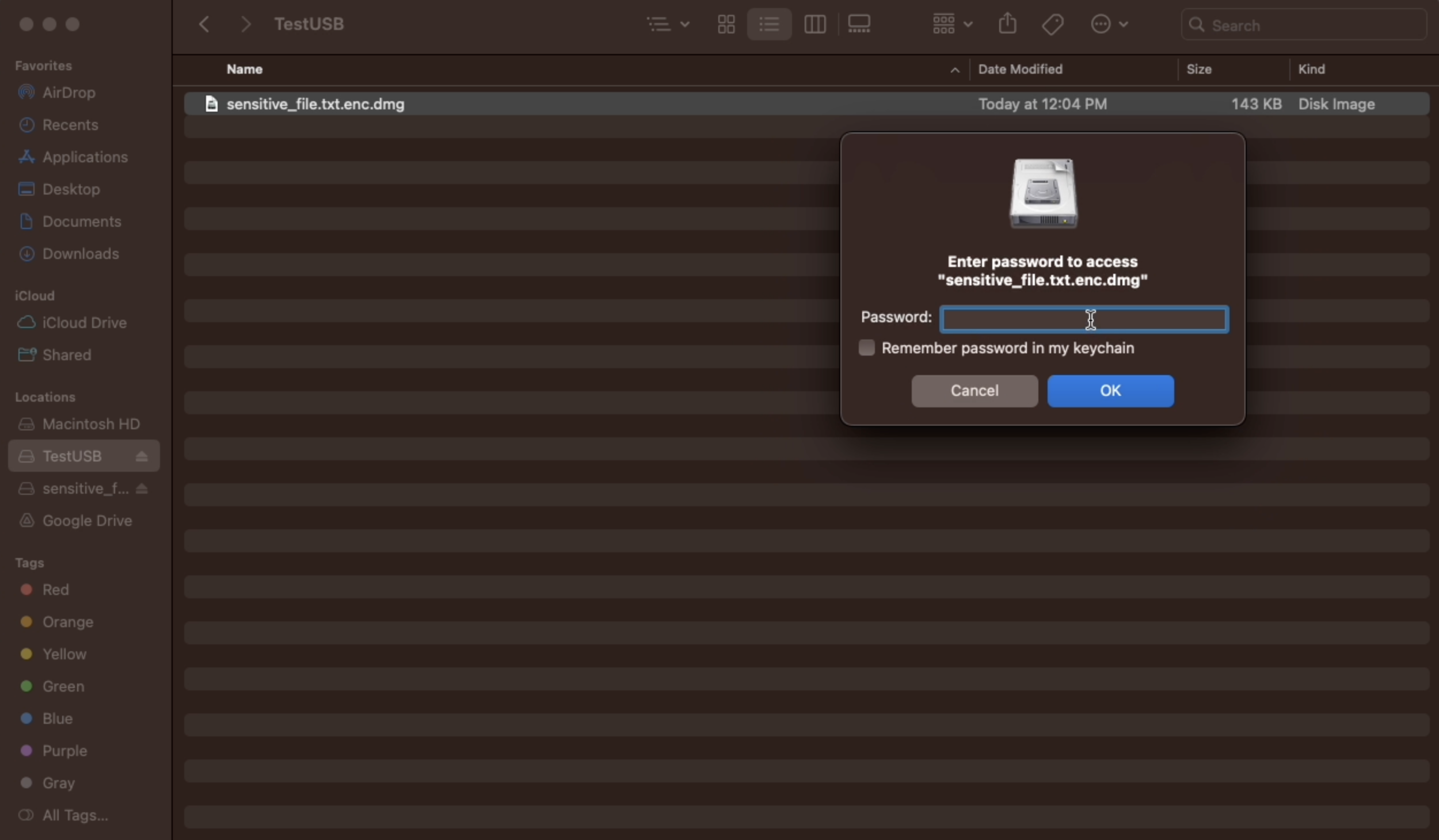
USB blocking is an endpoint security control that restricts the use of removable storage devices such as USB flash drives and external drives.
The traditional approach is straightforward:
USB allowed: Employees can copy files.
USB blocked: Employees cannot copy files.
This can work in highly restricted environments, but it creates a problem for organizations where employees legitimately need removable storage.
A designer might need to transfer approved media. An IT administrator may need removable storage for operational work. Another employee, however, should not be able to copy a spreadsheet containing thousands of customer records.
Treating those activities identically creates unnecessary friction.
This is why organizations are increasingly moving from basic USB blocking to content-aware USB DLP.
Port blocking asks:
“Can this employee use a USB device?”
USB DLP asks a much more useful question:
“Should this particular data be allowed onto this USB device?”
Instead of making a binary decision about the entire device, USB DLP can inspect files being transferred and enforce policies according to the sensitive information detected.
For example:
This keeps legitimate workflows operating while placing stronger controls around sensitive information.

Cloud applications and GenAI have created new data-loss channels, but physical removable media has not disappeared.
USB drives remain particularly risky because transferring data to them can quickly move information outside centrally managed SaaS, cloud, and corporate environments.
An employee or contractor with legitimate access to company information may copy customer lists, intellectual property, source code, financial information, or other confidential files before leaving the organization.
Traditional access controls may not prevent this because the employee was authorized to access the original information.
DLP adds another layer by controlling what happens after the data has been accessed.
Not every USB incident is malicious.
An employee might copy the wrong spreadsheet to an external drive, transfer an entire folder instead of a single file, or lose a USB drive containing sensitive information.
Content-aware policies can identify sensitive information before the copy creates an exposure.
Once sensitive information reaches removable media, security teams can lose visibility over where that information goes next.
The drive might be connected to a personal computer, given to another employee, lost, stolen, or taken outside the organization.
Preventing inappropriate transfers at the endpoint reduces this downstream risk.
Organizations handling regulated information need controls around how sensitive data is accessed, transferred, and exposed.
This can include:
USB DLP can become one control within a broader security program supporting requirements associated with frameworks and regulations such as HIPAA, PCI DSS, GDPR, and SOC 2.
A blanket USB ban sounds secure, but security teams frequently have to balance protection with legitimate business workflows.
The problem with traditional USB blocking is that it focuses on the device instead of the data.
Consider two employees copying files onto removable storage.
Employee A copies approved product photographs.
Employee B copies a CSV containing names, addresses, phone numbers, and financial information for thousands of customers.
A simple USB policy sees the same action: file copied to removable storage.
Content-aware DLP sees two completely different levels of risk.
That distinction is increasingly important as security teams move toward policies based on data sensitivity, context, users, destinations, and actions rather than simply disabling entire technologies.
USB protection should go considerably further than switching ports on and off.
File names and extensions do not tell security teams whether something is sensitive.
A file called customers.xlsx, report.pdf, or screenshot.png could contain highly sensitive information.
DLP therefore needs deep content inspection capable of identifying sensitive information within the files themselves.
Strac uses content-aware detection, including ML/OCR capabilities, to identify sensitive information across structured and unstructured content rather than relying solely on simple pattern matching.
Organizations rarely need to protect only one category of information.
Policies may need to identify:
Custom detection is particularly important because every organization has information that generic compliance templates cannot fully capture.
Not every policy violation should result in exactly the same response.
Security teams should be able to determine the appropriate action based on the sensitivity and context of the transfer.
That could mean allowing normal content, warning users about risky behavior, auditing transfers, or blocking sensitive files from being copied.
The goal is not simply “block USB.”
It is:
“Apply the right security action to the right data.”
Sensitive information frequently lives inside PDFs, spreadsheets, documents, screenshots, images, and other attachments.
Modern DLP therefore needs to inspect the contents of those files rather than treating every attachment as an opaque object.
This is particularly important for USB because removable storage is primarily a file-based exfiltration channel.
Security teams need to understand what happened after a policy is triggered.
Useful visibility includes the user involved, data classification detected, policy triggered, action taken, and relevant destination context.
These records can help with incident investigations, security operations, and compliance evidence.
A strong USB policy solves only part of the endpoint problem.
Sensitive information can leave through multiple channels, including browsers, uploads, applications, removable media, and other endpoint workflows.
That means organizations should avoid building USB protection as a standalone security silo.
Instead, USB should be one policy enforcement point within a broader Endpoint DLP strategy.
Strac's approach extends sensitive data protection across multiple environments, including endpoints as well as SaaS, Cloud, and GenAI workflows, creating broader visibility over where sensitive data is stored and moved.
Block, Warn, or Audit based on the data and channel. See the broader endpoint controls in Strac's Endpoint DLP agent guide.
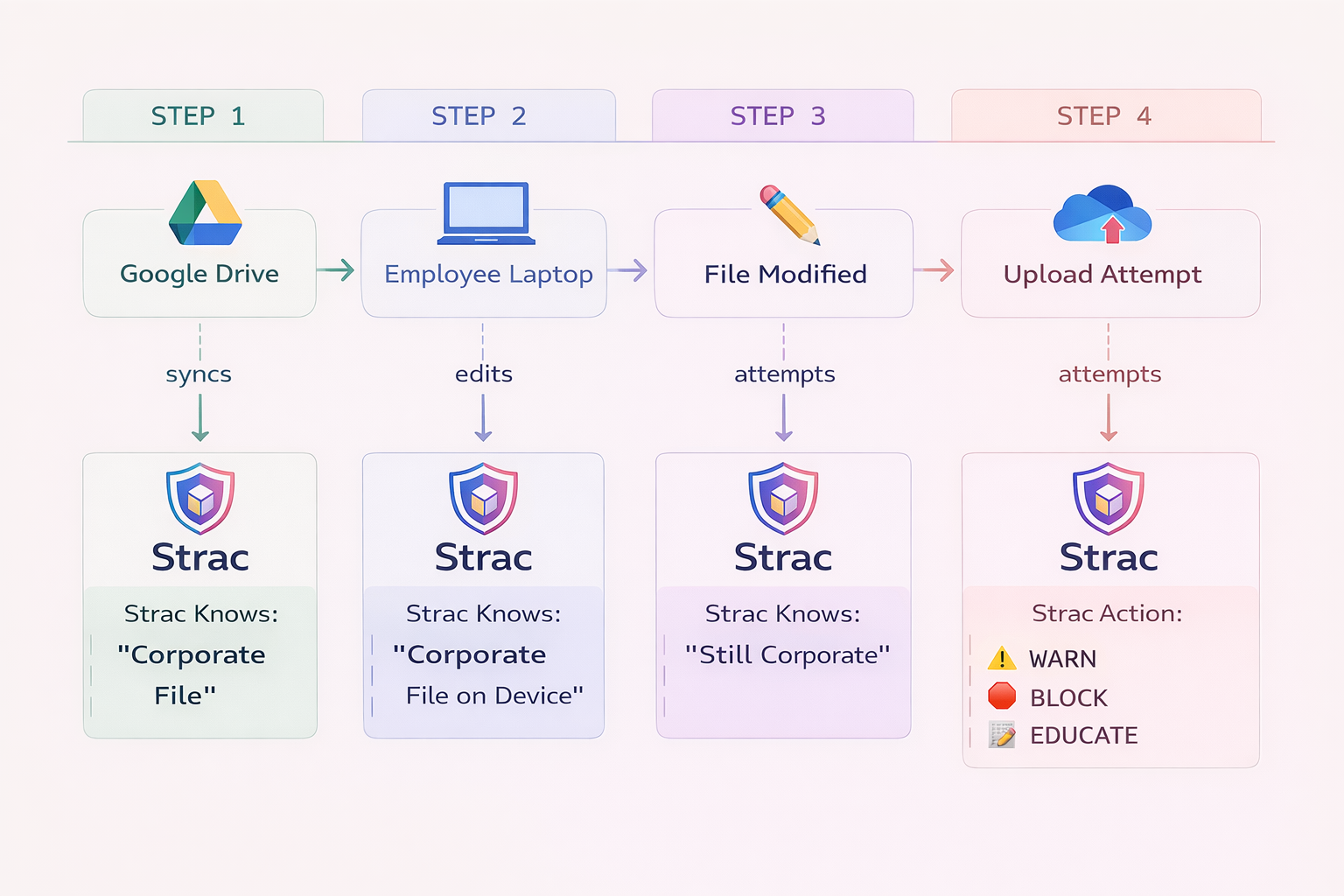
Strac's Endpoint DLP is designed to protect sensitive information at the point where users interact with and move it.
Instead of relying only on blanket device restrictions, organizations can apply policies around the sensitive content being transferred.
For example, an organization could permit normal business files to be copied while preventing files containing customer PII or payment information from leaving through removable storage.
Strac's broader platform also combines DLP with sensitive data discovery and classification, allowing organizations to extend protection beyond the endpoint.
The platform's broader differentiators include content-aware detection, inline remediation, customizable sensitive-data detection, and unified protection across modern data environments.
The bigger security challenge in 2026 is that USB is no longer the only, or necessarily the most important, exfiltration path.
Sensitive information can move through:
A customer record blocked from being copied to a USB drive could still be pasted into an AI tool, uploaded through a browser, shared through SaaS, or exposed inside a support ticket.
That is why DLP strategies increasingly need to follow the data, rather than protecting individual applications in isolation.
Strac combines data discovery, classification, DLP, and remediation across modern environments instead of limiting protection to a single channel.
When evaluating USB DLP, security teams should look beyond a checkbox that says “USB blocking.”
Ask:
The strongest solution is not necessarily the one that blocks the most activity.
It is the one that gives security teams enough context to block risky activity without unnecessarily blocking legitimate work.
USB blocking still has a place in endpoint security, particularly when organizations need to prohibit removable storage entirely. But binary port controls are increasingly insufficient for modern environments.
USB DLP provides a more intelligent approach by inspecting the information being transferred and applying policies based on its sensitivity.
Strac extends that principle beyond removable media with content-aware DLP across endpoints, SaaS, Cloud, and GenAI environments. Instead of asking only whether a channel should be allowed, organizations can control what sensitive data is allowed to move through it, and what should happen when risk is detected.
Related reading:
USB blocking simply allows or denies access to removable storage. USB DLP goes deeper by inspecting what data is being copied and applying policies based on sensitivity. For example, normal files can be allowed while a spreadsheet containing customer PII is blocked.
Yes. USB DLP can inspect files during transfer and enforce policies when sensitive data such as PII, PHI, PCI data, credentials, or confidential business information is detected. Depending on the policy, the organization can block, warn, or audit the activity.
Not necessarily. Blanket USB blocking can reduce risk, but it can also disrupt legitimate workflows. Content-aware USB DLP provides more granular control by allowing approved transfers while restricting sensitive information.
Modern USB DLP should inspect more than plain-text files. Sensitive information can appear inside PDFs, Word documents, spreadsheets, images, screenshots, and other attachments, making deep content inspection and OCR important capabilities. Strac emphasizes ML/OCR-powered detection across structured and unstructured content.
No. USB is only one potential exfiltration channel. Sensitive data can also leave through browsers, SaaS applications, cloud storage, GenAI tools, email, and other endpoint workflows. Strac's broader approach combines protection across endpoints with SaaS, Cloud, and GenAI data environments.
.avif)


.gif)


.webp)