August 24, 2026

4
min read
PCI Compliance Email
Learn about the new technique 'email redaction' to remove sensitive PCI emails and reduce the PCI scope.
PCI compliance email refers to the security measures needed to protect cardholder data when sending it via email. Email is not a secure method for transmitting sensitive information like credit card data, as it can be intercepted and accessed by cybercriminals. To meet PCI standards, email messages containing cardholder data should be end-to-end encrypted. This article provides more information on the vulnerabilities of email communications and offers solutions to ensure email security and PCI compliance. Keep reading to learn about the risks of sending unencrypted data via email and how to secure email communications to meet PCI requirements.
In the digital era, email has become a staple in our daily communication. However, the transmission of sensitive data such as credit card details or personally identifiable information (PII) via email can pose significant security threats. This not only jeopardizes compliance with the Payment Card Industry Data Security Standard (PCI DSS) but also leaves businesses vulnerable to potential data breaches and financial penalties. This article delves into the challenges of maintaining PCI compliance when using email and outlines best practices for securing email communications.
Email, by its very nature, is insecure, making it a risky medium for transmitting confidential information. Each server that an email traverses becomes part of the Cardholder Data Environment (CDE), escalating the risk of interception and unauthorized access to sensitive data. Sending unencrypted credit card information via email places both the sender and the recipient within the scope of PCI compliance, making compliance maintenance exceptionally challenging. PCI DSS Requirement 4.2 explicitly forbids the use of email and end-user messaging technologies for capturing, transmitting, or storing credit card information.

To comply with PCI requirements for email communications, encryption is key. End-to-end encryption safeguards the privacy and security of email content, thwarting interception or unauthorized access. However, relying solely on email encryption does not guarantee data protection. It is advisable to refrain from using email for sensitive information to maintain PCI compliance.
Collaborating with technology providers can assist businesses in meeting PCI requirements for email communications. These providers offer secure solutions for transmitting private information via secured links, thereby ensuring the protection of sensitive data. For example, Intuit works with SecurityMetrics to help merchants adhere to PCI standards, validating encryption and security controls in their payment card systems. Trustifi also offers email encryption and DLP solutions to ensure PCI compliance, preventing data loss and meeting critical requirements for PCI and GDPR compliance.
Besides encryption, training employees on best practices for handling sensitive information is crucial. Employees should be taught how to safeguard encryption keys and trained to identify and avoid phishing attacks. Phishing attacks are a common tactic employed by cybercriminals to gain unauthorized access to sensitive data. By training employees to recognize and report phishing attempts, businesses can significantly reduce the risk of data breaches and maintain PCI compliance.
It's worth noting that PCI compliance levels are determined by the number of annual credit card transactions. Organizations that violate PCI compliance typically fail to implement required security updates, use weak passwords, have unsecured Wi-Fi networks, lack sufficient access controls, or fail to monitor security events. Violation fines can reach up to $500,000 per incident. To offset these costs and fines, businesses might consider cyber insurance coverage.

While email encryption can offer enhanced protection for sensitive data, it also has its limitations. Encrypting email communications can place parts of a company's systems within the scope of PCI DSS compliance, making certain email communications more challenging and costly. However, an innovative alternative known as 'email redaction' can secure email-based information without increasing PCI scope.
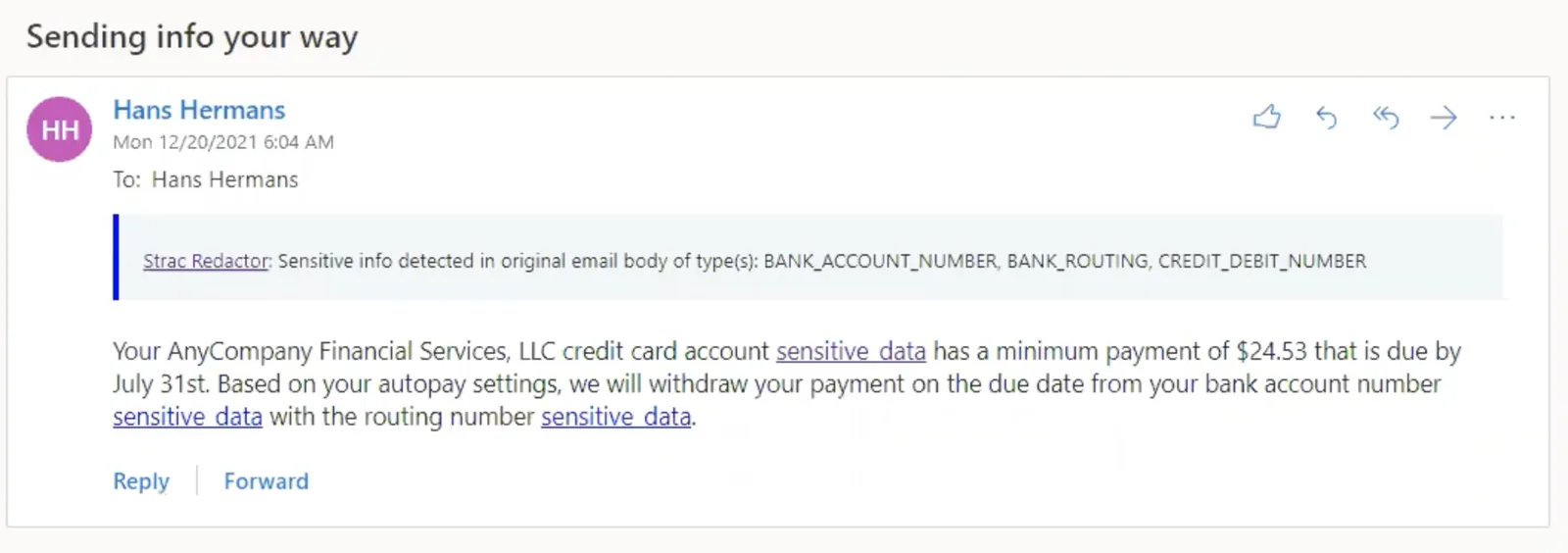
Email Redaction is a technique that allows for the secure transmission of sensitive data through email exchanges without putting those communications into PCI scope. By using email redaction, sensitive email body and attachments are removed and replaced with an identifier. This ensures that email exchanges remain outside of PCI scope and comply with PCI DSS requirements.
Also PCI-DSS section 3.2 clearly states that the credit card data always needs to be masked or redacted.
One of the biggest problems with traditional PCI compliance tooling is that many systems only generate alerts after sensitive data has already spread across SaaS applications.
Modern PCI compliance requires remediation-first security.
Instead of simply detecting payment card exposure, modern DLP platforms should automatically:
This becomes especially important across collaboration and support tools where sensitive customer information moves quickly between employees, vendors, and AI systems.
Modern DLP platforms also rely on contextual machine learning and OCR-based detection instead of only regex matching. This improves detection accuracy across screenshots, PDFs, attachments, and unstructured customer conversations while reducing false positives.
PCI compliance used to focus primarily on securing email communications containing cardholder data. But in 2026, the problem is much larger than inboxes alone.

Today, PCI data moves across:
A single credit card number pasted into an AI prompt, uploaded into a support ticket, or shared through a cloud drive can create PCI scope expansion and compliance exposure.
This is why modern PCI compliance strategies now require unified SaaS DLP, GenAI DLP, Browser DLP, Cloud DLP, and Endpoint DLP — not just email encryption.
Modern organizations need visibility into:
Legacy alert-only DLP solutions often notify security teams after exposure already occurred. Modern platforms instead focus on real-time remediation including redaction, masking, access revocation, quarantine, and automated policy enforcement.
Strac helps organizations secure PCI data across SaaS, Cloud, GenAI, Browser, Email, and Endpoint environments from one unified DSPM + DLP platform.
Unlike traditional alert-only DLP solutions, Strac combines sensitive data discovery, classification, and real-time remediation across tools like Gmail, Microsoft 365, Slack, Salesforce, Zendesk, Google Drive, ChatGPT, and more.
Key PCI compliance capabilities include:
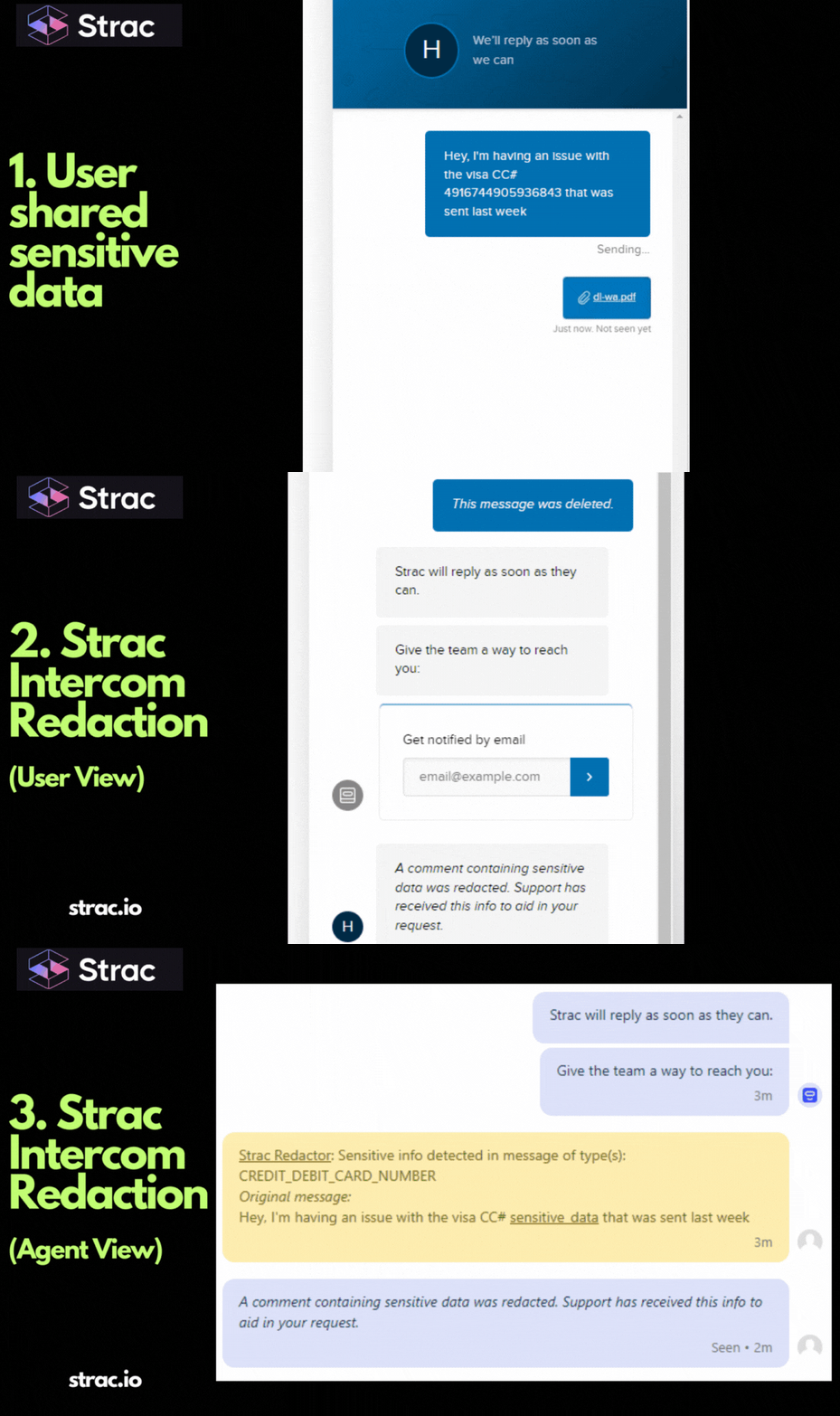
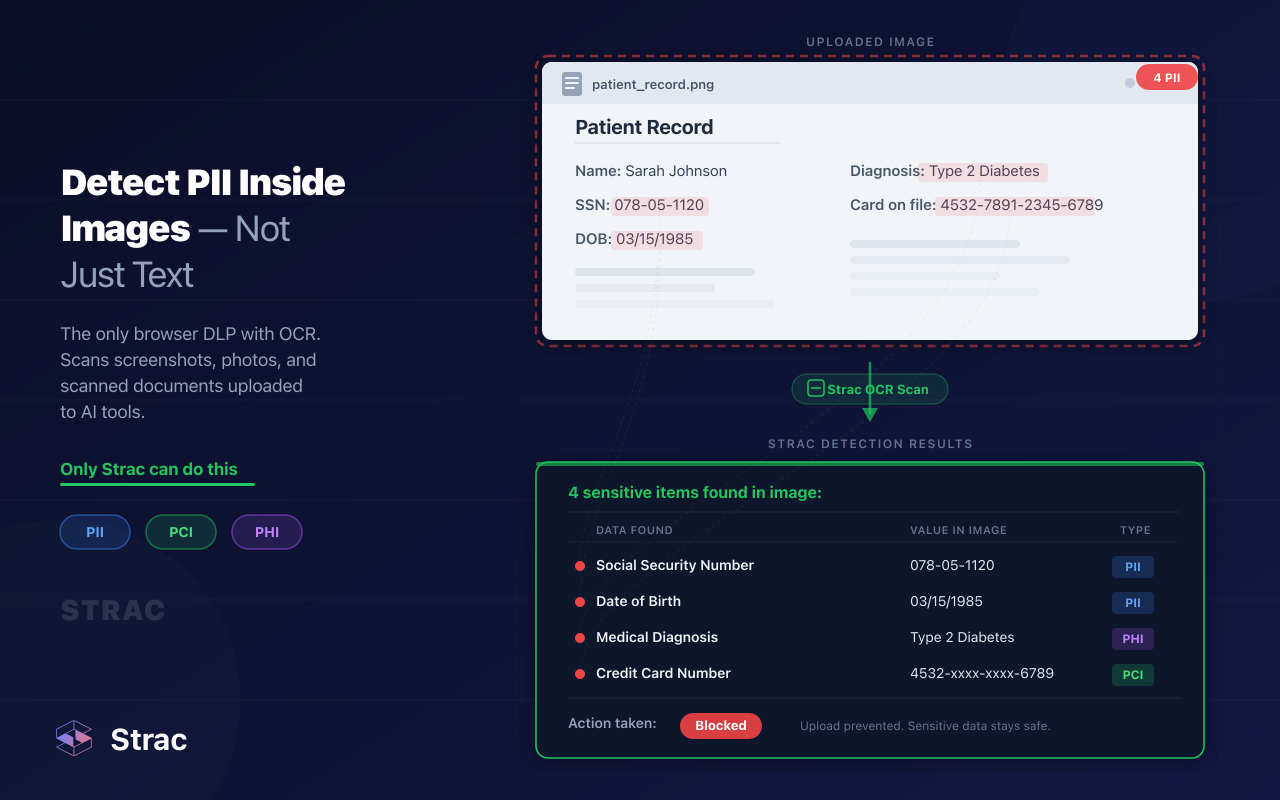
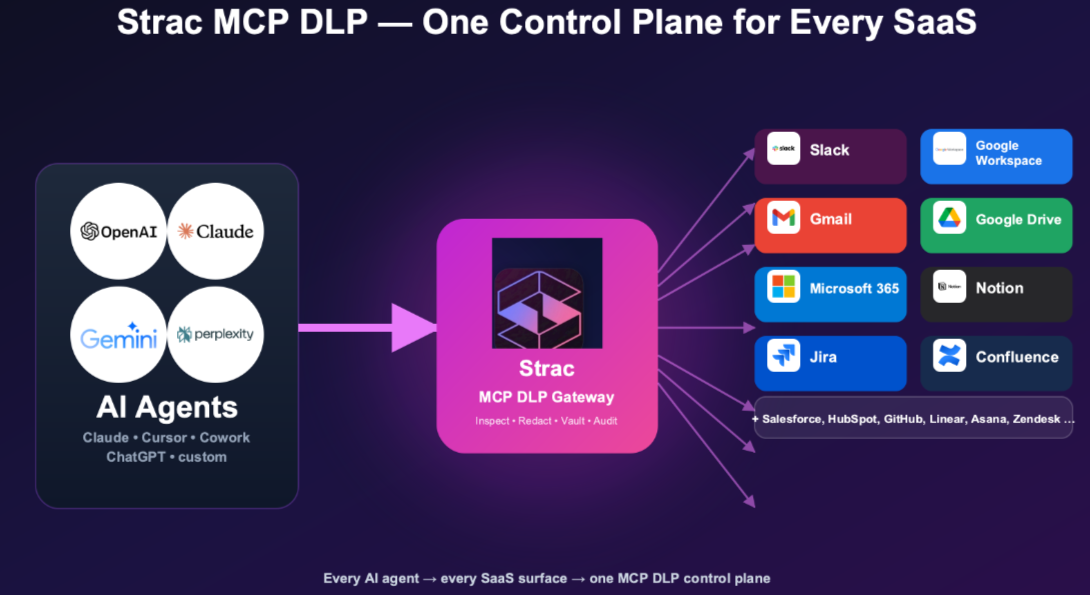
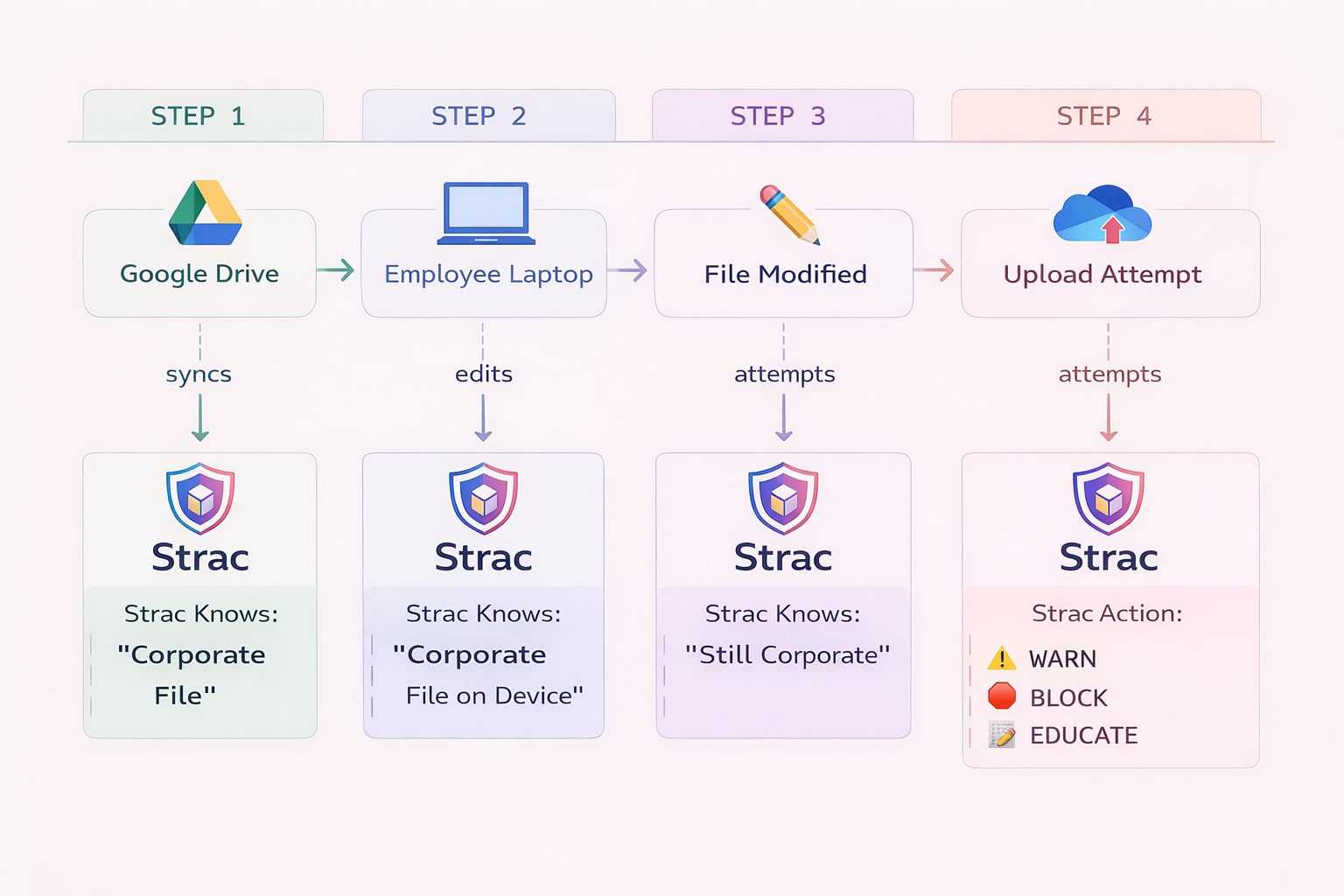


By combining DSPM and DLP into one platform, Strac helps organizations reduce PCI scope, secure sensitive data across modern workflows, and prevent cardholder data exposure before it spreads.

Yes, you should definitely consider PCI compliance for your business. It's important to ensure the security of card transactions and protect sensitive data. You can reach out to card networks like Visa, Mastercard, or American Express for details on their PCI compliance programs.
It is generally not recommended to send credit card information via email because email conversations involve multiple parties and are not typically encrypted. When discussing PCI compliance in email conversations, it is generally not recommended to send credit card information via email because of security risks. Also, PCI-DSS section 3.2 states that credit card data always needs to be masked or redacted. So, if email contains body or attachmet that has credit card data, it should be removed or redacted from emails.
Yes, please checkout https://www.strac.io/integration/office-365-dlp
Yes, please checkout https://www.strac.io/integration/gmail-dlp
Yes. For both Microsoft Office365 and Gmail, Strac can go back in time and do historical scanning and redaction of sensitive emails.
Yes. Employees pasting cardholder data into ChatGPT, Copilot, Gemini, or Claude can unintentionally expose regulated PCI data outside approved environments. Organizations should implement GenAI DLP controls to monitor and remediate sensitive uploads.
No. Encryption protects email transmission, but it does not prevent PCI data exposure across SaaS apps, cloud storage, support tickets, screenshots, browsers, endpoints, or AI tools.
Yes. Strac supports both historical and real-time scanning across Gmail and Microsoft 365 environments to identify, classify, redact, and remediate exposed PCI data.
.avif)


.gif)


.webp)