August 10, 2026

8
min read
Data Loss Prevention Consulting Services
Data Loss Prevention consulting services help protect sensitive data across SaaS, cloud, endpoints, GenAI, and MCP. Learn what modern DLP requires in 2026.
Data Loss Prevention consulting services help organizations understand where sensitive data lives, how it moves, and where it can leak.
Traditionally, consultants focused on risk assessments, DLP policies, compliance requirements, and deploying DLP software.
Those things still matter. But the environment they need to protect has changed.
A modern DLP strategy has to account for PII, PHI, PCI, credentials, secrets, source code, and other confidential information moving across dozens of applications and AI workflows.
Legacy DLP was largely designed around email, networks, files, and managed endpoints.
Today, employees can paste customer data into ChatGPT, upload a document to an AI tool, send sensitive information through Slack, expose credentials through a browser, or allow an AI agent to access company systems through MCP.
The challenge is no longer simply “Where is our sensitive data stored?”
Security teams also need to answer:
Where is it going, who is using it, which AI systems can access it, and can we stop unsafe actions before the data leaves?
That requires DLP built around modern data flows rather than yesterday's perimeter.
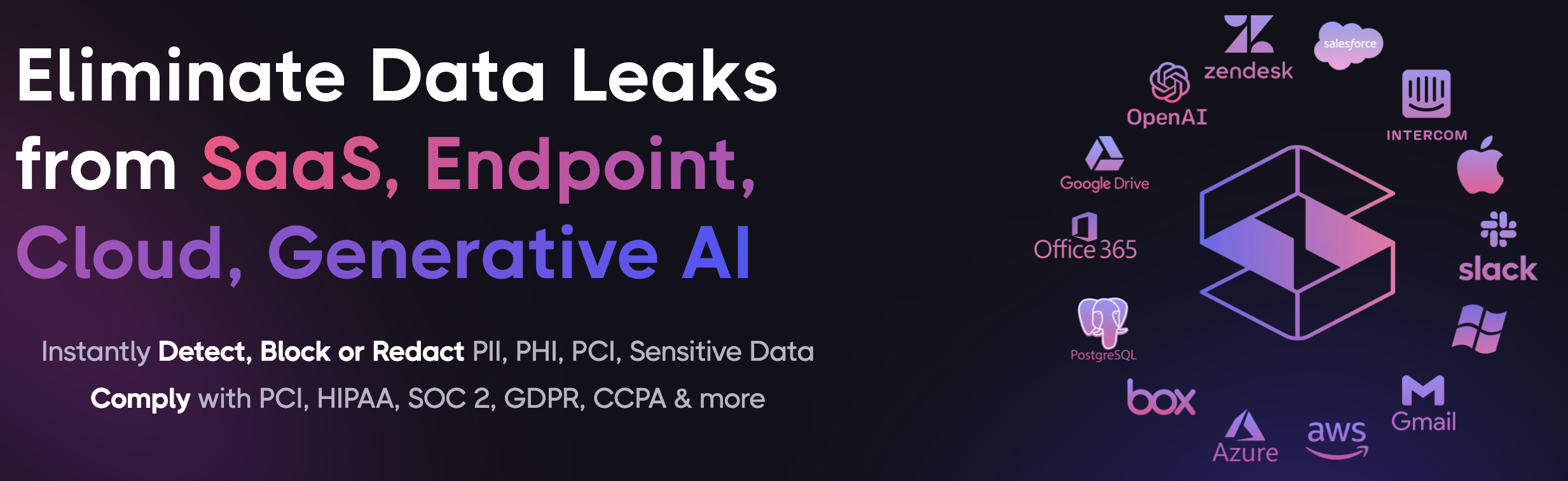
Sensitive information constantly moves through tools such as Slack, Google Workspace, Microsoft 365, Salesforce, Zendesk, and cloud storage.
Modern DLP needs visibility into messages, files, tickets, attachments, and other unstructured content, not just traditional databases.
Strac combines sensitive data discovery with DLP controls so organizations can find risky data and take action through redaction, masking, blocking, deletion, quarantine, and other remediation workflows.
GenAI has created an entirely new data-loss channel.
Employees can paste customer records, source code, financial information, credentials, or internal documents directly into AI prompts.
And the problem extends beyond ChatGPT. AI capabilities are increasingly embedded inside tools companies already trust and approve.
GenAI DLP therefore needs to inspect AI interactions and enforce policies before sensitive information reaches an unauthorized model or destination.
MCP adds another layer of risk.
AI agents can use MCP connectors to interact with company tools, databases, files, and other systems. That creates powerful workflows, but it can also create new paths for sensitive data to move between systems.
MCP DLP gives security teams a control point for inspecting these interactions and enforcing sensitive-data policies before information is exposed to an AI model, agent, tool, or unauthorized destination.
Not every leak happens inside an integrated SaaS application.
Users can copy sensitive information, upload files, paste data into websites, use personal accounts, or move information through applications running directly on their devices.
Endpoint and browser DLP help close that gap by protecting sensitive data at the point where users interact with it.
For organizations building a DLP strategy in 2026, the goal is simple: protect sensitive data wherever it moves, not just where traditional DLP expects to find it.
A strong DLP strategy in 2026 should follow sensitive data across the entire environment, not protect one channel at a time.
The goal is to know what sensitive data you have, where it is moving, and when to take action.

You cannot protect data you cannot see.
DLP should continuously identify sensitive information such as PII, PHI, PCI, credentials, API keys, secrets, source code, and confidential business data across SaaS, cloud, endpoints, and other environments.
Classification adds context so security teams can understand what the data is and how it should be handled.
Traditional regex and keyword rules can create too much noise because they often lack context.
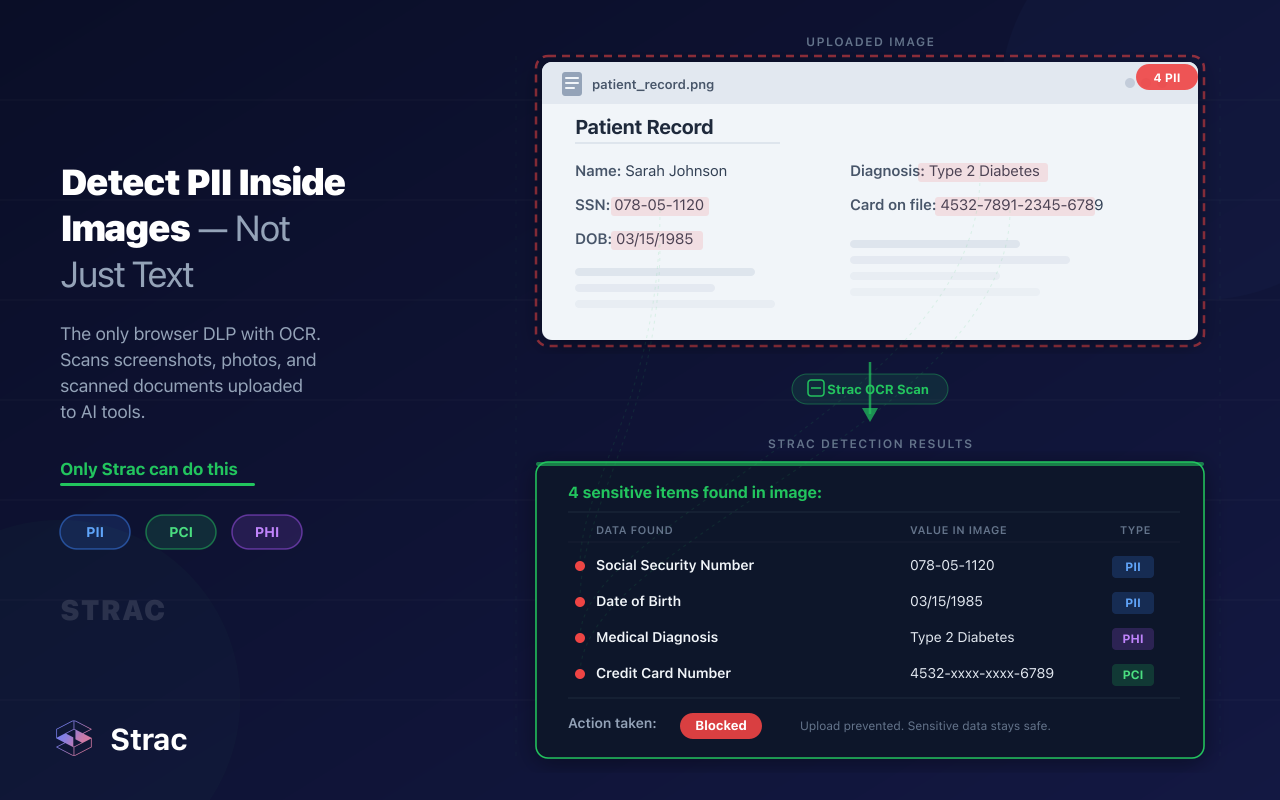
Modern DLP should understand the content around sensitive information and inspect more than plain text.
Strac uses content-aware detection, including ML and OCR, to identify sensitive data inside text, documents, PDFs, spreadsheets, screenshots, and images.
Finding sensitive data is only half the job.
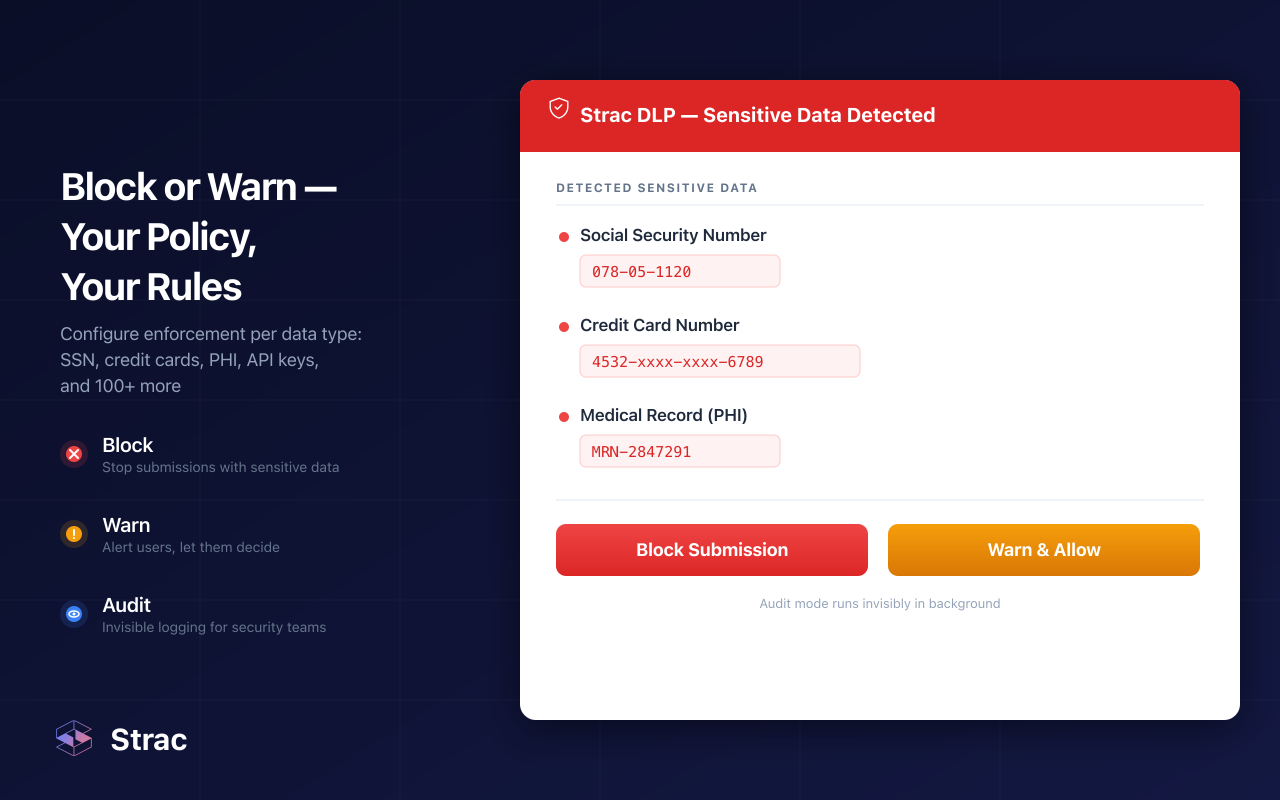
When risky activity happens, DLP should be able to act. Depending on the policy and destination, that can mean blocking, redacting, masking, deleting, quarantining, encrypting, or coaching the user.
This moves DLP from an alerting tool to an active security control.
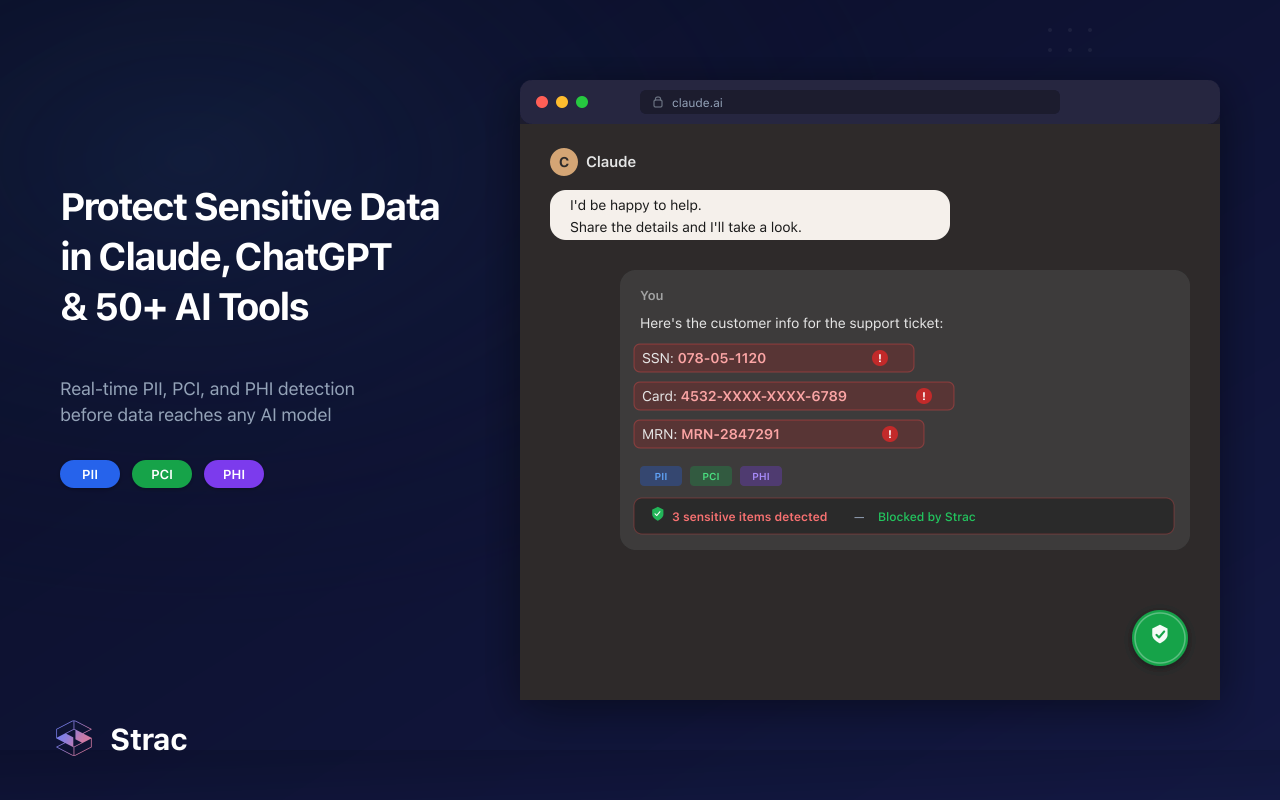
Employees are using AI to summarize documents, analyze data, write code, and complete everyday work.
That means sensitive information can easily enter AI prompts, uploads, and responses.
GenAI DLP helps security teams inspect these interactions and stop PII, PHI, PCI, credentials, source code, and other confidential information from being exposed to unauthorized AI tools.
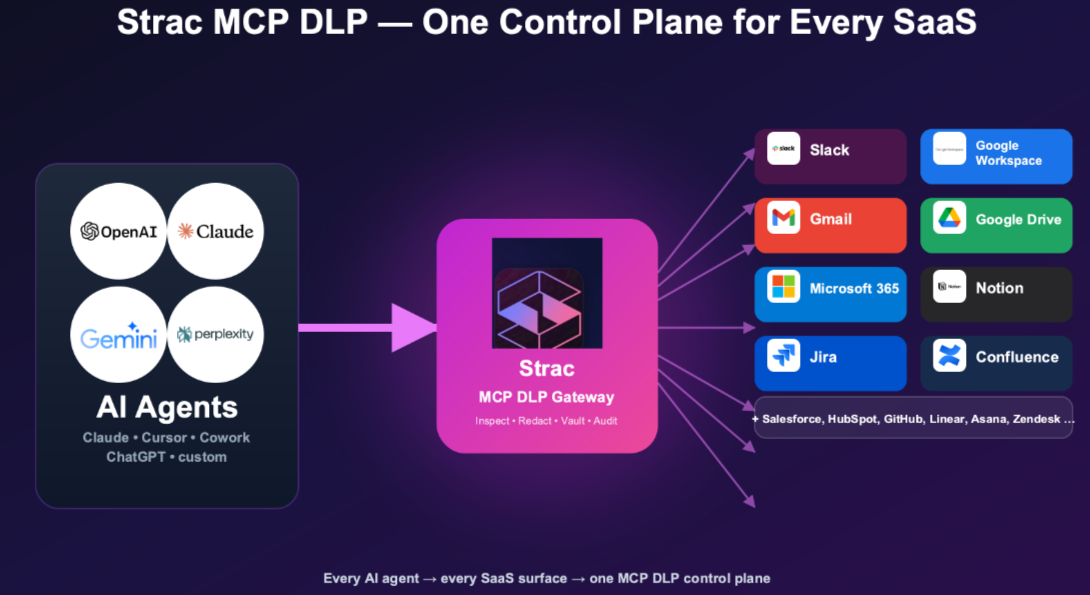
MCP allows AI agents to connect with business applications, databases, files, and tools.
But every new connection creates another potential path for sensitive data.
MCP DLP provides a security layer between AI agents and connected systems, helping organizations inspect sensitive data flows and enforce policies before information reaches the wrong model, tool, or destination.
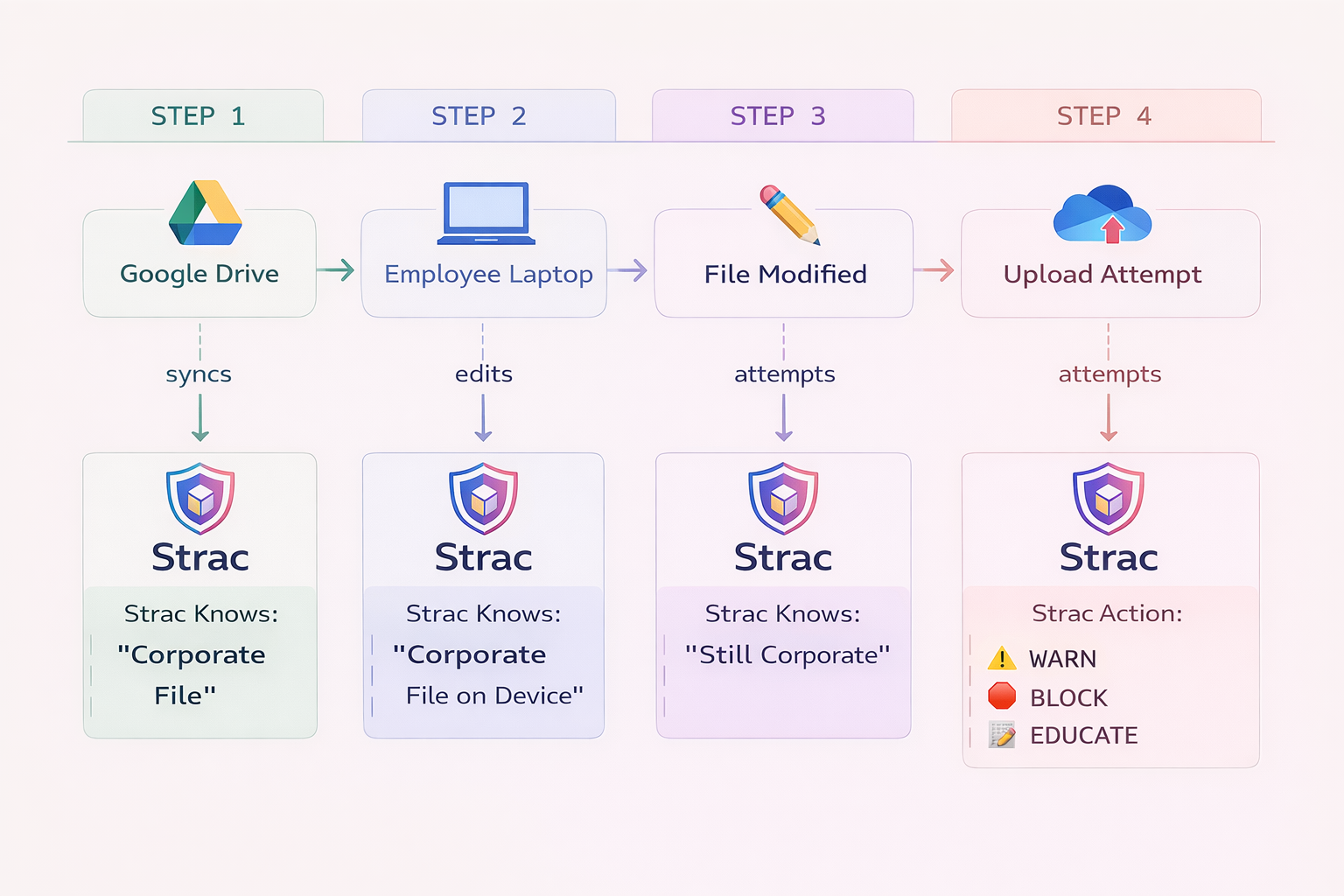
Endpoints remain one of the biggest places where sensitive data moves.
Users copy files, upload documents, use removable storage, access personal accounts, and interact with applications outside the organization's SaaS stack.
Endpoint DLP extends protection to these user actions so security teams can enforce policies closer to where the data is actually being handled.
.gif)
The browser has become a major data-loss surface.
Employees can paste sensitive information into websites, upload files to unknown destinations, or move company data into personal accounts.
Browser-aware controls help organizations inspect these actions and enforce policies before sensitive information leaves the business.
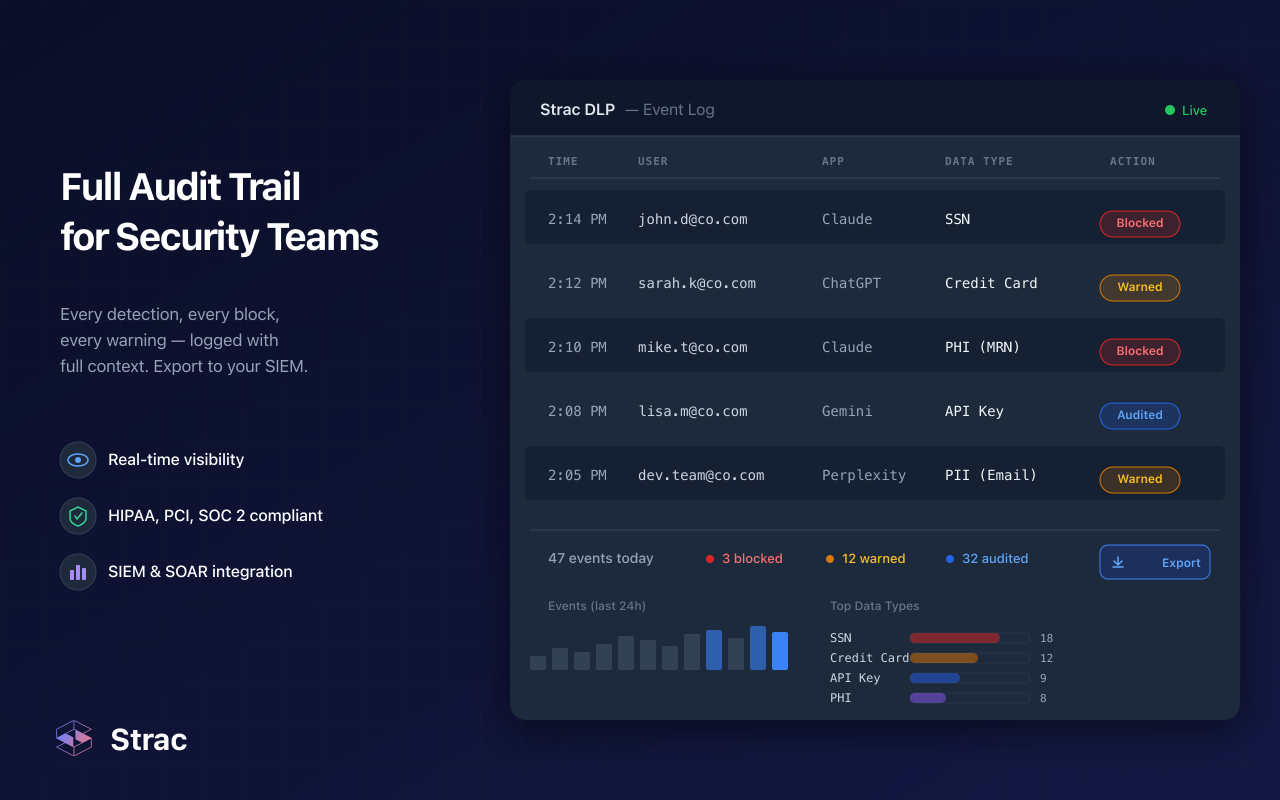
DLP also plays an important role in meeting requirements under frameworks such as HIPAA, PCI DSS, GDPR, SOC 2, and ISO 27001.
But compliance should be the outcome of good data protection, not the entire strategy.
Security teams need clear visibility into where sensitive data exists, what happened to it, which policies were triggered, and what remediation was taken.
A DLP consultant should help you understand your data flows before recommending more tools.
Start with a few practical questions:
The right DLP strategy should make sensitive data easier to find and control without making everyday work harder.
Strac is built for the way sensitive data moves today.
Instead of treating discovery, SaaS DLP, endpoint protection, and AI security as separate problems, Strac brings DSPM + DLP together across SaaS, cloud, GenAI, browsers, endpoints, and modern AI workflows.
Strac helps security teams discover where sensitive data exists, classify it, understand the risk, and enforce policies when that data moves.
This gives teams one approach for both data visibility and data loss prevention rather than another tool that only generates alerts.
Sensitive data regularly ends up inside Slack messages, Google Drive files, Salesforce records, support tickets, email, and other business applications.
Strac can discover and protect PII, PHI, PCI, secrets, and other sensitive information across SaaS and cloud environments.
When a policy is violated, teams can take actions such as redact, mask, block, quarantine, delete, or encrypt depending on the workflow.
AI adoption has made prompt-level data protection a core part of DLP.
Strac helps organizations control sensitive information moving into GenAI applications and AI workflows, including prompts, uploads, and other interactions.
This allows employees to use AI while security teams maintain control over what company data can be shared.
MCP is quickly becoming another important security boundary.
As AI agents connect to company applications and data through MCP, Strac provides DLP controls designed to inspect those interactions and prevent sensitive information from reaching unauthorized models, tools, or destinations.
This extends DLP beyond human users into agent-driven workflows.
Strac also protects data when users interact with it directly on their devices.
Endpoint and browser controls help security teams manage actions such as copying sensitive data, uploading files, using personal accounts, or sending company information to unknown destinations.
This closes gaps that SaaS-only DLP cannot see.
DLP becomes difficult to trust when every pattern match creates another alert.
Strac uses content-aware detection, ML, and OCR to identify sensitive information across text, documents, spreadsheets, PDFs, screenshots, images, and other unstructured content.
The goal is simple: understand what the data actually is before deciding whether it represents risk.
Legacy DLP was built for a more predictable environment.
In 2026, data moves between SaaS apps, browsers, endpoints, cloud systems, AI models, and increasingly autonomous agents.
Security teams need controls that can follow those workflows without creating endless rules and alerts.
That is where modern DLP is heading: discover the data, understand the context, and enforce the right policy at the moment of risk.
Strac is built around that model.
DLP consulting in 2026 is about more than choosing a tool or writing policies. Organizations need to understand where sensitive data lives, how it moves, and how new technologies like GenAI and MCP change that risk.
Strac combines DSPM + DLP to discover, classify, and protect sensitive data across SaaS, cloud, GenAI, MCP, browsers, and endpoints. The goal is not more alerts; it is better visibility and enforcement where data actually moves.
Data Loss Prevention consulting services help organizations identify sensitive data, understand how it moves, build DLP policies, meet compliance requirements, and select or implement the right security controls.
In 2026, that should include SaaS, cloud, endpoints, browsers, GenAI, and AI agent workflows, not just email and network traffic.
Not always. Traditional DLP was largely designed before employees started sharing information directly with AI models.
GenAI DLP needs visibility into prompts, file uploads, AI websites, and other AI interactions so sensitive information can be detected and controlled before exposure.
MCP DLP applies data protection controls to interactions involving the Model Context Protocol (MCP).
As AI agents use MCP to access applications, files, databases, and other tools, DLP can inspect these data flows and prevent sensitive information from reaching unauthorized models, agents, tools, or destinations.
DSPM focuses on discovering sensitive data, classifying it, and understanding where it creates risk.
DLP focuses on preventing that data from being exposed or misused.
Modern platforms such as Strac bring the two together so teams can discover sensitive data and enforce policies from the same security strategy.
Look beyond basic detection.
A modern DLP solution should provide content-aware detection, sensitive data discovery, real-time enforcement, SaaS and cloud coverage, endpoint and browser protection, GenAI security, MCP protection, and support for unstructured data such as documents, images, screenshots, and attachments.
The best solution is one that protects the way data actually moves through your organization without overwhelming your security team with noise.
.avif)


.gif)


.webp)